
LAPD Duty Weapon: Official Sidearms, Gear Standards, and What Every Candidate Should Know
Learn about the LAPD duty weapon, approved sidearms, gear requirements, and salary info. ✅ Essential reading for LAPD candidates and curious civilians.

The LAPD duty weapon is one of the most discussed topics in lapd news coverage and among prospective police candidates. The Los Angeles Police Department authorizes specific sidearms that every sworn officer must carry while on duty, and understanding which firearms qualify — along with the training, storage, and safety requirements that accompany them — is essential knowledge for anyone pursuing a law enforcement career in Los Angeles. The department's firearm policy is grounded in decades of operational experience and is updated regularly to reflect advancements in handgun technology and officer safety research.
The LAPD has historically issued and approved the Smith & Wesson Model 15 revolver, the Beretta 92F semi-automatic pistol, and more recently the Smith & Wesson M&P (Military and Police) series as approved duty weapons. Officers may also carry personally owned firearms that appear on the department's approved list, provided those weapons pass a rigorous inspection and qualification process conducted by the department's Range Unit. This flexibility allows officers to select a sidearm that fits their hand size, grip preference, and shooting style while still meeting the department's strict standards for reliability and safety.
Understanding the LAPD duty weapon policy also means understanding the broader ecosystem of lapd gear that officers are required to maintain. The duty weapon is just one component of a comprehensive equipment kit that includes holsters, spare magazines, less-lethal tools, body armor, and communications equipment. Recruits learn about all of this gear during the six-month Los Angeles Police Academy training program, and they must demonstrate proficiency with their duty weapon before they are authorized to carry it on the street. The qualification standards are demanding, and recruits who fail the initial firearms qualification receive additional instruction and remedial range time.
The lapd chief of police sets the overarching use-of-force policy that governs when and how officers may draw or discharge their duty weapon. This policy is publicly available and is reviewed periodically by the Police Commission, which provides civilian oversight of the department. Recent years have seen significant revisions to LAPD use-of-force guidelines, with a greater emphasis on de-escalation tactics, proportional response, and crisis intervention techniques that can resolve dangerous situations without firearms ever being drawn.
For candidates preparing for the LAPD hiring process, knowledge of the department's weapon and gear standards is useful background, but the written examination and background investigation focus more heavily on judgment, integrity, and problem-solving skills. That said, demonstrating familiarity with how the department operates — including its equipment protocols — can be an asset during oral interviews. Candidates who arrive well-informed about LAPD operations tend to perform more confidently during every stage of the hiring process, from the written test through the polygraph and psychological evaluations.
LAPD officers are required to qualify with their duty weapon twice per year on department-operated ranges. These qualification courses test accuracy, speed, and proper firearms handling technique under a variety of simulated conditions. Officers who do not meet the minimum qualification score receive mandatory retraining. This ongoing requirement ensures that every officer on patrol in Los Angeles is current on their weapons proficiency and familiar with the latest departmental protocols regarding firearm safety and deployment.
Beyond the basics of which guns are approved, the LAPD duty weapon policy intersects with issues of officer compensation, as the department provides a gear allowance to help offset the cost of personally owned approved firearms. Understanding lapd salary structures and allowances helps candidates plan financially for the transition from civilian life to sworn officer status, where equipment purchases represent a real upfront investment before the first paycheck arrives.
LAPD Duty Weapon & Officer Standards by the Numbers

LAPD Approved Duty Weapon Categories
The LAPD primarily authorizes semi-automatic pistols in 9mm, .40 S&W, and .45 ACP calibers. Popular approved models include the Smith & Wesson M&P series, Glock 17/19/21, and Sig Sauer P226. These must meet reliability and safety standards set by the Range Unit.
Officers may carry personally owned handguns provided the firearm appears on the LAPD approved list and passes departmental inspection. Officers are responsible for all maintenance, ammunition costs, and must demonstrate proficiency during semi-annual qualification sessions at a department range.
Recruits who do not own an approved firearm may be issued a department weapon during their academy training period. Some specialized units, including SWAT and Metropolitan Division, use purpose-selected service weapons appropriate to their tactical mission requirements.
LAPD officers are encouraged — and in many circumstances required — to carry an approved firearm while off duty. Off-duty weapons must also appear on the approved list and may differ from the primary on-duty sidearm, though the same qualification standards apply to all carried firearms.
Understanding lapd gear requirements goes far beyond the duty weapon itself. Every patrol officer in the Los Angeles Police Department is expected to maintain a comprehensive set of equipment that meets departmental specifications for quality, condition, and placement on the duty belt.
The holster worn by an LAPD officer must be an approved retention holster — typically a Level II or Level III design — that secures the duty weapon against unauthorized grabs while still allowing a smooth, practiced draw when needed. This balance between security and accessibility is the defining challenge of duty holster design, and the LAPD specifies holster requirements in its equipment directives.
The duty belt itself is a critical piece of lapd gear that must be properly configured according to departmental standards. Officers carry their duty weapon on the dominant-hand side, with spare ammunition magazines on the opposite side for efficient reloading under stress. The belt also supports a collapsible baton, pepper spray (OC), handcuffs, a radio holder, a flashlight ring, and glove pouches. Keeping all of this gear organized, accessible, and properly maintained is a skill that patrol officers develop over time, with mentorship from field training officers during the probationary period after academy graduation.
Body armor is another mandatory component of LAPD officer equipment. The department requires all officers to wear an approved ballistic vest while on duty, and the vest must meet the minimum threat level specified in the current equipment directive. Officers are provided a vest through the department, and replacements are issued on a scheduled cycle to ensure the protective material remains within its rated service life. Some officers choose to purchase upgraded vests out of pocket, provided those vests meet or exceed the department's minimum specifications and are approved by the equipment section.
The lapd uniform and associated gear represent a significant upfront investment for newly sworn officers. While the LAPD provides many items through its equipment section, officers are responsible for purchasing certain items — including their duty weapon if they choose a personally owned firearm — before completing the academy. The department offers a gear allowance and, in some cases, low-interest financing arrangements through the Police Relief Association to help new officers manage these costs. Understanding the full financial picture of becoming an LAPD officer is as important as understanding the tactical and legal dimensions of the role.
LAPD officers assigned to specialized units such as the Gang and Narcotics Division, the Major Crimes Division, or the Robbery-Homicide Division may carry additional gear appropriate to their assignment. Detectives working in plainclothes assignments typically use a smaller, more concealable duty weapon drawn from the approved list, carried in a holster designed for concealed carry. These officers must still qualify with their carry weapon twice per year and are held to the same use-of-force policies as uniformed patrol officers, regardless of their assignment or attire.
Recruits at the Los Angeles Police Academy spend significant time learning about the history, mechanics, and legal framework surrounding the duty weapon before they ever fire a live round. The academy curriculum includes classroom instruction on California firearms law, departmental use-of-force policy, and the psychology of lethal force decision-making. This academic foundation is integrated with practical range training that begins with basic marksmanship and builds toward scenario-based exercises where recruits must decide in real time whether and when to draw their weapon. This integrated approach reflects the LAPD's commitment to producing officers who are skilled marksmen and sound decision-makers simultaneously.
The department's lapd phonetic alphabet and radio communications protocols are also taught alongside weapons training because officers need to quickly and accurately report weapons discharges, describe suspects, and coordinate backup units during critical incidents. The ability to communicate clearly under extreme stress — using the standard phonetic alphabet to spell names, describe vehicles, and relay locations — is considered as important as marksmanship skill in the LAPD's training philosophy. Officers who cannot communicate effectively under stress cannot be safely deployed in high-risk situations, regardless of their shooting scores.
LAPD SWAT, Ranks & Specialized Unit Weapons
LAPD SWAT (Special Weapons and Tactics) officers carry a broader array of weaponry than standard patrol officers. In addition to an approved duty pistol, SWAT operators are trained and equipped with patrol rifles — typically the M4 carbine platform in 5.56mm NATO — as well as less-lethal systems including the 40mm grenade launcher and the Taser X2. All SWAT weapons are department-issued, maintained by the unit armorer, and subject to more frequent qualification requirements than patrol-level standards.
SWAT officers also carry specialized breaching tools, flashbang grenades, and long-range precision rifles for sniper assignments. The LAPD SWAT sniper program uses bolt-action rifles chambered in .308 Winchester for precision engagement at extended ranges. Becoming a SWAT operator requires first serving as a patrol officer, demonstrating superior firearms scores, and passing a demanding physical and tactical selection process. The training pipeline for SWAT weapons qualification adds months of additional range time on top of standard patrol qualification requirements.

Personally Owned vs. Department-Issued LAPD Duty Weapon: Key Tradeoffs
- +Personally owned firearms can be fitted to the officer's hand size and grip preference for improved accuracy
- +Officers familiar with their own weapon from prior civilian ownership may require less initial training time
- +Personally owned weapons may be carried off duty with the same practiced muscle memory as on-duty carry
- +Officers can select from multiple approved calibers to match their personal comfort and shooting style
- +Personal ownership builds a deeper sense of responsibility for equipment maintenance and condition
- +Some approved personally owned models offer ergonomic or mechanical advantages over older issued options
- −Personally owned firearms represent a significant upfront cost of $500 to $1,200 for approved models
- −Officers bear full cost of approved ammunition, cleaning supplies, and any required parts replacement
- −The weapon must pass departmental inspection before it may be carried, which takes time to schedule
- −If the personally owned weapon fails inspection, the officer must immediately source a replacement or use an issued weapon
- −Officers who change assignments may find their personally owned weapon is not optimal for the new role
- −Damage or loss of a personally owned duty weapon is the officer's financial responsibility, not the department's
Pros and Cons at a Glance
| Pros | Cons |
|---|---|
| Personally owned firearms can be fitted to the officer's hand size and grip preference for improved accuracy | Officers bear full cost of approved ammunition, cleaning supplies, and any required parts replacement |
| Officers familiar with their own weapon from prior civilian ownership may require less initial training time | The weapon must pass departmental inspection before it may be carried, which takes time to schedule |
| Personally owned weapons may be carried off duty with the same practiced muscle memory as on-duty carry | If the personally owned weapon fails inspection, the officer must immediately source a replacement or use an issued weapon |
| Officers can select from multiple approved calibers to match their personal comfort and shooting style | Officers who change assignments may find their personally owned weapon is not optimal for the new role |
| Personal ownership builds a deeper sense of responsibility for equipment maintenance and condition | Damage or loss of a personally owned duty weapon is the officer's financial responsibility, not the department's |
LAPD Duty Weapon & Gear Compliance Checklist for New Officers
- ✓Verify your chosen sidearm appears on the current LAPD approved firearms list before purchasing
- ✓Schedule a pre-carry inspection with the Range Unit to confirm your weapon meets departmental standards
- ✓Purchase a Level II or Level III approved retention holster compatible with your specific firearm model
- ✓Acquire department-approved duty ammunition in the correct caliber and grain weight for your weapon
- ✓Complete initial firearms qualification at the academy range before being authorized to carry on patrol
- ✓Configure your duty belt according to the current LAPD equipment directive, including all required accessories
- ✓Ensure your ballistic vest meets the minimum threat level specified in the current equipment directive
- ✓Register your personally owned duty weapon with the department's equipment section and retain the receipt
- ✓Schedule your semi-annual qualification sessions in advance to avoid lapsing your authorized carry status
- ✓Review the current use-of-force policy and any recent chief's directives before each qualification cycle
Failing to Qualify Means Losing Your Carry Authorization
An LAPD officer who fails to complete their semi-annual firearms qualification — or who scores below the minimum passing threshold — is immediately placed on restricted duty and may not carry their duty weapon until they complete remedial training and pass a requalification session. This is not a disciplinary action but a safety protocol, and it affects officers at every rank, including supervisors and specialized unit personnel. Keeping your qualification current is as important as any other professional responsibility in the department.
The relationship between lapd salary and the cost of carrying a duty weapon is something every prospective officer should understand before entering the hiring process. The base salary for a newly promoted Police Officer I starts at approximately $71,000 per year and can exceed $100,000 with overtime, specialty pay, and bonuses once an officer gains experience and seniority.
However, the costs associated with equipping oneself for patrol — duty weapon, holster, backup firearm, off-duty carry system, and additional gear items not provided by the department — can easily total $2,000 to $3,500 in the first year alone, even with the departmental gear allowance factored in.
The LAPD provides a gear allowance to sworn officers that partially offsets equipment purchases, including approved firearms. The exact amount of this allowance has varied over contract cycles negotiated between the city and the Los Angeles Police Protective League, which is the union representing rank-and-file officers. Candidates should research the current Memorandum of Understanding (MOU) between the city and the LAPPL to understand what allowances apply at the time of their hire, as these figures change with each contract negotiation cycle. The LAPPL website and the LAPD's Human Resources Division are both good sources for current information.
Beyond the initial equipment investment, lapd salary structures include various forms of specialty pay that reflect an officer's qualifications and assignment. Officers assigned to SWAT, the Air Support Division, or other specialized units often receive an additional percentage on top of their base salary to compensate for the extra training, risk, and responsibility associated with those roles. Officers who serve as field training officers (FTOs), who are bilingual, or who hold advanced certifications in areas like crisis negotiation or bomb disposal also receive additional pay incentives.
The LAPD's lapd ranks structure creates a clear advancement pathway that comes with both increased responsibility and increased compensation. A Sergeant I earns substantially more than a Police Officer III, and each promotion requires passing a competitive examination, demonstrating a strong performance record, and often serving in a particular assignment for a minimum period.
Officers who aspire to reach the rank of Lieutenant or above should be aware that each promotional exam covers a broad range of topics, including departmental policy, California law, and supervisory principles — none of which focuses specifically on duty weapon mechanics, though weapons policy remains part of the overall policy knowledge base tested.
The lapd headquarters at 100 West 1st Street in downtown Los Angeles houses the department's executive leadership, including the office of the chief of police, the various deputy chiefs who oversee bureaus, and the administrative divisions that manage personnel, equipment, and budget functions. The Equipment Section, which is responsible for maintaining the approved firearms list and managing departmental weapon inventories, operates out of a separate facility but reports through the administrative chain that runs up to headquarters. Officers who have questions about approved weapons or equipment directives can contact the Equipment Section directly or work through their unit's equipment coordinator.
For candidates interested in how the LAPD manages major incidents involving duty weapons, the department's Critical Incident Video Release policy — adopted in 2018 — requires the release of body camera footage within 45 days of an officer-involved shooting or other serious use-of-force incident.
This policy, which reflects a national trend toward greater transparency in policing, means that footage of duty weapon deployments in the field is more accessible to the public than ever before. Reviewing released footage can give candidates a realistic sense of the high-stress, fast-moving situations in which officers must make split-second decisions about drawing or discharging their weapons.
The lapd non emergency number (1-877-ASK-LAPD) is the appropriate channel for members of the public who have non-urgent questions about weapons policies, found firearms, or related topics. Calling 911 for policy questions is inappropriate and takes resources away from emergency response. The non-emergency line connects callers with trained personnel who can direct them to the correct division or provide information about filing a found property report for recovered firearms — a surprisingly common situation in a large urban environment like Los Angeles.

Candidates who have previously owned firearms must disclose all prior weapons ownership during the LAPD background investigation. Investigators will verify registration records, check for any history of improper storage or unsafe handling, and may contact former co-residents about weapons security practices. Any discrepancy between a candidate's self-reported weapons history and the records uncovered by investigators will be treated as a potential integrity issue that can result in disqualification from the hiring process.
Preparing for the LAPD hiring process requires candidates to understand not just the physical and tactical aspects of carrying a duty weapon, but also the legal and ethical framework that governs its use.
California law — specifically Penal Code Section 835a — codifies the circumstances under which a peace officer may use deadly force, and the LAPD's departmental policy operationalizes that statute with specific directives about when officers must attempt de-escalation before drawing a weapon, when cover and distance must be used, and when tactical repositioning is required before any use of force. Candidates who can articulate this framework during their oral board interview demonstrate a level of professional maturity that impresses hiring panels.
The oral board interview is one of the most consequential stages of the LAPD hiring process, and scenario questions often involve situations where the candidate must describe how they would handle a confrontation that might escalate to a weapons deployment. Interviewers are not looking for candidates who immediately escalate to lethal force; they are looking for candidates who demonstrate awareness of the full continuum of force, who prioritize de-escalation and officer safety simultaneously, and who can articulate sound reasoning under pressure. Reviewing the LAPD's publicly available use-of-force policy before your oral board is an effective preparation strategy.
The background investigation that follows the oral board digs deeply into every aspect of a candidate's personal history, including their relationship with firearms if they are current or former gun owners. Investigators check whether candidates have properly registered their firearms, whether any weapons were reported stolen, and whether there is any history of reckless or unlawful use of firearms. Candidates with a prior history of responsible firearms ownership — including formal training, proper storage, and clean registration records — often find this aspect of the background check works in their favor by demonstrating maturity and respect for weapons safety.
The lapd inmate search portal and related custody systems are separate from the weapons and patrol systems, but they illustrate the breadth of LAPD's operational infrastructure. Officers assigned to custody duties may carry their duty weapon in some facilities, but many detention environments have specific protocols about when weapons must be secured outside the secure perimeter before entry. Understanding these context-specific rules about duty weapon carry is part of the broader firearms policy education that all LAPD officers receive during and after the academy.
The LAPD's training philosophy regarding duty weapons has evolved considerably over the past two decades. Where earlier training emphasized marksmanship fundamentals almost exclusively, contemporary LAPD firearms training incorporates realistic scenario-based exercises, force-on-force simulations using non-lethal training ammunition, and judgment training that helps officers make faster and more accurate decisions about when lethal force is and is not appropriate. This evolution reflects broader changes in policing philosophy nationally, as well as specific lessons learned from high-profile officer-involved shootings in Los Angeles and elsewhere that prompted policy reviews and training revisions.
Officers who are interested in advancing to specialized assignments that involve enhanced weapons capabilities — such as SWAT, the Air Support Division, or the Metropolitan Division — should focus on building an exceptional patrol record, maintaining perfect or near-perfect qualification scores, and developing the physical fitness levels required by those units' selection processes.
Being a technically proficient shooter is necessary but not sufficient for SWAT selection; candidates must also demonstrate tactical intelligence, teamwork, and the psychological stability to perform under extreme stress in prolonged high-risk operations. The selection process for these units is competitive, with many more applicants than available positions in any given cycle.
For those following lapd news and considering a career with the department, it is worth noting that the LAPD continues to invest in training infrastructure, with upgrades to its range facilities and the introduction of virtual reality-based use-of-force simulators that allow officers to practice decision-making in immersive, realistic scenarios without firing live ammunition. These technologies represent the cutting edge of law enforcement training and reflect the LAPD's commitment to continuous improvement in officer readiness, safety, and judgment — all of which intersect directly with how and when officers deploy their duty weapons in the field.
Practical preparation for LAPD hiring begins well before the written examination. Candidates who intend to carry a personally owned duty weapon should start researching the current approved firearms list early in the process so they can make an informed purchase decision. The approved list is updated periodically, and a firearm that was approved in a previous year may have been removed due to reliability issues or other concerns identified by the department's range staff. Checking directly with the LAPD Recruitment and Employment Division for the most current list is strongly recommended before making any weapons purchase.
Firearms training at a civilian shooting range before entering the academy is a worthwhile investment for candidates who have limited prior shooting experience. Many LAPD recruits arrive at the academy having rarely or never fired a handgun, and while the academy's range instructors are experienced at training beginners, recruits who arrive with basic marksmanship fundamentals already in place tend to have a less stressful experience during initial qualification.
Several shooting ranges in the Los Angeles area offer basic handgun courses specifically marketed to law enforcement candidates, and these courses cover the safe handling, loading, and firing techniques that form the foundation of LAPD's firearms curriculum.
Understanding the lapd phonetic alphabet — the NATO standard phonetic alphabet used by most U.S. law enforcement agencies, with Alpha for A, Bravo for B, Charlie for C, and so on — is another practical preparation task that costs nothing but a few hours of study.
Recruits are expected to know this alphabet fluently before they enter the field, and academy instructors will drill it during radio communications training. Candidates who arrive with the alphabet already memorized can focus their attention during those training sessions on the more complex aspects of radio protocol, such as code numbers and proper dispatch procedures.
The LAPD written examination tests reading comprehension, writing ability, logical reasoning, and situational judgment. It does not test specific knowledge of firearms models or technical specifications. However, a candidate who has done broad research into how the LAPD operates — including its weapons policies, its organizational structure, and its community relations programs — will have useful context that supports stronger performance on the situational judgment portions of the test.
Scenario-based questions often involve situations that mirror real patrol challenges, and candidates with realistic knowledge of police work tend to choose more appropriate responses than candidates who rely solely on television or movie representations of law enforcement.
The psychological evaluation that is part of the LAPD hiring process assesses, among other things, a candidate's attitude toward the use of force. Psychologists who conduct these evaluations are looking for candidates who fall within a healthy psychological range — neither excessively aggressive and eager to use force, nor excessively conflict-averse to the point where they might hesitate in situations that require decisive action. Candidates who can articulate a balanced, thoughtful perspective on when force is and is not appropriate — grounded in the legal and policy frameworks they have studied — tend to perform well in these evaluations.
Networking with current or former LAPD officers before entering the hiring process can provide invaluable firsthand knowledge about what life with a duty weapon actually looks like. Many officers are willing to speak with serious candidates about their experiences, and some divisions actively host ride-along programs that allow civilians to accompany officers on patrol. Seeing how officers interact with their duty weapon — how they manage holster retention, how they handle weapons transitions, how they communicate with dispatch about weapons-related calls — can give candidates a realistic picture that no amount of reading can fully replicate.
Finally, candidates should remember that the duty weapon, while central to the identity and responsibility of being a police officer, is used in only a tiny fraction of all interactions that LAPD officers have with the public each year. The vast majority of patrol work involves communication, problem-solving, report writing, and community engagement — skills that are tested in the written and oral portions of the hiring process.
Approaching your LAPD candidacy with the same seriousness you would bring to any major career transition, and grounding your preparation in accurate information about how the department actually operates, is the most reliable path to success in one of the most demanding and meaningful law enforcement hiring processes in the United States.
Sample Los Angeles Police Department Practice Questions
Try these questions from our free Los Angeles Police Department practice tests. The correct answer and an explanation follow each question.
During the 1-minute sit-up event, a candidate performs 40 repetitions. For all repetitions, they successfully touch their elbows to their knees and their shoulder blades to the floor. However, for the first 20 repetitions their fingers are interlocked behind their head, and for the last 20 their arms are crossed over their chest. What is the candidate's most likely official score?
- A. 40, because both techniques are acceptable variations.
- B. 20, because the form was not consistent throughout the event.
- C. 0, because crossing arms over the chest is an invalid technique.
- D. 30, because a 10-repetition penalty is assessed for changing form.
Answer: C. 0, because crossing arms over the chest is an invalid technique.
According to LAPD PFQ demonstration videos, the only two acceptable hand positions for the sit-up are fingers interlocked behind the head or arms crossed over the chest with hands on opposite shoulders. However, a different source for police testing states fingers must be interlaced behind the head. Given the official LAPD video shows a specific technique (arms crossed), any deviation, including the 'fingers interlaced' method common in other tests, would likely invalidate those repetitions. The valid technique requires arms to be crossed over the chest.
A candidate attempts the LAPD PFQ and successfully passes all four events with a high cumulative score. What is the next immediate step for this candidate in the hiring process?
- A. They are given their final ranking on the eligibility list based on their score.
- B. They must retake the PFQ to confirm their score before proceeding.
- C. They receive a conditional offer of employment immediately upon passing.
- D. They are deemed qualified to proceed to the next stage of the selection process.
Answer: D. They are deemed qualified to proceed to the next stage of the selection process.
The Physical Fitness Qualifier is a qualifying, pass/fail component of the hiring process. Successfully passing it means the candidate is eligible to move forward to the next step, which could be the medical evaluation, background investigation, or department interview. The PFQ score itself does not determine a final ranking for hiring.
You are off duty and witness what appears to be a robbery in progress. You are not carrying your service weapon. What is the most appropriate action?
- A. Physically intervene immediately to stop the robbery
- B. Call 911, observe safely, and provide a detailed description to responding officers
- C. Announce yourself as an LAPD officer and attempt to detain the suspects
- D. Do nothing since you are off duty and unarmed
Answer: B. Call 911, observe safely, and provide a detailed description to responding officers
An unarmed off-duty officer placing themselves in a dangerous confrontation creates unnecessary risk; calling 911 and acting as a witness is the safest ethical choice.
What financial behavior is most likely to be viewed favorably by LAPD background investigators when reviewing a candidate's credit history?
- A. Having no credit history whatsoever
- B. Demonstrating a consistent pattern of on-time payments and responsible debt management
- C. Showing a very high credit limit across many open accounts
- D. Having all accounts closed and using only cash
Answer: B. Demonstrating a consistent pattern of on-time payments and responsible debt management
A consistent record of on-time payments and responsible credit use demonstrates financial maturity and reliability, traits valued in law enforcement candidates.
LAPD Questions and Answers
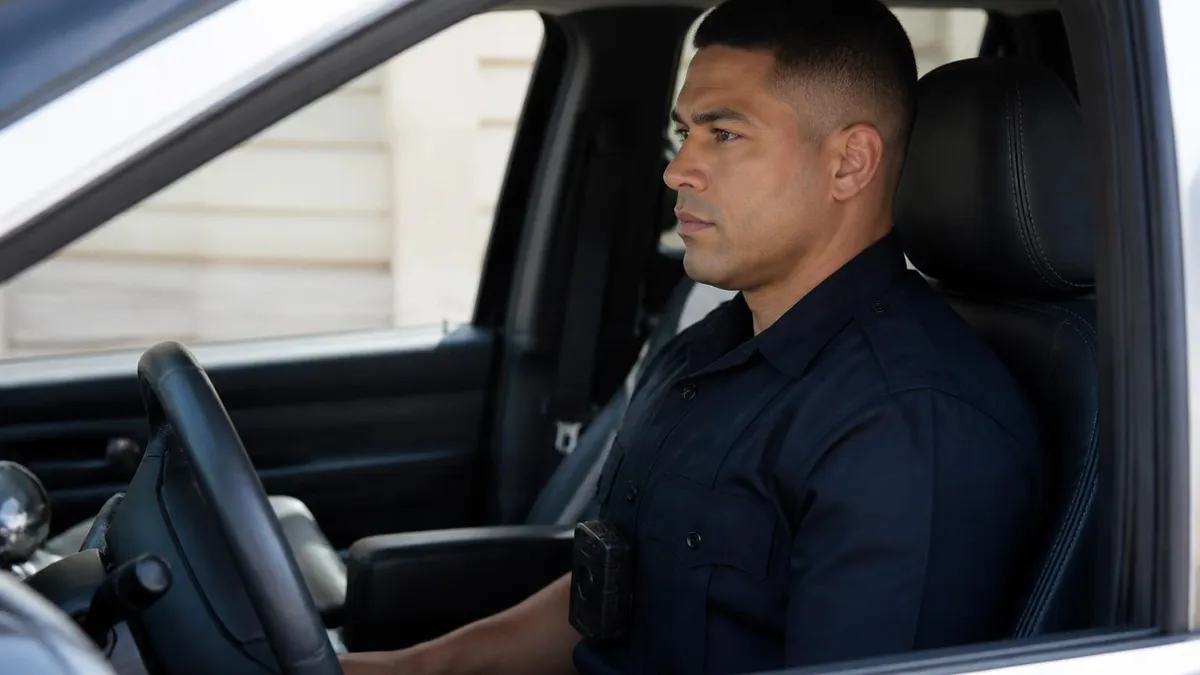
Los Angeles Police Department Rank Structure: Insignia & Promotion Path

LAPD Pension: Complete Guide to Benefits, Retirement Tiers, and What Officers Actually Earn

LAPD Metropolitan Detention Center: What You Need to Know About LA's Key Custody Facility

LAPD Gang and Narcotics Division: Structure, Operations, and What You Need to Know
LAPD Non Emergency Line: 1-877-275-5273 — When to Call, Online Reports, Division Numbers
About the Author

Law Enforcement Trainer & Civil Service Exam Specialist
John Jay College of Criminal JusticeMarcus B. Thompson earned his Master of Arts in Criminal Justice from John Jay College of Criminal Justice and served 12 years as a law enforcement officer before transitioning to full-time academy instruction. He is a POST-certified instructor who has prepared candidates for police entrance exams, firefighter assessments, and civil service examinations across dozens of agencies.
Join the Discussion
Connect with other students preparing for this exam. Share tips, ask questions, and get advice from people who have been there.
View discussion (9 replies)