
Kentucky State Police Driving Test: What to Expect and How to Prepare
Prepare for the Kentucky State Police Driving certification. Practice questions with answer explanations covering all exam domains.

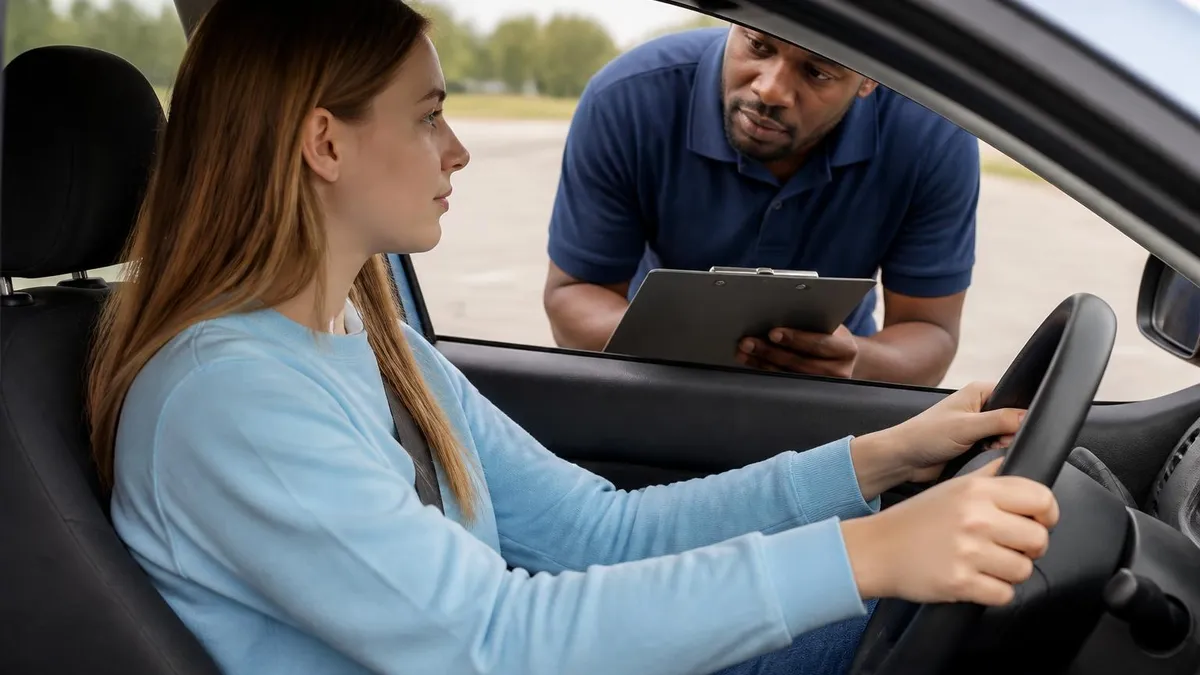
Getting your driver's license in Kentucky means passing two tests: the written knowledge test and the behind-the-wheel skills test. The road test is administered by Kentucky State Police (KSP) troopers — not DMV employees, not third-party examiners. That's different from many states, and it shapes what the experience is like.
KSP troopers are trained evaluators who follow a standardized scoring sheet. They're not there to fail you — they're there to verify you can operate a vehicle safely in real traffic conditions. Knowing what they're looking for gives you a real advantage going in.
This guide covers the Kentucky driving test from start to finish: eligibility, the format, what examiners score, common mistakes, and how to prepare effectively.
Who Administers the Kentucky Driving Test?
In Kentucky, road tests for standard (Class D) driver's licenses are administered by Kentucky State Police troopers at KSP Posts across the state. This is distinct from many other states where county clerks, DMV staff, or third-party vendors handle licensing.
You schedule your road test through your local KSP Post — not through the Transportation Cabinet or a DMV office. The posts that conduct road tests are listed on the KSP website and vary by region. Some areas have longer wait times than others, so scheduling early matters.
For commercial driver's licenses (CDL), testing is handled differently through the Kentucky Transportation Cabinet. This guide focuses on the standard Class D license test.
Kentucky Driving Test Eligibility
Before you can take the road test, you need to meet these requirements:
- Age: At least 16 years old (or 17 if applying under the graduated licensing program's standard timeline)
- Learner's permit: You must hold a valid Kentucky Instruction Permit for at least 180 days before taking the road test (under age 18)
- Supervised driving hours: Applicants under 18 must complete at least 60 hours of supervised driving, including 10 hours at night
- Passed the written knowledge test: You must have a valid instruction permit, which requires passing the written test at a circuit court clerk's office
- Vehicle: You must provide a vehicle for the road test — it must be properly registered, insured, and in safe operating condition
Applicants 18 and older don't have the 180-day permit holding period or supervised hours requirement, but still need a valid instruction permit before scheduling the road test.
What the Kentucky Road Test Covers
The Kentucky State Police driving test is a behind-the-wheel skills evaluation conducted on public roads near the KSP Post where you test. It typically runs 15–25 minutes. The examiner rides with you and uses a standardized scoring form to evaluate your driving.
The test covers these main areas:
Pre-Drive Vehicle Inspection
Before you leave the parking lot, the examiner may ask you to demonstrate knowledge of basic vehicle controls — windshield wipers, defrost, headlights, hazard lights, horn. This isn't always part of every test but knowing where everything is on your vehicle is good practice regardless.
Backing
You'll typically be asked to back up in a straight line for a set distance. The examiner checks that you look over your shoulder (not just mirrors), maintain a straight path, and control speed while reversing.
Parallel Parking
Kentucky's road test historically includes parallel parking as a standard component. You're typically given one or two attempts. The examiner evaluates whether you complete the maneuver without hitting cones (or simulated vehicles), whether you check mirrors and surroundings, and whether the final position is close to the curb and within a reasonable distance of the space boundaries.
Turning
You'll make multiple left and right turns throughout the test. The examiner scores your approach (proper lane position), signal use (signaling before turning, not during), speed reduction, turn execution (wide vs. proper), and lane selection after the turn.
Stopping
Stop signs and traffic signals are evaluated throughout the test. The examiner checks whether you come to a complete stop at the stop line (or before the crosswalk/intersection if no line), whether you inch forward to check clearance properly, and how you handle yielding at intersections.
Traffic Flow and Speed
You'll drive in regular traffic conditions. The examiner evaluates whether you maintain appropriate speed for conditions, keep up with traffic flow (driving too slowly is also marked), maintain safe following distance, and merge or change lanes safely where required.
Observation and Scanning
One of the biggest factors examiners note is how actively you scan the road. Checking mirrors regularly, scanning intersections before proceeding, checking for pedestrians — these are all observed and scored. Examiners want to see that you're not fixated on the road directly in front of you.
Important: The KSA exam covers multiple domains. Allocate more study time to unfamiliar topics while maintaining review of strong areas.
Scoring: How Examiners Grade Your Test
Kentucky uses a deduction-based scoring system. You start with a perfect score and points are deducted for errors. The examiner records errors on a standardized form throughout the test.
There are two types of failures:
Automatic Failures (Test Ends Immediately)
Certain errors result in an immediate end to the test, regardless of how well you've done otherwise:
- Any collision or near-collision requiring the examiner to intervene
- Running a red light or stop sign
- Refusing the examiner's instructions
- Dangerous action that creates a hazard for other road users
- Driving into oncoming traffic
Cumulative Errors
Lesser errors accumulate throughout the test. Exceeding the allowed number of deductions results in a failing score, even if you didn't make any single catastrophic mistake. This is where people who "mostly know how to drive" fail — a series of small errors adds up.
Common cumulative errors that knock people out:
- Not signaling before turns or lane changes
- Rolling stops (not coming to a complete, full stop)
- Checking mirrors infrequently
- Poor lane positioning on turns (swinging wide or cutting corners)
- Following too closely
- Drifting within the lane or crossing lane markers
The Most Common Reasons People Fail
If you talk to KSP troopers or driving instructors in Kentucky, the same issues come up repeatedly:
Rolling Stops
This is probably the single most common test failure cause. A rolling stop — where you slow significantly but don't actually stop — is an error every time. The vehicle must come to a complete stop. Tires must stop moving. Then check for traffic and proceed.
Poor Parallel Parking
Many people haven't parallel parked since they started practicing, and the test version is more formal than you expect. Hitting a cone, ending up more than 18 inches from the curb, or using too many pull-up/back-up attempts all cost points. Practice this specifically before your test, not as an afterthought.
Turn Signal Timing
Signaling while already turning doesn't count — signals must be activated before you begin the turn, giving traffic behind you advance warning. Three seconds before starting a turn is the standard guidance. This trips up people who treat signals as a formality rather than a communication tool.
Not Scanning Intersections
Approaching an intersection and looking only straight ahead is a common beginner pattern. Examiners watch your eyes and head movement. You should visibly check left, right, and ahead before proceeding through any intersection — even if you have the green light. Pedestrians, cyclists, and red-light runners exist everywhere.
Speed Issues
Going over the speed limit is obviously a problem, but going significantly under the speed limit is also penalized. If traffic is moving at 35 mph and you're doing 22 mph on a clear road, that's an error. Match traffic flow within the posted limit.
How to Prepare for the Kentucky Driving Test
Know the Route Conditions
Kentucky State Police Posts are spread across the state, and each one tests on different local roads. Before your test date, drive the area around the KSP Post you'll be testing at. Note the stop signs, traffic signals, any tricky intersections. You won't know the exact route, but familiarity with the area reduces surprises.
Practice Parallel Parking Until It's Automatic
Parallel parking is the skill that fails the most test takers who otherwise drive adequately. Set up cones or use trash cans to simulate the space. A standard parallel parking space is about one and a half car lengths — practice in that actual space size, not a generous one. Aim to complete the maneuver in two moves: back in, pull forward to straighten.
Develop Deliberate Mirror Habits
Examiners can tell if you're checking mirrors or just making head-movement theater. Develop a real habit: check center mirror every 5–8 seconds, check side mirrors before any lane change or turn, scan intersections actively. This should be habitual, not performed for the test.
Come to Complete Stops — Every Time
For the two weeks before your test, practice coming to complete stops every single time — not just "exam-type" stops. Make it your default. If it's your default during practice, it'll be your default on test day when you're nervous.
Review Kentucky Traffic Laws
The road test isn't just about vehicle control — it's about applying Kentucky traffic law correctly. Know right-of-way rules at four-way stops, what a flashing red light means vs. flashing yellow, when you must yield to pedestrians, and Kentucky's specific rules about school buses, emergency vehicles, and highway driving.
What to Bring to Your Kentucky Road Test
- Your valid Kentucky Instruction Permit
- A vehicle that is registered, insured, and in roadworthy condition
- A licensed adult (21+) who can drive the vehicle to and from the post if you fail (you won't be able to drive back on your permit alone without them present)
- Proof of vehicle insurance (to present if requested)
The vehicle you bring matters. An unfamiliar car — borrowed from a relative, for instance — is harder to parallel park and maneuver confidently. If at all possible, take the test in the same vehicle you've been practicing in.
After the Test: Pass or Fail
If You Pass
The KSP trooper will issue documentation that you can take to your county clerk's office to obtain your actual driver's license. You don't get your license at the KSP Post — you take the pass documentation to the circuit court clerk. Bring your permit, the pass form, required fees, and acceptable ID.
If You Fail
You'll receive a scoring sheet showing what errors were recorded. Review it carefully — it tells you exactly what to work on before rescheduling. Contact your local KSP Post to schedule a retake. There may be a waiting period before you can retest, and you'll need to schedule a new appointment (same-day retests aren't typically offered).
Most people who fail have specific, fixable issues — parallel parking, rolling stops, signal timing. Address those specifically in your practice before your next attempt, rather than just "driving more."
- ✓Valid Kentucky Instruction Permit
- ✓Registered and insured vehicle
- ✓Licensed adult present (required if under 18; practical for any age)
- ✓Vehicle inspection: headlights, signals, brake lights working
- ✓Mirrors adjusted before examiner gets in
- ✓Seatbelt reminder ready (buckle up before starting)
- ✓Know where windshield wipers, defrost, and hazard lights are
- ✓Left/right identification confirmed (sounds obvious, nerves make you doubt)
- ✓Arrived 10–15 minutes early to your appointment
Kentucky's Graduated Driver Licensing (GDL) System
If you're under 18, Kentucky's GDL system has three stages before you hold a full unrestricted license:
- Instruction Permit (minimum age 16): Requires passing the written knowledge test. Must be supervised at all times by a licensed driver 21+. Must hold for 180 days minimum.
- Intermediate License (after passing road test): No passengers under 20 except immediate family for the first 6 months; no driving between midnight and 6 AM except for work, school, or emergency.
- Full License (age 17 or older, after 6 months on intermediate without violations): Full privileges with no GDL restrictions.
The 60-hour supervised driving requirement (including 10 nighttime hours) must be logged and certified by a parent or guardian. Kentucky uses an Affidavit of Compliance form — the KSP trooper will ask for it at your road test appointment. Don't forget it.
Scheduling Your Road Test Appointment
Road test appointments at Kentucky State Police Posts fill up quickly, especially at Posts near larger cities like Louisville, Lexington, and Bowling Green. Schedule as soon as you're eligible — don't wait until a week before you want to test.
To find your nearest KSP Post and scheduling options, visit the Kentucky State Police website. Some posts allow online scheduling; others require a phone call. Hours and availability vary by location.
Bring everything you need to your appointment. Showing up without your permit, without proof of insurance, or without a vehicle will mean rescheduling — and losing your appointment time.
KSA: Pros and Cons
- +KSA exam preparation strengthens your knowledge across all domains
- +Passing the exam proves competency to employers and clients
- +Study materials and practice tests are widely available
- +Exam-based credentials are portable across states and employers
- +Clear exam objectives help focus your study plan effectively
- −Exam anxiety can affect performance — practice tests help reduce it
- −Registration fees are non-refundable if you miss your test date
- −Limited retake opportunities may apply with waiting periods
- −Exam content updates periodically — use current study materials
- −Testing center availability may require advance scheduling
About the Author

Attorney & Bar Exam Preparation Specialist
Yale Law SchoolJames R. Hargrove is a practicing attorney and legal educator with a Juris Doctor from Yale Law School and an LLM in Constitutional Law. With over a decade of experience coaching bar exam candidates across multiple jurisdictions, he specializes in MBE strategy, state-specific essay preparation, and multistate performance test techniques.