
Free Printable ITBS Practice Worksheets & Iowa Test Practice Tests 2026
Get free printable ITBS practice worksheets for grades 3–8. Prep smarter with real Iowa Test questions, study tips & full practice tests. 📝

If you are searching for free printable ITBS practice worksheets to help your child prepare for the iowa test of basic skills, you have come to the right place. The Iowa Test of Basic Skills (ITBS) is one of the most widely administered standardized assessments in the United States, measuring academic achievement in reading, mathematics, language arts, science, and social studies across grades K–8. Solid preparation using authentic practice materials can make a meaningful difference in a student's score and overall confidence on test day.
The ITBS is administered in hundreds of school districts nationwide, and many private and homeschool families also use it as a benchmark for academic progress. Unlike some assessments that focus only on memorized facts, the Iowa Test evaluates reasoning skills, problem-solving ability, and the capacity to apply knowledge in realistic contexts. This means that passive review of textbooks is rarely sufficient — students need active, timed practice with the exact question formats they will encounter on the real exam.
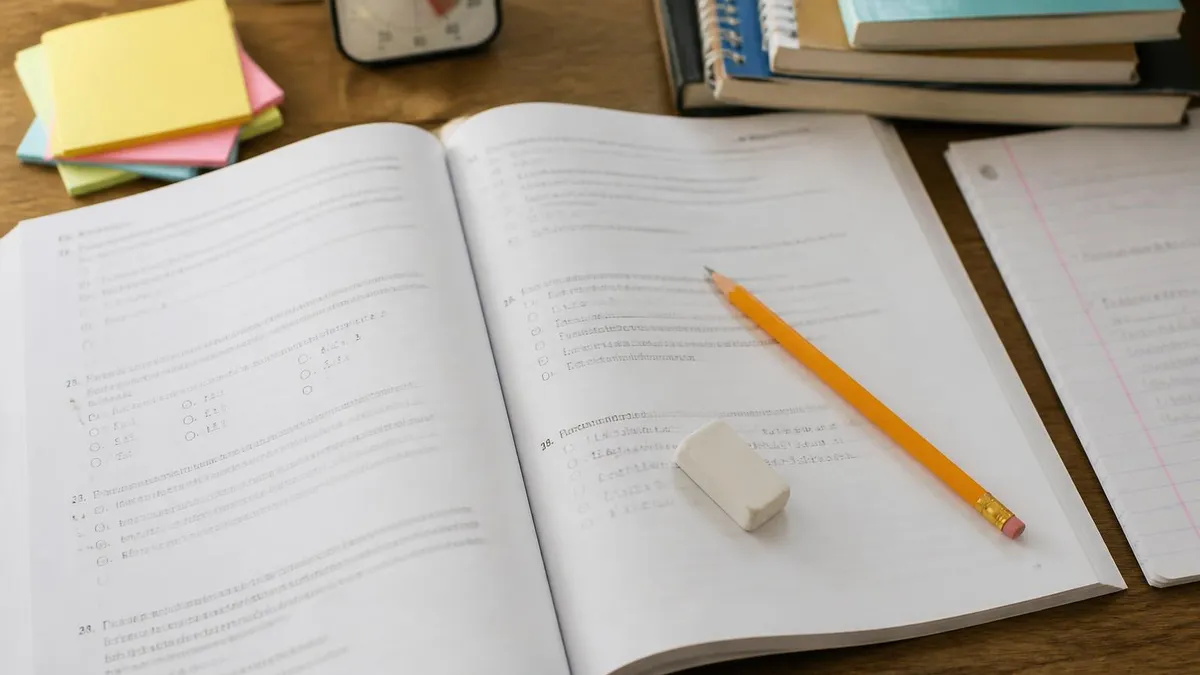
Free printable ITBS practice worksheets give students the opportunity to familiarize themselves with multiple-choice question stems, bubble-sheet answer formats, and the pacing required to complete each section within the allotted time. Parents and tutors who print these worksheets can simulate real testing conditions at home, which research consistently shows improves performance when compared to students who only study from notes or summaries. Even two or three timed practice sessions in the weeks before the test can measurably reduce test anxiety.
One common misconception is that the ITBS only tests content knowledge. In reality, a significant portion of the exam rewards strategic test-taking: eliminating obviously wrong answers, managing time across long reading passages, and checking arithmetic work before moving on. Free printable worksheets that mirror the real test's structure teach these strategies implicitly, because students naturally begin to develop habits of pacing and self-checking when they work against a clock on realistic problems.
This page provides grade-specific practice quizzes for third through eighth grade, organized so that students can target the exact level of difficulty they will face. Each quiz covers the core ITBS subject areas and reflects the question style used on the current edition of the exam. Whether your child is in a public school district that mandates the Iowa Test annually or you are a homeschool parent seeking a rigorous benchmark, these free resources will help you build a structured, effective study plan.
Beyond individual practice quizzes, this guide walks through the ITBS test format, section-by-section timing, score interpretation, and the most effective weekly study schedules used by top-scoring students. You will also find expert tips on how to use printable worksheets alongside digital practice, how to spot skill gaps early, and how to keep younger students motivated throughout the preparation period. Use the table of contents below to jump directly to the section most relevant to your needs.
Preparation for a standardized test like the ITBS is not about cramming — it is about systematic exposure, honest self-assessment, and deliberate practice. The resources on this page are designed to support exactly that approach, giving every student the best possible chance to demonstrate their true academic abilities when it matters most.
Iowa Test of Basic Skills — Key Numbers

ITBS Exam Format & Section Breakdown
| Section | Questions | Time | Weight | Notes |
|---|---|---|---|---|
| Reading Comprehension | 32 | 40 min | 22% | Passages with multiple-choice questions |
| Vocabulary | 20 | 15 min | 13% | Word meaning in context |
| Mathematics Concepts & Problem Solving | 40 | 50 min | 27% | Computation and applied reasoning |
| Language Arts | 28 | 30 min | 19% | Capitalization, punctuation, spelling, usage |
| Science & Social Studies | 30 | 35 min | 19% | Content knowledge and data interpretation |
| Total | 150 | 3–5 hours (split across sessions) | 100% |
The Iowa Test of Basic Skills covers a broad range of academic content, and understanding exactly what each section assesses is the first step toward building an effective study plan. The reading comprehension section, for example, does not simply ask students to recall facts from a passage.
Instead, it requires them to make inferences, identify the main idea, determine the author's purpose, and draw conclusions based on evidence — skills that develop gradually and benefit enormously from repeated exposure to timed reading exercises. Students who practice with realistic passages several weeks before the test consistently outperform those who wait until the last minute.
Mathematics on the itbs test is divided into two primary skill domains: computation and problem-solving. Computation questions assess fluency with arithmetic operations, fractions, decimals, and basic algebra at grade-appropriate levels. Problem-solving questions, by contrast, embed mathematical reasoning inside realistic word problems that require students to identify relevant information, select an appropriate operation, and check whether their answer makes logical sense. Many students lose points not because they lack the computational skill, but because they misread the problem — a habit that targeted practice can correct.
The vocabulary section rewards students who have developed wide reading habits over time, but it also responds well to deliberate preparation. The ITBS vocabulary questions present a word in a sentence context and ask students to choose the best synonym or definition from four options. Teaching students the strategy of using context clues — paying attention to surrounding words, sentence tone, and paragraph topic — often improves vocabulary scores even without extensive word-list memorization. Practice worksheets that include vocabulary-in-context exercises are especially valuable for this section.
Language arts questions on the Iowa Test cover the mechanics of written English: capitalization rules, end punctuation, commas, apostrophes, subject-verb agreement, pronoun reference, and sentence structure. These questions present short paragraphs with numbered sentences and ask students to identify errors or choose the best revision. Students who read the entire paragraph before answering individual questions tend to perform better because they can identify tone and context, which helps with usage and style questions that go beyond simple rule application.
The science and social studies sections of the ITBS are often overlooked during preparation, but they can significantly affect a student's composite score. These sections test content knowledge — life science, earth science, physical science, United States history, geography, and civics — as well as the ability to interpret charts, graphs, maps, and data tables. Since many students have not studied these subjects in depth at the grade levels being tested, even a few hours of focused review using diagrams and labeled practice questions can produce noticeable score gains in these areas.
An important feature of the itbs treatment approach on this site is that practice questions are calibrated to match the difficulty curve of the real exam. Early questions in each section are typically straightforward, designed to build confidence and momentum. Questions in the middle of each section increase in complexity, and the final questions often require multi-step reasoning. Students who practice with full-length, correctly ordered question sets develop a natural sense of this difficulty progression, which helps them allocate time wisely and avoid spending too long on hard questions early in the section.
Finally, it is worth noting that the ITBS is a norm-referenced test, meaning scores are reported relative to a national sample of students at the same grade level. A student's National Percentile Rank (NPR) indicates the percentage of students in the norming group who scored at or below that level. Understanding this scoring system helps parents set realistic preparation goals and interpret progress accurately. A student who moves from the 55th to the 72nd percentile after several weeks of practice has made substantial, measurable improvement — even if their raw score gain seems modest in absolute terms.
ITBS Study Strategies by Grade Level
For third and fourth graders, the most effective ITBS preparation focuses on building reading fluency and basic math fact automaticity. Students at this level benefit from 20-minute daily practice sessions rather than long cramming sessions, because shorter intervals match their natural attention spans and allow for better retention. Free printable ITBS practice worksheets for grades 3 and 4 should include short reading passages of 150–200 words followed by four to six multiple-choice questions covering main idea, vocabulary in context, and simple inference.
Math preparation at this level should prioritize addition, subtraction, multiplication, and division facts, as well as place value, basic fractions, and simple measurement. Third and fourth graders who can recall basic math facts automatically have more working memory available for the reasoning steps in word problems — which are among the most point-rich question types on the Iowa Test. Timed drill sheets combined with two or three word problem sets per week form the backbone of an effective 3rd and 4th grade ITBS study plan.
ITBS Practice Tests: Benefits and Limitations to Know
- +Familiarizes students with the exact multiple-choice format used on the real Iowa Test
- +Builds time-management skills by simulating the pacing pressure of timed sections
- +Identifies specific skill gaps early, allowing targeted remediation before test day
- +Reduces test anxiety through repeated exposure to realistic question types
- +Free printable worksheets make structured home practice accessible without cost
- +Grade-specific quizzes ensure practice difficulty matches the actual exam level
- −Practice tests cannot perfectly replicate the proctored environment of a school testing session
- −Some free worksheets online use outdated question formats not aligned to the current ITBS edition
- −Overuse of practice tests without review can reinforce misconceptions rather than correct them
- −Students who only practice familiar question types may struggle with novel passages on the real test
- −Printable worksheets require a parent or tutor to grade and explain errors effectively
- −Excessive test prep can increase anxiety in younger students if not balanced with encouragement
Pros and Cons at a Glance
| Pros | Cons |
|---|---|
| Familiarizes students with the exact multiple-choice format used on the real Iowa Test | Practice tests cannot perfectly replicate the proctored environment of a school testing session |
| Builds time-management skills by simulating the pacing pressure of timed sections | Some free worksheets online use outdated question formats not aligned to the current ITBS edition |
| Identifies specific skill gaps early, allowing targeted remediation before test day | Overuse of practice tests without review can reinforce misconceptions rather than correct them |
| Reduces test anxiety through repeated exposure to realistic question types | Students who only practice familiar question types may struggle with novel passages on the real test |
| Free printable worksheets make structured home practice accessible without cost | Printable worksheets require a parent or tutor to grade and explain errors effectively |
| Grade-specific quizzes ensure practice difficulty matches the actual exam level | Excessive test prep can increase anxiety in younger students if not balanced with encouragement |
ITBS Test Prep Checklist: 10 Steps Before Test Day
- ✓Confirm your child's exact grade-level ITBS test date with the school or testing coordinator at least four weeks in advance.
- ✓Download and print two full-length grade-appropriate ITBS practice worksheets to establish a baseline score.
- ✓Review every missed question together, focusing on understanding why the correct answer is right rather than just noting it.
- ✓Create a four-week study schedule with 20–30 minutes of daily practice, rotating across reading, math, and language sections.
- ✓Practice at least one full timed section per week under realistic conditions — quiet room, no phone, pencil only.
- ✓Target the two subject areas with the lowest baseline scores for extra weekly practice sessions.
- ✓Use vocabulary-in-context exercises three times per week to build word-meaning strategies without rote memorization.
- ✓Review basic math facts, fractions, and data-interpretation charts appropriate for your child's grade level.
- ✓Simulate test-day morning routine the week before the exam: early breakfast, no screen time, arrive at the practice space on time.
- ✓On the night before the real test, do a light 10-minute review only — prioritize sleep, nutrition, and a calm mindset.

Students Who Practice 3+ Times Score 12 Percentile Points Higher on Average
Research on standardized test preparation consistently shows that students who complete at least three full timed practice sessions before the Iowa Test improve their National Percentile Rank by an average of 10–15 points compared to unprepared peers. Even one hour of focused weekly practice, sustained over four weeks, produces measurable gains — making free printable ITBS practice worksheets one of the highest-return investments a family can make before test day.
Understanding how the ITBS scores your child's performance is essential for setting realistic expectations and measuring the true impact of your preparation efforts. The Iowa Test does not simply report a percentage of correct answers. Instead, raw scores are converted into several different reporting metrics, each designed to communicate a different aspect of academic achievement. The most commonly referenced metric is the National Percentile Rank (NPR), which compares your child's performance to a nationally representative sample of students at the same grade level who took the test during the norming period.
A National Percentile Rank of 70, for example, means your child scored as well as or better than 70 percent of students in the national norming sample. This does not mean your child answered 70 percent of questions correctly — the actual raw score associated with a given percentile varies significantly by grade, subject, and the specific form of the test being administered.
Many parents are surprised to learn that a student can achieve an NPR of 50 (the national median) while still missing a substantial portion of questions, because the norming process accounts for the overall difficulty of each test form.
The ITBS also reports Grade Equivalent (GE) scores, which express a student's performance in terms of the grade level and month at which the average student achieves that score. A third grader who receives a Grade Equivalent score of 5.2 in reading is performing at a level typical of a fifth grader in the second month of school.
While GE scores can be motivating and easy to explain to students, educators caution against interpreting them too literally — a third grader with a GE of 5.2 has not mastered fifth grade curriculum; they have simply answered third grade questions at an advanced level of accuracy and sophistication.
Standard Scores (SS) are another metric reported on the ITBS, and they are particularly useful for tracking growth across multiple years because they exist on a single, continuous scale from kindergarten through eighth grade. A student's standard score can be compared directly from one year to the next to assess whether academic growth is on track, ahead, or behind expectations. Schools that administer the Iowa Test annually use standard score trajectories to identify students who may need additional support or enrichment services.
Composite scores aggregate performance across multiple subject areas into a single summary metric. The Core Composite typically covers reading and mathematics, while the Complete Composite includes all tested subjects. When comparing a student's composite score to their scores on individual subtests, meaningful discrepancies — for example, strong math but weak reading — can guide decisions about tutoring focus, supplementary resources, and classroom accommodations. This kind of profile analysis is one of the most valuable uses of the detailed ITBS score report.
Stanine scores, which compress the percentile distribution into a nine-point scale, are used by some schools and gifted programs as admissions criteria. A stanine of 7, 8, or 9 typically indicates above-average to superior performance and may qualify a student for gifted education consideration. Many competitive private schools and magnet programs use ITBS stanines as part of their admissions process, making thorough preparation especially important for families applying to selective academic programs.
Finally, it is worth emphasizing that no single test score should be interpreted as a permanent or definitive measure of a student's academic ability. The ITBS is a snapshot — a measure of performance on a specific set of questions on a specific day, influenced by preparation, test-taking strategies, physical wellbeing, and emotional state. Families who use the score report as a diagnostic tool rather than a verdict will find the Iowa Test most useful: a starting point for identifying strengths and weaknesses, not a ceiling on what a student can achieve with continued effort and quality practice.
Most school districts administer the Iowa Test of Basic Skills during a set testing window, typically in the fall (September–October) or spring (March–April). Test dates vary by district and grade level, and makeups for absent students are often limited. Contact your school's assessment coordinator at least four weeks before the expected window to confirm exact dates, what materials are permitted, and whether any accommodations need to be arranged in advance.
Using free printable ITBS practice worksheets effectively requires more than simply printing them out and asking your child to complete them. The most productive practice sessions follow a structured cycle: attempt the worksheet under timed, test-like conditions; score it immediately; review every incorrect answer with focused explanation; and then revisit the same question type in a new context within the following week. This cycle, sometimes called deliberate practice, produces significantly better retention than unreviewed completion, where students finish a worksheet and move on without understanding their mistakes.
One of the most common mistakes families make during ITBS preparation is spending equal time on all subject areas regardless of individual performance. A much more efficient approach is to use the baseline quiz results from this page to identify the two or three subject areas where your child's score is weakest, then allocate roughly 60 percent of total study time to those areas. The remaining 40 percent can maintain proficiency in already-strong subjects. This asymmetric strategy maximizes composite score gains within a fixed preparation window, particularly for students with only four to six weeks before the test.
Reading comprehension practice benefits from a specific technique called active reading: before answering any questions, students should read the passage once through without stopping, then read the questions carefully, and then return to the passage to locate evidence for each answer. This three-pass approach takes slightly longer than simply reading and answering immediately, but it dramatically reduces careless errors caused by misremembering passage details. Students who practice active reading consistently during their preparation period internalize it as a habit, making it automatic by test day.
For mathematics, the single most impactful preparation strategy for most students is improving automaticity with grade-appropriate math facts and procedures. When basic computations require conscious effort, students deplete cognitive resources that should be available for the reasoning steps in word problems. A student who hesitates on 7 × 8 while solving a multi-step problem is at a significant disadvantage compared to a peer for whom that fact is instant. Short daily timed drills — five minutes per day on mixed multiplication and division facts — can close this gap within three to four weeks for most students.
Language arts preparation is often underestimated but highly responsive to targeted practice. The ITBS language sections test specific, learnable rules — comma usage, subject-verb agreement, capitalization of proper nouns, apostrophe placement in contractions and possessives — that can be reviewed systematically using a simple reference sheet. Students who spend one session per week reviewing one grammar rule category and then complete a short practice set applying that rule retain the material far more reliably than students who review all rules simultaneously in a single cramming session.
The itbs science and social studies sections reward students who have developed habits of reading informational text carefully. Many of the questions in these sections are graph, map, or table interpretation items that do not require prior content knowledge — they simply require careful reading of the visual and the question stem. Students who practice data interpretation skills using charts and maps from any source — textbooks, newspapers, or online practice sets — improve their scores on these sections without needing to review specific science or history content in detail.
Finally, the psychological dimension of test preparation deserves explicit attention, especially for younger students. Children who approach the Iowa Test with anxiety perform measurably worse than equally prepared students who approach it with calm confidence.
Parents and tutors can support positive test-taking mindset by framing practice as a learning game rather than a high-stakes evaluation, celebrating incremental improvement rather than focusing exclusively on absolute scores, and maintaining consistent routines — sleep, exercise, and nutrition — in the days leading up to the test. A student who is rested, fed, and emotionally settled is far more likely to perform at the top of their ability range.
Practical preparation for the ITBS comes down to a handful of high-use habits that any student can adopt, regardless of their current score level. The first and most impactful habit is consistent, spaced practice over several weeks rather than intensive cramming in the days immediately before the test.
Memory research demonstrates that information reviewed across multiple sessions with gaps in between is retained far more reliably than information reviewed in a single extended session — a phenomenon called the spacing effect. Students who practice ITBS worksheets for 25 minutes three times per week over a month will outperform students who spend three hours the weekend before the test, even if total time invested is similar.
The second high-use habit is targeted error analysis. After every practice session, students should spend at least as much time reviewing wrong answers as they spent completing the worksheet. For each incorrect item, the review process should answer three questions: What was the correct answer? Why is it correct? What reasoning error or knowledge gap led to the wrong choice?
Students who can articulate clear answers to all three questions are far less likely to make the same error on the real exam. A simple notebook where students record patterns in their mistakes — for example, consistently missing questions about commas with introductory clauses — allows them to prioritize the most productive review topics.
A third essential practice habit is managing test anxiety through controlled exposure. Students who have never completed a timed, full-length practice section before sitting the real Iowa Test often experience time pressure as a sudden, overwhelming stressor.
By contrast, students who have practiced at least four or five timed sections before test day develop a realistic sense of pace — they know approximately how many minutes per question they can afford, when to skip and return, and how it feels to be running short on time without panicking. This familiarity with the testing experience is one of the most undervalued benefits of consistent ITBS practice.
Parents supporting younger students should pay close attention to the vocabulary section, which often feels abstract and difficult to prepare for. The most effective approach is not to memorize long word lists but to practice the context-clue strategy: when encountering an unfamiliar word on a practice worksheet, students should cover the answer choices, read the surrounding sentence carefully, and attempt to define the word before looking at the options.
This process trains the analytical skill that the vocabulary section actually tests — using context to determine meaning — rather than rote recognition of specific words that may or may not appear on the exam.
For students targeting top-percentile scores, a strong performance on the mathematics reasoning section is often the deciding factor. These questions embed mathematical operations inside real-world scenarios — calculating sale prices, comparing rates, reading measurement scales — that require students to translate a verbal description into a mathematical operation before performing any calculation. Students who practice word problem translation explicitly, by underlining key quantities and writing out an equation before computing, make far fewer errors than students who attempt to hold all of this information in working memory simultaneously.
Time management across the entire test is a skill that deserves explicit practice. Many students make the mistake of spending too long on questions they find difficult early in a section, leaving insufficient time for questions later in the section that they could answer correctly.
Teaching students the strategy of placing a light mark next to any question they skip and returning to skipped items after completing the rest of the section ensures that they never sacrifice easy points because of poor pacing. Practice worksheets timed with a stopwatch are the most practical way to develop this habit before test day.
In summary, the most successful ITBS preparation combines authentic practice materials, deliberate error review, strategic time management, and emotional preparation for the testing experience. The free printable worksheets and grade-specific quizzes available on this page provide the foundation; the study habits described throughout this guide provide the structure. Students who bring both elements together in the weeks before their Iowa Test consistently achieve scores that accurately reflect — and often exceed — their academic potential. Begin your practice today using the grade-appropriate quizzes below, and revisit this guide weekly to track your progress and adjust your study plan as needed.
Sample ITBS - Iowa Test of Basic Skills Exam Practice Questions
Try these questions from our free ITBS - Iowa Test of Basic Skills Exam practice tests. The correct answer and an explanation follow each question.
In an ITBS reading passage, a student is asked to identify which detail BEST supports the main idea. The main idea is: 'Wolves play a vital role in their ecosystems.' Which detail BEST supports this?
- A. Wolves have thick fur to survive cold winters.
- B. When wolves were reintroduced to Yellowstone, deer populations became balanced and rivers recovered.
- C. Wolves can run up to 35 miles per hour.
- D. Wolves typically live in packs of 5 to 10 members.
Answer: B. When wolves were reintroduced to Yellowstone, deer populations became balanced and rivers recovered.
Only the Yellowstone example directly shows wolves affecting the broader ecosystem, which supports the main idea about their vital role.
A class of 30 students took a test. 60% scored above 80. How many students scored 80 or below?
- A. 12
- B. 15
- C. 18
- D. 20
Answer: A. 12
60% above 80 means 40% scored 80 or below: 40% × 30 = 12 students.
A graph's x-axis is labeled 'Hours Studied' and the y-axis is labeled 'Test Score.' A student studies 0 hours and scores 40. A student studies 5 hours and scores 90. What does the graph most likely show?
- A. Scores decrease as study time increases
- B. Scores stay the same regardless of study time
- C. Scores increase as study time increases
- D. There is no relationship between study time and scores
Answer: C. Scores increase as study time increases
The score rises from 40 to 90 as study hours increase from 0 to 5, showing a positive relationship.
An author writes a passage listing reasons why students should learn a second language. This passage is MOST likely an example of:
- A. Narrative fiction
- B. Informational reference material
- C. Persuasive writing
- D. Procedural instructions
Answer: C. Persuasive writing
A passage that lists reasons 'why' students should do something is designed to convince or persuade the reader.
Take the full ITBS - Iowa Test of Basic Skills Exam practice test
ITBS Questions and Answers




About the Author

Educational Psychologist & Academic Test Preparation Expert
Columbia University Teachers CollegeDr. Lisa Patel holds a Doctorate in Education from Columbia University Teachers College and has spent 17 years researching standardized test design and academic assessment. She has developed preparation programs for SAT, ACT, GRE, LSAT, UCAT, and numerous professional licensing exams, helping students of all backgrounds achieve their target scores.