
International Baccalaureate Schools in Japan: Complete Guide for Students and Families
Find international baccalaureate schools in Japan — locations, programs, costs & tips for families. 🎓 Compare IB schools across Tokyo, Osaka & beyond.

Families searching for international baccalaureate schools in Japan will find a rapidly growing network of authorized IB World Schools spanning Tokyo, Osaka, Kyoto, Nagoya, and dozens of smaller cities. Japan currently hosts more than 215 IB-authorized schools — one of the highest concentrations in Asia — offering every programme from the Primary Years Programme (PYP) for young learners through the prestigious Diploma Programme (DP) for students aged 16 to 19. Whether you are a relocating expat family or a Japanese national seeking a globally recognized credential, the country's IB ecosystem offers remarkable depth.
The International Baccalaureate Organization authorizes schools only after a rigorous candidacy and evaluation process that typically spans two to four years. Schools must demonstrate strong inquiry-based pedagogy, internationally minded faculty, robust assessment systems, and the infrastructure to support bilingual or multilingual instruction. In Japan, this standard is maintained across both international schools — which often teach primarily in English — and Japanese national schools that deliver the DP in Japanese, giving domestic students a pathway to IB qualification without switching language environments.
Tokyo alone hosts well over 50 IB-authorized schools, making it one of the densest IB markets in the world outside of the United States and the United Kingdom. Schools cluster in internationally oriented districts such as Minato, Shibuya, and Shinjuku, but suburban campuses in Yokohama, Kawasaki, and Chiba also serve families who prefer lower population densities while staying within commuting distance of the capital. The variety of campus sizes, tuition structures, and programme offerings gives families genuine choice rather than a one-size-fits-all experience.
Understanding how Japan's IB landscape differs from that of other countries is essential for smart school selection. Unlike many Western nations where IB schools are almost exclusively private, Japan includes a growing cohort of public (kokusai) schools that have adopted the DP to satisfy government goals for global human resource development. Ministry of Education initiatives launched in 2013 and subsequently expanded have funded public IB implementation, meaning that cost need not be a barrier for qualified Japanese students pursuing the Diploma Programme in their native language.
For expatriate families arriving in Japan on corporate or government assignments, timing school enrollment correctly is critical. IB World Schools in Tokyo and Osaka often have waiting lists — especially at the PYP and MYP levels — that extend twelve to eighteen months. Starting your research before you arrive, contacting admissions offices early, and understanding the school's intake calendar (most Japanese international schools align with either a September or April start) will dramatically improve your chances of securing a place in the programme best suited to your child's academic stage and language background.
Curriculum continuity is another major advantage that ib schools by location worldwide share: a child who completes two years of the MYP in a Tokyo school and then moves to a school in New York or London can transition into the next year of the same programme with minimal disruption, because IB frameworks are standardized globally. This portability is particularly valued by families in multinational corporations, diplomatic service, or military postings whose assignments rotate every two to four years, and it is one of the most frequently cited reasons parents choose IB over national curricula when living abroad.
This guide covers everything you need to know about pursuing the IB in Japan: which cities have the highest concentration of authorized schools, what to expect from tuition and fees, how the Japanese public IB track compares with private international options, and how to use IB practice resources — including free online tests — to help your student prepare for Diploma Programme subject exams. Read through each section carefully and use the table of contents below to jump to the topics most relevant to your family's situation.
IB Schools in Japan by the Numbers

IB School Landscape in Japan: Key Categories
Primarily serve expatriate families; teach the full IB continuum in English. Examples include the British School in Tokyo, Saint Maur International School, and the American School in Japan. Tuition ranges from ¥2.5 million to ¥4 million per year.
Government-funded secondary schools delivering the DP in Japanese or bilingually. Tuition is significantly subsidized, making IB accessible to Japanese nationals. Entrance is competitive, requiring examinations and interviews conducted in Japanese.
Japanese private schools authorized for IB that serve both domestic and international students. Many offer a dual-track system — Japanese national curriculum alongside IB — giving students flexibility in which credential they pursue at graduation.
Offer instruction in both English and Japanese, targeting families who want global portability without full immersion in one language. Popular in Tokyo and Osaka, these schools often feature the IB MYP bridging to a bilingual DP.
Tokyo is the undisputed hub of IB education in Japan, hosting over 50 authorized schools across all four programmes. The concentration of multinational headquarters, embassies, and international organizations in districts like Minato, Shibuya, and Roppongi has driven decades of investment in world-class international schooling. Families arriving in Tokyo will typically have access to multiple IB schools within a 30-minute commute, giving them the rare luxury of comparison shopping based on programme quality, language of instruction, extracurricular offerings, and campus culture rather than simply geographic proximity.
Osaka and the broader Kansai region represent Japan's second-largest IB cluster, with approximately 30 authorized schools serving families in Osaka, Kobe, Kyoto, and Nara. Kobe has a particularly long history of international schooling dating back to the Meiji era, when foreign merchants established educational institutions for their children. Today, schools like Marist Brothers International School and the Canadian Academy in Kobe offer full IB continuum programmes and have strong university placement records at both Japanese and overseas institutions. The slightly lower cost of living in Kansai compared to Tokyo can also translate into modestly lower tuition at some schools.
Nagoya, Aichi Prefecture's industrial capital, hosts a smaller but high-quality IB cluster anchored by schools serving Japan's automotive and manufacturing industries. Families relocating to work at Toyota, Denso, or other major manufacturers will find English-medium IB options within the city, though choices are more limited than in Tokyo or Osaka. The Nagoya International School is the most established IB provider in the region, offering PYP through DP, and the city's relatively compact size makes cross-city commuting to school practical for families living anywhere within the metropolitan area.
Hiroshima and Fukuoka, while smaller than Japan's three main metropolitan regions, have developed noteworthy IB presences partly driven by municipal government investment in international education. Hiroshima in particular has embraced IB as part of its global peace education mission, and several schools in the city incorporate themes of international understanding — a core IB value — into their programme delivery in distinctive and compelling ways. Fukuoka's growing tech sector and proximity to South Korea and mainland China have similarly spurred demand for internationally portable credentials among both expat and domestic Japanese families.
Rural and smaller-city Japan presents a more challenging landscape for IB seekers. While the IBO has made significant efforts to expand beyond urban centers, families relocating to regions like Tohoku, Shikoku, or rural Kyushu may find that the nearest IB-authorized school requires a significant commute or even boarding arrangements. In these situations, some families opt for IB online schools or distance-learning programmes that allow students to sit IB examinations while receiving instruction remotely, though these options require exceptional student self-discipline and strong parental support structures to be effective.
For families comparing options across multiple Japanese cities, it is worth noting that the IBO's online School Search tool allows you to filter by programme type, language of instruction, and specific city or prefecture.
Cross-referencing this with independent parent forums, expat community Facebook groups, and embassy school lists will give you a more granular picture of school quality, waiting list reality, and community culture than official directories alone can provide. Visiting schools in person before committing — even if this requires a dedicated trip to Japan prior to your relocation — is strongly recommended for any family making a multi-year enrollment decision.
Beyond the formal school choices, many IB students in Japan supplement their in-school learning with private tutoring, international exam prep courses, and online practice resources. The IB's internally assessed components — including the Theory of Knowledge essay, Extended Essay, and CAS portfolio — benefit enormously from guidance that goes beyond what classroom teachers can provide during regular instruction hours. Building a support network of tutors, study groups, and reliable online resources early in the DP journey is a strategy that consistently distinguishes high-scoring Japanese IB students from their peers.
IB Programmes Available at Schools in Japan
The Primary Years Programme serves students aged 3 to 12 and focuses on developing the whole child through transdisciplinary inquiry. In Japan, PYP schools are heavily concentrated in Tokyo and Osaka, where the expatriate population is large enough to sustain early-years international programmes. The PYP's inquiry framework emphasizes curiosity, collaboration, and communication — skills that translate well across cultural contexts and prepare children for the more structured demands of the Middle Years Programme.
Japanese families considering the PYP should be aware that most PYP schools in Japan operate in English as the primary language of instruction, though Japanese language development is typically offered as an additional language. A child who enters a PYP school at age 5 and completes the programme at age 12 will have spent seven formative years in an inquiry-based, internationally focused environment — a foundation that research consistently associates with stronger critical thinking and intercultural competence in later academic life.

Pros and Cons of Attending an IB School in Japan
- +Globally portable credential recognized by universities in over 100 countries, ideal for mobile families
- +Japan's IB students consistently outscore the global average, reflecting high teaching quality and academic culture
- +Public IB schools offer subsidized tuition, making the Diploma Programme accessible to Japanese nationals
- +Tokyo and Osaka provide dozens of school options across all four IB programmes and multiple languages of instruction
- +Bilingual IB schools in Japan uniquely support both English proficiency and Japanese language maintenance simultaneously
- +Strong alumni networks and university counseling services at established Tokyo IB schools facilitate competitive university admissions worldwide
- −Private international IB schools in Tokyo can charge ¥3–4 million per year, placing them out of reach for many families
- −Waiting lists at top PYP and MYP schools in Tokyo and Osaka can stretch 12–18 months, requiring early planning
- −Rural and small-city Japan has very limited IB school coverage, potentially requiring boarding or long commutes
- −Public IB schools are highly competitive to enter and primarily serve Japanese nationals comfortable studying in Japanese
- −Not all Japan IB schools offer the full PYP-MYP-DP continuum, sometimes forcing disruptive school transfers between programme stages
- −The DP's demanding workload — six subjects plus TOK, EE, and CAS — can create significant stress, particularly for students also managing Japanese cultural expectations around extracurricular participation
IB School Enrollment Checklist for Families Moving to Japan
- ✓Research IB-authorized schools in your target city using the IBO's official School Search tool at ibo.org before you relocate.
- ✓Confirm which programmes each school offers (PYP, MYP, DP, CP) and map a continuous 13-year pathway if your child is young.
- ✓Contact admissions offices at least 12 months in advance — Tokyo and Osaka schools have long waiting lists.
- ✓Request the school's most recent IB results data, including average DP score and university placement records.
- ✓Confirm the primary language of instruction and the school's approach to maintaining your child's home language.
- ✓Visit the campus in person during an open day or arranged tour before committing to enrollment.
- ✓Review the full fee schedule including registration, tuition, capital levy, uniform, and activity fees to avoid budget surprises.
- ✓Ask whether the school offers a bus service or confirm public transit routes, as Tokyo and Osaka campuses are rarely central.
- ✓Request a student shadowing day so your child can experience a full school day before enrollment decisions are finalized.
- ✓Register for free IB practice tests online so your DP-age student can assess their subject readiness early in the school search process.
Japan's Public IB Schools Are a Hidden Gem
Many international families overlook Japan's network of publicly funded IB Diploma Programme schools, which charge a fraction of private international school tuition while delivering strong academic results. If your child is fluent in Japanese and meets the competitive entrance requirements, a public kokusai IB school can deliver an internationally recognized credential at a cost comparable to a standard Japanese private high school — often under ¥600,000 per year versus ¥3 million or more at private international schools.
Understanding the costs associated with IB schooling in Japan is essential for family financial planning, particularly because fee structures vary enormously between school categories. At the high end of the market, elite Tokyo international schools such as the American School in Japan or the British School in Tokyo charge annual tuition fees between ¥3 million and ¥4.5 million, plus one-time capital levies of ¥500,000 to ¥1.5 million that are typically non-refundable. These fees reflect world-class facilities, highly credentialed expatriate faculty, and comprehensive support services, but they represent a substantial financial commitment that families should budget for over multiple years.
Mid-range private IB schools — including many Japanese private schools that have adopted IB alongside their national curriculum — typically charge between ¥1.5 million and ¥2.5 million per year. These schools often have strong academic results and serve a mixed population of Japanese nationals and long-term resident foreign families. Because they operate within the Japanese private school regulatory framework, some may be eligible for government high school tuition support subsidies, potentially reducing the net cost for Japanese taxpayer families by ¥100,000 to ¥400,000 per year depending on household income.
Public kokusai IB schools represent the most affordable pathway to the Diploma Programme in Japan, with annual fees that may be as low as ¥400,000 to ¥700,000 once government subsidies are applied. However, the entrance process for these schools is genuinely competitive: applicants typically sit written examinations in Japanese language, mathematics, and English, and must demonstrate the academic caliber to handle a rigorous bilingual or Japanese-medium DP curriculum. For Japanese families who qualify, this pathway offers exceptional value and a diploma that Japanese universities are increasingly familiar with evaluating.
Beyond tuition, families should budget for IB examination fees, which are charged by the IBO directly and currently amount to approximately USD 170 per subject examination for DP students, plus fees for TOK and the Extended Essay submission. A student sitting the full DP of six subjects can therefore expect examination fees of roughly USD 1,100 to USD 1,300 in their final year — an amount that is often overlooked in early financial planning. Schools sometimes absorb part of this cost, so it is worth confirming the school's examination fee policy during the admissions process.
Housing costs in Japan's major IB school cities are another major factor in total relocation budgets. Tokyo rents for family-sized apartments in internationally oriented neighborhoods such as Hiroo, Azabu, or Daikanyama routinely run ¥300,000 to ¥600,000 per month, representing a substantial portion of corporate housing allowances. Osaka and Kobe offer lower housing costs with comparable or only slightly reduced school quality, making Kansai an attractive alternative for budget-conscious families who have flexibility in their employer's location assignment.
Corporate families on assignment packages should negotiate carefully to ensure that their school fee allowance covers not just headline tuition but also the full suite of mandatory fees including registration, capital levy, activities fees, and examination costs. Many corporate HR departments base their Japan education allowances on published tuition figures from previous years, which may underestimate actual current costs. Requesting a comprehensive fee schedule directly from the school admissions office and providing this to your employer's relocation team early in the negotiation process is the most reliable way to ensure full coverage.
Scholarship and financial assistance opportunities at Japan's IB schools are limited but do exist. Several Tokyo schools offer need-based bursaries or merit scholarships that can reduce tuition by 10 to 30 percent for qualifying families. These are typically not advertised prominently and require proactive inquiry during the admissions process. Japanese government and prefectural scholarship programmes also exist for domestic students attending private IB schools, particularly at the senior secondary level, and your school's admissions or finance team should be your first point of contact for identifying which programmes your family might qualify for.
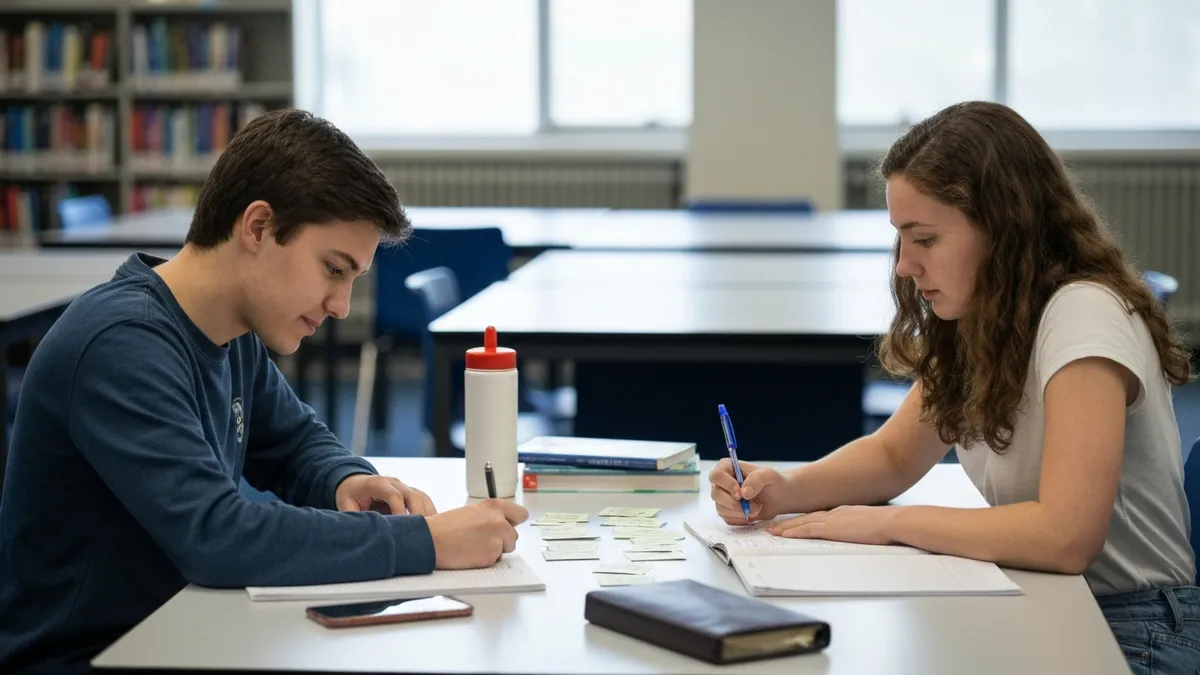
Top PYP and MYP schools in central Tokyo regularly have waiting lists that extend 12 to 18 months. Families who contact schools only after confirming a relocation date — typically 3 to 6 months before arrival — frequently find that no places are available for the current academic year. Begin your school research and register your interest as early as possible, ideally 12 to 24 months before your planned arrival date, even if your assignment is not yet confirmed.
Preparing for IB examinations in Japan requires a strategic approach that goes well beyond classroom attendance. DP students at Japanese IB schools typically face a dual challenge: meeting the high expectations of their IB teachers while also navigating Japan's intense culture of academic perfectionism and extracurricular commitment. The most successful students develop systematic study habits early in the two-year DP course, treating each subject's syllabus as a roadmap and building their practice and review schedules around known examination dates rather than waiting until the final semester to consolidate learning.
Past paper practice is the single most effective examination preparation strategy available to IB students, and Japan-based students have the same access to official IBO resources as students anywhere in the world. The IBO publishes past papers through its teacher support material platform, and students whose schools subscribe to this resource should make systematic past paper practice a weekly habit from the beginning of Year 2. For students seeking additional free practice materials, online platforms including PracticeTestGeeks offer subject-specific IB practice questions that closely mirror the format and difficulty level of actual DP examinations.
The Theory of Knowledge component deserves particular attention from Japan-based students because its philosophical and cross-cultural demands can be unfamiliar to students schooled primarily in more fact-oriented Japanese educational traditions. TOK essays and exhibitions require students to explore the nature of knowledge itself — examining how different ways of knowing (perception, reason, language, emotion) apply across areas of knowledge such as natural sciences, history, and ethics.
Many students find it helpful to start engaging with TOK concepts informally during Year 1 by connecting TOK themes to their experiences in subject classes, rather than treating TOK as a separate module to be addressed in isolation during Year 2.
The Extended Essay, a 4,000-word independent research paper, is another component that rewards early planning. Japan offers unique research opportunities that can produce genuinely distinctive EEs: students might investigate topics in Japanese history, traditional arts, environmental science in specific Japanese ecosystems, or sociolinguistic phenomena in Japanese-English bilingual communities. IB examiners appreciate EEs that demonstrate authentic engagement with a specific research question, and a topic rooted in the student's actual Japanese environment can signal that engagement more convincingly than generic topics tackled by thousands of students worldwide.
Japanese IB schools typically have strong university counseling departments that specialize in both Japanese domestic university applications and international applications to universities in the United States, United Kingdom, Australia, Canada, and Europe. Students attending Japanese IB schools should begin engaging with their university counselor no later than the beginning of Year 1 of the DP, since some overseas university applications require materials — including counselor recommendation letters and school profiles — that take significant time to prepare. The counselor's knowledge of how specific universities evaluate Japanese IB applicants is an invaluable resource that students who engage early benefit from disproportionately.
Beyond formal university applications, Japanese IB students should be aware of the specific recognition policies of Japanese national universities, which have historically required IB applicants to navigate a distinct admissions track. Japanese national universities began accepting the IB Diploma as a qualification for admission in 2014, and the number of participating institutions has grown substantially since then.
However, each university sets its own minimum DP score requirements — typically between 30 and 38 points depending on the institution and faculty — and some require supplementary examinations or interviews even for IB applicants. Your school's university counselor and the IBO Japan office are the most current sources for institution-specific requirements.
Finally, the Creativity, Activity, Service requirement of the DP is worth approaching with intentionality in the Japanese context. Japan offers extraordinary CAS opportunities: students can engage in traditional arts (ikebana, calligraphy, martial arts) for the creativity strand, outdoor leadership and sports activities for the activity strand, and community volunteer work — including organizations supporting elderly populations, disaster recovery efforts, or environmental conservation — for the service strand.
Schools in Japan often have established CAS partnerships with local organizations, and tapping into these school-facilitated partnerships is the easiest way to ensure that CAS activities are both meaningful and properly documented for IBO review.
Students who approach the IB Diploma Programme in Japan with a clear preparation strategy consistently outperform those who rely solely on classroom instruction. One of the most effective habits is building a weekly review cycle: after each class, spend 15 to 20 minutes writing a brief summary of the key concepts covered, identifying any gaps in understanding, and noting which past paper questions relate to that day's content. This low-effort habit creates a continuously updated study guide that becomes invaluable during the intense revision period in the final months before May examinations.
Subject-specific strategies matter enormously in the IB. For sciences like Biology and Chemistry — subjects for which free online practice resources are readily available — students should prioritize learning the precise command terms that IB examiners use, such as "outline," "explain," "compare," and "evaluate." Each term signals a specific type of response with a different level of depth required. Students who master these command terms and practice applying them in timed conditions will write more focused, mark-efficient answers than peers who write generically without attending to what the question is actually asking.
Mathematics in the IB DP comes in two courses — Analysis and Approaches (AA) and Applications and Interpretation (AI) — each offered at Standard Level and Higher Level. Students in Japan often have strong foundational numeracy from their prior Japanese schooling, but the IB's emphasis on mathematical exploration, modeling in unfamiliar contexts, and the internal assessment Mathematical Exploration can feel unfamiliar. Choosing a good exploration topic early — ideally something with personal relevance or connection to a real-world phenomenon the student has encountered in Japan — and committing to it with genuine intellectual curiosity produces the strongest IA scores.
Language and Literature courses in the IB require students to analyze texts across a wide range of forms, contexts, and purposes. Students in Japan typically choose English A: Language and Literature or English A: Literature as their Group 1 subject, with Japanese as either a Language B or an A-level subject depending on their proficiency. For students whose first language is Japanese studying English A, the close reading skills required for Paper 1 — analyzing unseen texts — benefit enormously from consistent exposure to literary and non-fiction English texts throughout the two years, not just during examination revision periods.
The IB's assessment model combines external examinations with internally assessed components, and understanding the relative weight of each component in your subjects is essential for prioritizing revision time. In a subject where the IA counts for 20 percent of the final grade and is already completed, 100 percent of your pre-exam revision effort should focus on the external examination components. Students who misallocate revision time by dwelling on completed IA work or investing heavily in components that carry little weight in the final grade calculation consistently underperform relative to their academic potential.
Peer study groups are particularly valuable in the Japanese IB context, where small cohort sizes at many schools mean that individual subject classes may have only 10 to 20 students. Organizing regular study sessions with classmates — particularly in subjects where discussion-based review (History, Economics, TOK) is effective — creates accountability, surfaces misunderstandings that solo study might miss, and replicates the kind of collaborative discourse that IB examiners reward in oral assessment components.
Many Tokyo IB schools have alumni networks that connect current students with graduates now at university, providing access to subject-specific study strategies and honest assessments of what worked and what did not.
Finally, maintaining physical and mental wellbeing during the DP is not optional — it is a prerequisite for sustained academic performance. Japan's culture of discipline and perseverance is an asset in DP preparation, but it can also tip into overwork and stress without appropriate boundaries.
Building regular exercise, adequate sleep, and genuine leisure time into a DP schedule is not a distraction from academic goals; research consistently shows that students who maintain these habits throughout high-stakes academic programmes outperform those who sacrifice them during revision periods. Set a sustainable daily study schedule, protect your sleep, and use your CAS activity strand as a genuine physical outlet rather than treating it as a compliance checkbox.
IB Questions and Answers

International Baccalaureate Schools Barcelona: Complete Guide for Students and Families

IB Curriculum: Complete Guide to the International Baccalaureate Program

IB Practice Test PDF (Free Printable 2026)
International Baccalaureate Schools: IB Programs Complete Guide
IB Exam (International Baccalaureate)
About the Author

Educational Psychologist & Academic Test Preparation Expert
Columbia University Teachers CollegeDr. Lisa Patel holds a Doctorate in Education from Columbia University Teachers College and has spent 17 years researching standardized test design and academic assessment. She has developed preparation programs for SAT, ACT, GRE, LSAT, UCAT, and numerous professional licensing exams, helping students of all backgrounds achieve their target scores.