
FTCE General Knowledge Test: Complete Study Guide and Certification Prep
🧠 Master the FTCE General Knowledge Test with our complete study guide. Exam format, scoring, study schedules, and free practice questions.

The ftce general knowledge test is a required certification exam for aspiring teachers in Florida, designed to verify that candidates possess the foundational academic skills expected of a licensed educator. Administered by the Florida Department of Education and developed by Pearson, the exam covers four distinct subject areas: English Language Skills, Reading, Mathematics, and Essay. Every candidate seeking an initial Florida teaching certificate must pass this exam before entering the classroom, making thorough preparation not optional but essential for career success.
Understanding what the exam demands before you sit for it can mean the difference between passing on your first attempt and repeating a costly, time-consuming retake cycle. Many test-takers underestimate the breadth of content covered, particularly in the Mathematics and Reading subtests, which draw on skills ranging from algebraic reasoning to inference and critical analysis. Beginning your study plan well in advance — ideally 10 to 12 weeks before your scheduled test date — gives you the runway needed to address weak areas without cramming or panic.
Florida uses the FTCE GKT as a gatekeeping measure to ensure that every teacher who enters the state's public school system can model proficient literacy, numeracy, and communication skills for students. The standards are deliberately broad rather than subject-specific, because general knowledge competence underpins effective teaching in any discipline. A chemistry teacher who cannot write a coherent analytical essay, or a reading coach who struggles with basic algebraic reasoning, will inevitably face limitations in the classroom regardless of their content expertise.
Candidates who approach the FTCE GKT strategically — mapping their study time to the exam's weighted sections, completing timed practice tests under realistic conditions, and reviewing explanations for missed questions rather than simply tallying scores — consistently outperform those who rely on passive review. Research into test preparation consistently shows that retrieval practice, where you actively pull information from memory rather than re-reading notes, produces stronger long-term retention and better performance under high-stakes conditions like a licensure exam.
This comprehensive guide walks you through everything you need to know about the FTCE General Knowledge Test: the official exam format and section weights, scoring thresholds, recommended study timelines, the most effective preparation strategies, and answers to the questions candidates ask most frequently. Whether you are a first-time test-taker or returning after a previous attempt, the guidance here is designed to help you walk into the testing center with confidence and walk out with a passing score.
One important note before diving in: the FTCE GKT is not a measure of teaching ability, classroom management skill, or subject-matter expertise. It is a baseline academic competency screen. That framing matters because it shapes how you should study. You are not trying to become an expert mathematician or literary critic — you are demonstrating that you can read critically, write clearly, apply fundamental math concepts, and use standard English conventions at a level appropriate for a professional educator. Keep that target in mind as you build your preparation plan.
Throughout this guide you will find practice quiz links, study schedule recommendations, format breakdowns, and expert tips drawn from the official FTCE candidate information bulletin and the experiences of thousands of Florida teacher candidates. Use each section actively: take notes, flag weak areas, and revisit the practice questions more than once. The candidates who pass reliably are the ones who treat preparation as a process, not an event.
FTCE General Knowledge Test by the Numbers

FTCE GKT Exam Format and Structure
| Section | Questions | Time | Weight | Notes |
|---|---|---|---|---|
| English Language Skills | 40 | 40 min | 20% | Grammar, usage, sentence structure |
| Reading | 40 | 55 min | 20% | Comprehension, inference, main idea |
| Mathematics | 45 | 100 min | 25% | Calculator allowed; algebra, data, geometry |
| Essay | 1 | 50 min | 35% | Scored 1–6 by two raters; must score ≥8 combined |
| Total | 200 | 4 hours 30 minutes | 100% |
The English Language Skills subtest evaluates your command of standard written English, with particular emphasis on grammar, sentence structure, punctuation, and word choice. Questions present sentences or short passages with identified errors — or ask you to select the most effective revision — so your ability to recognize correct usage in context is more important than memorizing isolated rules. Common topics include subject-verb agreement, pronoun-antecedent agreement, parallel construction, comma usage, and commonly confused words like affect versus effect or their versus there.
The Reading subtest presents a series of passages drawn from a variety of genres and disciplines — literary excerpts, informational texts, social science writing, and natural science summaries — followed by multiple-choice questions that test comprehension, inference, vocabulary in context, author's purpose, and text structure. Strong performance on this subtest requires you to read actively: annotating main ideas, identifying supporting details, and distinguishing stated facts from implied conclusions. Time management is critical here because the passages themselves are substantial and the 55-minute window moves quickly.
Mathematics is the subtest that generates the most anxiety among FTCE GKT candidates, and for good reason: it spans a wider range of content than many test-takers anticipate. The 45-question section covers number sense and operations, measurement and geometry, algebraic thinking, data analysis and probability, and problem-solving in real-world contexts. You are permitted to use an on-screen calculator for most items, but the exam also includes calculator-inactive questions that require mental math and number sense, so balanced preparation across both calculator and non-calculator skills is essential.
The Essay subtest presents a single writing prompt and asks you to compose a well-organized, coherent analytical or argumentative essay within 50 minutes. Two trained raters score your essay independently on a scale of 1 to 6, and the scores are combined for a total of 2 to 12 points. To pass, you must earn a combined score of 8 or higher — roughly equivalent to each rater assigning a score of 4, meaning a competent but not necessarily exceptional essay. Scorers evaluate central focus, organization, support and elaboration, conventions, and overall effectiveness.
One structural feature of the FTCE GKT that surprises many candidates is that the four subtests can be taken separately across multiple sittings. If you feel strong in English Language Skills but need more preparation time for Mathematics, you can register for and pass one subtest at a time, banking your passing scores as you work through the remaining sections. This modular approach can reduce per-sitting stress and allow you to allocate study hours more precisely to the areas where you need the most growth.
Score reports for the multiple-choice subtests are available immediately after you finish testing — you will see on-screen pass/fail results before leaving the testing center. Essay scores take approximately three to four weeks to be processed and released because human raters must evaluate each response. Passing scores on individual subtests remain valid indefinitely in Florida, so a subtest score you earned five years ago is still reportable to your certification application as long as you passed it on a FTCE GKT administration.
Preparation resources published by Pearson, the exam's developer, include an official study guide and a free online practice test with 30 multiple-choice items per subtest. While these official resources are a good starting point, most candidates benefit significantly from supplementing them with additional practice tests, targeted skill-building exercises in weak content areas, and timed writing practice for the Essay subtest. The more representative practice conditions you create — timed, distraction-free, with full test simulations — the better calibrated you will be on exam day.
FTCE GKT Study Strategies by Subtest
To strengthen your English Language Skills performance, work through grammar workbooks that present rules in the context of full sentences rather than isolated fill-in-the-blank exercises. Focus especially on comma usage, pronoun case, modifier placement, and parallel structure — these four categories account for a large share of test questions. Reading widely in diverse nonfiction genres also builds the implicit grammar intuition that distinguishes strong ELS performers from borderline ones.
For the Reading subtest, practice annotating passages as you read: underline the main claim of each paragraph, circle transition words, and bracket any sentence that introduces a new idea. After reading, answer questions without looking back first, then verify. This two-pass approach trains you to retain key information during your initial read, which is exactly the skill the subtest rewards. Aim to complete at least 15 full passage sets under timed conditions before your exam date.
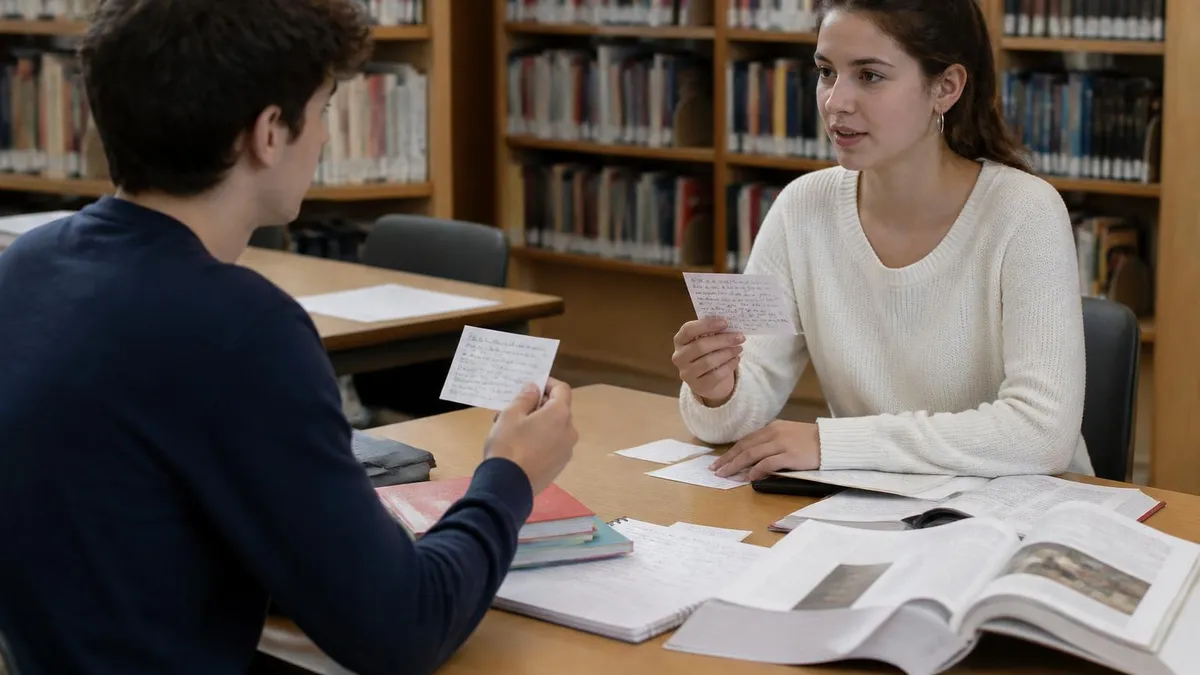
Is the FTCE GKT Worth Taking Early in Your Program?
- +Passing early removes a major certification barrier before student teaching placements begin
- +Banking subtest scores reduces stress during the final semester of a teacher preparation program
- +Early attempts give you time for multiple retakes if needed without delaying graduation
- +Scores are valid indefinitely in Florida, so there is no rush to retake a passed subtest
- +Identifying weak content areas early allows you to seek targeted academic support during coursework
- +Some Florida school districts require passing scores before hiring provisional teachers
- −Registration fees of $150 per sitting add up quickly if you need multiple attempts
- −Academic skills tested on the GKT may feel distant from coursework in your teaching specialty
- −Essay subtest score turnaround takes three to four weeks, delaying your overall pass status
- −Limited official practice materials from Pearson may not fully represent exam difficulty
- −Test anxiety can disproportionately affect performance if you are not used to timed, high-stakes exams
- −Scheduling availability at Pearson VUE testing centers varies significantly by location and season
FTCE GKT Test-Day Preparation Checklist
- ✓Register at least 30 days in advance at the Pearson VUE FTCE portal to secure your preferred date and testing center.
- ✓Bring two valid, government-issued photo IDs to the testing center — a driver's license plus a passport or state ID works well.
- ✓Arrive at least 30 minutes before your scheduled appointment to complete check-in and biometric screening.
- ✓Avoid scheduling back-to-back subtests on the same day unless you have practiced full four-hour sittings during preparation.
- ✓Complete a full timed practice test within the 72 hours before your exam to activate recent memory without exhausting yourself.
- ✓Prepare a high-protein, moderate-carbohydrate meal for the morning of the exam — avoid heavy meals that cause mid-exam sluggishness.
- ✓Confirm the testing center's location and parking situation the day before so there are no logistical surprises on exam morning.
- ✓Review your weakest content domain one final time the evening before, then stop studying by 9 p.m. to allow full rest.
- ✓Bring an approved photo ID that exactly matches the name on your registration — any discrepancy can bar you from testing.
- ✓Log into your Pearson VUE account the week before to verify your appointment details, testing location, and subtest selections.

The Essay Subtest Carries the Highest Weight
At 35% of your overall GKT score, the Essay subtest has a larger impact on your result than any individual multiple-choice section. Candidates who invest disproportionate preparation time in Mathematics or English Language Skills while neglecting weekly timed essay practice often find that a weak Essay score is what stands between them and a passing result. Treat the Essay as a first-priority subtest, not an afterthought.
Understanding how the FTCE GKT is scored helps you set realistic targets and allocate study time proportionally to each subtest's impact on your overall result. The multiple-choice subtests — English Language Skills, Reading, and Mathematics — are scored on a scale of 100 to 300, with a minimum passing score of 200 required on each.
The Essay subtest is scored on a combined scale of 2 to 12, and you must earn a combined score of 8 or higher to pass, which translates to each of the two independent raters awarding you at least a 4 on the 1-to-6 rubric scale.
A scaled score of 200 on a multiple-choice subtest does not mean you must answer exactly two-thirds of questions correctly. Scaled scoring on the FTCE accounts for slight variations in difficulty across test administrations, so the raw score required to earn a 200 may vary by a few points from one administration to another. This means that preparing to answer approximately 70 to 75 percent of questions correctly gives you a solid buffer above the passing threshold while accounting for normal test-day variation in difficulty or performance.
The Essay subtest rubric evaluates five dimensions of writing quality: focus and organization, support and elaboration, voice and style, conventions (grammar, spelling, punctuation), and overall effectiveness. Each dimension contributes to the overall 1-to-6 holistic score each rater assigns. Candidates who produce essays that are well-organized and develop a clear central argument with specific supporting evidence consistently score in the 4-to-5 range, which is sufficient to pass. A score of 6 requires exceptional command of language and fully developed, nuanced argumentation — admirable but not required.
Florida's FTCE score reporting timeline means that candidates who complete all four subtests in a single sitting will see immediate pass/fail results for the three multiple-choice sections but must wait three to four weeks for the Essay result. During this window, maintain contact with your teacher preparation program advisor so that a delayed Essay result does not disrupt your certification application timeline. Some programs allow student teaching placements to begin with three of four subtests passed, provided the Essay result arrives before the final certification application deadline.
If you do not pass a subtest on your first attempt, Florida allows an unlimited number of retakes, but you must wait at least 31 days between attempts on the same subtest. Each retake requires a new registration and the full $150 fee. The 31-day waiting period is mandatory and cannot be waived even if you feel ready to retest immediately. Use this window productively: request your score report, identify which content domains your answers fell short in based on the diagnostic information provided, and build a targeted remediation plan before scheduling your next attempt.
Score reports for the FTCE GKT include a diagnostic breakdown by content domain in addition to your overall pass/fail result. On the Mathematics subtest, for example, you will see separate performance indicators for number sense and operations, measurement and geometry, algebraic thinking, and data analysis. These domain-level indicators are not precise enough to tell you exactly how many questions you answered correctly in each category, but they do tell you whether your performance was strong, adequate, or weak relative to the passing standard — which is sufficient information to prioritize your remediation efforts effectively.
Candidates who pass the FTCE GKT along with the FTCE Professional Education Test and the appropriate subject-area exam become eligible to apply for an initial Florida Professional Educator Certificate. The certificate is valid for five years and requires a set of professional development and inservice hours for renewal. The GKT is required only for initial certification — you will not need to retake it at renewal, so passing it once is all that is required to satisfy this particular licensing requirement for the duration of your Florida teaching career.
Florida mandates a minimum 31-day waiting period between FTCE GKT subtest attempts — this cannot be waived or shortened under any circumstances. Additionally, registration deadlines close approximately 30 days before each test date, so candidates who fail and immediately try to register for the next available administration may find it already fully booked. Build retake lead time into your study plan from the start to avoid unexpected delays in your certification timeline.
Retake strategy deserves as much planning as initial preparation. The most common reason candidates fail a second or third attempt on the FTCE GKT is that they repeat the same study approach that did not work the first time, spending more hours on the same materials rather than changing the method. Effective retake preparation begins with a frank diagnostic review of your score report, identifying the specific content domains where your performance was weakest and building a structured plan to address those gaps with new resources and methods.
For candidates who struggled with the Mathematics subtest specifically, a common pitfall is over-relying on formula memorization without developing conceptual understanding. When a word problem is presented in an unfamiliar context — say, calculating the area of a composite shape as part of a home renovation scenario rather than a straightforward geometry diagram — candidates who memorized formulas without understanding the underlying concepts often freeze. Rebuilding from conceptual understanding, using tools like Khan Academy's visual algebra and geometry units, produces more durable mathematical fluency than formula drilling alone.
Reading subtest retakers often benefit most from practicing with more complex, discipline-specific texts rather than generic reading comprehension passages. Academic journal abstracts, policy briefs, and literary criticism excerpts are useful supplementary materials because they require the same inference and text structure skills tested on the GKT Reading subtest but with the added challenge of unfamiliar vocabulary and dense argumentation. If you can accurately identify the main claim and supporting structure of a challenging academic text, you will find the GKT Reading passages comparatively straightforward.
Essay retakers should focus on the specific rubric dimension where their first essay was weakest. If score feedback indicates weak support and elaboration, practice building body paragraphs using the claim-evidence-analysis structure: state your point, provide a concrete example or piece of reasoning, and then explain explicitly how that example supports your overall argument. Many underperforming GKT essays are not disorganized or ungrammatical — they simply assert claims without developing them with the specific detail and analysis that distinguishes a competent essay from a passing one on the rubric.
Candidates who are retaking after a near-miss — scoring in the 195-to-199 range on a multiple-choice subtest — often need less remediation and more test-taking strategy refinement. Common strategies for near-miss retakers include practicing process of elimination more aggressively on uncertain questions, managing time more deliberately to avoid rushing on the final 10 questions of each section, and building confidence through repeated timed practice so that test anxiety does not suppress performance below the candidate's actual knowledge level on the day of the exam.
Florida does not impose a lifetime limit on the number of FTCE GKT attempts, but persistent failure across multiple attempts is a signal worth taking seriously. If you have attempted a subtest three or more times without passing, consider seeking individualized academic support from a tutoring service, a university writing center, or a subject-matter specialist rather than continuing with self-directed preparation alone. The underlying academic skills tested on the GKT are learnable at any stage of life, but some candidates have significant skill gaps that require more intensive intervention than a commercial study guide can provide.
Finally, it is worth remembering that passing the FTCE GKT is a one-time milestone, not a recurring burden. Every hour invested in preparation and every dollar spent on registration fees is an investment in a Florida teaching career that, according to the Bureau of Labor Statistics, employs over 180,000 teachers statewide and offers a median annual salary of approximately $56,000, with experienced educators in some districts earning considerably more. Viewed in that context, the effort required to pass the GKT is modest relative to the professional opportunity it unlocks. Stay consistent, study actively, and trust the process.
Practical test preparation tips can transform an average study session into a highly productive one, and the most effective candidates are those who approach preparation with the same intentionality they will eventually bring to their classrooms. One of the most powerful techniques is interleaved practice — mixing content domains within a single study session rather than dedicating full sessions to a single subject. Research consistently shows that interleaving slightly slows initial learning but dramatically improves long-term retention and the ability to apply knowledge flexibly in unfamiliar contexts, which is exactly what a licensure exam demands.
Spaced repetition is equally important. Rather than studying a grammar rule once thoroughly and then never revisiting it, distribute your review across multiple sessions separated by days or weeks. Each time you successfully recall a rule or solve a problem type after a gap, the memory trace becomes stronger and more durable. Free tools like Anki allow you to create digital flashcard decks for grammar rules, math formulas, and reading strategy reminders that deliver spaced repetition automatically, presenting items you struggle with more frequently and items you know well less often.
Time yourself on every practice test you take, even in early preparation when your goal is learning rather than simulation. Knowing how long you spend per question on each subtest type helps you identify not just content weaknesses but also pacing weaknesses — a candidate who knows the material but spends four minutes on every hard math problem will still run out of time before the final questions. For the Mathematics subtest, aim for an average of two minutes per question, which gives you a 10-minute buffer for review within the 100-minute window.
The Essay subtest rewards a specific type of preparation that many candidates skip: reading and evaluating scored sample essays before writing your own. The Florida DOE publishes scored sample responses with rater commentary on the official FTCE website. Reading a score-6 essay alongside a score-3 essay on the same prompt and identifying specifically what makes one superior to the other is an invaluable calibration exercise. It sharpens your internalized sense of what the rubric rewards, which you can then apply consciously when drafting and revising your own timed practice essays.
Building a study group with two or three peers preparing for the same exam offers benefits beyond accountability. Explaining a concept you think you understand to someone else is one of the most reliable ways to discover gaps in your own understanding — if you cannot explain it clearly, you do not fully understand it. Study group members can also share the essay feedback role, scoring each other's practice essays against the rubric and providing the kind of specific, constructive commentary that self-evaluation rarely produces with equal objectivity.
In the final week before your exam, shift your preparation mode from acquisition to maintenance and confidence-building. Avoid introducing new content or attempting your first essay on a difficult prompt type.
Instead, review your notes on content areas where you feel confident, complete one final timed practice session at moderate difficulty, and ensure that all logistical details — registration confirmation, ID readiness, testing center route, and rest schedule — are fully resolved. The week before the exam is not the time to cram; it is the time to consolidate, relax, and arrive on test day in the optimal mental and physical state.
Candidates who follow a structured, evidence-based preparation plan — beginning 10 to 12 weeks before their exam date, studying actively using retrieval and spaced repetition, practicing under timed conditions, and reviewing explanations for every missed question — consistently achieve passing scores on the FTCE GKT. The exam is challenging but absolutely passable for any motivated candidate who invests in genuine preparation. Trust the process, lean on the practice resources available to you, and approach test day knowing that your preparation has given you every reasonable advantage for success.
GKT Questions and Answers

Florida General Knowledge Test: Complete Study Guide and Certification Prep

General Knowledge: Complete Study Guide and Practice

General Knowledge Trivia: Questions, Topics, and How to Practice

General Knowledge Test: Complete Guide to Preparation, Format, and Scoring

General Knowledge Quiz: How to Practice and Sharpen Your Recall
About the Author

Educational Psychologist & Academic Test Preparation Expert
Columbia University Teachers CollegeDr. Lisa Patel holds a Doctorate in Education from Columbia University Teachers College and has spent 17 years researching standardized test design and academic assessment. She has developed preparation programs for SAT, ACT, GRE, LSAT, UCAT, and numerous professional licensing exams, helping students of all backgrounds achieve their target scores.