
Free Prometric CNA Questions and Answers: Complete Test Center Guide
Free prometric cna questions and answers — Prometric testing center scheduling, CNA exam prep, login help, and what to expect on test day. 📗
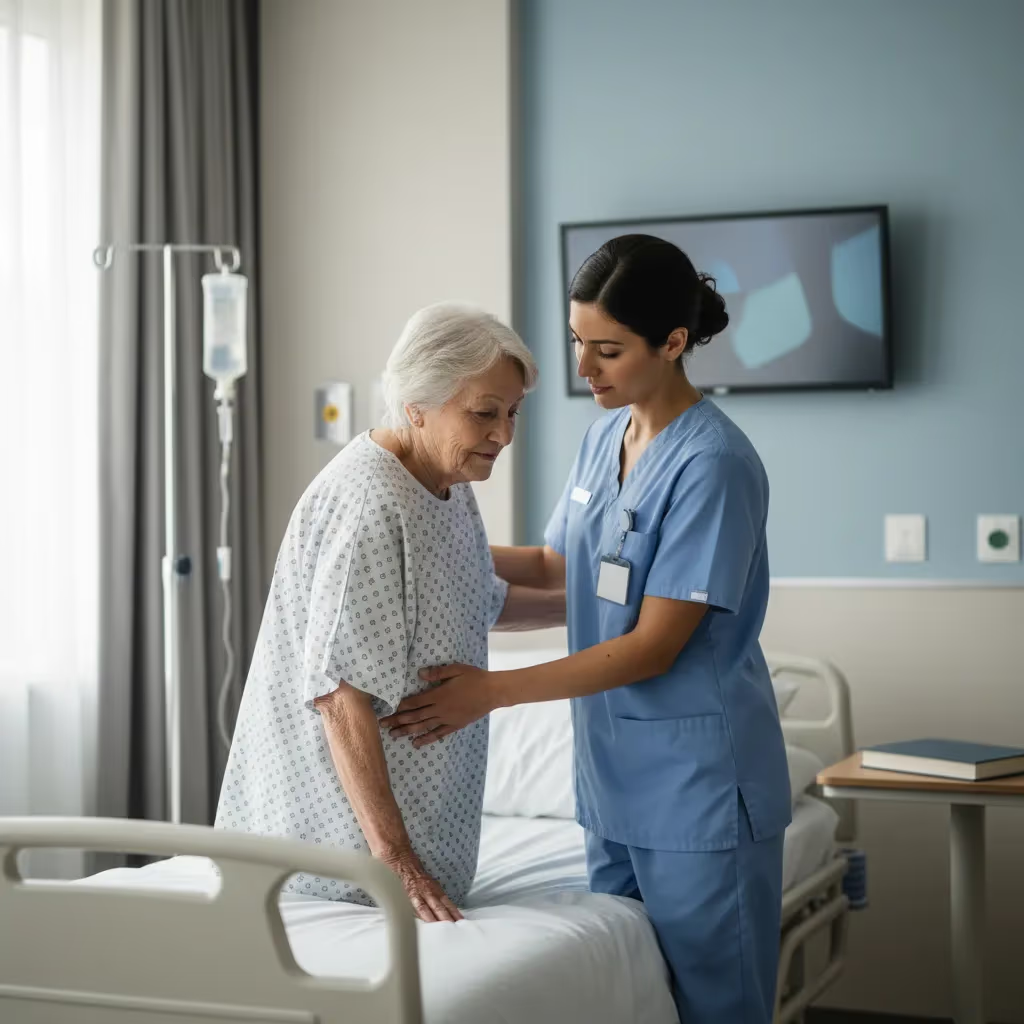
This free prometric cna questions and answers guide covers Prometric — the world's largest professional testing company that administers thousands of exams across healthcare (CNA, RN, NCLEX), accounting (CPA), insurance (state licensure), and many other professional certifications. prometric operates 8,000+ testing centers worldwide, processes 8+ million exam appointments annually, and handles testing for 300+ certifying bodies. The prometric testing center network is the back-end infrastructure for many of the credentials covered elsewhere on this site. If you're scheduling, rescheduling, or preparing for any Prometric-administered exam — including CNA — this page covers what you need to know.
You'll see exactly how Prometric scheduling works, what to expect at a Prometric testing center, the strict identification and proctoring rules, and how to prepare specifically for the CNA written exam through Prometric. Most CNA candidates take both a written exam and a skills evaluation — Prometric typically handles the written portion in computerized form at their testing centers. The CNA written exam runs 60-70 questions over 90-120 minutes with passing scores around 75% on most state CNA exams.
If you're testing soon, the test-day checklist near the bottom covers Prometric's strict procedures. If you have weeks of prep time, the structure cards section maps your study plan. By the end of this guide, you'll know how Prometric works and how to prepare for your CNA exam efficiently.
Prometric by the Numbers
The prometric testing center infrastructure is the largest in professional testing — operating in nearly every US state and 180+ countries worldwide. The prometric test center network handles everything from CNA exams (state-specific) to CPA exams (national) to USMLE physician licensing exams to insurance licensing tests. Each testing center follows identical security and proctoring procedures regardless of which exam you're taking.
For CNA candidates specifically, Prometric administers state-approved CNA written exams in 30+ states. The exam structure varies slightly by state but typically includes 60-70 multiple-choice questions in 90-120 minutes covering personal care, basic nursing skills, restorative skills, mental health, communication, and resident's rights. Pass score is typically 70-80% depending on your state's nursing board.
Plan to invest 4-8 weeks of structured CNA prep with daily 30-60 minute study sessions. Working through 300-500 practice questions across all 6 CNA content areas is the strongest predictor of first-attempt pass. Free CNA practice tests from this site and others supplement the structured course content you receive from your CNA training program. Most state-approved CNA training programs include 75-180 hours of classroom + clinical practice.
One detail worth knowing: Prometric is increasingly offering ProProctor — a remote-proctoring option for select exams that lets candidates test at home rather than at a physical center. ProProctor uses webcam monitoring, ID verification, and secure browser locking. It's available for some IT certifications, finance exams, and a small but growing list of healthcare credentials. CNA exams typically still require in-person testing for the skills-evaluation portion, but the written portion is moving toward remote-proctored options in some states.
The prometric test center scheduling process happens through Prometric's online portal. The prometric login system uses your Prometric ID or email plus password. New candidates create accounts during their first scheduling. Existing candidates log in to schedule, reschedule, view results, and access test history. The system is generally reliable but occasional maintenance windows close access — check Prometric's status page if you can't log in.
The prometric scheduler tool lets you search by ZIP code, certification type, and date range. Slots fill quickly in major metros (NYC, LA, Chicago, Dallas, Houston, Atlanta), especially for popular exams (CNA, CPA, NCLEX). Book 4-8 weeks in advance for your preferred date and location. Last-minute scheduling (within 2 weeks) is often possible but limits your location and time choices.
Most Prometric exams are taken via computer at the testing center. Some specialty exams use paper booklets or other formats. Confirm the format for your specific exam during scheduling. CNA exams are typically computer-based with audio-supported questions (the audio version helps candidates with reading limitations).
One detail worth knowing: Prometric is increasingly offering ProProctor — a remote-proctoring option for select exams that lets candidates test at home rather than at a physical center. ProProctor uses webcam monitoring, ID verification, and secure browser locking. It's available for some IT certifications, finance exams, and a small but growing list of healthcare credentials. CNA exams typically still require in-person testing for the skills-evaluation portion, but the written portion is moving toward remote-proctored options in some states.
Prometric Practice Test Questions
Prepare for the Prometric Test exam with our free practice test modules. Each quiz covers key topics to help you pass on your first try.
Prometric Test Certification Exams
Prometric Exam Questions covering Test Certification Exams. Master Prometric Test concepts for certification prep.
Prometric Test Exam Center Procedures
Free Prometric Practice Test featuring Test Exam Center Procedures. Improve your Prometric Exam score with mock test prep.
Prometric Test Exam Day Tips
Prometric Mock Exam on Test Exam Day Tips. Prometric Study Guide questions to pass on your first try.
Prometric Test Exam Registration
Prometric Test Prep for Test Exam Registration. Practice Prometric Quiz questions and boost your score.
Prometric Test Prometric Test Accommodatio...
Prometric Questions and Answers on Test Prometric Test Accommodations and Accessibility. Free Prometric practice for exam readiness.
Prometric Test Prometric Test Score Reporting
Prometric Mock Test covering Test Prometric Test Score Reporting. Online Prometric Test practice with instant feedback.
Prometric Test Study Methods
Free Prometric Quiz on Test Study Methods. Prometric Exam prep questions with detailed explanations.
Major Prometric-Administered Exams
Prometric administers CNA, RN, LPN, MA, EMT, and dozens of other healthcare credentialing exams. Most state-approved CNA exams run through Prometric. NCLEX-RN and NCLEX-LPN are administered through Pearson VUE (not Prometric), but Prometric handles state-specific RN and LPN credential renewals. Medical assistant (CMAA, CCMA), dental assistant (DANB), and pharmacy technician (PTCB PTCE) exams partly route through Prometric.
The phrase prometric test center: (sometimes typed with a colon trailing) reflects search queries about specific test center information. Each Prometric test center has its own address, hours, parking, and accessibility details published in the Prometric scheduler. Read the specific center details before your scheduled date — knowing parking arrangements and check-in procedures reduces test-day stress significantly.
The prometric center staff are trained proctors following standardized Prometric procedures. Check-in involves photo ID verification, palm vein scanning (at most US centers), personal item lockup (phones, watches, bags), and metal detection scan. The procedures are strict — no exceptions for tardy arrivals, prohibited items, or rule violations. Plan to arrive 30 minutes early to complete check-in without rushing.
For prospective Prometric test-takers, the check-in process can feel intimidating on first visit. Familiarize yourself with the procedures in advance through Prometric's online prep videos. The first-time anxiety usually disappears after one successful test session. Major-metro Prometric centers handle hundreds of candidates daily and have efficient check-in flow.
One detail worth knowing: Prometric is increasingly offering ProProctor — a remote-proctoring option for select exams that lets candidates test at home rather than at a physical center. ProProctor uses webcam monitoring, ID verification, and secure browser locking. It's available for some IT certifications, finance exams, and a small but growing list of healthcare credentials. CNA exams typically still require in-person testing for the skills-evaluation portion, but the written portion is moving toward remote-proctored options in some states.
CNA Exam Prep Plan via Prometric
Complete your state-approved CNA training program (75-180 hours classroom + clinical). Review your textbook's chapter on personal care, basic nursing skills, restorative skills, and resident's rights. Take a diagnostic CNA practice test cold.
Drill specific CNA skills through your training program's lab sessions: bed making, vital signs, bathing, feeding, transferring. Take 30-question CNA practice tests daily. Focus on weak content areas identified by your initial diagnostic.
Take 2-3 full 70-question CNA practice tests under timed conditions. Review every wrong answer with a written rationale. Watch CNA skill demonstration videos on YouTube for the practical skills evaluation portion.
Schedule your Prometric CNA exam through Prometric.com. Confirm test center location and procedures. Day before exam: 30-min light review of weakness journal. Get 8 hours of sleep. On test day, arrive 30 minutes early with two photo IDs.
The prometric reschedule process accommodates legitimate scheduling changes. Reschedule at least 30 days before your test date for full flexibility (no fee). 6-30 days before incurs a $50-$100 reschedule fee depending on exam type. Within 6 days requires emergency-only reschedule with documentation. Same-day reschedule is generally not available except for emergencies — you'll forfeit the exam fee if you miss the appointment.
The prometric testing security procedures are strict by design. Palm vein biometric scanning (used at most US centers) is unique to each candidate and prevents identity fraud. Phones, watches (including smartwatches), bags, hats, and outerwear are stored in a locker during testing. Restroom breaks during the exam are limited and require sign-out/sign-in procedures. Test rules vary slightly by exam — confirm specifics in your Prometric scheduling confirmation.
The prometric cna exam workflow specifically includes both a written exam at the Prometric center plus a separate skills evaluation typically administered at your training program site or a state-designated location. The written and skills portions are scored separately; some states require both to be taken on the same day, others allow scheduling them separately. Confirm your state's specific requirements through your CNA training program coordinator.
One detail worth knowing: Prometric is increasingly offering ProProctor — a remote-proctoring option for select exams that lets candidates test at home rather than at a physical center. ProProctor uses webcam monitoring, ID verification, and secure browser locking. It's available for some IT certifications, finance exams, and a small but growing list of healthcare credentials. CNA exams typically still require in-person testing for the skills-evaluation portion, but the written portion is moving toward remote-proctored options in some states.
Testing via Prometric: Pros & Cons
- +Largest testing network globally — 8,000+ centers, easy to find near you
- +Consistent security and proctoring across all centers
- +Online scheduling and rescheduling through Prometric.com
- +Multiple exam types at single centers — convenient for multi-credential candidates
- +Standardized check-in procedures reduce confusion across exam types
- +Strong customer support for technical issues, accommodations, and rescheduling
- −Strict procedures intimidate first-time test-takers
- −Reschedule fees ($50-$100) for changes within 30 days of test date
- −Last-minute scheduling has limited slot availability in major metros
- −Test center locations may require significant travel in rural areas
- −No same-day rescheduling without documented emergency
- −Palm vein scanning is required at most US centers (some candidates uncomfortable with biometrics)
The prometric cpa exam administration covers the CPA (Certified Public Accountant) credential's 4 sections: AUD (Auditing), BEC (Business Environment), FAR (Financial Accounting), and REG (Regulation). Each section runs 4 hours and is scheduled separately through Prometric. CPA candidates often schedule sections weeks apart to focus prep, but must complete all 4 within an 18-month window. CPA exam fees plus Prometric scheduling typically total $1,000-$1,500 per section.
The prometric date search variant reflects candidates checking available test dates. Prometric's scheduler shows real-time availability across all centers. Date selection matters for high-stakes exams where peak prep time aligns with specific testing windows (e.g., NCLEX after nursing school graduation, CPA after 12-week intensive review). Plan exam dates with sufficient prep runway — last-minute scheduling typically produces lower pass rates.
The prometric testing centers directory at prometric.com lets you search by ZIP code, exam type, and date. Major metros have abundant testing options; rural areas may require travel to the nearest mid-sized city. Some smaller cities have only 1 Prometric center serving all exam types; major metros may have 5-10+ centers within 30 miles. Plan accordingly when scheduling rural-location exams.
One detail worth knowing: Prometric is increasingly offering ProProctor — a remote-proctoring option for select exams that lets candidates test at home rather than at a physical center. ProProctor uses webcam monitoring, ID verification, and secure browser locking. It's available for some IT certifications, finance exams, and a small but growing list of healthcare credentials. CNA exams typically still require in-person testing for the skills-evaluation portion, but the written portion is moving toward remote-proctored options in some states.
Prometric Test-Day Checklist
- ✓Bring two forms of valid government-issued photo ID — name must match Prometric registration exactly
- ✓Arrive 30 minutes early — Prometric strictly enforces check-in cutoff times
- ✓Pack light — phones, watches, smartwatches, bags, and outerwear go in lockers
- ✓Eat a balanced meal 60-90 minutes before — protein + complex carbs sustain focus
- ✓Use the bathroom right before the session starts — breaks during testing are limited
- ✓Be prepared for palm vein scanning at check-in (US centers)
- ✓Listen carefully to the proctor's instructions — they cover important security details
- ✓Read each question stem carefully — Prometric exams typically allow time for careful reading
- ✓Flag uncertain items for review in your final session minutes
- ✓Stay calm — Prometric centers process thousands of candidates daily, follow standardized procedures
The prometric locate tool at prometric.com shows test center locations by ZIP code, city, or address search. Each result includes address, distance, phone number, hours, and accessibility notes (wheelchair access, hearing accommodations, etc.). Use the locator to identify your closest options before scheduling — minimizing test-day travel reduces stress and arrival time risk.
The prometric cna practice test options from reputable sources include Mometrix CNA Test Prep, Pocket Prep CNA Mobile App, and free practice from this site and others. Your state CNA training program likely also provides practice test access. Mix free + paid prep for comprehensive exposure. Total prep investment for serious candidates: $20-$80 in practice resources beyond your training program fees.
For specific state CNA exam requirements, check your state nursing board's CNA registry. Each state has its own approved CNA training program list, exam vendor (most use Prometric or Pearson VUE), and pass score requirements. Programs vary from 75 hours (minimum federal requirement) to 180+ hours in states with stricter standards (California, Oregon). Total program tuition: $500-$3,000 typical.
One detail worth knowing: Prometric is increasingly offering ProProctor — a remote-proctoring option for select exams that lets candidates test at home rather than at a physical center. ProProctor uses webcam monitoring, ID verification, and secure browser locking. It's available for some IT certifications, finance exams, and a small but growing list of healthcare credentials. CNA exams typically still require in-person testing for the skills-evaluation portion, but the written portion is moving toward remote-proctored options in some states.
Arrive 30 Minutes Early
Prometric's strict check-in cutoff means late arrivals are typically refused and forfeit the exam fee ($110-$1,500+ depending on exam). Arriving 30 minutes early gives buffer for ID verification, biometric scanning, locker setup, and seating assignment. Major-metro Prometric centers handle hundreds of candidates daily — the 30-minute buffer protects you against unexpected queues. Same-day reschedule isn't an option for most exam types, so build in the time buffer.
The prometric phone number for candidate support is 1-800-853-6769 (US, English). International phone numbers vary by region — check prometric.com/contact for your country's specific support line. Phone support handles rescheduling, accommodations requests, and account access issues. Wait times can be significant during peak testing seasons (January CPA windows, May/June nursing exam windows). Email support and online chat are faster alternatives for routine questions.
The prometric schedule portal at prometric.com handles 99% of routine scheduling needs without phone support. New scheduling, rescheduling, canceling, and viewing existing appointments all happen online. Phone support is needed only for accommodations requests (extended time, separate room, etc.), technical issues with the online portal, or post-test result inquiries. Online-first scheduling is faster and more flexible than phone scheduling.
For CNA candidates specifically, your state CNA registry maintains records of your training completion, exam pass dates, and active certification status. Many states use Prometric's results delivery to update the state registry automatically. After passing both written and skills portions of the CNA exam, your name appears on the state registry within 1-2 weeks — making you legally able to work as a Certified Nursing Assistant.
One detail worth knowing: Prometric is increasingly offering ProProctor — a remote-proctoring option for select exams that lets candidates test at home rather than at a physical center. ProProctor uses webcam monitoring, ID verification, and secure browser locking. It's available for some IT certifications, finance exams, and a small but growing list of healthcare credentials. CNA exams typically still require in-person testing for the skills-evaluation portion, but the written portion is moving toward remote-proctored options in some states.
Prometric requires two forms of identification at check-in, with at least one being a government-issued photo ID. The names on your ID must match your Prometric registration exactly — Susan vs Suzanne, middle name vs middle initial, hyphenated last name spelling, etc. Update your Prometric profile to match your ID before scheduling. Mismatched names at check-in result in test cancellation with full fee forfeiture and no refund. Verify before testing.
The prometric testing center locations directory shows all 8,000+ global Prometric centers. US coverage is strongest in major metros (NYC: 25+ centers, LA: 30+, Chicago: 20+, Dallas: 15+, etc.). Rural US areas have fewer centers, sometimes requiring 30-60 minute drives. International coverage is strongest in Europe, the Middle East, and major Asian markets. Some regions have limited center availability — confirm before scheduling international exams.
The prometric contact number for general inquiries is 1-800-853-6769 (US, English) or the regional support number for international candidates. Phone support is staffed during business hours, with extended hours during peak testing seasons. Email contact through prometric.com/contact handles non-urgent questions with typical 1-2 business day response times. For urgent issues (locked accounts, accommodation deadlines), phone support is faster.
Final tip: schedule your Prometric CNA exam for a morning slot if your center has options. Cognitive function peaks 2-4 hours after waking, and the 90-120 minute CNA exam rewards sustained focus. A 9 AM start gives you peak energy; an afternoon start fights post-lunch focus drop. Small detail, real edge for an exam where every percentage point counts toward your career.
For specific exam preparation across the Prometric-administered credentials, focused state-specific prep matters. CNA candidates should use their state-specific CNA training textbook (often Nurse Aide Training textbook by Hartman, Mosby's Textbook for Nursing Assistants, or similar). Each state's CNA exam draws from its specific approved curriculum. Generic CNA prep helps but state-aligned prep produces higher pass rates.
The prometric testing infrastructure is generally reliable but occasional issues arise. Common problems: locked Prometric accounts requiring password reset, scheduling system maintenance windows, accommodation requests requiring documentation, and rare check-in delays. Build buffer for these contingencies — schedule with adequate prep runway, verify your Prometric profile a week before testing, and arrive 30+ minutes early on test day.
One overlooked tactic: many candidates take their CNA exam during peak hiring windows. Hospitals and long-term care facilities ramp up CNA hiring in late spring (May-July) before summer staffing shortages and again in fall (September-October). Passing your CNA exam in April-May or August-September positions you for the strongest hiring windows. Time your training program and exam strategically.
Prometric Questions and Answers
About the Author

Senior Cloud Architect & Cybersecurity Certification Trainer
Stanford UniversityDavid Chen holds a Master of Science in Computer Science from Stanford University and has earned over 25 professional certifications across AWS, Microsoft Azure, Google Cloud, cybersecurity, and enterprise architecture domains. He works as a solutions architect and now focuses on helping IT professionals pass cloud, security, and technical certification exams.