
FREE CPD Community Policing and Public Safety Questions and Answers 2026 October
Pass your FREE CPD Community Policing and Public exam on the first attempt. Practice questions with detailed answer explanations, hints, and instant ✍🏼
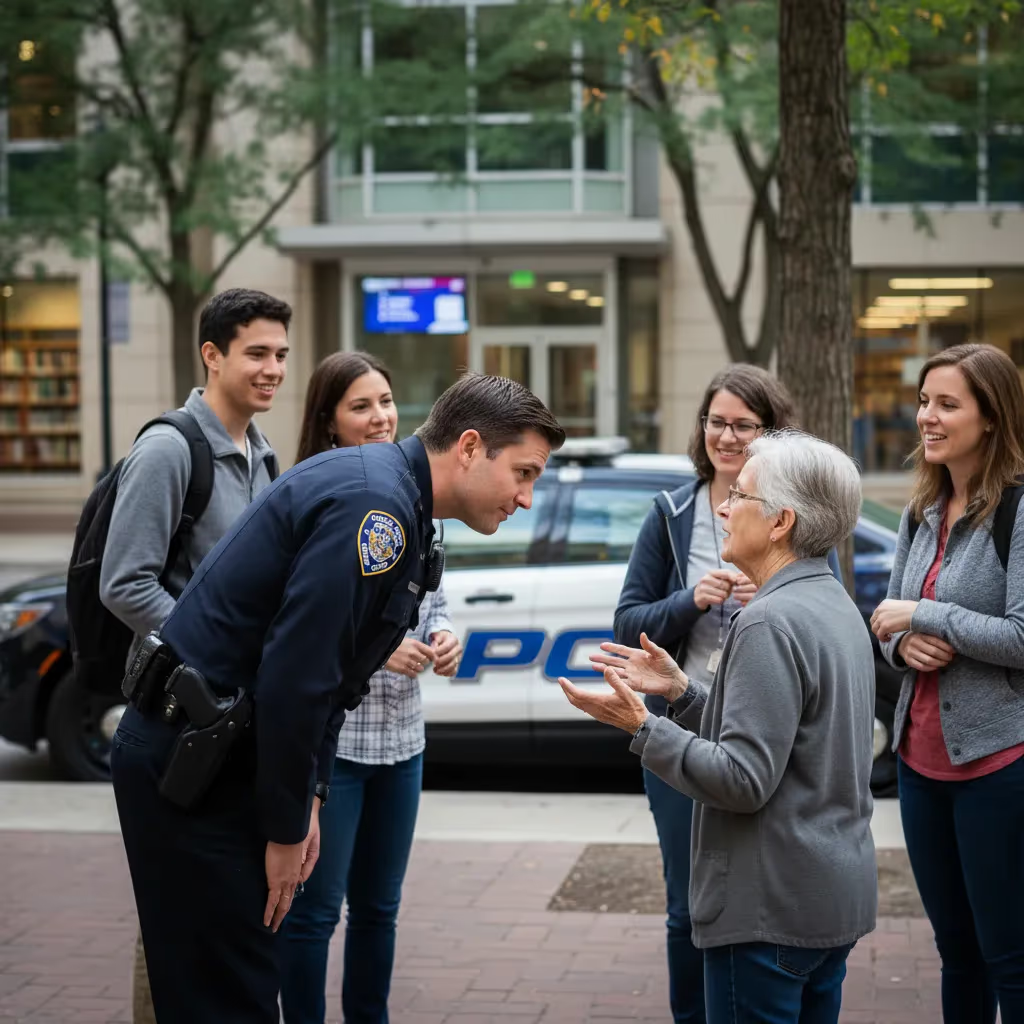
Sample CPD - Chicago Police Department Practice Questions
Try these questions from our free CPD - Chicago Police Department practice tests. The correct answer and an explanation follow each question.
A CPD officer responding to a noise complaint discovers the 'noise' is a block party with permits and community approval. The BEST community policing response is to:
- A. Issue a citation to all organizers for generating a call
- B. Verify the permits, address any legitimate concerns with the organizers, and engage positively with community members
- C. Shut down the event immediately to avoid future complaints
- D. Leave without documenting the contact
Answer: B. Verify the permits, address any legitimate concerns with the organizers, and engage positively with community members
Community policing requires officers to exercise judgment, verify legitimate activity, and use community interactions as opportunities to build positive relationships.
CPD's Community Policing program (CAPS) requires district-level officers to engage the community through which primary mechanism?
- A. Monthly written community satisfaction surveys distributed by mail
- B. Regular beat meetings where officers and residents discuss crime trends and solutions
- C. Annual neighborhood town halls hosted by the Superintendent
- D. Quarterly crime statistics reports published in local newspapers
Answer: B. Regular beat meetings where officers and residents discuss crime trends and solutions
CAPS centers on regular beat community meetings where officers and residents collaborate to identify and address neighborhood crime issues.
A resident reports drug dealing in a park but fears retaliation if identified. How should a CPD officer practicing community policing respond?
- A. Tell the resident to submit a formal written complaint before anything can be done
- B. Thank the resident, take the information confidentially, and follow up without exposing the source
- C. Immediately broadcast the resident's name over the radio to coordinate response
- D. Dismiss the concern unless the resident is willing to testify
Answer: B. Thank the resident, take the information confidentially, and follow up without exposing the source
Community policing depends on trust; officers must protect confidential sources to encourage ongoing information sharing.
A CPD officer encounters a teenager spray-painting a wall. The teen bolts when the officer approaches. What community-policing principle should guide the officer's follow-up?
- A. File no report since no arrest was made
- B. Work with school and community partners to identify and counsel the youth before the behavior escalates
- C. Post the teen's description on social media for public identification
- D. Arrest any youth matching the description within 24 hours
Answer: B. Work with school and community partners to identify and counsel the youth before the behavior escalates
Community policing emphasizes prevention and partnership with schools and community groups to address root causes of juvenile delinquency.
Chicago Police Department (CPD) Questions and Answers
About the Author

Law Enforcement Trainer & Civil Service Exam Specialist
John Jay College of Criminal JusticeMarcus B. Thompson earned his Master of Arts in Criminal Justice from John Jay College of Criminal Justice and served 12 years as a law enforcement officer before transitioning to full-time academy instruction. He is a POST-certified instructor who has prepared candidates for police entrance exams, firefighter assessments, and civil service examinations across dozens of agencies.