
FDOT Mobility Week and Florida Transportation Events: What You Need to Know
Learn about FDOT Mobility Week, annual transportation events, and how Florida DOT engages communities. ✅ Your complete 2026 October guide.
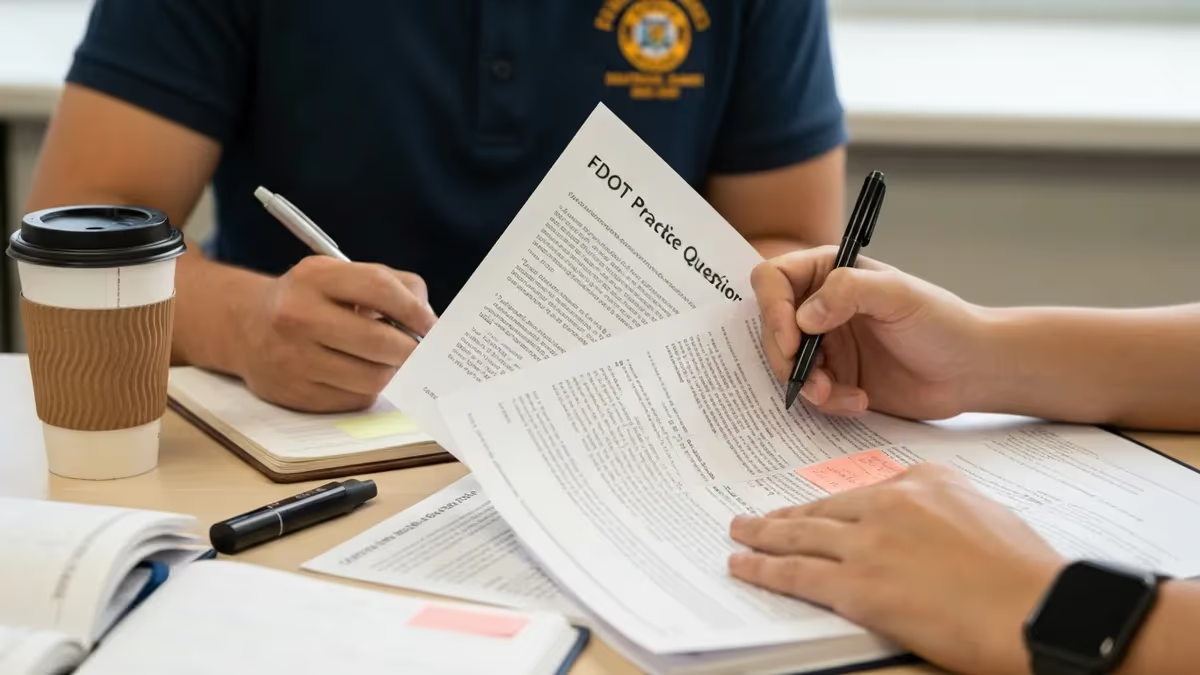
FDOT Mobility Week is one of the most visible public engagement initiatives hosted by the Florida Department of Transportation, drawing together transportation professionals, community advocates, local government leaders, and everyday commuters who want to learn how Florida is shaping the future of getting around. Held annually, typically in the fall, this statewide event spans multiple days and features workshops, expos, public forums, and hands-on demonstrations that highlight innovations in transit, pedestrian safety, cycling infrastructure, and emerging mobility technologies like autonomous vehicles and electric transportation corridors.
Understanding the scope and significance of fdot events goes far beyond simply marking a date on the calendar. These gatherings represent a structured opportunity for transportation workers, inspectors, engineers, and certification candidates to stay current with evolving FDOT standards, network with agency representatives, and discover new tools being deployed across Florida's vast highway and transit network. Whether you're preparing for an FDOT certification exam or managing infrastructure projects in the field, staying connected to these events gives you a meaningful edge.
Florida's transportation landscape is uniquely complex. With more than 12,000 miles of state highway, over 7,100 bridges, and a population exceeding 22 million residents, FDOT manages one of the largest and most dynamic transportation systems in the United States. The annual rhythm of public events, professional development conferences, and stakeholder summits that FDOT organizes reflects the agency's ongoing commitment to safety, innovation, environmental stewardship, and community engagement across all 67 Florida counties.
FDOT Mobility Week specifically zeroes in on multimodal transportation — the concept that Floridians should have real, practical options for getting from point A to point B that extend well beyond the single-occupancy vehicle. Events during Mobility Week often include cycling challenges, bus rapid transit showcases, electric vehicle charging station tours, and panel discussions featuring FDOT district engineers, metropolitan planning organization representatives, and private sector mobility innovators who are actively building tomorrow's transportation systems today.
For professionals working in FDOT-related fields — whether you're a concrete inspector, drainage technician, construction project manager, or maintenance of traffic specialist — these events serve a dual purpose. They provide continuing education credit opportunities and keep you informed about regulatory changes, updated standard specifications, and new construction practices that directly affect how you do your job. Several FDOT districts use Mobility Week as a platform to announce upcoming projects, solicit public input, and demonstrate accountability to Florida taxpayers who fund the transportation system.
The 2026 FDOT event calendar builds on years of growing participation. In recent years, attendance at Mobility Week-affiliated events has consistently exceeded 10,000 participants statewide across all seven FDOT districts, reflecting a genuine appetite among Floridians for direct engagement with the agency responsible for maintaining roads, designing safer intersections, and planning the transit expansions that support Florida's rapid population growth. Registration for most FDOT Mobility Week workshops and expos is free, making participation accessible to a wide range of community members regardless of professional background.
This guide walks you through everything you need to know about FDOT events — from the structure of Mobility Week to how these gatherings connect with professional certification pathways, district-specific programming, and the practical steps you can take to make the most of what FDOT offers throughout the year. We cover participation tips, key event formats, and how staying engaged with FDOT's public programming can directly support your career in Florida transportation.
Free FDOT - Florida Department of Transportation Study Tools
Interactive FDOT - Florida Department of Transportation resources on PracticeTestGeeks, free to start:
- FDOT - Florida Department of Transportation practice test — 100+ questions with instant scoring and answer explanations
- FDOT - Florida Department of Transportation flashcards — review key terms and concepts card by card
- FDOT - Florida Department of Transportation study guide — topic-by-topic overview of what the exam covers
- FDOT - Florida Department of Transportation cheat sheet — one-page printable summary for last-minute review
FDOT Events & Mobility Week by the Numbers

FDOT Event Calendar: Key Annual Gatherings
The flagship annual event, typically held in October or November, featuring workshops, expos, and public forums across all seven FDOT districts. It focuses on multimodal transportation innovation, safety, and community engagement over several days.
Held throughout the year, these community meetings allow residents and stakeholders to comment on specific transportation projects, environmental reviews, and long-range plans within each of FDOT's seven geographic districts.
Technical conferences for construction professionals, inspectors, and engineers. These events feature product demonstrations, regulatory updates, safety training, and networking opportunities critical for FDOT-certified professionals.
Oversight hearings and public sessions conducted by the Florida Transportation Commission to evaluate FDOT performance, budget allocation, and strategic priorities. Open to public participation and relevant to policy-level stakeholders.
Ongoing FDOT safety campaigns tied to Mobility Week include bike-to-work events, pedestrian awareness drives, and school safety programs targeting vulnerable road user protection across Florida communities.
The relationship between FDOT events and professional certification is closer than many transportation workers initially realize. FDOT administers and oversees a wide range of technical certifications covering concrete inspection, drainage management, earthwork, asphalt, traffic control, and a dozen other specialty areas that are required for anyone working on state-funded construction projects. Staying current with certification requirements — which change as FDOT updates its Standard Specifications for Road and Bridge Construction — is an ongoing professional obligation, and FDOT-hosted events are one of the most efficient ways to meet that obligation.
Professional development workshops held in conjunction with Mobility Week and other FDOT conferences frequently offer Florida Department of Transportation-approved continuing education credits. For workers holding certifications in areas like Maintenance of Traffic (MOT), concrete testing, or materials sampling, these credits can count toward renewal requirements without requiring separate enrollment in costly third-party training programs. FDOT's in-house training branch, the State Materials Office, and the Construction Training Qualification Program (CTQP) all participate in coordinating event-based education opportunities throughout the year.
Concrete inspection is one of the most active areas of FDOT certification, with thousands of inspectors across Florida holding current credentials in categories ranging from basic concrete field testing to advanced structural inspection techniques. FDOT events provide direct access to agency subject matter experts who can answer questions about evolving test methods, updated ASTM standards that FDOT references in its specifications, and field application challenges that don't always have obvious solutions in the written manuals. This face-to-face access is genuinely valuable and hard to replicate through online training alone.
Drainage and stormwater management is another certification pathway that benefits enormously from event-based engagement. Florida's geography — low-lying, prone to flooding, and home to sensitive aquifer systems — makes stormwater management a high-stakes discipline. FDOT events frequently feature sessions on updated drainage design standards, environmental permit requirements from the Florida Department of Environmental Protection, and construction inspection practices for culverts, retention ponds, and treatment systems. Inspectors who attend these sessions return to the field better equipped to catch compliance issues before they become costly project delays.
If you're targeting an FDOT certification exam in the near future, attending relevant workshops before you test is a genuinely smart strategy. Instructors at FDOT training events often give attendees insight into which topics appear most frequently in exam questions, what common field errors the certification exams are designed to screen for, and how to interpret ambiguous specification language in ways that align with FDOT's actual expectations in the field. This kind of insider context is exactly what separates candidates who pass on the first attempt from those who need multiple tries.
FDOT also uses its events to introduce new certification categories as the transportation landscape evolves. In recent years, certifications related to intelligent transportation systems (ITS), autonomous vehicle infrastructure, and electric vehicle charging networks have moved from niche specialties to high-demand credentials. Workers who attend FDOT Mobility Week expos often get first exposure to these emerging certification pathways months before they're formally launched through the CTQP website, giving early movers a competitive advantage in a labor market where FDOT-certified professionals are consistently in demand across all regions of Florida.
Beyond formal certification, FDOT events create informal mentorship pathways. Senior inspectors, project engineers, and FDOT district representatives who help workshops often make themselves available for one-on-one questions during breaks and networking sessions. These informal conversations frequently yield practical guidance about navigating the certification renewal process, understanding documentation requirements for materials testing logs, and knowing when to escalate field discrepancies to project engineers — the kind of institutional knowledge that no manual ever fully captures.
FDOT Events by District: What to Expect
FDOT Districts 1, 2, and 3 serve North and North-Central Florida, including the Panhandle, Jacksonville metro, and the Gainesville area. Events in these districts frequently emphasize hurricane preparedness, rural corridor safety improvements, and freight movement along major interstate corridors like I-10 and I-75. Mobility Week activities in these districts often feature collaboration with military base transportation coordinators near Pensacola and Jacksonville, given the significant federal transportation infrastructure presence in the region.
Public engagement sessions in North Florida tend to draw strong participation from agricultural and rural communities whose daily transportation needs differ significantly from urban Floridians. FDOT events in these districts often address topics like road condition monitoring for rural two-lane highways, bridge load rating for agricultural equipment, and the unique drainage challenges posed by Florida's northern river systems. Professionals based in D1, D2, and D3 benefit from event programming that reflects both the scale of rural infrastructure and the growth pressures affecting communities like Gainesville, Tallahassee, and Pensacola.

Should You Attend FDOT Events? Pros and Cons
- +Free or low-cost registration makes events accessible to workers at all career stages and income levels
- +Earn CTQP-approved continuing education credits toward certification renewal requirements
- +Direct access to FDOT district engineers and subject matter experts not available through online resources
- +First exposure to new certification categories and emerging technology standards before formal launch
- +Networking opportunities with employers, subconsultants, and peers across the Florida transportation industry
- +Public project announcements give certified professionals advance notice of upcoming contract opportunities
- −Events are often concentrated in major metro areas, requiring significant travel for rural-based professionals
- −Session schedules can conflict with active construction project timelines and field inspection duties
- −Popular workshops fill quickly, and some require early registration weeks in advance to secure a seat
- −Not all event content is equally relevant — large expos require selective scheduling to maximize value
- −Limited childcare and accommodation options at some event venues can create barriers for some attendees
- −Documentation of informal education received at events (not tied to formal credit hours) is the attendee's own responsibility
Pros and Cons at a Glance
| Pros | Cons |
|---|---|
| Free or low-cost registration makes events accessible to workers at all career stages and income levels | Events are often concentrated in major metro areas, requiring significant travel for rural-based professionals |
| Earn CTQP-approved continuing education credits toward certification renewal requirements | Session schedules can conflict with active construction project timelines and field inspection duties |
| Direct access to FDOT district engineers and subject matter experts not available through online resources | Popular workshops fill quickly, and some require early registration weeks in advance to secure a seat |
| First exposure to new certification categories and emerging technology standards before formal launch | Not all event content is equally relevant — large expos require selective scheduling to maximize value |
| Networking opportunities with employers, subconsultants, and peers across the Florida transportation industry | Limited childcare and accommodation options at some event venues can create barriers for some attendees |
| Public project announcements give certified professionals advance notice of upcoming contract opportunities | Documentation of informal education received at events (not tied to formal credit hours) is the attendee's own responsibility |
FDOT Event Preparation Checklist
- ✓Verify your current CTQP certifications and identify which ones are due for renewal within the next 12 months
- ✓Register for FDOT Mobility Week and district events at least 3-4 weeks in advance to secure workshop seats
- ✓Review the published event agenda and pre-select sessions that align with your certification renewal needs
- ✓Bring your FDOT CTQP card or certification documentation to credential-based workshops and training sessions
- ✓Download and review any pre-event reading materials or specification updates distributed by workshop presenters
- ✓Prepare 2-3 specific technical questions to ask FDOT subject matter experts during Q&A sessions and networking breaks
- ✓Collect contact information from peers, FDOT district staff, and industry vendors you meet throughout the event
- ✓Request a certificate of attendance or continuing education credit documentation before leaving each session
- ✓Review your notes within 48 hours of attending to reinforce key takeaways before they fade from memory
- ✓Follow up with new contacts via email within one week to solidify professional relationships made at the event
CTQP Credits at FDOT Events Count Toward Renewal
Many FDOT Mobility Week workshops and technical sessions are pre-approved for Construction Training Qualification Program (CTQP) continuing education credits. If you're holding an active FDOT certification in concrete, drainage, earthwork, or MOT, attending these events is one of the most efficient ways to meet renewal requirements without paying for separate training — always confirm credit pre-approval with the event organizer before attending.
The outcomes of sustained engagement with FDOT events are well-documented among professionals who make attendance a regular part of their career development strategy. Workers who attend two or more FDOT events per year consistently report higher first-pass rates on certification exams, stronger relationships with FDOT district personnel, and earlier awareness of contract bidding opportunities that their less-connected peers miss entirely. The compounding effect of staying informed through events is real and measurable in career terms over a span of just two to three years.
FDOT Mobility Week specifically has driven measurable policy outcomes in Florida. The multimodal transportation emphasis that defines Mobility Week has influenced FDOT's investment decisions in ways that are now visible on the ground across the state. Increased funding for protected bicycle infrastructure, expanded pedestrian countdown signal deployments, and accelerated transit signal priority installations on BRT corridors in Tampa and Jacksonville are all outcomes that trace at least partly to the advocacy and data-sharing that happens at Mobility Week expos and public engagement sessions.
From a workforce development standpoint, FDOT events have become a pipeline into the transportation sector for students and recent graduates exploring career pathways. FDOT partners with the University of Florida's Center for Infrastructure Protection and Physical Security, Florida State University's Urban and Regional Planning program, and several community colleges offering construction technology degrees to bring students to Mobility Week and other major events. These connections frequently turn into internships, mentorship relationships, and ultimately full-time employment in an industry that is consistently short of qualified technical professionals.
The safety outcomes associated with FDOT event-driven knowledge sharing are equally significant. When inspectors learn at a Mobility Week workshop that a particular precast drainage product has been generating recurring field failures under Florida's traffic loadings, they return to active project sites with updated inspection protocols that prevent the same failures elsewhere. FDOT's willingness to share lessons-learned information openly at public events — rather than quietly circulating internal memos — reflects a safety culture that benefits the entire construction ecosystem, from prime contractors to specialty subconsultants to individual inspectors working in the field.
Business owners and company principals in the Florida transportation sector have found FDOT events to be among the most cost-effective marketing and relationship-building venues available. The concentration of FDOT district staff, MPO planners, county transportation engineers, and certified inspectors in a single venue creates an unparalleled opportunity for firms offering inspection services, equipment, materials testing, or engineering consulting to build the visibility and trust that eventually translates into contract awards. Many small and minority-owned business enterprises in the Florida transportation sector trace their initial FDOT client relationships directly to conversations that began at Mobility Week expos or district public meetings.
FDOT's Community Liaisons and Equal Opportunity Office staff are consistently present at major events, providing guidance on the Disadvantaged Business Enterprise (DBE) certification process, Small Business Enterprise program participation, and On-the-Job Training requirements that federal transportation funding mandates. For businesses seeking to grow their FDOT contracting footprint, these conversations with program staff are invaluable and far more productive than navigating FDOT's procurement website without a human contact to guide the process.
The long-term trajectory of FDOT events points toward increasing integration of digital tools and virtual participation options. COVID-19 accelerated FDOT's investment in hybrid event formats, and many workshops that previously required in-person attendance now offer simultaneous livestreaming with recorded sessions available for 90 days post-event. This democratizes access for professionals in rural districts and those with inflexible work schedules, ensuring that the knowledge transfer that happens at FDOT events reaches a broader professional audience than the in-person attendance figures alone would suggest.

FDOT Mobility Week workshops and district conference sessions often fill weeks before the event date. The Florida Department of Transportation publishes event schedules through its district websites and the statewide FDOT.com events calendar. Set a reminder to check registration availability 4-6 weeks before Mobility Week opens — popular technical sessions on drainage, concrete, and MOT frequently reach capacity within days of opening.
Preparing strategically for FDOT professional development events pays dividends that last well beyond the event itself. The most effective approach begins with a clear audit of your current certification status and an honest assessment of where your technical knowledge has gaps relative to what FDOT field assignments actually demand.
If you're not sure where your gaps are, reviewing FDOT's published exam outlines for your certification category is an excellent starting point — the exam outline maps directly to the technical competencies that FDOT expects certified workers to demonstrate, and those same competencies are exactly what workshop instructors emphasize at training events.
Self-assessment through practice tests is one of the most powerful tools available to professionals preparing for both certification exams and event-based learning. When you attempt a full-length practice exam before attending an FDOT workshop on a topic like drainage inspection or concrete field testing, you arrive at the session knowing specifically which concepts feel unclear and which questions tripped you up. That targeted awareness transforms a general overview session into a highly personalized learning experience, because you're primed to hear the explanations that clarify your specific gaps rather than passively absorbing information you already know.
Study groups formed in advance of FDOT events can dramatically amplify the benefit of attendance. When three or four colleagues who work in the same specialty area attend a Mobility Week workshop together, they collectively cover more ground in the networking sessions, ask a broader range of questions to subject matter experts, and debrief afterward with more diverse perspectives on what they learned. Study groups that stay connected after the event — even informally through a group text or email thread — provide ongoing peer support that keeps everyone's certification preparation momentum going between formal FDOT events.
For professionals preparing to sit for FDOT certification exams in the months surrounding Mobility Week, the event itself can serve as a powerful final review opportunity. Several FDOT districts host exam preparation sessions as part of their Mobility Week programming, where experienced CTQP instructors walk through high-frequency exam topics, address common misconceptions, and review the Standard Specifications passages that exam questions most frequently reference. These sessions are routinely cited by first-time exam passers as a turning point in their preparation that practice tests alone couldn't replicate.
Documentation discipline after FDOT events is an area where many professionals underinvest. Taking detailed notes during workshops is essential, but equally important is organizing those notes within 24 to 48 hours while the material is fresh. Notes that reference specific FDOT specification section numbers, updated ASTM test method designations, or field calculation examples from a workshop are immediately usable back on the job site. Vague notes like "check drainage requirements" or "update concrete forms" lose meaning within days and fail to capture the practical value of what was learned.
FDOT makes an extensive library of training materials, recorded webinars, and published guidance documents available through its website and through the FDOT Learning Management System (FAMS) portal. Professionals who attend events and then follow up by downloading the companion materials that workshop instructors reference extend the shelf life of what they learned at the event by months. Combining event attendance with deliberate follow-up study — including additional practice test repetitions targeting your identified knowledge gaps — creates a complete preparation ecosystem that supports both exam readiness and field competence simultaneously.
Finally, giving back to the FDOT events community by volunteering, presenting, or mentoring newer professionals is a practice that the most respected figures in Florida transportation have embraced as a genuine professional responsibility. FDOT actively recruits experienced professionals to serve as workshop facilitators, technical reviewers for new curriculum, and mentors at career development sessions held in conjunction with Mobility Week. These volunteer roles deepen your own expertise, raise your profile within the FDOT professional community, and contribute to the knowledge ecosystem that the entire industry depends on for its next generation of qualified transportation workers.
The practical steps for getting the most out of FDOT events begin long before you walk through the registration desk on day one. Experienced professionals treat event preparation as a multi-week process that starts with reviewing the published agenda, identifying the three or four sessions that are most directly relevant to their certification renewal needs or project responsibilities, and reaching out in advance to confirm session availability and any prerequisite materials. This front-end investment of two to three hours pays back many times over during the event itself.
On the day of the event, arriving early matters more than many first-time attendees appreciate. Popular FDOT workshops on high-demand topics like drainage design, structural inspection, and MOT often fill beyond their listed capacity when attendees fail to pre-register or show up at the last minute hoping to slip in. Arriving 20 to 30 minutes before a session starts ensures you get a seat, allows you to review any handout materials before the session begins, and creates time for brief introductory conversations with fellow attendees that can turn into genuinely valuable professional contacts.
Engaging actively during sessions — asking questions, participating in hands-on demonstrations when offered, and contributing observations from your field experience — transforms your event participation from passive to genuinely collaborative. FDOT workshop instructors consistently report that attendees who participate actively demonstrate better retention of workshop content and perform better on subsequent certification exams than those who sit quietly and take notes without engaging with the material. The conversational format of most FDOT workshops is specifically designed to encourage this kind of active engagement.
Vendor and exhibitor areas at FDOT expos are often underutilized by professionals who focus exclusively on the formal workshop sessions. The exhibitor hall at a Mobility Week event is where you'll find equipment manufacturers demonstrating updated testing tools, materials suppliers showcasing specification-compliant products, and technology companies previewing the next generation of infrastructure monitoring platforms. These conversations give you practical product knowledge that directly supports field decision-making, and vendor representatives are typically far more knowledgeable about FDOT-specific compliance requirements than you might expect.
Following FDOT on its official social media channels and subscribing to district-specific email newsletters keeps you informed of event announcements, registration deadlines, and last-minute schedule changes that can affect your plans. FDOT's District 5 Orlando office, for example, consistently uses its communications channels to announce public engagement sessions with 30 to 60 days of notice — enough lead time for busy professionals to adjust their schedules. Missing event announcements because you're not subscribed to the right channels is entirely avoidable with a few minutes of channel setup.
Tracking your FDOT event attendance formally is important for professionals whose certifications require documented continuing education. Keep a simple spreadsheet or folder on your phone where you save certificates of attendance, program agendas with your name on them, and any other documentation of your participation. When certification renewal time arrives, having organized documentation of your event-based education makes the renewal process straightforward rather than stressful. Some certifying bodies require documentation submitted within 90 days of the renewal deadline, so don't wait until the last minute to locate records of workshops attended months earlier.
Ultimately, the value of consistent FDOT event participation compounds over a career in ways that are difficult to fully quantify but easy to observe in the professionals who practice it. The inspectors, engineers, and project managers who are routinely called upon for their expertise, promoted to senior roles, and trusted with complex project oversight are disproportionately the professionals who treat FDOT Mobility Week and the broader FDOT events calendar as a standing annual commitment rather than an optional extra.
Showing up consistently is the single most effective career investment available in Florida's transportation sector, and the barrier to entry is simply registering, showing up, and being willing to engage.
Sample FDOT - Florida Department of Transportation Practice Questions
Try these questions from our free FDOT - Florida Department of Transportation practice tests. The correct answer and an explanation follow each question.
What FDOT inspection program is responsible for periodic bridge safety inspections on Florida's highway system?
- A. FDOT Maintenance Rating Program
- B. FDOT Bridge Safety Inspection Program (BSIP)
- C. FDOT Structure Inventory and Appraisal (SI&A)
- D. National Bridge Inspection Standards (NBIS) only
Answer: B. FDOT Bridge Safety Inspection Program (BSIP)
The FDOT Bridge Safety Inspection Program (BSIP) conducts periodic inspections of all state highway bridges to ensure structural safety and serviceability.
According to FDOT standards, what is the standard lane width for through lanes on a principal arterial in Florida?
- A. 10 feet
- B. 11 feet
- C. 12 feet
- D. 13 feet
Answer: C. 12 feet
FDOT's standard lane width for through lanes on principal arterials is 12 feet, consistent with AASHTO and providing adequate clearance for vehicles.
What Florida agency oversees environmental permitting for FDOT projects affecting wetlands and state waters?
- A. Florida Department of Transportation (FDOT)
- B. Florida Department of Environmental Protection (FDEP) and Water Management Districts
- C. Florida Fish and Wildlife Conservation Commission (FWC)
- D. Florida Department of Agriculture
Answer: B. Florida Department of Environmental Protection (FDEP) and Water Management Districts
FDEP and the five regional Water Management Districts share authority over Environmental Resource Permits for projects affecting Florida's wetlands and water resources.
What type of protected area in Florida requires FDOT to conduct a biological assessment before construction?
- A. Any area within 500 feet of a state highway
- B. Areas containing or adjacent to listed threatened or endangered species habitat
- C. All areas within incorporated city limits
- D. Any site with a FEMA floodplain designation
Answer: B. Areas containing or adjacent to listed threatened or endangered species habitat
A biological assessment is required when FDOT projects may affect areas containing listed species or designated critical habitat, triggering formal ESA Section 7 consultation.
Take the full FDOT - Florida Department of Transportation practice test
FDOT Questions and Answers

Florida Department of Transportation Orlando: Complete Guide to FDOT's Central Florida Operations
FDOT Practice Test PDF (Free Printable 2026)

FDOT Advanced Maintenance of Traffic Certification: Complete Study Guide & Exam Prep

FDOT Closures: What Florida Drivers and Workers Need to Know

FDOT (Florida Department of Transportation) Test Prep
About the Author

Educational Psychologist & Academic Test Preparation Expert
Columbia University Teachers CollegeDr. Lisa Patel holds a Doctorate in Education from Columbia University Teachers College and has spent 17 years researching standardized test design and academic assessment. She has developed preparation programs for SAT, ACT, GRE, LSAT, UCAT, and numerous professional licensing exams, helping students of all backgrounds achieve their target scores.
Join the Discussion
Connect with other students preparing for this exam. Share tips, ask questions, and get advice from people who have been there.
View discussion (9 replies)