
Certificate of Fitness FDNY: Types, Application & Renewal 2026 October
🆕 FDNY Certificate of Fitness guide: F-01, F-80, P-99, C-14 categories, nyc.gov application steps, $25 fee, 3-year renewal, exam tips for 2026 October.
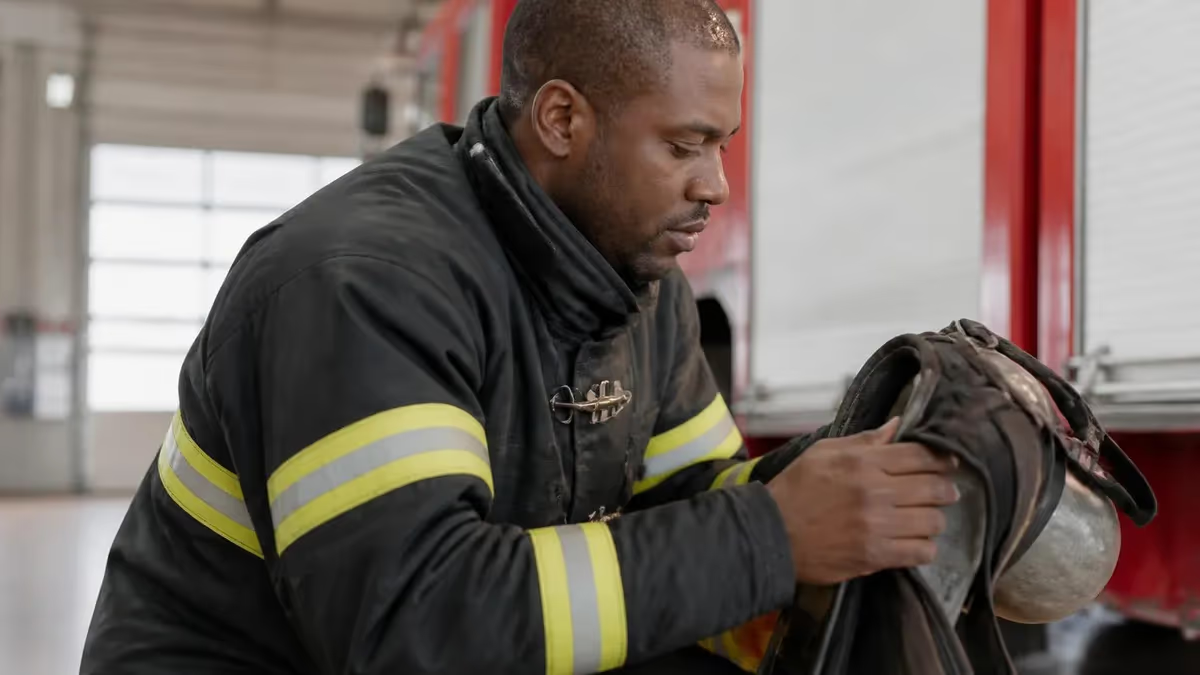
Walk into almost any large NYC building—a Broadway theater, a midtown hotel ballroom, a warehouse storing flammable solvents, a hospital with a backup generator room—and somewhere in that building, by law, sits a person with a small laminated card in their wallet. That card is a Certificate of Fitness issued by the FDNY. Without it, the activity that card covers cannot legally happen in New York City.
The Certificate of Fitness (often shortened to “C of F” or “CoF”) is the FDNY’s way of saying, “Yes, this specific person has been tested on the rules and can be trusted to do this specific job safely.” There are more than 100 categories of CoF, and most of them carry letter-and-number codes that look cryptic at first glance—F-01, F-80, P-99, S-12, G-60, C-14.
If you’ve been told you need one, this guide will tell you which one, where to apply, what it costs, how the test works, and how renewal goes once the three years are up.
A few quick numbers to set the stage. The FDNY processes roughly 100,000 Certificate of Fitness exams per year. The most common are F-01 (Fire Guard for Impairment), F-02 (Fire Guard for Construction Sites), and S-95 (Fire and Emergency Drill Conductor). Pass rates hover in the 70–80% range for most categories, lower for the highly technical ones like Z-50 (refrigeration) or P-99 (standpipe). The exam itself is short—usually 30 to 50 multiple-choice questions—but the booklets you have to study are anything but. We’ll cover the prep load category by category later.
This is also the moment to clear up a common confusion. The Certificate of Fitness is not the same as an FDNY Certificate of Approval, an FDNY License, or an FDNY permit. The CoF certifies a person. A permit or Certificate of Approval certifies a business activity, location, or piece of equipment. You usually need both. The cards live in different parts of the FDNY Business portal at nyc.gov, and the application processes don’t look anything alike. Confusing them is the most frequent mistake first-time applicants make.
FDNY Certificate of Fitness by the Numbers
Key Facts at a Glance
| Item | Value | Details |
|---|---|---|
| Validity period | 3 years | |
| Typical exam length | 30-50 Qs | |
| Standard fee | $25 |
Let’s talk about who actually needs a Certificate of Fitness. The short answer: anyone whose job involves a fire, life-safety, or hazardous-material activity that the FDNY has decided requires individual certification. The long answer fills a 40-page chapter of the New York City Fire Code. Below are the categories you’ll bump into most often if you work in NYC hospitality, construction, real estate management, or industrial operations.
Fire Guards are by far the largest population of CoF holders. If a building’s fire alarm or sprinkler system is temporarily out of service for repairs—an “impairment” in FDNY language—someone with an F-01 must patrol the affected area continuously until the system is restored.
Construction and demolition sites carry similar staffing rules under F-02. A hotel ballroom hosting a wedding for 200 guests almost certainly has an F-03 (Fire Guard for Temporary Place of Assembly) on duty. The card holder is, in practice, the person whose pager will go off at 2 a.m. if anything fire-related happens.
Place of Assembly categories cover indoor venues with capacity over 75 people: theaters, nightclubs, lecture halls, religious centers, banquet halls. The big one here is F-80, the Indoor Place of Assembly Safety Personnel certificate. Anyone working the door of a Broadway theater, the floor of a SoHo nightclub, or the security desk of a midtown banquet hall during occupancy usually has an F-80. F-04 covers fire alarm system operators—the person sitting in the lobby of a high-rise office tower watching the annunciator panel.
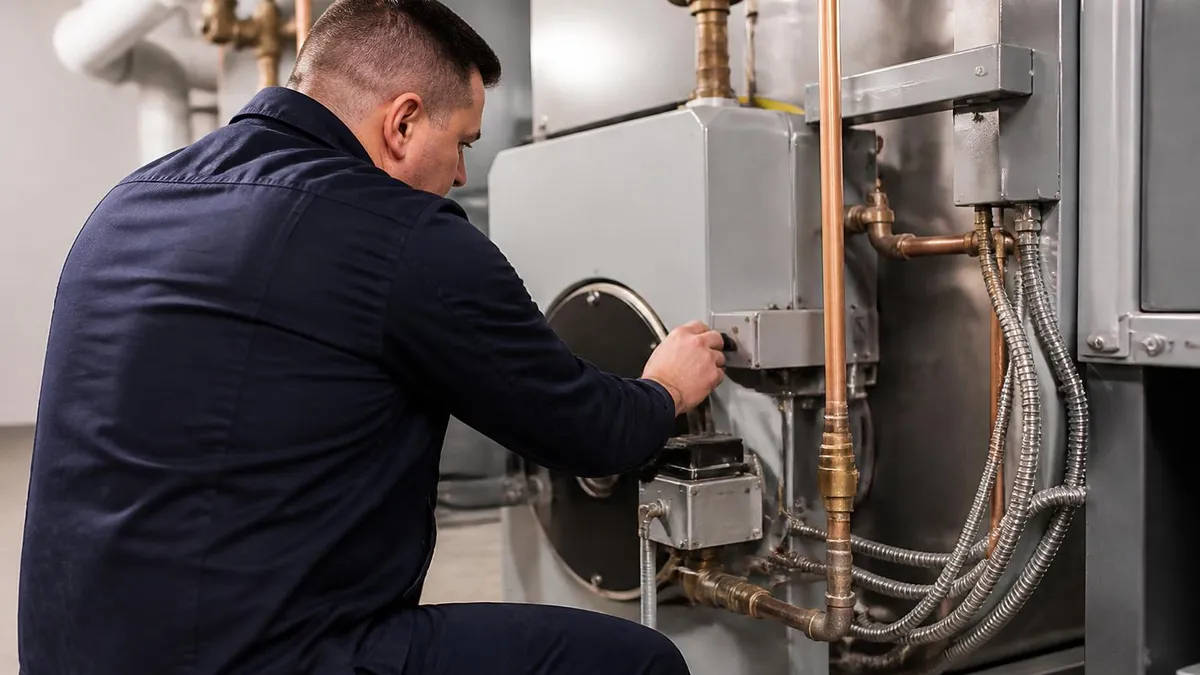
Then come the system-specific categories. P-99 covers standpipe systems—the water risers firefighters connect their hoses to. S-12 covers wet sprinkler systems. S-13 covers dry-pipe sprinkler systems. Z-50 covers refrigeration. These are technical exams aimed at building engineers and maintenance staff. Pass rates run lower because the test questions assume real plumbing or mechanical knowledge, not just safety-rule memorization.
Start With Your Employer or Building Owner
The single fastest way to identify the correct Certificate of Fitness is to ask your employer or building owner. They have already mapped their FDNY permits to specific CoF requirements. Showing up at the testing center for an F-03 when you actually needed F-04 means losing both the day and the $25 fee. If you are the building owner or operator, cross-check the FDNY Certificate of Fitness list on nyc.gov against your active permits—the category descriptions and prerequisites are searchable by job title, equipment type, and occupancy class.
Once you know which CoF you need, the application path runs through FDNY Business, the city’s online portal at nyc.gov/fdny. You will create or log into an NYC.ID account, link it to a Personal CoF Holder profile, and submit the application electronically. Paper applications still exist for a handful of edge cases (out-of-state applicants, certain corporate batches), but for 95% of applicants the digital flow is faster and tracks the exam appointment in the same dashboard.
The application asks for the usual basics—legal name, address, date of birth, contact info—plus two FDNY-specific items: a photo that meets passport-style specifications and, depending on the category, a notarized affidavit from your employer confirming your job duties. Some categories like P-99 also require proof of prior trade experience or completion of an approved training course. Read the prerequisites section on the CoF page before paying the fee, because the $25 is non-refundable once submitted.
After the application is accepted, you’ll receive a confirmation email with your candidate number and instructions to schedule the exam at FDNY Headquarters in Downtown Brooklyn (9 MetroTech Center). Exams run roughly Monday through Friday, with sessions starting between 8 a.m. and 2 p.m. depending on category. Walk-in exams used to be common pre-2020; today nearly all exams require a pre-booked appointment. Arrive 30 minutes early, bring photo ID, and bring a printed copy of your appointment confirmation. The Brooklyn building is strict about both.
Common FDNY Certificate of Fitness Categories
Required whenever a building's fire alarm or sprinkler system is out of service for repair, testing, or maintenance. The holder patrols the affected area on a logged schedule until the system is restored. One of the most common CoFs across NYC commercial real estate; widely held by porters, supers, and security staff.
Required at active construction and demolition sites covered by an FDNY permit. The holder enforces hot-work rules, monitors temporary heating, manages extinguisher placement, and patrols after-hours when trades have left. Almost every NYC construction site has at least one F-02 on the daily roster.
Required at indoor venues with occupant load over 75 people: theaters, nightclubs, banquet halls, religious centers, lecture halls. The holder enforces occupancy limits, monitors exits, and coordinates evacuation if needed. Common for ushers, bouncers, and front-of-house security staff in NYC entertainment districts.
Required to operate fire alarm panels in commercial buildings where on-site monitoring is part of the building's compliance plan. Holders sit at the lobby annunciator panel and triage incoming alarms, log impairments, and coordinate with arriving FDNY units during an actual event.
Highly technical. Required for personnel responsible for standpipe and high-rise standpipe operation, including testing and post-fire restoration. The exam covers hydraulics, valve types, pressure-reducing device behavior, and the FDNY high-rise water supply protocol. Aimed at building engineers and maintenance leads.
Required to oversee operation, testing, and inspection of wet-pipe sprinkler systems in NYC buildings. Covers system layout, control valve identification, NFPA 25 inspection schedules, and impairment management. Holders are typically licensed plumbers, building engineers, or contracted sprinkler-firm techs.
Required for any worker using an acetylene, MAPP, or other flammable-gas torch on a job site or in a permitted location. Covers cylinder storage, hot-work permit rules, FDNY notification requirements, and post-torch fire watch. Frequently paired with F-02 on construction sites.
Required to supervise paint spraying in spray booths or other approved areas where flammable or combustible coatings are applied. Covers booth ventilation, ignition source control, residue removal, and FDNY permit conditions. Common for auto-body shops, industrial finishers, and large-scale architectural painters.
Now to the part that surprises new applicants: each CoF has its own study guide, and the FDNY publishes them all free on nyc.gov. The guides are PDF booklets that range from 20 pages (simple categories like F-01) to well over 200 pages (P-99, S-12, S-13, Z-50). Download yours, work through it cover to cover, and pay attention to the highlighted passages—those are the FDNY’s polite way of saying “this will be on the test.” Most candidates report 6–12 study hours for basic categories and 30+ hours for the technical ones.
The exam is computer-based at FDNY Headquarters. You sit at a terminal, work through 30 to 50 multiple-choice questions in a 60–90 minute window, and get your score before you leave the building. Pass mark is 70% for most categories. Fail and you can re-test after 30 days with a new $25 fee. Pass and your physical Certificate of Fitness card prints on-site in most cases; for some categories it’s mailed within 10 business days.
One subtlety that trips people up: language accommodations. The FDNY offers many CoF exams in Spanish, Chinese (Simplified and Traditional), Korean, and several other languages by request. You have to flag the language choice in the original application—you cannot switch on exam day. If English isn’t your first language and you’re studying a 200-page technical booklet, the language option is worth using even if your everyday English is fluent. Test stress narrows reading speed; the official translation removes ambiguity.
A practical study tip: the FDNY exams are notoriously rules-heavy, not concept-heavy. They’ll ask you, “What is the maximum allowable storage quantity of Class IB flammable liquid in a Group F-1 occupancy?” rather than “Why does Class IB liquid burn faster than Class II?” Memorize the numbers, the procedures, and the chain-of-command rules. If a study guide chapter ends with a numbered list, learn the list cold. That’s where the questions come from.

Application, Exam, and Renewal Steps
Step 1. Identify the correct CoF category with your employer or by searching the FDNY Certificate of Fitness list on nyc.gov.
Step 2. Create or log into your NYC.ID account, then link it to a Personal CoF Holder profile inside FDNY Business.
Step 3. Complete the online application, upload your photo, attach any required employer affidavits, and pay the $25 fee by credit card.
Step 4. Receive your candidate number by email, then schedule the exam appointment at 9 MetroTech Center in Brooklyn through the same portal.
Renewal is where the system rewards organization and punishes procrastination. If you renew before the expiration date, most categories are administrative: pay the $25 fee, confirm your contact information, and your card extends another three years. No re-test. If you renew after the expiration date, you may need to sit the exam again as a new applicant—starting the prep cycle from scratch. The cutoff is firm. Late by one day is treated the same as late by one year.
That said, the FDNY has been pushing more renewals into refresher-exam territory for high-risk categories. P-99 (standpipe), S-12 and S-13 (sprinkler), Z-50 (refrigeration), and G-60 (torch work) increasingly require a short renewal exam every three years even when you renew on time. The exam is shorter than the initial test and the pass mark is the same 70%. Plan a weekend of refresher reading rather than walking in cold.
Employers should also know that bulk renewal is supported through FDNY Business. A property management firm with 30 fire guards across a portfolio can submit a batch renewal under their company account rather than chase 30 individuals. The portal then notifies each holder to confirm their personal details and pay the fee, with the corporate account covering bulk administration. This is one of the more underused features of the platform.
An expired Certificate of Fitness cannot be reinstated. You will be treated as a new applicant—new fee, new study guide, new exam, new wait time. If your job depends on the certification, your employer may put you on unpaid administrative status until the new card is issued. Set a calendar alert for 90 days before expiration and again at 30 days before. The renewal window opens 90 days out; using the full window prevents last-minute problems with photo updates or affidavit re-signatures.
Let’s zoom out on cost. Initial CoF: $25. Renewal: $25. Refresher exam (where required): no separate fee, included in renewal. Failed-exam re-test: $25 again, with a 30-day wait. So the total lifetime cost for a single-category CoF holder is small—under $200 over 20 years even with one failure. Compare that to OSHA 30 training ($150 per cycle), New York City Site Safety Manager training (multi-thousand-dollar program), or even a basic Food Protection card ($25 but every 5 years). The CoF is cheap.
The hidden cost is time. The study guide for P-99 alone runs over 200 pages of dense plumbing and fire-code material. Many candidates report 30 to 50 hours of preparation to feel comfortable. If you are studying on unpaid personal time, the real cost of that CoF is your hourly wage multiplied by 40 hours. Employers that hire experienced building engineers often pay for prep courses through accredited NYC training schools precisely to compress that timeline.
Speaking of prep courses: third-party FDNY exam prep is a small but real industry in NYC. Costs range from $75 for a basic F-01 weekend class to $500+ for technical categories like P-99 or S-12. Most are run by retired FDNY personnel or licensed contractors. Quality varies. Before paying, check whether the course publishes a pass rate, whether instructors are credentialed in the actual trade, and whether the course materials are kept current with the latest FDNY study guide revisions (they update every 2–3 years).
For the simpler categories, third-party courses are often unnecessary. F-01, F-02, F-03, and F-04 are well within reach of a motivated candidate working through the official guide and one set of practice questions. Save the paid courses for the technical ones where the failure cost is high—both because re-test wait times are 30 days and because your employer might need that certified person on staff next week.
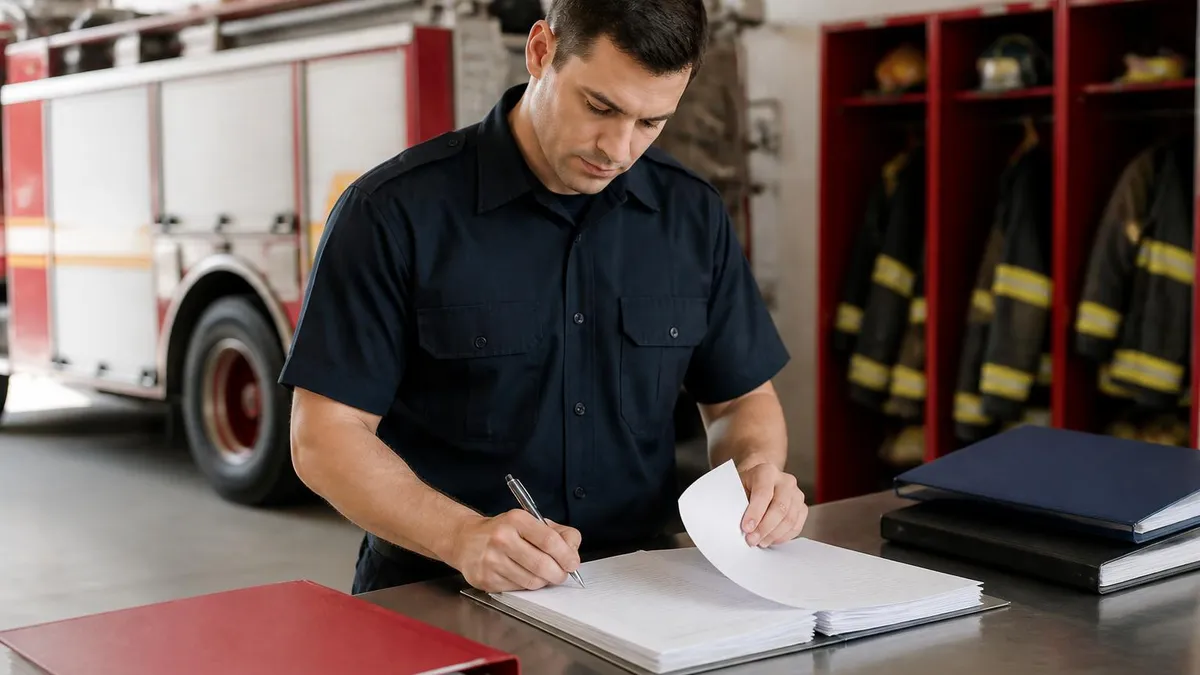
FDNY Certificate of Fitness Application Checklist
- ✓Confirm the exact CoF category required for your job by checking your employer’s FDNY permits or the official FDNY Certificate of Fitness list on nyc.gov
- ✓Create or log into your NYC.ID account and link it to a Personal CoF Holder profile inside the FDNY Business portal
- ✓Gather identification documents: a valid government-issued photo ID, proof of address, and any employer affidavit your category requires
- ✓Prepare a passport-style digital photo that meets FDNY specifications — plain background, no headwear except for religious reasons
- ✓Download the official FDNY study guide PDF for your category and plan 6 to 30 hours of study depending on technical complexity
- ✓Submit the online application, pay the $25 fee by credit card, and save your candidate number and confirmation email
- ✓Schedule the exam appointment at 9 MetroTech Center in Brooklyn through the portal once your application is approved
- ✓On exam day, arrive 30 minutes early with photo ID and your printed appointment confirmation; phones and bags go into lockers
- ✓After passing, store your physical CoF card in your wallet and a scanned copy in your phone for inspection access on the job site
Speaking of inspection access: always have your card on you while working. FDNY inspectors routinely visit construction sites, theaters, hotels, and high-rise commercial buildings to verify that the personnel performing CoF-restricted activities are actually certified.
If you’re asked to show your card and you don’t have it, the building can be cited and you can be sent home. The fines run into the thousands of dollars per violation, and they roll up to the permit holder, not the worker. That’s why building managers tend to be loud about wallet checks at the start of each shift.
A practical workflow many NYC employers have settled on: keep a scanned image of every active CoF in a shared, password-protected company drive, organized by employee. When an FDNY inspector asks, the site super can pull up the digital copy in 10 seconds while the holder fishes the physical card out of a wallet. Belt and suspenders. The FDNY accepts both digital and physical proof during inspections as long as the document is legible and current.
Another smart practice: cross-train. If your operation depends on a single F-01 fire guard and that person calls in sick, the impairment patrol can’t run, and the impairment can’t be in effect, which means the system has to be restored or work has to stop. Having two or three certified staff in the same category for a given site is the cheapest insurance policy you can buy. The $25 fee per backup person is rounding error against a single project-day shutdown.
One last cross-functional tip. If you employ workers who hold multiple CoFs (common for senior building engineers—P-99, S-12, S-13, Z-50, and F-04 in one wallet), bake the expiration dates into your facilities-management software. Renewals don’t cluster; they happen on rolling three-year cycles tied to whenever the original exam was taken. Without a tracking system, it’s easy to miss one buried among the others. The day you find out is the day an inspector walks through.
Working With a Certificate of Fitness: Trade-offs
- + —
- + —
- + —
- + —
- + —
- + —
- − —
- − —
- − —
- − —
- − —
- − —
If you’re an employer reading this and thinking about scaling CoF coverage across a portfolio, the bigger play is to integrate FDNY Business with your facilities management stack. The portal exposes a reasonable amount of data on the corporate dashboard—active CoFs, pending renewals, lapsed certificates, scheduled exams. Pulling that information into a quarterly compliance report keeps your operations team ahead of inspections rather than reacting to them.
One area that’s evolving fast: continuing education tied to CoFs. Historically the FDNY treated the CoF as a one-and-done test. Increasingly, certain high-risk categories are layered with mandatory refresher modules between exams. Watch the FDNY Public Notices page on nyc.gov for category-specific changes; subscribe to the FDNY Business newsletter if you manage staff certifications at any scale. New rules for sprinkler and standpipe categories in particular have rolled out in stages over the past few years, with more expected.
For individual candidates, especially career-changers entering NYC’s hospitality, construction, or building-engineering sectors, stacking CoFs is a real career strategy. Pair an F-01 (impairment fire guard) with F-02 (construction sites) and F-80 (place of assembly), and you’ve covered three of the most common “help wanted” lines in NYC operations job ads. Add F-04 (alarm system operator) for office-tower lobby work and you’re competitive across most of midtown. Total prep time for that four-card stack is realistic at 30–40 hours total. Total cost: $100.
The certifications are also reasonably portable within New York City regardless of which borough you work in. There’s no Manhattan-vs-Brooklyn variant. There is, however, a distinct New York State system for non-NYC jurisdictions—Yonkers, Buffalo, Albany. If you cross the city line for a job, double-check whether your FDNY CoF is recognized or whether the local fire marshal’s office requires a separate state certificate. Most outside NYC do.
Before the FAQ, one final piece of practical advice. The FDNY Business portal has improved a lot over the past few years, but it still goes down for scheduled maintenance and the occasional surprise outage. Don’t leave your application or renewal to the last possible day. If the portal is down on the day your CoF expires, you lose the on-time renewal window. Build a one-week buffer into every important date.
And if you’re reading this because you just got the news that your job requires a CoF and you have two weeks to get one—don’t panic. For most categories, two weeks is achievable. Download the guide tonight, schedule the exam this week, study every evening for 90 minutes, and you’ll walk into MetroTech with the material fresh. The pass-rate data suggests prepared candidates clear most CoFs comfortably. The candidates who fail almost always tell the same story: they skimmed the guide once instead of working through it.
If you want a no-cost way to see where you stand right now, try a free FDNY practice test. Read a few sample questions, see whether the rules and figures look familiar or unfamiliar, and let that diagnostic tell you how long to study. The questions are structured the same way the FDNY writes its exam items—specific, rules-driven, and unforgiving of vague memorization. It’s the fastest sanity check you can run before paying for the official exam.
The Certificate of Fitness is one of those quietly load-bearing parts of how NYC stays standing. The buildings work because the people inside them know the rules. That card in your wallet is the city’s way of trusting you with that. Take it seriously, study properly, renew on time, and the rest takes care of itself.
Sample Fire Department New York Practice Questions
Try these questions from our free Fire Department New York practice tests. The correct answer and an explanation follow each question.
The FDNY Certificate of Fitness for a Citywide Sprinkler System Coordinator (F-58) is required in buildings with:
- A. Any sprinkler system installed after 1980
- B. High-rise buildings with more than 100 sprinkler heads
- C. Buildings required to maintain a fire pump under the Fire Code
- D. All residential buildings with wet-pipe sprinkler systems
Answer: C. Buildings required to maintain a fire pump under the Fire Code
An F-58 Citywide Sprinkler System Coordinator Certificate of Fitness is required for individuals responsible for overseeing sprinkler systems in buildings that must maintain a fire pump under NYC Fire Code.
How often must a Certificate of Fitness holder renew their certification with the FDNY?
- A. Every 6 months
- B. Every year
- C. Every 2 years
- D. Every 3 years
Answer: D. Every 3 years
FDNY Certificates of Fitness must be renewed every 3 years to ensure holders remain current on fire safety regulations and procedures.
Which division within the FDNY is primarily responsible for the training of new recruits?
- A. Bureau of Fire Prevention
- B. Bureau of Training
- C. Bureau of Emergency Medical Services
- D. Bureau of Administration
Answer: B. Bureau of Training
The Bureau of Training is the division within the FDNY primarily responsible for the comprehensive training of new recruits, both firefighters and EMTs. This bureau operates the FDNY Fire Academy, where recruits undergo rigorous physical and academic instruction to prepare them for the demands of emergency service.
What FDNY apparatus is specifically equipped with a hydraulic platform or aerial ladder and is used for high-rise rescues and elevated operations?
- A. Tower Ladder
- B. Pumper Engine
- C. Rescue Company vehicle
- D. Battalion Supervisor unit
Answer: A. Tower Ladder
Tower Ladders (also called aerial platform trucks) carry a hydraulic articulating bucket and are used for high-rise rescues, elevated firefighting, and victim removal from heights.
FDNY Questions and Answers
About the Author

Law Enforcement Trainer & Civil Service Exam Specialist
John Jay College of Criminal JusticeMarcus B. Thompson earned his Master of Arts in Criminal Justice from John Jay College of Criminal Justice and served 12 years as a law enforcement officer before transitioning to full-time academy instruction. He is a POST-certified instructor who has prepared candidates for police entrance exams, firefighter assessments, and civil service examinations across dozens of agencies.
Join the Discussion
Connect with other students preparing for this exam. Share tips, ask questions, and get advice from people who have been there.
View discussion (9 replies)