
FCTC Test Guide: Florida Firefighter Certification, What the Test Covers & Requirements
Prepare for the FCTC certification. Practice questions with answer explanations covering all exam domains. 🎓

The FCTC (Florida State Fire College) administers the state certification exam required for all Florida firefighters. The test evaluates your knowledge of fire behavior, emergency medical procedures, hazardous materials response, building construction, and firefighting tactics based on the Florida Minimum Standards curriculum. You must complete an approved fire academy program and pass this exam to receive your Florida Firefighter Certificate of Compliance, which is required before any fire department in the state can hire you.
Healthcare and nursing candidates preparing for certification should also use our NREMT practice test 2026 to practice the clinical reasoning and patient care scenarios tested in the real exam.
Government and public-sector job candidates can also prepare with our CPS firefighter test 2026, which covers the same reasoning, reading comprehension, and situational judgment sections used in official exams.
The FCTC exam uses a multiple-choice format with questions covering all major domains. Most versions allow 2-3 hours for completion.
Questions test both knowledge recall and application skills. A score of 70-75% is typically required to pass.

What Is the FCTC and Florida Firefighter Certification?
The FCTC — the Florida State Fire College — operates under the Division of State Fire Marshal within the Florida Department of Financial Services. It serves as the central authority for firefighter training standards, certification testing, and continuing education throughout the state. The Bureau of Fire Standards and Training (BFST), housed within the FCTC, directly manages the certification process.
Florida law (Florida Statute 633) requires that all career and volunteer firefighters hold a valid Certificate of Compliance issued by the Division of State Fire Marshal. This certificate proves you've completed an approved training program and passed the state certification examination. Without it, no fire department in Florida — whether municipal, county, or special district — can employ you as a firefighter.
The certification process has several distinct phases. First, you must complete a Florida-approved Minimum Standards fire academy, which typically runs 398-600+ hours depending on the training center. These academies are offered through state colleges, technical schools, and some fire departments throughout Florida. After completing the academy, you're eligible to sit for the FCTC state certification exam.
The certification system is designed to ensure uniform competency across all Florida firefighters. Whether you're fighting wildland fires in the Panhandle, responding to high-rise incidents in Miami, or handling hazmat calls in Orlando, your baseline knowledge and skills have been validated through the same standardized process.
Florida's firefighter certification is also part of a broader reciprocity framework. While the FCTC certificate is specific to Florida, the training standards align with NFPA 1001 (Standard for Fire Fighter Professional Qualifications), which can help certification transfers to other states. However, most states require additional testing or bridge courses for out-of-state firefighters.
To start practicing for the knowledge portion of the exam right away, try our free FCTC Knowledge practice test covering the core subject areas tested on the state exam.
What the FCTC Test Covers
The FCTC test evaluates your mastery of the Florida Minimum Standards curriculum, which aligns with NFPA 1001 Firefighter I and II competencies. The written exam covers 16 major subject areas, and you need to understand each one thoroughly.
Fire Behavior and Combustion
This section tests your understanding of how fires start, grow, and spread. You'll need to know the fire tetrahedron (heat, fuel, oxygen, chemical chain reaction), classes of fire (A through K), stages of fire development (incipient, growth, fully developed, decay), and the principles of heat transfer — conduction, convection, and radiation. Questions often present scenarios and ask you to identify the stage of fire or predict fire behavior based on building and weather conditions.
Building Construction
Understanding building construction is essential for firefighter safety. This section covers the five types of construction (fire-resistive, non-combustible, ordinary, heavy timber, and wood-frame), how structural components behave under fire conditions, and indicators of potential building collapse. You must know load-bearing versus non-load-bearing walls, truss construction hazards, and how different building materials perform when exposed to heat.
Self-Contained Breathing Apparatus (SCBA)
SCBA knowledge is critical for survival. Expect questions on SCBA components and operation, air management, emergency procedures (including buddy breathing and RIT activation), NIOSH certification standards, daily and post-use inspection procedures, and proper donning and doffing sequences. Many candidates underestimate this section — SCBA questions are detailed and scenario-heavy.
Hazardous Materials Awareness and Operations
The hazmat section covers identification of hazardous materials (using placards, labels, SDS, and the ERG), appropriate response levels (awareness versus operations), decontamination procedures, basic containment strategies, and the incident command structure for hazmat events. You won't be tested on technician-level skills, but you must demonstrate competent awareness and operations-level knowledge.
Emergency Medical Services
Florida firefighters are expected to provide emergency medical care. This section tests basic life support (BLS) procedures, patient assessment, airway management, bleeding control, shock recognition and treatment, CPR, and AED operation. Many fire departments require EMT certification in addition to firefighter certification, so the EMS content on the FCTC test serves as a baseline.
Additional Subject Areas
The exam also covers fire hose operations and appliances, water supply and hydraulics, ladders (types, placement, safety), ventilation (horizontal, vertical, positive pressure), search and rescue procedures, salvage and overhaul operations, fire prevention and public education, fire detection and suppression systems (sprinklers, standpipes, alarms), wildland firefighting basics, and vehicle extrication. Each topic area contributes questions to the overall exam.
Practice the physical aspects of firefighting preparation with our FCTC Candidate Physical Ability Test (CPAT) practice questions to understand the physical standards you'll need to meet.
- ✓Confirm your exam appointment and location
- ✓Bring required identification documents
- ✓Arrive 30 minutes early to check in
- ✓Read each question carefully before answering
- ✓Flag difficult questions and return to them later
- ✓Manage your time — don't spend too long on one question
- ✓Review flagged questions before submitting
FCTC Eligibility and Requirements
Before you can sit for the FCTC state certification exam, you must meet several eligibility requirements established by Florida Statute 633 and the Bureau of Fire Standards and Training.
Age and Education
You must be at least 18 years old at the time of certification. A high school diploma or GED equivalent is required. There is no maximum age limit for certification, though individual fire departments may have their own age requirements for hiring.
Fire Academy Completion
You must successfully complete a Florida-approved Minimum Standards fire academy. These programs follow the curriculum established by the Bureau of Fire Standards and Training and include both classroom instruction and practical skills training. The minimum program length is 398 hours for the Minimum Standards curriculum, though most programs run 500-600+ hours to include additional training.
Approved academies are available throughout Florida at institutions including:
- State colleges and community colleges (e.g., Valencia College, Broward College, Hillsborough Community College)
- Technical and vocational schools
- Fire department-sponsored academies (e.g., Miami-Dade Fire Rescue Academy, Orlando Fire Department Training Center)
- The Florida State Fire College in Ocala (the FCTC campus itself)
Background and Character
Florida law requires that firefighter candidates be of good moral character. You must pass a thorough background investigation, which includes criminal history checks, driving record review, and personal reference verification. Felony convictions typically disqualify candidates, and certain misdemeanor convictions may also be disqualifying depending on the nature of the offense and how recently it occurred.
Medical and Physical Fitness
You must pass a medical examination confirming your physical fitness for firefighting duties. Most departments also require candidates to pass the Candidate Physical Ability Test (CPAT), a standardized physical agility test used nationwide. The CPAT consists of eight events performed consecutively while wearing a 50-pound weighted vest: stair climb, hose drag, equipment carry, ladder raise and extension, forcible entry, search, rescue (dummy drag), and ceiling breach and pull.
Certification Timeline
After completing your fire academy, you have one year to pass the state certification exam and obtain your Certificate of Compliance. If you don't pass within that window, you may be required to complete additional training or repeat portions of the academy before becoming eligible to test again. Don't delay — schedule your exam as soon as possible after graduation.
For a complete overview of all FCTC resources and practice materials, visit our FCTC Test masterpage with practice exams covering every major subject area on the state certification test.
How to Prepare and Pass the FCTC Test
Passing the FCTC certification exam on your first attempt requires focused preparation beyond what your fire academy provides. Here's a proven study approach used by successful candidates.
Use the Florida Minimum Standards Curriculum as Your Study Bible
The state exam is built directly from the Minimum Standards curriculum. Review your academy textbooks and course materials systematically. The International Fire Service Training Association (IFSTA) "Essentials of Fire Fighting" and the Jones & Bartlett "Fundamentals of Fire Fighter Skills" are the two primary texts used by Florida academies. Focus on the chapters that align with the 16 tested subject areas.
Focus on Your Weak Areas First
Most candidates have 2-3 subject areas where they consistently struggle. Common weak areas include fire hydraulics calculations, building construction classification, and hazmat placard identification. Identify your weaknesses early (through practice tests) and allocate extra study time to those topics rather than reviewing material you already know well.
Practice with Exam-Format Questions
The FCTC exam uses multiple-choice questions with four answer options. Reading about fire behavior is different from answering timed multiple-choice questions about fire behavior. Practice questions train you to read carefully, eliminate wrong answers, and manage your time. Our FCTC Knowledge practice test provides questions formatted like the actual state exam, with detailed explanations for every answer.
Form a Study Group
Study groups with fellow academy graduates are extremely effective for FCTC preparation. Each person can take responsibility for teaching a subject area, which reinforces their own understanding while helping others. Quiz each other on weak areas, discuss confusing questions, and hold each other accountable to a study schedule.
Understand Scenario-Based Questions
The FCTC exam increasingly uses scenario-based questions that test your ability to apply knowledge rather than simply recall it. You might be given a fire scenario and asked to determine the appropriate ventilation strategy, or presented with an EMS patient and asked to identify the correct treatment priority. These questions require deeper understanding than rote memorization.
Exam Day Strategy
The certification exam is computer-based and administered at approved testing centers throughout Florida. You'll have a set time limit to complete all questions. Read each question completely before looking at the answer choices. Eliminate obviously wrong answers first. If you're unsure, mark the question and return to it after completing the rest of the exam. Don't change answers unless you have a clear reason — your first instinct is usually correct.
Don't forget the physical component of your career preparation. The CPAT practice questions help you understand the physical standards, timing requirements, and techniques for each of the eight CPAT events.
FCTC Pros and Cons
- +FCTC certification is recognized across employers as evidence of verified competency, often required for specific roles
- +Certification provides a structured framework for professional knowledge that benefits daily work, not just the credential itself
- +Many certified professionals report salary increases of 10–20% compared to non-certified peers in the same role
- +Certification maintenance requirements create ongoing professional development that keeps knowledge current
- +The certification credential differentiates candidates in competitive hiring processes and promotion decisions
- −FCTC certification fees can be substantial — exam costs, study materials, and renewal fees add up over a career
- −Certification requirements change over time; candidates who delay testing may face updated content requirements
- −Not all employers or markets equally value or require certification — the salary return varies significantly by geography and industry
- −Exam preparation requires significant time investment alongside existing work and personal responsibilities
- −Certification does not guarantee competency in practice — it validates knowledge at a point in time, not ongoing performance
Pros and Cons at a Glance
| Pros | Cons |
|---|---|
| FCTC certification is recognized across employers as evidence of verified competency, often required for specific roles | FCTC certification fees can be substantial — exam costs, study materials, and renewal fees add up over a career |
| Certification provides a structured framework for professional knowledge that benefits daily work, not just the credential itself | Certification requirements change over time; candidates who delay testing may face updated content requirements |
| Certification maintenance requirements create ongoing professional development that keeps knowledge current | Not all employers or markets equally value or require certification — the salary return varies significantly by geography and industry |
| The certification credential differentiates candidates in competitive hiring processes and promotion decisions | Exam preparation requires significant time investment alongside existing work and personal responsibilities |
Sample FCTC Test Practice Questions
Try these questions from our free FCTC Test practice tests. The correct answer and an explanation follow each question.
A crew of 4 firefighters can complete a primary search of a 2,400 sq ft floor in 6 minutes. How many square feet per minute does each firefighter cover?
- A. 80 sq ft/min
- B. 90 sq ft/min
- C. 100 sq ft/min
- D. 120 sq ft/min
Answer: C. 100 sq ft/min
Total rate = 2,400 ÷ 6 = 400 sq ft/min; per firefighter = 400 ÷ 4 = 100 sq ft/min.
'No probationary firefighter may operate apparatus without a driver certification. Miguel does not have a driver certification.' What can be concluded about Miguel?
- A. Miguel is a probationary firefighter
- B. Miguel may operate apparatus under supervision
- C. Miguel is not permitted to operate apparatus
- D. Miguel needs to pass a written exam only
Answer: C. Miguel is not permitted to operate apparatus
The rule states no one without driver certification may operate apparatus. Since Miguel lacks certification, he may not operate apparatus — regardless of whether he is probationary or not.
A firefighter needs to calculate the floor area of a room to determine ventilation requirements. The room is rectangular and measures 40 feet in length by 25 feet in width. What is the total area of the room in square feet?
- A. 800 square feet
- B. 950 square feet
- C. 1,000 square feet
- D. 1,250 square feet
Answer: C. 1,000 square feet
The area of a rectangle is calculated by multiplying its length by its width. The calculation is 40 feet × 25 feet = 1,000 square feet.
A technical bulletin reads: 'Positive pressure ventilation (PPV) fans should be positioned six to ten feet from the entry opening and angled so the air cone covers the entire doorway. The exhaust opening must be created before starting the fan.' According to the bulletin, what must be done BEFORE starting the PPV fan?
- A. Position the fan six to ten feet from the entry
- B. Ensure all occupants have evacuated
- C. Create the exhaust opening
- D. Confirm the fire is fully suppressed
Answer: C. Create the exhaust opening
The bulletin states the exhaust opening must be created before the fan is started.
FCTC Questions and Answers
About the Author
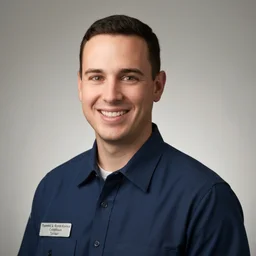
Paramedic & Emergency Services Certification Trainer
George Washington UniversityCaptain Ryan O'Brien is a licensed paramedic and NREMT-certified emergency medical professional with a Bachelor of Science in Emergency Medical Services from George Washington University. He has 15 years of field experience as a paramedic and firefighter, and has coached hundreds of EMT and paramedic candidates through their NREMT written and psychomotor licensing examinations.
Join the Discussion
Connect with other students preparing for this exam. Share tips, ask questions, and get advice from people who have been there.
View discussion (7 replies)