
FCC Training Programs & Classes for Child Care Providers 2026 September
❓ Free family child care home practice test with questions and answer explanations. Prepare for the 2026 September exam with instant scoring and study guides.
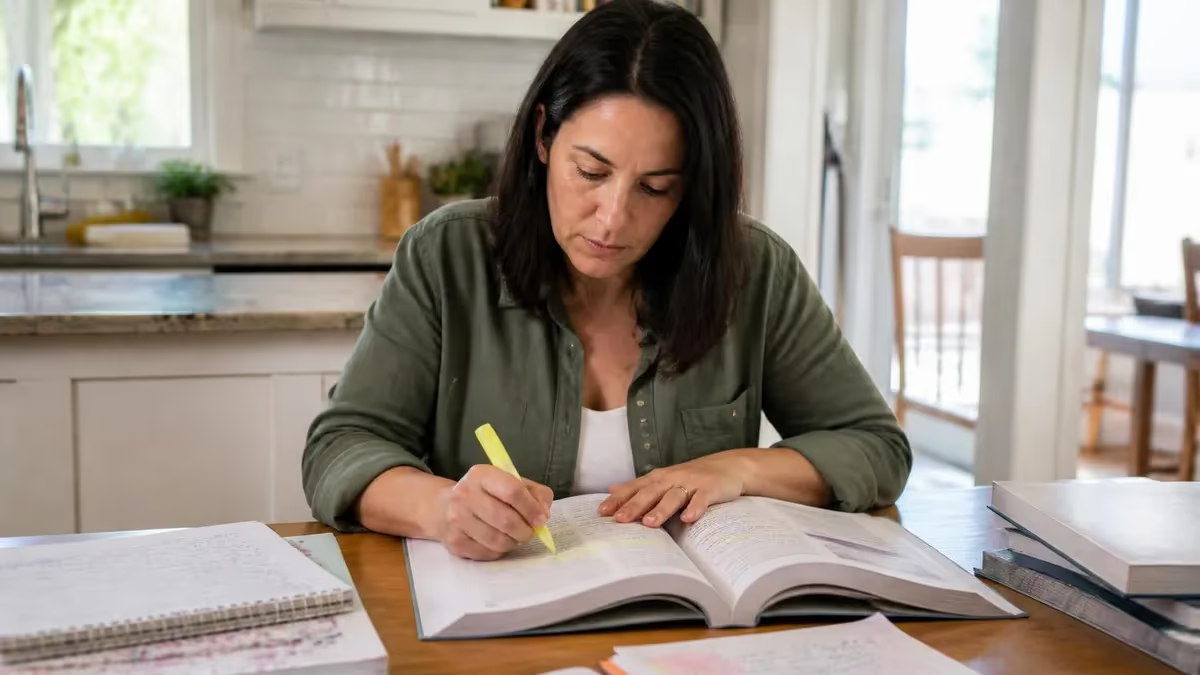
Running a family child care (FCC) home is more than looking after children — it's operating a licensed small business with regulatory requirements, ongoing training obligations, and professional development expectations. Whether you're just starting out or looking to maintain your existing license, understanding what FCC training programs and FCC classes are required in your state is essential.
This guide covers what training family child care providers typically need, how to find approved programs, and how to structure your professional development as an FCC provider.
What Are FCC Training Programs?
FCC training programs are educational courses and workshops designed specifically for family child care providers — individuals who run licensed child care operations in their own homes. These programs cover child development, health and safety, nutrition, business practices, curriculum, and family engagement.
Training requirements vary significantly by state. Most states that license family child care homes require providers to complete a minimum number of training hours annually or biennially as a condition of maintaining their license.
Common topics covered in FCC training programs include:
- Child development — age-appropriate milestones, developmental screening, play-based learning
- Health and safety — medication administration, communicable disease prevention, food safety
- CPR and first aid — required in virtually all states, with renewal every 2 years
- Nutrition and meal planning — CACFP requirements, meal patterns, feeding practices
- Business and professional practices — licensing compliance, parent communication, record-keeping
- Safe sleep practices — infant safe sleep policies required in most states
- Prevention of Abusive Head Trauma — mandated in many states
How Many Training Hours Do FCC Providers Need?
The annual training hour requirement for family child care providers varies by state. Common requirements:
- 6–10 hours per year — typical for licensed providers in many states. Often divided between health/safety topics and general child development content.
- 12–20 hours per year — required in some states, particularly for providers serving infants and toddlers or participating in Quality Rating and Improvement Systems (QRIS).
If you're enrolled in a QRIS program — a tiered quality rating system that many states use — you may need additional training hours to move up quality levels and access associated financial incentives.
Types of FCC Classes and Where to Find Them
Child Care Resource and Referral Agencies (CCR&Rs)
Every state has a network of Child Care Resource and Referral agencies that provide training, technical assistance, and referral services to child care providers. CCR&Rs are typically the primary source of free or low-cost FCC training in your area. Search for your state's CCR&R network through Child Care Aware of America.
Community College Courses
Many community colleges offer early childhood education (ECE) courses that count toward FCC training requirements. These courses are typically more structured and comprehensive than short workshops, and completing enough credits can lead to a Child Development Associate (CDA) credential or an associate degree in early childhood education.
Online Training Platforms
Several online platforms offer approved FCC classes that can be completed on your own schedule. Popular platforms include the ChildCare Education Institute (CCEI) and state-specific online portals for licensed providers. Online training is particularly valuable for family child care providers who can't easily attend in-person workshops due to scheduling constraints. Check with your licensor to confirm which online providers are approved in your state.
National Organizations
The National Association for Family Child Care (NAFCC) and the National Association for the Education of Young Children (NAEYC) both offer training resources and professional development opportunities relevant to FCC providers. NAFCC also administers a voluntary national accreditation program for family child care homes.
CACFP Training for FCC Providers
If you participate in the CACFP (Child and Adult Care Food Program) — which provides reimbursements for meals served to children in licensed care — you have additional training requirements specific to the program. CACFP training covers meal pattern requirements, record-keeping, documentation, and civil rights compliance.
CACFP training is typically provided by your sponsoring organization or by your state CACFP agency. Annual CACFP training is required to remain in the program and maintain meal reimbursements. The financial value of CACFP participation is significant — providers can receive reimbursement that adds thousands of dollars annually to their income.
CDA Credential for FCC Providers
The Child Development Associate (CDA) credential, administered by the Council for Professional Recognition, is the most widely recognised entry-level credential in early childhood care and education. There's a specific CDA credential track for Family Child Care providers.
To earn the FCC CDA, you need to:
- Complete 120 hours of formal child care education
- Accumulate 480 hours of experience working with children under 5 in a family child care setting
- Assemble a Professional Portfolio
- Complete an observation by a CDA Professional Development Specialist
- Pass the CDA Exam
The CDA is often required as a baseline for higher-tier quality ratings in QRIS programs and can open doors to higher subsidy rates, grants, and professional advancement. Many states offer scholarship assistance for FCC providers pursuing CDA credentials through T.E.A.C.H. Early Childhood programs.
Tracking and Documenting Your FCC Training
Your state licensor or CCR&R typically maintains a professional development registry where your completed training is recorded. Make sure every course you complete is documented and submitted to your registry — incomplete records create compliance issues at licensing renewal time.
Keep your own records too: certificates of completion, sign-in sheets, and course descriptions. If there's ever a discrepancy in the registry, your personal records provide backup documentation.
Planning your training year in advance helps you avoid the scramble of trying to complete required hours right before your license renewal. Spread your training across the year and prioritise topics that align with your professional development goals as well as meeting minimum requirements.
Professional development isn't just a licensing checkbox — it directly improves the quality of care you provide. Providers who engage actively with training tend to create better environments for children, have lower turnover of enrolled families, and build more sustainable businesses. Our free FCC practice tests help you check your knowledge of key content areas — use them as part of your ongoing professional self-assessment.

- +Industry-recognized credential boosts your resume
- +Higher earning potential (10-20% salary increase on average)
- +Demonstrates commitment to professional development
- +Opens doors to advanced career opportunities
- −Exam preparation requires significant time investment (4-8 weeks)
- −Certification fees can be $100-$400+
- −May require continuing education to maintain
- −Some employers may not require certification




Choosing the Right FCC Training for Your Needs
With so many training options available, it helps to approach professional development strategically rather than just completing the minimum required hours.
If you're new to family child care, prioritise foundational health and safety training — CPR and first aid certification, safe sleep training, and basic child development content. These are the non-negotiables that every provider needs from the start.
As you gain experience, branch out into areas that address your specific challenges or goals. If you want to work toward CDA credential, plan your training around the required 120 hours and focus on courses that align with the CDA competency areas. If you want to move up quality tiers in your state's QRIS, find out exactly what training hours and topics are required at each level and plan accordingly.
Don't overlook peer learning. Many CCR&Rs facilitate Family Child Care networks or provider associations where experienced providers share knowledge and support each other. These informal learning communities complement formal training in valuable ways that structured courses alone can't replicate.
Our free practice tests cover key content areas in family child care — from child development and nutrition to business practices and professional standards. Use them to identify knowledge gaps you might want to address in your next round of training, and to prepare for any credentialing exams or state competency assessments you're working toward.
FCC Key Concepts
What is the passing score for the FCC exam?
Most FCC exams require 70-75% to pass. Check the official exam guide for exact requirements.
How long is the FCC exam?
The FCC exam typically allows 2-3 hours. Time management is critical for success.
How should I prepare for the FCC exam?
Start with a diagnostic test, create a 4-8 week study plan, and take at least 3 full practice exams.
What topics does the FCC exam cover?
The FCC exam covers multiple domains. Review the official content outline for the complete list.
About the Author

Educational Psychologist & Academic Test Preparation Expert
Columbia University Teachers CollegeDr. Lisa Patel holds a Doctorate in Education from Columbia University Teachers College and has spent 17 years researching standardized test design and academic assessment. She has developed preparation programs for SAT, ACT, GRE, LSAT, UCAT, and numerous professional licensing exams, helping students of all backgrounds achieve their target scores.