
When Did FAFSA Open? Complete 2026 September-26 Release Date Guide and Filing Timeline
💯 When did FAFSA open? Get the exact 2026 September-26 release date, key deadlines, filing timeline, and step-by-step submission tips for federal aid.

If you have asked when did fafsa open for the 2025-26 school year, here is the short answer: the U.S. Department of Education launched the soft rollout on November 21, 2024, and opened the FAFSA broadly to all students on December 1, 2024. That release pushed the start date well beyond the historical October 1 window, mirroring the delays families experienced during the chaotic 2024-25 cycle. Knowing the exact opening date matters because state and college priority deadlines began counting down the moment the form went live.
The 2024-25 cycle set the precedent for these later openings. After the FAFSA Simplification Act required a redesigned form, the Department of Education pushed back the launch to December 30, 2023, instead of October 1, 2023. That ten-week delay caused widespread confusion, missed deadlines, and reduced application volume, so the Department promised a steadier rollout for 2025-26. The phased opening starting November 21, 2024 was their compromise: a beta test for selected students before full public access on December 1.
This guide walks through every milestone for the current FAFSA cycle so you can plan your submission, lock in priority aid, and avoid the mistakes that cost families thousands of dollars last year. We will cover the federal deadline, state deadlines, college-specific priority dates, the IRS Data Retrieval Tool timeline, and what to do if you miss a window. We will also explain what fafsa 2025 means in practice — the form name refers to the 2025-26 academic year that begins in fall 2025.
Understanding the difference between the federal deadline and the priority deadline is critical. The federal FAFSA deadline 2025 is June 30, 2026, which is the last day to submit the form for the 2025-26 academic year. But that date is misleading because most state and institutional aid programs close their priority windows months earlier, often by February or March. Missing those earlier dates can mean losing grants, work-study, and competitive scholarships even if your FAFSA is technically still on time federally.
If you are wondering what does fafsa stand for, it is the Free Application for Federal Student Aid. This single form unlocks federal Pell Grants, Direct Loans, work-study eligibility, and the majority of state grant programs. It also serves as the gatekeeper for institutional need-based aid at almost every accredited college and university in the United States. Completing it correctly and on time is the single most important financial step a college-bound student takes each year.
The 2025-26 FAFSA also retained the simplifications introduced last cycle: fewer questions, automatic IRS data transfer for most families, and the new Student Aid Index that replaced the old Expected Family Contribution. The form is shorter, but it is not faster for everyone — contributors must each create their own FSA ID and consent to having their tax data pulled. We will walk through that process step by step so you can move from account creation to submission in under two hours.
Throughout this article we will reference the exact dates the Department of Education has published, the historical context for those dates, and the practical timeline most families should follow. If you are reading this in early 2026, much of the information still applies because the 2025-26 cycle remains open until June 30, 2026. New seniors should also bookmark this guide because the 2026-27 FAFSA is expected to return to the traditional October 1, 2025 opening date.
FAFSA 2025-26 by the Numbers

FAFSA 2025-26 Release Timeline
Beta Testing Phase
Soft Launch
Full Public Launch
Priority Filing Window
Federal Closing Date
The fafsa deadline 2025 actually refers to three different deadlines that students often confuse. The federal deadline of June 30, 2026 is the latest possible date to submit, but it is essentially irrelevant for most families because state and school deadlines fall months earlier. Treating June 30 as your target almost guarantees lost aid. The smart approach is to identify the earliest deadline that applies to you — usually a state priority date in February — and aim to file at least two weeks before that.
State deadlines vary dramatically across the country. California's Cal Grant deadline is March 3, 2025, while Texas uses a January 15 priority date for the TEXAS Grant. Tennessee requires submission by the date of high school graduation for the HOPE Scholarship, and Indiana imposes one of the earliest cutoffs at April 15. New York's TAP requires a separate state application but uses your FAFSA data, with a deadline of June 30. You can check your state's specific deadline on studentaid.gov or through your state's higher education agency website.
College-specific deadlines add another layer. Highly selective private colleges often require the FAFSA by early February, sometimes alongside the CSS Profile. State universities frequently use March 1 or April 1 as their institutional priority dates. Community colleges tend to be more flexible, accepting FAFSAs into the summer, but even there, work-study positions and certain campus-based grants are awarded first-come first-served. Always check each college on your list individually — assumptions cost money.
The fafsa id, formally called the FSA ID, must be created before you can begin the form. Each contributor — student, parent or stepparent, and in some cases a spouse — needs their own unique FSA ID consisting of a username and password tied to a Social Security number. Creating the ID requires identity verification through the Department of Education's matching system, which usually takes one to three business days. Do this step a week before you plan to file to avoid bottlenecks.
If you started the form but did not finish, the system saves your progress automatically. You can return to studentaid.gov, log in with your FSA ID, and resume from the section you left. Be aware that contributor invitations expire after a period of inactivity, so if a parent has not completed their section within several weeks, you may need to reissue the invitation. The Department of Education's how long does fafsa take to process documentation explains the typical processing window after submission.
For students answering when is fafsa due for 2025-26, the safest answer is: as early as possible, ideally within the first thirty days the form is open. The 2025-26 form opened December 1, 2024, so the ideal filing window was December 2024 through January 2025. If you missed that window, file immediately — every day of delay reduces your chances of receiving discretionary, need-based, and first-come aid. Even mid-cycle filers can still receive Pell Grants and federal loans, which are not time-limited within the year.
If you need help, the fafsa phone number is 1-800-433-3243. The Federal Student Aid Information Center operates Monday through Friday from 8 AM to 11 PM Eastern, and weekends from 11 AM to 5 PM. Wait times are shortest early in the morning and longest during deadline weeks in late February and early June. For technical issues with the online form, support agents can troubleshoot login problems, FSA ID resets, and submission errors directly.

FAFSA Practice Test Questions
Prepare for the FAFSA - Free Application for Federal Student Aid exam with our free practice test modules. Each quiz covers key topics to help you pass on your first try.
FAFSA Dependency Status
FAFSA Exam Questions covering Dependency Status. Master FAFSA Test concepts for certification prep.
FAFSA Deadlines and Renewal
Free FAFSA Practice Test featuring FAFSA Deadlines and Renewal. Improve your FAFSA Exam score with mock test prep.
FAFSA Verification Process
FAFSA Mock Exam on FAFSA Verification Process. FAFSA Study Guide questions to pass on your first try.
FAFSA Federal Aid Types
FAFSA Test Prep for Federal Aid Types. Practice FAFSA Quiz questions and boost your score.
FAFSA Federal Aid Types and Eligibility
FAFSA Questions and Answers on Federal Aid Types and Eligibility. Free FAFSA practice for exam readiness.
FAFSA Financial Aid Eligibility
FAFSA Mock Test covering Financial Aid Eligibility. Online FAFSA Test practice with instant feedback.
FAFSA Income and Asset Reporting
Free FAFSA Quiz on Income and Asset Reporting. FAFSA Exam prep questions with detailed explanations.
FAFSA Practice Test
FAFSA Practice Questions for Practice Test. Build confidence for your FAFSA certification exam.
Understanding fafsa 2025 Federal, State, and Institutional Layers
The federal layer is the foundation. By submitting one FAFSA, you become eligible for the Pell Grant (up to $7,395 for 2025-26), Federal Supplemental Educational Opportunity Grant, Federal Work-Study, Direct Subsidized Loans, Direct Unsubsidized Loans, and Parent PLUS Loans. These programs do not have first-come limits at the federal level — eligibility is determined by your Student Aid Index regardless of when you file within the cycle.
The federal deadline of June 30, 2026 applies to all federal aid programs. As long as the Department of Education receives your FAFSA before that moment, the federal portion of your aid package can be processed. Corrections are accepted through September 12, 2026. However, your school must also receive your processed application before its own deadline, which is usually earlier than the federal date and varies by institution.
Filing FAFSA Early vs Waiting Until Spring
- +Maximum eligibility for first-come state grants before funds run out
- +Earlier financial aid offers from colleges help with enrollment decisions
- +More time to appeal awards or correct errors before deadlines
- +Priority consideration for limited work-study positions on campus
- +Access to institutional scholarships with early deadlines
- +Reduced stress during senior year college decision season
- −Tax information from two years prior may not match current circumstances
- −Family income changes after filing require professional judgment appeals
- −Early filers occasionally hit technical bugs that later filers avoid
- −Contributors must be available and responsive in November-December
- −Custodial parent determination requires settled living arrangements
- −Asset values change throughout the year and can affect SAI calculations
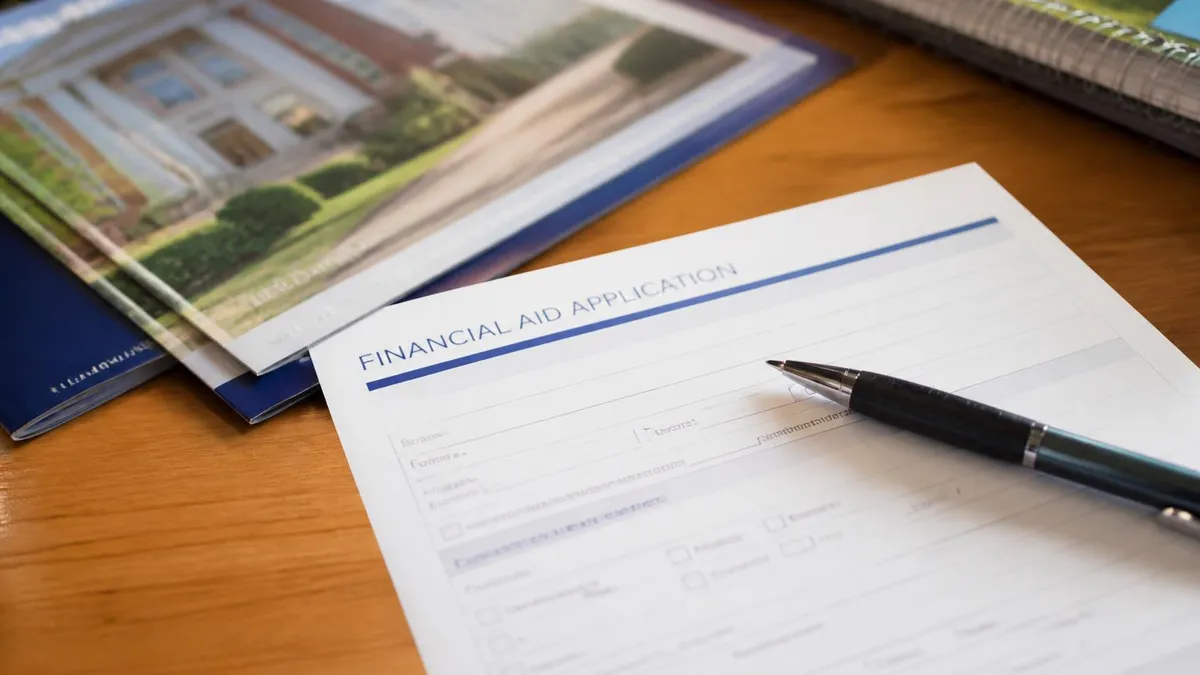
Pre-Submission Checklist for the fafsa deadline
- ✓Create your FSA ID at least one week before filing the form
- ✓Gather Social Security numbers for student and all contributors
- ✓Collect 2023 federal tax returns and W-2 forms for income reporting
- ✓List current balances of checking, savings, and investment accounts
- ✓Identify your custodial parent based on the past 12 months of support
- ✓Add up to 20 college codes where you want the FAFSA sent
- ✓Confirm citizenship status and have Alien Registration Number if applicable
- ✓Note any unusual circumstances that may require a professional judgment appeal
- ✓Bookmark your state's priority deadline and the deadlines for each target college
- ✓Save your confirmation page and the email containing your submission summary
File within 30 days of the FAFSA opening to maximize aid
State grant programs in California, Texas, Indiana, Tennessee, and several other states distribute funds first-come, first-served. Filing in December or January routinely yields thousands of dollars more in aid than filing in March or April for identical financial situations. The form does not improve with delay — file as soon as your contributors are ready.
The 2025-26 FAFSA preserved most of the simplifications introduced for fafsa 2025 last cycle while fixing the operational disasters that frustrated families in 2024-25. The form is shorter — most students answer fewer than 36 questions — and the IRS Direct Data Exchange automatically transfers tax information from contributors who consent. The old Expected Family Contribution has been replaced by the Student Aid Index, which can go as low as negative $1,500 to better reflect families in extreme financial need.
The Student Aid Index calculation differs from the old EFC in important ways. The number of children in college no longer reduces your SAI, which means families with multiple students in college simultaneously may see less aid than they did under the old system. Small business and family farm assets are now counted, where they were excluded before. Child support received counts as an asset instead of income. These changes shift aid distribution but do not necessarily reduce total available funding.
The contributor model is the most significant procedural change. Each adult who provides financial information — student, parent or stepparent, and in some cases a spouse — must create their own FSA ID and complete their own section of the form. Contributors receive email invitations with secure links and must consent to having the IRS transfer their tax data automatically. Without that consent, the form cannot be processed, even if every other section is complete and correct.
The IRS Direct Data Exchange replaced the old IRS Data Retrieval Tool with a more reliable, more automatic system. Most contributors will see their tax information populate without ever leaving studentaid.gov. The exchange covers adjusted gross income, taxes paid, untaxed income from retirement contributions, and a handful of other line items. Contributors who filed amended returns, lived abroad, or did not file at all will need to provide additional documentation manually.
Processing time for the 2025-26 cycle has been dramatically faster than 2024-25. Most students received their Student Aid Index notification within three days of submission, compared to three months or longer for some 2024-25 applicants. Schools began receiving Institutional Student Information Records in early December 2024 — much earlier than in the previous cycle. If you are curious about the historical context, our guide to the fafsa 2025-26 state-by-state deadlines provides additional detail.
For students answering what is fafsa, remember that the form does much more than determine federal aid. It is the universal financial aid application used by virtually every accredited college, every state grant program, and many private scholarship organizations. Filing it correctly opens doors to roughly $120 billion in annual federal aid, plus tens of billions more in state and institutional support. Skipping the FAFSA because you assume you will not qualify is one of the most expensive mistakes a college family can make.
The 2026-27 FAFSA is expected to return to the historic October 1 opening date, marking the first on-schedule launch since 2022. The Department of Education has publicly committed to that target, citing the stable contributor model, faster IRS data exchange, and lessons learned from two delayed cycles. If you have a younger sibling starting college in fall 2026, plan to file their FAFSA in early October 2025 to lock in priority aid the moment the form opens.
Although the federal deadline is June 30, 2026, virtually all state grants and institutional aid programs have already closed by then. Filing in late spring or summer means losing access to billions of dollars in need-based grants and competitive scholarships. If you have not filed yet, do it today — every additional day of delay reduces your aid package and limits your enrollment options for fall 2025 and spring 2026 semesters.
Missing a fafsa deadline is rarely fatal, but the consequences depend heavily on which deadline you missed. Missing the federal June 30 deadline means you cannot receive any federal aid for the 2025-26 academic year — no Pell Grant, no Direct Loans, no work-study. Missing a state priority deadline usually means losing state grant eligibility but keeping federal aid intact. Missing a college's institutional priority date typically means smaller institutional grants but does not affect federal or state aid.
If you missed your state's priority deadline, contact your state higher education agency immediately. Some states allow late filers to receive any remaining unallocated funds, particularly if you can demonstrate extenuating circumstances like a family illness, technical issue, or lost contributor access. Tennessee, for example, sometimes accepts late HOPE Scholarship applications when high schools verify late graduation dates. New Jersey allows TAG applicants to file as late as April 15 in some cases.
For institutional deadlines, contact the financial aid office directly. Many colleges hold a reserve of institutional aid for late filers, particularly for students with strong academic profiles or special circumstances. Be polite, be specific about why you missed the deadline, and ask whether any portion of the aid package can still be considered. Schools want students to enroll, so they often find ways to provide partial support even outside priority windows.
If your family's financial situation changed after you filed, request a professional judgment review. Job loss, divorce, death of a contributor, major medical expenses, or natural disasters all qualify as circumstances that warrant a review. Submit a written request to the financial aid office with documentation, and they can recalculate your SAI based on current circumstances rather than the 2023 tax data you originally reported. Decisions usually take two to four weeks.
If you forgot to add a college code to your FAFSA, you can add up to 20 schools by logging back into studentaid.gov. Corrections process within one to three business days, and the school will receive your data shortly after. There is no penalty for adding schools after submission, and the schools you originally listed will not see the new additions unless they specifically check. Adding schools late is harmless from a federal perspective, though institutional priority dates still apply.
Students who lost FSA ID access can recover their accounts through identity verification on studentaid.gov. The process requires a current Social Security number, date of birth, and a working email or phone number for two-factor authentication. If those recovery methods fail, the FSA ID Customer Service team at 1-800-433-3243 can manually verify identity using tax records, driver's license numbers, and other documents. Plan extra time if you suspect any recovery issues.
For students wondering about the fafsa refund timeline after submitting late, check our complete fafsa deadline 2024 guide. Late filing often delays disbursement and any refund check that follows, which can create cash-flow challenges for students who counted on aid to cover housing deposits, books, or commuting costs. The earlier you file, the earlier your school can package your aid, and the earlier any refund arrives.
Practical preparation makes the difference between a smooth FAFSA submission and a frustrating multi-week ordeal. Start by reading every email from your colleges' financial aid offices between October and February. Schools publish their specific deadlines, required supplementary forms, and verification requirements in those messages. Set calendar reminders for two weeks before each deadline and another reminder one week before. Time pressure is the most common cause of FAFSA mistakes.
Organize your documents before you log in. Keep a folder containing your 2023 tax return, your parents' 2023 tax return if you are a dependent, recent bank statements for all accounts, current values of investments outside retirement accounts, and your Social Security card. Having these documents physically beside you while filing prevents the back-and-forth that causes many filers to abandon the form midway. The actual form takes less than an hour for prepared families.
Coordinate with your contributors before filing. If your parents are divorced, identify which parent provided more financial support over the past 12 months — that parent is your custodial parent for FAFSA purposes, regardless of legal custody arrangements. If your custodial parent has remarried, your stepparent's income and assets are also required. Have an honest conversation about who will report what, and confirm that each contributor will respond promptly to their FAFSA invitation email.
Double-check every number before submitting. The most common errors are typos in Social Security numbers, mismatched names between FAFSA and Social Security records, and asset values reported as monthly rather than current balances. Even small errors trigger verification flags that can delay aid by weeks. Reviewing the summary page carefully before clicking submit takes ten extra minutes and saves enormous downstream hassle.
After submission, watch your email and the studentaid.gov portal daily for the next two weeks. Your FAFSA Submission Summary arrives via email and is also available in your account. Review it line by line for accuracy. If any reported information is wrong, log back in and submit a correction immediately. Schools receive your data within one to three days of submission and begin building your aid package shortly after.
Plan ahead for verification. Roughly 18 percent of FAFSA submissions are selected for verification, which requires you to submit additional documents to the school's financial aid office. Selection is often random but more common when your reported income differs significantly from prior years. If selected, you will receive instructions from each school listed on your FAFSA. Respond within two weeks to keep your aid package on schedule — slow responses delay enrollment confirmation and financial aid disbursement.
Finally, remember that the FAFSA is annual. You must file a renewal FAFSA every fall to continue receiving federal aid in subsequent academic years. The renewal form pre-fills most of your prior responses, which makes the process faster — usually 20 to 30 minutes — but you must still update income, assets, and contributor information each year. Set a personal deadline of November 1 each year to renew, and your aid will arrive on time every academic year without scrambling.
FAFSA Questions and Answers

FAFSA Deadline 2025-2026: Federal and State Dates You Cannot Miss

State FAFSA Deadlines: 2025-26 Priority Dates Guide

How Long Does FAFSA Take to Fill Out? Complete 2025-26 Timing Guide

When Do I Get My FAFSA Refund? Complete 2025-26 Timeline Guide

FAFSA Refund: How Financial Aid Refunds Work & When You Get Paid
About the Author

Educational Psychologist & Academic Test Preparation Expert
Columbia University Teachers CollegeDr. Lisa Patel holds a Doctorate in Education from Columbia University Teachers College and has spent 17 years researching standardized test design and academic assessment. She has developed preparation programs for SAT, ACT, GRE, LSAT, UCAT, and numerous professional licensing exams, helping students of all backgrounds achieve their target scores.