
Parent FAFSA — Complete Guide (2026)
Parent FAFSA guide — ✏️ who counts as a parent, how to invite a parent contributor, FSA ID setup, what info parents provide, and when parent data isn't

Parent FAFSA: How Parents Fit Into the 2026–27 Application
The new FAFSA changed how parents show up on the form. Not just a few tweaks — a structural rework. Parents are now called contributors, and each one signs in to studentaid.gov with their own FSA ID, gives consent to pull tax data from the IRS, and answers their own section of the form. The student starts the application, lists who needs to contribute, and the system emails those people an invitation. How does fafsa work in this contributor model? It splits the workload — and the responsibility for accurate info — across everyone who touches the form. Practice with the free FAFSA practice test on PracticeTestGeeks (150+ questions with answer explanations).
Here's the catch: not every parent counts. The Department of Education has narrow rules about which parent fills out the form when biological parents are divorced, when a stepparent is in the picture, or when the student lives with grandparents. Get this wrong and the Student Aid Index — your SAI — comes out wrong too, which can cost thousands in aid eligibility. Sai fafsa calculations pull directly from the contributor sections, so the parent you list matters more than most families realize.
This guide walks through every parent-related question on the new FAFSA. Who counts. How to invite them. What documents they'll need. What happens if a parent refuses to participate. And when parent info isn't required at all — because the student qualifies as independent.
Short answer up front: most undergraduate students under 24 need at least one parent contributor. The parent provides tax info via direct IRS transfer (called FA-DDX), confirms household details, and signs off on the application. The whole parent section usually takes 20 to 40 minutes once the parent has their FSA ID set up. FSA ID creation itself can take another 1–3 days to verify with the Social Security Administration.
If you want to estimate aid before filing, the fafsa aid calculator uses similar inputs to what your parent will enter. Run it first — it'll tell you whether the parent section is worth the effort and what kind of aid number to expect.
One more framing point before we dive in. The new FAFSA's contributor model isn't just a UI change. It's a redistribution of who's legally responsible for each piece of data. Under the old form, a student could complete the whole thing with a parent's tax return in front of them — for better or worse, with mistakes traceable to nobody in particular.
Now each contributor signs their own section under their own FSA ID, which means each person attests to the accuracy of what they entered. That accountability matters during verification, when a school's financial aid office can compare what was submitted against tax transcripts and W-2s.
Worth knowing: the IRS data transfer happens behind a wall. The student never sees the parent's income figures unless the parent shares them outside the form. The parent never sees the student's section unless the student shares it. This privacy split is one of the cleanest improvements in the new design — and it's also why families with poor communication sometimes leave the form half-finished for weeks.
If you want the full picture, the parent fafsa guide walks through it step by step.
Free FAFSA Study Tools
Interactive FAFSA resources on PracticeTestGeeks, free to start:
- FAFSA practice test — 150+ questions with instant scoring and answer explanations
- FAFSA flashcards — review key terms and concepts card by card
- FAFSA study guide — topic-by-topic overview of what the exam covers
- FAFSA cheat sheet — one-page printable summary for last-minute review
Key things parents need to know
- You need an FSA ID — created at studentaid.gov before you can sign the form.
- Custodial parent rules apply — for divorced parents, it's the one who provided more financial support in the past 12 months.
- Stepparents count if married to the custodial parent — their income goes on the form.
- Student invites you — you'll get an email with a link after the student lists you as a contributor.
- IRS data pulls automatically — you'll consent once, and tax info imports directly.
- Refusing to participate means the student can only get unsubsidized loans — no Pell Grant.
Which Parent Files the FAFSA
- Who files: Both parents
- Income reported: Combined
- Contributors needed: 1 (joint return) or 2 (separate)
- Who files: Parent who provided more support
- Lookback period: Past 12 months
- If support is equal: Parent with higher income files
- Who files: Custodial parent + stepparent
- Income reported: Both spouses
- Stepparent excluded: Never — always counted if married
- Who files: Both parents
- Income reported: Combined
- Same rules apply: As any married couple
- Who files: The parent
- Other biological parent: Not reported
- Child support received: Reported as asset, not income
- Who files: Biological/adoptive parent (not grandparents)
- Exception: If legally adopted by grandparents
- Special circumstance: May qualify as independent
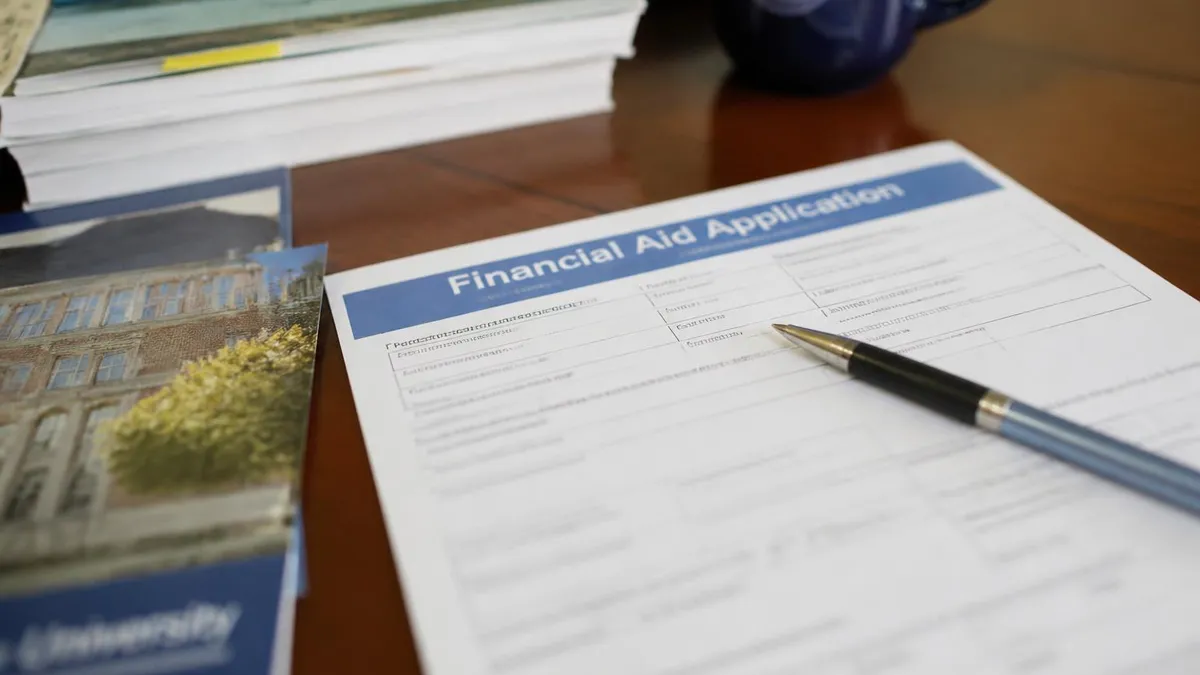
How to Invite a Parent Contributor on the New FAFSA
This is the step that trips up the most families. The student starts the application, and somewhere in the early sections it asks for a list of contributors. Parents don't sign up themselves — they get invited. You'll need their legal name (exactly as on their SSN card), their date of birth, and their Social Security Number. If they don't have an SSN, you'll need their ITIN or you'll select the option indicating they don't have one.
Step One: Student Logs In First
The student goes to studentaid.gov, signs in with their own FSA ID, and starts the 2026–27 FAFSA. Around the third or fourth screen, the system asks about the student's parents. Answer honestly — the system uses these answers to build the contributor invitation list.
Step Two: Add Each Parent
For each parent who needs to contribute, enter their info. The system sends an email invite immediately. The parent gets a link, follows it to studentaid.gov, signs in (or creates an FSA ID if they don't have one), and gets directed to their section of the FAFSA.
Step Three: Parent Signs In and Completes Their Section
Once the parent is in, they answer questions about marital status, family size, untaxed income, and assets. The IRS data tool — called FA-DDX in the new form — pulls tax info directly. Parents consent once, and 2024 tax data (for the 2026–27 form) imports without anyone typing a number. That's a big change. Manual entry is no longer the default.
The wait time matters. How long does fafsa take to process depends on whether all contributors finish their sections. The application doesn't get submitted until every contributor signs and submits. One stalled parent can hold up the whole thing for weeks.
Step Four: Sign and Submit
Each contributor electronically signs their section before submission. The student then submits the completed form. You'll get a confirmation page with your SAI estimate — that's the new EFC replacement number that schools use to build your aid package.
Creating a Parent FSA ID
Before any of this works, parents need an FSA ID. Go to studentaid.gov. Click "Create Account." You'll enter your SSN, full legal name (matching SSA records exactly), date of birth, and a personal email address. The system verifies your info with the Social Security Administration — this can take 1 to 3 business days. You can technically use the FSA ID right away for some functions, but signing the FAFSA requires SSA verification to complete.
One critical rule: each FSA ID needs its own email address. A parent can't share an email with their student. If both you and your child use the same Gmail, one of you needs a different email before either FSA ID will work. This is the single most common parent FAFSA mistake we see.
Forgot your FSA ID from a previous year? Use the "Forgot My Username" or "Forgot My Password" links. Don't create a new account — duplicate FSA IDs cause processing delays that can take weeks to untangle through the fafsa number support line.
Parent FAFSA Timeline — From Invite to Submission
Day 0: Student Starts Application
Day 0: Parent Receives Email Invite
Days 1–3: Parent Creates FSA ID
Day 3–5: Parent Signs In and Completes Section
Day 5: All Contributors Sign
Day 5: Student Submits
Days 5–8: Processing
Day 14–30: School Aid Offers
Common Parent Situations
If your biological parents are divorced and live apart, only one fills out the FAFSA — the one who provided more financial support during the past 12 months. Not the one with legal custody. Not the one the student lives with most of the time. The one who paid more for food, housing, medical care, and similar essentials.
If support is exactly equal, the parent with the higher income files. If that parent has remarried, the stepparent's info also goes on the form.
Quick test: add up housing, food, clothing, medical, transportation, and other support costs for each parent over the past year. Whoever's number is higher fills out the FAFSA.
Parent Documents Checklist
- ✓Parent's Social Security Number (or ITIN)
- ✓Parent's date of birth (matching SSN card exactly)
- ✓Parent's legal name (exactly as on SSN card)
- ✓Personal email address (different from student's email)
- ✓Mobile phone number for FSA ID two-factor auth
- ✓2024 federal tax return (for 2026–27 FAFSA)
- ✓Records of untaxed income — child support received, untaxed pensions, veterans benefits
- ✓Current bank statements (checking and savings balances)
- ✓Investment values — stocks, bonds, real estate (excluding primary home)
- ✓Business or farm net worth, if applicable
- ✓Records of any 529 plans owned by the parent
- ✓Driver's license or state ID for identity verification

When Parent Info Is Not Needed — The Independent Student Test
Not every student needs a parent on the FAFSA. The federal government considers some students independent based on specific criteria. If even one applies, the parent section gets skipped entirely. No invitation. No contributor. Just the student's info.
The Independence Criteria
You're independent for FAFSA purposes if any of these apply: you'll be 24 or older by January 1 of the award year, you're married or separated (not divorced), you have a child or other legal dependent you support, you're a veteran of the U.S. Armed Forces, you're on active duty for purposes other than training, you're an orphan or ward of the court, you were in build care after age 13, you're homeless or at risk of homelessness, you're an emancipated minor, you're working on a graduate or professional degree.
That last one matters a lot. Once you start a master's program or law school, you're automatically independent. No parent info, ever. Schools use only your own income and assets to calculate aid. Fafsa requirements for graduate students differ in several ways — generally simpler, with no parent contributor section.
The Tricky Cases
Some situations don't automatically grant independence but might qualify through a dependency override. A student estranged from both parents due to abuse or neglect can request override status through their school's financial aid office. The school evaluates evidence — police reports, social worker statements, letters from clergy or teachers — and decides case by case.
What doesn't qualify? "My parents won't pay for college." "My parents don't claim me on their taxes." "I live on my own." None of these — by themselves — change your dependency status. The federal rules don't care who pays. They care about the specific independence criteria listed above. And don't bank on a dependency override unless you have real documentation — police reports, court orders, letters from social workers who know the situation directly.
What If the Student Lives Alone?
Living independently as an 18-year-old doesn't change FAFSA dependency. Neither does paying your own bills. Neither does being financially cut off. The rules are blunt: until you hit one of the bright-line criteria, you're treated as dependent. That feels unfair to many students who've had to grow up fast. The system isn't designed around fairness here — it's designed around verifiable categories.
Independence Triggers — One Is Enough
- ✓Will be 24 or older by January 1 of the award year
- ✓Married or separated (not divorced) at time of filing
- ✓Has a child or other legal dependent receiving more than half their support
- ✓Veteran of the U.S. Armed Forces (active duty for training doesn't count)
- ✓On active duty for purposes other than training
- ✓Orphan, ward of the court, or in build care after age 13
- ✓Emancipated minor or in legal guardianship (court-determined)
- ✓Homeless or at risk of homelessness, as determined by a school or shelter
- ✓Currently pursuing a master's, doctorate, or professional degree
What Parents Provide on the Form
The parent section has roughly 30 questions, depending on situation. Here's what you'll cover, broken down by topic so you know what records to gather first.
Marital Status and Family Size
The form asks about the parent's current marital status — married, separated, divorced, widowed, never married. It then asks about household size: how many people the parent supports financially, including the student and any other dependents.
Household size includes anyone the parent provides more than half the financial support for, even if they don't live in the home. An elderly relative the parent supports. A child from a previous relationship who lives with the other parent but is financially supported. All count. Get this number right — it's a multiplier on the SAI formula, and undercounting costs aid money.
Income via FA-DDX
The big change in the new FAFSA: parents give one-time consent and 2024 IRS tax data pulls automatically. Adjusted gross income, taxes paid, untaxed IRA distributions, retirement contributions — all transferred without manual entry. The whole income section takes about 30 seconds once consent is granted. No more paging through your 1040 trying to find line 11. No more matching schedule numbers to FAFSA question numbers.
If your parent's taxes aren't filed yet, they can still complete the FAFSA using estimates and update later. But the smoother path is filing taxes first, then doing FAFSA. The fafsa calculator can give you a preview of what the SAI will look like based on rough income estimates.
Assets
This is where families get nervous. The form asks about: cash, checking, savings balances, investment account values, real estate (other than primary home), and business or farm value over certain thresholds. Primary home, retirement accounts, life insurance, and small family-owned businesses (under 100 employees) are excluded.
Assets are reported as of the day you submit the form. Not last year. Not last month. The day-of value. Some families time their FAFSA submission for when accounts are lower — right after a mortgage payment, or after paying for a car. Legal, but the savings are usually modest.
Number in College
The new FAFSA dropped the "number in college" factor for SAI calculation. Used to be: if two siblings were in college, the SAI was effectively halved for each. That's gone. Each student is now calculated independently. This hurt many middle-income families with multiple kids in college simultaneously — a quiet but consequential change. Families who paid attention to this rule for years are now blindsided when their second child's aid offer looks nothing like the first child's did.
1. Wrong custodial parent in a divorced household. If the wrong parent files, the SAI can swing thousands of dollars in either direction. The rule is who provided more support in the past 12 months — not who has legal custody, not who the student lives with most nights. Calculate the support carefully. Document it.
2. Day-of asset reporting timed badly. Assets are reported as of the submission date, not the tax year. Filing on the day a savings account is at peak balance can inflate the SAI. There's no penalty for waiting a few days after a big bill is paid. Plan the submission timing around your actual cash position.
Multiple Students in One Family
If you have two or three kids in college at the same time, each student files their own FAFSA. Each invites the same parent as a contributor. The parent goes through the contributor flow once per student. Same FSA ID. Same IRS data pull. Different student account.
Track everything in one spreadsheet — kid name, FAFSA submission date, SAI returned, schools listed, verification status. Without that, the second and third kid's applications blur together fast. Parents juggling multiple FAFSAs miss deadlines simply because they lose track of which child is at which step in the process.
It's tedious but straightforward. There's no "family bundle" application. The parent's info is identical across all forms, but each student's submission is separate. Plan an extra 15–30 minutes per additional student. Keep your household size answer consistent across forms — discrepancies between siblings' FAFSAs are one of the most common verification triggers.
The good news: once you've done it once, the second time is fast. You know the flow, your FSA ID works, IRS consent is fresh, and you can probably knock out a second student's parent section in 10 minutes. Apply for fafsa walks through the full submission process if you want a refresher on the student-side steps as well.
What Happens After Submission
Once everything is signed and submitted, processing takes about 1 to 3 business days. You'll get an email confirmation, and your SAI gets sent to every school listed on the form. Schools then build aid packages — Pell Grant first if you qualify, then institutional aid, then loans. Most schools send award letters 2 to 4 weeks after processing. Some send earlier; some take until well into spring.
Parent's Role After Submission
The parent's part isn't necessarily done at submission. About 20% of FAFSAs get selected for verification — sometimes randomly, sometimes because of data flags. If your application is one of them, the parent will need to provide additional documentation directly to each school: tax transcripts from the IRS, W-2s, proof of household size, sometimes proof of citizenship status. The school sends the request; the parent responds with documents.
Verification has hard deadlines. Miss them and the school can withdraw the aid offer entirely. Most schools give 30 to 60 days from the request date, but it varies. Check the student's portal weekly during the spring — that's where most schools post verification requests, not via email. Set a calendar reminder and respond fast. Aid offered isn't aid in hand until verification clears.
One last thing parents should know: keep copies of everything you submit. Save the parent section PDF, save the tax transcript request confirmation, save the verification documents you upload to the school portal. If anything goes wrong six months later, those records are the difference between a quick fix and a lost semester of aid.

New FAFSA Contributor Model — Trade-offs
- +IRS data imports automatically — no more typing 1040 numbers
- +Each contributor does only their own section, not the whole form
- +Stronger privacy — parents only see their part, not the student's section
- +Cleaner UI on studentaid.gov — fewer error messages and dead-ends
- +Email invites mean you can complete sections from different locations
- +One-time IRS consent covers the entire application year
- +Form length feels shorter for any single user (split across people)
- −Every contributor needs their own FSA ID — including parents without prior accounts
- −Each contributor needs a unique email address — no sharing with the student
- −Application doesn't submit until every contributor finishes their section
- −FSA ID verification through SSA can take 1–3 business days — block of delay
- −Removal of "number in college" discount hurts middle-income families with multiple kids
- −Stepparents are mandatory contributors with no exceptions
- −Parents without SSNs hit slower verification paths
Parent FAFSA By the Numbers
Key Facts at a Glance
| Item | Value | Details |
|---|---|---|
| Questions in parent section | ~30 | |
| Age that grants independence | 24+ | |
| Required contributor completion before submit | 100% |
If anything you enter conflicts with IRS data, prior FAFSA submissions, or your school's records, your application gets flagged for verification. This means the financial aid office requests proof — tax transcripts, W-2s, household documentation — before they finalize your aid package.
Common triggers: estimated income that doesn't match later actual filings, parent marital status that changed mid-year, household size discrepancies between siblings' FAFSA forms, addresses that don't match SSA records.
The fix: keep parent records consistent across all student FAFSA forms in your family. If you update one, update all. Resolve any IRS mismatches by re-importing data after taxes are corrected.
10 Mistakes Parents Make on the FAFSA
- ✓Sharing one email between parent and student FSA IDs — neither will work
- ✓Creating a new FSA ID instead of recovering the old one — causes duplicate accounts
- ✓Filing as the wrong custodial parent in a divorced household
- ✓Forgetting to add a stepparent who's required to contribute
- ✓Reporting retirement account balances as assets — they're excluded
- ✓Listing the primary home as an asset — also excluded
- ✓Entering household size without the FAFSA's specific definition
- ✓Skipping the IRS data transfer and entering numbers manually — invites errors
- ✓Submitting before all contributors have signed — application sits incomplete
- ✓Not following up after submission — missing verification document requests
Sample FAFSA Practice Questions
Try these questions from our free FAFSA practice tests. The correct answer and an explanation follow each question.
Which parent's information do you submit on the FAFSA if a parent has remarried?
- A. Put down both the biological parent and the stepparent that the student is living with.
- B. Only list the biological parent that the student is currently living with and not their stepparent.
- C. You can either put down both biological parents or the biological parent that you are living with and the stepparent that you are living with.
- D. Put down both biological parents and not the stepparent that the student is living with.
Answer: A. Put down both the biological parent and the stepparent that the student is living with.
When a student's biological or adoptive parent has remarried, the FAFSA requires financial information for both that parent and their stepparent if the student lives with them. This is because the stepparent's income and assets are considered part of the household's financial resources available to support the student's education. The FAFSA aims to capture the financial capacity of the entire household the student resides in.
How long does a school typically have to complete the verification process and disburse aid?
- A. 30 days from FAFSA submission
- B. 120 days from the last day of enrollment or within the award year, whichever is sooner
- C. Until the end of the calendar year
- D. Until the end of the following award year
Answer: B. 120 days from the last day of enrollment or within the award year, whichever is sooner
Schools generally must complete verification and disburse aid within 120 days of the student's last day of enrollment for the award year or by the end of the award year, whichever is sooner.
Who can borrow a Parent PLUS Loan?
- A. The student on behalf of their parents
- B. The biological or adoptive parent of a dependent undergraduate student
- C. Any legal guardian of the student
- D. Stepparents only if they have legally adopted the student
Answer: B. The biological or adoptive parent of a dependent undergraduate student
Parent PLUS Loans can be borrowed by biological or adoptive parents of dependent undergraduate students to help pay for the student's education.
Who selects students for FAFSA verification?
- A. The IRS only
- B. The student's bank
- C. The Department of Education and/or the school
- D. The state financial aid agency
Answer: C. The Department of Education and/or the school
Students can be selected for verification by the U.S. Department of Education or by the institution itself.
FAFSA Questions and Answers
FAFSA Practice Test Questions
Prepare for the FAFSA - Free Application for Federal Student Aid exam with our free practice test modules. Each quiz covers key topics to help you pass on your first try.
FAFSA Dependency Status
FAFSA Exam Questions covering Dependency Status. Master FAFSA Test concepts for certification prep.
FAFSA Deadlines and Renewal
Free FAFSA Practice Test featuring FAFSA Deadlines and Renewal. Improve your FAFSA Exam score with mock test prep.
FAFSA Verification Process
FAFSA Mock Exam on FAFSA Verification Process. FAFSA Study Guide questions to pass on your first try.
FAFSA Federal Aid Types
FAFSA Test Prep for Federal Aid Types. Practice FAFSA Quiz questions and boost your score.
FAFSA Federal Aid Types and Eligibility
FAFSA Questions and Answers on Federal Aid Types and Eligibility. Free FAFSA practice for exam readiness.
FAFSA Financial Aid Eligibility
FAFSA Mock Test covering Financial Aid Eligibility. Online FAFSA Test practice with instant feedback.
FAFSA Income and Asset Reporting
Free FAFSA Quiz on Income and Asset Reporting. FAFSA Exam prep questions with detailed explanations.
FAFSA Practice Test
FAFSA Practice Questions for Practice Test. Build confidence for your FAFSA certification exam.
More FAFSA Guides

How Does FAFSA Work? Complete Process Guide

FAFSA Requirements: Eligibility, Documents & Deadlines

SAI FAFSA: What the Student Aid Index Means for Your Aid

FAFSA ID: How to Create Your FSA Account and Sign In

FAFSA Calculator: Estimate Your Financial Aid Before Applying

Apply for FAFSA: Step-by-Step Application Guide for 2026
About the Author

Educational Psychologist & Academic Test Preparation Expert
Columbia University Teachers CollegeDr. Lisa Patel holds a Doctorate in Education from Columbia University Teachers College and has spent 17 years researching standardized test design and academic assessment. She has developed preparation programs for SAT, ACT, GRE, LSAT, UCAT, and numerous professional licensing exams, helping students of all backgrounds achieve their target scores.