
Is FAFSA Paused? Current Status & What Students Should Know 2026 October
🎯 Is FAFSA paused? No - the FAFSA has been continuously available since 1992. Learn what 'paused' really means and how to verify current status.

Search "is FAFSA paused" and you will see panic threads, half-true tweets, and viral screenshots claiming the application is shut down. Take a breath. The FAFSA - the Free Application for Federal Student Aid - has been continuously available since 1992. It has never been permanently paused. Not under any administration. Not during a shutdown. Not during the bumpy 2024-25 rollout.
But that does not mean nothing odd has happened. The form has had rough rollouts, processing delays, brief site-maintenance windows, and individual applications stuck mid-review. Those are real, and they feel like a pause when you are the one waiting on aid. So the smarter question is not whether it is paused but what is happening right now, and what do I do next.
This guide answers both. We will explain what paused can actually mean, where to verify the current status of the system, what to do if your individual form is stuck, and how to keep your head when the news cycle gets loud. You will leave with a checklist you can act on today - not just a feeling that something might be wrong.
Why does this question even trend? Because the FAFSA touches money, deadlines, and family stress all at once. When even one screenshot suggests the form is down, the post spreads. Add a noisy political year, a slow processing day at FSA, and a few stuck individual applications, and the rumor mill takes care of itself.
We will treat this like a calm diagnostic. The form is not paused. Something specific is probably happening to your file, your school, or the cycle. Identify the right scenario and the fix usually takes 20 to 60 minutes - not weeks of waiting and hoping. The rest of this guide walks through every scenario in plain language.

FAFSA By the Numbers
The numbers below frame the scale of the FAFSA. When you understand how big the system is, you also understand why a viral FAFSA-is-down post is almost never the full picture. Tens of thousands of submissions move through the system on a normal weekday. A short maintenance window does not equal a pause.
Federal Student Aid (FSA) is the largest provider of student aid in the United States. They manage Pell Grants, Direct Loans, work-study programs, and the application that gates all of them. Pausing the FAFSA would mean blocking access to billions of dollars per cycle - and would require an act of Congress.
That scale also explains the typical confusion. With 17 million applications a year, even a 0.1 percent error rate translates to 17,000 stuck files at any given moment. Those families are real. Their problems are real. But their problems are individual, not systemic.
If you have heard someone say Trump paused FAFSA or Biden froze financial aid, remember that the form itself sits inside Federal Student Aid (FSA), an office of the U.S. Department of Education. Executive policy can shift loan repayment, forgiveness programs, or staffing - but the legal authorization for the FAFSA is set by the Higher Education Act. Pausing the application would require congressional action, not a press conference.
That distinction matters. Headlines often confuse loan forgiveness paused with FAFSA paused. They are different. A pause to a forgiveness program does not stop new students from applying for aid. A staffing cut at FSA can slow processing, but the form stays open. Read the actual story before you assume the worst.
You can confirm the live status yourself in under a minute. Visit studentaid.gov and try to start or continue an application. If the page loads and the Start Here button works, the FAFSA is not paused. The site occasionally posts an announcement bar at the top when there is real maintenance.
What FAFSA Paused Actually Means
Your school selected your file for documentation review. Aid will not finalize until you upload requested items.
- ▸Most common cause of stuck status
- ▸Triggered by income mismatch or random selection
- ▸Resolved by uploading tax returns, W-2s, or signed forms
Federal processing takes 1-3 days normally, longer during peak season or after a system update. Your form is moving, just slowly.
- ▸Different from a pause - it is still in queue
- ▸Check status banner on studentaid.gov
- ▸Most cases clear within 5 business days
Sunday early-morning maintenance is scheduled and announced. The site comes back online within a few hours.
- ▸Usually 3:00 AM - 7:00 AM ET on Sundays
- ▸Banner posted at studentaid.gov in advance
- ▸Not a policy pause
Your own session timed out, a signature is missing, or the form will not advance. Fixable from your account.
- ▸Often a parent FSA ID signature issue
- ▸Sometimes a corrupted browser session
- ▸Resolved by logging in fresh, not restarting
The FAFSA Simplification rollout launched late and had processing bugs. Form was open - but slow and bumpy.
- ▸Launched December 2023 instead of October
- ▸Processing delayed aid packages by months
- ▸Resolved by mid-2024 with stability returning
News about loan forgiveness, FSA staffing, or budget cuts. These rarely affect the FAFSA application itself.
- ▸Loan repayment programs are not the FAFSA form
- ▸Form availability is set by federal law
- ▸Verify at studentaid.gov before reacting

Below is a quick reference for what people usually mean when they say FAFSA paused. Most of the time, only one of these is actually happening to you, and the response is different for each one. Diagnosing the right scenario saves hours of worry.
Read the labels carefully. Each card represents a different root cause with a different fix. Conflating them is the main reason students restart applications they should have left alone, or panic over scheduled maintenance that clears in two hours.
Pause vs. Maintenance vs. Delay
A true pause would mean the form is closed and no one can submit a new FAFSA. This has never happened in the FAFSA 30-plus year history. Even during the 35-day government shutdown of 2018-19, the FAFSA stayed online - because the application is not funded year-by-year the way other services are.
You would know a real pause is happening when studentaid.gov posts a homepage banner, the press releases line up, and Federal Student Aid emails registered users. Tweets and screenshots are not evidence. Always check the official site first.
Of the five scenarios above, the one that bites students hardest is verification. Your school selects you (or the Department selects you) for verification, asks for documents, and your aid does not finalize until you respond. That is not a system pause - that is your file waiting on you. Check your school portal email and your FSA inbox weekly during the spring.
If you are worried about the wider system, the 2024-25 cycle is the cautionary tale. The FAFSA Simplification rollout introduced a shorter form, the Student Aid Index (SAI), and a redesigned process. It launched late (December 2023 instead of October), suffered processing bugs, and delayed financial aid offers at thousands of schools. The form was not paused - but it felt that way to families who waited months.
Lessons from that cycle still apply. Submit early. Watch your FAFSA Submission Summary for errors. Respond to corrections within 14 days. Keep a copy of every document you upload. And do not panic-restart your application - that creates duplicates that take longer to untangle than the original delay.
Here is how the FAFSA processing pipeline actually works once you submit. Knowing the steps helps you understand where a delay would show up - and what a delay is not. The pipeline runs around the clock, but each handoff between systems can take days, not minutes.
Each stop in the pipeline has its own status code. Knowing those codes shortens the troubleshooting dramatically. When a student tells me their FAFSA is paused, my first question is always: which status is showing on your dashboard?
The chain of custody for your FAFSA goes from you, to the Central Processing System, to your school, and back to you. If your FAFSA status says Processed Successfully, the federal side is done. If you do not see aid yet, the holdup is at your school financial aid office, not at FSA.
That handoff is invisible to most students. They assume submitted means I am getting money soon. It does not. After processing, your school needs to package the aid offer, verify any flagged items, confirm enrollment, and then disburse. The shortest version of this dance is two weeks. The longest, especially during a delayed cycle, is two to four months.
What To Do Right Now - 30-Day Action Plan
- ✓Open studentaid.gov and confirm you can log in to your FSA ID dashboard
- ✓Check your FAFSA Submission Summary for status: Processed, Pending, or Action Required
- ✓Search your email (including spam and promotions) for messages from noreply at studentaid.gov
- ✓Log into every school portal you applied to and look for financial aid task lists
- ✓Verify the email and phone number on your FSA ID profile are still current
- ✓Gather last year tax return, W-2s, and bank statements in case verification hits
- ✓Confirm your parent FSA ID is active (most stuck applications trace back to this)
- ✓Bookmark studentaid.gov/announcements for official status updates
- ✓Add the FSA Information Center number to your phone: 1-800-433-3243
- ✓Block off 90 minutes this weekend to review and submit any pending corrections
Let us look at the difference between a real system pause, a maintenance window, and a processing delay. These three terms get mashed together in social media posts. Treating them as the same thing leads to bad decisions like creating duplicate applications.
The tabs below break each scenario into what it looks like, how long it lasts, and what you should do. Pick the one that matches your current symptom. That alone usually answers 80 percent of the question - the remaining 20 percent is execution.
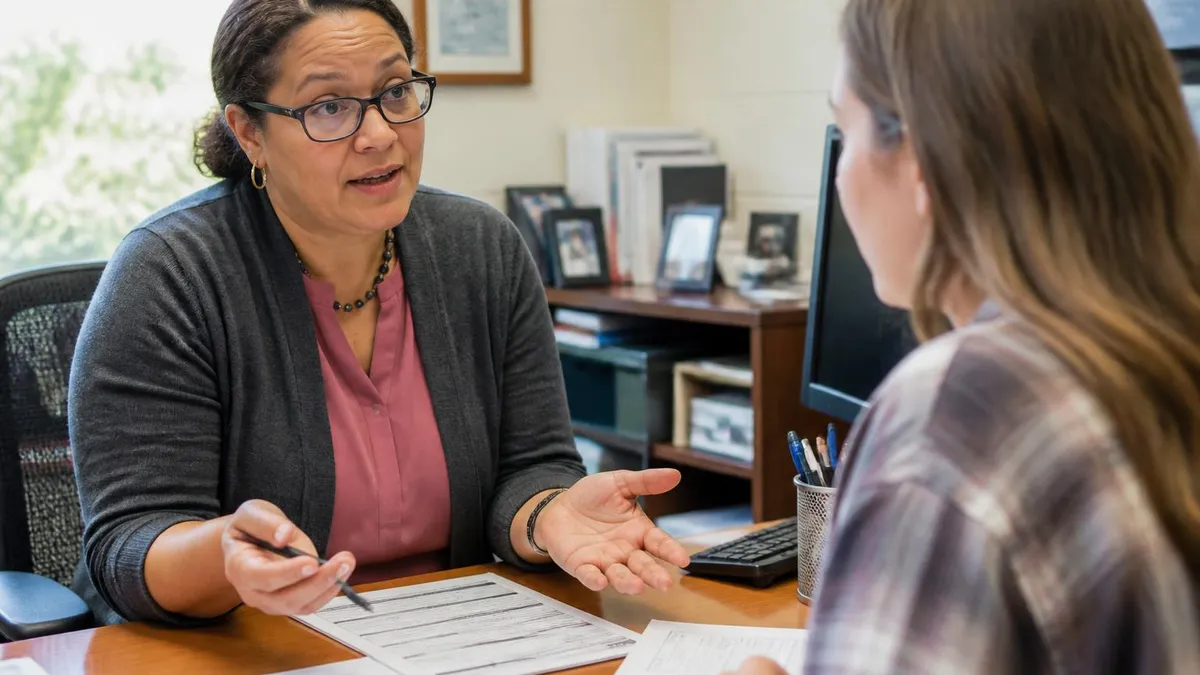
If you suspect your individual FAFSA is paused, do not start over. Starting over creates a second record that has to be reconciled with the first, and the second one usually inherits the same problem. The right move is to check three places, in order: your FSA dashboard, your school portal, and your email (including spam).
Your FSA dashboard shows the federal side. Your school portal shows the awarding side. Your email shows requests for missing documents. Nine times out of ten, the answer is sitting in one of those three places. The tenth time, you call.
The order matters. Start with the FSA dashboard because that is the source of truth for federal status. If it says Processed Successfully, the issue is downstream. Move to your school portal next - look for a financial aid task list, missing documents tab, or a yellow alert banner. Most schools post a clear list of what they still need.
If both of those look clean, your email is the third stop. Filter for messages from any address ending in studentaid.gov, fsa.ed.gov, or your school domain. Check spam, promotions, and any work-managed inbox you might have used for the application. Verification requests sometimes hit promotional folders by accident, especially with parent emails.
Trade-offs of Acting During FAFSA Uncertainty
- +Submitting early protects you from any late-cycle slowdowns or policy shifts
- +Verification responses sent within 7 days often unlock aid faster than promised timelines
- +Tracking your dashboard weekly catches issues before they become missed deadlines
- +Knowing the system separates real pauses from social-media noise - and saves stress
- +Backup plans (community college pricing, payment plans, scholarships) give you use
- −Submitting blindly without checking estimated aid can lead to gap-year surprises
- −Calling FSA at peak times means hour-plus hold times - call early morning ET
- −Some schools delay packaging when federal data is late, beyond your control
- −Verification document requests can require parent cooperation you may not have on day one
- −Restarting a stuck application usually multiplies the problem rather than fixing it
Pros and Cons at a Glance
| Pros | Cons |
|---|---|
| Submitting early protects you from any late-cycle slowdowns or policy shifts | Submitting blindly without checking estimated aid can lead to gap-year surprises |
| Tracking your dashboard weekly catches issues before they become missed deadlines | Calling FSA at peak times means hour-plus hold times - call early morning ET |
| Knowing the system separates real pauses from social-media noise - and saves stress | Some schools delay packaging when federal data is late, beyond your control |
| Backup plans (community college pricing, payment plans, scholarships) give you use | Verification document requests can require parent cooperation you may not have on day one |
If you have checked all three places and nothing makes sense, call the Federal Student Aid Information Center. Have your FSA ID username, your Social Security Number, and your school code ready. Calling early in the morning - Eastern time - usually beats the queue.
FSA agents can see the federal side of your file in real time. They can tell you whether your application has been received, whether it has been processed, and whether a school has imported your data. They cannot rush a school decision, but they can confirm that the federal side is clean. That alone often ends the panic.
If the agent confirms your federal record looks fine, the next call is to your school financial aid office. Ask which specific items they need from you. Send those items the same day if possible. Then ask for a packaging timeline in writing. Schools track promised timelines and usually honor them.
While you wait, prepare. A FAFSA delay does not have to derail your fall semester. Knowing the system also means knowing what you can do today regardless of what FSA is doing. Use a quiet weekend to nail down the practical pieces so you are not scrambling later.
Many of the items below also help if you are selected for FAFSA verification. Having documents organized in advance means your verification response goes back in days, not weeks. Schools love a fast verification response - sometimes they expedite your aid package as a thank-you.
Use the checklist below as your action plan for the next 30 days. Print it, screenshot it, paste it into your notes app - whatever keeps it visible. Each item takes 10 to 30 minutes. None of them require you to wait on the Department of Education.
The checklist is intentionally tactical. Each item moves your file forward or gives you better information. Cross items off as you go - the visual progress reduces stress and helps you spot the one thing actually blocking your aid.
So is the current uncertainty worth losing sleep over? It depends on which side of the trade-offs you sit on. The honest answer is that FAFSA delays are frustrating but rarely catastrophic. Schools have packaging flexibility, deadlines often shift, and emergency aid exists for a reason. Knowing the upsides and downsides helps you plan instead of panic.
A clear-eyed view of the trade-offs above lets you make better choices. If you are in your senior year of high school, submit early and pick safety schools that have firm packaging timelines. If you are a returning student, finish your FAFSA before you register for next term so financial aid is locked when bills hit. If you are a parent, set calendar reminders for verification follow-ups.
The single biggest predictor of a smooth FAFSA cycle is not the political headlines - it is whether you submit early, respond to requests within a week, and keep records. Students who do those three things rarely experience the dreaded FAFSA paused feeling, even during messy rollout years.
You also have options when headlines get scary. Lock in your community college pricing if a four-year offer is late. Ask financial aid for a deferred-payment plan. Apply for institutional scholarships that bypass the FAFSA. Most colleges will not let a missing federal award number kick you out of housing or registration if you communicate proactively. Silence is what causes problems.
Treat the FAFSA news cycle the way you treat severe weather forecasts. Pay attention, but make decisions based on official sources, not on doom posts. studentaid.gov and your school portal are the equivalent of the National Weather Service. Twitter and Reddit are people standing on porches yelling about the wind. Useful for color - not for decisions.
Another smart move during uncertain cycles is keeping a paper trail. Save every screenshot of your dashboard. Export your FAFSA Submission Summary. Note the date and time of every call to FSA or your school. If a packaging dispute happens later, those notes are gold.
One last thought before the FAQ. The FAFSA news cycle will always have its panic moments - a viral screenshot, a misquoted policy, a senator threatening cuts. The students who navigate them well are the ones who treat studentaid.gov as the source of truth and treat Twitter as commentary. Bookmark the dashboard. Subscribe to your school portal alerts. Then go live your life.
If you want a sanity check on what your future self will need to know, practice with our FAFSA practice quizzes. They cover the questions every applicant gets wrong - verification, the SAI, dependency status, asset reporting - so the actual form takes 30 minutes instead of three nights.
Here is a short field guide to keeping your composure through any future scare. First, screen your sources. If a claim about the FAFSA does not have a studentaid.gov link or a Department of Education press release behind it, treat it as rumor until proven otherwise. Second, never act on a single tweet. Wait for the official confirmation or denial.
Third, do not skip your annual FAFSA submission because of headlines. Even in cycles where processing is slow, every aid dollar still gets distributed. A student who waits to apply usually ends up worse off than a student who applies on the messy week one and lets the system catch up. The biggest mistake is opting out of the process entirely.
Bottom line: the FAFSA is not paused. It has stumbled, it has slowed, and it has been re-engineered. But the door has stayed open for every cycle since 1992. Submit early, watch your inbox, and you will be fine.
Sample FAFSA Practice Questions
Try these questions from our free FAFSA practice tests. The correct answer and an explanation follow each question.
A student who starts college in January (spring semester) should file FAFSA for which award year?
- A. The prior academic year
- B. The current academic year covering that spring semester
- C. The next academic year only
- D. No FAFSA is needed for spring entry
Answer: B. The current academic year covering that spring semester
A student starting in the spring semester should file the FAFSA for the academic year that includes that spring semester to receive aid for those terms.
What is the enrollment status threshold for a student to receive a Federal Direct Subsidized Loan?
- A. Full-time only
- B. At least quarter-time
- C. At least half-time
- D. At least three-quarter time
Answer: C. At least half-time
Students must be enrolled at least half-time to be eligible for Federal Direct Subsidized or Unsubsidized Loans.
Which enrollment status makes a student ineligible for most federal student aid?
- A. Half-time
- B. Full-time
- C. Less than half-time
- D. Three-quarter time
Answer: C. Less than half-time
Students enrolled less than half-time are ineligible for most federal student aid programs, including Pell Grants in many cases.
What document might a financial aid office request to verify a student's independent status claim?
- A. Bank statements only
- B. Court documents, tax returns, or signed statements from officials
- C. High school transcripts
- D. Employment records only
Answer: B. Court documents, tax returns, or signed statements from officials
Schools may request court documents, tax returns, letters from social workers, or other official documentation to verify claimed independent status.
FAFSA Questions and Answers
About the Author

Educational Psychologist & Academic Test Preparation Expert
Columbia University Teachers CollegeDr. Lisa Patel holds a Doctorate in Education from Columbia University Teachers College and has spent 17 years researching standardized test design and academic assessment. She has developed preparation programs for SAT, ACT, GRE, LSAT, UCAT, and numerous professional licensing exams, helping students of all backgrounds achieve their target scores.