
Iowa FAFSA Deadline: Complete Guide to Dates, Requirements, and Maximizing Aid
🎓 Iowa FAFSA deadline dates, step-by-step filing tips, and how to maximize state aid for 2026 September-26. Don't miss your cutoff — apply early.

The iowa fafsa deadline is one of the most important dates an Iowa student will face during the college financial aid process. The Free Application for Federal Student Aid, better known as FAFSA, is the single form that unlocks access to federal grants, subsidized loans, work-study programs, and — critically for Iowa residents — state-specific aid like the Iowa Vocational-Technical Tuition Grant and the Iowa Tuition Grant. Missing the iowa fafsa deadline by even a single day can cost you thousands of dollars in grant money that does not need to be repaid.
For the fafsa 2025-26 award year, Iowa students should be aware of multiple overlapping deadlines: the federal deadline, the Iowa state deadline, and individual college priority deadlines. Each of these operates independently, and the earliest one is almost always the one that matters most for your wallet. Iowa's state aid programs, administered by the Iowa College Student Aid Commission, have historically used a first-come, first-served funding model, meaning students who file in October receive better funding outcomes than those who file in April.
Understanding what is fafsa and how it works is the first step toward securing your financial future. The FAFSA collects detailed financial information from students and their families — including tax data, asset values, household size, and number of college students in the family — and uses it to calculate your Student Aid Index (SAI), formerly called the Expected Family Contribution (EFC). Colleges then use your SAI to build a financial aid package tailored to your specific situation and their available resources.
The fafsa deadline landscape in Iowa involves coordination across at least three different agencies: the federal government via the U.S. Department of Education, the Iowa College Student Aid Commission, and your specific college or university's financial aid office. Federal deadlines are set nationally, state deadlines reflect Iowa's legislative priorities and available funding pools, and institutional deadlines are set individually by each school. Navigating all three requires planning and awareness — which this guide is designed to provide.
Many students and families ask when is fafsa due and assume a single answer covers everything. Unfortunately, that is not the case. The federal FAFSA deadline for the 2025-26 academic year is June 30, 2026, but Iowa's state grant programs have a much earlier priority deadline — and many Iowa colleges set priority deadlines as early as December 1 of the prior year. Waiting until June means federal loans may still be available, but state grants and institutional scholarships will almost certainly be exhausted.
One practical resource every Iowa student should bookmark is the Iowa College Student Aid Commission website, where you can track your application status, check award letters, and verify that your FAFSA data was successfully transmitted. Additionally, if you encounter technical problems during the filing process, resources like the iowa fafsa deadline troubleshooting guide can help you navigate system outages, login errors, and common submission failures without losing your place in the funding queue.
This comprehensive guide covers every deadline Iowa students need to know for the 2025-26 award year, explains how the FAFSA application process works step by step, and offers proven strategies to maximize your financial aid award. Whether you are a first-time college student, a transfer student, or a returning adult learner, the information here will help you file on time and secure every dollar of aid you deserve.
Iowa FAFSA by the Numbers

Iowa FAFSA Deadlines: Key Dates for 2025-26
October 1, 2024 — FAFSA Opens
December 1, 2024 — Many College Priority Deadlines
March 1, 2025 — Iowa Vocational-Technical Tuition Grant Deadline
July 1, 2025 — Iowa State Priority Funding Cutoff
June 30, 2026 — Federal FAFSA Deadline
Filing the Iowa FAFSA correctly and on time requires gathering the right documents before you sit down at the application. The process begins at studentaid.gov, the official federal portal where all FAFSA applications are submitted. Before starting, every student and contributing parent must create a StudentAid.gov account — which serves as the FAFSA ID — using a unique email address and Social Security number.
This fafsa id is used to sign the application digitally, so creating it well in advance of your application date is essential. Account verification can take up to three days, and a delay there can push your effective filing date back significantly.
The FAFSA requires financial data from your federal tax return, typically from two years prior. For the 2025-26 FAFSA, you will use 2023 tax information. The IRS Direct Data Exchange tool, integrated within the FAFSA form, can automatically import your tax data if you authorize it — dramatically reducing errors and processing time.
However, if your family's financial situation changed significantly in 2024 or 2025, you may be able to request a Professional Judgment review from your college's financial aid office after filing. This process allows aid administrators to adjust your SAI to reflect current circumstances such as job loss, divorce, or unusual medical expenses.
Dependent students — generally those under 24 who are not married, not veterans, and do not have dependents of their own — must include parental financial information on the FAFSA. Independent students file using only their own financial data. Determining your dependency status correctly is critical, because mistakes in this area can delay processing or result in an incorrect aid calculation. Practice resources like dependency status quizzes can help you understand which category applies to your situation before you file.
Once submitted, your FAFSA is processed by the federal government and a Student Aid Report (SAR) is generated, typically within three to five business days for online submissions. Review your SAR carefully for errors, particularly in Social Security numbers, tax figures, and household size. Any errors must be corrected by logging back into studentaid.gov and submitting a correction — which restarts the processing clock. Colleges receive your FAFSA data electronically once you list them on your application; you can list up to 20 schools at once.
For Iowa residents, the FAFSA data is also shared with the Iowa College Student Aid Commission automatically when you list an Iowa school on your application. This sharing triggers the evaluation of your eligibility for state-funded programs including the Iowa Tuition Grant, the Iowa Vocational-Technical Tuition Grant, the All Iowa Opportunity Scholarship, and the Iowa National Guard Service Scholarship. You do not file a separate Iowa state application — your FAFSA submission covers both federal and Iowa state aid simultaneously.
After your college receives your FAFSA, the financial aid office will typically send you an award letter — sometimes called a financial aid offer — outlining the types and amounts of aid you are being offered for the upcoming academic year. This letter may arrive as early as January or February for the following fall semester if you filed promptly. Read every line of the award letter carefully: grants and scholarships do not need to be repaid, while loans do. Work-study awards represent money you can earn but must actually work for through a campus job.
If you have questions during any part of the FAFSA process, the fafsa phone number for the Federal Student Aid Information Center is 1-800-433-3243, available Monday through Friday from 8 a.m. to 11 p.m. Eastern Time, and on Saturdays from 11 a.m. to 5 p.m. Eastern. Iowa residents can also contact the Iowa College Student Aid Commission directly at 877-272-4456 for state-specific aid questions. Both agencies offer free assistance and can help you troubleshoot application issues, verify processing status, and understand your aid options.
Iowa State Aid Programs: What FAFSA Unlocks
The Iowa Tuition Grant is the flagship state grant for Iowa residents attending eligible private, nonprofit Iowa colleges and universities. For the 2025-26 award year, the maximum grant is $6,206 annually. Eligibility is based on financial need as determined by your FAFSA, and students must be enrolled at least half-time in a degree program. The grant is renewable each year as long as you continue to meet eligibility requirements and file the FAFSA by the state priority deadline.
Because Iowa Tuition Grant funds are limited and distributed on a first-come, first-served basis, students who file the FAFSA as early as October 1 have a substantially higher chance of receiving the maximum award. Schools participating in the program include Cornell College, Drake University, Loras College, Luther College, and dozens of other Iowa institutions. Private for-profit colleges and out-of-state schools are not eligible. Always confirm your school's participation status through the Iowa College Student Aid Commission website before relying on this grant in your financial planning.

Filing the Iowa FAFSA Early vs. Waiting Until Spring
- +First-come, first-served state grants are still fully funded in October and November
- +College priority deadlines — often December 1 — are easier to meet with early submission
- +More time to correct errors before aid packages are finalized by schools
- +Early filers receive award letters sooner, enabling better college cost comparisons
- +Reduces stress by removing the risk of technical outages close to deadlines
- +Iowa Vocational-Technical Tuition Grant has a March 1 hard cutoff that early filers comfortably meet
- −Filing in October uses prior-prior year tax data, which may not reflect your current family finances
- −You may need to make corrections later if your financial situation changed significantly
- −Some students find October overwhelming with college application deadlines occurring simultaneously
- −FAFSA system outages in early October are common due to high traffic volume
- −Early award letters from colleges may change if your FAFSA data is later corrected
- −Families awaiting tax document finalization may feel rushed to file before returns are complete
Iowa FAFSA Filing Checklist: Everything You Need
- ✓Create your StudentAid.gov account (FAFSA ID) at least one week before you plan to file
- ✓Gather your Social Security number and your parents' Social Security numbers if you are a dependent student
- ✓Collect your 2023 federal tax return or use the IRS Direct Data Exchange tool to import data automatically
- ✓Document all untaxed income sources including child support received, veterans benefits, and housing allowances
- ✓List your Iowa colleges and universities on the FAFSA — you can include up to 20 schools
- ✓Record bank account balances, investment values, and business asset information for both student and parents
- ✓Submit before your school's priority deadline, typically December 1 for Iowa public universities
- ✓Review your Student Aid Report for errors within five days of submission and correct immediately
- ✓Contact the Iowa College Student Aid Commission at 877-272-4456 to verify your state aid eligibility
- ✓Respond promptly to any verification requests from your college's financial aid office to avoid award delays
Iowa State Aid Is Not Guaranteed — File by October 1
Unlike federal Pell Grants, which are an entitlement program (every eligible student receives one regardless of when they file), Iowa state grants like the Iowa Tuition Grant are funded by a capped state appropriation. Once the money is gone, it is gone for the year — even if you are financially eligible. Students who filed in October consistently receive higher average state grant awards than those who filed in February or March. The difference can easily exceed $2,000 per academic year.
Maximizing your Iowa financial aid award begins long before you actually file the fafsa 2025 form. Strategic financial planning in the months leading up to October 1 can meaningfully improve your calculated financial need and, by extension, the size of your aid package. One of the most important steps is understanding which assets are counted by the FAFSA and which are not.
Retirement accounts such as 401(k)s and IRAs are not counted as assets on the FAFSA, making them a favorable place to hold family savings. Conversely, checking accounts, savings accounts, and taxable brokerage accounts are counted and can reduce need-based aid eligibility.
The FAFSA uses a formula called the Student Aid Index to calculate how much your family is expected to contribute toward college costs. The lower your SAI, the more need-based aid you qualify for. Families can potentially reduce their SAI legally by accelerating certain expenses — such as paying down consumer debt or making large planned purchases — before the financial snapshot date.
However, moving assets from a countable account to a non-countable account (such as a retirement fund) in the months immediately before filing should be done carefully and in consultation with a financial advisor, as large recent transactions may raise questions during verification.
Students who are considering whether to file as dependent or independent should understand the rules precisely. The FAFSA has strict criteria for independent status: you must be 24 or older, married, a veteran, an active-duty military member, an orphan or ward of the court, an emancipated minor, or have legal dependents of your own.
If you do not meet any of these criteria, you are a dependent student regardless of whether your parents actually support you financially. Filing incorrectly as independent when you are legally dependent is a federal error that can result in repayment demands and loss of future eligibility.
Professional Judgment (PJ) is a powerful but underused tool that allows financial aid administrators to adjust your SAI when your prior-year tax data does not accurately reflect your current financial situation. Common qualifying circumstances include a parent's job loss in 2024 or 2025, divorce or separation, significant unreimbursed medical expenses, or a one-time income event (such as selling a home or receiving an inheritance) that inflated your 2023 tax return. To request a PJ review, contact your college's financial aid office directly — the process is school-specific, requires documentation, and must be initiated after you have filed the FAFSA.
Appealing your financial aid award is an option more students should use. If you receive an award letter that does not fully reflect your family's circumstances, you can write a formal appeal letter to the financial aid office explaining the discrepancy. Include documentation such as termination notices, medical bills, or insurance statements. Some Iowa colleges have dedicated appeal processes and reserve funds specifically for this purpose. A well-documented appeal can result in additional grant funding, loan restructuring, or work-study increases — particularly at private colleges with more flexible institutional aid budgets.
Scholarship stacking is another strategy Iowa students can use to reduce out-of-pocket costs. Iowa offers numerous private scholarships through organizations like the Iowa Foundation for Educational Opportunity and individual community foundations throughout the state. Many of these scholarships are explicitly designed to supplement FAFSA-based aid rather than replace it. However, students should notify their college's financial aid office when they receive outside scholarships, as some schools will reduce institutional aid dollar-for-dollar when outside scholarship funding is added. Understanding your school's outside scholarship policy before applying helps you set realistic expectations.
Finally, renewing your FAFSA every year is non-negotiable for maintaining aid eligibility. The deadline for the fafsa applies not just to first-time applicants but to every returning student as well. Many students mistakenly assume that once they file, their aid continues automatically. In reality, FAFSA must be filed annually, your SAI recalculated each year, and your eligibility re-verified based on current financial data. Setting a calendar reminder for October 1 each year is one of the simplest things you can do to protect your financial aid and avoid unexpected gaps in funding.
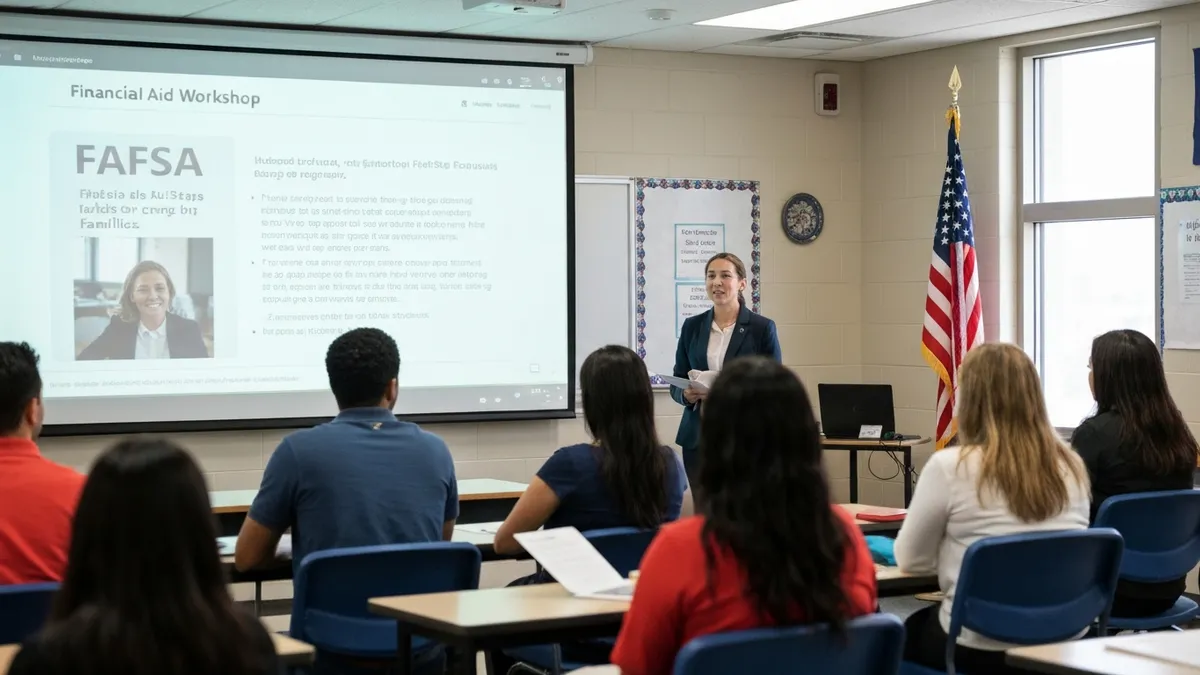
Iowa's need-based state grant programs, including the Iowa Tuition Grant and the Iowa Vocational-Technical Tuition Grant, are funded by a fixed state appropriation that is exhausted on a first-come, first-served basis. In recent years, these funds have been fully committed well before the June 30 federal deadline. Filing after March 1 significantly reduces — and filing after May 1 effectively eliminates — your chances of receiving Iowa state grant aid. The fafsa deadline 2025 for maximum Iowa aid is October 1, 2024.
Common FAFSA mistakes cost Iowa students millions of dollars in aid every year, and most of them are entirely preventable with careful attention to detail. The single most frequent error is using incorrect tax information — either entering figures manually from memory rather than using the IRS Direct Data Exchange, or accidentally transposing digits in income or tax fields. The IRS data transfer tool was specifically designed to eliminate this category of errors, and its use is strongly recommended for all filers who have already filed their federal tax return.
A second common mistake involves conflating the student's financial information with the parent's. On the FAFSA, there are two distinct sections: the student section and the parent section. Income and assets listed in the wrong section will produce an incorrect SAI and may trigger a verification flag. Dependent students must carefully separate their own savings and income (part-time jobs, summer employment) from their parents' financial data. Even small amounts of income can shift which section they belong in, so reading each question carefully before entering data is essential.
Failing to list all intended Iowa colleges on the FAFSA is another error with real financial consequences. You can list up to 20 schools, and your FAFSA data is shared with each one simultaneously. If you forget to include a college, that school will not receive your financial information and cannot build an aid package for you.
Adding a school after initial submission is possible — you can log in and update your school list — but this resets the processing timeline for that institution and may push you past their priority deadline. List all schools you are seriously considering from day one.
The FAFSA also asks about untaxed income, which many families overlook. Child support payments received, veterans' education benefits, untaxed pension distributions, and worker's compensation payments are all examples of untaxed income that must be reported. Failure to report these amounts — even inadvertently — is considered a federal financial aid violation and can result in repayment demands, suspension of future aid, and in egregious cases, referral to the Inspector General's office. When in doubt about whether something counts as income, call the FAFSA helpline or consult your school's financial aid office rather than guessing.
Signing errors are surprisingly common, especially for first-time filers. Both the student and at least one parent (for dependent students) must sign the FAFSA using their respective StudentAid.gov accounts. If the parent has not yet created their account, they cannot sign, and the application will remain incomplete — it will not be processed and will not reserve your place in the funding queue. Getting both accounts set up before sitting down to complete the form eliminates this delay entirely. Students should also ensure they are signing in the correct role (student vs. parent) to avoid triggering identity verification issues.
Ignoring verification is a mistake that can freeze your aid entirely. Approximately 30% of FAFSA applicants are selected for verification, a process in which the college's financial aid office requests documentation to confirm the accuracy of your FAFSA data. Commonly requested documents include signed tax transcripts, proof of household size, and verification of non-filing status for non-tax-filers.
Students who do not respond to verification requests within the required timeframe will have their aid canceled for the award year — and reinstatement requires restarting the process from scratch. Check your student email and financial aid portal regularly throughout the spring semester to catch any verification requests promptly.
Finally, do not assume that submitting the FAFSA means your aid is finalized. Award letters are offers, not contracts. Colleges reserve the right to adjust awards if FAFSA data is corrected, if your enrollment status changes, or if you receive outside scholarships that affect your demonstrated need.
Read every communication from your financial aid office carefully, respond to requests promptly, and if anything in your award letter surprises you, schedule an appointment with a financial aid counselor to walk through the details. Being proactive about your FAFSA protects your funding and ensures you receive every dollar of aid you have earned.
For Iowa students who are approaching the FAFSA process for the first time, the sheer volume of information can feel overwhelming. Breaking the process into manageable steps makes it far less daunting. Start by creating your StudentAid.gov account the moment you decide to apply to college — ideally in the summer before your senior year of high school.
This gives the system time to verify your identity and gives you time to resolve any issues without time pressure. Many Iowa high schools host FAFSA completion nights where guidance counselors and Iowa College Student Aid Commission representatives help families complete the form together, often in a single two-hour session.
Transfer students face a slightly different FAFSA landscape than traditional first-time freshmen. If you are transferring between Iowa institutions, your FAFSA data can be transferred to your new school, but you must add the new school to your FAFSA and remove schools you are no longer attending.
The timing of your transfer relative to the academic year also matters: mid-year transfers may require a recalculation of your aid package based on the number of semesters remaining in the award year. Contact both your old and new school's financial aid offices when planning a transfer to understand how your aid will be handled.
Adult and returning students — those who have been out of school for several years — sometimes find the FAFSA process unfamiliar compared to when they last enrolled. Key changes include the elimination of the paper FAFSA (the form is now entirely online), the introduction of the IRS Direct Data Exchange, and the new SAI calculation replacing the old EFC methodology.
Adult students who are independent are often pleasantly surprised to find they qualify for more aid than they expected, particularly if they have dependents of their own or have experienced income disruptions. Iowa's Workforce Training programs and community colleges are especially well-positioned to serve returning adult learners.
Graduate students in Iowa also file the FAFSA, though the aid available to them differs from undergraduate aid. Graduate students are always considered independent on the FAFSA, so no parental information is required. However, graduate students are not eligible for Pell Grants and generally can only receive unsubsidized federal loans and Graduate PLUS Loans through FAFSA. Many Iowa graduate programs also offer graduate assistantships, fellowships, and departmental grants that are awarded through the academic program rather than the financial aid office, so exploring both avenues simultaneously is advisable.
For families navigating the FAFSA together, communication is essential. Parents and students should discuss financial expectations before the FAFSA is filed — not after award letters arrive. Understanding that the SAI represents an estimate of what your family is expected to contribute, not a bill you must pay immediately, helps frame productive conversations about college financing.
Some families choose to split costs between savings, loans, parent contributions, and student earnings. Iowa's community colleges offer pathways to significant cost savings through two-plus-two transfer agreements with four-year institutions, allowing students to complete their first two years at a fraction of the cost of a residential university.
The when is fafsa due for 2025-26 question has a layered answer that depends on which type of aid you are prioritizing. For Iowa state grants: file by October 1, 2024. For college priority consideration: file by your school's stated priority deadline, often December 1. For federal loan eligibility: file by June 30, 2026.
For the Iowa Vocational-Technical Tuition Grant: file by March 1, 2025. Mapping out these dates on a calendar and setting alerts at least two weeks before each deadline ensures you never miss a critical cutoff. Using a free FAFSA practice resource can also help you understand the concepts and terminology you will encounter when you sit down to complete the form.
Ultimately, the FAFSA is not just a form — it is the gateway to education funding that can determine whether college is financially feasible for you and your family. Iowa has built a robust system of state aid to supplement federal programs, but that system rewards students who act early and file accurately. The strategies, timelines, and tips in this guide give you everything you need to approach the Iowa FAFSA with confidence, meet every relevant deadline, and secure the maximum aid your situation warrants. Take the first step today by creating your StudentAid.gov account and gathering your financial documents.
FAFSA Questions and Answers

Why Is the FAFSA Website Not Working? Fixes, Deadlines & What to Do

FAFSA Parent PLUS Loan: Eligibility, Rates, Risks and Alternatives

FAFSA Estimator: Tools, How They Work, and Realistic Expectations

FAFSA Taken Away: Why It Happens, What to Do, and How to Get Aid Restored

FAFSA: Complete Guide to Federal Student Aid 2026
About the Author

Educational Psychologist & Academic Test Preparation Expert
Columbia University Teachers CollegeDr. Lisa Patel holds a Doctorate in Education from Columbia University Teachers College and has spent 17 years researching standardized test design and academic assessment. She has developed preparation programs for SAT, ACT, GRE, LSAT, UCAT, and numerous professional licensing exams, helping students of all backgrounds achieve their target scores.