
FAA MOSAIC: Complete Guide to the New Light Sport Rule 2026 September
FAA MOSAIC expands Light Sport Aircraft to 3,000 lb and four seats. 🧠 Sport pilots get bigger planes, night flying, and lower training costs. Full guide.

The FAA's MOSAIC rule — Modernization of Special Airworthiness Certificates — is the biggest shake-up to light-aircraft certification in two decades. It expands the Light Sport Aircraft category, lets sport pilots fly heavier planes with up to four seats, and rewrites the rules around instruction and rentals.
If you fly, train, or build, MOSAIC will touch your logbook within the next 12 months. The reach is broader than most pilots realize. Even ramp checks, insurance underwriting, and resale prices have shifted in response to the new framework.
This guide walks you through what the rule actually changes: the new aircraft weight and speed envelopes, the pilot-privilege upgrades, the timeline, and the practical impact on your sectional chart reading, training plan, and ramp checks. The numbers and dates here are the ones examiners and DPEs use in the field.
We're keeping the language plain on purpose. The Federal Register entry is dense reading, but the takeaways are simple — and once you've got them, you can answer almost any MOSAIC question on a written or oral exam without re-reading the rule.

MOSAIC by the Numbers
MOSAIC isn't a single airplane or a single regulation — it's a framework. The FAA stitched together updates to Part 21, Part 43, Part 61, Part 91, and Part 141 so the same aircraft can be certified, maintained, flown, and used for instruction without bouncing between conflicting rule sets.
Before MOSAIC, a Light Sport Aircraft was capped at 1,320 pounds and two seats. That boxed out most modern composite designs and almost every legacy trainer. The new envelope is performance-based, not weight-based. Instead of asking how heavy the plane is, the FAA now asks how fast it stalls and how fast it cruises.
That single shift is what unlocks four-seat Cessna 172s, retractable-gear singles, and even some electric and hybrid prototypes for sport-pilot operations. If you're studying for a written exam, expect MOSAIC questions to show up before the end of 2026.
The rule also moves the FAA closer to a model used in other parts of aviation — consensus standards. Industry groups like ASTM publish technical standards that the FAA recognizes as equivalent to formal certification. That swap reduces administrative cost and accelerates time-to-market for new airframes.
Critics worry about safety oversight, but the FAA points to the LSA category's safety record over the past two decades as evidence that consensus standards work. Time will tell how the new heavier and faster aircraft fare under the same approach.
The Four Pillars of MOSAIC
Clean-config stall speed up to 54 knots, cruise capped at 250 knots, maximum 3,000 lb takeoff weight, up to four seats. Performance-based limits replace the old weight-only test.
Sport pilots can fly heavier aircraft with one passenger and operate at night after additional training. Driver's license medical pathway preserved.
Light Sport Repairman certificates expanded; A&Ps can sign off most MOSAIC aircraft without IA endorsement. Owner-operator maintenance widened under consensus standards.
Industry consensus standards from ASTM replace traditional Part 23 certification for most light aircraft. Faster time-to-market, lower compliance cost, easier avionics upgrades.
The aircraft side of MOSAIC is where most pilots feel the change first. The old 1,320-pound limit is gone. The new ceiling is 3,000 pounds maximum takeoff weight, with a clean-configuration stall speed not exceeding 54 knots calibrated airspeed. Cruise speed is bounded at 250 knots.
Retractable gear is back on the menu. Controllable-pitch propellers are allowed. Even pressurization gets a pathway under certain consensus standards. The one thing MOSAIC keeps out is turbine power — for now, the rule stays piston and electric only.
Why those specific numbers? The FAA worked backwards from accident data and training curricula. Stall speeds above 54 knots correlate with sharper landing-phase risk profiles. Cruise speeds above 250 knots historically aligned with type-rating territory. The framers wanted a ceiling that captured trainers and personal aircraft without sliding into business-jet airspace.
The 3,000-pound number was chosen to encompass nearly every four-seat single-engine piston ever certified. That's not an accident. By widening the definition just enough to scoop up legacy fleets, the FAA put thousands of existing airframes back into productive training use.
Sport pilots flying MOSAIC aircraft use the same driver's license medical standard. No FAA medical exam is required as long as you self-certify fit to fly and hold a current state driver's license. BasicMed is also accepted for higher-tier operations.
Pilot Privileges by Certificate Level
Under MOSAIC, a sport pilot can fly any MOSAIC-eligible aircraft up to 250 knots cruise, carry one passenger, and operate at night with additional training and a logbook endorsement. The driver's license medical still applies — no FAA Class 3 needed.

Pilot privileges under MOSAIC are the headline most student pilots care about. A sport pilot used to be limited to two seats, day VFR, and an aircraft that almost nobody actually owned. The new rule keeps the medical convenience — drive-by-license stays — while removing nearly every other meaningful constraint.
You can fly at night, but only after specific training and an endorsement from a qualified CFI. You can carry one passenger, and that passenger can sit in any seat. You can operate in Class B, C, and D airspace with the standard endorsement.
What you cannot do is carry more than one passenger, fly for hire, or operate above 10,000 feet MSL (with a 2,000-foot AGL allowance in mountainous terrain). The single-passenger limit catches new pilots off guard, so memorize it. The rule is about pilot workload, not airframe capacity.
Training the new privileges costs about ten extra hours on average across U.S. flight schools. That's a one-time investment that unlocks every MOSAIC-eligible aircraft your local FBO has on the line. Most students recoup the cost in their first month of unrestricted weekend flying.
Existing private pilots see less direct change, but the broader fleet means more rental options and a clearer pathway to instruct in light aircraft without first earning a commercial certificate. That alone has reshaped career planning for hundreds of pilots who want to teach part-time.
And for CFIs already working full-time, MOSAIC widens the customer base. More aircraft means more students, more checkouts, and more leaseback opportunities. The training market is the single biggest beneficiary of the rule change.
MOSAIC Compliance Checklist for Pilots
- ✓Confirm your target aircraft falls within MOSAIC limits — 3,000 lb maximum takeoff weight, 54 KCAS clean stall speed, and 250 kt cruise ceiling
- ✓Verify your medical pathway — driver's license self-certification for sport, BasicMed for higher operations, or Class 3 medical if you prefer the traditional route
- ✓Get the night-flying endorsement from a qualified CFI if you plan to operate after sunset; log specific takeoff and landing currency requirements
- ✓Update your logbook with MOSAIC aircraft type, configuration, and any endorsements for night, Class B/C/D airspace, complex, or high-performance operations
- ✓Check that your insurance carrier has approved the MOSAIC airframe — coverage limits and named-pilot requirements vary by underwriter post-MOSAIC
- ✓Review the aircraft's consensus-standard airworthiness certificate before each flight; verify the ASTM standard reference matches the operating limitations
- ✓Confirm your instructor holds the appropriate MOSAIC training endorsement and that the school's syllabus has been updated to reference the new rule
- ✓File a current weight-and-balance with the most recent equipment list — many MOSAIC airframes have been modified or re-equipped under the new framework
- ✓Pre-flight the radios and ADS-B Out installation; consensus-standard avionics installations can vary widely between similarly numbered airframes
- ✓Brief your passenger that even four-seat MOSAIC aircraft can only carry one passenger under sport-pilot privileges — no exceptions
Which aircraft actually qualify? The list is longer than most pilots expect. On the legacy side, the Cessna 150, 152, 172 (most variants), Piper Cherokee 140 and 180, Diamond DA20, and most Grumman two- and four-seaters fall inside the MOSAIC envelope.
On the modern side, every current Light Sport airframe stays eligible, plus a wave of new designs from Tecnam, Pipistrel, Vashon, and Bristell that were waiting on MOSAIC to scale up. Tail-draggers like the Citabria and Champion lines also qualify, opening up backcountry and grass-strip flying for sport pilots.
Experimental amateur-built aircraft are not directly affected by MOSAIC, but the consensus-standards approach influences how the FAA reviews repairman certificates and operational limitations. If you fly a Van's RV or a Sonex, your day-to-day operations don't change, but the regulatory climate gets friendlier.
Worth noting: the Cessna 172R and 172S models include some variants that creep just above the 3,000-pound limit when loaded. Check the specific serial-number range and equipment list before assuming your favorite trainer makes the cut. The FAA publishes a running eligibility table on its MOSAIC information page.
The MOSAIC final rule was published in August 2025. Aircraft certification provisions took effect 90 days after publication. Pilot privilege expansions phase in over 24 months. Existing LSA aircraft and pilots are grandfathered with no action required.
Maintenance is where MOSAIC quietly saves owners thousands of dollars per year. Under the old framework, a standard-category Cessna 172 needed an annual inspection signed by an Inspection Authorization (IA) holder, plus all the standard Part 43 appendices.
The same airframe registered under MOSAIC consensus standards needs only an annual condition inspection by an A&P or a Light Sport Repairman with the right ratings. That doesn't mean the airplane gets less attention — the ASTM consensus standards spell out what must be inspected.
What changes is the paperwork burden and the cost of finding an IA in remote areas. Owner-operators who hold the Light Sport Repairman certificate can do most of their own work, mirroring the way amateur-built owners maintain their planes today.
For working pilots and small commercial operators, the savings flow through to leaseback economics and instructor compensation. A 172 in a busy training fleet flies roughly 800 hours per year. Saving even fifteen dollars per hour on maintenance translates to twelve thousand dollars annually — money that goes back into upgrades, fuel, or pilot wages.
MOSAIC at a Glance
- +Sport pilots can fly four-seat aircraft with one passenger and full baggage
- +Driver's license medical retained for sport-pilot operations without any new fees
- +Night flying allowed with a CFI endorsement and standard recency requirements
- +Larger rental fleet available for sport pilot training and personal use
- +Maintenance costs drop substantially for consensus-standard aircraft
- +Most legacy two- and four-seat trainers are now MOSAIC-eligible
- +Class B, C, and D airspace access with the appropriate endorsement
- +Used-aircraft resale market broadens for owners selling MOSAIC-eligible airframes
- +Flight instruction by CFIs in MOSAIC aircraft permitted without a commercial certificate
- −Maximum one passenger even in four-seat aircraft under sport-pilot rules
- −No flight for hire under sport pilot privileges other than instruction
- −Turbine powerplants are still excluded from the MOSAIC envelope
- −Insurance carriers have been slow to update underwriting and named-pilot rules
- −Phase-in over 24 months for some pilot privileges and instructor endorsements
- −Class A airspace and instrument operations remain out of reach for sport pilots
- −Foreign authorities have not adopted equivalent rules for international flying
Pros and Cons at a Glance
| Pros | Cons |
|---|---|
| Sport pilots can fly four-seat aircraft with one passenger and full baggage | Maximum one passenger even in four-seat aircraft under sport-pilot rules |
| Driver's license medical retained for sport-pilot operations without any new fees | No flight for hire under sport pilot privileges other than instruction |
| Night flying allowed with a CFI endorsement and standard recency requirements | Turbine powerplants are still excluded from the MOSAIC envelope |
| Larger rental fleet available for sport pilot training and personal use | Insurance carriers have been slow to update underwriting and named-pilot rules |
| Maintenance costs drop substantially for consensus-standard aircraft | Class A airspace and instrument operations remain out of reach for sport pilots |
| Most legacy two- and four-seat trainers are now MOSAIC-eligible | Foreign authorities have not adopted equivalent rules for international flying |

If you're sitting a knowledge test soon, MOSAIC questions are already appearing on private-pilot and sport-pilot written exams. The FAA Airman Knowledge Test Standards were updated alongside the rule, and DPEs have been briefed on how to test for MOSAIC awareness.
Expect at least one question on weight and speed limits, and another on the difference between MOSAIC and legacy LSA categories. The ACS now references MOSAIC operating limitations under the regulations task. Memorize four numbers: 3,000 pounds, 54 knots stall, 250 knots cruise, four seats.
Practice tests will help you absorb the rule faster than reading the regulation cold. Most prep platforms have integrated MOSAIC questions into their question banks, and the FAA itself publishes a sample question set in its supplementary training materials. Drill those sample questions until you can answer each one in under fifteen seconds.
A common test trap pits the old LSA limits against the new MOSAIC limits. Read the question stem carefully — if it says "Light Sport Aircraft under the original LSA category," the answer uses 1,320 pounds and two seats. If it references the MOSAIC framework, the answer uses 3,000 pounds and four seats. Misreading the stem is the single most common error among test-takers in the months since the rule landed.
On the oral exam, expect a scenario like: "You're a sport pilot with night and Class B endorsements. You want to fly your friend and his daughter in a four-seat Diamond DA40 after sunset." The trick is the passenger count — you can only carry one passenger regardless of seat count.
Airspace operations get a meaningful upgrade under MOSAIC. Sport pilots who hold the proper endorsement can operate in Class B, C, and D airspace, file VFR flight plans, and use flight following just like private pilots.
ADS-B Out is still required wherever it was required before, and MOSAIC does not change Mode C veil rules. What does change is that more student pilots will gain confident exposure to controlled airspace earlier in training because the rental fleet now includes properly equipped four-seat aircraft.
Equipment requirements for MOSAIC airframes are spelled out in the consensus standards rather than in the Code of Federal Regulations directly. When a new piece of avionics clears a consensus standard, manufacturers can install it without waiting years for a Supplemental Type Certificate.
One often-missed detail: night-VFR equipment requirements for MOSAIC aircraft mirror Part 91.205. You still need position lights, an anti-collision light, a landing light if operating for hire, an adequate electrical source, and spare fuses or three spare fuses of each kind. Don't assume that because the airframe is light, the rules are lighter — they aren't.
A few misconceptions are already spreading on flight-school forums, so let's clear them up. First, MOSAIC does not let a sport pilot fly six-seat aircraft. The four-seat cap is firm. Second, MOSAIC does not allow flight in instrument meteorological conditions for sport pilots.
The certificate remains a VFR-only privilege regardless of how capable the airframe is. Third, MOSAIC does not eliminate the need for biennial flight reviews — those still apply on the same 24-month cycle every active pilot has known for decades.
Another myth: MOSAIC does not "automatically convert" your existing certificate. To exercise new MOSAIC privileges, you need the same endorsements and training records anyone else needs. The rule expands what's possible, not what's automatic.
And one more — MOSAIC does not change Class 1 or Class 2 medical requirements for commercial operations. Airline transport pilots, charter pilots, and most commercial certificate holders still need their existing medicals. The driver's license alternative remains specific to sport-pilot operations and recreational private operations under BasicMed where applicable.
Just because MOSAIC expands aircraft eligibility doesn't mean you can fly without the right logbook endorsements. Night flying, Class B/C/D operations, and high-performance considerations all still require specific instructor sign-offs before you can legally exercise the privilege.
The industry response has been dramatic. Within weeks of the final rule, Textron Aviation announced plans to re-market the Cessna 172 directly to flight schools through a streamlined consensus-standards path.
Tecnam expanded its U.S. dealer network on the assumption that four-seat sport pilots would prefer their P2010 and P2008 lines. Used-aircraft prices reflected the shift almost immediately — a clean 1978 Cessna 172N that traded near seventy thousand dollars now commonly lists in the eighty-five-thousand range.
For training organizations, the bigger story is liability and curriculum. Flight schools have spent the past several months rewriting their syllabi to identify which lessons must include MOSAIC-specific limitations and which legacy aircraft they will keep in service for instrument training where MOSAIC privileges don't apply.
Smart schools are using this transition as a chance to standardize on glass-panel four-seaters and retire their oldest two-seat airframes. The upgrade pays off in lower long-term maintenance costs, faster instruction throughput, and a stronger student-retention story when prospective pilots tour the facility.
What about international flying? MOSAIC is a U.S. domestic rule, so foreign authorities still apply their own light-aircraft rules to your operations abroad. Transport Canada and EASA have both expressed cautious interest, but neither has committed to mirroring the FAA's approach.
If you plan to fly a MOSAIC aircraft into Canada or Mexico, check the latest cross-border procedures and be ready to demonstrate equivalent airworthiness documentation. Insurance for international flights may also require carrier-specific updates.
Looking further ahead, the FAA has signaled that MOSAIC is a foundation rather than a finish line. Future amendments are expected to clarify how electric propulsion and hybrid powertrains fit into consensus standards. Urban air mobility designs sit outside MOSAIC for now, but the regulatory pathway built by this rule makes future inclusion easier.
The general direction is clear: the FAA is moving from prescriptive certification toward performance-based oversight, and pilots who understand MOSAIC will be best positioned for whatever comes next. Stay current with FAA notices and consensus-standard revisions to keep your privileges intact.
Bottom line — MOSAIC is the most pilot-friendly rule the FAA has issued in years. It lowers cost barriers, widens the available training fleet, and clarifies a path forward for new propulsion technology. Take the time to study the four key numbers, get the night and Class B endorsements that unlock the full privilege set, and you'll be ahead of most pilots at your home airport.
Whether you fly weekends, instruct students, or own a leaseback, MOSAIC affects how you plan your next twelve months. Talk to your CFI, your A&P, and your insurance carrier early — the operators who move first will get the most value from a rule that was, ultimately, written for them.
Learn more in our guide on faa jobs near me. Learn more in our guide on FAA Cracking Down on Carry-On Bags: New 2026 Enforcement Rules Explained. Learn more in our guide on faa web scheduler. Learn more in our guide on faa n registration.
FAA Questions and Answers
About the Author
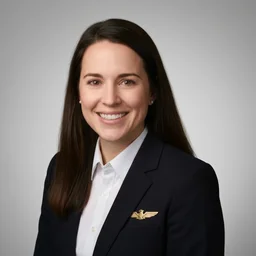
Commercial Pilot & FAA Certification Specialist
Embry-Riddle Aeronautical UniversityCaptain Jennifer Walsh graduated with honors in Aerospace Engineering from Embry-Riddle Aeronautical University and holds FAA Airframe & Powerplant and Airline Transport Pilot certificates. With 11 years of commercial aviation experience and 6 years as a ground school instructor, she guides aviation mechanics and student pilots through FAA written exams and practical tests.
Join the Discussion
Connect with other students preparing for this exam. Share tips, ask questions, and get advice from people who have been there.
View discussion (9 replies)