
Wrap Text in Excel: How to Display Long Text Cleanly 2026 September
Learn how to wrap text in Excel cells using ribbon, keyboard shortcut, or auto-wrap. ✅ Display long text cleanly without column expansion.

Wrap Text in Excel is the feature that displays long cell content across multiple lines within a single cell rather than overflowing into adjacent cells or being truncated. When you have cells containing addresses, descriptions, comments, or any longer text, Wrap Text makes the content readable without requiring extreme column widths. The feature is one of Excel's most-used display options because most spreadsheets eventually have at least some cells with content too long to display in standard column widths. Knowing how to use Wrap Text effectively, plus understanding its limitations and alternatives, is foundational Excel knowledge.
The simplest way to apply Wrap Text: select the cells you want to wrap, go to Home tab, click Wrap Text in the Alignment group. The button toggles wrap on or off — clicking it on a cell that's wrapped removes wrapping; clicking on an unwrapped cell applies wrapping. The keyboard shortcut Alt+H+W produces the same result without leaving the keyboard. Both methods work the same way; choose based on whether you prefer mouse or keyboard interaction. Selected cells immediately show wrapped text or revert to single-line display.
Wrap Text works by automatically breaking text at word boundaries to fit within the column width. Excel adjusts row height to accommodate the wrapped lines automatically. As you change column width, the wrapping adjusts dynamically — narrower columns produce more wrap breaks, wider columns produce fewer. This automatic responsiveness makes Wrap Text useful even as you adjust column layouts. Unlike manual line breaks (Alt+Enter for forced breaks at specific points), Wrap Text reflows automatically based on column width.
This guide covers Wrap Text comprehensively: how to apply it through various methods, when to use it versus alternatives like manual line breaks or column expansion, common issues and their fixes, and integration with other Excel features. Whether you're new to Excel or refreshing on basic features, you'll find practical guidance on this fundamental display tool.
For users who frequently work with text-heavy spreadsheets — content marketers tracking articles, customer service teams logging cases, project managers documenting status — wrap text becomes a daily essential tool. Building muscle memory around the keyboard shortcut (Alt+H+W) saves time across hundreds of daily applications. Combining with auto-fit row height through standard practice produces consistently usable displays without manual height adjustment.
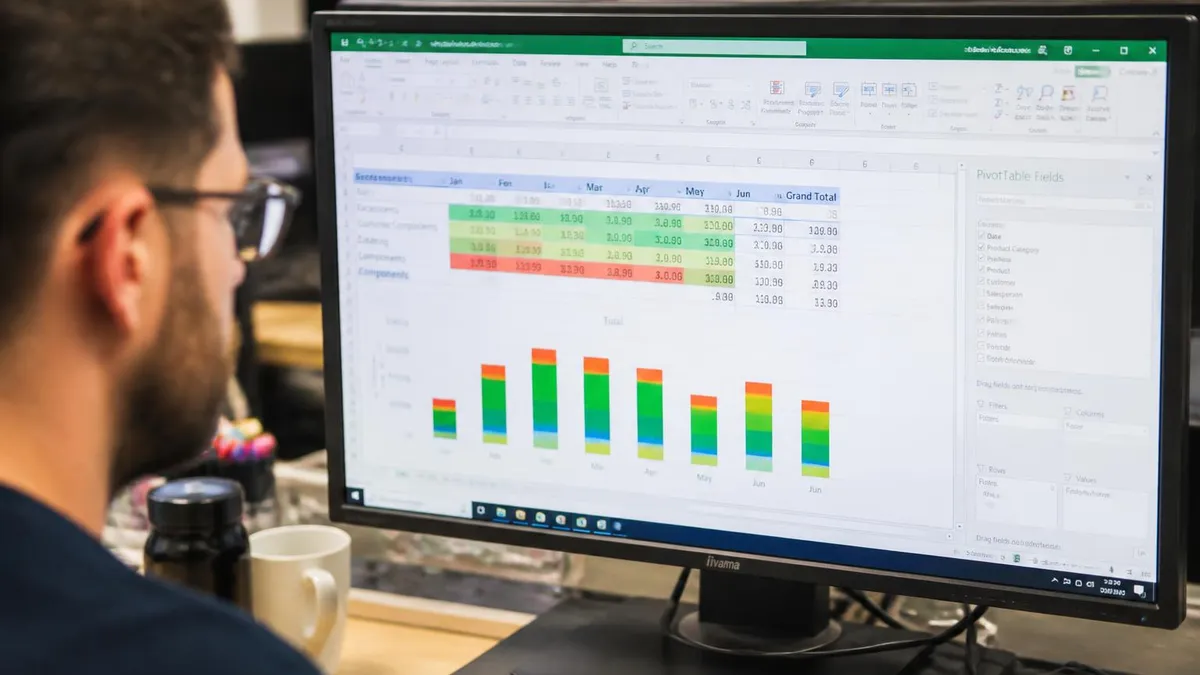
Apply via ribbon: Home tab → Alignment group → Wrap Text
Keyboard shortcut: Alt+H+W
Format Cells dialog: Ctrl+1 → Alignment tab → Wrap text checkbox
Result: Long text displays in multiple lines within cell, row height adjusts
Reverse: Toggle the same control to remove wrapping
Several methods exist to apply Wrap Text. The Home tab Wrap Text button is the most discoverable method — clearly visible in the Alignment group with text that wraps across multiple lines as its icon. The Alt+H+W keyboard shortcut works without mouse movement. The Format Cells dialog (Ctrl+1, then Alignment tab, then check Wrap text checkbox) provides the same result and offers other alignment options simultaneously. Right-clicking and choosing Format Cells provides another path to the same dialog. Each method produces identical results; the choice depends on personal preference and what other formatting you need to apply.
For applying wrap text to entire columns, select the column header (clicking the letter at the top of the column) before applying wrap text. This makes wrap text the default for all cells in that column, including cells you'll add data to later. New entries automatically wrap as you type without requiring per-cell wrap application. This is particularly useful for columns containing descriptions, comments, addresses, or other typically-long content. Combined with appropriate column width settings, this produces consistent display of multi-line content throughout the column.
For tables (Excel Tables created via Ctrl+T), wrap text formatting can be applied at the column level and persists as new rows are added to the table. The combination of Excel Tables plus column-level wrap text creates clean, automatically-formatted display for ongoing data entry. Adding new rows to the table inherits the wrap text formatting without manual application per row. The Excel formulas framework includes various display features that work alongside wrap text for comprehensive cell formatting.
Common issues with Wrap Text include: row heights not adjusting automatically (sometimes Excel needs prompting via Format → AutoFit Row Height); text appearing truncated despite wrap text being on (typically because row height is fixed manually and not auto-fitting); and text breaking awkwardly at unexpected points (Wrap Text breaks at word boundaries; very long single words may not break gracefully). Most issues resolve through ensuring AutoFit Row Height is enabled and column widths are appropriate for the content. The conditional formatting applied alongside wrap text helps emphasize important content within wrapped cells visually.
For text that has natural break points (sentences, list items, address lines), combining manual line breaks (Alt+Enter while editing the cell) with Wrap Text produces optimal results. Manual breaks force text to start a new line at specific points; Wrap Text reflows the content within those segments based on column width. This combination is common for addresses where you want specific lines (street, city/state, zip) to start fresh, but wrap any individual line that exceeds column width. Pure Wrap Text handles flowing prose well; combined with manual breaks handles structured content like addresses better.
Some advanced wrap text scenarios deserve specific attention. For cells containing both long text and merged cells, ensure the merged cell width is appropriate before applying wrap text — narrow merged cells can produce strange wrapping. For cells with formulas returning long text, wrap text formats the calculated result correctly. For cells with hyperlinks, wrap text works with the underlying display text but may interact unusually with link formatting in some Excel versions. Testing specific scenarios with your particular content prevents surprises.
Wrap Text Use Cases
Multi-line addresses display cleanly with wrap text plus manual line breaks. Combine Alt+Enter for line separation between street, city/state/zip, and country with wrap text for individual lines that exceed column width. Common formatting for contact lists and customer data.
Long product descriptions, customer notes, project comments work well with wrap text alone. Excel handles word-boundary breaks automatically based on column width. Adjust column width to balance compact display vs. readability — typically 30-50 characters per line works well.
Open-ended survey responses with varying lengths display readably with wrap text. Each cell can have different content length while maintaining consistent column width. Combined with sufficient row height, makes scanning responses feasible even when many cells have substantial content.
Column headers with long names benefit from wrap text plus narrower columns. Multi-word headers can wrap to two lines while keeping columns at appropriate widths for the data values below. Common in dashboards and reports where clear labeling matters but data values are typically shorter than headers.

Auto-fit row height is the companion feature that makes wrap text useful. Without auto-fit, wrapped text might be hidden if row height is fixed at a smaller value than the wrapped content needs. To enable auto-fit: select the rows, go to Home → Format → AutoFit Row Height. This makes Excel adjust row heights automatically based on cell content. Combined with wrap text, auto-fit produces displays that show all wrapped content without manual height adjustment. For ongoing data entry where content lengths vary, auto-fit eliminates the maintenance burden of adjusting row heights individually.
For situations where you want consistent row heights despite varying content lengths, you can manually set row heights and Excel respects those settings. The trade-off: cells with content exceeding the manual row height will have their wrapped content truncated. This is sometimes preferable for visual consistency in dashboards or reports where uniform row spacing matters more than seeing all content at once. Right-clicking row numbers and choosing Row Height lets you set specific heights; auto-fit and manual heights are mutually exclusive choices.
Print considerations affect how wrap text appears in printed output. Wrapped text generally prints as displayed on screen — what you see is what you print. However, very long content may extend beyond page boundaries during printing if row heights aren't set appropriately. Print preview (Ctrl+P) shows how content will appear printed. Adjusting page setup (margins, orientation, scaling) before printing produces better results when wrap text content is extensive. The COUNTIF function in Excel and other analytical features work the same regardless of wrap text settings — wrap text is purely a display formatting choice.
For shared workbooks where multiple users will view and edit the data, wrap text settings persist with the workbook. When you save a workbook with wrap text applied to specific cells, recipients opening the file see the same wrapping. This consistency helps ensure all viewers benefit from the wrap text formatting you applied. Co-authors editing the workbook can change wrap text settings if needed, but the saved state is what new viewers initially experience.
For Excel for the web (browser-based), wrap text works similarly to desktop versions with slightly different access — typically through a Wrap Text button in the Home tab or formatting options. Mobile Excel apps support wrap text with touch-optimized interaction. The fundamental concepts and behaviors are consistent across platforms, though specific UI details vary. Learning wrap text on one platform transfers easily to others with minor adjustment for interface differences.
Step-by-Step Wrap Text Application
Apply wrap text to one cell:
- Click the cell you want to wrap
- Click Home tab on the ribbon
- In the Alignment group, click Wrap Text
- Cell content now displays on multiple lines if needed
- Row height adjusts automatically (with AutoFit Row Height enabled)
- Click Wrap Text again to remove wrapping

Wrap text affects how cells appear but not the underlying data. The cell's actual value is unchanged — wrap text only changes display. Formulas referencing wrapped cells work identically to formulas referencing non-wrapped cells. Calculations, sorting, filtering, and other data operations all use the underlying values regardless of wrap text settings. This means you can apply wrap text freely without worrying about affecting data integrity. The display formatting is independent of the data itself.
For tables and ranges with mixed content lengths, applying wrap text to the entire range produces consistent formatting even when most cells don't need wrapping. Cells with short content display normally; cells with long content wrap. The unified application avoids cases where some cells have wrapping enabled and others don't — which can happen accidentally and create inconsistent display patterns. Bulk application followed by adjustment of specific cells if needed produces cleaner overall formatting than per-cell application.
Performance considerations with wrap text are minimal in most cases. Excel handles wrap text rendering efficiently. Very large datasets (100,000+ rows) with extensive wrap text formatting can have some performance impact compared to unformatted ranges, but the difference is rarely noticeable in practical use. For maximum performance with very large datasets, applying wrap text only to columns that need it (rather than blanket application across all data) reduces unnecessary rendering work.
For users coming from Google Sheets or other spreadsheet tools, wrap text works similarly across most spreadsheet applications. Google Sheets has a Wrap Text option (Format menu → Wrapping → Wrap) that produces equivalent results. The cross-tool compatibility is good — Excel files with wrap text formatting open correctly in Google Sheets and vice versa. Learning wrap text on one tool transfers cleanly to others.
Beyond basic wrap text application, related Excel features support comprehensive cell display management. Merge Cells combines multiple cells into one larger cell — sometimes used alongside wrap text for headers spanning multiple columns. Center Across Selection achieves visual centering without actually merging cells, often a better alternative for sortable/filterable data. Indent settings (Increase Indent / Decrease Indent buttons in Home tab) provide visual hierarchy within wrapped text. Combining these features thoughtfully produces professional-looking spreadsheets that communicate effectively.
Wrap Text reflows automatically based on column width — change the column width and the wrap points change. Manual line breaks (Alt+Enter while editing the cell) force breaks at specific points regardless of column width. They serve different purposes: Wrap Text for automatic reflow; manual breaks for forced separation between specific content segments. Combine them for content like addresses where you want specific structural breaks (between street and city) plus automatic flow for individual lines. Understanding both lets you produce optimal display for various content types.
For situations where wrap text isn't appropriate, alternatives exist. Column expansion (making columns wider) keeps content on single lines but produces very wide columns for occasional long entries — usually not optimal because it expands columns based on edge cases rather than typical content.
Truncation with overflow prevention shows just the beginning of long content; full content visible only when cell is selected — useful for IDs or short codes that occasionally have longer values. Hide rows with very long content — sometimes long text doesn't need to be visible in summary views. Each alternative has specific use cases; wrap text remains the most general solution for variable-length content.
For users designing spreadsheets that others will use, thoughtful application of wrap text supports better usability. Apply wrap text to columns where content is typically variable in length. Use sufficient column widths to avoid excessive wrapping that produces unreadable narrow lines. Combine with appropriate row heights so wrapped content is fully visible. Think about how your spreadsheet will look on different screen sizes — wrap text behavior changes with column width, and column width changes with screen size in some configurations. Designing for the most common viewing context produces cleaner display than optimizing only for your own development setup.
For dashboard design specifically, wrap text plays a role in making data readable. Charts and pivot tables that present summary data benefit from clearly wrapped headers. Data tables with variable content lengths need wrap text to remain readable. Consistent wrap text application across similar elements produces visual consistency that supports professional appearance. Combined with thoughtful color coding, font choices, and layout, wrap text contributes to dashboards that communicate effectively rather than just present information.
Looking forward, Excel's wrap text feature has been stable for many years and is unlikely to change dramatically. Microsoft adds new features periodically that complement wrap text — improved auto-fit behavior, better integration with Excel Tables, and various alignment options. The fundamental capability remains the same as it has been for decades because the underlying need (displaying variable-length content cleanly) hasn't changed. Mastering wrap text now produces lasting value across many years of Excel use.
For Excel users new to advanced text formatting, wrap text is one of several display features worth learning together. Cell merging combines multiple cells into one. Center across selection achieves visual centering without merging. Vertical alignment options control top/middle/bottom positioning. Indent levels create visual hierarchy. Each feature serves specific purposes, and combining them thoughtfully produces professional spreadsheet appearance. Building familiarity with these display tools alongside wrap text supports overall Excel formatting capability that distinguishes polished spreadsheets from purely functional ones.
Excel formatting fundamentals like wrap text rarely appear in headlines about new features, but they're the daily building blocks that make spreadsheets usable. Master them well, build them into your default approach to spreadsheet creation, and you'll produce work that distinguishes itself through polish and clarity.
The cumulative effect of small formatting decisions made consistently produces better outcomes than dramatic single improvements.Wrap Text Quick Facts
Wrap Text vs. Alternatives
- +Wrap Text: handles variable content lengths automatically
- +Wrap Text: doesn't require fixed column widths
- +Wrap Text: persists with workbook for consistent viewer experience
- +Wrap Text: doesn't affect underlying data or formulas
- +Wrap Text: works on web, mobile, desktop versions of Excel
- −Wrap Text: produces variable row heights that may look uneven
- −Wrap Text: very narrow columns produce unreadably narrow lines
- −Wrap Text: doesn't break very long single words gracefully
- −Manual line breaks (Alt+Enter): require thinking about specific break points
- −Column expansion: produces overly wide columns for occasional long entries
Wrap Text Questions and Answers
About the Author

Business Consultant & Professional Certification Advisor
Wharton School, University of PennsylvaniaKatherine Lee earned her MBA from the Wharton School at the University of Pennsylvania and holds CPA, PHR, and PMP certifications. With a background spanning corporate finance, human resources, and project management, she has coached professionals preparing for CPA, CMA, PHR/SPHR, PMP, and financial services licensing exams.