
Esthetician State Board Exam Guide: Written and Practical Test Format, Study Tips
🧠 Free Esthetician State Board practice test with questions and answer explanations. Prepare for the 2026 October exam with instant scoring.
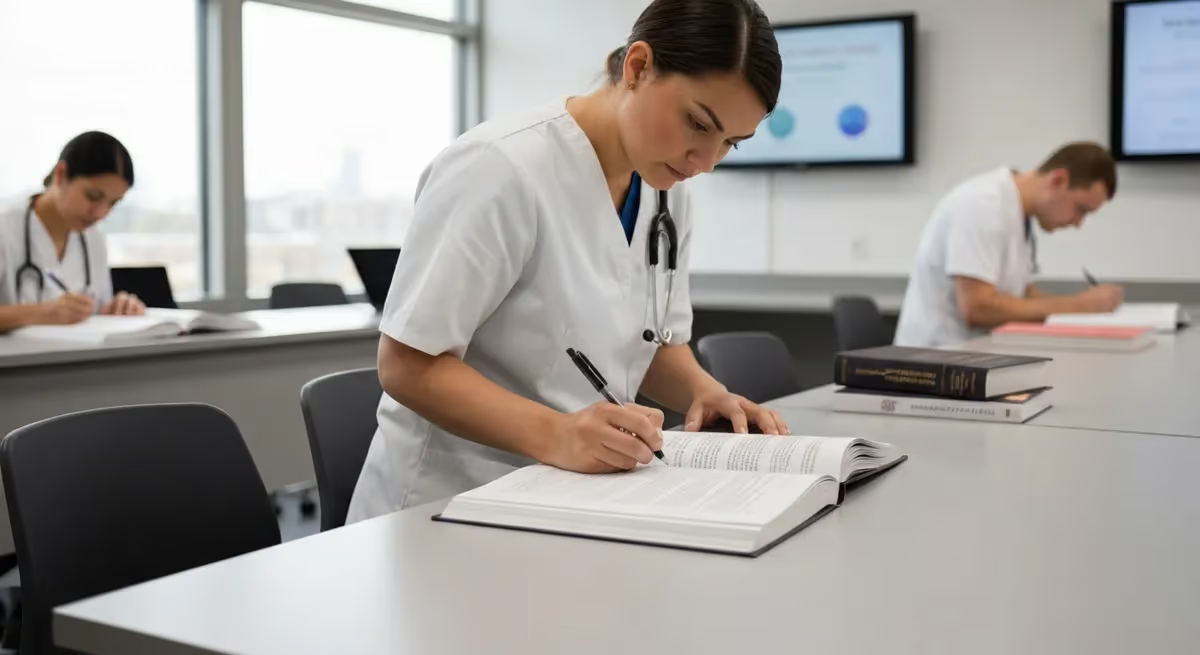
The esthetician state board exam consists of two parts: a written (theory) exam with 100-120 multiple-choice questions covering skin science, infection control, facial procedures, and state law, and a practical exam where you demonstrate hands-on skills including facial treatments, waxing, makeup application, and sanitation procedures. Most states use exams administered by NIC (National-Interstate Council of State Boards of Cosmetology) or PSI, with a passing score of 70-75%. Candidates who study consistently for 4-6 weeks after completing their training hours typically pass both sections on the first attempt.
Test-takers preparing for psi will find our PSI exam 2026 invaluable for mastering the content and format before exam day.
The Esthetician Practice Exam exam uses a multiple-choice format with questions covering all major domains. Most versions allow 2-3 hours for completion.
Questions test both knowledge recall and application skills. A score of 70-75% is typically required to pass.

Written Exam Format and Content
The written portion of the esthetician exam tests your theoretical knowledge of skin science, treatment procedures, product chemistry, safety protocols, and professional regulations. Understanding the exam structure and content breakdown helps you allocate study time effectively.
Exam Structure:
Most states use either the NIC (National-Interstate Council) exam or PSI exam for the written portion. Both are computer-based, multiple-choice tests with 100-120 questions. You typically have 90-120 minutes to complete the exam, which is more than enough time for most candidates — the challenge is knowledge, not speed.
Content Domains and Approximate Weight:
| Domain | Approximate Weight | Key Topics |
|---|---|---|
| Infection Control and Safety | 20-25% | Sanitation, disinfection, sterilization, bloodborne pathogens, OSHA, EPA |
| Skin Analysis and Conditions | 20-25% | Skin types, Fitzpatrick scale, lesions, disorders, contraindications |
| Facials and Treatments | 15-20% | Facial procedures, extraction, masks, peels, equipment operation |
| Anatomy and Physiology | 10-15% | Skin layers, cells, glands, muscles, nerves, circulation |
| Chemistry and Product Knowledge | 10-15% | pH, ingredients, product formulation, chemical reactions |
| Hair Removal | 5-10% | Waxing techniques, electrolysis basics, contraindications |
| Makeup Application | 5-10% | Color theory, face shapes, corrective techniques, hygiene |
| State Laws and Business | 5-10% | Licensing requirements, scope of practice, salon regulations |
Question Styles You Will See:
The written exam uses several question formats:
- Direct knowledge: "What is the purpose of desincrustation?" — Tests factual recall
- Scenario-based: "A client presents with papules and pustules on the chin and jawline. What is the most likely condition?" — Tests diagnostic reasoning
- Procedure sequence: "What is the correct order for performing a basic facial?" — Tests procedural knowledge
- Safety application: "A client's skin turns red and begins to welt during waxing. What should you do first?" — Tests emergency response knowledge
Infection control is the single most heavily weighted topic. Prepare thoroughly with our Infection Control and Safety practice quiz — this section alone accounts for 20-25% of your written exam score.
Practical Exam Procedures
The practical portion of the esthetician exam evaluates your ability to perform esthetic procedures safely, hygienically, and competently on a live model (which you must bring to the exam). This section tests both technical skill and strict adherence to sanitation protocols.
What to Expect on Exam Day:
You will set up your workstation, demonstrate procedures on your model, and clean up — all under the observation of a state board examiner. The examiner evaluates you using a standardized checklist that covers every step of each procedure, from hand washing before client contact to proper disposal of used materials.
Common Practical Exam Procedures:
1. Basic Facial (Almost Always Tested)
The basic facial is the cornerstone of the practical exam. You will demonstrate:
- Client consultation and skin analysis
- Proper draping technique
- Cleansing (first and second cleanse)
- Skin analysis using a magnifying lamp
- Steam application
- Exfoliation
- Massage (typically effleurage, petrissage, and tapotement movements)
- Mask application and removal
- Toner and moisturizer application
- Sunscreen application
2. Hair Removal (Waxing)
You will demonstrate wax application and removal on your model. The exam may specify eyebrow waxing, lip waxing, or another area. Key evaluation points include proper wax temperature testing, correct application direction (with hair growth), correct removal direction (against hair growth), skin preparation and post-care, and proper disposal of used wax strips.
3. Makeup Application
A basic makeup application demonstrating color theory, product selection for the model's skin type and tone, proper sanitation of makeup tools, and technique. You may be asked to apply a specific look (daytime, corrective, or special occasion).
4. Extraction (State Dependent)
Some states include extraction in the practical exam. If tested, you must demonstrate proper comedone extraction technique, including steaming, skin preparation, correct lancet use (if applicable), and post-extraction care.
Critical Pass/Fail Points:
Certain actions result in automatic failure regardless of how well you perform the rest of the exam:
- Not washing hands before touching the client
- Using a contaminated implement on the client
- Double-dipping a used spatula into product
- Failing to drape the client properly
- Not asking about allergies or contraindications before beginning a procedure
- Placing used items back in the clean area
The practical exam fundamentally tests sanitation discipline. Every action you take must demonstrate awareness of infection control principles — from hand hygiene to implement handling to workspace organization. Study these principles thoroughly with our Infection Control and Safety practice quiz.
- ✓Confirm your exam appointment and location
- ✓Bring required identification documents
- ✓Arrive 30 minutes early to check in
- ✓Read each question carefully before answering
- ✓Flag difficult questions and return to them later
- ✓Manage your time — don't spend too long on one question
- ✓Review flagged questions before submitting
Top Study Topics for the Written Exam
Focusing your study time on the most heavily tested topics gives you the highest return on your preparation effort. These three areas account for approximately 60% of the esthetician exam.
1. Infection Control (20-25% of the Exam)
This is the most important section to master. The exam tests your understanding of the chain of infection, levels of decontamination, and regulatory requirements.
- Three levels of decontamination: Sanitation (cleaning — reduces pathogens), disinfection (kills most pathogens — required for multi-use tools), sterilization (kills all pathogens including spores — used for implements that penetrate skin)
- EPA-registered disinfectants: Hospital-grade, tuberculocidal disinfectants are the standard for esthetics. Know immersion times (typically 10 minutes) and proper dilution ratios
- Bloodborne pathogens: OSHA's Bloodborne Pathogen Standard, universal/standard precautions, hepatitis B and C, HIV transmission, exposure incident procedures
- Single-use vs. multi-use items: Know which implements must be discarded after one use (lancets, extraction needles, cotton pads, gloves) versus which can be disinfected and reused (metal implements, glass bowls)
- Hand hygiene: When to wash hands (before and after every client, after removing gloves, after touching contaminated surfaces), proper washing technique (20+ seconds with soap and water)
2. Skin Histology and Disorders (20-25% of the Exam)
Understanding the skin's structure and common conditions is essential for both the written and practical exams.
- Skin layers: Epidermis (stratum corneum, lucidum, granulosum, spinosum, basale), dermis (papillary and reticular layers), and subcutaneous tissue (hypodermis)
- Skin types: Normal, dry, oily, combination, sensitive — know characteristics and appropriate treatments for each
- Fitzpatrick skin types: Types I-VI classification based on reaction to UV exposure — determines treatment parameters for chemical peels, microdermabrasion, and light-based treatments
- Primary and secondary skin lesions: Macules, papules, pustules, vesicles, wheals (primary) versus scales, crusts, fissures, ulcers, scars (secondary)
- Common skin conditions: Acne vulgaris, rosacea, eczema, psoriasis, seborrheic dermatitis, hyperpigmentation, melasma — know which you can treat and which require medical referral
- Contraindications: Conditions and medications that prevent you from performing certain treatments (accutane, blood thinners, active infections, sunburn, recent chemical peels)
Strengthen your knowledge of these critical topics with our Skin Histology and Disorders practice quiz.
3. Facial Procedures and Equipment (15-20% of the Exam)
Know the correct sequence for all facial procedures, the purpose and operation of esthetic equipment, and when to use or avoid specific treatments:
- High-frequency machine: Direct (for acne-prone skin, germicidal) and indirect (for aging skin, stimulating) current applications
- Galvanic current: Desincrustation (negative pole softens sebum for deep cleansing) and iontophoresis (pushes product into skin using same-charge polarity)
- Microcurrent: Low-level electrical current for facial toning and lifting — contraindicated for clients with pacemakers
- Steamer: Proper distance (18 inches), duration (5-10 minutes), purpose (soften skin, open follicles), contraindications (rosacea, extremely sensitive skin, claustrophobia)
- Chemical peels: Superficial peels (esthetician scope), types of acids (glycolic, lactic, salicylic, mandelic), pH and concentration considerations, Fitzpatrick implications
Study Plan and Preparation Tips
A structured approach to studying for the esthetician exam increases your chances of passing both sections on the first attempt. Most candidates who fail do so because they studied inconsistently or focused too heavily on one area while neglecting others.
4-Week Study Plan:
Week 1: Infection Control and Safety (Foundation)
- Study sanitation, disinfection, and sterilization procedures in depth
- Review bloodborne pathogens, universal precautions, and OSHA standards
- Take our Infection Control and Safety practice quiz daily until you score 90%+
- Create flashcards for disinfection immersion times, EPA requirements, and single-use vs. multi-use items
Week 2: Skin Science and Analysis
- Study skin anatomy (layers, cells, glands), skin types, and Fitzpatrick classification
- Learn primary and secondary lesions — use image-based study materials to recognize each type visually
- Review common skin disorders and contraindications
- Practice with our Skin Histology and Disorders quiz
Week 3: Treatments, Equipment, and Procedures
- Study facial procedure sequences, hair removal techniques, and makeup application principles
- Review esthetic equipment: high-frequency, galvanic, microcurrent, steamer, magnifying lamp
- Study chemistry basics: pH scale, acid vs. alkaline, ingredient functions
- Practice practical exam procedures on a friend or classmate — focus on sanitation steps
Week 4: Review and Practice Exams
- Take full-length practice exams under timed conditions
- Review all missed questions and identify weak areas
- Practice the practical exam from start to finish at least 3 times
- Review state-specific laws and scope of practice for your state
- Prepare your practical exam kit — check that all supplies are in order
Practical Exam Preparation Tips:
- Practice your setup: You will be timed from the moment you begin setting up your station. Practice organizing your workspace efficiently — clean area on one side, dirty area on the other, implements laid out in order of use
- Talk through your process: Narrate what you are doing and why during practice sessions. Some examiners appreciate verbal communication during the exam
- Sanitize visibly: Make your sanitation steps obvious to the examiner. Do not rush through hand washing — take the full 20 seconds and make it visible
- Choose a reliable model: Your model must be someone you have practiced on multiple times. They should be comfortable with all procedures, have no skin conditions that could complicate the exam, and arrive on time
- Pack extra supplies: Bring backup products, extra towels, and duplicate implements in case something falls or becomes contaminated during the exam
Esthetician State Pros and Cons
- +Esthetician exam content is organized around a published blueprint, making targeted preparation efficient and systematic
- +Official and third-party practice materials provide realistic exposure to question types before the actual exam
- +Score reporting after practice tests and the actual exam provides detailed feedback for focused improvement
- +Study communities (forums, Discord groups, Reddit) share current insights about tested content and effective strategies
- +Multiple registration windows and retake policies give candidates flexibility in timing and recovery from suboptimal first attempts
- −High-quality preparation materials require financial investment that not all candidates can easily access
- −Time required for thorough preparation is often underestimated, leading to rushed review of critical content
- −Esthetician preparation resources vary widely in quality and accuracy — not all published guides are aligned with current exam content
- −Self-study without external accountability increases the risk of avoiding weak subjects and over-studying familiar ones
- −Performance under actual exam conditions often differs from practice performance due to time pressure and stress factors
Sample Esthetician Practice Questions
Try these questions from our free Esthetician practice tests. The correct answer and an explanation follow each question.
According to a state board sanitation standards document, which of the following correctly describes the difference between sanitation and sterilization?
- A. Sanitation eliminates all microbial life; sterilization reduces microbial count to a safe level
- B. Sanitation and sterilization are interchangeable terms in cosmetology regulations
- C. Sanitation reduces the number of pathogens to a safe level; sterilization destroys all microbial life including spores
- D. Sterilization uses chemical disinfectants; sanitation uses heat-based methods only
Answer: C. Sanitation reduces the number of pathogens to a safe level; sterilization destroys all microbial life including spores
Sanitation lowers microbial counts to safe public health levels, while sterilization is the complete destruction of all microorganisms, including bacterial spores — a critical distinction in state board regulations.
According to state board regulations, what information must be documented on a client consultation card before providing services?
- A. The client's insurance provider and policy number
- B. The client's medical history, allergies, and current medications
- C. The client's preferred social media handles
- D. The client's previous esthetician's contact information
Answer: B. The client's medical history, allergies, and current medications
Client consultation cards must include medical history, allergies, and medications to ensure safe treatment and identify any contraindications.
An esthetician accidentally spills a chemical peel solution. To find detailed information about the product's hazards and proper cleanup procedures, the esthetician should consult the:
- A. Occupational Safety and Health Administration (OSHA) website
- B. Product's marketing brochure
- C. Safety Data Sheet (SDS)
- D. Salon's service menu
Answer: C. Safety Data Sheet (SDS)
A Safety Data Sheet (SDS), formerly known as MSDS, is a document required by OSHA that provides comprehensive information about a chemical substance. It includes details on potential hazards, handling and storage instructions, and emergency procedures, making it the correct resource for a chemical spill.
During a client consultation, an esthetician learns the client has a history of Hepatitis B. According to the principles of Universal Precautions, how should the esthetician proceed with the service?
- A. Refuse service to the client to avoid any risk.
- B. Use extra-strong disinfectants on all surfaces.
- C. Proceed with the service, treating all clients as if they have a potential bloodborne pathogen.
- D. Wear two pairs of gloves throughout the entire service.
Answer: C. Proceed with the service, treating all clients as if they have a potential bloodborne pathogen.
Universal Precautions, a concept from OSHA's Bloodborne Pathogens Standard, requires treating all human blood and certain body fluids as if they are known to be infectious for HIV, HBV, and other bloodborne pathogens. This means standard infection control procedures, like wearing gloves and proper disinfection, should be consistently applied to every client, regardless of their known health status. Refusing service based on this history would be discriminatory and is not the correct protocol.
Esthetician Exam Questions and Answers
About the Author
Licensed Cosmetologist & Beauty Licensing Exam Specialist
Paul Mitchell SchoolsMichelle Santos is a licensed cosmetologist with a Bachelor of Science in Esthetics and Salon Management from Paul Mitchell School. She has 16 years of salon industry experience and 8 years preparing students for state cosmetology board exams in theory, practical skills, and sanitation. She specializes in licensure preparation for cosmetologists, estheticians, and nail technicians.
Join the Discussion
Connect with other students preparing for this exam. Share tips, ask questions, and get advice from people who have been there.
View discussion (4 replies)