
How Much Do Police Officers Make? Read More To Find Out! 2026
Free How Much Do Police Officers practice test with instant feedback and detailed answer explanations. Prepare for your exam.
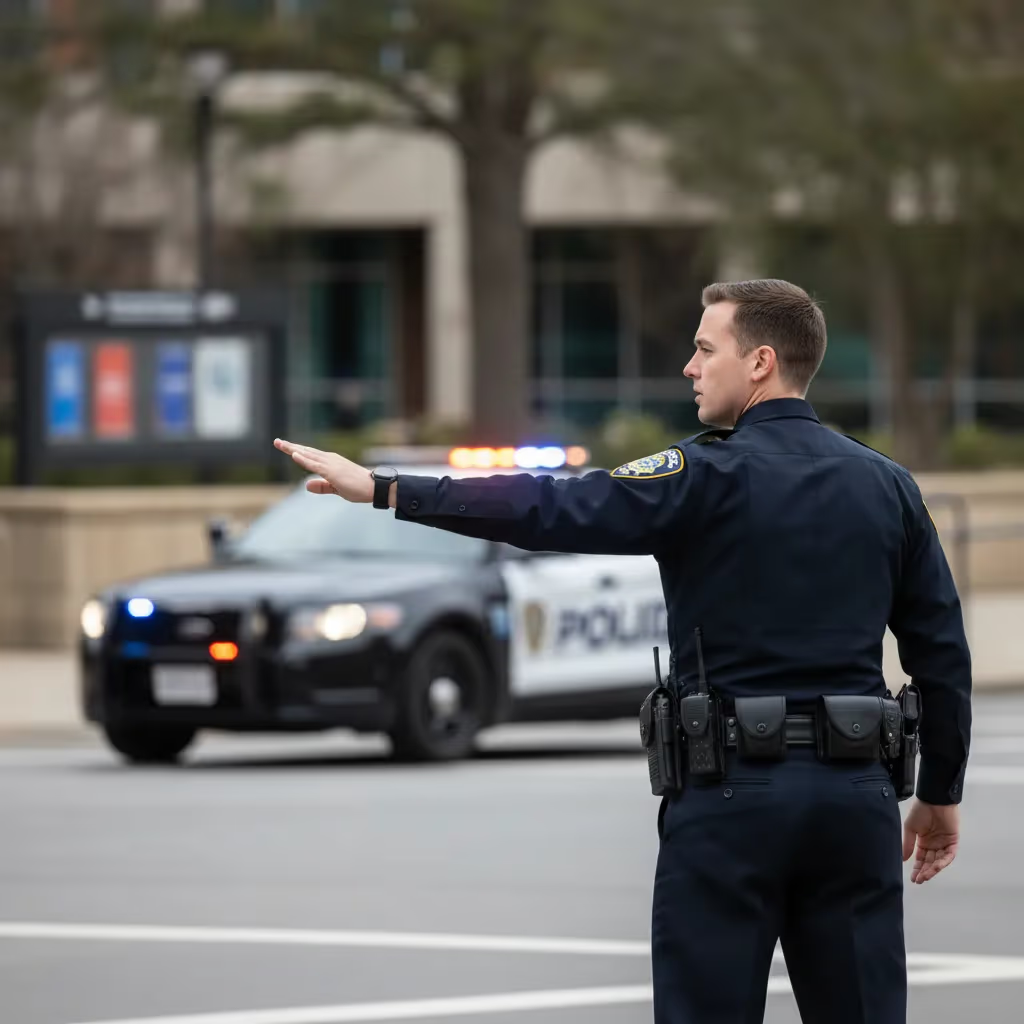
Police Officer Starting Salary
- 0-5 years: $44,000
- 5-10 years: $50,000
- 10-20 years: $55,000
- 20+ years: $64,000
Police Officer Salary By State
| State | Police Officer Salary Per Hour | Average Police Officer Annual Salary |
| Police Officer Salary in NY - New York | $25.74 | $53,547 |
| Massachusetts - Police Officer Salary | $25.53 | $53,105 |
| New Hampshire - Police Officer Salary | $25.06 | $52,132 |
| Police Officer Salary Maryland | $23.84 | $49,579 |
| Nebraska - Police Officer Salary | $23.73 | $49,363 |
| Police Officer Salary CT - Connecticut | $23.71 | $49,316 |
| Police Officer Salary Hawaii | $23.59 | $49,077 |
| North Dakota - Police Officer Salary | $23.53 | $48,935 |
| Nevada - Police Officer Salary | $23.53 | $48,935 |
| Montana - Police Officer Salary | $23.53 | $48,935 |
| Alaska - Police Officer Salary | $23.53 | $48,935 |
| Wyoming - Police Officer Salary | $23.53 | $48,935 |
| Idaho - Police Officer Salary | $23.53 | $48,935 |
| Vermont - Police Officer Salary | $23.52 | $48,927 |
| Washington - Police Officer Salary | $23.40 | $48,668 |
| Police officer salary California | $23.35 | $48,565 |
| Police Officer Salary Virginia | $23.01 | $47,867 |
| West Virginia - Police Officer Salary | $22.78 | $47,374 |
| Rhode Island - Police Officer Salary | $22.56 | $46,923 |
| Police Officer Salary AZ - Arizona | $22.37 | $46,538 |
| Police Officer Salary NJ - New Jersey | $22.36 | $46,500 |
| Police Officer Salary Colorado | $22.32 | $46,419 |
| South Dakota - Police Officer Salary | $22.30 | $46,390 |
| Police Officer Salary in PA - Pennsylvania | $22.29 | $46,360 |
| Delaware - Police Officer Salary | $22.26 | $46,303 |
| Police Officer Salary Oregon | $22.21 | $46,196 |
| Police Officer Salary Minnesota | $22.20 | $46,175 |
| South Carolina - Police Officer Salary | $22.19 | $46,154 |
| Police Officer Salary Tennessee | $22.09 | $45,953 |
| Police Officer Salary Utah | $21.97 | $45,702 |
| Police Officer Salary Ohio | $21.86 | $45,472 |
| Police Officer Salary Indiana | $21.84 | $45,432 |
| Police Officer Salary Oklahoma | $21.77 | $45,278 |
| Iowa - Police Officer Salary | $21.76 | $45,256 |
| Kentucky - Police Officer Salary | $21.74 | $45,213 |
| Louisiana - Police Officer Salary | $21.71 | $45,147 |
| Kansas - Police Officer Salary | $21.58 | $44,883 |
| Police Officer Salary Wisconsin | $21.47 | $44,650 |
| Maine - Police Officer Salary | $21.28 | $44,255 |
| Arkansas - Police Officer Salary | $21.19 | $44,082 |
| Police Officer Salary in GA - Georgia | $21.07 | $43,828 |
| Police Officer Salary Texas | $21.05 | $43,784 |
| Police Officer Salary Alabama | $20.99 | $43,663 |
| New Mexico - Police Officer Salary | $20.80 | $43,268 |
| Police Officer Salary Illinois | $20.61 | $42,863 |
| Police Officer Salary Michigan | $20.49 | $42,611 |
| Missouri - Police Officer Salary | $20.40 | $42,431 |
| Mississippi - Police Officer Salary | $20.39 | $42,417 |
| Police Officer Salary Florida | $19.69 | $40,962 |
| Police Officer Salary NC - North Carolina | $18.18 | $37,820 |
Free Police Officer Study Tools
Interactive Police Officer resources on PracticeTestGeeks, free to start:
- Free Police Officer Questions and Answers — 16 questions with instant scoring and answer explanations
- Police Officer flashcards — review key terms and concepts card by card
- Police Officer study guide — topic-by-topic overview of what the exam covers
- Police Officer cheat sheet — one-page printable summary for last-minute review
Key Takeaway: Police Officer certification demonstrates expertise in this field. Most candidates spend 4-8 weeks preparing with practice tests and study guides before taking the exam.
- ✓Review the official Police Officer exam content outline
- ✓Take a diagnostic practice test to identify weak areas
- ✓Create a study schedule (4-8 weeks recommended)
- ✓Focus on your weakest domains first
- ✓Complete at least 3 full-length practice exams
- ✓Review all incorrect answers with explanations
- ✓Take a final practice test 1 week before exam day

Frequently Asked Questions
Sample Police Officer Practice Questions
Try these questions from our free Police Officer practice tests. The correct answer and an explanation follow each question.
You read the following passage on a police exam: 'Officers must document all use-of-force incidents accurately and promptly. Incomplete or delayed reports undermine accountability and may compromise legal proceedings.' Which conclusion is best supported by this passage?
- A. Officers should avoid using force whenever possible.
- B. Timely and accurate reporting is essential to maintaining accountability.
- C. Legal proceedings are the responsibility of prosecutors, not officers.
- D. Force incidents should only be reported if they result in injury.
Answer: B. Timely and accurate reporting is essential to maintaining accountability.
The passage explicitly states that incomplete or delayed reports undermine accountability and legal proceedings, directly supporting the conclusion that timely, accurate reporting is essential.
Read this passage: Officers responding to disturbance calls must first assess the scene for immediate threats, then attempt to de-escalate the situation through verbal communication before resorting to any physical intervention. According to this passage, what is the FIRST thing officers should do?
- A. Assess the scene for immediate threats
- B. Attempt verbal de-escalation
- C. Apply physical intervention
- D. Contact dispatch for backup
Answer: A. Assess the scene for immediate threats
The passage explicitly states first assess the scene for immediate threats - this is the first step described in the sequence.
A police department has 240 officers and needs to staff 3 patrol shifts equally. How many officers will be assigned per shift?
- A. 80
- B. 60
- C. 90
- D. 75
Answer: A. 80
240 officers divided by 3 shifts equals 80 officers per shift.
The means by which police misbehavior is covered up or denied are lies in official police reports. A culture of tolerance for corruption has been cultivated due to a lack of control and careless internal and external leadership.
- A. Myths with use of deadly force
- B. The police code of silence
- C. The code of silence is institutitonalized
- D. The code of silence is institutitonalized
Answer: B. The police code of silence
The 'police code of silence,' also known as the 'blue wall of silence,' refers to the unwritten rule among police officers not to report a colleague's misconduct, often covering up misbehavior. The description of lies in official reports and a culture of tolerance for corruption directly illustrates this phenomenon. This code hinders accountability and perpetuates misconduct within police departments.
Take the full Police Officer practice test
Police Officer Practice Test Questions
Prepare for the Police Officer exam with our free practice test modules. Each quiz covers key topics to help you pass on your first try.
Police Officer Crime and Punishment
Police Officer Exam Questions covering Crime and Punishment. Master Police Officer Test concepts for certification prep.
Police Officer Entrance
Free Police Officer Practice Test featuring Entrance. Improve your Police Officer Exam score with mock test prep.
Police Officer MCQ
Police Officer Mock Exam on MCQ. Police Officer Study Guide questions to pass on your first try.
Police Officer
Police Officer Test Prep for Police Officer. Practice Police Officer Quiz questions and boost your score.
Police Officer Trivia
Police Officer Questions and Answers on Trivia. Free Police Officer practice for exam readiness.
Police Officer Vocabulary
Police Officer Mock Test covering Vocabulary. Online Police Officer Test practice with instant feedback.
Police Officer: Pros and Cons
- +Police Officer professionals earn competitive salaries with strong growth potential
- +Multiple career paths and specializations available in the field
- +High demand across industries increases job security
- +Certification can boost salary by 10-25% over non-certified peers
- +Remote and flexible work opportunities in many Police Officer roles
- −Entry-level salaries may be lower while gaining experience
- −Salary varies significantly by location and employer
- −Additional certifications may be needed for top-paying roles
- −Overtime or irregular hours common in some Police Officer positions
- −Continuing education required to maintain earning potential
How this page was made: written with AI tools and published by Nathan Beja, founder of Practice Test Geeks, who is responsible for its content. Exam facts are checked against the official sources listed below. Not reviewed by a subject-matter expert. Editorial policy
Sources & references
Exam facts on this page (fees, format, dates, passing scores) are checked against these official sources; the date is our last check. Editorial policy
- nyc.gov — Test delivery, eligibility, fees, passing score, registration deadline, registration, score release, test dates, score validity, exam information · verified Oct 2026
- post.ca.gov — Test delivery, retake policy, score release, score validity · verified Oct 2026
- joinlapd.com — Test delivery, score validity, eligibility · verified Oct 2026