
English Grammar Check: Tools, Methods & How to Catch Errors 2026 October
Master English grammar checking with the best tools, manual proofreading techniques, and common errors to catch in your writing. 🎯

English grammar check is essential for anyone writing in English — students working on essays, professionals preparing reports, content creators publishing articles, and non-native speakers refining their writing. The combination of automated grammar checking tools and manual proofreading techniques produces more polished, error-free writing than either approach alone. Understanding the strengths and limitations of various checking methods helps you build a writing process that catches errors reliably without missing the nuances that automated tools sometimes overlook.
Modern grammar checking has advanced dramatically with AI and machine learning. Tools like Grammarly, ProWritingAid, Microsoft Editor, Hemingway Editor, and others use natural language processing to identify grammar errors, suggest improvements, and highlight stylistic issues. Browser extensions integrate these tools across web-based writing platforms. Mobile apps support grammar checking on smartphones. The accessibility of high-quality grammar checking has never been better.
However, automated tools have limitations. They sometimes miss context-dependent errors that depend on understanding meaning. They occasionally flag correct constructions as errors. They struggle with creative or unconventional writing styles. Manual proofreading remains essential for catching subtle issues that automated tools miss — particularly issues with logic, flow, voice consistency, and content accuracy. Combining both approaches produces better results than relying on either alone.
This guide covers grammar checking comprehensively: the most useful tools and how to choose between them, common grammar errors to watch for, manual proofreading techniques that complement automated checks, and how to build a sustainable proofreading habit that improves your writing over time. Whether you're a student, professional writer, or English language learner, you'll find practical guidance here.
Voice consistency is one of the subtler aspects of writing that grammar tools can't fully address. Maintaining a consistent narrative voice (first-person, third-person), tense (present, past), and tone (formal, conversational) throughout a piece of writing requires conscious attention. Automated tools may flag tense shifts but often miss voice inconsistencies. Reading your own work with attention to whether each sentence fits the established voice helps identify drift that needs correction.

Top tools: Grammarly, ProWritingAid, Microsoft Editor, Hemingway Editor, Google Docs
Browser extensions: Available for most major tools — checks writing across websites
Pricing: Free tiers available; premium versions $10-30/month for advanced features
Manual checks: Read aloud, print and review, check after time gap
Best practice: Combine automated checking with manual proofreading for best results
Choosing among grammar checking tools depends on your specific needs. Grammarly is the most popular and provides comprehensive grammar, spelling, punctuation, and style suggestions through web app, browser extension, and Microsoft Office integration. The free version handles core checking; the premium version ($12-30/month) adds advanced suggestions for clarity, engagement, and tone. ProWritingAid offers similar checking with stronger style and writing improvement features, often preferred by serious writers. Microsoft Editor is built into Microsoft 365 and provides good basic checking integrated with Word, Outlook, and other Microsoft tools.
Hemingway Editor takes a different approach, focusing on readability and clarity rather than detailed grammar. It highlights complex sentences, passive voice, adverb overuse, and reading grade level. Useful as a complement to detailed grammar checkers, particularly for non-fiction writing where clarity matters. Free for basic web use; desktop app costs $20 one-time purchase. Google Docs has built-in grammar checking that's improved significantly in recent years and is convenient for users already in the Google Workspace ecosystem.
For non-native English speakers specifically, tools designed for English language learning include built-in explanations of why specific corrections are suggested, helping users learn rules rather than just accepting changes. Grammarly's detailed explanations work well for this. Specialized ESL-focused tools like LanguageTool offer additional support for specific language pairs. The English grammar resources provide foundational explanations that complement automated checking with conceptual understanding.
Common grammar errors that automated tools catch reliably include: subject-verb agreement ("the team are" vs "the team is"), apostrophe usage (its vs it's, your vs you're), comma splices (joining independent clauses with just a comma), run-on sentences, sentence fragments, dangling modifiers, and tense inconsistency within paragraphs. These represent the bread-and-butter errors most writers make occasionally and that automated tools have been trained extensively to detect. Reviewing flagged items teaches you patterns you can recognize in your own writing over time.
More subtle errors that automated tools catch with varying success include: who/whom usage, that/which distinctions, fewer/less correctness, comprise/compose differences, and various idiom usages. Style suggestions like passive-to-active voice conversion or removing unnecessary adverbs are also commonly flagged. Some style suggestions reflect rule preferences rather than strict grammar errors — knowing the difference helps you accept useful suggestions while ignoring stylistic preferences that don't match your intended voice. Practice tests like the English grammar practice test help you identify patterns in your own grammar weaknesses.
Cultural and regional variations in English grammar matter for international writing. American English and British English differ in spelling (color/colour, organize/organise), punctuation conventions (American typically puts commas inside quotation marks; British outside), and certain word usages. Choosing one variant and consistently applying it throughout a document is more important than which variant you choose. Grammar tools usually let you set the variant; check this setting matches your intended audience.
Major Grammar Checking Tools
Most popular comprehensive grammar checker. Web app, browser extension, MS Office integration, mobile apps. Free tier covers basic checking; premium $12-30/month adds clarity, engagement, tone suggestions. Strong AI-driven explanations help users learn rules rather than just accepting corrections.
Comprehensive grammar plus advanced style features for serious writers. Reports on overused words, sentence variety, pacing, dialogue tags, and more. Less polished UX than Grammarly but more powerful style analysis. $79-399/year subscription pricing. Particularly popular with novelists.
Built into Microsoft 365 (Word, Outlook, Edge browser). Free with Microsoft 365 subscription. Good basic grammar and clarity checking. Convenient for users already in Microsoft ecosystem. Doesn't match Grammarly or ProWritingAid for advanced features but covers core needs adequately.
Focuses on readability rather than detailed grammar. Highlights complex sentences, passive voice, adverbs, hard-to-read sentences. Free web version; $20 desktop app. Useful complement to detailed grammar checkers — addresses different aspects of writing quality. Especially valuable for non-fiction clarity.
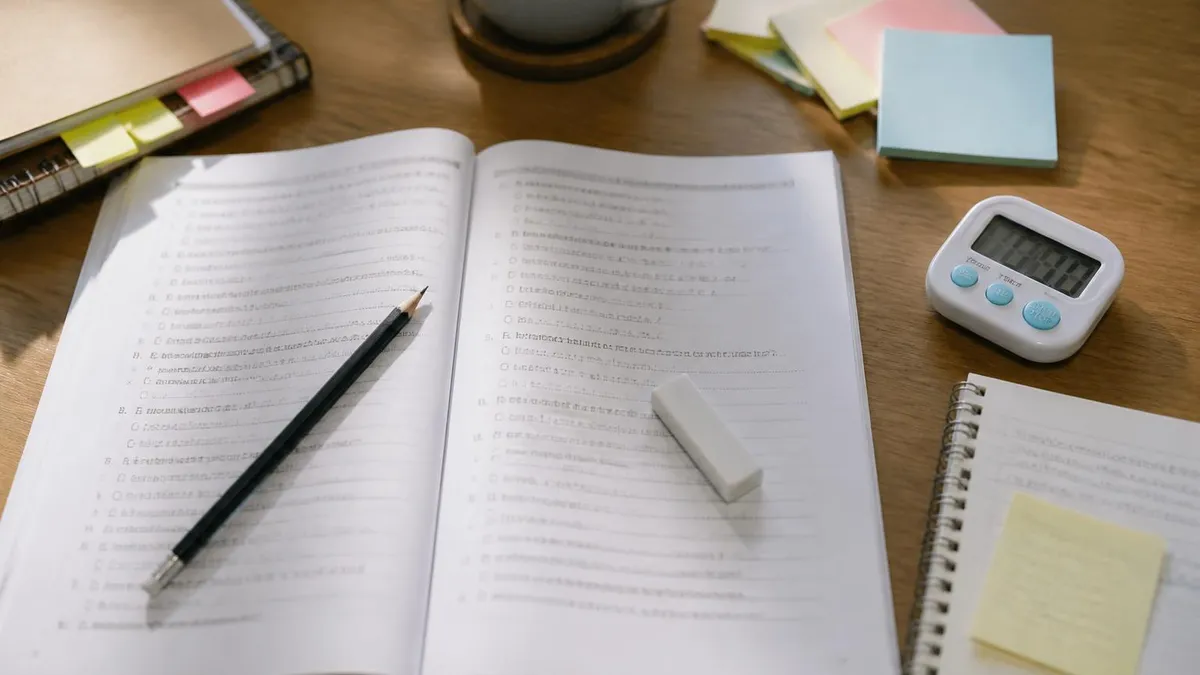
Manual proofreading remains essential despite the availability of strong automated tools. Reading aloud catches errors that silent reading misses — your ear hears awkward phrasing, missing words, and rhythm problems that your eyes pass over. Printing the document and reviewing on paper changes the visual context enough that errors become more apparent than reading on screen. Reviewing after a time gap (a few hours or overnight) brings fresh perspective that helps you see your work more objectively.
Specific manual proofreading techniques include: reading the document backward sentence by sentence (breaks the flow that lets your eyes skip over errors), checking each sentence in isolation for completeness, verifying that pronouns clearly refer to specific antecedents, ensuring tense consistency within paragraphs and shifts only happen for good reasons, and confirming subject-verb agreement especially in complex sentences with intervening phrases between subject and verb. These techniques train your eye to catch patterns over time.
Common errors automated tools sometimes miss include: factual errors (you wrote 1995 but meant 1955), inconsistencies within the document (calling someone Sarah in one paragraph and Sara in another), formatting issues (inconsistent capitalization, varied date formats), missing transitions between ideas that make logic unclear, and contextual word choice issues where the technically correct word isn't the best word for your specific audience or purpose. Manual review catches these even when grammar is technically correct.
For longer documents, breaking proofreading into separate passes for different concerns produces better results than trying to catch everything at once. First pass for grammar and spelling. Second pass for clarity and flow. Third pass for fact-checking and consistency. Fourth pass for formatting. Each pass focuses on specific issues rather than trying to do everything simultaneously. The accumulated quality across multiple focused passes typically exceeds what single-pass review produces, especially for important documents where the time investment is justified.
Editing services beyond software exist for high-stakes writing. Professional editors handle dissertations, books, business proposals, and other documents where the cost of errors justifies professional review. Costs vary widely from $0.01-0.10 per word for basic copy editing to $0.10-0.30+ for substantive editing or proofreading at top tiers. For students, university writing centers often provide free peer review and tutoring.
For professional writing, services like Grammarly's premium proofreading and various freelance editor platforms connect writers with professionals at varying price points. Combining all the available resources — automated tools, manual review, and human editors — produces the highest quality output for situations where it matters.
For students learning English grammar systematically, sequential study of major topics produces lasting understanding. Start with parts of speech (nouns, verbs, adjectives, adverbs, etc.), then sentence structure (clauses, phrases, sentence types), then verb tenses and moods, then more advanced topics like conditionals, reported speech, and clause-level analysis. Building from foundations upward provides a coherent framework that supports continued learning rather than the patchy understanding that comes from random topic study.
Common Grammar Errors to Watch For
Subject-verb agreement is one of the most common error categories.
- Incorrect: The list of items are on the desk.
- Correct: The list of items is on the desk. (subject is 'list', not 'items')
- Tricky case: Either of these is fine. (correlative subjects can take singular)
- Watch for: Phrases between subject and verb that distract from the actual subject

Building good grammar habits over time produces lasting improvement. Pay attention to corrections in your own writing to identify patterns of errors you make repeatedly. Review style guides for the writing contexts that matter to you (AP Stylebook for journalism, APA for psychology, MLA for humanities). Read writers whose style you admire to absorb good patterns through immersion. Work with a writing tutor or class for systematic improvement. Combine multiple approaches rather than relying on any single method.
For non-native English speakers, specific challenges include articles (a, an, the), preposition usage (which preposition fits with which verb), idioms (combinations that don't follow logical rules), and sentence structure differences from your native language. Targeted practice on these specific challenges, alongside general grammar improvement, addresses the most common ESL writing issues. ESL-focused materials and tutors provide more relevant guidance than general writing resources for these specific needs.
Style guides for specific contexts handle questions that pure grammar doesn't address. AP style for journalism specifies rules for numbers, capitalization, and abbreviations. Chicago Manual of Style for book publishing handles citations, formatting, and complex grammar questions. Plain Language Guidelines for government and accessibility writing emphasize clarity over formal grammar correctness. Choosing and consistently following appropriate style guides for your context produces more polished work than treating grammar in isolation.
Ultimately, grammar serves communication. The point of correct grammar is not perfection for its own sake but clarity that serves your reader. Some grammar rules are more important than others — agreement and tense errors that confuse meaning matter more than minor punctuation choices. Pragmatic grammar habits that focus on serving your reader produce better outcomes than rigid adherence to every traditional rule, especially in informal contexts where the reader's experience matters more than impressing them with formal correctness. Knowing which rules truly matter for clarity helps you focus your editing effort effectively.
Looking forward, AI tools continue advancing rapidly. ChatGPT and similar large language models can rewrite entire passages with grammar improvements, simplification, or stylistic shifts. While powerful, these tools require careful review — they sometimes change meaning or introduce errors of their own. The hybrid approach of using AI tools as helpful collaborators while maintaining human judgment over final output produces the best results in most current writing contexts. The technology will continue improving, but human attention to clarity and meaning will remain essential for the foreseeable future.
Automated grammar checkers occasionally suggest changes that are technically correct but stylistically wrong for your context, or flag correct constructions as errors. Always understand what each correction does and why before accepting it. Blindly accepting all suggestions can homogenize your writing voice or introduce subtle errors. The tools are aids to thinking, not replacements for it. Use the explanations they provide as learning opportunities while exercising judgment about which suggestions to accept.
For specific writing contexts beyond general writing improvement, specialized grammar resources address domain-specific needs. Academic writing has its own conventions around tense usage, hedging, and citation. Business writing emphasizes brevity and clarity. Legal writing has unique conventions around terminology and structure. Technical writing requires precision and consistency. Each context has dedicated style guides, tools, and best practices that complement general grammar checking. Investing time in learning the specific conventions of your domain produces better results than treating all writing the same way.
Building writing skills systematically over time pays dividends across professional and personal contexts. Reading actively (noticing how writers construct sentences and paragraphs), writing regularly (the only way to build skill), seeking feedback (from peers, mentors, professional editors), and reviewing your own work critically all contribute to gradual improvement. There's no shortcut to writing mastery, but the gradual accumulation of skill over years of practice produces meaningful capability that affects how effectively you communicate in many contexts.
For students preparing for grammar-heavy tests like the SAT, ACT, GRE Writing, or English language proficiency exams (TOEFL, IELTS), targeted practice with grammar materials specific to those tests is most effective. The questions on standardized tests have specific patterns and emphases that general grammar improvement doesn't fully address. Practice tests, study guides aligned with specific exams, and tutoring focused on test-specific patterns prepare students more efficiently than generic grammar improvement alone.
The combination of automated tools, manual proofreading, ongoing learning, and feedback from others produces writers who handle grammar competently across diverse contexts. No single approach is sufficient by itself; the integration of multiple approaches creates the comprehensive grammar fluency that distinguishes confident writers from those constantly anxious about errors. Building this fluency takes time, but the trajectory of improvement is reliable for those who invest in the work consistently.
Workplace writing standards often differ from academic conventions. Business writing emphasizes brevity, action-oriented language, and clear calls-to-action. Academic writing values nuance, hedging, and detailed citation. Casual personal writing prioritizes voice and warmth over formal correctness. Adapting your grammar approach to match the context produces writing that resonates with the intended audience rather than feeling out of place. Knowing which conventions apply when matters as much as knowing the conventions themselves.
Regular practice writing improves grammar more reliably than studying rules in isolation. The combination of frequent writing, careful self-review, exposure to good writing through reading, and feedback from others produces gradual improvement that compounds over time. Setting up a regular writing practice — daily journaling, blogging, professional documentation, fiction writing, or any consistent writing activity — builds the underlying capability that makes grammar checking less necessary because errors become less frequent in the first place.
For aspiring writers building professional capability, consistency in grammar correctness becomes a baseline expectation rather than a notable strength. Editors and publishers expect basic grammar competence; they don't reward writers for not making errors but penalize those who do. Building grammar capability to the point where it requires minimal conscious attention frees you to focus on higher-level writing concerns: argument, structure, voice, and audience engagement. Mechanical correctness becomes the floor that lets you build everything else on top.
The trajectory of growth is reliable for those who commit to the work over time. Each writing project is an opportunity to apply and refine the grammar fundamentals that support effective communication.Grammar Checking Quick Facts
Automated vs. Manual Grammar Checking
- +Automated: catches common errors quickly across long documents
- +Automated: provides explanations that help learn rules over time
- +Automated: integrates with most writing platforms and email
- +Manual: catches context-dependent errors automated tools miss
- +Manual: maintains your unique voice rather than homogenizing it
- −Automated: occasionally suggests incorrect changes or misses subtle errors
- −Automated: premium versions add subscription costs
- −Manual: time-consuming for long documents
- −Manual: requires self-discipline and skills built over time
- −Either alone: insufficient — combining both produces best results
Pros and Cons at a Glance
| Pros | Cons |
|---|---|
| Automated: catches common errors quickly across long documents | Automated: occasionally suggests incorrect changes or misses subtle errors |
| Automated: provides explanations that help learn rules over time | Automated: premium versions add subscription costs |
| Automated: integrates with most writing platforms and email | Manual: time-consuming for long documents |
| Manual: catches context-dependent errors automated tools miss | Manual: requires self-discipline and skills built over time |
| Manual: maintains your unique voice rather than homogenizing it | Either alone: insufficient — combining both produces best results |
Sample English Grammar Test Practice Questions
Try these questions from our free English Grammar Test practice tests. The correct answer and an explanation follow each question.
I believe we ought to relocate to my ___ house.
- A. "no article"
- B. The
- C. A
- D. An
Answer: A. "no article"
When a possessive pronoun like 'my' is used before a noun ('house'), an article (a, an, the) is generally not needed. The possessive pronoun already specifies which house is being referred to, making the use of an article redundant. Therefore, 'my house' is the correct and natural phrasing without an additional article.
She said, 'I might join the team.' What is the reported speech?
- A. She said she might join the team.
- B. She said she may join the team.
- C. She said she would join the team.
- D. She said she could join the team.
Answer: A. She said she might join the team.
'Might' is already a past-form modal and does not backshift further in reported speech.
Where should the comma go in this sentence with a contrasting element: 'He wanted to win not to participate'?
- A. He wanted, to win not to participate.
- B. He wanted to win, not to participate.
- C. He wanted to win not, to participate.
- D. No comma is needed.
Answer: B. He wanted to win, not to participate.
A comma sets off a contrasting element introduced by 'not,' 'but,' or 'yet.'
I am a sentence that consists of two distinct clauses, one of which is separated from the other by a coordinating conjunction or a semicolon.
- A. Complex
- B. Compound
- C. Simple
- D. Compound-complex
Answer: B. Compound
A compound sentence is characterized by having two or more independent clauses, which are complete thoughts that can stand alone. These clauses are typically joined by a coordinating conjunction (like 'and,' 'but,' 'or') or a semicolon. This definition precisely matches the description provided in the question.
Grammar Questions and Answers
About the Author

Writing Expert & Communications Certification Educator
Columbia UniversityDr. Rebecca Foster holds a PhD in English Literature and an MFA in Creative Writing from Columbia University. She has 14 years of experience teaching academic writing, professional communications, and editorial skills at the university level. Rebecca coaches candidates through AP English, writing placement assessments, editing certifications, and communication skills examinations.