
NY ELA Standards: A Complete Guide to New York's English Language Arts Framework
Master the NY ELA standards with this complete guide. Learn grade-level expectations, strand breakdowns, and test prep strategies. 📚

The NY ELA standards form the backbone of English Language Arts instruction across every public school in New York State. Adopted and refined over the years to align with rigorous college- and career-ready benchmarks, these standards define what students in kindergarten through twelfth grade should know and be able to do in reading, writing, speaking, listening, and language. Whether you are a parent trying to understand your child's report card, a teacher building curriculum maps, or a student preparing for state assessments, understanding the NY ELA standards is essential for navigating the New York education system with confidence and clarity.
New York's ELA standards are built on four interconnected strands: Reading, Writing, Speaking and Listening, and Language. Each strand grows in complexity across grade levels, asking students to engage with increasingly sophisticated texts and tasks. In the early grades, the focus falls on foundational literacy skills such as phonics, phonemic awareness, and basic comprehension. By the middle grades, students are expected to analyze literary and informational texts, construct evidence-based arguments, and conduct short research projects. In high school, the demands escalate further, requiring deep synthesis of complex texts and the production of polished, audience-aware writing.
One of the most important features of the NY ELA standards is their emphasis on text complexity. Rather than simply asking students to identify the main idea or recall facts, the standards push students to examine how authors craft their texts, why structural choices matter, and how evidence from multiple sources can be woven together into a coherent claim. This shift toward higher-order thinking skills reflects national conversations about preparing young people for post-secondary success in a rapidly changing information landscape where critical literacy is more valuable than ever before.
The standards also place considerable weight on the reading of both literary and informational texts. Research consistently shows that students who read widely across genres and disciplines develop stronger vocabularies, better background knowledge, and more flexible reading strategies. The NY ELA standards therefore require a balanced diet of fiction, poetry, drama, biography, and nonfiction across all grade levels. Teachers are expected to integrate complex informational texts into ELA classrooms alongside the novels, short stories, and poems that have long been the heart of literacy instruction in New York schools.
Writing instruction under the NY ELA standards is similarly rigorous and varied. Students are expected to develop three distinct types of writing: argument, informational/explanatory, and narrative. Each type requires different organizational structures, different kinds of evidence, and different stylistic choices. The standards recognize that strong writers are not born but developed through sustained practice, revision, and feedback. As students move through the grades, they are expected to demonstrate increasing control over conventions, style, and the demands of specific writing tasks and audiences.
The Speaking and Listening strand is sometimes overlooked in test preparation contexts, but it plays a vital role in the full NY ELA standards framework. Students are expected to participate in collaborative discussions, present information clearly, and evaluate the reasoning and evidence in what they hear and view. These oral communication skills mirror the demands of college seminars, professional workplaces, and civic life, making this strand an important complement to the reading and writing work at the heart of ELA instruction.
For students preparing for state assessments, a thorough understanding of the ny ela standards provides a clear roadmap for what knowledge and skills will be tested. The state ELA assessments in grades three through eight and the Regents exams in high school are all designed to measure student mastery of these standards, making them the single most important document for any serious test preparation effort in New York State schools.
NY ELA Standards by the Numbers

The Four Strands of the NY ELA Standards
Covers both Literature and Informational Text. Students analyze story elements, author's craft, text structure, point of view, and evidence across fiction, poetry, drama, and nonfiction at increasing levels of complexity from kindergarten through grade twelve.
Encompasses argument, informational/explanatory, and narrative writing tasks. Students learn to plan, draft, revise, and publish polished pieces using grade-appropriate evidence, organizational structures, and command of style and conventions.
Focuses on collaborative discussion, oral presentation, and critical listening. Students learn to build on others' ideas, evaluate media sources, and present findings clearly and persuasively in a range of formal and informal academic settings.
Addresses grammar, usage, mechanics, and vocabulary acquisition. Students develop command of standard English conventions and learn to determine word meanings using context clues, roots, affixes, and reference materials across all grade levels.
Understanding grade-level expectations within the NY ELA standards is critical for parents, teachers, and students alike. In kindergarten and first grade, the primary focus is foundational literacy: children learn letter-sound correspondences, practice decoding simple words, and begin building the print awareness that makes independent reading possible. These early standards set the floor for all later academic work, which is why early identification of reading difficulties and targeted intervention are so strongly emphasized in New York State education policy.
By second and third grade, students are expected to transition from learning to read to reading to learn. The NY ELA standards for these grades expect students to retell stories with key details, explain how characters respond to challenges, describe text structure in informational pieces, and begin crafting their own simple opinion and informational writing. Third grade also marks the beginning of annual state ELA testing, which measures how well students are meeting grade-level standards in reading comprehension and writing conventions.
Grades four through six represent a critical bridge in the NY ELA standards progression. Students are now expected to compare texts across genres, analyze how authors use evidence to support claims, write multi-paragraph arguments with clear reasons and relevant evidence, and conduct basic research projects. Vocabulary instruction becomes increasingly important in these grades as students encounter more technical and domain-specific words in science, social studies, and other content areas. Teachers often use close reading strategies to help students slow down and notice how an author's word choices and structural decisions shape meaning and tone.
Middle school standards in grades six through eight raise the bar significantly. Students are asked to trace and evaluate arguments in informational texts, analyze how themes develop across a literary work, synthesize information from multiple sources into a coherent research report, and write sustained arguments that acknowledge and refute counterarguments. The Language strand in these grades focuses heavily on grammar nuances, style choices, and the conventions that distinguish formal academic writing from casual communication. These are the skills that state assessments measure most rigorously in grades six, seven, and eight.
High school ELA standards in grades nine through twelve prepare students for the demands of post-secondary education and careers. Students are expected to analyze complex literary and historical texts, evaluate the reasoning and evidence in a wide range of arguments, write extended research papers with proper citation, and adapt their communication style for different audiences and purposes. The Regents English Language Arts exam, which all New York students must pass to earn a diploma, is built directly around these high school standards and tests a student's ability to read and respond to complex texts under timed conditions.
A key design principle of the NY ELA standards is the staircase of complexity — the idea that text difficulty and task demands should increase steadily and coherently from one grade to the next.
This means that a fifth grader reading a historical biography and an eleventh grader reading the same author should be doing very different things with the text: the fifth grader might summarize main ideas and identify supporting details, while the eleventh grader analyzes rhetorical strategies, evaluates the reliability of the author's evidence, and compares the text to primary source documents. This intentional scaffolding ensures that skills build on one another in a logical progression.
Teachers working with the NY ELA standards are encouraged to view them not as a rigid checklist but as a flexible framework that supports rich, engaging instruction. The standards specify outcomes — what students should know and be able to do — but they deliberately leave room for teacher judgment about which texts to use, which instructional methods to employ, and how to sequence learning experiences for a particular group of students.
This balance between rigor and flexibility is one reason the NY ELA standards have been broadly embraced by educators across the state as a sound foundation for meaningful literacy instruction.
NY ELA Standards: Reading, Writing, and Language Explained
The Reading strand in the NY ELA standards is divided into two sub-strands: Reading Literature and Reading Informational Text. Both sub-strands share a parallel structure, asking students to demonstrate skills in key ideas and details, craft and structure, and integration of knowledge and ideas. A foundational standards cluster — Reading Foundational Skills — applies specifically to kindergarten through grade five, covering phonological awareness, phonics, word recognition, and reading fluency. These foundational skills are non-negotiable prerequisites for all the higher-level comprehension work the standards demand.
One of the most consistent themes across the Reading standards is the expectation that students cite textual evidence to support their analysis. At the lowest grade levels, this looks like pointing to a picture or sentence that supports an answer. By high school, it means selecting the most relevant and specific quotations from a complex text, integrating them smoothly into an analytical response, and explaining how each piece of evidence connects to the argument being made. This skill is assessed heavily on all New York State ELA assessments and is among the most important habits the standards cultivate.

Strengths and Challenges of the NY ELA Standards
- +Provide a clear, coherent progression of skills from kindergarten through grade twelve
- +Emphasize critical thinking, textual evidence, and higher-order analysis at all grade levels
- +Balance literary and informational text reading, reflecting real-world literacy demands
- +Include all four communication strands: reading, writing, speaking, listening, and language
- +Designed to prepare students for college, careers, and civic participation
- +Give teachers flexibility in choosing texts and instructional approaches to meet standards
- −Can feel overwhelming for teachers new to standards-based curriculum planning
- −Text complexity expectations may be challenging for students with reading difficulties
- −High-stakes state testing can narrow instructional focus to tested skills only
- −Speaking and Listening standards are often under-assessed and deprioritized in classrooms
- −Vocabulary breadth requirements demand sustained, systematic instruction that takes significant time
- −Alignment between standards, curriculum materials, and assessments is inconsistent across districts
NY ELA Standards Test Prep Checklist
- ✓Review all four NY ELA standards strands: Reading, Writing, Speaking and Listening, and Language.
- ✓Practice close reading with both literary and informational texts at your grade level.
- ✓Learn to identify and cite specific textual evidence to support analytical claims.
- ✓Study the three writing types: argument, informational/explanatory, and narrative.
- ✓Build academic vocabulary using context clues, word roots, and reference tools.
- ✓Practice writing multi-paragraph responses with clear thesis statements and organized evidence.
- ✓Complete timed reading passages to build stamina and improve pacing on assessments.
- ✓Review grammar and conventions rules tested on the NY state ELA assessments.
- ✓Analyze sample essays at multiple score levels to understand what strong writing looks like.
- ✓Take full-length practice tests under realistic conditions to identify remaining skill gaps.
Textual Evidence Is the Foundation
Every NY ELA standards assessment — from the grade three state test to the high school Regents exam — places textual evidence at the center of every scored response. Students who practice the habit of always returning to the text to support their thinking, rather than relying on prior knowledge or general impressions, consistently outperform their peers on New York State ELA assessments.
Effective classroom instruction aligned to the NY ELA standards begins with a clear understanding of what each standard actually demands. Many teachers find it useful to unpack standards by identifying the skills, knowledge, and vocabulary embedded in the standard's language.
For example, a standard that asks students to "analyze how an author's choices concerning how to structure a text, order events within it, and manipulate time create such effects as mystery, tension, or surprise" is not simply asking students to retell what happened. It is asking them to notice craft decisions and explain their effect on the reader — a much more sophisticated cognitive task that requires direct instruction and repeated practice.
Text selection is one of the most powerful decisions a teacher makes in an ELA classroom, and the NY ELA standards offer clear guidance on what makes a text appropriate. Three factors determine text complexity: quantitative measures such as Lexile level or sentence length, qualitative factors such as levels of meaning, knowledge demands, and text structure, and reader and task considerations such as the student's motivation, background knowledge, and the purpose for reading.
A text that is quantitatively simple might still be quite challenging if it relies on extensive cultural background knowledge that students do not possess, making teacher judgment essential in text selection.
Close reading is the instructional practice most closely associated with the NY ELA standards, and it involves asking students to read and reread short, complex passages with a high level of attention to detail. Rather than pre-teaching background knowledge before students encounter a text, close reading encourages students to mine the text itself for meaning, using its words, structure, and context to make sense of even unfamiliar content. This approach mirrors the demands of college and career reading, where professionals routinely encounter unfamiliar texts and must work through them independently without the scaffolding of prior instruction.
Discussion is another high-leverage instructional practice supported by the NY ELA standards. When students talk about texts in structured, evidence-based discussions, they develop the speaking and listening skills the standards require, deepen their comprehension of what they have read, and encounter perspectives that challenge and refine their thinking. Socratic seminars, literature circles, and fishbowl discussions are all structures that teachers use to facilitate the kind of collaborative intellectual work the standards envision. These discussions also give teachers valuable formative assessment data about where students are in their understanding of a text or concept.
The Writing Process is explicitly addressed in the NY ELA standards through the production and distribution standards, which expect students to develop and strengthen their writing through planning, drafting, revising, editing, and publishing. This process-oriented approach recognizes that strong writing is almost never produced in a single sitting and that revision — the act of rethinking and reshaping a draft in response to feedback — is where the most important learning often happens. Teachers who build regular revision cycles into their writing instruction report significant gains in student writing quality over time.
Technology integration is woven throughout the NY ELA standards in ways that reflect contemporary literacy demands. Students are expected to use technology to produce and publish writing, to conduct research using digital sources, and to evaluate the credibility and relevance of online information. These digital literacy skills are increasingly non-negotiable in an economy where virtually all professional communication happens through digital tools. The standards' attention to technology ensures that ELA instruction remains relevant and connected to the information environments students will inhabit as adults.
Assessment literacy — understanding how standards translate into assessment tasks — is a crucial component of effective ELA instruction in New York. Teachers who are familiar with the format, question types, and scoring rubrics of the state ELA assessments are better positioned to prepare students effectively without reducing their instruction to test prep. When students understand what high-quality reading responses and writing samples look like, they develop the metacognitive awareness that helps them self-monitor and self-correct both during preparation and on assessment day.
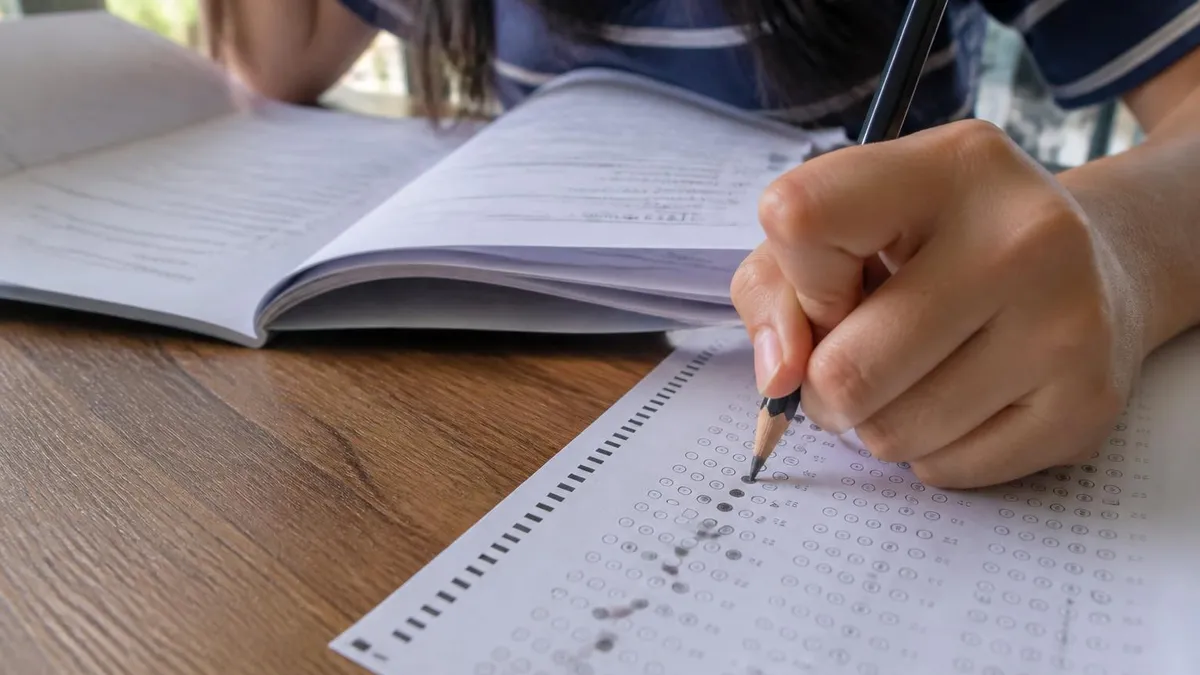
New York State administers ELA assessments for grades three through eight in April each year, and high school students take the Regents English Language Arts exam in January, June, and August. Students should check with their school or the NYSED website for exact testing dates and any changes to assessment formats or scoring that may affect preparation plans.
Supporting students who struggle to meet the NY ELA standards requires both early identification and targeted, sustained intervention. Research consistently shows that reading difficulties that are not addressed by third grade become significantly harder to remediate, which is why New York State has invested heavily in early literacy screening and intervention programs in recent years. The NY ELA standards provide a clear benchmark for what grade-level proficiency looks like, making it easier for teachers and intervention specialists to identify specific skill gaps and design targeted instruction to address them.
Differentiation is essential in any classroom where students arrive with varying levels of readiness for grade-level work. The NY ELA standards represent the target — the destination — but the path to that destination will look different for different students. For students reading below grade level, teachers might use scaffolded texts that build toward complexity, provide more explicit vocabulary instruction, or offer additional opportunities to practice foundational skills. For advanced students, the standards can be extended through more complex texts, more sophisticated writing tasks, and richer analytical discussions that push beyond basic proficiency.
English Language Learners face particular challenges in meeting the NY ELA standards because they are simultaneously developing English proficiency and academic content knowledge. New York State has developed scaffolded supports and language proficiency benchmarks that help teachers distinguish between language acquisition challenges and academic skill gaps. When ELL students receive high-quality, linguistically scaffolded ELA instruction aligned to the standards, they make measurable progress on both language development and academic achievement, particularly when their home language literacy skills are leveraged as a resource rather than treated as a deficit.
Family engagement is a frequently underestimated factor in student success with the NY ELA standards. When parents and caregivers understand what the standards require and how they can support reading and writing development at home, students benefit from consistent reinforcement of the skills being developed at school. Schools that provide families with grade-level examples, reading lists, and practical strategies for supporting literacy development see higher levels of student achievement, particularly in communities where home literacy resources have historically been limited.
Professional development for teachers is one of the most important investments a school or district can make in standards implementation. Teachers who deeply understand the NY ELA standards — who can unpack their demands, select appropriate texts and tasks, and design assessments aligned to specific standards — are far more effective than those working from a surface-level understanding. Many districts offer collaborative planning time, instructional coaching, and professional learning communities where teachers study student work together and refine their instructional practice in response to what the data reveals.
The relationship between the NY ELA standards and broader curriculum design is also worth understanding. The standards themselves do not specify which books to read, which writing topics to assign, or which instructional methods to use. Those decisions belong to districts, schools, and individual teachers.
What the standards do specify is the level of cognitive demand, the range of text types and tasks, and the grade-level expectations that curriculum and instruction must meet. Districts that invest in high-quality, standards-aligned curriculum materials report more consistent student outcomes across classrooms and schools, because teachers are working from a shared framework rather than making individual decisions in isolation.
For any student working toward mastery of the NY ELA standards, consistent practice with authentic reading and writing tasks is the single most important factor in building the skills and stamina the standards demand. Reading widely and often, writing regularly across all three text types, and engaging in substantive discussions about texts all develop the habits of mind that the NY ELA standards are designed to cultivate.
Students who approach ELA as a discipline that rewards curiosity, careful attention, and persistence — rather than as a set of test-taking strategies — are best positioned for lasting academic success in New York and beyond.
Practical test preparation for the NY ELA standards should begin well before the assessment window, ideally several months in advance. The most effective approach is not to set aside regular instruction in favor of test prep but rather to ensure that day-to-day instruction consistently develops the skills the assessments measure. When students spend the school year reading complex texts, writing evidence-based responses, and discussing their thinking in structured ways, they build the reading stamina, writing fluency, and analytical habits that translate directly to strong performance on NY state ELA assessments.
One of the most valuable test preparation strategies is extensive practice with released test questions and sample passages. The New York State Education Department releases prior years' assessment questions, and these authentic items give students the clearest possible picture of the format, question types, and complexity levels they will encounter.
When students work through released items under realistic timed conditions and then review their answers carefully, they develop both the skills and the metacognitive awareness needed to perform well on assessment day. Teachers should study these released items carefully as well, since they reveal exactly how the standards are operationalized in the testing context.
Writing preparation is particularly important because the written response components of NY ELA assessments require students to produce extended, evidence-based writing under significant time pressure. Students who have regularly practiced timed writing — who know how to read a prompt carefully, plan a response quickly, and write a clear, organized, evidence-supported response within a set time limit — are far better prepared than those who have only written in low-pressure, open-ended classroom settings. Practicing with actual assessment prompts and reviewing anchor papers at multiple score levels helps students internalize the expectations and develop realistic self-assessment skills.
Vocabulary development deserves sustained attention throughout any NY ELA standards preparation effort. Research shows that the single strongest predictor of reading comprehension is vocabulary knowledge, which means that students who consistently expand their word knowledge through wide reading, explicit vocabulary instruction, and word study activities will be better equipped to handle the complex texts on any NY ELA assessment. Teachers and students should prioritize academic vocabulary — the cross-disciplinary words that appear across content areas — as well as the literary and rhetorical vocabulary needed to discuss and analyze texts in sophisticated ways.
Poetry analysis is a specific skill area that many students find challenging but that appears regularly on NY ELA assessments. The standards expect students to analyze figurative language, determine the impact of word choice on meaning and tone, and compare how different poets approach similar themes. Regular exposure to poetry across grade levels, combined with guided practice in close reading and discussion of poetic devices, helps students develop the specialized reading strategies that poetry requires. Practice quizzes focusing on poetry analysis are an excellent supplement to classroom instruction for students who feel less confident with this particular genre.
Time management during assessments is a practical skill that students often neglect in their preparation but that has a significant impact on performance. NY ELA assessments typically include multiple reading passages and several different question types, including multiple-choice, short response, and extended writing tasks.
Students who practice pacing themselves — allocating their time across sections strategically and leaving time to review their written responses — tend to perform better than those who spend too much time on early sections and rush through the writing tasks at the end. Mock testing under realistic conditions is the best way to develop this skill before assessment day arrives.
Finally, approaching the NY ELA standards with a growth mindset makes a meaningful difference in student outcomes. The skills the standards require — careful reading, evidence-based thinking, clear writing, thoughtful communication — are not fixed talents that some students have and others lack. They are learnable skills that develop through effort, practice, and feedback.
Students who believe they can improve their reading and writing abilities, and who seek out opportunities to practice and receive feedback, consistently make greater gains than those who believe their literacy skills are fixed. This mindset, cultivated through encouraging classroom environments and meaningful success experiences, is ultimately the most powerful preparation tool of all.
ELA Questions and Answers

ELA Lessons: Grade-Band Guide to Reading, Writing, and Language Strands

ELA Exam NYS: Complete Study Guide for the New York State English Language Arts Assessment

ELA Anchor Charts: The Complete Teacher's Guide to Visual Learning Tools

ELA Lesson: A Complete Guide to Teaching and Mastering English Language Arts

ELA Questions: Complete Guide to Types, Strategies, and Practice
About the Author

Educational Psychologist & Academic Test Preparation Expert
Columbia University Teachers CollegeDr. Lisa Patel holds a Doctorate in Education from Columbia University Teachers College and has spent 17 years researching standardized test design and academic assessment. She has developed preparation programs for SAT, ACT, GRE, LSAT, UCAT, and numerous professional licensing exams, helping students of all backgrounds achieve their target scores.
Join the Discussion
Connect with other students preparing for this exam. Share tips, ask questions, and get advice from people who have been there.
View discussion (8 replies)