
ELA B.E.S.T. Standards Florida: Complete Guide to the Benchmarks for Excellent Student Thinking
Master ELA B.E.S.T. Standards Florida 🎓 Full breakdown of reading, writing & language benchmarks. Free practice tests included.

The ELA B.E.S.T. Standards Florida — Benchmarks for Excellent Student Thinking — represent the most significant overhaul of Florida's English Language Arts curriculum in over a decade. Adopted by the Florida State Board of Education in 2020 and fully implemented by the 2022–2023 school year, these standards set clear, rigorous expectations for what students in kindergarten through grade 12 should know and be able to do in reading, writing, speaking, listening, and language. Understanding these benchmarks is essential for teachers, students, and parents who want to stay ahead of statewide assessments and classroom instruction.
Florida's B.E.S.T. Standards replaced the previous Florida Standards, which were closely aligned to the Common Core State Standards adopted around 2010. Educators and policymakers wanted a framework that felt uniquely Floridian, emphasizing the close reading of complex literary and informational texts, evidence-based writing, and the development of a rich vocabulary from the earliest grades. The result is a comprehensive, vertically aligned progression that builds skills systematically from one grade to the next, ensuring students are not just exposed to content but develop genuine mastery over time.
One of the most notable features of the B.E.S.T. ELA Standards is their emphasis on authentic reading and writing tasks. Rather than isolating discrete skills in a vacuum, the standards ask students to engage with real texts — both literary and informational — and to produce writing that demonstrates sophisticated thinking. Students are expected to analyze author's craft, evaluate arguments, compare perspectives across multiple texts, and construct original arguments supported by textual evidence. These expectations begin in the primary grades and escalate in complexity each year through high school.
For students preparing for Florida's statewide assessments, a solid grasp of the B.E.S.T. ELA Standards is non-negotiable. The Florida Assessment of Student Thinking (FAST) — which replaced FSA beginning in 2022 — is directly built around these benchmarks. Each progress monitoring window, each end-of-year assessment, and each Writing component is mapped to specific B.E.S.T. benchmarks. Students who understand the structure and language of the standards gain a strategic advantage when they sit down to take these high-stakes tests, because they recognize exactly what skills are being measured.
Parents navigating Florida's public school system will find the B.E.S.T. Standards a useful roadmap for supporting learning at home. Whether you're reviewing a report card, attending a parent-teacher conference, or selecting supplemental reading materials, knowing what benchmarks your child is working toward helps you ask better questions and provide more targeted support. The standards are organized by strand — Reading, Writing, Communication, and Language — which makes it easier to identify specific areas where a student may need additional practice or enrichment.
Teachers new to Florida, or those transitioning from another state's standards framework, should invest time in studying the B.E.S.T. ELA Standards thoroughly. The benchmarks are numbered using a specific coding system that identifies the grade, strand, and individual standard, and understanding this coding system helps educators plan units, align assessments, and communicate clearly with colleagues and administrators. You can also explore our comprehensive resource on ela florida standards to see how these benchmarks translate into classroom instruction across every grade band.
This guide breaks down every major strand of the B.E.S.T. ELA Standards, explains the key shifts from the previous Florida Standards, offers practical study and teaching strategies, and connects you with free practice materials aligned to specific benchmarks. Whether you are a student preparing for FAST ELA assessments, a teacher building curriculum, or a parent advocating for your child's education, the information here will give you the foundation you need to succeed with Florida's current ELA expectations.
Florida B.E.S.T. ELA Standards by the Numbers

How the B.E.S.T. ELA Standards Are Organized
Covers literary text, informational text, and paired text analysis. Students develop skills in identifying main idea, analyzing author's craft, evaluating evidence, and comparing texts across grade-appropriate complexity bands.
Encompasses narrative, expository, argumentative, and research-based writing. Students learn to organize ideas, cite evidence, develop arguments, revise for clarity, and produce multiple drafts with feedback.
Addresses oral language, listening skills, collaborative discussion, and media literacy. Students practice presenting ideas clearly, evaluating spoken arguments, and interpreting multimedia sources critically.
Focuses on vocabulary acquisition, grammar, usage, and mechanics. Students build word knowledge through context clues, morphology, and dictionary skills while applying standard conventions in written and spoken language.
The Reading strand of the Florida B.E.S.T. ELA Standards is divided into two major categories: Literary Text and Informational Text. Within Literary Text, students are expected to engage with fiction, drama, and poetry across a wide range of historical periods, cultures, and genres. In the primary grades, this means identifying story elements such as character, setting, and plot. By middle school, students analyze theme, point of view, figurative language, and structural choices. In high school, they evaluate how authors use craft decisions to convey complex meaning and contribute to broader literary traditions.
Informational text benchmarks follow a parallel structure, asking students to comprehend and analyze nonfiction across disciplines — including history, science, social studies, and the arts. One of the most significant shifts introduced by the B.E.S.T. Standards is the explicit inclusion of paired text tasks at virtually every grade level. Students regularly encounter two or more texts on the same topic and must compare authors' arguments, purposes, perspectives, and use of evidence. This skill is tested directly on the FAST ELA assessments, making paired text practice especially critical for students at every grade level.
Vocabulary development is woven throughout the Reading strand via the Language strand's vocabulary benchmarks, but the B.E.S.T. framework integrates word work directly into reading instruction. Students are expected to use context clues, knowledge of Greek and Latin roots, and word relationships to determine the meaning of unfamiliar words and phrases encountered in grade-level texts. In grades 6–8, students are specifically benchmarked on understanding domain-specific vocabulary in informational texts, recognizing that content-area literacy is inseparable from ELA skill development.
Text complexity is a cornerstone of the B.E.S.T. Reading standards. Florida provides specific guidance on what constitutes grade-appropriate text complexity using a three-part model: quantitative measures (such as Lexile levels), qualitative dimensions (such as layers of meaning, language conventionality, and knowledge demands), and reader-task considerations. Teachers are expected to select texts that are appropriately challenging and to scaffold instruction so that students can access complex texts with increasing independence over the course of the school year.
Poetry benchmarks within the Literary Text strand deserve special attention, particularly for students in grades 3 through 12. The B.E.S.T. Standards call for students to analyze how poets use sound devices (such as rhyme, meter, and alliteration), structural elements (such as stanzas and line breaks), and figurative language (such as metaphor, simile, and personification) to convey meaning and create effects. These skills appear frequently on FAST assessments, and students who feel uncomfortable with poetry analysis often find themselves struggling on passages they did not expect to encounter. Our poetry-focused practice resources can help bridge that gap.
Argument and persuasion reading benchmarks are another area of significant emphasis in the B.E.S.T. Standards. Students at all grade levels are expected to identify claims, evaluate the quality of evidence used to support those claims, recognize logical fallacies, and assess the credibility of sources. In grades 9–12, these skills escalate to include evaluating seminal U.S. documents and literary criticism, placing Florida's ELA curriculum firmly within a tradition of civic literacy and critical thinking. These higher-order reading skills align directly with the types of writing tasks students are asked to complete, creating a cohesive instructional framework across strands.
For students and educators looking to see exactly how the B.E.S.T. reading benchmarks map to instructional resources and classroom practice, exploring the detailed grade-band breakdowns available through aligned ELA materials is highly recommended. The reading strand's progression from kindergarten through grade 12 is one of the most carefully structured elements of the entire framework, and understanding that vertical alignment helps both teachers plan instruction and students understand what mastery looks like at each stage of their academic career.
Writing, Communication, and Language Strands Explained
The Writing strand in Florida's B.E.S.T. ELA Standards requires students to produce three primary types of writing: narrative, expository/informational, and argumentative. Each type follows a developmental progression, with expectations for organization, elaboration, word choice, sentence variety, and conventions becoming increasingly sophisticated from kindergarten through grade 12. Students are also expected to engage in research writing, gathering information from multiple credible sources, evaluating source quality, and synthesizing findings into original written products with proper citation.
A major emphasis of the B.E.S.T. Writing strand is the process approach — prewriting, drafting, revising, editing, and publishing. Students in every grade are expected to practice all stages of the writing process regularly, not just produce finished products. The standards also place significant weight on evidence-based writing: whether crafting a narrative, explaining a concept, or arguing a position, students must ground their writing in specific textual evidence and demonstrate the ability to cite that evidence accurately and purposefully. This expectation appears on both classroom assessments and the statewide FAST Writing component.

B.E.S.T. ELA Standards: Strengths and Challenges
- +Clear vertical alignment from kindergarten through grade 12 ensures consistent skill progression
- +Strong emphasis on evidence-based reading and writing mirrors real academic and professional expectations
- +Integration of paired text tasks develops critical comparison and synthesis skills at every grade level
- +Media literacy benchmarks prepare students for digital information environments
- +Explicit vocabulary development strand builds academic language across all disciplines
- +Authentic writing tasks across narrative, expository, and argumentative modes develop versatile writers
- −High text complexity expectations can be challenging for struggling readers without adequate scaffolding
- −Breadth of benchmarks makes full coverage difficult within a single school year
- −Transition from previous Florida Standards required significant teacher retraining and resource replacement
- −Standardized assessments (FAST) may not capture the full range of skills the B.E.S.T. Standards develop
- −Students with IEPs or language acquisition needs may require extensive differentiation to access grade-level benchmarks
- −Limited official practice materials available for some strand areas, especially Communication benchmarks
Pros and Cons at a Glance
| Pros | Cons |
|---|---|
| Strong emphasis on evidence-based reading and writing mirrors real academic and professional expectations | High text complexity expectations can be challenging for struggling readers without adequate scaffolding |
| Integration of paired text tasks develops critical comparison and synthesis skills at every grade level | Breadth of benchmarks makes full coverage difficult within a single school year |
| Media literacy benchmarks prepare students for digital information environments | Transition from previous Florida Standards required significant teacher retraining and resource replacement |
| Explicit vocabulary development strand builds academic language across all disciplines | Standardized assessments (FAST) may not capture the full range of skills the B.E.S.T. Standards develop |
| Authentic writing tasks across narrative, expository, and argumentative modes develop versatile writers | Students with IEPs or language acquisition needs may require extensive differentiation to access grade-level benchmarks |
B.E.S.T. ELA Standards Student Preparation Checklist
- ✓Download your grade-level B.E.S.T. ELA benchmark document from the Florida Department of Education website.
- ✓Identify which strand areas (Reading, Writing, Communication, Language) are your strongest and which need the most work.
- ✓Practice reading literary and informational texts at your grade-level Lexile range at least three times per week.
- ✓Complete at least one paired-text analysis task per week, comparing two sources on the same topic.
- ✓Write one evidence-based response per week, practicing both argument and expository formats.
- ✓Study academic vocabulary (Tier 2 words) systematically using flashcards, context practice, and morphology strategies.
- ✓Review grammar and usage benchmarks for your grade level and apply them in your daily writing.
- ✓Take timed practice tests to build stamina and familiarity with FAST assessment question formats.
- ✓Analyze released FAST ELA passages to understand what text complexity looks like at your grade level.
- ✓Use free online practice resources — including argument and poetry analysis quizzes — to target specific benchmark areas.
Every FAST Question Maps to a Specific B.E.S.T. Benchmark
Every single question on the FAST ELA assessment is coded to a specific B.E.S.T. benchmark. When you practice with released FAST items, look at the benchmark code provided in the answer key — this tells you exactly which standard the question is testing. Targeting your weakest benchmark codes with focused practice is the single most efficient way to raise your score before the next assessment window.
Understanding how the Florida B.E.S.T. ELA Standards align to the FAST assessment system is critical for students who want to maximize their performance on statewide testing. The Florida Assessment of Student Thinking replaced the Florida Standards Assessment (FSA) beginning in the 2021–2022 school year, bringing with it not only a new test name but a fundamentally different assessment philosophy.
FAST uses a progress monitoring model with multiple checkpoints throughout the year — typically three windows — rather than a single end-of-year test. Each window assesses a subset of benchmarks appropriate to what students should have learned by that point in the academic calendar.
The FAST ELA assessments are divided into two primary components: FAST ELA Reading and FAST ELA Writing. The Reading component features multiple passages — both literary and informational, sometimes paired — followed by multiple-choice, multi-select, and evidence-based selected response questions. Each question is designed to assess specific B.E.S.T. benchmarks, and the passages themselves are carefully chosen to represent the text complexity expectations outlined in the standards. Students who have practiced reading challenging texts throughout the year are significantly better prepared for the level of complexity they encounter on the actual assessment.
The Writing component of FAST ELA asks students to produce an extended written response to a text-based prompt. Depending on the grade level and assessment window, students may be asked to write an informational/expository piece, an argumentative essay, or a narrative. All prompts require students to draw on one or more provided texts, and responses are scored using a rubric that assesses purpose and organization, evidence and elaboration, and language and conventions — all directly mapped to B.E.S.T. Writing strand benchmarks. Students who understand this rubric in advance can approach the writing task more strategically.
One important aspect of FAST assessment alignment that students and families should understand is the distinction between benchmark progress monitoring and summative grade-level performance. The FAST system is designed to give teachers, students, and parents regular feedback about progress toward annual learning goals.
A score from the first progress monitoring window in October reflects a very different set of expectations than a score from the third window in April or May. Students who feel discouraged by early window scores should understand that the benchmarks tested in those early windows represent only a portion of the full year's curriculum, and that growth over time is what matters most in the B.E.S.T. framework.
For students in grades 3 through 10, FAST ELA results are also used for school and district accountability reporting under Florida's school grading system. Schools are evaluated in part based on the percentage of students achieving satisfactory or above performance on FAST ELA assessments, as well as the percentage of students demonstrating learning gains from one year to the next. This means that even students who are not at the highest performance levels can contribute to their school's grade by showing measurable improvement — a motivating framing for students at all ability levels.
High school students taking courses such as English I, II, III, and IV should be aware that B.E.S.T. ELA benchmarks also underpin the Florida end-of-course assessment expectations for those courses. While FAST is the primary statewide assessment system, the B.E.S.T. benchmarks provide the curriculum framework for all high school ELA courses regardless of the specific assessment used. Students preparing for dual enrollment, Advanced Placement, or the Florida Bright Futures Scholarship requirements should also recognize that the skills developed through B.E.S.T.-aligned instruction — close reading, evidence-based argumentation, sophisticated vocabulary — directly support success in those higher-level academic contexts.
Families who want to monitor their child's progress against B.E.S.T. benchmarks throughout the year should take advantage of the detailed score reports generated after each FAST progress monitoring window. These reports identify specific benchmark areas where the student performed well and areas that need additional attention. Pairing that information with targeted practice on specific benchmark types — such as argument analysis or poetry interpretation — gives families a concrete, actionable roadmap for supporting learning between assessment windows.
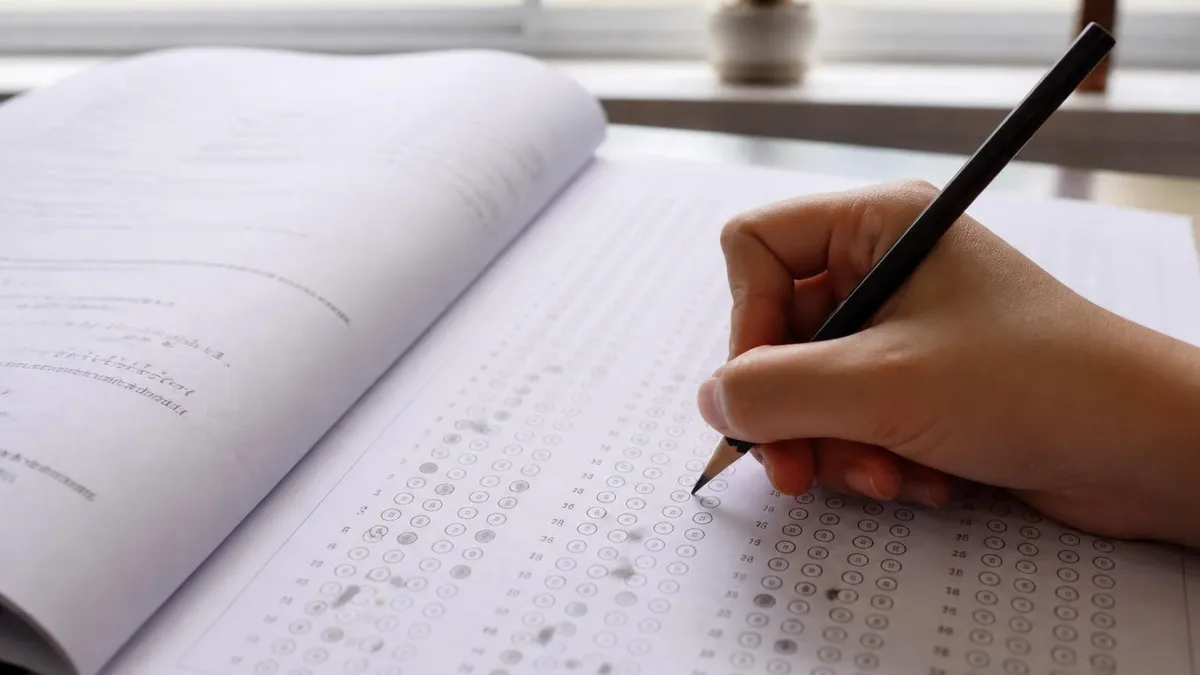
Florida's FAST ELA assessments are administered in three progress monitoring windows each school year — typically in October, February, and April/May. Each window covers benchmarks appropriate to what students should have learned by that point in the year. Contact your school's assessment coordinator or check the Florida Department of Education website for your district's specific testing calendar, as window dates can vary slightly by district and grade level.
Effective teaching of the Florida B.E.S.T. ELA Standards requires more than familiarity with the benchmark document — it demands deliberate instructional planning that connects individual benchmarks to meaningful, text-centered learning experiences. One of the most powerful approaches educators can take is to use backwards design: starting with the benchmark being assessed, identifying what student mastery of that benchmark looks like in practice, and then designing lessons that build toward that outcome through carefully scaffolded instruction. This approach prevents the common pitfall of teaching activities that feel productive but don't actually develop the specific skills benchmarked by B.E.S.T.
Text selection is one of the most consequential instructional decisions a teacher makes under the B.E.S.T. framework. Because the standards emphasize grade-appropriate text complexity and the close reading of literary and informational texts, teachers need to build a strong text library that represents a range of genres, cultures, time periods, and complexity levels.
The Florida Department of Education provides text complexity guidelines and sample text lists, but teachers must also use their professional judgment to select texts that will engage their specific students while meeting the rigor demanded by the benchmarks. Mixing anchor texts (used for in-depth, sustained study) with shorter, paired texts (used for comparison tasks) is an effective curriculum design strategy.
Formative assessment is the engine that drives B.E.S.T.-aligned instruction. Rather than waiting for FAST progress monitoring windows to identify student needs, effective teachers build quick, benchmark-specific formative assessments into daily and weekly instruction. Exit tickets that ask students to identify a textual claim and evaluate one piece of evidence take only a few minutes to complete and grade, but they provide immediate data on where students stand relative to a specific benchmark. This data then informs the next day's instruction, allowing teachers to reteach benchmarks where students struggled while moving forward on benchmarks that most of the class has mastered.
Writing instruction under the B.E.S.T. Standards benefits enormously from a mentor text approach, in which teachers use high-quality published writing to show students what excellent work looks like in practice.
By analyzing mentor texts through the lens of specific B.E.S.T. writing benchmarks — examining how a professional author organizes an argument, selects and integrates evidence, or varies sentence structure for effect — students develop a clearer mental model of what their own writing should aspire to. This approach is especially effective for benchmark areas like evidence elaboration and organizational structure, which are often difficult for students to improve without concrete examples.
Vocabulary instruction aligned to B.E.S.T. Language strand benchmarks should be systematic and cumulative rather than incidental. Research consistently shows that students acquire deep word knowledge through multiple exposures across multiple contexts, so effective vocabulary instruction under B.E.S.T. incorporates word study into reading, writing, discussion, and language activities simultaneously. Programs that use morphology instruction — teaching students to recognize and use prefixes, suffixes, and Greek and Latin roots — are particularly well-aligned to B.E.S.T. vocabulary benchmarks, which explicitly call for students to analyze word parts as a strategy for determining meaning.
Collaborative discussion, a key Communication strand benchmark, is most effectively developed through structured discussion protocols that give all students meaningful opportunities to participate. Socratic seminars, think-pair-share activities, and literature circles are all evidence-based protocols that align well to B.E.S.T. Communication benchmarks. The key is to make the norms for academic discussion explicit and to hold students accountable for meeting those norms — not just participating, but asking clarifying questions, building on peers' ideas, and grounding their contributions in textual evidence. These skills transfer directly to the collaborative and communication demands students will face in college and career settings.
Finally, teachers should not underestimate the power of consistent, explicit benchmark-to-assessment alignment in building student confidence and test-taking stamina. When students understand which specific B.E.S.T. benchmarks are being tested on each FAST assessment, they can approach practice and preparation more strategically. Transparent teaching — sharing benchmark language with students, discussing what mastery looks like, and celebrating growth toward benchmarks — builds the metacognitive awareness that helps students become self-directed learners. That metacognitive capacity is itself one of the most valuable outcomes of well-implemented B.E.S.T. ELA instruction, extending far beyond any single assessment score.
Building a practical study plan aligned to the Florida B.E.S.T. ELA Standards starts with honest self-assessment. Students preparing for FAST ELA assessments should begin by reviewing any score reports from previous FAST windows, identifying which benchmark areas earned the lowest performance indicators. If previous score reports are unavailable, taking a diagnostic practice test across all major strand areas — Reading Literary, Reading Informational, Writing, and Language — provides a useful baseline. The goal is to prioritize studying the benchmarks where improvement will yield the greatest score gains rather than spending equal time on areas already mastered.
For reading practice, the most effective strategy is deliberate, structured reading rather than passive consumption. This means reading complex texts actively — annotating for main idea, supporting details, author's craft choices, and unfamiliar vocabulary — and then responding in writing to comprehension and analysis questions.
Students who journal briefly after reading challenging texts, summarizing what they read and identifying one key literary or rhetorical device the author used, develop the close reading habits that B.E.S.T. Reading benchmarks are designed to assess. Even 20 to 30 minutes of structured reading practice per day, sustained over several months, produces measurable improvement in reading comprehension and analysis skills.
Writing improvement under the B.E.S.T. framework requires regular production of complete, benchmark-aligned pieces. Students who only practice isolated grammar exercises or vocabulary drills without actually producing extended writing miss the opportunity to develop the integrated skills that FAST Writing prompts demand.
A realistic practice schedule might include one short evidence-based response (150 to 250 words) three times per week and one full extended writing piece (400 to 600 words) once per week. Seeking feedback from a teacher, tutor, or writing center on each full piece — specifically feedback mapped to the B.E.S.T. Writing rubric — accelerates improvement far faster than self-study alone.
Language strand benchmarks — grammar, conventions, and vocabulary — are best reviewed through application rather than rote memorization. Instead of memorizing grammar rules in isolation, students should practice editing paragraphs that contain intentional errors, identifying and correcting each one while naming the convention being applied. Similarly, vocabulary study is most effective when students encounter target words in multiple authentic contexts rather than simply memorizing definitions. Creating original sentences using new vocabulary words, locating those words in real texts, and discussing their connotations builds the depth of word knowledge that B.E.S.T. Language benchmarks require.
Poetry analysis is a benchmark area where focused, targeted practice pays off quickly because students often avoid poetry outside of assigned reading. Dedicating even two or three poetry analysis practice sessions per week — reading a poem carefully, identifying sound devices and figurative language, considering the effect of structural choices, and writing a brief analysis — builds the confidence and skill needed to tackle poetry passages on FAST ELA assessments. Our poetry analysis practice quizzes offer an excellent starting point for students who want structured, benchmark-aligned poetry practice with immediate feedback on their responses.
Time management during the actual FAST ELA assessment is a skill that must be practiced, not just planned. Students who spend too much time on a single difficult question risk not completing the full assessment, which can artificially deflate their performance. A useful rule of thumb for multiple-choice and selected-response questions is to spend no more than 90 seconds per question on the first pass, flagging items you're uncertain about and returning to them after completing the rest of the section.
For the Writing component, students should budget at least 5 minutes for planning (listing key points and evidence before writing), the majority of the time for drafting, and the final 3 to 5 minutes for reviewing and editing. These strategies make assessment performance more consistent and representative of actual skill.
Finally, students and families should remember that mastery of the Florida B.E.S.T. ELA Standards is a long-term developmental process, not a single-session achievement. The benchmarks are carefully sequenced across 13 grade levels precisely because the skills they develop — critical reading, evidence-based argumentation, precise communication, rich vocabulary — take years of consistent practice to master fully.
Each FAST assessment window is a milestone, not a final judgment. Students who approach B.E.S.T.-aligned ELA learning with curiosity, persistence, and a growth mindset will find that the skills they develop along the way serve them well not just on standardized tests, but in every academic and professional context they encounter throughout their lives.
Sample English Language Arts Practice Questions
Try these questions from our free English Language Arts practice tests. The correct answer and an explanation follow each question.
A student synthesizes information from multiple sources. This means they are:
- A. Copying text from each source into their paper
- B. Combining ideas from several sources to form a new understanding
- C. Using only one source per paragraph
- D. Summarizing each source in separate paragraphs
Answer: B. Combining ideas from several sources to form a new understanding
Synthesis involves combining and integrating information from multiple sources to build a unified argument.
Which part of a research article should a student read FIRST to quickly determine if it is relevant to their topic?
- A. The bibliography
- B. The abstract
- C. The appendix
- D. The acknowledgments
Answer: B. The abstract
The abstract provides a brief summary of the article's purpose, methods, and findings.
A student is asked to summarize a peer's argument before responding. What is the primary benefit of this practice?
- A. It wastes time so the other speaker feels respected
- B. It ensures the student has accurately understood the argument before reacting
- C. It allows the student to memorize the peer's words
- D. It shows the student can speak longer than the peer
Answer: B. It ensures the student has accurately understood the argument before reacting
Paraphrasing or summarizing before responding confirms comprehension and demonstrates respectful engagement.
When paraphrasing a source in a research paper, a student MUST:
- A. Copy the text word-for-word with quotation marks
- B. Still cite the original source
- C. Only use information from one source
- D. Avoid using any of the original ideas
Answer: B. Still cite the original source
Even when paraphrasing, you must cite the original source to give credit and avoid plagiarism.
Take the full English Language Arts practice test
ELA Questions and Answers

ELA Lessons: Grade-Band Guide to Reading, Writing, and Language Strands

ELA Exam NYS: Complete Study Guide for the New York State English Language Arts Assessment

ELA Anchor Charts: The Complete Teacher's Guide to Visual Learning Tools

ELA Questions: Complete Guide to Types, Strategies, and Practice

Ace Your ELA (English Language Arts) Test: Expert Tips
About the Author

Educational Psychologist & Academic Test Preparation Expert
Columbia University Teachers CollegeDr. Lisa Patel holds a Doctorate in Education from Columbia University Teachers College and has spent 17 years researching standardized test design and academic assessment. She has developed preparation programs for SAT, ACT, GRE, LSAT, UCAT, and numerous professional licensing exams, helping students of all backgrounds achieve their target scores.
Join the Discussion
Connect with other students preparing for this exam. Share tips, ask questions, and get advice from people who have been there.
View discussion (8 replies)