
1st Grade ELA Standards: What Every Parent and Teacher Needs to Know
Understand 1st grade ELA standards for reading, writing, and language. ✏️ Includes what kids learn, how to support them, and free practice resources.

Understanding 1st grade ela standards is one of the most important steps parents and teachers can take to support early literacy success. These standards outline exactly what children ages six and seven are expected to learn across reading, writing, speaking, listening, and language development during a single school year. They serve as a roadmap for classroom instruction and give families a benchmark for measuring their child's academic progress throughout first grade.
The Common Core State Standards (CCSS), adopted by the majority of U.S. states, form the backbone of first-grade ELA expectations in most public schools. Even in states that have created their own frameworks — such as Texas (TEKS), Virginia (SOLs), or Florida (NGSSS) — the core literacy goals remain remarkably consistent. First graders are expected to move from emergent reading skills toward fluent, independent reading of simple texts, while also developing the ability to write complete sentences and communicate ideas clearly.
Reading standards in first grade are divided into foundational skills and literature/informational text comprehension. On the foundational side, children master phonics concepts like consonant blends, long vowel patterns, and common sight words. They practice reading decodable texts until word recognition becomes automatic. On the comprehension side, they learn to ask and answer questions about key details, identify the main topic of a text, and distinguish between fiction and nonfiction. These twin pillars of decoding and comprehension must develop in tandem for true reading growth to occur.
Writing standards for first graders require students to produce opinion pieces that introduce a topic, state a preference, and supply a reason. They also write informative texts that name a topic and provide basic facts, as well as narrative pieces that recount two or more sequenced events with a closing statement. While first-grade writing may seem simple, the ability to organize thoughts into a structured paragraph represents a genuine cognitive leap from kindergarten scribbling and dictation. Teachers use mentor texts, graphic organizers, and guided writing sessions to scaffold this development.
Language standards round out the picture by addressing grammar, spelling, and vocabulary. First graders learn to use singular and plural nouns correctly, to write sentences with proper capitalization and end punctuation, and to use phonics knowledge to spell simple words. Vocabulary instruction focuses on understanding shades of meaning, sorting words by category, and using context clues to figure out unknown words. These language skills reinforce both reading comprehension and writing quality, creating a virtuous cycle of literacy growth.
Speaking and listening standards are often overlooked but are equally important in first grade. Children are expected to participate in collaborative conversations with peers and adults, follow agreed-upon rules for discussion, and build on each other's ideas. They learn to ask clarifying questions, describe people, places, things, and events with relevant details, and add drawings or visual displays to strengthen oral presentations. Strong oral language skills directly correlate with reading comprehension and writing ability, making this strand a high-leverage area for early intervention.
This guide walks through each strand of the first-grade ELA standards in detail, offers practical strategies for home and classroom support, and connects you to free practice resources that align with real assessment expectations. Whether you are a teacher designing lesson plans, a parent wanting to support homework time, or a tutor working with a struggling reader, understanding these standards will help you focus your efforts where they matter most and celebrate the remarkable literacy growth that happens during first grade.
1st Grade ELA Standards by the Numbers

Core Strands of First-Grade ELA Standards
Covers phonological awareness, phonics, and fluency. Students master letter-sound relationships, consonant blends, short and long vowels, and high-frequency sight words to build accurate, automatic word recognition by year's end.
Students ask and answer questions about key story details, identify the main topic of informational passages, compare two texts on the same topic, and distinguish between narrative and expository text structures.
First graders compose opinion, informative, and narrative pieces. They introduce topics, supply reasons or facts, sequence events, and add details through drawing and writing, with teacher and peer support throughout the process.
Students participate in discussions, follow conversation rules, use proper grammar and punctuation, expand vocabulary through context and sorting activities, and produce complete sentences in both speaking and writing contexts.
Reading foundational skills are the engine that drives first-grade literacy growth, and understanding what these standards actually require helps parents and teachers provide targeted support. The phonological awareness standards expect first graders to segment spoken single-syllable words into their individual phonemes — for example, breaking the word "cat" into /k/ /æ/ /t/. This skill is distinct from phonics, which connects those sounds to written letters, and both must be explicitly taught and practiced for students to become fluent readers.
Phonics instruction in first grade follows a carefully sequenced scope and sequence. Early in the year, students review consonant-vowel-consonant (CVC) words and short vowels.
By mid-year, they tackle consonant blends like "bl," "cr," and "st," as well as digraphs such as "ch," "sh," "th," and "wh." The final stretch of first grade introduces long vowel patterns including silent-e words (like "cake" and "time") and common vowel teams like "ai," "ee," and "oa." Teachers use decodable readers that contain only the phonic patterns students have already been taught, ensuring that decoding practice is matched to current skill level rather than frustrating children with too many unknown patterns at once.
Sight word fluency is a parallel track in the foundational skills strand. These are high-frequency words that appear in almost every text — words like "the," "said," "have," "come," and "were" — many of which cannot be fully decoded using phonics rules alone. First graders are typically expected to read and write between 40 and 60 sight words automatically by the end of the year, depending on the specific curriculum their school uses. Dolch and Fry word lists are the most common reference points, and teachers often send home practice flashcards or games to build this automaticity at home.
Oral reading fluency standards in first grade focus on reading grade-level text accurately, at an appropriate rate, and with expression that reflects understanding of punctuation and meaning. By the end of first grade, research benchmarks suggest students should read approximately 40 to 60 words per minute on an unpracticed grade-level passage. More important than raw speed, however, is accuracy — most standards expect first graders to decode at least 95 percent of words correctly in instructional-level text. When accuracy falls below this threshold, the reading level is too difficult for productive practice, and teachers should adjust the text complexity downward.
Reading comprehension standards for literature require first graders to ask and answer questions about key details in a story — who, what, where, when, why, and how. They identify the central message or lesson of a story, describe characters and the major events of a plot using story-language vocabulary like "beginning," "middle," and "end," and identify who is telling the story. For informational text, students identify the main topic and key details, use text features like headings, glossaries, and photographs to locate information, and compare and contrast two informational texts on the same subject.
Integration of knowledge and ideas is another comprehension standard that is sometimes underemphasized in first-grade classrooms. Students are expected to use illustrations and details to describe characters, settings, or events in a story, and to identify basic similarities and differences between two texts on the same topic.
This standard builds critical thinking skills that will become increasingly important as students move into content-area reading in third grade and beyond. Read-aloud experiences, where the teacher reads aloud while students focus entirely on comprehension rather than decoding, are an especially effective way to build this skill before students can access complex texts independently.
Parents can reinforce reading standards at home through daily shared reading routines that include both picture books and simple nonfiction texts. After reading, asking questions like "What was the most important thing that happened?" or "What did you learn that you didn't know before?" directly mirrors the comprehension strategies taught at school.
Pausing during reading to notice punctuation, talk about unfamiliar words, or make predictions also builds the active reading habits that the standards are designed to cultivate. Even ten to fifteen minutes of daily reading practice at home produces measurable gains in both fluency and comprehension over the course of a school year.
Language, Writing, and Speaking Standards Breakdown
First-grade writing standards require students to produce three distinct types of text: opinion pieces, informative or explanatory texts, and narrative writing. In opinion writing, students introduce a topic or book, state a clear preference using a sentence starter like "I think" or "My favorite," supply at least one reason, and provide a sense of closure. The key standard here is that the opinion must be supported — simply saying "I like dogs" is not enough; the student must explain why with at least one concrete reason connected to the topic.
Informative writing asks first graders to name a topic, supply two or more facts or details about that topic, and provide some sense of conclusion. Narrative writing requires students to recount two or more appropriately sequenced events, including details about what happened, use temporal words like "first," "then," and "finally" to signal the event order, and provide a reaction or closing to wrap up the piece. Teachers use the writing process — brainstorming, drafting, revising, editing, and publishing — even in first grade, though the process is heavily scaffolded with graphic organizers, sentence frames, and peer conferences.

Common Core ELA Standards: Benefits and Limitations for First Grade
- +Provide a consistent, nationwide benchmark that allows teachers to align instruction and share resources across state lines.
- +Emphasize both decoding skills and comprehension equally, preventing the over-reliance on phonics drills that characterized older approaches.
- +Include explicit speaking and listening standards that build oral language skills known to predict long-term literacy success.
- +Sequence skills carefully across grade levels so that first-grade standards build directly on kindergarten expectations and feed into second-grade goals.
- +Support differentiation by giving teachers a clear target, allowing them to identify which students are below, at, or above standard and adjust instruction accordingly.
- +Include informational text alongside literature, exposing first graders to nonfiction genres and content-area vocabulary earlier in their academic careers.
- −Standards describe what students should learn, not how to teach it — many districts lack the professional development to implement standards-aligned instruction effectively.
- −The pace of the phonics scope and sequence can feel rushed for students who entered first grade without strong kindergarten foundational skills.
- −Heavy emphasis on text evidence in comprehension standards can crowd out time for student-driven, personal-response activities that build reading motivation.
- −Standardized assessments tied to the standards often do not capture the full range of early literacy development, particularly for English Language Learners.
- −The writing standards, while appropriate developmentally, are sometimes assessed with rubrics that penalize invented spelling — which is actually a healthy sign of phonics knowledge in first grade.
- −Parents who learned to read under different instructional frameworks (such as whole language) can find the standards-based approach confusing or overly structured for six-year-olds.
End-of-Year Mastery Checklist: 1st Grade ELA Standards
- ✓Read and write at least 40 high-frequency sight words automatically without sounding out.
- ✓Decode single-syllable words using short vowels, long vowel silent-e patterns, and common digraphs.
- ✓Read a grade-level text aloud with at least 95% accuracy and appropriate expression.
- ✓Answer who, what, where, when, and why questions about a story or informational text using key details.
- ✓Identify the central message or main topic of a text read aloud or independently.
- ✓Write an opinion sentence that states a preference and provides at least one supporting reason.
- ✓Write an informative sentence or short piece naming a topic and supplying two or more facts.
- ✓Retell a narrative with at least two sequenced events using temporal words like first, next, and last.
- ✓Use correct capitalization at the start of sentences and proper end punctuation marks.
- ✓Sort a set of words into correct categories to show understanding of word relationships and vocabulary.
Phonics + Comprehension Together = Real Reading Growth
Research consistently shows that first graders who receive balanced instruction — explicit phonics AND rich comprehension discussion — outperform peers who receive either approach in isolation. Decoding skill gets words off the page; comprehension skill makes those words meaningful. When both are strong by end of first grade, students typically enter second grade as confident, independent readers ready to tackle longer texts with more complex ideas.
Supporting first-grade ELA standards at home does not require a teaching degree or expensive curriculum materials. The most powerful thing a parent or caregiver can do is read aloud to their child every single day, even after the child begins reading independently. Read-alouds expose children to vocabulary, sentence structures, and text complexity that they cannot yet access on their own. When a first grader hears a parent model expressive reading — pausing at punctuation, varying tone for different characters, expressing curiosity about what will happen next — they internalize those same strategies for use during their own silent reading.
Building a home library of both fiction and nonfiction books is another high-impact strategy. First graders should spend roughly equal time with story books and informational texts like science readers, biographies written for children, and nonfiction nature books. The informational text standards in first grade are often underpracticed at home because most parents default to storybooks, but nonfiction reading builds vocabulary in content-area domains (science, social studies, technology) that directly supports reading comprehension as texts become more complex in later grades. Public libraries are an excellent free resource, and many offer digital lending through apps like Libby or Hoopla.
Phonics practice at home works best when it feels like a game rather than a drill. Word sort activities, where children physically move word cards into categories by vowel pattern or word family, are highly effective and can be done with index cards at the kitchen table.
Simple word-building activities using magnetic letters allow children to swap out one sound at a time — changing "cat" to "bat" to "bad" to "bed" — which builds exactly the flexible phoneme manipulation the foundational skills standards require. Apps like Bob Books Reading, Starfall, and Teach Your Monster to Read are well-aligned with first-grade phonics sequences and can extend practice during screen time in a productive direction.
Writing practice at home should feel purposeful and authentic rather than mechanical. Encourage your first grader to write grocery lists, birthday card messages, thank-you notes, journal entries about weekend activities, or captions for family photos. These real-world writing tasks naturally incorporate the opinion, informative, and narrative genres addressed in the standards.
Resist the urge to correct every spelling error immediately — invented spelling, where a child writes "becuz" for "because" or "lik" for "like," is actually evidence that the child is applying phonics knowledge, which is exactly what the standards ask. Celebrate the phonics logic in invented spellings and gently model the correct spelling afterward.
Vocabulary development happens most powerfully through conversation. Use sophisticated words naturally in everyday talk — instead of "big," try "enormous" or "massive"; instead of "said," try "whispered," "announced," or "muttered." When your child encounters an unfamiliar word in a book or conversation, make it a habit to talk through what it might mean using context clues before reaching for a definition. This mirrors the vocabulary acquisition strategies taught explicitly in first-grade classrooms. Keep a "word of the week" chart on the refrigerator where the whole family uses the same new word in sentences throughout the week.
Supporting speaking and listening standards at home is as simple as making time for meaningful conversation. Ask open-ended questions at dinner that require more than a yes-or-no answer: "What was the most interesting thing that happened today, and why?" or "If you could change one thing about recess, what would it be and what's your reason?" Encourage your child to ask you questions and really listen to the answers, building the collaborative conversation habits the standards emphasize.
Family discussions about books, movies, or shared experiences build exactly the oral language foundation that supports both reading comprehension and writing quality in school.
Finally, keep communication open with your child's teacher about where your child is in relation to the standards. Most first-grade teachers use running records, sight word assessments, and writing samples to track individual progress and are happy to share specific strategies tailored to your child's current needs. Understanding the specific sub-skills your child has mastered and which ones are still developing allows you to focus home practice precisely where it will have the greatest impact, rather than practicing skills the child has already mastered or jumping ahead to skills they are not yet ready for.
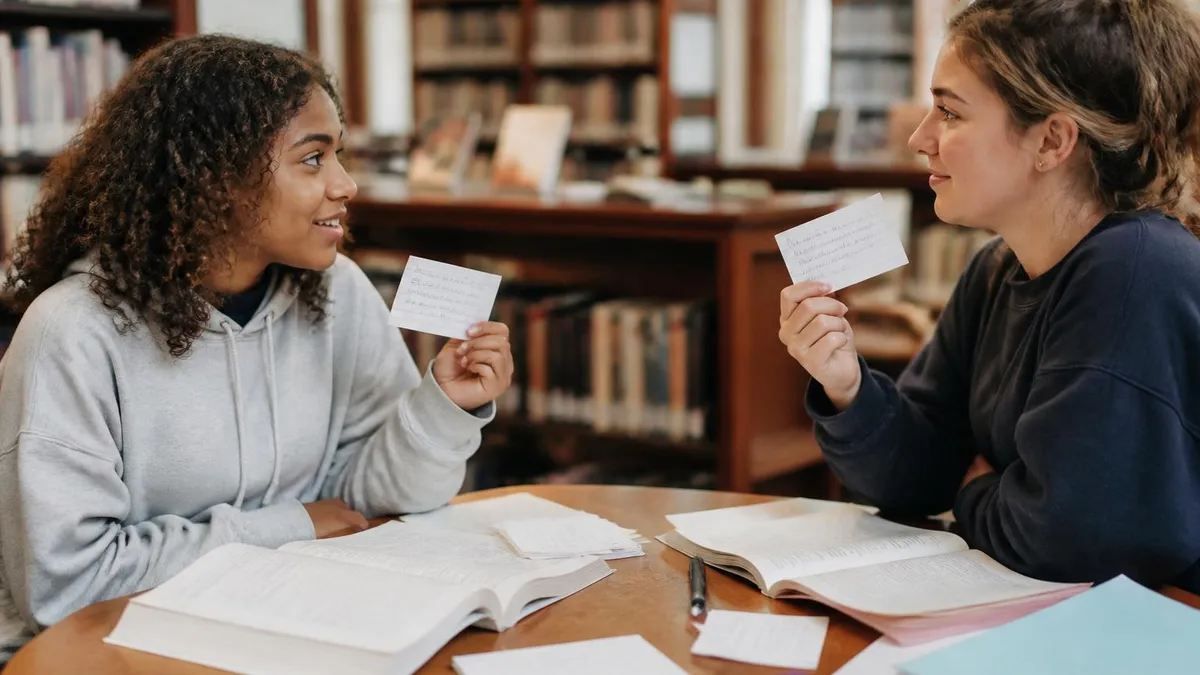
While the Common Core State Standards guide most U.S. states, Texas uses the TEKS, Virginia uses SOLs, and Florida uses the B.E.S.T. Standards. Despite different names and numbering systems, the core literacy expectations for first grade — phonics mastery, comprehension of key details, three writing genres, and language conventions — are highly consistent across all major state frameworks. Always check your specific state's Department of Education website to confirm the exact standards your child's school is using.
Assessment and progress monitoring are integral parts of first-grade ELA instruction, and understanding how teachers measure mastery of the standards helps parents interpret report cards and conference feedback more accurately. Most first-grade classrooms use a combination of formal assessments — district-mandated benchmarks given three times per year — and informal ongoing assessments like running records, anecdotal notes, and writing portfolios. These multiple data points together give a much richer picture of a child's literacy development than any single test score could provide on its own.
Running records are one of the most valuable assessment tools in first-grade reading. During a running record, the student reads a short unfamiliar text aloud while the teacher marks every word — noting accurate readings, substitutions, self-corrections, and omissions. The teacher then analyzes the error patterns to determine whether the child is using phonics knowledge, picture and context clues, or sentence structure to figure out unknown words. This qualitative analysis helps the teacher identify exactly which phonics patterns the child has internalized and which ones need more explicit practice, allowing instruction to be precisely targeted rather than broadly shotgun.
Sight word fluency assessments are typically administered monthly in first grade, tracking how many words from the Dolch or Fry frequency lists a student can read automatically in one minute. These assessments are brief, taking only two to three minutes per student, but they yield highly actionable data. A student who has mastered 20 sight words in October but only 25 in January is showing slower-than-expected growth, which might prompt the teacher to investigate whether the student needs more repetition, multisensory practice, or a vision screening to rule out visual processing issues that can interfere with sight word memorization.
Writing assessment in first grade is most often done through portfolio collection and teacher-scored writing samples using a rubric aligned to the three genres in the standards. Rubrics typically evaluate whether the student has addressed the genre requirements (stated an opinion with a reason, named a topic with facts, or sequenced narrative events), used correct conventions (capitalization, end punctuation), and included sufficient detail. Many districts also use writing progressions — sets of annotated student writing samples at each score point — to help teachers score consistently and communicate expectations to families using concrete examples rather than abstract descriptions.
Phonics assessments measure a student's ability to decode words containing specific phonics patterns, typically presented as nonsense words to ensure the student is actually applying phonics rules rather than recalling memorized whole words. The Nonsense Word Fluency (NWF) measure from DIBELS (Dynamic Indicators of Basic Early Literacy Skills) is one widely used example. A student who can read "mip," "fot," and "baj" quickly and accurately demonstrates mastery of CVC patterns even if they have never seen those specific letter combinations before, proving that the phonics knowledge is truly generalized and not just word-specific memorization.
Benchmark assessments, administered three times per year in fall, winter, and spring, place each student at a specific reading level and compare their performance to national norms. Common benchmark tools include DIBELS 8th Edition, Acadience Reading, the Fountas and Pinnell Benchmark Assessment System, and the iReady diagnostic. These assessments identify students who are on track, approaching standard, or in need of intensive intervention, and they trigger tiered support systems — small group instruction, reading intervention specialists, or special education referrals — for students who are significantly below expectations.
Parents should request copies of their child's benchmark results and ask teachers to explain what the scores mean in plain language. Questions like "Is my child reading at grade level?" and "What specific skill is most important to work on right now?" are entirely appropriate for parent-teacher conferences. Most teachers welcome engaged parents as partners in closing skill gaps, and understanding the assessment data removes the guesswork from home practice, allowing families to focus their limited evening time on the exact skills that will move their child forward most efficiently before the next benchmark window.
Helping a first grader who is struggling with ELA standards requires a calm, systematic approach rather than pressure or repetition of approaches that are not working. If a child is stuck on phonics, the first step is to identify exactly which patterns are causing difficulty by looking at the errors they make during oral reading or on spelling assessments.
A child who consistently confuses short "e" and short "i" needs targeted practice with minimal pairs — word pairs that differ only in that one vowel — rather than broad phonics review that covers patterns they have already mastered. Precision in identifying the specific gap leads to much faster progress than reteaching everything from the beginning.
Multisensory phonics instruction is particularly effective for first graders who are not responding to visual-only methods like flashcards and worksheets. Multisensory approaches engage sight, sound, and touch simultaneously — for example, having a child tap out phonemes on their fingers while sounding out a word, write letters in sand or shaving cream, or build words with textured letter tiles. The Orton-Gillingham approach and its derivatives (Wilson Reading, SPIRE, Barton Reading) are evidence-based multisensory phonics programs frequently used with first graders who have been identified as at risk for dyslexia or who have not responded adequately to classroom-level phonics instruction.
For students who are strong decoders but weak comprehenders — a pattern sometimes called "hyperlexia" — the intervention focus shifts to building oral language, background knowledge, and vocabulary. These students can accurately read words aloud without understanding what they are reading, which becomes increasingly problematic as texts become more content-dense in second and third grade.
Comprehension-focused read-alouds where the teacher stops frequently to think aloud, ask questions, and make connections are a powerful intervention. Building content knowledge through science experiments, museum visits, nature walks, and documentary viewing also builds the background knowledge that reading comprehension research identifies as one of its strongest predictors.
English Language Learners (ELLs) in first grade face the dual challenge of learning to read in a language they are still acquiring orally. Research strongly supports providing ELLs with explicit phonics instruction in English (the phonics system transfers across languages if the student has strong L1 literacy) alongside rich oral language development in English vocabulary and sentence structures. Teachers who draw on a student's home language as a resource — making connections between Spanish and English cognates, for example, or allowing bilingual responses during instruction — support both content learning and language development more effectively than English-only immersion approaches.
Gifted first-grade readers benefit from enrichment that goes beyond simply advancing them to higher reading levels. While a first grader reading at a third-grade level can certainly benefit from more complex texts, they also need instruction in sophisticated comprehension strategies — making inferences, analyzing author's craft, evaluating arguments, and synthesizing information across multiple texts — that are age-appropriate even when reading level is advanced. Gifted readers also need opportunities to pursue self-selected reading on topics of passionate personal interest, which sustains the intrinsic motivation that is the foundation of lifelong reading habits.
Collaboration between first-grade teachers, reading specialists, speech-language pathologists, and special education staff is essential for supporting the full range of learners in a first-grade classroom. The most effective schools use a tiered intervention model (often called Multi-Tiered System of Supports, or MTSS) in which all students receive high-quality Tier 1 classroom instruction, students showing early risk signs receive additional small-group Tier 2 intervention, and students with significant needs receive intensive Tier 3 support. Parents can ask their child's school to explain its MTSS structure and how referrals to higher tiers are made if they have concerns about their child's progress.
Finally, maintaining a growth mindset around early literacy is one of the most important things adults can model for first graders. Children who believe that reading ability is fixed — that some people are "just good readers" and others are not — are less likely to persist through the inevitable frustrations of learning to decode and comprehend.
Adults who talk openly about their own reading challenges, celebrate incremental progress, and communicate genuine excitement about books and stories create the emotional environment in which standards-aligned literacy skills can flourish. The academic skills outlined in the first-grade ELA standards are ambitious, but they are absolutely achievable for the vast majority of children when instruction, home support, and positive attitudes work together.
ELA Questions and Answers

ELA Lessons: Grade-Band Guide to Reading, Writing, and Language Strands

Conflict Definition in ELA: Types, Examples & Analysis of Literary Conflict

NYSED ELA Regents: Complete Guide to Format, Scoring, and How to Pass in 2026

ELA Practice Test: Complete Study Guide for English Language Arts
Ace Your ELA (English Language Arts) Test: Expert Tips
About the Author

Educational Psychologist & Academic Test Preparation Expert
Columbia University Teachers CollegeDr. Lisa Patel holds a Doctorate in Education from Columbia University Teachers College and has spent 17 years researching standardized test design and academic assessment. She has developed preparation programs for SAT, ACT, GRE, LSAT, UCAT, and numerous professional licensing exams, helping students of all backgrounds achieve their target scores.
Join the Discussion
Connect with other students preparing for this exam. Share tips, ask questions, and get advice from people who have been there.
View discussion (8 replies)