
What Is Ecology the Study of? Complete Guide to Ecological Science
What is ecology the study of? 🌿 Discover niches, footprints, succession, and more. Master ecological concepts with our complete guide.

What is ecology the study of? At its core, ecology is the scientific discipline that examines the relationships between living organisms and their physical environments. Ecologists study how energy flows through ecosystems, how nutrients cycle between living and non-living components, and how populations of species rise and fall over time. This field sits at the intersection of biology, chemistry, geology, and climatology, making it one of the most interdisciplinary sciences available to students today. Understanding what does ecology mean as a formal science helps clarify why it has become essential for addressing the planet's most pressing environmental challenges.
The scope of ecology is remarkably broad. Scientists working in this field may study how a single bacterium decomposes organic matter in soil, how wolf reintroduction changes river dynamics in Yellowstone, or how rising ocean temperatures shift coral bleaching patterns across entire ocean basins. Each of these examples operates at a different scale — from microbial to continental — yet all fall squarely within the domain of ecological inquiry. This multi-scale perspective is what gives ecology its tremendous explanatory power and practical utility.
Ecology differs from environmentalism, though the two are often confused. Environmentalism is a social and political movement advocating for the protection of natural systems, while ecology is a natural science that generates empirical knowledge about those systems. However, the data produced by ecologists frequently informs environmental policy, conservation law, and resource management decisions. When Congress debates endangered species protections or the EPA sets pollution thresholds, ecological research sits at the foundation of those decisions.
Modern ecology traces its intellectual roots to the early nineteenth century, when naturalists like Alexander von Humboldt began mapping how climate shapes plant communities across continents. Ernst Haeckel formally coined the term "ecology" in 1866, defining it as the study of the economy of nature. Since then, the field has grown to encompass genetics, remote sensing, computer modeling, and citizen science, fundamentally transforming how researchers gather and interpret environmental data across the globe.
Students preparing for ecology exams need a solid grasp of hierarchical organization within the discipline. Ecology is typically organized into four levels: individual, population, community, and ecosystem. Individual ecology examines how a single organism responds to its environment — for example, how a lizard regulates its body temperature by moving between sun and shade. Population ecology studies groups of the same species sharing a habitat. Community ecology looks at how multiple species interact. Ecosystem ecology integrates all biotic and abiotic components into one analytical framework.
Applied ecology has never been more important than it is today. Climate change, habitat fragmentation, invasive species, and overexploitation of natural resources are all problems that ecological science is uniquely positioned to address. Ecologists work in academia, government agencies like the US Fish and Wildlife Service, non-profit conservation organizations, and private consulting firms. Their work shapes land-use planning, wildlife management, pollution remediation, and international biodiversity agreements such as the Convention on Biological Diversity.
Whether you are a high school student encountering ecological concepts for the first time or a college undergraduate preparing for a standardized exam, developing fluency in ecological terminology and principles is essential. This guide covers the most frequently tested concepts — ecological niches, ecological footprints, ecological succession, and more — giving you the vocabulary and conceptual framework needed to excel on ecology assessments and to think critically about environmental issues in the real world around you.
Ecology by the Numbers

Core Branches of Ecological Science
Examines how groups of the same species change in size, distribution, and density over time. Key concepts include birth rates, death rates, carrying capacity, and limiting factors that regulate growth within a given habitat.
Studies interactions among multiple species sharing a habitat — competition, predation, mutualism, parasitism, and commensalism. Understanding community structure helps predict how ecosystems respond to disturbances like invasive species introductions.
Analyzes energy flow and nutrient cycling across entire systems that include both living organisms and abiotic factors such as water, sunlight, and soil chemistry. The nutrient cycle and trophic levels are central concepts in this branch.
Focuses on spatial patterns across large geographic areas — how habitat patches, corridors, and matrix affect biodiversity and species movement. Crucial for conservation planning and evaluating the effects of land fragmentation on wildlife.
Addresses planet-scale processes: biogeochemical cycles, climate feedbacks, and the distribution of biomes. Connects ecological patterns to atmospheric chemistry and ocean circulation, forming the scientific basis for climate change research.
An ecological niche is one of the most fundamental concepts in all of ecology. When scientists ask what is an ecological niche, they are asking about the full range of biotic and abiotic conditions under which a species can survive, reproduce, and maintain a viable population.
The niche concept was formalized by G. Evelyn Hutchinson in 1957, who described it as an n-dimensional hypervolume — a mathematical space defined by every environmental variable a species needs. Though abstract, this framework has proven enormously useful for predicting species distributions, modeling competition, and managing wildlife in fragmented habitats across the United States and beyond.
It is important to distinguish between the fundamental niche and the realized niche. The fundamental niche is the full range of conditions a species could theoretically occupy in the absence of competition, predation, and other biological constraints. The realized niche is the narrower subset of conditions actually used when competitors and predators are present. For example, a barnacle species in the rocky intertidal zone might be capable of surviving throughout a broad vertical range on the rocks, but competitive exclusion by a faster-growing species forces it into a smaller upper band where the environment is harsher but competition is lower.
Niche partitioning is the process by which competing species divide available resources to reduce direct competition and coexist within the same habitat. Darwin's finches in the Galápagos Islands are the textbook example: multiple finch species evolved different beak sizes and shapes to exploit different food sources — seeds, insects, nectar — allowing many species to coexist on the same island with less direct competition than if they all consumed identical resources. This partitioning of the ecological niche is a major driver of biodiversity in species-rich ecosystems worldwide.
Closely related to niche theory is the concept of competitive exclusion, or Gause's Law, which states that two species competing for exactly the same limiting resource cannot coexist indefinitely in the same habitat — one will eventually outcompete and displace the other. This principle has powerful implications for conservation: when humans introduce invasive species that occupy the same niche as native species, they frequently trigger local extinctions. Understanding what are the ecological consequences of niche overlap is therefore critical for predicting outcomes of invasions and designing targeted management interventions.
Specialist species occupy narrow niches with very specific resource requirements, while generalist species tolerate a wide range of conditions and exploit diverse resources. Specialists tend to be highly efficient within their niche but are vulnerable when that niche is disturbed. Generalists are less efficient but more resilient to environmental change. Giant pandas, for instance, are extreme specialists that depend almost entirely on bamboo, making them highly sensitive to habitat loss. Raccoons, by contrast, are generalists that thrive in forests, suburbs, and cities alike, consuming whatever food sources are available in each environment.
The concept of the ecological niche also intersects with island biogeography theory, developed by Robert MacArthur and E. O. Wilson in the 1960s. Their model predicts that the number of species on an island reaches an equilibrium determined by the balance between immigration of new species and extinction of established ones. Larger islands support more species because they contain more diverse niches; islands closer to mainland sources have higher immigration rates. This theory became the intellectual foundation for the design of nature reserves, guiding decisions about reserve size, shape, and connectivity in conservation biology practice.
For students studying ecology, mastering niche concepts means going beyond memorizing definitions. You should be able to apply niche theory to novel scenarios: predicting what happens when a keystone predator is removed, explaining why two similar bird species feed at different heights in the same forest, or evaluating how climate change is shifting the realized niches of temperature-sensitive species like alpine plants and polar mammals. These application-level questions are exactly the type featured on ecology assessments, so practicing with real exam questions is the most effective preparation strategy available to you.
What Is an Ecological Footprint — and Why Does It Matter?
An ecological footprint measures how much biologically productive land and water area a human population requires to produce the resources it consumes and to absorb its waste, particularly carbon dioxide. Developed by Mathis Wackernagel and William Rees in the early 1990s, the concept translates human demand for nature into a single standardized unit called a global hectare. This allows direct comparison of consumption levels across countries, cities, and individuals regardless of what specific resources are being used.
The global average ecological footprint is approximately 2.7 global hectares per person, but Earth provides only about 1.6 global hectares of biocapacity per person. This gap — called ecological overshoot — means humanity is consuming natural resources faster than ecosystems can regenerate them. The United States has one of the largest per-capita footprints in the world at roughly 8.0 global hectares per person, driven largely by high carbon emissions, energy-intensive food systems, and substantial material consumption relative to global averages.

Studying Ecology: Benefits and Challenges
- +Develops critical thinking about real-world environmental problems affecting human health and biodiversity
- +Opens career paths in government agencies, NGOs, consulting firms, and academic research institutions
- +Provides a multi-disciplinary framework integrating biology, chemistry, geology, and data science skills
- +Equips students to understand and communicate climate change science to diverse public audiences
- +Fieldwork opportunities allow hands-on data collection in diverse natural environments across the US
- +Growing job market as environmental regulations and conservation needs expand globally each decade
- −Requires strong quantitative skills including statistics, modeling, and sometimes calculus-level mathematics
- −Fieldwork can be physically demanding, involving remote locations, harsh weather, and irregular schedules
- −Entry-level salaries in government and non-profit sectors can be modest relative to other science fields
- −Research funding cycles are unpredictable, making long-term project planning challenging for new scientists
- −Complex systems with many interacting variables make definitive conclusions difficult to establish confidently
- −Policy-relevant findings are often resisted by economic interests, creating frustration for applied ecologists
Pros and Cons at a Glance
| Pros | Cons |
|---|---|
| Develops critical thinking about real-world environmental problems affecting human health and biodiversity | Requires strong quantitative skills including statistics, modeling, and sometimes calculus-level mathematics |
| Opens career paths in government agencies, NGOs, consulting firms, and academic research institutions | Fieldwork can be physically demanding, involving remote locations, harsh weather, and irregular schedules |
| Provides a multi-disciplinary framework integrating biology, chemistry, geology, and data science skills | Entry-level salaries in government and non-profit sectors can be modest relative to other science fields |
| Equips students to understand and communicate climate change science to diverse public audiences | Research funding cycles are unpredictable, making long-term project planning challenging for new scientists |
| Fieldwork opportunities allow hands-on data collection in diverse natural environments across the US | Complex systems with many interacting variables make definitive conclusions difficult to establish confidently |
| Growing job market as environmental regulations and conservation needs expand globally each decade | Policy-relevant findings are often resisted by economic interests, creating frustration for applied ecologists |
Essential Ecology Concepts Every Student Must Know
- ✓Define ecology as the scientific study of interactions between organisms and their environments at multiple scales
- ✓Distinguish between fundamental niche and realized niche using a concrete species example
- ✓Explain how primary and secondary succession differ in starting conditions and recovery timescales
- ✓Calculate or interpret an ecological footprint value expressed in global hectares per capita
- ✓Describe the difference between a food chain and a food web in terms of energy transfer efficiency
- ✓Identify the role of keystone species in maintaining community structure and biodiversity
- ✓Explain the carbon, nitrogen, and phosphorus cycles and their ecological significance
- ✓Apply the competitive exclusion principle to predict outcomes when two species share one limiting resource
- ✓Distinguish between r-selected and K-selected reproductive strategies and their ecological trade-offs
- ✓Recognize the levels of ecological organization: individual, population, community, and ecosystem
The 10% Rule: Energy Transfer Between Trophic Levels
On average, only about 10% of the energy stored in one trophic level is transferred to the next. This means a food chain can rarely sustain more than four or five links before available energy becomes too small to support another predator. Understanding this rule explains why large predators like wolves or sharks are always far less abundant than the prey species they consume, and it is one of the most frequently tested quantitative concepts on ecology assessments at both high school and college levels.
Ecosystem ecology focuses on the flow of energy and the cycling of matter through biological communities and their physical environments. Energy enters most ecosystems as sunlight captured by photosynthetic primary producers — plants, algae, and cyanobacteria — which convert solar energy into chemical energy stored in organic molecules. This process, called primary production, forms the energetic foundation for all other life in the ecosystem. Gross primary production (GPP) is the total amount of energy fixed by producers, while net primary production (NPP) is what remains after producers use some energy for their own metabolism and respiration.
Energy moves through an ecosystem via trophic levels — layers in the feeding hierarchy from producers at the base to primary consumers, secondary consumers, and apex predators at the top. At each transfer, roughly 90% of energy is lost as heat through metabolic processes, which is why ecosystems can support far more biomass of plants than of herbivores, and far more herbivores than carnivores. This energetic reality explains why shifting to plant-based diets is often cited by ecologists as one of the most effective individual actions for reducing land use and greenhouse gas emissions.
Nutrient cycling operates differently from energy flow because nutrients — unlike energy — are recycled within ecosystems rather than continuously lost. The carbon cycle, nitrogen cycle, phosphorus cycle, and water cycle are the four biogeochemical cycles most commonly covered on ecology exams. In the carbon cycle, photosynthesis removes CO2 from the atmosphere while respiration, decomposition, and combustion return it. Human burning of fossil fuels has disrupted the carbon cycle by adding ancient carbon to the atmosphere far faster than natural sinks can absorb it, driving the greenhouse effect and accelerating climate change.
The nitrogen cycle is particularly important for agriculture and ecological productivity because nitrogen is a key component of amino acids and nucleic acids. Although nitrogen gas (N2) makes up 78% of the atmosphere, most organisms cannot use it directly. Nitrogen fixation — carried out by specialized bacteria including Rhizobium species living in root nodules of legumes — converts N2 into ammonia that plants can absorb.
Industrial nitrogen fixation through the Haber-Bosch process has dramatically increased crop yields over the past century but has also caused nitrogen pollution in waterways, contributing to algal blooms and hypoxic dead zones in coastal areas like the Gulf of Mexico.
Biodiversity is both a product of ecological processes and a driver of ecosystem function. Research consistently shows that ecosystems with higher species diversity tend to be more productive, more resistant to invasive species, and more resilient following disturbances. The insurance hypothesis proposes that biodiversity provides a buffer against environmental variability: when conditions change, different species with different tolerances maintain ecosystem function even when individual species fail. This has direct implications for conservation: protecting biodiversity is not merely an ethical or aesthetic goal but a practical strategy for maintaining the ecosystem services that support human civilization.
Keystone species are those whose influence on community structure is disproportionately large relative to their abundance. The sea otter is the classic example: by preying on sea urchins, otters prevent urchin populations from overgrazing kelp forests. When otters were hunted to near-extinction for their fur, urchin populations exploded and kelp forests collapsed, dramatically altering entire coastal ecosystems. Reintroduction of otters to portions of their former range has allowed kelp forests to recover, demonstrating both the keystone concept and the potential of ecological restoration to reverse ecosystem degradation.
Trophic cascades occur when changes at one trophic level ripple through the food web, triggering dramatic shifts at other levels — often in unexpected ways. The reintroduction of wolves to Yellowstone National Park in 1995 provides one of the most studied examples: wolves reduced elk populations and changed elk behavior, allowing overgrazed riparian vegetation to recover.
Recovering willows and aspens stabilized stream banks, changed river channel morphology, increased beaver habitat, and ultimately affected songbird communities and fish populations. This cascade illustrates how a single predator can reshape an entire ecosystem through a chain of indirect effects operating across multiple trophic levels.

Many ecology exams test precise vocabulary distinctions that students commonly confuse. Know the difference between a habitat (where an organism lives) and a niche (how it lives — its functional role). Distinguish between mutualism (both species benefit), commensalism (one benefits, one is unaffected), and parasitism (one benefits at the other's expense). Also remember that biomass and productivity are not the same: a desert may have low biomass but high productivity if plants grow and die quickly.
Preparing effectively for ecology exams requires understanding not just individual concepts but how they connect to form a coherent scientific framework. Ecology is a network of ideas — niches connect to competition, succession connects to disturbance ecology, energy flow connects to nutrient cycling — and examiners frequently ask students to synthesize across multiple concepts in a single question. Building a mental map of these connections, rather than memorizing definitions in isolation, is the most reliable path to exam success and long-term retention of ecological knowledge.
Time management during ecology exams matters enormously. Multiple-choice sections often include distractors that are partially correct, requiring careful reading and critical thinking rather than simple recall. For diagram-based questions — food webs, population growth curves, succession timelines — practice reading axes, identifying trends, and drawing inferences from visual data. Many students lose points not because they lack knowledge but because they misread graph scales or confuse independent and dependent variables in ecological experiments.
One of the most effective study strategies is to work through past exam questions under timed conditions and then review both correct and incorrect answers in depth. When you miss a question, do not just note the right answer — understand why the other options were wrong and what misconception you held. This metacognitive approach builds the diagnostic skills needed to identify and correct your own misunderstandings before they cost you points on a high-stakes assessment. Flashcard apps like Anki can supplement active recall practice with spaced repetition algorithms that optimize long-term retention.
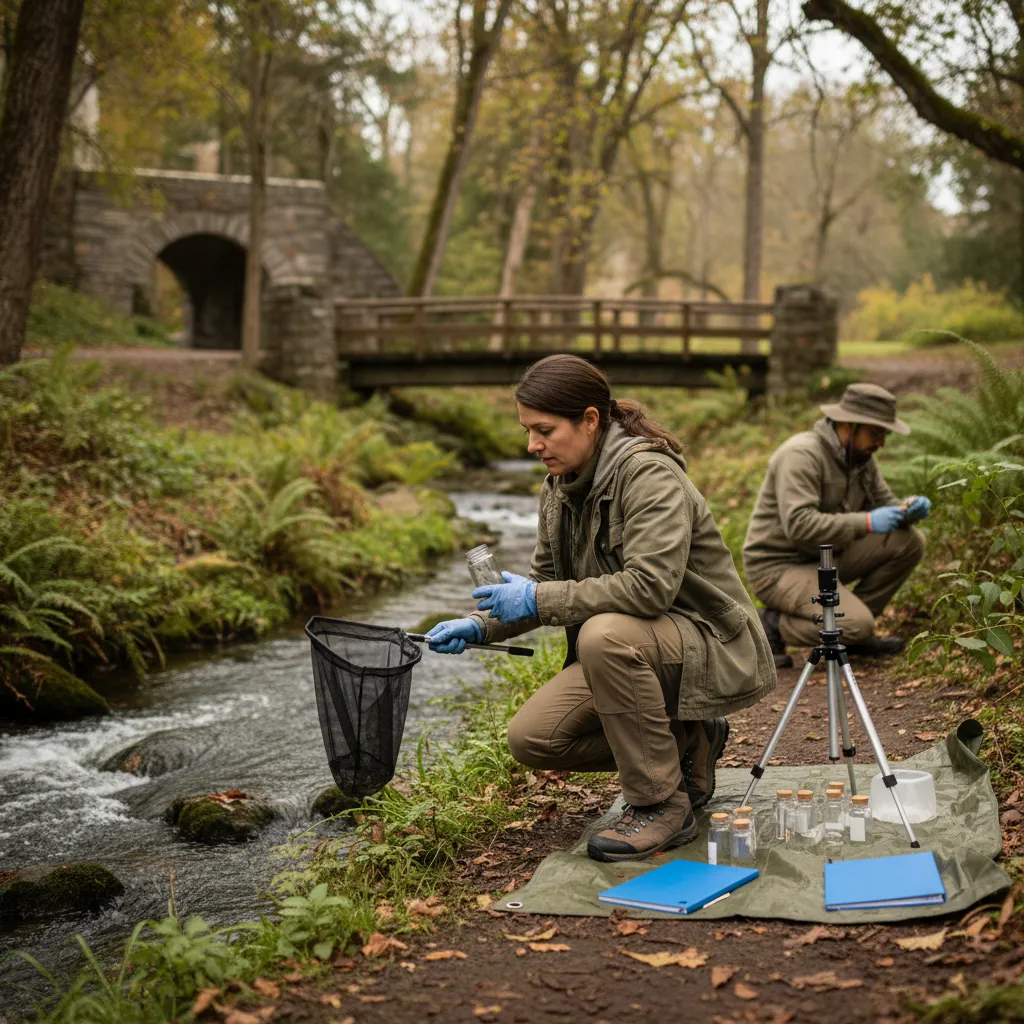
Laboratory and field-based ecology skills are increasingly tested on advanced assessments. You should be able to design a valid ecological experiment — stating a hypothesis, identifying variables, choosing appropriate controls, and selecting suitable statistical tests for ecological data. Understanding the difference between observational and experimental studies is critical because ecology frequently relies on natural experiments where direct manipulation is impossible. Know when correlation implies ecological relationships and when confounding variables make causal conclusions uncertain or premature.
Species identification is a practical skill that appears on many ecology assessments and is also essential for fieldwork. Familiarity with major taxonomic groups — plants, fungi, invertebrates, fish, amphibians, reptiles, birds, and mammals — and their ecological roles allows you to reason through unfamiliar exam scenarios. Dichotomous keys, field guides, and citizen science platforms like iNaturalist are valuable tools both for learning identification skills and for contributing real data to ecological research databases used by professional scientists and conservation managers.
Conservation biology, a closely related applied discipline, draws heavily on ecological principles to guide efforts to protect endangered species and restore degraded habitats. The IUCN Red List categorizes species by extinction risk using population size criteria, rate of decline, and geographic range data developed through ecological surveys. Understanding how population viability analysis (PVA) uses demographic data to estimate extinction probability over time gives you insight into how ecologists translate scientific findings into actionable conservation recommendations for wildlife managers and policymakers at all levels of government.
Finally, climate change is now woven through virtually every area of ecology, from phenology — the timing of seasonal biological events — to species range shifts, coral bleaching dynamics, and altered fire regimes. Exam questions increasingly ask students to apply core ecological principles to climate-change scenarios. Practice analyzing how warming temperatures might shift a species' realized niche, how earlier spring onset disrupts predator-prey synchrony, or how sea-level rise affects coastal wetland succession. Connecting classical ecological theory to contemporary environmental change is the hallmark of advanced ecological literacy that distinguishes strong exam performers from average ones.
Building genuine ecological fluency goes beyond exam preparation — it means developing the ability to interpret environmental news, evaluate conservation claims, and participate meaningfully in civic decisions about land use, wildlife management, and environmental policy. Every day, Americans encounter ecological issues in the news: wildfire management in the western US, salmon recovery in the Pacific Northwest, chronic wasting disease in deer populations, or the effects of microplastics on marine food webs. Citizens with ecological literacy can evaluate these stories critically rather than accepting oversimplified narratives from either industry advocates or environmental activists.
Practice applying the core vocabulary of ecology to real-world scenarios you encounter outside the classroom. When you read about a drought affecting a national park, think about how reduced precipitation affects primary productivity, which trophic levels are most immediately impacted, and whether the ecosystem is showing resilience or regime shift dynamics. When you hear about a new invasive species arriving in the Great Lakes, consider its potential niche overlap with native species, competitive dynamics, and what management interventions ecologists might recommend. This habit of ecological thinking is what transforms textbook knowledge into genuine scientific reasoning.
Group study is particularly valuable for ecology because the discipline involves so many interconnected concepts that benefit from discussion and explanation. Teaching a concept to a peer is one of the most effective learning strategies known to cognitive science — the act of explaining forces you to identify gaps in your own understanding and to construct clearer mental models. Study groups that work through past exam questions together, debate the reasoning behind correct answers, and quiz each other on vocabulary consistently outperform students who study alone using passive review methods like re-reading notes or highlighting textbooks.
Digital resources have transformed ecology education. Interactive simulations of population dynamics, food web construction tools, and virtual field trips to biomes around the world make it possible to explore ecological systems that would be inaccessible to most students in the classroom. NASA and NOAA provide free satellite data on vegetation cover, ocean temperatures, and atmospheric carbon that students can use for self-directed ecological investigations. Platforms like the National Ecological Observatory Network (NEON) offer real environmental datasets suitable for practice data analysis exercises that mirror authentic scientific workflows.
Writing about ecology is also an underrated study strategy. Composing short explanatory paragraphs about ecological concepts — as if writing for a younger student who has never studied ecology — forces you to move from recognition-level to production-level knowledge, a cognitively demanding and highly effective form of practice. If you can write a clear, accurate paragraph explaining the difference between primary and secondary succession without consulting your notes, you have mastered the concept at a level that will transfer reliably to exam performance under time pressure and stress.
Remember that ecology questions frequently use scenario-based formats where you must apply principles to novel situations rather than simply recall definitions. The best preparation for these questions is varied practice with real exam-style items that span all major content areas. Spend extra time on topics where your practice accuracy is lowest, and revisit those areas a day or two before your exam to consolidate learning while it is still fresh. Spaced practice across multiple study sessions consistently produces better long-term retention than massed studying crammed into a single night of intense review.
As you build your ecological knowledge, keep connecting the science back to the real world. Ecology is ultimately the science of life on Earth — it tells us how ecosystems work, why they matter, and what happens when human activities push them past their capacity for resilience.
Students who genuinely care about the natural world, who are curious about why forests look different at different altitudes, why some lakes turn green every summer, or why certain birds are disappearing from their backyards, have a natural motivational advantage in ecology. Curiosity is the most powerful study tool in any science discipline, and ecology rewards it richly.
Ecology Questions and Answers


About the Author

Educational Psychologist & Academic Test Preparation Expert
Columbia University Teachers CollegeDr. Lisa Patel holds a Doctorate in Education from Columbia University Teachers College and has spent 17 years researching standardized test design and academic assessment. She has developed preparation programs for SAT, ACT, GRE, LSAT, UCAT, and numerous professional licensing exams, helping students of all backgrounds achieve their target scores.
Join the Discussion
Connect with other students preparing for this exam. Share tips, ask questions, and get advice from people who have been there.
View discussion (2 replies)