
CST Degree: Requirements, Programs, and How to Become a Certified Surgical Technologist
Learn everything about the CST degree — ✅ accredited programs, coursework, clinical hours, and steps to become a Certified Surgical Technologist in 2026 September.

Earning a CST degree is the essential first step toward becoming a Certified Surgical Technologist — a highly skilled healthcare professional who assists surgeons before, during, and after operations. The pathway typically involves completing an accredited surgical technology program, accumulating supervised clinical hours in real operating rooms, and passing the National Board of Surgical Technology and Surgical Assisting (NBSTSA) certification exam. Whether you're a high school graduate exploring healthcare careers or a working medical professional looking to specialize, understanding exactly what the cst degree pathway requires will save you time, money, and frustration.
Surgical technologists work in hospital operating rooms, outpatient surgery centers, and specialty clinics across every state in the country. The U.S. Bureau of Labor Statistics projects a 7% growth rate for this occupation through 2032, which is faster than the average for all occupations. Every major surgery — from a routine appendectomy to a complex cardiac bypass — depends on a trained surgical tech to prepare sterile fields, pass instruments with precision, and anticipate the surgical team's needs. That operational dependence makes credentialed professionals with a proper CST degree highly valued and consistently employable.
The educational landscape for surgical technology has evolved considerably over the past decade. Accredited programs are now offered at community colleges, vocational schools, and some four-year universities. Program length ranges from about 12 months for diploma programs to 24 months for an associate degree, with a small number of bachelor's degree tracks available for those who want expanded leadership or instructional roles. Each format has distinct advantages depending on your timeline, budget, and long-term career ambitions within the surgical suite.
Choosing the right program matters more than many applicants realize. The NBSTSA requires that candidates graduate from a program accredited by either the Commission on Accreditation of Allied Health Education Programs (CAAHEP) or the Accrediting Bureau of Health Education Schools (ABHES). Graduating from a non-accredited school can disqualify you from sitting for the national certification exam entirely, which would prevent you from using the CST credential that most employers require for hiring and advancement.
Beyond accreditation, prospective students should evaluate programs based on clinical placement quality, pass rates on the certification exam, faculty credentials, and the availability of simulation labs with modern laparoscopic and robotic surgical equipment. A program with a high first-time pass rate on the NBSTSA exam — nationally around 70–75% — typically reflects rigorous preparation, experienced instructors, and sufficient clinical exposure in diverse surgical specialties including orthopedics, cardiovascular, neurosurgery, and general surgery.
Tuition costs for CST programs vary widely. Community college associate degree programs often run between $8,000 and $20,000 in total tuition, while private vocational schools may charge $25,000 to $45,000 for similar credentials. Financial aid, scholarships through the Association of Surgical Technologists (AST), and employer tuition reimbursement programs can all substantially reduce out-of-pocket costs. Some hospital systems partner directly with community colleges to offer sponsored training in exchange for a service commitment after graduation — a model that benefits both parties.
This guide walks you through every stage of the CST degree journey: the types of programs available, prerequisite courses, what the clinical component looks like, how to prepare for the national exam, and what your career trajectory might look like after earning your credential. By the end, you will have a complete picture of the investment required and the professional rewards that follow.
CST Degree by the Numbers

Types of CST Degree and Diploma Programs
Typically 12–15 months, these programs cover core surgical technology competencies and clinical hours. Best for students who want the fastest path to workforce entry. Offered primarily at vocational schools and some community colleges.
The most common CST degree, usually 18–24 months at a community college. Combines general education requirements with technical coursework and 700+ clinical hours. Meets all NBSTSA eligibility requirements and is widely accepted by employers.
A four-year degree available at select universities. Provides deeper coverage of anatomy, leadership, and healthcare systems. Ideal for those targeting surgical technology educator, supervisor, or first-assistant roles.
Designed for existing healthcare workers (CNAs, medical assistants, OR technicians) who want credit for prior experience. These programs can shorten the credential timeline by 6–12 months depending on documented clinical experience.
Admission to an accredited surgical technology program is competitive, and most schools have specific prerequisite requirements that applicants must meet before enrolling in clinical courses. Typical prerequisites include a high school diploma or GED, completion of high school biology and chemistry, and a cumulative GPA of at least 2.5 on a 4.0 scale.
Many programs also require a college-level anatomy and physiology course with a grade of C or better, often completed before or during the first semester of the program. Some programs give preference to applicants with healthcare experience — even a few months of work as a patient care technician or medical assistant can meaningfully strengthen your application.
Beyond academic requirements, most programs require applicants to provide proof of current immunizations, including hepatitis B, MMR, varicella, and annual influenza vaccination, as well as a negative tuberculosis (TB) test. A criminal background check is nearly universal, and some clinical sites conduct drug screening as well. These requirements are not just administrative hurdles — they reflect the reality that surgical technologists work in sterile, high-stakes environments where patient safety is paramount, and clinical affiliates hold schools accountable for sending prepared, vetted students.
CPR certification through the American Heart Association (BLS for Healthcare Providers) is required before clinical rotations begin. Students are generally responsible for obtaining and maintaining this certification throughout the program. Additionally, most programs require students to purchase or rent appropriate clinical attire including surgical scrubs, designated operating room shoes, and in some cases, a personal surgical loupes kit for magnification procedures. These upfront costs are worth budgeting for in addition to tuition.
The application process itself typically involves submitting official transcripts, letters of recommendation from science teachers or healthcare professionals, a personal statement describing your motivation for pursuing surgical technology, and sometimes a brief interview with program faculty. Competitive programs receive three to five applications for every available seat, so investing time in a well-crafted personal statement can be the difference between acceptance and waitlisting. Describe specific experiences that drew you to the OR environment — shadowing a surgical tech, volunteering at a hospital, or working in a related healthcare role all make compelling material.
Transfer students and those with prior college credit should consult each program's articulation agreements. Many community college surgical technology programs have formal agreements with four-year institutions, allowing AAS graduates to transfer credits toward a bachelor's degree in health sciences or a related field. This pathway is especially valuable for students who want to keep upward mobility options open without committing to a four-year timeline from the outset. Ask the program director about transfer options before enrolling if continuing education is part of your long-term plan.
International applicants or those whose primary education was in a non-English-speaking country may be required to demonstrate English language proficiency through TOEFL or IELTS scores. All clinical coursework, documentation, and communication in U.S. operating rooms is conducted in English, and surgical teams depend on precise verbal communication during procedures. Programs take this requirement seriously because miscommunication in the OR can compromise patient safety.
Once accepted, most programs have a limited cohort size — typically 16 to 24 students — which allows for individualized instruction and sufficient access to simulation equipment. This intimate learning environment is one of the genuine advantages of pursuing a surgical technology credential compared to larger allied health programs. You will know your classmates well, and the peer network you build during training often extends into your professional career as you encounter former classmates in hospital operating rooms throughout your region.
Core Coursework and Clinical Training in CST Programs
The academic portion of a CST degree program covers surgical anatomy and physiology, microbiology and infection control, pharmacology for surgical technologists, anesthesia principles, surgical instrumentation, and sterile technique. Students also study legal and ethical issues in perioperative care, patient safety protocols, and documentation practices. Most programs deliver this content through a combination of lecture, laboratory simulations, and case-based learning scenarios that mirror real OR situations.
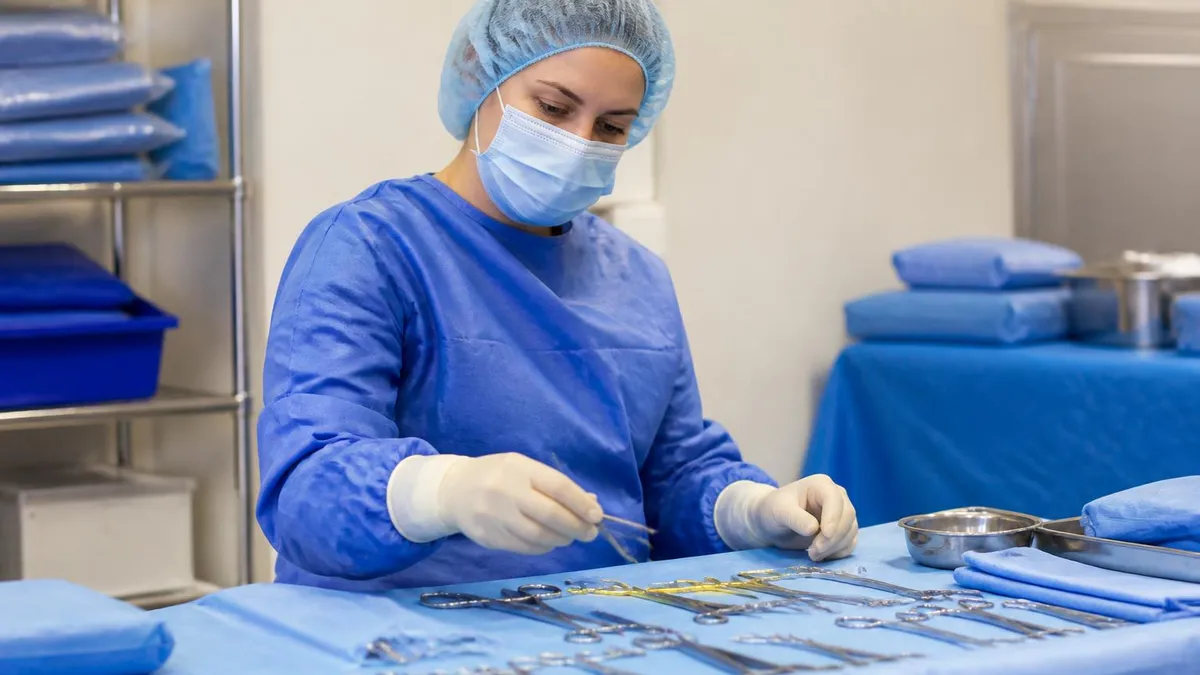
Advanced coursework addresses specific surgical specialties including orthopedic, cardiovascular, neurosurgical, obstetric, pediatric, and laparoscopic procedures. Students learn how to set up sterile back tables, prepare and maintain the sterile field, handle and pass instruments correctly, and manage surgical specimens. Programs increasingly include modules on robotic-assisted surgery platforms such as the da Vinci system, reflecting the growing adoption of minimally invasive techniques in hospitals of all sizes.

Is Pursuing a CST Degree Worth It?
- +Stable demand: surgical technologist jobs are projected to grow 7% through 2032
- +Relatively short education timeline — enter the workforce in 12–24 months
- +Competitive salary starting around $45,000 and reaching $80,000+ with experience
- +Meaningful, hands-on work in a high-stakes clinical environment
- +Clear credential pathway: accredited program → NBSTSA exam → CST certification
- +Portable credential: CSTs are in demand in hospitals nationwide and internationally
- −Clinical hours require significant time commitment including early morning OR start times
- −Physically and mentally demanding work — long hours standing during complex procedures
- −Limited program availability in rural areas may require relocation
- −Certification must be renewed every four years through continuing education
- −Entry-level wages in some markets are modest relative to program cost
- −Career advancement often requires additional credentials (CSFA, surgical first-assisting programs)
CST Degree & Certification Checklist
- ✓Confirm your program of interest is accredited by CAAHEP or ABHES before applying.
- ✓Complete all prerequisite courses — especially anatomy & physiology — with a C or better.
- ✓Gather immunization records, TB test results, and CPR certification before orientation.
- ✓Submit background check documentation to your program and primary clinical affiliate.
- ✓Complete minimum 700 clinical hours across multiple surgical specialty rotations.
- ✓Maintain a detailed case log recording procedure type, your role, and supervisor signatures.
- ✓Register for the NBSTSA exam within 6 months of graduation to keep content fresh.
- ✓Use official NBSTSA study materials, practice exams, and review books during exam prep.
- ✓Pass the CST exam — a score of 700 or higher on the 200-question scaled scoring system.
- ✓Apply for CST credentialing through NBSTSA and notify your employer of your new status.
Accreditation Is Non-Negotiable
Only graduates of CAAHEP- or ABHES-accredited surgical technology programs are eligible to sit for the NBSTSA certification exam. Before enrolling in any program — regardless of cost, convenience, or marketing claims — verify its accreditation status directly on the CAAHEP or ABHES website. Attending a non-accredited program can cost you years of work and thousands of dollars with no path to the CST credential most employers require.
Graduating from an accredited CST degree program opens doors to a range of career trajectories in perioperative care. The most direct path is entry-level employment as a certified surgical technologist at a hospital or ambulatory surgery center, where new graduates typically start in general surgery and orthopedics before progressing to more specialized service lines. Hospitals in high-cost-of-living markets — California, New York, Massachusetts, and Washington — pay the highest starting wages, often $55,000 to $65,000 annually, while rural and Midwestern facilities offer slightly lower wages but often sweeten packages with loan forgiveness or relocation assistance.
With two to five years of experience, certified surgical technologists can pursue advanced credentials that open new earning and responsibility tiers. The Certified Surgical First Assistant (CSFA) credential, offered by the NBSTSA, allows credentialed CSTs to assist surgeons intraoperatively in roles that go beyond instrument passing — including tissue handling, retraction, and hemostasis. Surgical first assistants earn a median salary of $75,000 to $100,000 depending on specialty and geography. Achieving this credential requires additional education and a separate exam, but many employers partially fund the training given the workforce shortage in first-assisting roles.
Some CSTs transition into surgical technology education — teaching at the same community colleges and vocational schools where they trained. Educator roles typically require a bachelor's degree and several years of OR experience, but they offer regular hours, summers with reduced clinical obligations, and the satisfaction of mentoring the next generation of surgical professionals. The Association of Surgical Technologists (AST) maintains a list of faculty development resources and continuing education workshops specifically for those interested in this path.
Central sterile processing is an adjacent field where experienced surgical technologists often advance into supervisory roles. Sterile processing departments manage the decontamination, inspection, assembly, sterilization, and distribution of all surgical instruments and equipment. CSTs with strong sterile technique foundations are naturally suited to sterile processing leadership, and some hospitals have formalized dual-role positions that allow surgical techs to split time between the OR and central sterile, expanding their institutional value and building toward department management.
Travel surgical technology is a growing niche for experienced CSTs willing to accept 13-week contract assignments at facilities nationwide. Travel contracts frequently pay $3,000 to $5,000 per week in all-in compensation — including housing stipends and travel reimbursement — making them highly attractive for debt-conscious new graduates or experienced technologists who value geographic flexibility. Staffing agencies that specialize in perioperative travel placements can provide detailed market information about which specialties command the highest rates in any given season.
Leadership roles within hospital surgical services — charge tech, lead tech, OR coordinator — are accessible to CSTs with five or more years of experience and strong communication skills. These hybrid clinical-administrative positions involve scheduling, inventory management, staff mentoring, and quality improvement initiatives. They rarely require additional formal education beyond the associate degree, but a bachelor's degree in health administration or a related field can accelerate advancement into OR management or service line director roles.
Regardless of which path you pursue, maintaining your CST credential is essential. The NBSTSA requires 60 continuing education credits over each four-year renewal cycle, with a mandatory ethics component. The AST offers a robust catalog of live, online, and conference-based CE opportunities across all surgical specialties. Active participation in professional development is not just a credentialing requirement — it is the mechanism through which surgical technologists stay current with rapidly evolving techniques, technology, and evidence-based practice standards.

NBSTSA exam applications must be submitted within a defined eligibility window after graduation. If you wait too long after completing your CST degree program, you may need to submit additional documentation or reapply. Check the current NBSTSA candidate handbook for exact deadlines, as these are updated periodically. Apply as soon as you receive your official graduation confirmation to avoid any administrative delays.
The total cost of earning a CST degree varies considerably depending on program type and institution. Community college associate degree programs are typically the most affordable option, with total tuition ranging from $8,000 to $20,000 over the full program length. When you factor in fees, textbooks, scrubs, clinical supplies, and the NBSTSA application fee of $275, the realistic total investment for a community college program is approximately $12,000 to $25,000. Private vocational schools charge significantly more — often $30,000 to $50,000 — though they sometimes offer faster timelines or more flexible scheduling for working students.
Federal financial aid is available for students enrolled in accredited programs at eligible institutions. Completing the FAFSA (Free Application for Federal Student Aid) is the critical first step to accessing Pell Grants, subsidized and unsubsidized federal loans, and work-study programs. Many surgical technology students qualify for Pell Grants of $2,000 to $7,395 per year, which do not need to be repaid. Students who exhaust grant options can borrow through the federal Direct Loan program at competitive interest rates with income-driven repayment options post-graduation.
Scholarships specifically for surgical technology students are available through the Association of Surgical Technologists Education and Research Foundation. The AST Foundation awards multiple scholarships each year ranging from $500 to $3,000, and competition is less intense than for general healthcare scholarships because the pool of applicants is smaller. Hospital foundations, local community organizations, and state allied health workforce development funds are additional sources worth investigating through your program's financial aid office.
Employer tuition reimbursement is perhaps the most underutilized funding mechanism for surgical technology education. Many hospital systems offer tuition assistance of $3,000 to $10,000 per year for employees who enroll in accredited healthcare programs. If you are currently employed at a hospital — even in a non-clinical role — check your HR benefits package for tuition assistance eligibility. Some systems have formal grow-your-own partnerships with nearby community colleges that provide discounted or fully funded training in exchange for a post-graduation employment commitment, typically two to three years.
When evaluating return on investment, consider both salary and employment stability. A CST degree typically pays for itself within 18 to 24 months of full-time employment. At a median salary of $64,000 annually, a graduate who invested $20,000 in a community college program breaks even in less than two years, net of taxes and living expenses. The calculation becomes even more favorable for those who enter the travel market, where annual earnings of $130,000 to $180,000 are achievable with strategic specialty development and placement timing.
Geographic salary variation is worth careful consideration when choosing where to work after graduation. The highest-paying states for surgical technologists in 2024 are California ($92,000 median), Washington ($83,000), Nevada ($78,000), and Alaska ($76,000). States in the Southeast and Midwest typically pay $50,000 to $58,000 at the median. If you are willing to relocate for your first position, prioritizing high-wage markets for the first three to five years of your career can substantially accelerate student loan repayment and savings accumulation before you settle in a preferred region.
Continuing education costs after graduation are also worth budgeting. The 60 CE credits required every four years can be obtained through free online modules, low-cost webinars, and AST annual congress attendance. Realistically, plan on spending $200 to $600 per year on continuing education to stay current and maintain your credential. Many employers fund a portion of CE expenses, and some cover the full cost of the NBSTSA renewal fee as a retention benefit for valued staff members.
Practical preparation for the NBSTSA certification exam should begin well before your final semester. The exam consists of 200 questions — 175 scored and 25 unscored pretest items — drawn from four primary content domains: perioperative care, basic science, instrumentation, and ancillary duties. The exam is computer-adaptive in difficulty and uses a scaled scoring system with a passing standard of 700 out of 800. Understanding the content domain weightings in the current NBSTSA exam blueprint allows you to allocate study time proportionally rather than reviewing all topics with equal intensity.
Creating a structured study schedule eight to twelve weeks before your exam date is the single most effective preparation strategy. Block out two to three hours of focused study time each day, and organize your schedule by domain. Spend the first two weeks reviewing basic science — anatomy, physiology, microbiology, and pharmacology — since this content underpins every other domain.
Move to perioperative care protocols in weeks three and four, instrumentation identification and use in weeks five through seven, and ancillary duties in weeks eight and nine. Reserve the final two to three weeks for comprehensive review using full-length practice exams under timed conditions.
Official NBSTSA practice exams and the Core Curriculum for Surgical Technology (published by AST) are the most authoritative study resources. Commercial review books by publishers like Appleton & Lange and Elsevier are also widely used and provide strong question banks. Flashcard systems — either physical or digital through platforms like Anki — are particularly effective for memorizing instrument names, suture types, and pharmacology. The goal of flashcard review is not just recognition but rapid retrieval, since exam time pressure rewards students who can identify instruments and recall drug doses instantly without deliberation.
Peer study groups formed from your clinical cohort are invaluable during exam preparation. Teaching content to a study partner is one of the most effective methods for solidifying your own understanding — if you can explain the steps of setting up a sterile back table or the mechanism of action of an epinephrine flush to a classmate without looking at notes, you have achieved the level of mastery the exam tests. Study groups also provide accountability, emotional support, and shared access to resources that individual students might not find on their own.
On exam day, arrive at the testing center early enough to complete check-in procedures without rushing. Bring two valid forms of ID, and leave all personal items — phones, watches, study materials — in your car or a provided locker. The exam is delivered by Pearson VUE at authorized testing centers nationwide. You will have approximately one minute per question, which is sufficient if you have prepared thoroughly. For questions where you are uncertain, use process-of-elimination to narrow options and commit to your best answer — unanswered questions count as incorrect, so never leave a question blank.
After passing the exam, you will receive your official CST certificate from the NBSTSA within four to six weeks. In the interim, many candidates receive a preliminary pass notification that can be shared with employers. Update your resume, LinkedIn profile, and any state licensure applications immediately. Some states require surgical technologists to hold a state-level license in addition to the national CST credential — currently these states include New Jersey, Oregon, South Carolina, Texas, Virginia, and Washington — so verify your state's requirements through the AST's state regulations database.
Finally, take time to celebrate the achievement. Becoming a Certified Surgical Technologist requires months of intensive academic work, challenging clinical training, and rigorous examination. The CST credential signals to every surgical team you will ever work with that you have met a nationally validated standard of knowledge and skill. From your first day in the OR as a credentialed professional, you will play an irreplaceable role in one of medicine's most consequential environments — and that is a career worth every hour of preparation.
CST Questions and Answers



About the Author

Educational Psychologist & Academic Test Preparation Expert
Columbia University Teachers CollegeDr. Lisa Patel holds a Doctorate in Education from Columbia University Teachers College and has spent 17 years researching standardized test design and academic assessment. She has developed preparation programs for SAT, ACT, GRE, LSAT, UCAT, and numerous professional licensing exams, helping students of all backgrounds achieve their target scores.