
CST Course Guide: Requirements, Programs, and How to Become a Certified Surgical Technologist
Everything about CST courses: accreditation, prerequisites, clinical hours, and exam prep. Start your surgical tech career today. 🎯

Choosing the right cst course is the single most important decision you will make on your path to becoming a Certified Surgical Technologist. These programs train students to assist surgeons during operations — handling instruments, maintaining sterile fields, and anticipating every step of complex procedures. With operating rooms across the United States facing a persistent shortage of qualified techs, a strong CST course opens doors to immediate employment, competitive salaries, and long-term career advancement in a field that shows no signs of slowing down. Practice with the free Certified Surgical Technician practice test on PracticeTestGeeks (9 questions with answer explanations).
Accredited surgical technology programs range from one-year certificate tracks to two-year associate degree programs, each designed to meet the education standards set by the Commission on Accreditation of Allied Health Education Programs (CAAHEP). Selecting a CAAHEP-accredited program is not optional if you intend to sit for the national certification exam administered by the NBSTSA — it is a firm prerequisite. Understanding what separates a mediocre program from an excellent one requires looking beyond tuition price and location to examine clinical hours, faculty credentials, first-time pass rates, and job placement support.
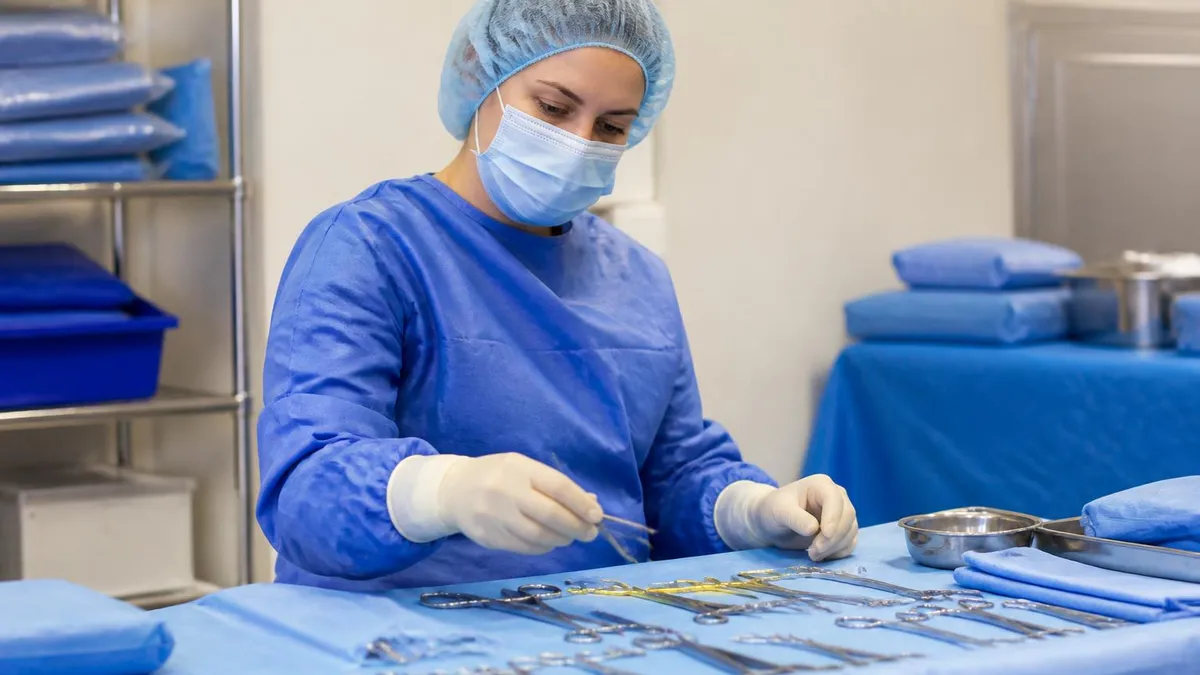
The core curriculum of any reputable CST course covers human anatomy and physiology, microbiology, surgical procedures by specialty, pharmacology, sterilization techniques, and patient safety protocols. Students learn how to prepare and maintain a sterile field, pass instruments with speed and precision, count sponges and sharps to prevent retained surgical items, and respond to emergencies in the operating room. These are not abstract skills — they are drilled through simulation labs, cadaver work, and hundreds of hours of supervised clinical rotations in real surgical suites.
Clinical training is where textbook knowledge transforms into professional competence. Most accredited CST programs require between 120 and 700 clinical hours, with many top programs exceeding 600 hours across multiple surgical specialties including general surgery, orthopedics, cardiovascular procedures, obstetrics, and neurosurgery. Each specialty rotation sharpens your instrument knowledge, deepens your understanding of surgical anatomy, and builds the calm, focused demeanor that separates excellent surgical techs from average ones. Hospitals and surgery centers notice this preparation during interviews and preceptorships.
Financial considerations play a significant role in program selection. Certificate programs at community colleges can cost as little as $6,000 to $12,000 in total tuition, while private vocational schools sometimes charge $20,000 or more for similar training. Associate degree programs at accredited community colleges typically fall in the $8,000 to $18,000 range, depending on residency status and fees. Federal financial aid, including Pell Grants and subsidized loans, is available for most accredited programs. Many hospital systems also offer tuition reimbursement or sponsorship for students who commit to employment contracts after graduation.
Admission requirements vary by school, but most programs ask for a high school diploma or GED, a minimum GPA (often 2.5 or higher), immunization records, a criminal background check, and CPR certification. Some competitive programs also require prerequisite courses in biology or medical terminology before you can begin the core surgical tech curriculum. Preparing these documents well in advance — ideally three to six months before the application deadline — prevents last-minute scrambles that could cost you a seat in a cohort that fills quickly.
Once you complete an accredited CST course and graduate, you become eligible to sit for the NBSTSA Certified Surgical Technologist exam. This 175-question multiple-choice test covers perioperative care, anatomy and physiology, surgical procedures, and professional standards. Adequate preparation through practice exams, study guides, and review courses significantly increases your probability of passing on the first attempt and launching your career without delay.
Free Certified Surgical Technician Study Tools
Interactive Certified Surgical Technician resources on PracticeTestGeeks, free to start:
- Certified Surgical Technician flashcards — review key terms and concepts card by card
- Certified Surgical Technician study guide — topic-by-topic overview of what the exam covers
- Certified Surgical Technician cheat sheet — one-page printable summary for last-minute review
CST Course by the Numbers

CST Course Roadmap: What to Expect Each Phase
- ▸Review human anatomy and physiology — organ systems and surgical landmarks
- ▸Study medical terminology used in the operating room
- ▸Begin microbiology and infection control principles
- ▸Familiarize yourself with the surgical tech scope of practice
- ▸Master principles of surgical asepsis and sterile field management
- ▸Learn instrument identification across general surgery sets
- ▸Practice gowning, gloving, and draping on simulation manikins
- ▸Study sterilization methods: autoclave, gas, and plasma
- ▸Study general surgery procedures: appendectomy, cholecystectomy, hernia repair
- ▸Learn orthopedic procedures: hip and knee arthroplasty, fracture repair
- ▸Review OB/GYN procedures including cesarean section and hysterectomy
- ▸Study anesthesia types and your role during induction and emergence
- ▸Report to clinical site — shadow experienced surgical techs for first two weeks
- ▸Begin scrubbing in on general surgery cases under supervision
- ▸Complete required sponge, sharps, and instrument counts on every case
- ▸Document case logs for program requirements
- ▸Rotate through cardiovascular, neuro, and pediatric specialties
- ▸Begin NBSTSA exam content review using practice tests and study guides
- ▸Identify weak content areas and schedule targeted review sessions
- ▸Complete program capstone or senior practicum requirement
Accreditation is the non-negotiable foundation of a legitimate CST course. The NBSTSA requires that all candidates for the Certified Surgical Technologist credential have graduated from a program accredited by CAAHEP or ABHES (Accrediting Bureau of Health Education Schools). Programs that are not accredited by one of these two bodies — regardless of how they market themselves — will leave you ineligible to sit for the national exam. Before enrolling anywhere, verify accreditation status directly through the CAAHEP or ABHES websites, not just through the school's own marketing materials.
Admission to accredited surgical technology programs is competitive, particularly at community colleges where tuition is significantly lower than private institutions. Most programs admit one cohort per year, ranging from 15 to 30 students per class. Strong applicants typically present a GPA above 3.0, completed prerequisite science courses with B grades or better, relevant healthcare experience (CNA, ER technician, medical assistant), and a compelling personal statement demonstrating commitment to the profession. Some programs conduct formal interviews as part of the selection process.
Prerequisite coursework commonly required before starting the core curriculum includes Introduction to Biology or Anatomy and Physiology I, Medical Terminology, and occasionally a college-level English composition course. Completing these prerequisites with strong grades not only satisfies admission criteria but also gives you a genuine academic foundation that makes the intensive CST curriculum significantly more manageable. Students who skip these prerequisites or complete them with minimal effort often struggle when the pace accelerates in the second semester.
Background checks and health clearances are mandatory at virtually every accredited program. Clinical sites — hospitals, ambulatory surgery centers, and specialty clinics — require students to clear criminal background investigations, drug screens, and sometimes fingerprinting before they can enter the surgical suite. Convictions related to theft, fraud, or substance abuse can complicate or prevent clinical placement, so it is essential to understand your state's licensing rules before investing in a CST course. Some states have provisions that allow certain past convictions to be reviewed on a case-by-case basis.
Immunization requirements reflect the healthcare environment you will be entering. Standard requirements include proof of MMR (measles, mumps, rubella), Varicella, Hepatitis B series, Tdap (tetanus, diphtheria, pertussis), and annual influenza vaccination. TB testing via PPD skin test or QuantiFERON blood test is also routinely required. Students who cannot provide documented immunity — either through vaccination records or titer tests showing adequate antibody levels — will need to complete catch-up vaccination schedules before clinical rotations begin, which can delay your start date if not addressed early.
CPR certification at the BLS (Basic Life Support) Healthcare Provider level through the American Heart Association is another standard requirement. Many programs require active BLS certification at the time of admission, not just upon starting clinicals. Scheduling your BLS course well before the program application deadline is a simple step that removes a common last-minute obstacle. Certification is typically valid for two years and can be renewed through any AHA-authorized training center, community college, or fire department training program across the country.
Understanding what to expect from the admissions timeline helps you plan effectively. Most programs post applications four to six months before the cohort start date, with decisions announced six to eight weeks after the deadline. If you are not accepted in your first application cycle, many programs provide feedback on how to strengthen your application for the next cycle. Using that feedback constructively — retaking prerequisites for better grades, gaining clinical experience, strengthening your personal statement — dramatically improves your chances in the following year.
CST Course Curriculum: What You Actually Learn
The classroom phase of a CST course covers the theoretical and scientific foundations of surgical technology. Students study human anatomy in surgical context — learning not just organ locations but how they are approached, retracted, and repaired during common procedures. Microbiology covers the pathogens that cause surgical site infections, the principles of sterilization and disinfection, and the evidence behind current aseptic technique protocols used in modern operating rooms across the country.
Pharmacology and anesthesia content teaches surgical techs to understand the drugs passing through their hands during a case. From local anesthetics injected at the sterile field to irrigation solutions and hemostatic agents, you learn indications, concentrations, labeling requirements, and error-prevention strategies. Surgical procedures coursework walks through hundreds of operations by specialty — from laparoscopic cholecystectomy to total knee arthroplasty — teaching instrument sequences, potential complications, and the tech's specific responsibilities at each stage of the procedure.

Is a CST Course Worth It? Honest Pros and Cons
- +Strong job security: surgical technologist positions are projected to grow 5-7% through 2032, outpacing many healthcare roles
- +Relatively short training timeline compared to nursing or physician assistant programs — credential in 12-24 months
- +Community college programs offer CAAHEP-accredited training at a fraction of private school tuition costs
- +Direct patient impact: you contribute to positive surgical outcomes every single shift you work
- +Career ladder potential: experienced CSTs can advance to first surgical assistant, educator, or OR manager roles
- +Nationally portable credential: the NBSTSA CST certification is recognized across all 50 states
- −Physically demanding environment: long periods of standing, maintaining sterile positions, and handling heavy instrument trays
- −Emotionally challenging: exposure to traumatic injuries, pediatric emergencies, and sometimes unfavorable surgical outcomes
- −Competitive admissions at affordable community college programs mean waitlists of six to eighteen months at many schools
- −Clinical rotation schedules are non-negotiable — shift times mirror real OR schedules (early mornings, occasional evenings)
- −Limited flexibility for students who cannot commit to full-time clinical attendance during the rotation phase
- −First-time NBSTSA pass rates hover around 54%, meaning nearly half of candidates need to retake — strong exam prep is non-negotiable
Pros and Cons at a Glance
| Pros | Cons |
|---|---|
| Community college programs offer CAAHEP-accredited training at a fraction of private school tuition costs | Physically demanding environment: long periods of standing, maintaining sterile positions, and handling heavy instrument trays |
| Direct patient impact: you contribute to positive surgical outcomes every single shift you work | Emotionally challenging: exposure to traumatic injuries, pediatric emergencies, and sometimes unfavorable surgical outcomes |
| Career ladder potential: experienced CSTs can advance to first surgical assistant, educator, or OR manager roles | Competitive admissions at affordable community college programs mean waitlists of six to eighteen months at many schools |
CST Course Preparation Checklist: Everything Before You Enroll
- ✓Verify that your target program is accredited by CAAHEP or ABHES on their official websites before applying
- ✓Complete all prerequisite courses (anatomy, biology, medical terminology) with a grade of B or higher
- ✓Schedule and complete your BLS Healthcare Provider CPR certification through an AHA-authorized training center
- ✓Gather immunization records and schedule any catch-up vaccines (Hepatitis B series, MMR, Varicella, Tdap, flu shot)
- ✓Request a criminal background check from your state to identify any issues before clinical placement screenings
- ✓Shadow a working surgical technologist for at least one shift to confirm the career is the right fit for your goals
- ✓Research program first-time NBSTSA pass rates — ask each school directly and compare with the national average of 54%
- ✓Complete the FAFSA and explore Pell Grant eligibility to offset tuition costs at accredited community college programs
- ✓Prepare a strong personal statement describing your motivation, relevant healthcare experience, and long-term career goals
- ✓Create a timeline noting application deadlines, cohort start dates, and clinical rotation scheduling requirements for each program

Program Pass Rate Is the Single Best Quality Indicator
Ask every program you consider for their NBSTSA first-time pass rate for the most recent three graduating cohorts. Programs consistently above 70% have proven curricula, strong clinical partnerships, and effective exam preparation built into their coursework. Programs below 50% should raise immediate questions about curriculum quality, clinical site access, and the level of exam prep support provided to students before they sit for the national certification exam.
Finding the right surgical technology program requires evaluating several quality indicators that go well beyond tuition price and location. The single most predictive metric is the program's NBSTSA first-time pass rate — schools that consistently place 70% or more of their graduates through the national certification exam on the first attempt have demonstrably effective curricula, well-run clinical partnerships, and strong exam preparation resources built into their coursework. Request this data directly from program directors, and ask them to provide three consecutive years of results so you can identify trends rather than cherry-picked statistics.
Clinical site diversity is the second most important factor. Programs affiliated with large academic medical centers offer exposure to complex, high-acuity cases across a wide range of surgical specialties. Students who rotate through neurosurgery, cardiovascular procedures, pediatric surgery, and trauma cases during their education are significantly more prepared for the realities of employment than those who primarily scrub on routine general surgery and outpatient cases. Ask programs for a complete list of affiliated clinical sites and the specialties available at each location before making your enrollment decision.
Faculty credentials signal the quality of instruction you will receive. Ideal surgical technology instructors hold active CST certification themselves and bring current clinical experience in the OR — not just theoretical knowledge from textbooks. Programs where instructors hold advanced degrees and maintain clinical practice deliver more relevant, up-to-date instruction. Ask about faculty-to-student ratios in both lab and clinical settings, as smaller ratios enable more individualized feedback and skill development, particularly during the simulation lab phases of the program.
Job placement rates and employer relationships reveal how well a program prepares graduates for the actual hiring market. Programs with formal externship partnerships — where clinical rotations can convert to job offers — dramatically shorten the job search timeline after graduation. Ask program directors which local employers regularly hire their graduates and whether the program has relationships with trauma centers, specialty surgery centers, or hospital systems that offer competitive starting salaries and strong benefit packages for new CSTs entering the workforce.
Student-to-faculty ratios in simulation labs directly affect skill development quality. The hands-on portions of surgical technology training — gowning, gloving, setting up sterile fields, instrument passing — require individualized feedback that is impossible to deliver in large group settings. Programs that limit simulation lab sections to eight to twelve students per instructor consistently produce graduates with stronger technique than programs that run larger groups. Visit the simulation lab in person if possible and observe whether the equipment is current, well-maintained, and sufficient for the enrolled student population.
Program format flexibility matters if you have work or family obligations. While most CST programs require full-time attendance due to clinical scheduling constraints, some institutions offer cohort start dates in both fall and spring, evening didactic coursework, and hybrid options for non-clinical coursework. Fully online CST programs do not exist in a legitimate accredited format because the clinical component is irreplaceable — but programs that front-load online or evening coursework before clinical rotations begin provide meaningfully more scheduling flexibility for working students and parents during the didactic phase.
Reviewing graduate outcomes data — including employment rates at six and twelve months post-graduation, average starting salaries, and the percentage of graduates who pass the NBSTSA exam — provides the most complete picture of a program's real-world value. Programs that are proud of their outcomes readily share this data. Hesitation or inability to provide recent graduate outcomes data is itself a meaningful signal about program quality and transparency worth weighing carefully in your decision.
Completing a surgical technology program that lacks CAAHEP or ABHES accreditation renders you permanently ineligible to sit for the NBSTSA CST exam — the national credential required for employment at most hospitals and surgery centers. Some unaccredited programs use language like 'preparing for accreditation' or 'nationally recognized' without holding active CAAHEP or ABHES status. Verify accreditation at caahep.org or abhes.org directly before paying any deposits, signing enrollment agreements, or accepting financial aid awards.
Once you have graduated from an accredited CST course and passed the NBSTSA certification exam, the career opportunities available to you expand considerably. Entry-level CST positions in hospital operating rooms typically offer starting salaries between $45,000 and $58,000 annually, with experienced surgical techs in high-cost-of-living areas like California, New York, and Alaska earning well above $70,000 per year. Specialty areas including cardiovascular surgery, orthopedics, and neurosurgery typically command premium compensation above general surgery rates due to the complexity of the cases and the experience required to perform well in those environments.
Hospital employment is only one pathway open to credentialed CSTs. Ambulatory surgery centers (ASCs) have grown rapidly as healthcare systems shift more elective procedures out of expensive inpatient facilities. ASCs often offer more predictable schedules — typically Monday through Friday, with no overnight call or holiday rotations — making them attractive to CSTs who prioritize work-life balance. The trade-off is typically slightly lower base compensation than hospital positions, though the absence of on-call pay and holiday differentials narrows that gap in practice for many surgical techs working in these settings.
Travel surgical technology is another high-earning option for credentialed CSTs with one to three years of experience. Travel assignments typically last 13 weeks and pay $30 to $50 per hour plus tax-free housing and travel stipends, resulting in total annual compensation that often exceeds $80,000 for techs willing to relocate temporarily for assignments. Travel positions exist in virtually every state, with demand particularly high in rural areas and regions with chronic staffing shortages. Travel techs also benefit from exposure to diverse surgical environments that accelerate professional development faster than staying in a single facility.
The role of Surgical First Assistant (SFA) represents the most common advanced career trajectory for experienced CSTs. First assistants actively participate in surgical procedures — retracting tissue, providing hemostasis, ligating vessels, and closing incisions — under the direct supervision of the attending surgeon. Becoming an SFA typically requires two to five years of CST experience, completion of a formal SFA training program, and passing the Certified Surgical First Assistant (CSFA) examination administered by the NBSTSA. SFA positions command salaries typically 20 to 35 percent above standard CST compensation.
Surgical technology education represents another attractive advancement path for experienced CSTs who enjoy teaching. Community college and vocational school surgical technology programs actively recruit faculty with current clinical credentials and OR experience. Teaching positions offer academic year schedules, summers with lighter workloads, and the professional satisfaction of shaping the next generation of surgical techs. Most faculty positions at community colleges require at minimum an associate degree and active CST certification, with bachelor's or master's degrees preferred for full-time tenure-track appointments at four-year institutions.
Central service and sterile processing management careers attract CSTs who develop deep expertise in instrument care, sterilization science, and regulatory compliance. Experienced surgical techs who move into sterile processing leadership roles apply their OR instrument knowledge to managing the systems that supply clean, sterile equipment to every surgical case in a facility. These roles offer predictable administrative schedules, leadership development opportunities, and compensation trajectories that extend into the $65,000 to $90,000 range for experienced department managers in larger hospital systems nationwide.
Regardless of which career path you pursue after completing your CST course, maintaining your NBSTSA certification through continuing education is essential. The CST credential requires 30 continuing education credits every four years, obtainable through professional conferences, online CE modules, employer-sponsored training, and academic coursework. Staying current with evolving surgical techniques, new instrumentation, and updated safety protocols not only satisfies certification maintenance requirements but also signals to employers that you are a committed professional invested in delivering the highest quality care to every patient on your table.
Exam preparation is the bridge between completing your CST course and earning your credential, and it deserves the same systematic approach you applied to your clinical rotations. The NBSTSA CST examination contains 175 questions, of which 150 are scored and 25 are unscored pilot questions that you cannot identify.
The scored questions are distributed across three broad domains: perioperative care (approximately 40%), anatomy and physiology in the context of surgical procedures (approximately 33%), and related sciences including pharmacology, microbiology, and professional practice standards (approximately 27%). Understanding this content weighting allows you to prioritize your study time strategically rather than reviewing all topics equally.
Practice exams are the most effective single study tool available for CST exam preparation. High-quality practice questions expose you to the question style, content emphasis, and clinical reasoning required to perform well on the actual exam.
The best practice tests include detailed rationales explaining not just why the correct answer is right but why each distractor is wrong — this level of explanation builds the conceptual understanding that transfers to novel questions you have not seen before. Completing five to ten full-length practice exams under timed conditions in the weeks before your exam date builds both knowledge and the test-taking stamina required to maintain performance over a three-hour examination period.
Content review resources should complement your practice testing rather than replace it. The Surgical Technology for the Surgical Technologist textbook published by the Association of Surgical Technologists (AST) is the most widely used primary reference in accredited programs and aligns closely with NBSTSA exam content.
The CST Study Guide published by NBSTSA provides an official outline of exam domains and recommended reading that reflects current exam blueprints. Combining structured content review from these authoritative sources with frequent practice testing creates a preparation cycle — identify weak areas through practice, target them with content review, then test again to confirm mastery before your exam date.
Group study sessions with classmates who recently completed the same CST course can add significant value to your preparation. Teaching concepts to others is one of the most effective ways to solidify your own understanding, and peers who struggled with different topics can help fill your own knowledge gaps. Organize sessions around specific exam domains — anatomy one session, pharmacology another, surgical procedures specialty by specialty — rather than unstructured review, which tends to drift toward already-comfortable material rather than the areas most likely to cost you points on exam day.
Managing exam-day logistics well eliminates unnecessary stress that can undermine your performance. NBSTSA testing is conducted through Pearson VUE testing centers, which are located in most major cities across the United States. Schedule your exam date at least four to six weeks out from your target date to ensure availability, and choose a time of day when you are typically at your mental sharpest — usually morning for most people.
Bring two valid forms of identification as specified by NBSTSA requirements, arrive at the testing center at least 30 minutes early, and plan to avoid cramming the night before in favor of rest that enables clear thinking during the examination itself.
Score reporting for the NBSTSA CST exam is typically available within two to three weeks of your test date. If you pass, you will receive your official CST certificate and can begin using the credential immediately in your job search or current employment.
If your score falls below the passing threshold, NBSTSA allows you to retake the examination after a 90-day waiting period, with a maximum of three attempts within any 12-month period. Using your score report to identify the specific domain areas where you underperformed, then targeting those domains with focused review before your retake attempt, gives you the best probability of passing on the next attempt.
Many candidates find that combining official NBSTSA study resources with additional online practice questions and a structured study schedule spanning six to eight weeks produces the most consistent first-time pass results. Committing to a daily study block — even as little as 45 to 60 minutes of focused review and practice questions — maintains momentum without burning out in the final weeks before exam day. The investment you made in your CST course culminates in this credential, making every hour of exam preparation a direct extension of the work you have already completed throughout your training program.
Sample Certified Surgical Technician Practice Questions
Try these questions from our free Certified Surgical Technician practice tests. The correct answer and an explanation follow each question.
What does the term 'cuff' refer to when the scrub technologist opens sterile supplies?
- A. A contaminated fold created by improper technique
- B. A protective fold of the sterile drape over the gloved hands
- C. The manufacturer's seal on a sterile package
- D. The inner wrapper layer of a double-wrapped package
Answer: B. A protective fold of the sterile drape over the gloved hands
Cuffing refers to folding the sterile drape or wrap over the gloved hands to prevent the sterile gloves from contacting the unsterile outer surface.
During a procedure, the scrub technologist notices the surgeon's gown sleeve has contacted an unsterile surface. The correct action is to:
- A. Inform the circulator and continue the case, monitoring closely
- B. Immediately inform the surgeon and replace the contaminated gown
- C. Apply a sterile drape over the contaminated area
- D. Continue the case since brief contact does not cause contamination
Answer: B. Immediately inform the surgeon and replace the contaminated gown
Any breach of sterility requires immediate correction; the contaminated gown must be replaced to maintain the sterile field.
A patient arrives to the holding area wearing a hearing aid. What should the surgical technologist do?
- A. Remove it immediately and place in the patient's chart
- B. Leave it in place until general anesthesia is induced so the patient can communicate
- C. Discard it with the patient's clothing
- D. Document its presence but take no action
Answer: B. Leave it in place until general anesthesia is induced so the patient can communicate
Leaving the hearing aid in place during the preoperative period allows the patient to hear instructions and reduces anxiety; it is removed at the appropriate time before anesthesia.
When passing a needle holder loaded with suture to the surgeon, the scrub technologist should:
- A. Place it on the sterile field for the surgeon to pick up
- B. Pass it handle-first with the needle pointing away
- C. Hand it needle-first to speed closure
- D. Pass it with the needle unclamped
Answer: B. Pass it handle-first with the needle pointing away
Suture is passed handle-first with the needle pointing away from both the surgeon's and technologist's hands to prevent needlestick injury.
Take the full Certified Surgical Technician practice test
CST Questions and Answers

NBSTSA CST Exam: Complete Study Guide & Certification Prep for 2026

New York CST Exam: Complete Training Guide & Requirements for 2026

CST Exam Guide 2026: Requirements, Format, and How to Pass

CST Medical Salary: What Certified Surgical Technologists Earn in 2026
Certified Scrum Master Training: Costs, Format, and How to Pass
How this page was made: written with AI tools and published by Nathan Beja, founder of Practice Test Geeks, who is responsible for its content. Exam facts are checked against the official sources listed below. Not reviewed by a subject-matter expert. Editorial policy
Sources & references
Exam facts on this page (fees, format, dates, passing scores) are checked against these official sources; the date is our last check. Editorial policy
- nbstsa.org — Test delivery, fees, exam format, renewal, retake fee, retake policy, score release, test dates, time limit, eligibility · verified Oct 2026