
CSP Prep Course: Study Guide & Practice Tests 2026 October
Free CSP Prep Course: 🗨️ Study Guide & practice test with questions and answer explanations. Prepare for the 2026 October exam with instant scoring.

What a CSP Prep Course Actually Covers
If you're planning to sit for the Certified Safety Professional exam, you've probably searched for a solid prep course and found yourself drowning in options. Some cost hundreds of dollars. Others promise magic results. So what should you actually look for — and what does a good prep course cover?
The CSP exam tests your knowledge across a wide range of safety domains. That means your prep course needs to go beyond surface-level review. The best programs break the exam into digestible sections: safety management, risk management, environmental management, emergency preparedness, and occupational health. You'll also encounter ergonomics, industrial hygiene, and fire prevention — none of which can be crammed the night before.
A structured prep course builds your knowledge week by week. It doesn't just hand you flashcards. It walks you through the why behind safety principles, so you're not memorizing isolated facts but actually understanding the frameworks the exam tests.
How the CSP Exam Is Structured
Before you pick a prep course, understand what you're preparing for. The CSP exam has 175 questions — 150 scored, 25 unscored pilot questions. You've got 5 hours and 20 minutes to finish. The passing score is a scaled 70, and the Board of Certified Safety Professionals overview page covers how BCSP determines that scale based on exam performance data.
The domains aren't weighted equally. Safety management and engineering controls tend to carry more weight than niche topics like product safety. Your prep course should reflect that weighting — spending the bulk of time on high-priority domains first, then filling in the gaps.
Many candidates underestimate the math on this exam. You'll see quantitative questions on noise levels, ventilation calculations, accident rates, and more. A good prep course includes worked examples with formulas, not just theory.
Self-Study vs. Structured Course: What Works Better?
Honestly? It depends on your background. If you've been working in occupational health and safety for 10+ years, self-study with a quality reference guide might be enough. But if you're newer to the field — or if you've been focused on one narrow safety area — a structured course fills the gaps you don't even know you have.
The most effective prep strategy combines both: a structured course for the framework, practice tests for self-assessment, and focused review of your weak spots. Don't skip the practice tests. They're the single best predictor of how you'll perform on exam day.
Important: The CSP exam covers multiple domains. Allocate more study time to unfamiliar topics while maintaining review of strong areas.
Building Your CSP Study Schedule
Most candidates spend 3–6 months preparing for the CSP. That's a wide range — and it depends heavily on your starting point. If you've recently completed an ASP exam, you're already ahead. If it's been years since you studied systematically, budget more time.
A reasonable weekly schedule for a working professional looks something like this: 2–3 hours on weekdays (split between reading and practice questions) plus a longer 3–4 hour session on weekends dedicated to full-length practice tests and review. That's roughly 15–18 hours per week.
Domain-by-Domain Priorities
Don't study every domain with equal intensity. Focus your heaviest prep time on areas that appear most frequently on the exam. Safety management systems, hazard identification, and risk assessment consistently show up in force. Industrial hygiene and emergency response are close behind.
Once you've covered the high-weight domains, fill in the others. Check your practice test scores by domain to see where you're losing points — then redirect your study time accordingly. This targeted approach beats generic reading every time.
Using Practice Questions Strategically
Practice questions aren't just for testing yourself — they're a study tool. When you get a question wrong, don't just note the right answer. Read the explanation carefully. Understand why your reasoning was off. That's where the real learning happens.
Aim to do at least 500–700 practice questions before exam day. Track your accuracy by topic area. If you're consistently under 70% on a domain, that's your signal to go back and review core concepts before grinding more questions.
What to Look for in a CSP Prep Course
Not all prep courses are equal. Here's what separates the good ones from the mediocre ones. First, check whether the course maps directly to the current BCSP exam content outline. Outdated content wastes your time. Second, look for courses that include rationale for both correct and incorrect answers — not just answer keys. Third, make sure there are full-length practice exams, not just topic quizzes. You need to practice the stamina and pacing required for a 5-hour exam.
Video lessons help some learners; others prefer written reference guides. Ideally, your prep course offers both. If you can, look for courses that have been updated within the last two years to reflect any BCSP content changes.
Free resources help too. Our CSP certification requirements guide walks through eligibility and exam prerequisites — make sure you've checked those boxes before investing in a full prep course.
Common Mistakes Candidates Make
Skipping the math sections is the most common pitfall. Many candidates with strong backgrounds in safety management underperform on quantitative questions because they haven't touched the formulas in years. Work through the calculations. Write them out. Don't assume you'll remember them under pressure.
Another mistake: treating the exam like a knowledge test only. The CSP also tests application and analysis — how you'd respond to a given scenario, not just what a regulation says. Your prep should include scenario-based questions, not just recall prompts.
Finally, don't cram. The CSP exam rewards deep, broad understanding. A week of intense cramming won't compensate for months of neglected study. Build the habit early, stay consistent, and you'll be in far better shape on test day.
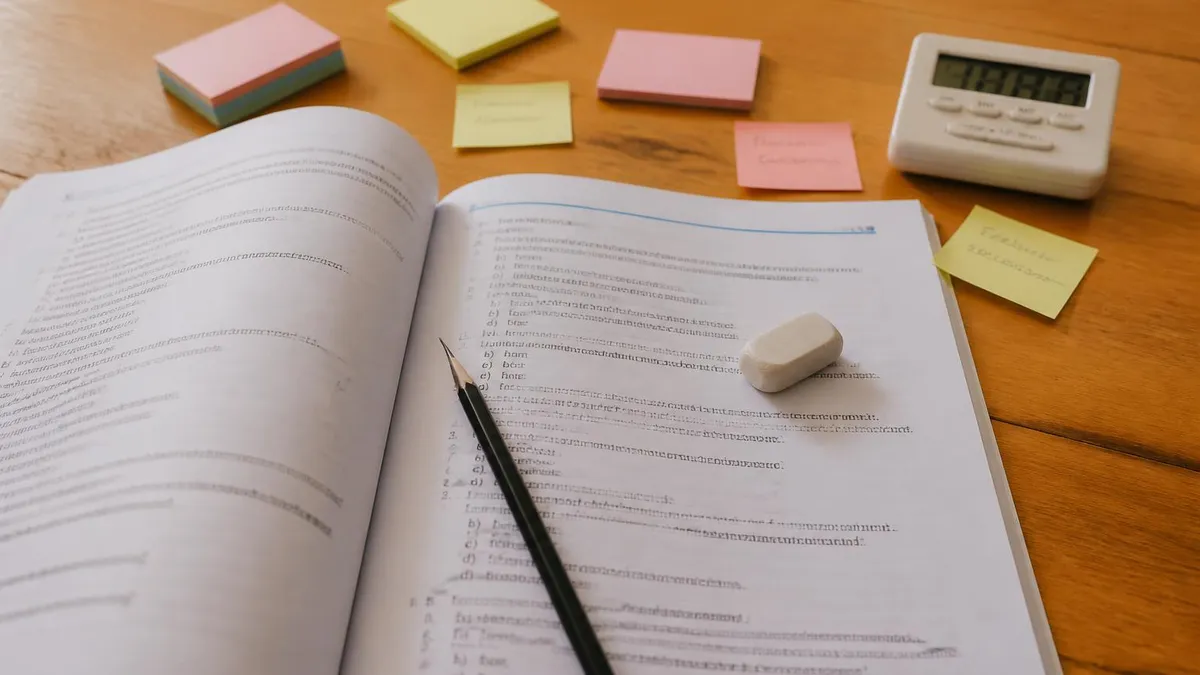
The CSP exam uses a multiple-choice format with questions covering all major domains. Most versions allow 2-3 hours for completion.
Questions test both knowledge recall and application skills. A score of 70-75% is typically required to pass.

CSP: Pros and Cons
- +Structured CSP training builds a solid foundation of skills
- +Multiple training formats available: online, in-person, and hybrid
- +Hands-on practice prepares you for real-world job scenarios
- +Training programs often include job placement assistance
- +Continuing education keeps your skills current with industry changes
- −Training programs can be time-intensive (weeks to months)
- −Quality varies significantly between training providers
- −Costs for comprehensive programs can be substantial
- −Hands-on components may require travel or in-person attendance
- −Self-paced learning requires strong discipline and motivation
Pros and Cons at a Glance
| Pros | Cons |
|---|---|
| Structured CSP training builds a solid foundation of skills | Training programs can be time-intensive (weeks to months) |
| Multiple training formats available: online, in-person, and hybrid | Quality varies significantly between training providers |
| Hands-on practice prepares you for real-world job scenarios | Costs for comprehensive programs can be substantial |
| Training programs often include job placement assistance | Hands-on components may require travel or in-person attendance |
| Continuing education keeps your skills current with industry changes | Self-paced learning requires strong discipline and motivation |
Sample Certified Safety Professional Exam Practice Questions
Try these questions from our free Certified Safety Professional Exam practice tests. The correct answer and an explanation follow each question.
A maintenance building's ceiling was hit by the bucket of an excavator being used to remove a tank from the building's front. The maintenance building's front roof partially fell in. An investigation into this incidence is required as soon as it's safe to do so. What is the first step in the study of the incident?
- A. Conduct a cause analysis
- B. Interview witnesses
- C. Make corrective recommendations
- D. Secure and document the scene
Answer: D. Secure and document the scene
Explanation: The first step in an incident investigation is to secure and document the scene. This involves ensuring that the area is safe and that no further harm can come to people or property. Once the area is secured, it is essential to document the scene by taking photographs or video footage of the incident site and any relevant evidence, such as damaged equipment or structures.
Which class of fire involves energized electrical equipment?
- A. Class A
- B. Class B
- C. Class C
- D. Class D
Answer: C. Class C
Class C fires involve energized electrical equipment and require non-conductive extinguishing agents to prevent electrocution risk.
Which standard provides OSHA's general guidelines for ergonomics programs, though it was withdrawn in 2001?
- A. 29 CFR 1910.900
- B. OSHA Ergonomics Program Standard (2000)
- C. ANSI Z-365
- D. NIOSH Publication 97-141
Answer: B. OSHA Ergonomics Program Standard (2000)
OSHA's Ergonomics Program Standard was published in 2000 and provided comprehensive ergonomics program requirements, but Congress voted to withdraw it in March 2001.
Which federal law in the U.S. requires facilities that store or release hazardous chemicals to report them to state and local emergency planning committees?
- A. RCRA (Resource Conservation and Recovery Act)
- B. CERCLA (Superfund)
- C. EPCRA (Emergency Planning and Community Right-to-Know Act)
- D. TSCA (Toxic Substances Control Act)
Answer: C. EPCRA (Emergency Planning and Community Right-to-Know Act)
EPCRA (SARA Title III) requires facilities to notify local emergency planning committees about hazardous chemical inventories and report accidental releases.
Take the full Certified Safety Professional Exam practice test


Start Your CSP Prep Today
The CSP certification opens doors — better roles, higher salaries, and professional credibility that sets you apart. But it's not a credential you can wing. You need a real plan, consistent effort, and honest self-assessment along the way.
Start with your weak domains. Take a diagnostic practice test, see where you stand, and build your study schedule around the gaps. Use our Certified Safety Professional exam guide to understand the full scope of what's tested before you dive into any single study resource.
Practice tests on this site are free and organized by domain — use them to measure your progress as you work through your prep course. The more exam-like your practice, the more confident you'll feel when the real test begins. Good luck.
About the Author

Educational Psychologist & Academic Test Preparation Expert
Columbia University Teachers CollegeDr. Lisa Patel holds a Doctorate in Education from Columbia University Teachers College and has spent 17 years researching standardized test design and academic assessment. She has developed preparation programs for SAT, ACT, GRE, LSAT, UCAT, and numerous professional licensing exams, helping students of all backgrounds achieve their target scores.