
Crime Scene Investigator (CSI): The Real Career Behind the TV Badge 2026 October
Become a crime scene investigator: real CSI duties, education, certifications, salary ranges, top agencies, and how to break in (2026 October guide). ✅
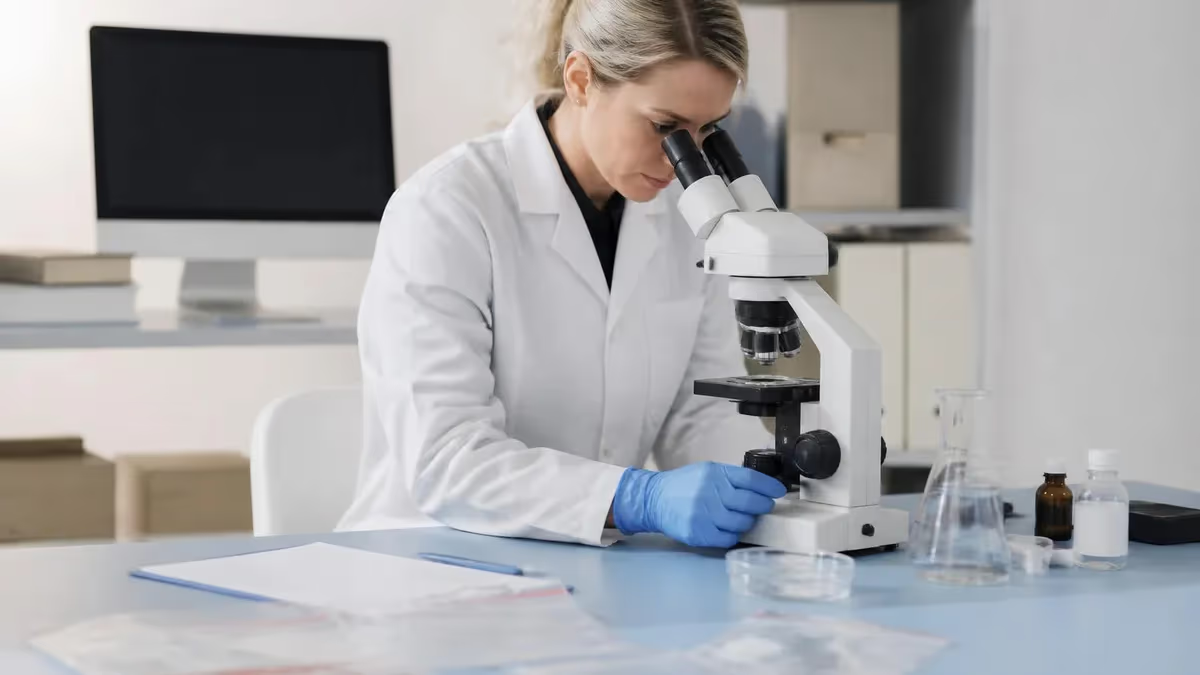
So you want to be a crime scene investigator. Maybe you binge-watched CSI, Forensic Files, or Bones, and now you can't stop thinking about the gloves, the cameras, the scene tape. Good news: the job is real, the work matters, and the field is hiring. Less-good news: it doesn't look much like TV. The lab tech who runs DNA in a glass tower at 3 a.m. wearing stilettos? That's a different person. The detective who corners the suspect in interrogation? Also a different person.
This guide is the straight version of the crime scene investigator job, end to end. We'll walk through what a real CSI does in 2026, the two main hiring paths (sworn vs civilian), what you study, what you earn, where you work, and how to actually get hired. Whether you're a high-school senior, a current officer eyeing a transfer, or a working scientist looking for hands-on field work, you'll leave with a clear plan and a realistic picture of the trade-offs involved.
The field exists because evidence has to be collected by someone who knows what they're doing. Mishandle a swab and you've contaminated DNA. Miss a print on a doorframe and the case stalls. Photograph a scene poorly and the jury never sees what you saw. CSIs sit at the front of every criminal case, and the quality of their work shapes everything that comes after — lab analysis, courtroom testimony, conviction, acquittal, closure for a family. That responsibility is the appeal and the weight of the work all at once.
Quick facts: A crime scene investigator (CSI), sometimes called a forensic technician or crime scene technician, documents scenes, collects physical evidence, and protects chain of custody. Median pay sits in the $55,000–$75,000 range with seniors clearing $100k. Expected job growth is roughly 14% through 2032 (Bureau of Labor Statistics). Most postings want a bachelor's in forensic science, biology, chemistry, or criminal justice with a science minor.
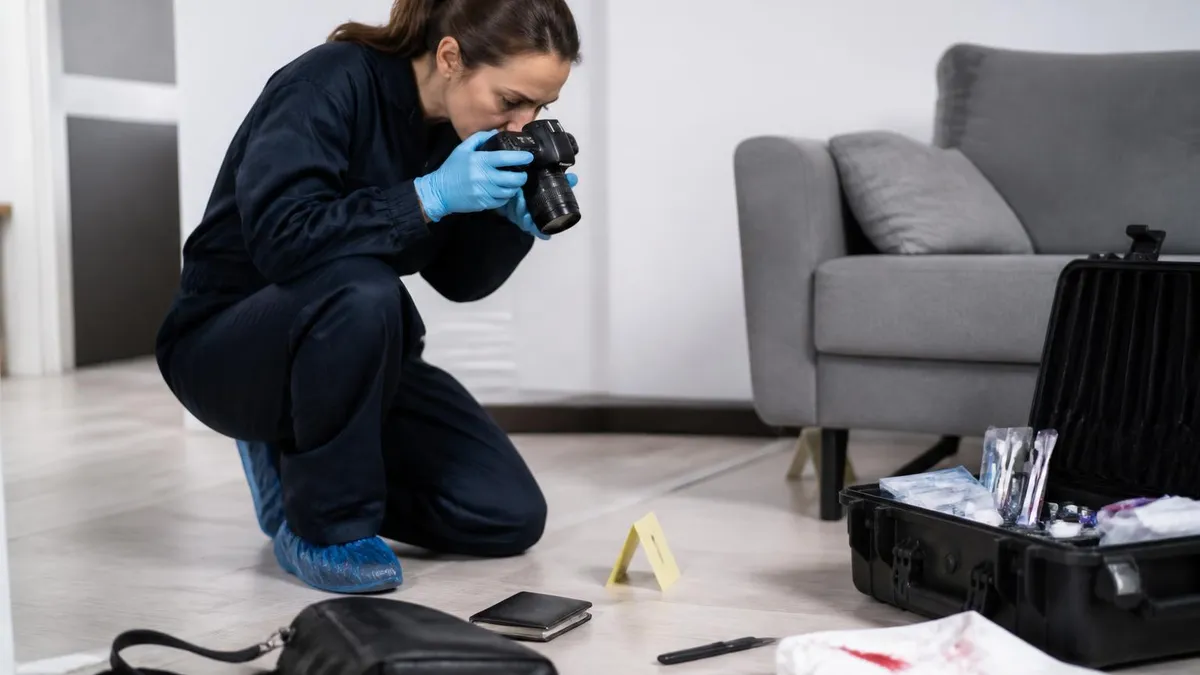
Let's start with the actual duties, because almost every misconception starts here. A CSI does not run DNA in the lab, doesn't (usually) interview suspects, and doesn't make arrests. What they do do is arrive at a scene, secure it, photograph and sketch it, identify and collect every relevant piece of physical evidence, package it correctly, document the chain of custody, transport it to the lab or property room, and write a careful report. Months later they may put on a suit and testify about what they did and what they found.
Read the CSI Crime Scene Investigator Test guide if you want to preview the kind of evidence-handling and crime-scene-management questions agencies and certification boards ask. The questions you'll see there mirror what working CSIs deal with on a Tuesday afternoon — chain of custody disputes, photo log gaps, packaging the wrong substrate for DNA preservation, sketching to scale when the scene won't cooperate.
Crime Scene Investigator: Numbers That Matter
One thing that surprises new CSIs is how much of the work is paper. Or, in 2026, digital paperwork. Every photo gets logged, every swab gets tagged, every box of evidence gets a sealed signature with date, time, and recipient. If chain of custody breaks, that evidence may not make it into trial. Sloppy documentation can sink a case you spent eight hours on your knees collecting in the rain. The single most common mistake new CSIs make isn't a bad photo or a missed print — it's a logbook gap that defense counsel finds twelve months later in discovery.
You'll also learn that scenes don't wait. They degrade. Rain washes away tire impressions. Wind moves trace fibers. A neighbor walks through a backyard. Sunlight breaks down biological material. The first hour at a scene is when you make decisions you can't take back: what to photograph first, where to step, what to seize before it disappears. Senior CSIs talk about "reading" a scene like a book — figuring out what happened by where things landed — and that intuition only comes from hundreds of scenes worked under good supervision.
CSI vs Forensic Scientist vs Detective: Who Does What
- Where: On-scene — homes, roadsides, businesses, outdoor scenes
- What: Documents, photographs, collects, packages physical evidence
- Tools: Camera, prints kit, swabs, evidence bags, measuring kit
- Typical degree: Forensic science, biology, chemistry, or criminal justice
- Authority: Civilian: none. Sworn: full police powers.
- Where: Crime lab — DNA, toxicology, firearms, trace, digital
- What: Analyzes the evidence the CSI brings in
- Tools: Microscopes, sequencers, mass spectrometers, comparison scopes
- Typical degree: Bachelor's or master's in chemistry, biology, biochemistry
- Authority: None — purely scientific role
- Where: Office, scenes, interview rooms, court, the street
- What: Builds the case — interviews, warrants, suspects, arrests
- Tools: Case files, interview techniques, surveillance, informants
- Typical degree: Police academy + patrol experience; degree often optional
- Authority: Full sworn-officer arrest powers
In small departments these roles can blur. A rural sheriff's deputy might process the scene in the morning, drive evidence to the state lab in the afternoon, and write an arrest affidavit by dinner. In a big metro agency the lines are sharp: CSIs work the scene, scientists work the bench, detectives work the case, and they all meet at trial. The blur isn't always bad — small-town generalists develop deeper case-building skills than big-city specialists — but it does change what "a CSI job" means depending on where you live and which agency hires you.
The hierarchy at a major scene usually goes: first patrol officer secures the perimeter, the supervising sergeant takes scene command, detectives arrive to begin investigation, and CSI arrives to begin processing. Big scenes (homicides, officer-involved shootings, mass-casualty events) bring in additional resources: the medical examiner's death investigators, state crime lab field teams, federal agencies if there's a jurisdictional hook. Knowing your place in that pecking order is part of being a competent CSI.
Three Big Choices in a CSI Career
Sworn CSI: a police officer (or deputy, or trooper) assigned to the crime scene unit. You went to the academy first, worked patrol, then applied for the unit. You carry a firearm, you have arrest powers, and you may rotate back to patrol or up to detective. Pay tracks the agency's officer scale, and you get the same pension and benefits.
Civilian CSI: hired directly into evidence work, usually because you have a science degree and steady hands. No arrest powers, no firearm, no patrol rotations — just the scene work, day in and day out. Pay scales tend to be lower than sworn at the start, but you stay specialized.
Which agencies use which? Larger metros (LAPD, Houston, Phoenix) lean civilian. Mid-size and rural departments often use sworn officers because budgets are tight and the same person doing CSI also patrols. The FBI Evidence Response Team is sworn (special agents), but supporting forensic specialists are civilian.
Now for the path. Most people picture a single line — degree, application, hired. The reality forks early, depending on whether you're aiming sworn or civilian. Civilian candidates lean hard on academic credentials and internship experience. Sworn candidates get hired as officers first and apply internally to the CSI unit later, sometimes years down the road. Both paths land you in the same trucks, but the journey is structured very differently and the daily life of a sworn vs civilian CSI continues to differ for the rest of your career.
If you're still in high school, the smartest move is to start volunteering or doing ride-alongs with your local department. Many agencies let teens shadow officers under explorer programs, and a few offer civilian "junior CSI" workshops. The point isn't the credential — it's getting a realistic look at the work before you sink four years and tens of thousands of dollars into a degree. The biggest reason CSI hires wash out in their first two years is that the actual job didn't match the imagined job.
How to Become a Crime Scene Investigator (Civilian Path)
Step 1: Earn the right degree
Step 2: Internship at a crime lab or PD
Step 3: Apply for entry-level forensic tech roles
Step 4: Survive the background check
Step 5: Field training (3–12 months)
Step 6: Pursue IAI certification (years 1–3)
If you're going the sworn route, the order flips: police academy first, patrol experience next, then internal application to CSI. Plan on three to five years in patrol before most agencies will let you transfer. While you're on patrol, take continuing-education courses in evidence collection, photography, and crime scene reconstruction. Volunteer to be the patrol officer who preserves the scene before CSI arrives. Show up early to calls. Document well. That kind of resume gets noticed when the unit posts an opening, and the supervising lieutenant remembers names.
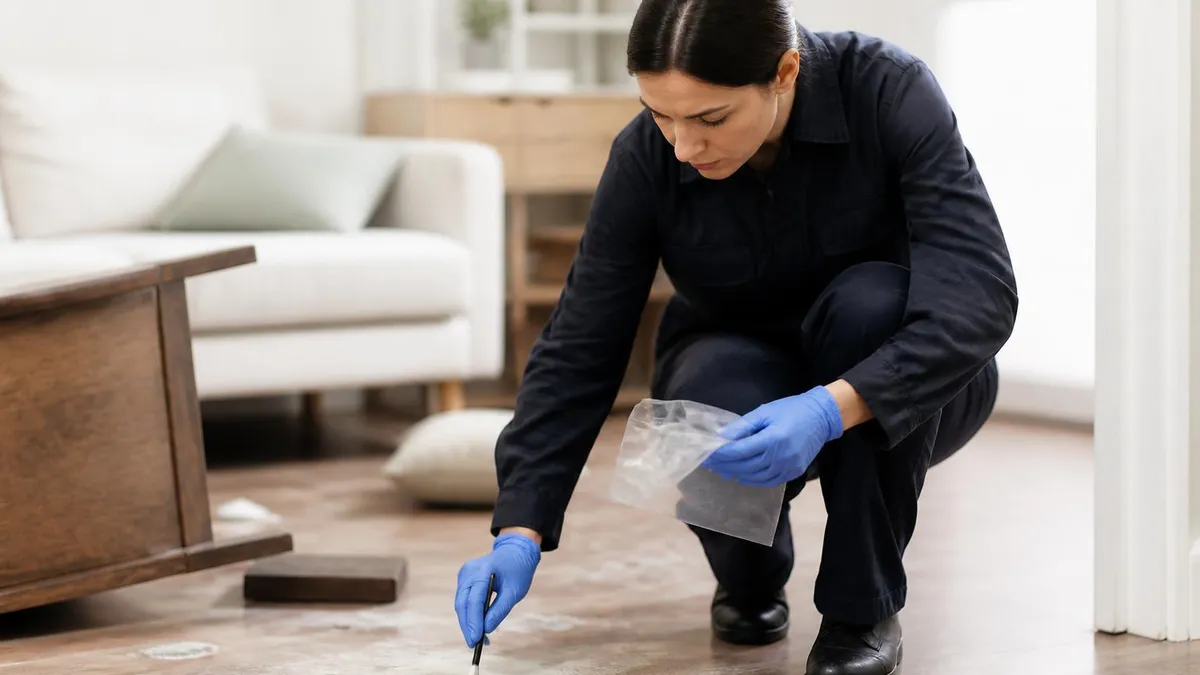
Either path eventually runs you through the same coursework that working CSIs find genuinely useful. You don't have to take all of it in school — many agencies offer in-house training too — but a candidate who already understands chain of custody, probability, and Daubert is a candidate who needs less hand-holding in field training. Below is the short list of subjects that pay back over your entire career.
Coursework That Actually Helps
- ✓General and organic chemistry (DNA work, drug ID, trace evidence)
- ✓Biology and human anatomy (decomp, blood, tissue)
- ✓Forensic photography (scene and macro work)
- ✓Statistics (you'll testify about probabilities)
- ✓Criminal procedure and evidence law (Daubert, chain of custody)
- ✓Public speaking (you will testify, often)
- ✓Spanish or another second language (huge bonus in many regions)
- ✓Computer forensics basics (phones and dashcams are everywhere now)
Once you're in, you'll discover that day-to-day life depends entirely on what comes through the radio. Some shifts are pure paperwork — typing reports, prepping for trial, restocking the kit, recharging camera batteries. Other shifts you don't sit down for ten hours straight, eat lunch one-handed in the truck, and don't see your kids until tomorrow. CSIs who stay in the job long-term find a way to make peace with that unpredictability; those who can't, drift out within three to five years. Here's what a busy day on a metro CSI unit can actually look like.
A Day in the Life: Sample CSI Shift
06:00 — On-call rotation begins
07:45 — Callout: residential burglary
10:30 — Back at the office
11:15 — Callout: traffic fatality
15:00 — Lunch (in the truck)
15:45 — Callout: aggravated assault
18:00 — Court prep
18:45 — Shift ends, on-call continues
None of that is an exaggeration. Ask any working CSI about their kit and you'll get a tour: a Pelican case heavier than a toddler, a backup camera body, four kinds of fingerprint powder, biohazard suits in two sizes, and yes, a granola bar in the side pocket that's been there since the academy. Most CSIs end up with a personal kit and an agency kit, because nobody wants to be the person who arrives at a scene without spare batteries. Here's the realistic minimum kit you'll see on every working truck in 2026.
What's in a CSI Field Kit
- ✓DSLR or mirrorless camera + macro lens + external flash
- ✓Nitrile gloves (multiple sizes), shoe covers, hair covers
- ✓Paper and plastic evidence bags + tamper-evident tape
- ✓Latent print powders (black, white, magnetic, fluorescent) + brushes
- ✓Lift tape, hinge lifters, gel lifters
- ✓Tape measure, folding ruler, photographic scales
- ✓Sketch pad, clipboard, scene notes template
- ✓Tweezers, scalpels, forceps for trace recovery
- ✓DNA collection kit: sterile swabs, distilled water, swab boxes
- ✓Tyvek suit, N95/respirator, eye protection for biohazard scenes
- ✓GPS or mapping app, voice recorder, body cam (if sworn)
- ✓Spare batteries, memory cards, and chargers — always two of everything
Now to the question everyone asks: how much does a crime scene investigator make? The honest answer is, it depends — on the agency, the city, sworn vs civilian, and your years of experience. A federal forensic examiner in DC and a small-town civilian CSI in rural Ohio might both have "crime scene investigator" on their business card and earn double-digit-thousand-dollar gaps in annual pay. Below is a realistic 2026 snapshot for the United States, organized by the career stages most CSIs actually move through.
Crime Scene Investigator Salary by Career Stage
- Range: $40,000 – $55,000/yr
- Typical title: Crime Scene Investigator I, Forensic Technician I
- Notes: Wide spread — rural sheriff vs metro PD can differ by $15K
- Range: $55,000 – $75,000/yr
- Typical title: CSI II, Senior Forensic Tech, Lead Specialist
- Notes: IAI cert + a specialty (latent prints, BPA) lifts you to the top of the band
- Range: $75,000 – $100,000+/yr
- Typical title: CSI III, Unit Supervisor, Crime Scene Manager
- Notes: Includes scheduling, training oversight, court-room expert testimony
- Range: $80,000 – $120,000+/yr
- Typical title: Forensic Examiner, Special Agent (ERT)
- Notes: GS-9 to GS-13 scale; locality pay adds 15–35% on top
Highest-paying states, predictably, are the ones with the highest cost of living: California, New York, New Jersey, Massachusetts, and Washington. A CSI II in Los Angeles County earns roughly what a CSI III earns in rural Alabama, but the rent in LA will eat the difference and then some. If you want top-of-band pay you'll need to live somewhere expensive enough to spend it. For more career-prep practice, grab the CSI practice test PDF and the CSI practice test video answers walk-throughs — both are useful before applying or sitting an internal promotional exam.
Don't forget benefits. Government CSI jobs typically include defined-benefit pensions (rare in the private sector now), full medical and dental, generous PTO, and tuition reimbursement for related coursework. Add overtime — and CSIs run a lot of overtime, since major scenes don't stop at quitting time — and total compensation often runs 25–40% above the base salary on the posting. That's the number to compare when you're weighing a CSI offer against a private-sector job that lists a higher headline figure.
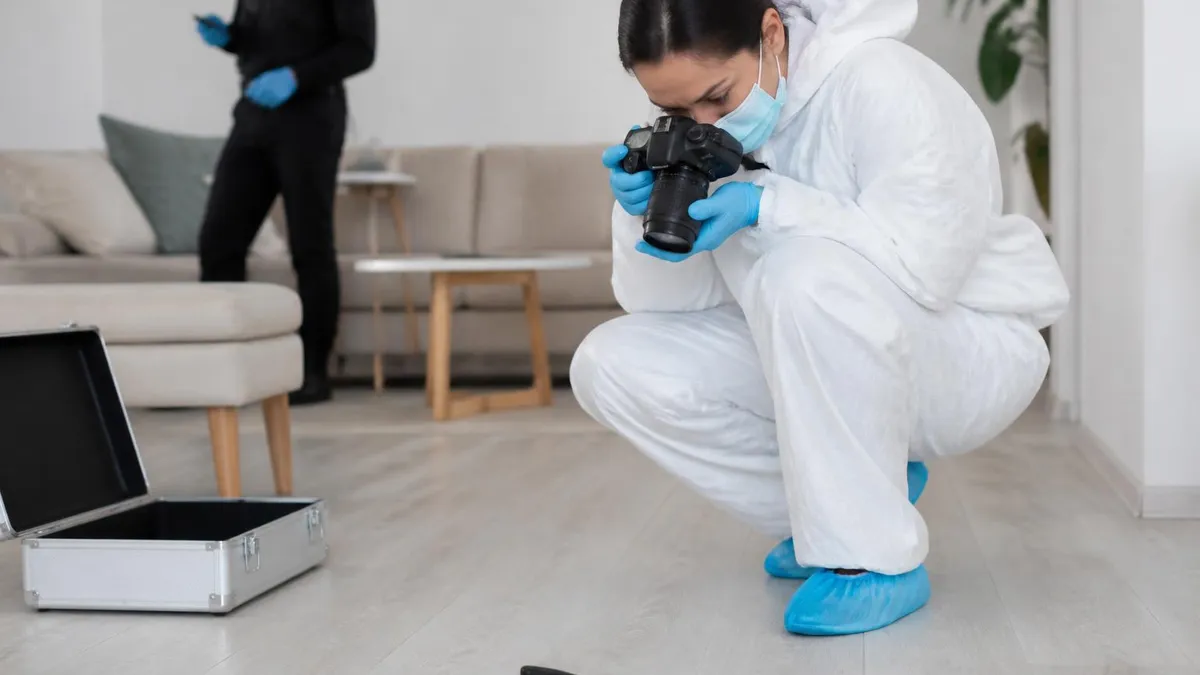
Certifications are the single biggest professional differentiator after your first couple of years. The International Association for Identification (IAI) is the dominant credentialing body in the US for crime scene work. The American Board of Criminalistics (ABC) does the same for lab analysts. Most agencies pay for the exam and reimburse the renewal cycle if you stay employed. Civilian CSIs who collect IAI certifications find that promotion comes faster and lateral moves to better-paying agencies become realistic. Sworn CSIs use IAI certs to argue for specialty pay and to qualify for instructor positions.
CSI Certifications That Carry Weight
- Eligibility: 1 year of crime scene experience + 48 hours of crime scene coursework
- Format: Written exam + work history review
- Renewal: Every 5 years (continuing-ed hours)
- Eligibility: 3 years of crime scene experience + 96 hours of training
- Format: Written + practical (mock scene)
- Renewal: Every 5 years
- Eligibility: 5 years of scene work + advanced reconstruction coursework
- Format: Comprehensive written + research project
- Renewal: Every 5 years
- Eligibility: 2 years of full-time latent print examination
- Format: Written exam + practical comparison test
- Renewal: Every 5 years (proficiency tests)
For investigators looking at digital and database tools, the NCIC test covers the federal records system you'll query daily, and the CFCS practice test PDF drills financial-crime concepts that increasingly cross into traditional CSI work — think laundering scenes, fraud searches, document examination at white-collar arrests. Even if you never plan to specialize, the basic literacy in financial forensics shows up on more scenes every year as cybercrime and traditional crime keep merging.
Heads up: The so-called "CSI effect" describes how prime-time forensic shows have shifted juror expectations. Real DNA results take 4–12 weeks (sometimes longer in backlogged labs), most scenes never yield usable prints, and not every case can be solved with a swab. As a working CSI you'll be asked in court why you didn't recover DNA, why a print didn't match, why the lab took six months. Your job is to explain real forensic science to people whose education came from a 43-minute drama with commercial breaks.
Speaking of TV vs reality, this is worth slowing down on, because it's the biggest source of new-CSI disappointment. Recruits who joined because of CSI: Miami often don't last. Recruits who joined after a ride-along and a few hard conversations with a working investigator usually do. The TV-vs-reality gap also matters in court. A defense attorney who senses a juror is a forensic-show fan will press you on every glamorous procedure they didn't see at trial.
TV vs Real Crime Scene Work
TV: DNA results in 22 minutes. Latent print hit pings within seconds.
Reality: DNA averages 4–12 weeks at a state lab. Backlogged labs can take 6+ months. AFIS print searches return candidates, not confirmations — every "hit" still requires manual side-by-side comparison by a certified examiner.
None of that is meant to scare you off. The core appeal is real: you handle physical evidence that helps decide whether a case proceeds. You're the person who finds the print on the doorframe, the casing in the gutter, the DNA on the bottle. When prosecutors win a conviction or, just as importantly, when defenders use your photos to clear someone wrongly accused, your work is at the center of it. That's not nothing.
Veteran CSIs talk about the moments that keep them in the job: a child reunited because of a print, an exoneration after a re-examined kit, a cold case cracked because someone packaged a piece of fabric correctly twenty years earlier. The job rewards people who find satisfaction in slow, careful, accurate work — and quietly punishes those who cut corners.
Crime Scene Investigator Pros and Cons
- +Meaningful work that directly helps victims and their families get answers
- +Variety — every scene is genuinely different from the last
- +Strong job security; the field grows faster than most government work
- +Solid benefits, pension, and healthcare when working for any government agency
- +Hands-on, science-based work that doesn't keep you behind a desk
- +Clear advancement ladder through certifications and specializations
- +Court testimony makes you a more skilled communicator over time
- −Emotionally heavy — child cases, fatalities, and violence don't get easier
- −On-call hours mean disrupted nights, weekends, and holidays
- −Physical demands: heavy gear, awkward positions, hot/cold scenes for hours
- −Court testimony is high-stakes; defense attorneys aim to discredit your work
- −Exposure to biohazards, chemicals, and sometimes dangerous environments
- −Bureaucratic frustrations — backlogged labs, slow approvals, evidence policy fights
- −Salary at entry level is lower than the science degree you needed to get there
Pros and Cons at a Glance
| Pros | Cons |
|---|---|
| Meaningful work that directly helps victims and their families get answers | Emotionally heavy — child cases, fatalities, and violence don't get easier |
| Variety — every scene is genuinely different from the last | On-call hours mean disrupted nights, weekends, and holidays |
| Strong job security; the field grows faster than most government work | Physical demands: heavy gear, awkward positions, hot/cold scenes for hours |
| Solid benefits, pension, and healthcare when working for any government agency | Court testimony is high-stakes; defense attorneys aim to discredit your work |
| Hands-on, science-based work that doesn't keep you behind a desk | Exposure to biohazards, chemicals, and sometimes dangerous environments |
| Clear advancement ladder through certifications and specializations | Bureaucratic frustrations — backlogged labs, slow approvals, evidence policy fights |
You'll also need to clear a thorough background check. Agencies look for honesty and integrity above almost everything else, because a CSI whose credibility can be impeached on the stand is a CSI whose cases fall apart. Past drug use, large debts, and dishonesty during the application are the most common disqualifiers. Be upfront on the form — they'll find it anyway, and the lie is what kills your candidacy. Old marijuana use is forgiven by most agencies in 2026 (rules vary by state); harder drug history within the last several years usually isn't.
Hiring panels run scenario-based interviews that are part technical and part character. Expect to walk through a hypothetical scene out loud — what you'd photograph first, how you'd handle a contaminated piece of evidence, what you'd do if a detective wanted you to skip a step. Your answers test both your competence and whether you'll stand your ground when an investigator with more rank pushes you to cut corners. The right answer is almost always: document it, follow the procedure, and let the report tell the story.
What Hiring Panels Actually Look For
- ✓Solid science fundamentals (chem, bio, anatomy)
- ✓Photography skill — show a portfolio if you have one
- ✓Clear, organized written reports (writing samples help)
- ✓Calm under pressure — they will run scenario-based interviews
- ✓Attention to detail — sloppy applicants get cut early
- ✓Integrity and honesty (background check sensitivity)
- ✓Physical capability — you'll lift heavy kits and work outdoors
- ✓Comfort with shift work, on-call rotations, and holidays
- ✓Evidence of continuing self-education (workshops, IAI student membership)
Cost of entry is a fair question. A four-year forensic science degree at an in-state public university runs roughly $40,000–$80,000 in tuition (less with scholarships, grants, and FEPAC-program aid). Out-of-state and private programs can cross $150,000. The math gets better when you remember that most agencies offer tuition reimbursement once you're hired, and federal student-loan forgiveness applies to many government jobs (Public Service Loan Forgiveness, 10 years of qualifying payments). For sworn candidates, the academy is paid by the agency once you're hired, and many departments cover associate or bachelor's coursework while you're on the job.
Big employers worth targeting (in no particular order): NYPD Crime Scene Unit, LAPD Scientific Investigation Division, Houston Forensic Science Center, Phoenix PD, Las Vegas Metro, Miami-Dade, Cook County Sheriff. State labs: California DOJ, Texas DPS, Florida FDLE, Virginia DFS. Federal: FBI Evidence Response Team (extremely competitive — most members come from special agent ranks first), ATF, DEA, USPIS, and military investigative services. Apply to several, expect a long hiring timeline (six to twelve months is normal), and don't be discouraged by your first rejection.
Continuing education isn't optional once you're in the job. Most agencies require 40+ hours a year, and IAI certifications need re-cert every five years through documented CE hours and proficiency testing. Plan to attend the IAI annual conference at least every other year — it's where the field talks shop, posts jobs, and quietly recruits. Smaller regional conferences (state IAI chapters, MAFS, NEAFS) are cheaper and equally useful for building the professional network that makes the second half of your career easier.
Sample Crime Scene Investigator Practice Questions
Try these questions from our free Crime Scene Investigator practice tests. The correct answer and an explanation follow each question.
A crime scene investigator is on the witness stand being cross-examined. The defense attorney asks, "Is it possible that the unidentified latent prints at the scene were left by someone else after the crime was committed but before you arrived?" Which is the most appropriate response?
- A. "No, that is impossible because the scene was secured."
- B. "Yes, that is a possibility."
- C. "That is a question for the lead detective, not for me."
- D. "It is highly unlikely, given the timeline provided by the police."
Answer: B. "Yes, that is a possibility."
The role of the CSI is to testify about facts and conditions they personally observed and documented. The investigator cannot know for certain what happened before their arrival, so stating something is "impossible" is an absolute that can be easily challenged. The most accurate and professional response is to acknowledge the possibility without speculating on its likelihood, as that would be outside the scope of their direct knowledge.
An investigator is documenting a crime scene. Which of the following is NOT a fundamental method for crime scene documentation?
- A. Note-taking
- B. Sketching
- C. Collecting witness testimonials on a personal recording device
- D. Photography
Answer: C. Collecting witness testimonials on a personal recording device
While witness statements are crucial to an investigation, collecting official testimonials is typically done through formal interviews, not on a personal recording device as part of the initial scene documentation. The three core, universally accepted methods for documenting the physical crime scene are note-taking, photography/videography, and sketching/diagramming.
What should be included in a crime scene investigator’s field notes?
- A. Observations, evidence descriptions, and witness statements
- B. Personal opinions of the investigator
- C. Unverified information from social media
- D. Only descriptions of suspects
Answer: A. Observations, evidence descriptions, and witness statements
Field notes are critical for documenting immediate observations, detailed descriptions of evidence, and initial witness statements at a crime scene. These notes serve as the primary, contemporaneous record of the investigation, ensuring accuracy and providing a foundational basis for official reports and court testimony. They capture raw, unfiltered information as it is discovered.
A crime scene investigator is processing a large outdoor field where a victim was found. Which search pattern would be most effective for ensuring thorough coverage by two or more investigators?
- A. Spiral search
- B. Wheel search
- C. Zone search
- D. Grid search
Answer: D. Grid search
The grid search method is highly effective for large outdoor areas as it involves searching the area twice. Investigators first traverse the scene in parallel lines (like a strip search) and then repeat the search from a perpendicular direction, creating a grid. This double coverage significantly reduces the chance of missing evidence.
Crime Scene Investigator Questions and Answers
About the Author

Educational Psychologist & Academic Test Preparation Expert
Columbia University Teachers CollegeDr. Lisa Patel holds a Doctorate in Education from Columbia University Teachers College and has spent 17 years researching standardized test design and academic assessment. She has developed preparation programs for SAT, ACT, GRE, LSAT, UCAT, and numerous professional licensing exams, helping students of all backgrounds achieve their target scores.
Join the Discussion
Connect with other students preparing for this exam. Share tips, ask questions, and get advice from people who have been there.
View discussion (8 replies)