
Construction Project Manager Interview Questions: Complete Prep Guide for 2026 September
Ace your construction project manager interview 🎯 — top questions, expert answers, salary data, and free practice tests for 2026 September.
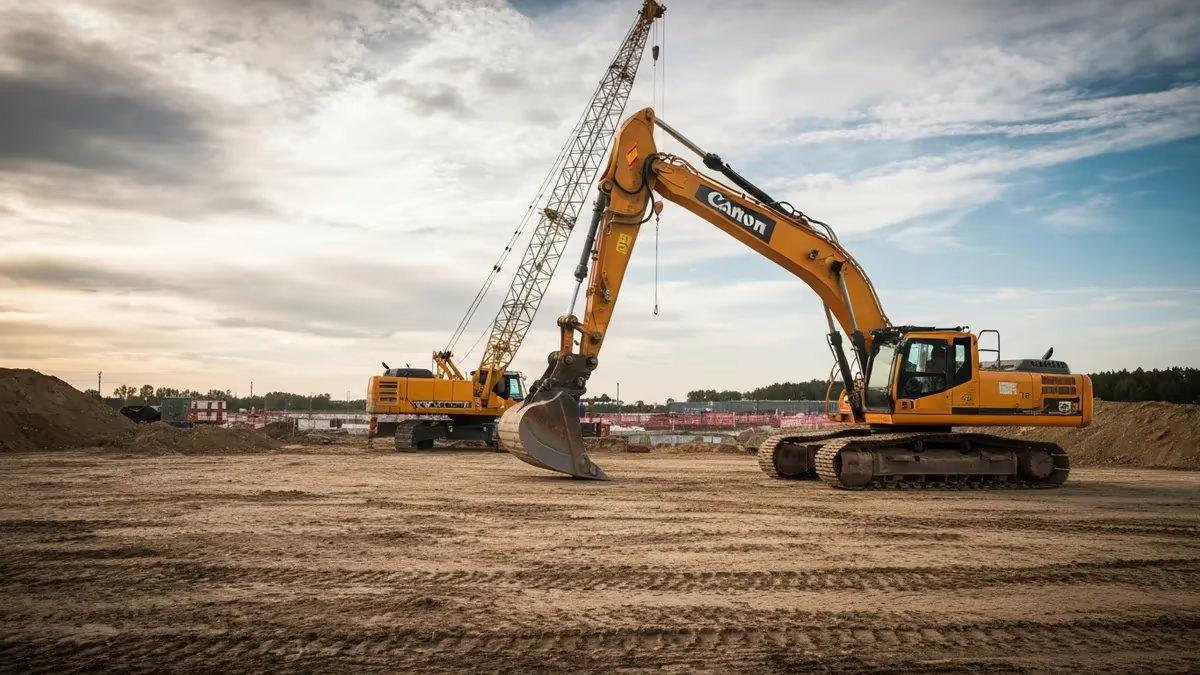
Construction project manager interview questions cover a broad range of competencies — from technical blueprint knowledge and budget control to leadership under pressure and conflict resolution on the job site. Landing a role in construction management is competitive, and hiring panels at general contractors, developers, and public agencies use structured interviews to separate candidates who truly understand the craft from those who simply look good on paper. Preparing thoroughly for these questions is the single highest-leverage action you can take before your interview date.
The construction management field employed roughly 475,000 managers across the United States as of the most recent Bureau of Labor Statistics data, and demand is expected to grow by 11 percent through the early 2030s — well above the national average for all occupations. With construction manager vacancies climbing in every region, employers are increasingly selective, asking multi-part behavioral questions that require candidates to demonstrate measurable results, not just describe job duties they once held.
Understanding what interviewers are actually measuring helps you craft stronger answers. Most construction project manager interview questions target five core domains: project planning and scheduling, cost and contract management, safety compliance, team coordination, and client communication. A strong candidate weaves specific numbers — square footage, budget totals, schedule variance percentages — into every answer, making accomplishments concrete and verifiable rather than vague and forgettable.
Behavioral questions using the STAR format (Situation, Task, Action, Result) are now standard at virtually every mid-size and large construction firm. Interviewers ask you to describe a time you recovered a project that was behind schedule, navigated a subcontractor dispute, or identified a design conflict before it became a costly field problem. Having three or four polished STAR stories ready lets you adapt them to whatever specific question the panel throws at you.
Technical questions test your working knowledge of scheduling software such as Primavera P6 and Microsoft Project, your ability to read and interpret construction drawings, your familiarity with contract types (lump-sum, GMP, cost-plus), and your understanding of lean construction principles like pull planning and last-planner system meetings. Weak answers in these areas signal to interviewers that your experience is more supervisory than hands-on, which can eliminate you from consideration even if your resume looks strong.
Salary expectations are another interview topic candidates frequently underestimate. The average construction project manager salary in the United States sits between $95,000 and $130,000 depending on market, sector, and years of experience — and knowing this range going in lets you negotiate with confidence rather than accepting an offer below market. Researching regional benchmarks and recent project complexity trends before the interview signals business acumen that senior hiring managers respect.
This guide walks you through every category of construction project manager interview question you are likely to face, provides model answers with the specific language that resonates with experienced evaluators, and links you to practice resources that sharpen the technical knowledge required to pass both the interview and downstream credentialing exams. Work through each section methodically, practice aloud, and use the free quizzes embedded below to reinforce the blueprint and estimating knowledge that frequently appears in technical screening rounds.
Construction Project Management by the Numbers

Key Interview Question Categories Every Candidate Must Master
Expect questions on how you build a CPM schedule, manage float, and recover lost time. Interviewers want to hear specific software names, milestone tracking methods, and how you communicate delays to owners before they escalate into claims.
Questions probe your ability to manage job cost reports, handle change order negotiations, and forecast final costs accurately. Citing a real example where you brought a project in under budget by a specific dollar amount earns immediate credibility with the hiring panel.
OSHA 30 knowledge, site-specific safety plans, incident investigation procedures, and subcontractor safety prequalification are all fair game. Demonstrate that safety is a leadership responsibility, not just a compliance checkbox you delegate to your superintendent.
Interviewers assess how you run preconstruction meetings, resolve scope disputes, and motivate field crews. Strong answers describe specific conflict scenarios, the resolution steps you took, and the measurable outcome — not just that you are a good communicator.
Owners, architects, inspectors, and community stakeholders all need different communication styles. Candidates who can describe their approach to owner update meetings, RFI turnaround targets, and design team coordination consistently score higher in final-round interviews.
Understanding the construction manager salary landscape helps you position yourself confidently in interviews and salary negotiation conversations. Entry-level construction project managers with one to three years of experience typically earn between $62,000 and $78,000 annually, most commonly in residential and light commercial sectors. At this level, interviewers focus heavily on education, internship experience, and demonstrated ability to read drawings and manage basic RFI logs independently.
Mid-career professionals with five to ten years of experience — especially those holding a PMP or CCM credential — command salaries in the $90,000 to $120,000 range. Construction management salary at this tier is strongly correlated with project value. If you have managed projects exceeding $20 million, saying so explicitly during salary discussions anchors the conversation at a higher figure from the start. Employers in healthcare, infrastructure, and federal contracting pay at the top of this band because regulatory complexity demands more experienced oversight.
Senior project managers and project executives overseeing portfolios or mega-projects often exceed $150,000 base salary, with bonuses tied to project profitability pushing total compensation well above $200,000 in major metro markets like New York, San Francisco, and Chicago. Construction management employment at this level nearly always requires demonstrable experience leading teams of 10 or more staff, managing general contractor self-perform work, and reporting directly to company principals or ownership groups.
Geographic location is a major salary driver. Construction project manager vacancies in high cost-of-living states like California, Massachusetts, and New York pay 20 to 35 percent above the national median. By contrast, markets in the Southeast and Midwest, while growing rapidly, still pay closer to the national average. Understanding this variance matters because interviewers in competitive markets often ask directly about your compensation expectations — and citing national averages when applying in San Francisco, for example, signals that you have not done your homework on local market rates.
Sector also matters enormously. Industrial and heavy civil construction — water treatment plants, highway interchanges, petrochemical facilities — pay at the top of the scale because the technical demands, regulatory oversight, and schedule pressure are significantly greater than residential or retail work. Healthcare construction is another premium sector, given the infection control requirements, occupied facility logistics, and complex mechanical systems involved. Matching your interview examples to the employer's project type is a subtle but powerful signal that you genuinely fit their culture and workload.
Benefits packages in construction project management have evolved considerably. Many firms now offer profit-sharing arrangements, vehicle allowances, phone and tablet stipends, remote work flexibility during preconstruction phases, and continuing education reimbursement for credential maintenance. When interviewers ask about your priorities beyond base salary, articulating interest in professional development funding and mentorship signals ambition and long-term commitment — qualities that distinguish candidates who will grow with the firm from those who will leave after the first pay raise elsewhere.
Preparing for salary negotiation is just as important as preparing for technical questions. Research comparable roles on LinkedIn Salary, the Bureau of Labor Statistics Occupational Employment and Wage Statistics portal, and industry salary surveys published by the Construction Management Association of America. Arriving at your interview with current, credible data transforms what could be an uncomfortable conversation into a professional exchange that most senior interviewers actually respect — and it often results in a higher opening offer.
Interview Strategies by Construction Management Role Level
Candidates applying for assistant or junior project manager roles should anchor every answer to academic projects, internship experience, and any field labor background they have. Interviewers at this level are evaluating learning potential and attitude as much as current knowledge. Demonstrating familiarity with Procore, Bluebeam, and Primavera P6 — even from coursework — signals that you can contribute from day one without months of software onboarding.
Focus on quantifiable outcomes even from small-scale experiences: a capstone project delivered on time, an internship where you tracked 50 RFIs to closure, or a summer job where you helped coordinate material deliveries across three subcontractors. Numbers matter at every career stage. Interviewers remember candidates who say "I helped reduce concrete pour rework by 15 percent by implementing a pre-pour inspection checklist" far longer than those who simply say they "helped improve quality on the project."
Is a Construction Project Manager Career Right for You?
- +Strong and growing demand — construction manager vacancies are rising in every U.S. region
- +Above-average salary with significant upside in senior and specialty sectors
- +Tangible results — you see a physical structure go from drawings to reality
- +Career mobility across residential, commercial, industrial, and infrastructure sectors
- +Multiple credential pathways (PMP, CCM, LEED AP) that accelerate earning potential
- +Entrepreneurial opportunities — many experienced PMs eventually start their own firms
- −Long and irregular hours during critical project phases, including weekends
- −High stress and accountability — budget overruns and schedule delays fall on you
- −Constant travel or extended stays on remote project sites in some sectors
- −Physically demanding environments with exposure to weather and safety hazards
- −Complex stakeholder management requires diplomatic skill and emotional resilience
- −Credential maintenance requires ongoing CEUs and recertification fees every few years
Pros and Cons at a Glance
| Pros | Cons |
|---|---|
| Strong and growing demand — construction manager vacancies are rising in every U.S. region | Long and irregular hours during critical project phases, including weekends |
| Above-average salary with significant upside in senior and specialty sectors | High stress and accountability — budget overruns and schedule delays fall on you |
| Tangible results — you see a physical structure go from drawings to reality | Constant travel or extended stays on remote project sites in some sectors |
| Career mobility across residential, commercial, industrial, and infrastructure sectors | Physically demanding environments with exposure to weather and safety hazards |
| Multiple credential pathways (PMP, CCM, LEED AP) that accelerate earning potential | Complex stakeholder management requires diplomatic skill and emotional resilience |
| Entrepreneurial opportunities — many experienced PMs eventually start their own firms | Credential maintenance requires ongoing CEUs and recertification fees every few years |
Construction Project Manager Interview Preparation Checklist
- ✓Research the company's project portfolio, recent awards, and geographic markets before the interview.
- ✓Prepare three to four STAR-format stories covering budget recovery, schedule delay, team conflict, and safety incident scenarios.
- ✓Know your numbers: memorize the contract value, square footage, and team size for every major project on your resume.
- ✓Practice explaining your scheduling approach — CPM, pull planning, or two-week lookahead — in plain language without jargon.
- ✓Review OSHA 30 standards, especially fall protection, excavation safety, and struck-by hazard protocols.
- ✓Prepare a clear answer to salary expectation questions using current market data for the specific region and sector.
- ✓Confirm your proficiency with Procore, Primavera P6, Bluebeam, and Microsoft Project before claiming expertise.
- ✓Draft three thoughtful questions to ask the interviewer about project pipeline, team structure, and performance metrics.
- ✓Review any relevant credentials you hold (PMP, CCM, OSHA 30) and be ready to discuss your recertification schedule.
- ✓Confirm the interview format in advance — panel, one-on-one, or case study — so you can prepare the right level of detail.
The Candidate Who Cites Numbers Always Wins
Construction hiring managers report that the single most common failure mode in project manager interviews is vague, unmeasurable answers. Candidates who say "I managed a large commercial project" lose to candidates who say "I delivered a $14.2 million office buildout, 11 days ahead of a 22-week schedule, with a final cost 3.4 percent below the GMP." Specific numbers — budget, schedule, team size, variance — transform good stories into compelling proof of competence that interviewers remember and repeat to their hiring committee.
Behavioral interview questions are the format most construction project manager candidates find hardest to prepare for, because the answers must be simultaneously specific, structured, and delivered conversationally under pressure. The STAR method — Situation, Task, Action, Result — gives you a reliable framework, but the framework only works if you populate it with real, detailed, quantified content from your own experience rather than generic scenarios that could have happened to anyone on any project anywhere.
One of the most common behavioral questions is some variation of: "Tell me about a time you had to recover a project that was significantly behind schedule." A weak answer describes the general problem and says you worked extra hours and pushed the team harder.
A strong answer identifies the specific milestone that was at risk (for example, concrete topping slab on level three, blocking the mechanical rough-in by 18 days), describes the recovery plan you developed (accelerating rebar placement by adding a second crew, coordinating concrete pours on consecutive days instead of weekly), and states the measurable outcome (you recovered 14 of the 18 lost days and finished the mechanical rough-in only 4 days behind the revised baseline).
Budget-focused behavioral questions are equally common: "Describe a situation where costs were running over budget and what you did about it." The best answers distinguish between controllable cost overruns (crew productivity, material waste, rework) and owner-directed changes that warrant a change order. Interviewers are specifically listening for whether you understand the difference between eating costs to maintain a relationship versus asserting your contractual right to additional compensation — a distinction that separates project managers who protect company profitability from those who erode margins out of conflict avoidance.
Safety behavioral questions often take the form of: "Tell me about a time you identified an unsafe condition and how you handled it." Effective answers demonstrate that you stopped the work immediately, communicated the hazard clearly to the crew and superintendent, documented the condition, and implemented a corrective action before resuming operations. Interviewers are not just checking that you know the right safety response — they are evaluating your leadership instinct and whether safety is genuinely baked into your management style or merely a policy you recite when asked.
Conflict resolution questions — "Describe a time you had a significant disagreement with a subcontractor or owner" — reveal interpersonal competence. The most effective answers acknowledge the other party's legitimate perspective before describing your resolution approach. Candidates who frame every conflict as an unreasonable subcontractor or a difficult owner signal poor relationship skills. Hiring managers want project managers who can disagree professionally, de-escalate tension before it becomes a formal dispute, and preserve working relationships even when advocating firmly for their company's interests.
Questions about team development and mentorship are increasingly common as construction firms grapple with workforce pipeline challenges. "How do you develop junior project managers on your team?" rewards candidates who describe structured approaches — weekly one-on-ones, stretch assignments, budget report reviews, and cross-training with superintendents — rather than generic statements about being available and supportive. Demonstrating that you actively grow talent makes you a force multiplier for the organization, not just a capable individual contributor.
Finally, many interviewers close with questions about your career vision: "Where do you see yourself in five years?" The strongest answers connect your ambitions to specific things you admire about the firm — their market position, project complexity, training programs, or geographic expansion plans. Expressing genuine interest in growing with this particular organization, rather than reciting a generic ambition to become a senior PM, signals that you have done your research and see a real future at the company — which is exactly the kind of commitment that turns a strong interview into a job offer.
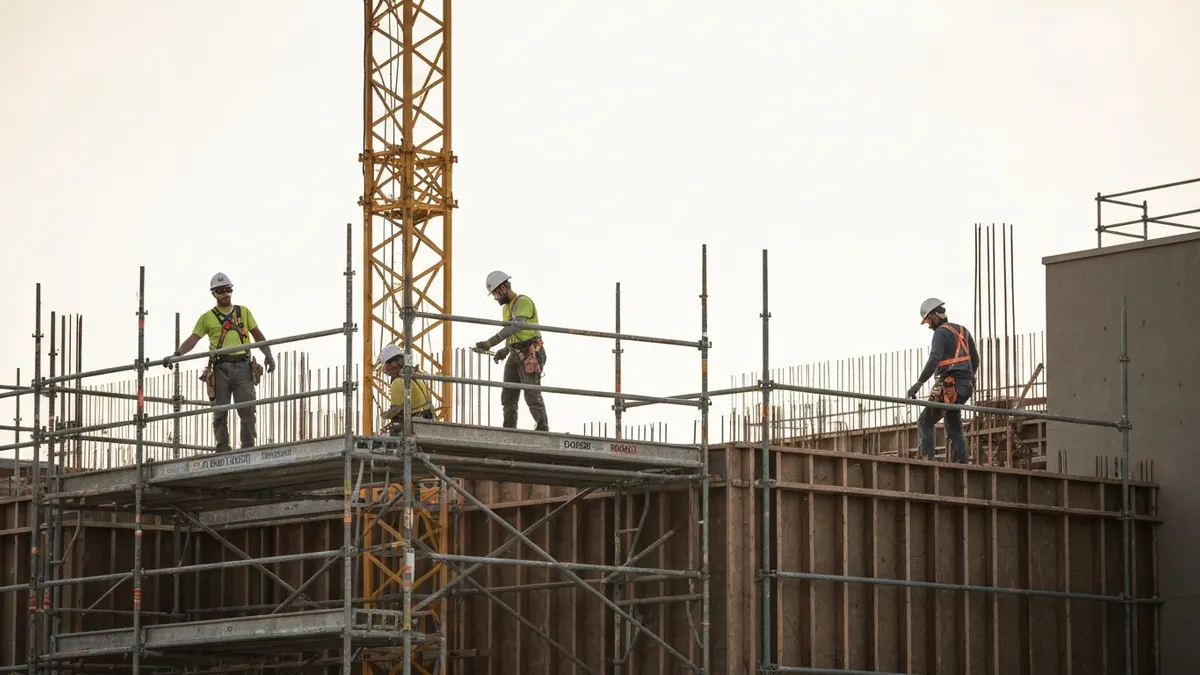
Many firms now include a technical assessment before or after the first interview — asking candidates to review a project schedule for float errors, identify a design conflict in a set of drawings, or calculate a rough quantity takeoff. Candidates who rely solely on behavioral preparation and skip technical review frequently fail this stage even when their interpersonal interview performance was strong. Spend at least 30 percent of your total preparation time on hands-on technical skills using the practice resources linked throughout this guide.
Technical knowledge is the foundation that gives behavioral answers credibility in construction project manager interviews. You can tell a compelling STAR story about recovering a delayed project, but if the follow-up question — "How did you identify the critical path activities to accelerate?" — exposes gaps in your scheduling knowledge, the entire answer falls apart. Interviewers who are experienced construction professionals will probe technical claims aggressively, so your knowledge must be genuine and current, not rehearsed at a surface level.
Scheduling is almost always the most heavily tested technical domain. You should be able to explain the difference between total float and free float, describe how you build a logic network for a new project, and discuss how you use resource-loaded schedules to identify crew conflicts before they hit the field.
If you have used Primavera P6, be prepared to describe a specific schedule you built — how many activities it contained, how you organized work breakdown structure codes, and how you used the schedule during weekly OAC meetings to communicate milestone risk to the owner. Candidates who can cite specific P6 features — activity codes, baseline comparisons, earned value integration — demonstrate hands-on proficiency that generic answers about being "comfortable with scheduling software" never achieve.
Contract knowledge is equally critical. Interviewers at general contractors and owners' rep firms routinely ask about the differences between lump-sum, GMP, and cost-plus contracts; how you manage owner-directed changes under each contract type; and how you structure a claim when an owner refuses a legitimate change order.
Understanding AIA document families — the A101 owner-contractor agreement, A201 general conditions, and G-series forms for applications for payment — signals that you work professionally within contractual frameworks rather than managing projects informally. Candidates for senior roles should also be familiar with design-build delivery and CMAR project structures, as these contract models are growing rapidly across both public and private sector construction.
Blueprint reading and quantity takeoff skills are tested in many firms through a practical exercise rather than a verbal question. You may be handed a set of architectural or structural drawings and asked to identify specific dimensions, locate a detail reference, or perform a basic material takeoff.
Practice this regularly using the construction manager vacancies and related technical resources on this site, which include real-world drawing interpretation exercises that mirror what interviewers actually use during technical screenings. Candidates who can move efficiently through a drawing set — understanding sheet organization, reference bubble systems, and symbol libraries — demonstrate field-level literacy that office-only candidates consistently lack.
Building information modeling (BIM) knowledge is increasingly expected, especially at firms working on complex commercial or institutional projects. You do not need to be a Revit modeler, but you should understand how BIM coordinates design disciplines, how clash detection works in Navisworks, and how model-based quantity takeoffs differ from traditional plan-and-spec estimating. Discussing your experience coordinating BIM review meetings, managing RFI workflows from model conflicts, or using 4D scheduling to visualize construction sequence shows that you are working at the current technological standard of the industry.
LEED and sustainability knowledge has moved from a differentiator to a baseline expectation in many markets. Questions about materials credits, indoor environmental quality requirements, commissioning obligations, and documentation procedures appear regularly in interviews for commercial and institutional projects. If you hold a LEED AP credential, be prepared to discuss a specific project where LEED certification shaped your procurement decisions or affected your construction sequencing. If you do not hold the credential, acknowledge it directly and describe the steps you are taking to earn it — most interviewers respect candidates who are honest about gaps and proactive about closing them.
Pursuing a construction management degree or supplementing your experience with structured technical study — including practice tests, video walkthroughs, and PDF study guides — is the fastest way to fill knowledge gaps before your interview. Employers consistently rank technical competence as the number one hiring factor for mid-career and senior project managers, above interpersonal skills and above academic credentials.
The candidates who invest in active technical review — not just passive reading — consistently outperform their peers in both interview performance and on-the-job results, and that investment signals to hiring managers exactly the kind of professional discipline they want leading their most important projects.
Final interview preparation requires synthesizing everything you have practiced into a confident, coherent performance under real pressure. One of the most overlooked preparation steps is conducting mock interviews — out loud, on video, with a timer running.
Reading your STAR stories silently feels very different from delivering them to a live panel of experienced construction professionals who are simultaneously evaluating your eye contact, your pacing, your vocabulary, and your composure when they push back on your answers. Record yourself and watch the playback critically, noting where you lose momentum, where your answers run too long, and where you use filler language that undermines your credibility.
Dress code matters more in construction interviews than many candidates assume. Most construction companies maintain a professional business environment in their offices even when field crews are in work boots and hard hats. Arriving overdressed is almost never penalized; arriving underdressed in jeans and a casual shirt to a panel interview at a major general contractor can create an impression that you do not take the opportunity seriously. When in doubt, business professional attire communicates respect for the process and the people investing their time in evaluating you.
Arrive early enough to observe the office environment before your interview begins. The way a construction firm's office is organized — how projects are tracked on wall schedules, how the project management team interacts with field staff, whether the space feels organized or chaotic — tells you a great deal about the company culture that you will be stepping into if you accept an offer. Attentive candidates use this observation time to inform the questions they ask at the end of the interview, demonstrating genuine curiosity rather than generic prepared questions that could apply to any employer in any industry.
References are often an afterthought, but they are a critical component of the hiring process at many construction firms, particularly for senior roles. Contact your references before the interview to give them context about the position, the type of projects the firm handles, and the specific competencies they are likely to be asked about.
A reference who can speak specifically about your performance on a $30 million healthcare project is far more valuable than a generic endorsement of your professionalism and work ethic. Preparing your references is a form of preparation that most candidates skip entirely, which means doing it gives you a meaningful competitive advantage in close hiring decisions.
Following up after the interview is standard professional practice that many candidates execute poorly. A personalized thank-you email sent within 24 hours — referencing a specific topic discussed during the interview, not just a generic expression of gratitude — keeps you top of mind and demonstrates both follow-through and communication skill. If you interviewed with multiple panelists, send individual emails to each person rather than a single group message. This level of personal attention mirrors the stakeholder communication discipline that the best project managers apply to their clients, and experienced interviewers notice it.
Handling rejection professionally is also part of the interview process. If you do not receive an offer, request specific feedback on where your candidacy fell short. Most construction firms will not volunteer this information, but many will share it if asked directly and professionally.
Treating rejection as a learning opportunity — and maintaining a positive relationship with the firm even after a no — sometimes results in a callback months later when a different role opens or the originally selected candidate does not work out. The construction industry in most markets is tightly networked, and your professional reputation across those interactions compounds over time in ways that a single job application never captures.
Ultimately, the candidates who succeed in construction project manager interviews are those who combine genuine technical competence with clear, confident communication and a demonstrated track record of delivering results under pressure. This guide gives you the framework, the vocabulary, and the preparation strategy — but the effort must be yours.
Use the free practice tests, review the technical resources, refine your STAR stories, and walk into your interview knowing that you have prepared more thoroughly than most of the candidates sitting across from the same panel. That preparation is not just a confidence boost — it is a real competitive advantage that shows up in the quality of your answers, the specificity of your examples, and the impression you leave behind.
Construction Questions and Answers

About the Author

Educational Psychologist & Academic Test Preparation Expert
Columbia University Teachers CollegeDr. Lisa Patel holds a Doctorate in Education from Columbia University Teachers College and has spent 17 years researching standardized test design and academic assessment. She has developed preparation programs for SAT, ACT, GRE, LSAT, UCAT, and numerous professional licensing exams, helping students of all backgrounds achieve their target scores.