
How to Become a COA: Complete Training Guide and Requirements 2026 October
🏆 Learn how to become a COA with our complete guide covering education, training, exam requirements, costs, and tips to pass the certification exam.

Learning how to become a COA is one of the smartest career moves you can make in the dental field. The Certified Orthodontic Assistant (COA) credential, awarded by the Dental Assisting National Board (DANB), proves that you have the clinical knowledge and hands-on skills to assist orthodontists at the highest level.
Whether you are a brand-new dental assistant exploring career options or an experienced chairside assistant ready to specialize, this guide walks you through every requirement, step, and strategy needed to earn your certification and advance your career. You can find additional how to become a coa resources to complement your study plan.
The demand for qualified orthodontic assistants has grown steadily over the past decade. Orthodontic practices have expanded nationwide as more adults and teenagers seek treatment, creating a strong job market for credentialed professionals. According to the Bureau of Labor Statistics, dental assistant employment is projected to grow 7 percent through 2032, faster than average for all occupations. Specialists in orthodontics who hold the COA designation typically command higher hourly rates and have access to more competitive practice environments, including multi-location DSO groups and prestigious private practices.
Before you begin, it helps to understand exactly what the COA credential covers. DANB's examination tests competency across three major domains: orthodontic materials and equipment, applied methods and techniques, and radiography and diagnostic imaging. Each domain carries specific question weight on the 100-question computer-based exam, and you must demonstrate broad, integrated knowledge rather than surface-level familiarity. The credential signals to employers that you can take impressions, fabricate retainers, handle bonding procedures, and manage the clinical workflow efficiently without constant supervision.
One of the most common questions candidates ask is whether they need formal schooling or if on-the-job experience alone qualifies them to sit for the exam. The answer depends on which eligibility pathway you choose. DANB offers multiple routes, including pathways for current CDAs, for graduates of CODA-accredited programs, and for candidates with documented clinical hours paired with CPR certification. Understanding which path aligns with your existing background can save you months of preparation time and hundreds of dollars in additional coursework.
The financial investment required to earn a COA is modest compared to other healthcare certifications. Between exam fees, study materials, and any additional coursework required for eligibility, most candidates spend between $300 and $700 total. That upfront investment often pays back within the first few months after earning the credential, as many orthodontic offices offer immediate pay increases ranging from $2 to $5 per hour for COA-certified team members. Over a full career, that wage premium can add up to tens of thousands of dollars in additional earnings.
Time commitment is another factor worth planning for carefully. Most candidates spend 8 to 16 weeks studying before they feel confident in all three exam domains. Candidates who work full-time in an orthodontic practice and are already familiar with bonding, banding, and retainer protocols often find they can condense their preparation to six to eight weeks of focused study. Candidates who come from general dentistry backgrounds with limited orthodontic exposure should budget more time to master domain-specific techniques and clinical terminology before sitting for the exam.
This comprehensive guide is organized to take you from eligibility check all the way through exam-day strategy. We cover the exact requirements, the application process, the exam format, what to study, how to prepare efficiently, and what to do after you pass. By the end, you will have a concrete action plan that you can begin implementing today, regardless of where you currently stand in your dental assisting career.
COA Certification by the Numbers
Key Facts at a Glance
| Item | Value | Details |
|---|---|---|
| Exam Questions | 100 | Computer-based, multiple choice |
| Exam Time Limit | 2.5 hrs | At Prometric testing centers |
| Renewal Cycle | 2 Years | 12 CE hours required for renewal |

Step-by-Step Path to Earning Your COA
Confirm Your Eligibility Pathway
Complete Required Clinical Hours
Obtain Current CPR Certification
Submit Your DANB Application
Schedule at a Prometric Center
Pass the Exam and Maintain Certification
The education and training requirements for the COA credential are designed to ensure that every certified assistant has a solid foundation in both classroom theory and hands-on clinical skills. DANB does not require a specific orthodontic assistant training program to be completed in most cases, but the three pathways differ meaningfully in how much formal education they demand. Understanding these differences helps you choose the most efficient route based on your current credentials, schedule, and budget.
The first and arguably simplest pathway is for current Certified Dental Assistants (CDAs). If you already hold a CDA from DANB, you have already demonstrated general dental assisting competency, and DANB will credit that credential toward your COA eligibility. You still need to document orthodontic-specific clinical experience, but the baseline educational requirement is considered fulfilled by your existing CDA status. Many working assistants find this pathway appealing because it rewards credentials they already earned rather than requiring them to repeat foundational coursework.
The second pathway is available to graduates of Commission on Dental Accreditation (CODA)-accredited dental assisting programs that include orthodontic assisting components in their curriculum. Graduates of these programs receive structured training in orthodontic procedures, materials science, and patient management as part of their degree or diploma requirements. If your program included orthodontics modules and you can provide official transcripts demonstrating completion, DANB accepts this credential as meeting the educational component of COA eligibility.
The third pathway, sometimes called the work-experience pathway, is the most flexible but also the most documentation-intensive. Candidates who did not graduate from a CODA-accredited program and who do not hold a CDA must demonstrate 3,500 hours of qualifying chairside dental assisting work experience. At least a portion of those hours should be in an orthodontic setting, and your supervising orthodontist must complete and sign DANB's work experience verification form. This pathway works well for experienced assistants who trained on the job and have been working in practices for several years but never sat for formal credentialing exams.
Regardless of which pathway you pursue, DANB requires current CPR and BLS certification from an approved provider such as the American Heart Association or the American Red Cross. Online-only CPR courses do not satisfy this requirement because they lack the hands-on skills assessment component. You must complete a course that includes an in-person skills test, and your certification must remain valid through your scheduled exam date. Many candidates find it simplest to complete a CPR renewal shortly before applying so the certification does not lapse during the application review period.
Supplemental orthodontic training courses can strengthen your application and your exam performance even if they are not strictly required. Organizations like the American Association of Orthodontists (AAO) and various dental continuing education providers offer orthodontic assistant workshops covering bonding, banding, wire changes, and retainer fabrication. These hands-on workshops are especially valuable for candidates coming from general dentistry backgrounds who may not have deep exposure to orthodontic-specific procedures. Investing in a two- or three-day workshop can meaningfully close knowledge gaps and boost your confidence before exam day.
Online orthodontic assistant training programs have become increasingly popular, particularly since the pandemic accelerated digital learning adoption across healthcare education. Several community colleges and private providers now offer fully online certificate programs specifically designed for COA exam preparation. These programs typically combine self-paced video lectures with downloadable study guides covering all three exam domains. When evaluating online programs, look for those that explicitly align their content with the current DANB COA Candidate Handbook, as this ensures the material you study reflects the same competency standards that appear on the actual exam.
COA Exam Domains: What You Need to Know
The orthodontic materials and equipment domain is the largest section of the COA exam and covers a wide range of materials used in daily orthodontic practice. You will need to know the properties, mixing ratios, setting times, and clinical applications of impression materials, bonding adhesives, orthodontic cements, and retainer materials including Hawley plate acrylic and vacuum-formed thermoplastic. Understanding how to handle, store, and dispose of these materials correctly is also tested.
Equipment knowledge includes proper use and maintenance of bracket positioning devices, band-seating instruments, ligature tucking tools, and photographic documentation systems. Questions frequently test your ability to identify bracket systems by type (self-ligating versus conventional), distinguish between wire alloy types (nickel-titanium versus stainless steel versus beta-titanium), and select the appropriate wire gauge for specific treatment stages. Candidates who spend extra time reviewing material data sheets and product catalogs often report feeling more confident in this domain on exam day.

Is Becoming a COA Worth It? Pros and Cons
- +Higher hourly wages — most COA-certified assistants earn $2 to $5 more per hour than non-certified peers
- +Increased job marketability in a competitive orthodontic job market
- +Professional recognition that validates your clinical expertise to patients and colleagues
- +Pathway to senior or lead assistant roles in multi-provider orthodontic offices
- +Nationally recognized credential accepted in all 50 states
- +Relatively low cost to obtain compared to other healthcare certifications
- −Requires documented clinical hours that can take months or years to accumulate
- −Exam fees and study materials represent an out-of-pocket cost of $300 to $700
- −Biennial renewal requires 12 continuing education hours every two years
- −Some states have additional requirements beyond DANB certification for expanded functions
- −The application documentation process can be time-consuming and detail-intensive
- −Limited value if you plan to stay in general dentistry rather than specializing in orthodontics
COA Application Readiness Checklist
- ✓Confirm which of the three DANB eligibility pathways applies to your background before starting your application.
- ✓Obtain a current CPR/BLS certification from an AHA or Red Cross in-person course with skills assessment.
- ✓Request official transcripts if applying via the CODA-accredited program pathway.
- ✓Collect your CDA certificate and DANB ID number if applying via the CDA credential pathway.
- ✓Ask your supervising orthodontist to complete and sign the DANB work experience verification form.
- ✓Create or log in to your DANB online account at danb.org to begin the electronic application.
- ✓Pay the COA application fee by credit card through the DANB portal — check the current fee schedule before submitting.
- ✓Monitor your email for DANB's eligibility decision letter, which typically arrives within 10 to 15 business days.
- ✓Schedule your exam at a Prometric testing center within your 90-day Authorization to Test window.
- ✓Bring a valid, government-issued photo ID to the testing center — your name must match exactly what appears on your ATT.
Download the DANB COA Candidate Handbook Before You Study Anything Else
The official DANB COA Candidate Handbook is a free download from danb.org and contains the exact content outline used to write every exam question. Organizing your study plan around the handbook's domain weightings ensures you spend the most time on the highest-value topics. Candidates who skip this step often over-prepare in comfortable areas and under-prepare in sections that carry more exam weight.
Building a smart, structured study strategy is the single biggest factor separating candidates who pass the COA exam on their first attempt from those who have to retest. The exam covers three distinct domains, and each domain requires a different cognitive approach. Orthodontic materials and equipment calls for memorization and recognition skills. Applied methods and techniques rewards candidates who can visualize and sequence clinical procedures. Radiography and diagnostic imaging requires both conceptual understanding of radiation physics and practical knowledge of imaging protocols. Treating all three domains identically in your study plan is a common mistake that leads to uneven preparation.
Start your preparation by downloading the DANB COA Candidate Handbook from danb.org and building a study calendar based on the exam content outline. The handbook specifies the relative weight of each domain so you can allocate your weekly study hours proportionally. If orthodontic materials represents 35 percent of the exam, it should represent roughly 35 percent of your total study time. This sounds obvious, but many candidates default to studying what feels familiar rather than what the exam actually emphasizes most heavily.
Practice questions are indispensable tools for COA preparation because they force you to apply knowledge rather than simply recognize it when reading. Use practice tests from reputable sources that align with DANB's current content outline. After completing a practice set, spend at least as much time reviewing wrong answers as you spent taking the test. When you miss a question, do not simply look up the correct answer — trace back to the underlying concept, find your knowledge gap, and revisit the relevant study material. This active review process builds durable understanding rather than short-term answer memorization.
Flashcard systems are especially effective for the materials and equipment domain where you need to quickly recall specific product properties, abbreviations, and clinical applications. Digital flashcard platforms like Anki use spaced repetition algorithms that automatically show you cards at increasing intervals as you demonstrate mastery, which means you spend more time on cards you struggle with and less time reviewing cards you already know well. Building a deck organized by DANB content area takes time upfront but dramatically improves long-term retention compared to passive re-reading of notes.
Clinical reinforcement is another powerful study strategy that candidates working in active orthodontic practices can use directly. When you assist with a bonding appointment, mentally narrate the steps and materials being used. When you handle impression materials, review the mixing ratios in your head. When you see a panoramic radiograph mounted in a treatment room, take a moment to identify the key anatomical landmarks. Linking study concepts to real clinical encounters creates associative memory pathways that activate naturally during exam questions, making recall faster and more reliable under test conditions.
Group study sessions or study partnerships with colleagues who are also preparing for the COA can accelerate preparation significantly. Teaching a concept to another person is one of the most effective ways to identify gaps in your own understanding. When you can explain impression material selection to a study partner in plain language, you know you have genuinely mastered the concept rather than just memorized a definition. Online forums and social media groups for dental assistants often contain COA study threads where candidates share resources, test experiences, and encouragement throughout the preparation process.
In the final week before your exam, shift your focus from learning new material to consolidating and reviewing what you have already studied. Attempting to cram new topics in the days immediately before the exam often increases anxiety without meaningfully improving performance. Instead, run through a full-length practice test under timed conditions to simulate the real exam experience, review your weakest content areas using your flashcard deck, and make sure all logistical details like your testing center address, parking, and arrival time are fully confirmed. Getting to the testing center relaxed and well-rested is itself a form of exam preparation.
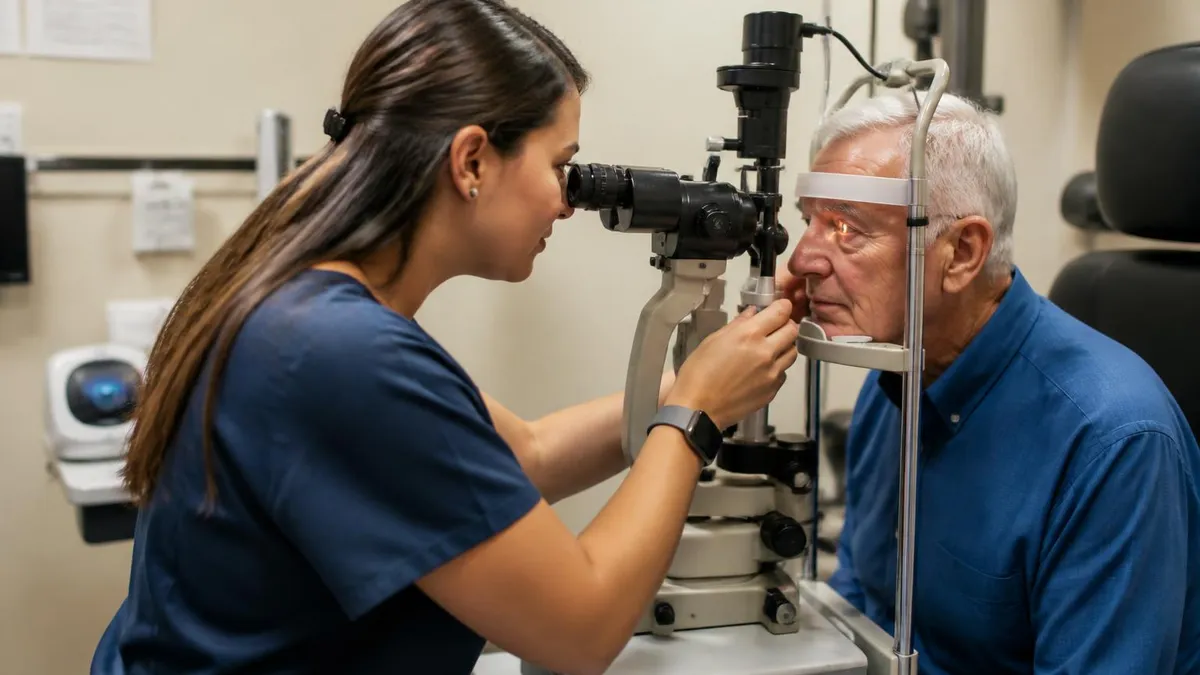
Once DANB approves your application and issues your Authorization to Test (ATT), you have exactly 90 days to schedule and sit for your exam. If your ATT expires before you test, you must reapply and pay all fees again. Schedule your exam date as soon as you receive your ATT notification, then work backward to build your study calendar around that date.
After you pass the COA exam, your career options expand in meaningful ways that go well beyond a simple pay raise. Certified orthodontic assistants are positioned as clinical leaders within their practices, and many COA holders use the credential as a springboard into supervisory roles, orthodontic treatment coordinator positions, or continuing education in dental hygiene and other advanced dental careers. Understanding how to use your new credential strategically helps you maximize its long-term career value.
The most immediate benefit most COA holders experience is a wage increase. If your employer has not already committed to a raise tied to your certification, prepare for a direct conversation about compensation as soon as your certificate arrives. Research local salary benchmarks for COA-certified assistants using resources like the DANB salary survey or the Bureau of Labor Statistics Occupational Employment Statistics database. Going into the salary conversation with specific market data gives you a confident, factual foundation for negotiating rather than relying solely on the credential itself as use.
COA certification also opens doors to employment in orthodontic specialty practices and corporate dental service organizations (DSOs) that may have previously screened for credentialed assistants specifically. Many large DSO groups with orthodontic divisions list COA certification as a preferred or required qualification in their job postings. Having the credential on your resume means your application clears automated applicant tracking system filters that would otherwise route uncredentialed resumes to a rejection pile, giving you access to a broader range of job opportunities at higher-quality practices.
Maintaining your certification requires completing 12 hours of continuing education (CE) every two years and paying the DANB renewal fee before your certification expiration date. DANB accepts CE hours from a wide range of approved providers including AAO-sponsored courses, dental school continuing education departments, state dental assisting association meetings, and DANB's own online learning modules. Tracking your CE hours proactively throughout the two-year cycle is far less stressful than scrambling to complete 12 hours in the final weeks before your renewal deadline.
Many COA holders use the renewal cycle as an intentional professional development opportunity rather than viewing CE as a compliance burden. Selecting courses in emerging orthodontic technologies such as clear aligner therapy, digital scanning, and 3D printing keeps your clinical knowledge current and positions you as a forward-thinking team member in practices that are investing in new treatment modalities. Attending the AAO Annual Session or regional orthodontic meetings is another excellent way to earn CE hours while building professional relationships with colleagues across the country.
Sharing your COA status publicly through professional networks like LinkedIn increases your visibility to recruiting practices and professional peers. Update your LinkedIn headline to include "COA-Certified Orthodontic Assistant" and add a specific description of your orthodontic competencies in your profile summary. Dental staffing agencies and orthodontic practice managers actively search LinkedIn for credentialed candidates, and a well-maintained profile can result in inbound job inquiries without requiring you to actively search for new opportunities.
If career advancement beyond direct patient care interests you, the COA credential demonstrates the commitment and professional discipline that dental schools and dental hygiene programs consider favorably during admissions evaluations. Some COA holders also transition into dental assisting education as clinical instructors or curriculum developers, using their specialized orthodontic expertise to train the next generation of assistants. The credential is not a ceiling — it is a foundation that supports a wide range of career directions in dental healthcare.
Practical exam-day strategies can make a meaningful difference in your performance even when your preparation has been thorough. The COA exam is administered at Prometric testing centers using a secure, computer-based format. You will have 150 minutes to answer 100 multiple-choice questions, and the questions are not grouped by domain — they appear in randomized order throughout the exam. Knowing this in advance allows you to approach the test without expecting a clean domain-by-domain progression and helps you avoid the false sense of momentum that can come from encountering familiar material in early questions.
Arrive at the testing center at least 30 minutes before your scheduled appointment. Prometric's check-in process includes biometric identity verification, a locker assignment for personal belongings, and a brief orientation to the testing station. Rushing through this process or arriving late adds unnecessary stress before you even see the first question. Bring two forms of identification, including at least one government-issued photo ID, and verify that the name on your ID matches your DANB registration exactly — even minor discrepancies can cause check-in complications.
During the exam itself, use the mark-and-review feature available in Prometric's testing software to flag questions you are uncertain about on your first pass. Answer every question — even flagged ones — before going back to review, because unanswered questions count as wrong while flagged questions give you a chance to return with fresh eyes. Many candidates find that questions encountered later in the exam trigger recall that helps them revisit and correct earlier flagged items, so completing the full exam before reviewing is a worthwhile strategy.
Pace management is straightforward at 150 minutes for 100 questions — you have an average of 90 seconds per question. Use the on-screen timer to check your pacing after every 25 questions rather than monitoring it obsessively, which can disrupt concentration. Most candidates find they have five to ten minutes remaining after completing all questions, which provides comfortable buffer time for reviewing flagged items without feeling rushed.
After the exam, Prometric will display your preliminary pass or fail result on screen before you leave the testing center. This immediate feedback is unofficial, and DANB will send official score reports within three to five business days to the email address you registered with. If you receive a passing result, take a moment to genuinely celebrate — earning the COA is an achievement that represents months of preparation and real professional growth.
If your initial attempt results in a fail, DANB's score report will include a domain-level performance breakdown showing your relative strength or weakness in each content area. Use this detailed feedback to build a targeted retake study plan rather than re-studying everything from scratch. Most candidates who fail by a narrow margin on their first attempt pass on the retake when they focus exclusively on their weakest domain and take additional practice tests under timed conditions. DANB allows retesting after a 60-day waiting period, giving you sufficient time to address identified gaps methodically.
The COA credential represents a genuine professional achievement that advances both your earning potential and your clinical identity as an orthodontic specialist. Every hour you invest in preparation is an investment in a credential that will benefit your career for decades. Use the resources in this guide, work through practice tests consistently, study the DANB handbook deeply, and approach exam day with the confidence that comes from thorough, organized preparation. You have everything you need to succeed.
Sample COA - Certified Orthodontic Assistant Practice Questions
Try these questions from our free COA - Certified Orthodontic Assistant practice tests. The correct answer and an explanation follow each question.
How should professionals apply continuing education requirements in daily practice?
- A. Only when being evaluated
- B. Consistently integrate best practices into every aspect of professional work
- C. Apply principles selectively based on convenience
- D. Follow standards only for complex tasks
Answer: B. Consistently integrate best practices into every aspect of professional work
Consistent application of professional standards ensures quality outcomes and builds professional credibility.
How should challenges in continuing education requirements be addressed?
- A. Avoid challenges and stick to familiar tasks
- B. Apply systematic problem-solving, seek expert guidance when needed, and document decisions
- C. Ignore challenges until they resolve themselves
- D. Delegate all challenges to supervisors
Answer: B. Apply systematic problem-solving, seek expert guidance when needed, and document decisions
Systematic problem-solving combined with appropriate consultation and documentation ensures challenges are addressed effectively.
What is the foundational principle of continuing education requirements in the Certified Orthodontic Assistant field?
- A. Maximizing personal advancement
- B. Maintaining competence, integrity, and service to stakeholders
- C. Following the easiest path available
- D. Avoiding all challenging situations
Answer: B. Maintaining competence, integrity, and service to stakeholders
The foundational principles of continuing education requirements in Certified Orthodontic Assistant center on maintaining competence, integrity, and quality service.
How should continuing education requirements knowledge be maintained and updated?
- A. Initial training provides lifelong competence
- B. Through continuous professional development, current literature review, and professional networking
- C. Knowledge updates are only needed every five years
- D. Learning stops after certification
Answer: B. Through continuous professional development, current literature review, and professional networking
Professional competence requires ongoing development through education, literature review, and engagement with the professional community.
Take the full COA - Certified Orthodontic Assistant practice test
COA Questions and Answers

About the Author

Educational Psychologist & Academic Test Preparation Expert
Columbia University Teachers CollegeDr. Lisa Patel holds a Doctorate in Education from Columbia University Teachers College and has spent 17 years researching standardized test design and academic assessment. She has developed preparation programs for SAT, ACT, GRE, LSAT, UCAT, and numerous professional licensing exams, helping students of all backgrounds achieve their target scores.
Join the Discussion
Connect with other students preparing for this exam. Share tips, ask questions, and get advice from people who have been there.
View discussion (8 replies)