
Correctional Officer Practice Test 2026 August: Free Questions, Full Exam Prep & Pass Strategies
📝 Free correctional officer practice test 2026 August with 500+ questions, full answer keys, scoring tips, and proven strategies to pass your CO exam first try.
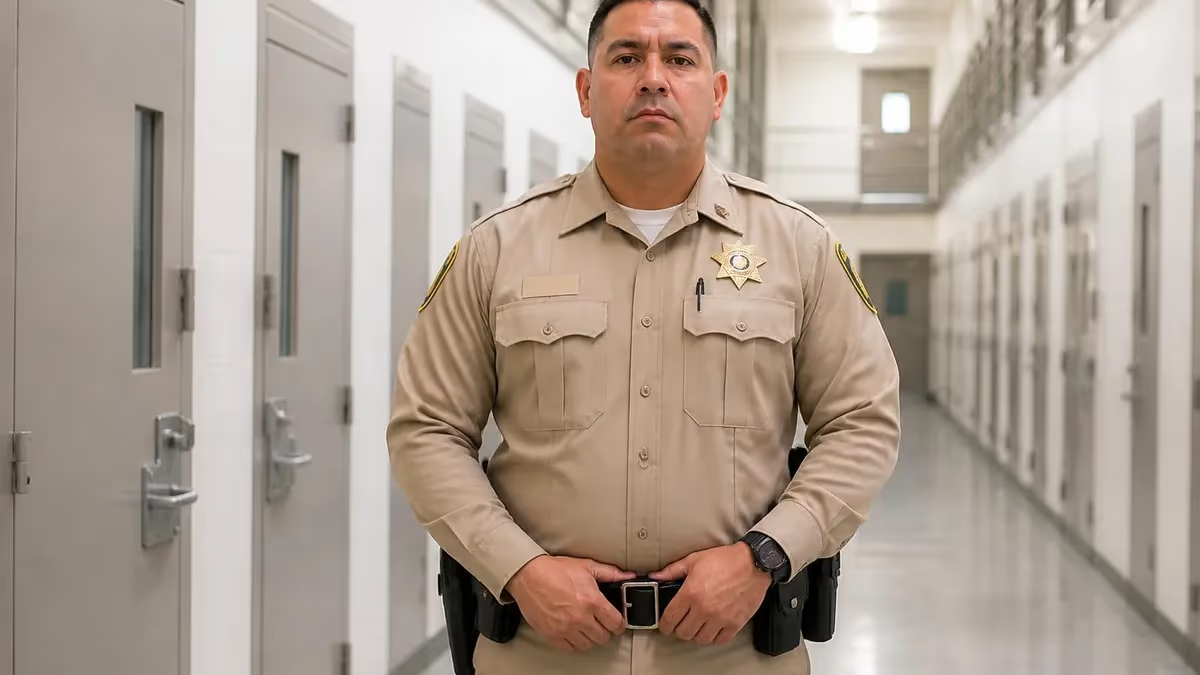
The correctional officer practice test is the single most important tool standing between you and a uniformed career inside a state, county, or federal facility. Whether you're applying to a Department of Corrections academy in Texas, a sheriff's detention unit in Florida, or a Federal Bureau of Prisons institution, the written exam screens out roughly 30 to 45 percent of applicants on the first attempt. A structured practice test routine exposes your weak content areas, builds the pacing reflexes you'll need on test day, and dramatically increases your chance of advancing to the physical agility test and oral board.
Most candidates underestimate how broad the CO exam content really is. Beyond basic reading comprehension and report writing, you'll face situational judgment items, math word problems involving inmate counts and shift schedules, memory recall passages, and ethics scenarios that test your decision-making under pressure. A high-quality collars and co aligned practice question bank mirrors the actual exam blueprint and uses the same question stems agencies recycle year after year, which is exactly why structured prep outperforms simply rereading the study guide.
This guide walks you through every category on the modern CO written exam, explains how to score each section, breaks down the timing strategy that high scorers use, and links you to six full-length quiz sets covering the highest-weight topics: inmate classification, health and safety, stress management, rehabilitation programs, and contraband recognition. Each quiz is calibrated to the difficulty level you'll encounter in real testing centers from Houston to Albany.
You'll also find a comparison of self-study versus paid prep programs, a 12-week study schedule for working candidates, a downloadable checklist of test-day essentials, and detailed FAQs answering the questions hiring sergeants hear most often during recruitment events. Whether you're a first-time applicant or retaking the exam after a near-miss, the strategies below have helped thousands of recruits move from "applicant" to "officer" with a confirmed academy seat.
The single biggest predictor of passing the written exam is total volume of practice questions completed before test day. Candidates who finish 400 or more questions across at least three timed sessions pass at roughly twice the rate of those who study only the official handbook. That's not a marketing claim, it's a pattern repeated across post-employment surveys at state DOC academies. Volume builds familiarity with question phrasing, and familiarity buys you the seconds that separate a 72 from an 82.
Finally, treat this article as a living study companion. Bookmark it, run through each quiz set twice with a one-week gap, and review every missed question with the hint explanation before moving on. The 90 minutes you spend in disciplined review tonight is worth more than 10 hours of passive reading next week.
By the end of this page you'll know exactly which content areas to attack first, how long to spend on each section during the live exam, and where to channel your final week of cramming for maximum scoring impact.
CO Practice Test by the Numbers
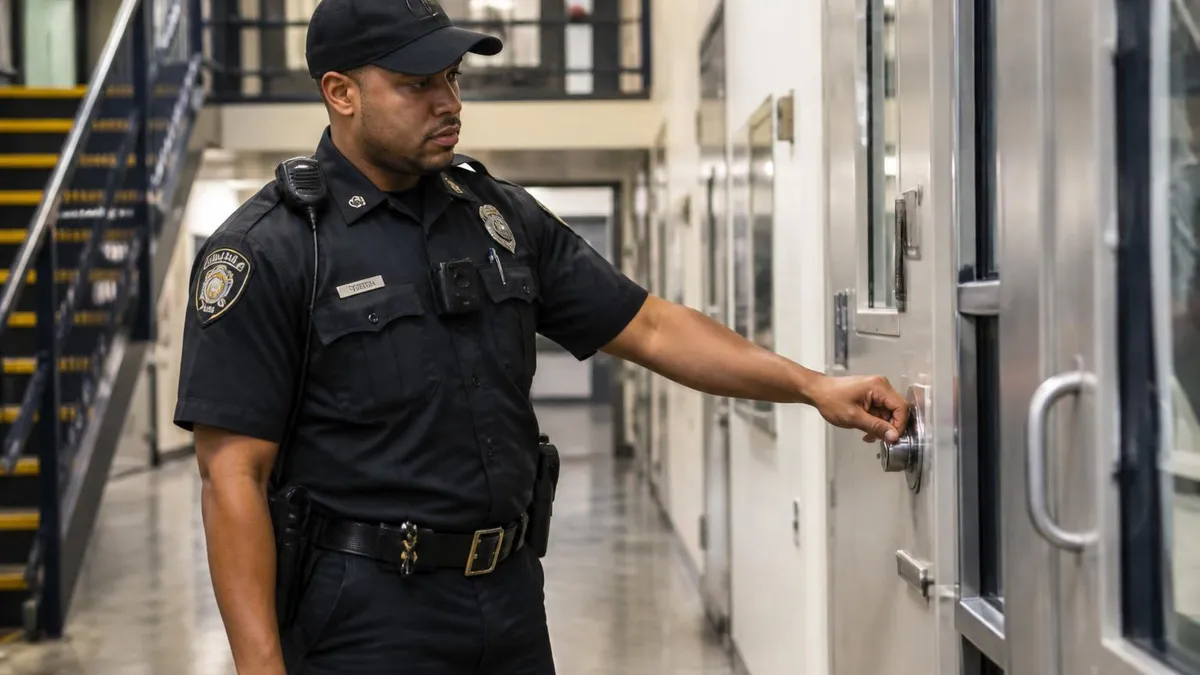
Correctional Officer Exam Format
| Section | Questions | Time | Weight | Notes |
|---|---|---|---|---|
| Reading Comprehension | 25 | 35 min | 21% | Policy excerpts and incident reports |
| Situational Judgment | 30 | 40 min | 25% | Inmate interaction scenarios |
| Math & Counting | 15 | 20 min | 12% | Headcounts, schedules, ratios |
| Memory & Observation | 20 | 25 min | 17% | Visual recall passages |
| Report Writing | 10 | 15 min | 10% | Grammar, clarity, chronology |
| Ethics & Code of Conduct | 20 | 15 min | 15% | PREA, use of force, contraband |
| Total | 120 | 2 hours 30 minutes | 100% |
The correctional officer practice test you study from should reflect the six core content domains every modern CO exam measures. Reading comprehension is the largest single category at roughly 20 to 25 percent of scored questions. Expect dense policy excerpts, incident reports, and inmate grievance letters as your source material. The trick isn't reading faster, it's reading once with intention and underlining the verbs that define the action required. Practice with passages of 250 to 400 words and you'll outperform peers who studied from shorter, easier samples.
Situational judgment is the second heaviest category and the one most candidates get wrong. These items present a scenario like "an inmate refuses to return to his cell after recreation" and offer four responses ranked from passive to aggressive. The correct answer is rarely the most forceful option. Agencies want officers who de-escalate, document, and call for backup before placing hands on an inmate. Reviewing your state's use-of-force continuum before you sit for the exam will sharpen your instinct on these items.
Math questions on the CO exam are not algebra. They are practical counting and scheduling problems. You'll calculate inmate-to-officer ratios for a housing unit, figure out overtime hours across a two-week rotation, or determine how many meal trays are needed when two inmates are on medical hold. A calculator is rarely permitted, so practice mental math with two-digit multiplication and percentages. Five minutes of daily drills for two weeks will eliminate this category as a weak point.
Memory and observation passages give you 60 to 90 seconds to study a photograph, floor plan, or paragraph describing an incident, then ask recall questions after you turn the page. The proven technique is to scan top-to-bottom, then left-to-right, naming five distinct details aloud (silently in the test room) before the timer ends. Officers in active facilities use this exact method during shift briefings, so the skill transfers directly to your future job. The rifle paper co study research confirms candidates who train memory daily score 18 percent higher on this section.
Report writing is short but heavily weighted because it predicts on-the-job documentation quality. Expect to identify the clearest, most chronological version of an incident report from four options. Watch for passive voice, missing time stamps, and unnamed subjects. The correct answer always uses active voice, lists events in order, identifies every person by inmate number or officer rank, and avoids opinion words like "obviously" or "clearly."
Ethics and code of conduct questions cover the Prison Rape Elimination Act, contraband definitions, fraternization rules, and mandatory reporting obligations. These items are designed to be easy if you've read your state's CO handbook and harder if you haven't. The most common trap is the question that asks "what should you do first?" The correct first action is almost always to notify a supervisor and secure the scene, not to investigate independently or confront the inmate.
Across all six categories, the candidates who score in the top 20 percent share one habit: they keep an error log. Every missed question gets written into a notebook with the topic, the wrong answer they chose, and the correct answer with a one-sentence explanation. By exam day they've reviewed the log three times, and the patterns of their personal weaknesses become impossible to repeat.
CO Practice Test Questions
Prepare for the CO - Correctional Officer exam with our free practice test modules. Each quiz covers key topics to help you pass on your first try.
CO Health, Safety & Stress Management
CO Exam Questions covering CO Health, Safety & Stress Management. Master CO Test concepts for certification prep.
CO Inmate Classification & Rehabilitation ...
Free CO Practice Test featuring CO Inmate Classification & Rehabilitation Programs. Improve your CO Exam score with mock test prep.
CO Mental Health & Special Populations
CO Mock Exam on CO Mental Health & Special Populations. CO Study Guide questions to pass on your first try.
Communication Skills & Report Writing
CO Test Prep for Communication Skills & Report Writing. Practice CO Quiz questions and boost your score.
CO Rehabilitation & Inmate Programs
CO Questions and Answers on CO Rehabilitation & Inmate Programs. Free CO practice for exam readiness.
CO - Correctional Officer Observation and ...
CO Mock Test covering - Correctional Officer Observation and Recall Skills. Online CO Test practice with instant feedback.
CO - Correctional Officer Situational Judg...
Free CO Quiz on - Correctional Officer Situational Judgment Scenarios. CO Exam prep questions with detailed explanations.
CO Emergency Response & Crisis Management
CO Practice Questions for Emergency Response & Crisis Management. Build confidence for your CO certification exam.
CO Inmate Supervision & Behavioral Management
CO Test Online for Inmate Supervision & Behavioral Management. Free practice with instant results and feedback.
CO Legal Standards & Ethical Responsibilities
CO Study Material on Legal Standards & Ethical Responsibilities. Prepare effectively with real exam-style questions.
CO Security Procedures & Facility Operations
Free CO Test covering Security Procedures & Facility Operations. Practice and track your CO exam readiness.
CO Use of Force & Defensive Tactics
CO Exam Questions covering Use of Force & Defensive Tactics. Master CO Test concepts for certification prep.
CO Career Outlook
Free CO Practice Test featuring Career Outlook. Improve your CO Exam score with mock test prep.
Correctional Officer Security and Safety
CO Mock Exam on Correctional Officer Security and Safety. CO Study Guide questions to pass on your first try.
State vs Federal vs County Exam Differences
State Department of Corrections exams vary widely but share a common spine: situational judgment, reading, and basic math. Texas TDCJ, California CDCR, New York DOCCS, and Florida FDC each publish blueprints showing the percentage weight of each section. Texas leans heavily on report writing, California emphasizes ethics and PREA compliance, and Florida includes a contraband identification module unique to its system. Always download your target state's most recent candidate orientation guide before purchasing any third-party prep materials.
State exams typically allow 2 to 2.5 hours and use a scaled 100-point scoring system with 70 as the cut score. Some states like Pennsylvania add a personality inventory that is not scored for pass-fail but feeds into the oral board ranking. Practice tests aligned to your specific state save dozens of hours that generic national prep wastes on irrelevant content. Cross-check the publisher's content list against your state blueprint before committing.
Self-Study vs Paid Prep Course
- +Self-study costs $0 to $40 for a handbook and practice question bank
- +You control the pace and can focus extra time on weak categories
- +Flexible scheduling fits around current jobs and family obligations
- +Free practice tests online cover 70 percent of the same content
- +No travel or class attendance required
- +You build self-discipline that helps later in the academy
- +Repeatable for retests without paying again
- −No instructor to explain why a wrong answer is wrong
- −Easy to skip the hardest sections and develop blind spots
- −No live feedback on report writing samples
- −Motivation drops without classmates or a fixed deadline
- −Outdated free resources may not match current blueprints
- −No mock oral board practice included
- −Risk of studying the wrong content if you misread the blueprint
Correctional Officer Test Day Checklist
- ✓Government-issued photo ID matching your application name exactly
- ✓Original admission letter or confirmation email printed on paper
- ✓Two number-two pencils with working erasers and a black ballpoint pen
- ✓Approved transparent water bottle, label removed if required by venue
- ✓Light jacket or sweater because testing rooms run cold all year
- ✓Snack like a granola bar for the break period, no strong odors
- ✓Driving directions printed in case your phone loses signal
- ✓Arrival plan that gets you to the parking lot 45 minutes early
- ✓Eight hours of sleep the night before, no caffeine after 2 p.m.
- ✓Light protein breakfast 90 minutes before report time
- ✓No electronic devices, smart watches, or recording equipment
- ✓Completed pre-test questionnaire if your state provides one
Build and review an error log every study session
Candidates who maintain a written log of every missed practice question — recording the topic, their wrong answer, and a one-sentence reason the correct answer is correct — score on average 12 to 15 points higher than peers who simply move on after grading. The log forces active processing and prevents the same mistake from repeating on test day. Review your log every Sunday and again the night before your exam.
Effective question strategy on the correctional officer practice test starts with pacing, not content. Divide your total minutes by total questions to get your per-question budget, then subtract 15 percent for review time. On a 150-question, 150-minute exam you have 51 seconds per question with 22 minutes left at the end for second passes. Mark every uncertain question with a small dot in the margin so you can return without rereading every stem. This single discipline converts panicked guessing into deliberate scoring.
Read the question stem before the passage on reading comprehension items. Knowing what you're looking for cuts your reading time by 30 percent because your brain filters automatically for relevant details. This trick is widely taught in LSAT and police entrance exam prep and transfers perfectly to the CO exam format. Practice it on every reading question in your prep bank until it becomes automatic. The mental shift from passive reading to targeted scanning is the single largest pacing improvement available to candidates.
On situational judgment questions, eliminate the two extreme options first. The most aggressive response that involves immediate force is almost always wrong, and the most passive response that involves doing nothing is almost always wrong too. You're now choosing between two middle-ground answers, which doubles your odds on guesses. Then ask which option a supervisor would document as procedurally correct, not which option feels emotionally satisfying. The exam rewards textbook responses, not personal opinions or street logic.
Math problems should be attacked with estimation first. Round inmate counts to the nearest ten and overtime hours to the nearest half. If your estimated answer matches one option closely and the others are far off, you can lock in your answer in 15 seconds instead of grinding through long multiplication. Save the precise calculation for items where two options are estimation-close. This selective rigor approach is how high scorers finish the math section with five minutes to spare.
Memory passages require a structured encoding technique. Use the "five details, five seconds" rule: identify five specific items in the passage or image (a number, a name, a time, a location, a relationship) and rehearse them silently in order before turning the page. The act of rehearsal moves information from short-term to working memory and triples your recall accuracy. Don't try to memorize everything, the questions only test five to seven specific details and they're predictable in pattern.
Report writing items are graded by elimination. Read all four versions quickly looking for the one that uses active voice, lists events in chronological order, identifies every person by role and number, and avoids opinion words. Three of the four answers will violate at least one of these rules, often more. The correct version reads like a court-ready document, not a casual narrative. If two options seem clean, look for the one with more specific time stamps and exact quotes.
Ethics questions test whether you know the procedure, not whether you have good morals. The correct answer is whatever your facility's written policy requires you to do first, which is almost always notify a supervisor, secure the scene, preserve evidence, and complete documentation. Trust the procedure, not your gut, and you'll pick up a quick 90 percent on this category. Memorize the PREA reporting timeline because at least one question on every modern CO exam tests it directly.
Candidates have been disqualified months after passing the written exam because they omitted minor disclosures on the pre-employment questionnaire. Report every prior employer, address, traffic citation, and personal reference even if it seems irrelevant. Background investigators verify everything, and undisclosed details are treated as deception which is an automatic disqualifier in most states. Honesty about old issues almost always passes; concealment never does.
Your final week before the correctional officer practice test should look completely different from the previous eleven weeks. This is taper week, the period where elite test-takers reduce volume and increase focus. Cut your daily question count from 50 to 20, but spend twice as long reviewing each missed item. Reread your error log on Monday, Wednesday, and Friday. Sleep eight hours every night without exception because cognitive performance drops 20 percent after a single night under six hours.
On the seven-day countdown, schedule one full-length timed mock exam under realistic conditions: no phone, no breaks beyond what the real exam allows, and the same start time as your scheduled test. This dress rehearsal does more for your test-day confidence than any amount of additional content review. Do it on the same day of the week as your real exam if possible, so your circadian rhythm cooperates rather than fights you.
Three days out, stop learning new material entirely. Anything you don't know by Thursday won't be reliably available on Sunday. Switch to pure review of high-yield categories: ethics and code of conduct, PREA reporting, use of force continuum, and your state's chain of command. These four topics produce more questions per minute of study than any others on the exam, and they're heavily represented in the sourdough and co hierarchy materials many candidates underestimate.
Two days out, drive to your test center during the same hour you'll arrive on test day. Identify parking, find the building entrance, and check whether you'll need to walk far from the lot. Test-day stress drops dramatically when you've already solved the logistics puzzle. Pack your test kit Friday evening using the checklist earlier in this article, set out the clothes you'll wear, and place your ID and admission letter on top of your bag.
The night before, eat a normal dinner with carbohydrates and lean protein. Avoid alcohol entirely because it disrupts REM sleep even in small doses. Set two alarms 15 minutes apart as a backup. Do not study after 8 p.m. Watch a movie, take a walk, call a friend, anything that pulls your mind out of test prep mode and into rest mode. Cramming the night before increases anxiety more than it adds knowledge.
Morning of, eat a light breakfast with protein and complex carbs. Skip heavy fats and sugar which crash energy mid-exam. Drink water but stop 30 minutes before your scheduled start so you don't lose time on bathroom breaks. Arrive 45 minutes early, check in, use the restroom, and do five minutes of deep breathing before the proctor calls you in. Slow your heart rate intentionally and your reading comprehension scores improve measurably.
During the exam itself, work the first pass at steady pace, mark uncertain items, then return for a focused second pass. Never change an answer unless you have a specific content reason for the change. First instinct is correct roughly 70 percent of the time according to published test prep research. Finish with five minutes to spare, scan for blank bubbles, and submit confidently. You've trained for this moment, trust your preparation.
Practical preparation extends beyond the written exam into the broader hiring pipeline, and the candidates who plan ahead avoid the common traps that derail otherwise strong applicants. Start building your application package the same week you begin studying. Order sealed transcripts, gather your DD-214 if applicable, collect at least five non-family references with current phone numbers, and pull your driving record for any state you've held a license in over the past ten years. These documents take two to four weeks to arrive and delay starting dates if you wait.
While you study, train your body in parallel. The physical agility test follows the written exam by 30 to 90 days depending on your agency, and unfit candidates wash out at rates near 25 percent. Run three days a week building up to a 1.5 mile run under 14 minutes, do push-ups and sit-ups to academy standards, and practice dummy drags simulating an inmate extraction. Combining physical and mental prep keeps stress lower than focusing only on one and panicking about the other.
Mock oral board practice pays disproportionate dividends because so few candidates do it. Find a current or retired officer through a local recruitment event, FOP lodge, or community college criminal justice program, and ask them to run you through ten standard interview questions. The questions are predictable: tell me about a time you handled conflict, why do you want to be a CO, describe your understanding of use of force, how would you respond to peer pressure to break policy. Rehearsed answers come across as confident, not robotic, when delivered with eye contact and natural pacing.
Financial planning matters too. Most states pay academy recruits at a reduced rate (60 to 80 percent of officer base pay) for 6 to 16 weeks, and uniforms, boots, and gear can run $400 to $800 out of pocket before your first reimbursement. Build a small emergency fund covering two months of expenses before you accept a start date. Candidates who quit during academy almost always cite financial pressure as the deciding factor, not the training itself.
Connect with current officers before you start. Attend a public recruitment event, request a facility tour if your agency offers them, or shadow a friend in the field for a shift. The reality of the job, the noise level, the smell of an industrial cafeteria, the way inmates test new staff, is impossible to fully understand from articles or videos. Direct exposure either confirms your commitment or saves you from a 12-week academy you would have left anyway.
Track your prep with a simple weekly log: hours studied, questions completed, scores by category, miles run, push-ups completed, and one note about what you learned that week. Reviewing the log monthly shows tangible progress that motivates you through plateau weeks. Candidates who quit prep almost always lack a feedback loop showing them they're improving. Build the loop and you'll finish the program.
Finally, prepare your support system. Tell your family or roommate exactly when your exam is, what time you need silence the night before, and what your study schedule looks like. Most candidates underestimate how much friction unsupportive household members create during prep. A 30-minute conversation explaining your goal and timeline eliminates almost all of that friction and earns you the focused study time you need to pass.
CO Questions and Answers

Correctional Officer Test 2026: Practice Exam, Physical Test & What to Expect
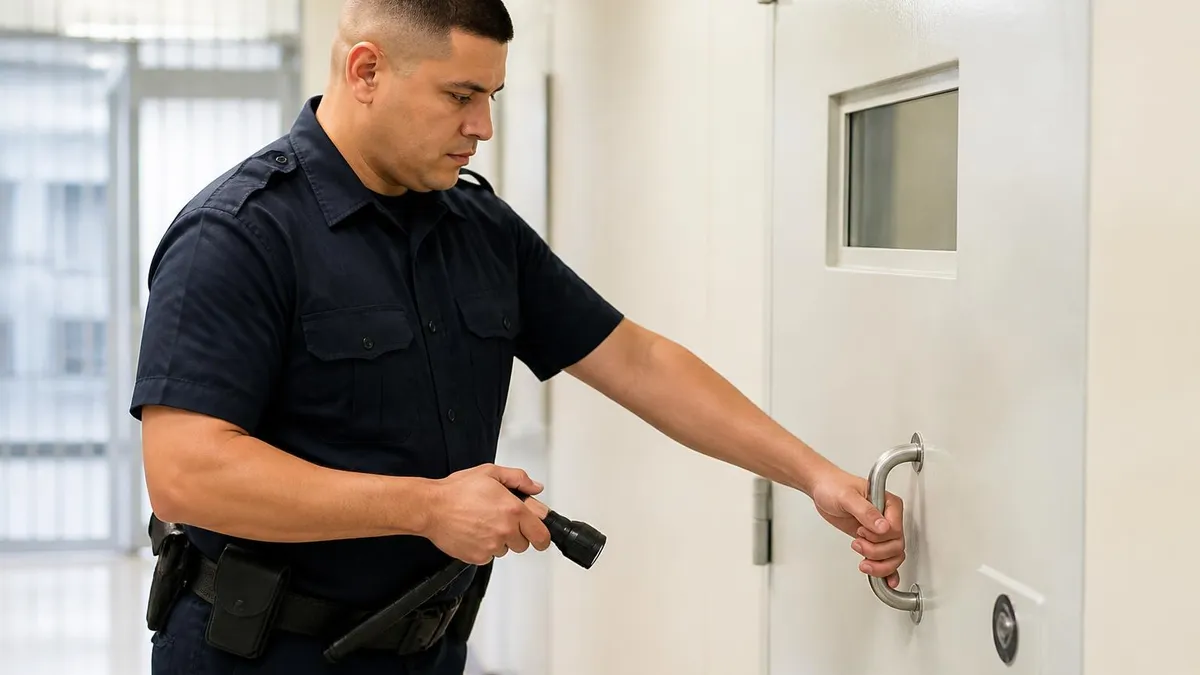
Correctional Officer Life Expectancy: Career Health, Stress & Longevity Research 2026
CO Correction Officer Guide 2026 — Exam, Salary & Career Path
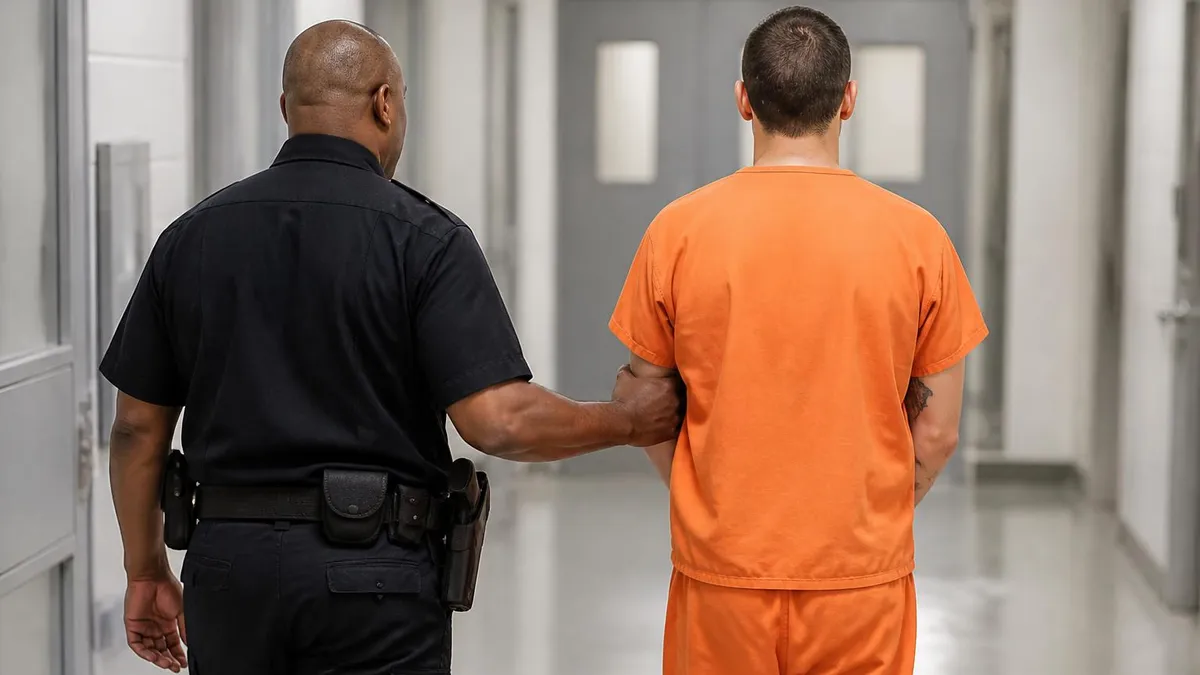
Correctional Officer Ranks: Complete Guide to CO Hierarchy, Insignia & Promotion Paths 2026

Correctional Officer Uniform: Complete Guide to CO Standards, Gear, and Equipment
About the Author

Educational Psychologist & Academic Test Preparation Expert
Columbia University Teachers CollegeDr. Lisa Patel holds a Doctorate in Education from Columbia University Teachers College and has spent 17 years researching standardized test design and academic assessment. She has developed preparation programs for SAT, ACT, GRE, LSAT, UCAT, and numerous professional licensing exams, helping students of all backgrounds achieve their target scores.
Join the Discussion
Connect with other students preparing for this exam. Share tips, ask questions, and get advice from people who have been there.
View discussion (9 replies)