
Correctional Officer Jobs in Charlotte, NC: Complete Career Guide 2026 September
Find correctional officer jobs in Charlotte NC. Salaries, hiring steps, benefits & exam tips. 🎯 Your complete 2026 September career guide.

If you are searching for correctional officer jobs in charlotte nc, you are stepping into one of the most stable and rewarding public-safety careers the region has to offer. The Charlotte-Mecklenburg area is home to multiple county detention facilities, state prison units, and federal holding centers, all of which maintain ongoing recruitment cycles throughout the year. Unlike seasonal or contract positions, correctional officer roles come with full benefits, a defined retirement plan, and structured pay scales that increase predictably with seniority and time-in-grade.
Many job seekers are surprised to learn how competitive the compensation has become. In Mecklenburg County alone, entry-level detention officers now start above the statewide average, reflecting both the region's higher cost of living and the chronic staffing shortfalls that followed the pandemic years. When you factor in shift-differential pay, longevity bonuses, and overtime availability, a first-year officer can realistically bring home significantly more than the base salary listed in the job posting.
The hiring pipeline in Charlotte is multi-step but straightforward. Candidates move through a written exam, a physical fitness assessment, a thorough background investigation, a psychological screening, and a medical evaluation before receiving a conditional offer. Each stage is designed to filter for integrity, physical readiness, and mental resilience — the three pillars that define a successful corrections career. Understanding each hurdle in advance lets you prepare strategically rather than reactively.
Charlotte sits at the intersection of several distinct correctional systems. Mecklenburg County operates its own detention center, the North Carolina Department of Adult Correction (NCDAC) runs nearby prison units, and the federal Bureau of Prisons (BOP) maintains a presence in the broader Piedmont region. Each employer uses a slightly different exam, pay scale, and benefit structure, so knowing which agency you are targeting helps you tailor your preparation and application materials effectively.
Beyond the Charlotte city limits, the surrounding counties — Cabarrus, Gaston, Union, and Iredell — all operate jail and detention systems that regularly post openings. Candidates willing to commute even thirty minutes outside the city core dramatically expand their options. Many officers begin in a smaller county facility, gain two to three years of experience, and then transfer to a higher-paying Mecklenburg or state position with a competitive advantage over first-time applicants.
This guide covers everything you need to know: salary benchmarks, hiring timelines, benefit comparisons, exam preparation strategies, and insider tips from veteran officers who have navigated this exact process. Whether you are a first-time applicant or a lateral transfer from another state, the information here will help you move through the Charlotte corrections hiring process with confidence and clarity. Explore the full breakdown of correctional officer jobs charlotte nc rank structures and promotion pathways as you plan your career trajectory.
One more point worth emphasizing at the outset: the corrections field is not merely a job — it is a profession with a clear advancement ladder, specialized training opportunities, and genuine community impact. Officers who invest in their careers through continuing education, specialty assignments, and supervisory development can reach mid-management within five to seven years. Charlotte's growing population and expanding justice infrastructure mean that demand for qualified corrections professionals will remain strong well into the 2030s.
Charlotte-Area Corrections Jobs by the Numbers

Salary Ranges Across Charlotte-Area Agencies
Entry officers start at approximately $42,500 annually. With shift differentials for nights and weekends, first-year total compensation frequently reaches $48,000–$52,000. Lateral hires from other counties may negotiate step placement above the entry rung.
State correctional officers at nearby units (Gaston CI, Lanesboro CI) begin around $40,000 base. The state pension system (TSERS) and health insurance package add substantial long-term value that often exceeds private-sector equivalents.
BOP positions in the Piedmont region start at GS-5 or GS-6, translating to roughly $45,000–$55,000. Federal officers also receive Law Enforcement Availability Pay (LEAP) — a 25% supplement — making federal jobs the highest-compensating option.
Cabarrus, Union, and Gaston counties post starting salaries of $38,000–$43,000. These agencies offer faster promotion timelines due to smaller staffs, making them excellent launching pads for officers who want supervisory roles within three to four years.
Understanding the hiring process is the single most important step toward landing a correctional officer position in the Charlotte area. Every agency follows a multi-stage pipeline, and being unprepared for any single stage can end an application that was otherwise strong. The good news is that the sequence is predictable, and candidates who invest time in advance preparation pass each hurdle at dramatically higher rates than those who show up cold.
The process typically begins with an online application through the county, state, or federal jobs portal. For Mecklenburg County, this means the county's official HR system; for NCDAC positions, the NC Office of State Human Resources (OSHR); and for BOP roles, USAJOBS.gov. Each platform has its own quirks — USAJOBS in particular requires a meticulously detailed resume that uses specific federal terminology. Candidates who submit generic resumes to federal postings are almost universally screened out before a human ever reads their file.
Once the application clears initial screening, candidates are invited to a written examination. Mecklenburg County uses a custom assessment covering reading comprehension, basic math, situational judgment, and report writing. NCDAC administers a standardized exam developed by the NC Office of State Human Resources. BOP applicants complete the FBOP Correctional Officer Exam, which places heavy emphasis on memory, observation, and incident-scenario reasoning. Scoring above the 70th percentile on any of these exams puts candidates in a strong competitive position for the next round.
The physical fitness assessment follows the written exam at most agencies. Mecklenburg County's standards include a 1.5-mile run, push-ups, sit-ups, and a flexibility test. NCDAC uses a similar battery with slightly different cutoff values by age and sex. Federal BOP candidates must pass a Physical Abilities Test (PAT) that simulates real correctional tasks — climbing stairs, dragging a weighted dummy, and responding quickly to alarm scenarios. Candidates who train specifically for these standards rather than for general fitness consistently outperform those who rely on baseline conditioning.
Background investigations are the most time-consuming phase, often adding four to eight weeks to the timeline. Investigators verify every employer, address, and reference listed over the past ten years. Financial history, criminal record, and social media presence all receive scrutiny. Agencies in the Charlotte area are particularly focused on drug use history; most require a minimum of two to three years of abstinence from marijuana even in states where it is recreationally legal. Honesty throughout the background questionnaire is non-negotiable — discrepancies discovered during the investigation are automatic disqualifiers, even for minor issues.
Psychological screening typically involves a written personality inventory (often the MMPI-2 or PAI) followed by a one-on-one evaluation with a licensed psychologist. The goal is not to find perfect people but to screen out candidates with impulse control problems, authority issues, or significant stress-response deficits. Candidates who have engaged in counseling or therapy should not fear disclosure — agencies view help-seeking behavior positively, as it reflects self-awareness and emotional maturity.
Medical evaluations conclude the pre-hire process. Vision, hearing, cardiovascular fitness, and drug screening are all assessed. Corrected vision is generally acceptable for most agencies. Certain medical conditions may require a physician's clearance letter rather than automatic disqualification. Candidates with pre-existing conditions should research each agency's medical standards before investing time in the rest of the pipeline. Planning your career path early — including understanding how rank structures work — gives you a major advantage. Study the full hierarchy at correctional officer jobs charlotte nc to see exactly where your entry-level role fits within the larger organizational ladder.
After receiving a conditional offer, new hires attend the basic corrections academy. NCDAC runs a 16-week residential academy in Raleigh for state positions; county hires may attend a regional academy or complete an in-house training program depending on the facility. Academy curriculum covers legal authority, use of force, crisis intervention, firearms qualification, emergency response, and institutional operations. Graduation from the academy converts the conditional offer into permanent employment status.
Comparing Charlotte-Area Corrections Employers — Time in CO Career
Mecklenburg County Detention Center is the largest local jail in the Charlotte region, housing over 1,400 inmates across multiple housing units. Officers benefit from a 5% longevity bonus after five years, a defined-benefit pension plan through the Local Government Employees Retirement System (LGERS), and access to a county wellness program that includes gym reimbursement and mental health services.
The county posts openings year-round due to population growth and ongoing facility expansion. Promotion to corporal is competitive but achievable within three to four years for officers with strong performance reviews and specialty certifications. Many officers cite the urban environment, diverse inmate population, and modern facility infrastructure as key reasons they chose county detention over state or federal alternatives.

Is a Corrections Career in Charlotte Right for You?
- +Stable government employment with low layoff risk even during economic downturns
- +Comprehensive benefits including health, dental, vision, and life insurance from day one
- +Defined-benefit pension plans at county and state level — rare in the modern job market
- +Consistent overtime availability that can boost total compensation by 15–25% annually
- +Clear promotion ladder with objective criteria: time-in-grade, exams, and performance reviews
- +Diverse specialty assignments — K9, mental health, classification, investigative services
- −Mandatory shift work including nights, weekends, and holidays on a rotating basis
- −High stress environment with constant exposure to conflict, trauma, and institutional violence
- −Physical demands remain significant throughout the career, not just at hiring
- −Mandatory overtime can be ordered with little advance notice during staff shortages
- −Public misperceptions about corrections work can affect social relationships outside the job
- −Burnout risk is real — the field has above-average rates of stress-related health conditions
Charlotte CO Application Checklist — 10 Steps Before You Submit
- ✓Verify minimum age requirement (21 for most agencies; 18 for some county jails) and confirm citizenship or permanent residency status.
- ✓Obtain a certified copy of your high school diploma or GED; college transcripts strengthen your application but are rarely mandatory at entry level.
- ✓Run your own background check through NC court records to identify any issues before investigators do — resolve or disclose proactively.
- ✓Achieve a clean 12-month financial record: pay down collections, avoid new delinquencies, and gather documentation of any resolved debts.
- ✓Begin a structured fitness program targeting the specific standards of your target agency at least 90 days before your scheduled assessment.
- ✓Compile ten years of employment history with exact dates, supervisor names, and contact information — gaps require written explanations.
- ✓Gather five professional references who can speak to your integrity, reliability, and ability to handle stressful situations.
- ✓Complete a targeted study program for the written examination, focusing on reading comprehension, situational judgment, and report writing.
- ✓Prepare a detailed, truthful personal history statement covering any prior arrests, drug use, or disciplinary actions — omissions are worse than disclosures.
- ✓Schedule a pre-hire physical with your physician to identify and address any medical conditions before the official agency medical evaluation.
Honesty Outweighs a Perfect Record
Background investigators in the Charlotte corrections hiring process are trained to detect omissions, not just misdeeds. Officers who disclosed prior marijuana use or minor financial problems and explained them clearly are hired every cycle. Candidates who concealed those same issues and were caught are permanently disqualified. When in doubt, disclose and contextualize — never hide and hope.
Career advancement in Charlotte-area corrections is structured, merit-based, and genuinely attainable for officers who invest in their professional development from day one. The rank ladder varies slightly by agency, but the core progression — officer, corporal or senior officer, sergeant, lieutenant, captain, and major or superintendent — is consistent across county, state, and federal employers. Each step requires a combination of time-in-grade, a passing score on a promotional examination, and a competitive performance review average.
At Mecklenburg County Detention, the promotional examination for corporal is offered annually and draws from a pool of officers with at least two years of service. The exam covers facility policy, use-of-force law, supervisory principles, and scenario-based decision making. Officers who study systematically rather than relying on experience alone consistently outperform their peers. Top scorers are placed on an eligibility list from which the administration fills vacancies as they arise — making exam rank critically important.
NCDAC promotional exams operate on a similar model but with statewide eligibility lists. An officer working at a facility near Charlotte who scores in the top tier of the statewide sergeant's exam may receive a promotion offer at a different facility. While relocation can be a complication, many officers view it as an opportunity to gain diverse experience before returning to their preferred region at a higher rank and pay grade. The state's structured salary table means each promotion comes with an immediate and predictable pay increase.
Specialty assignments represent another form of career advancement that does not necessarily involve a rank change. Charlotte-area facilities offer placements in mental health response, crisis negotiation, K9 operations, classification and case management, investigative services, and training academies. Each specialty typically carries a pay supplement and develops skills that make the officer a stronger candidate for future promotional examinations. Seasoned officers frequently advise new hires to pursue at least one specialty assignment within their first five years.
Education incentives are increasingly common across Charlotte-area employers. Mecklenburg County offers tuition reimbursement up to $5,250 annually — the federal tax-free maximum — for coursework relevant to criminal justice, public administration, or related fields. NCDAC similarly supports educational advancement through partnership agreements with UNC system campuses. Officers who earn associate's or bachelor's degrees often gain three to five preference points on promotional exams, a potentially decisive advantage on competitive eligibility lists.
Federal BOP careers offer perhaps the broadest advancement opportunities, including positions in psychology services, education, UNICOR (federal prison industries), and regional administration. BOP officers who complete the agency's executive development program can reach GS-12 supervisory positions without geographic restriction. The federal pay scale also means that each GS step increase — earned through satisfactory annual performance — adds a meaningful amount to base compensation in addition to annual cost-of-living adjustments.
Mentorship is an underutilized accelerant in the corrections career. Officers who formally connect with a sergeant or lieutenant early in their tenure gain inside knowledge about how promotional decisions are actually made, which specialty assignments build the strongest resumes, and how to navigate the institutional politics that exist in every corrections organization. Many veteran officers in Charlotte actively seek mentorship relationships with newer hires, seeing it as a professional obligation and a way to shape the next generation of corrections leadership.
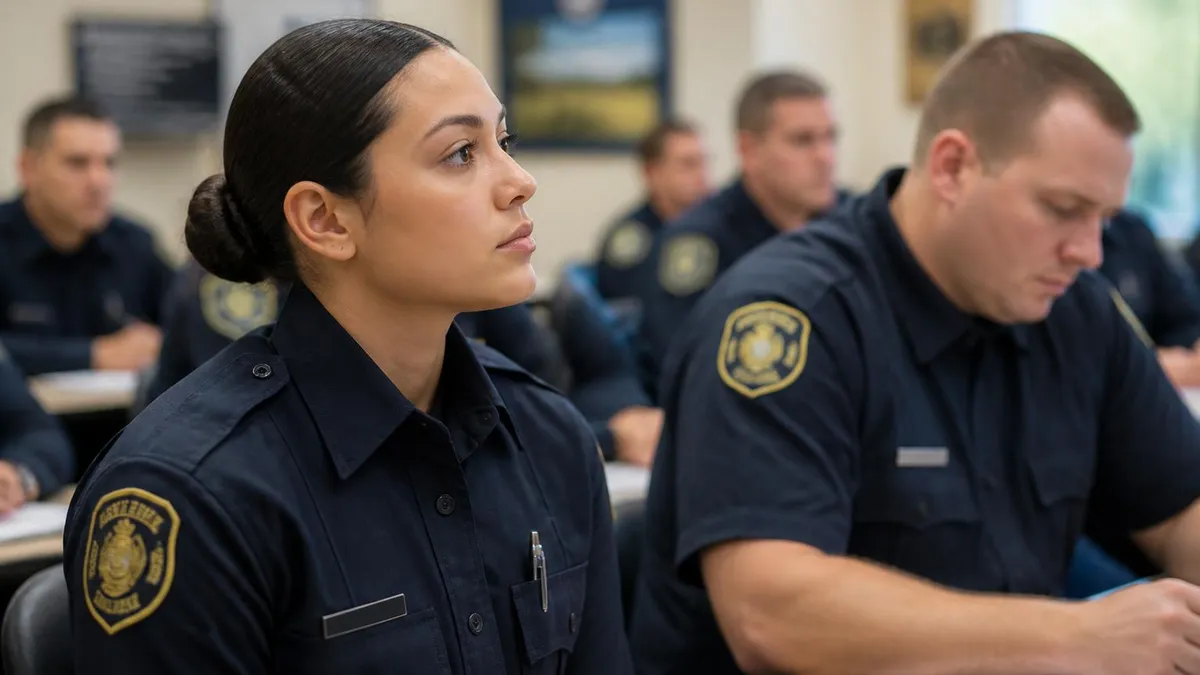
Mecklenburg County Detention uses a continuous-recruitment model — there is no single annual deadline. However, eligibility lists are rebuilt periodically, and candidates who apply after a list has been established may wait months before their application is evaluated. Monitor the county HR portal weekly and apply immediately when a posting is active to secure the earliest possible evaluation slot.
Exam preparation is the most controllable variable in your corrections job application, and the candidates who treat it seriously gain a measurable statistical advantage. The written assessments used by Mecklenburg County, NCDAC, and BOP all test a common core of skills: reading comprehension under time pressure, mathematical reasoning applied to real corrections scenarios, situational judgment in ambiguous or volatile situations, and clear written communication. Structured study over eight to twelve weeks is far more effective than cramming in the days before the exam.
Reading comprehension sections present passages drawn from correctional policy, legal statutes, or procedural manuals and ask questions that require careful, precise interpretation. The key skill is resisting the urge to infer beyond what the text explicitly states. Many candidates lose points by answering based on prior knowledge rather than the passage provided. Practice with full-length timed reading sets, targeting accurate reading speeds of 250–300 words per minute with strong retention.
Mathematical reasoning questions on corrections exams rarely require advanced math. The focus is on practical calculation: computing inmate headcounts, calculating shift hours, interpreting staffing ratios, and working through basic percentage problems. A thorough review of fractions, decimals, ratios, and unit conversion covers the vast majority of what you will encounter. Practice under timed conditions, because time pressure is a larger obstacle than difficulty for most candidates.
Situational judgment questions present a corrections-specific scenario — a conflict between two inmates, a colleague behaving unethically, an emergency in a housing unit — and ask the candidate to choose the best response from four options. These questions are specifically designed to assess professional judgment and ethical reasoning. Studying the use-of-force continuum, the PREA standards, and basic supervisory ethics gives you a framework for evaluating answer choices systematically rather than relying on instinct.
Report writing assessments, used by some agencies, ask candidates to read a brief incident description and produce a clear, factual narrative summary. Common errors include passive voice overuse, chronological disorganization, and inclusion of opinions or inferences. Practice writing incident reports from scenario prompts, then evaluate your own drafts against the criteria: accuracy, completeness, chronological order, and absence of subjective interpretation. One well-practiced format used consistently outperforms creative improvisation every time.
Practice tests are your most valuable preparation tool. Completing full-length timed practice exams under realistic conditions builds not only content knowledge but also the test-taking stamina and time-management habits that determine performance on exam day. Review every wrong answer to understand the reasoning behind the correct choice — passive review without active analysis produces limited improvement. Candidates who complete six or more full practice exams before their actual assessment consistently report feeling calm and prepared on test day. Use the resources at correctional officer jobs charlotte nc to deepen your understanding of the institutional context these exams assess.
Mental and physical preparation in the weeks before your exam date matters as much as content study. Consistent sleep, adequate hydration, and regular aerobic exercise have documented positive effects on cognitive performance under pressure. Arrive at the testing location early enough to settle in without rushing. Bring required identification and any permitted materials listed in your exam invitation. Eat a balanced meal two hours before the exam — not immediately before — to maintain steady energy without digestive discomfort. These are small details that collectively create the conditions for your best performance.
Once you receive a job offer and complete the academy, the first year on the floor is a critical proving ground. New officers are typically assigned to a field training officer (FTO) who evaluates their application of academy knowledge in live operational settings. This period determines your initial assignment, shapes your reputation among supervisors, and establishes the performance baseline that follows you through your early career. Approaching FTO evaluation with humility, attentiveness, and consistent professional conduct pays dividends far beyond the training period itself.
Shift culture in corrections varies significantly by facility and housing unit. Some units are high-energy environments with frequent incidents requiring physical intervention; others are lower-intensity but demand sophisticated interpersonal communication skills to manage chronic behavioral health challenges. New officers who approach each assignment as a learning opportunity rather than a hardship develop the adaptability that veteran officers and supervisors identify as the hallmark of long-term career success.
Building positive relationships with colleagues is not just a social nicety — it is a safety necessity. Corrections is a team-dependent environment where backup response time and inter-officer communication can be the difference between a minor incident and a serious injury. Officers who are known for reliability, composure under pressure, and willingness to support colleagues during difficult situations earn the trust that translates into favorable assignments, strong reference letters, and supervisory backing during promotional cycles.
Financial planning is an aspect of corrections careers that many new officers neglect in their first years. The combination of shift differential pay, overtime, and specialty supplements can make it tempting to treat extra income as discretionary spending rather than as an opportunity to build long-term financial security. Officers who begin contributing to their supplemental retirement accounts (NC 401k or 457b plans, or TSP for federal employees) in their first year of employment gain decades of compound growth that dramatically improves their retirement outlook beyond the pension baseline.
Stress management is a non-negotiable professional skill in corrections. The psychological toll of daily exposure to violence, human suffering, manipulation, and institutional dysfunction accumulates in ways that are not always immediately visible. Charlotte-area agencies have expanded their employee assistance programs (EAPs) significantly in recent years, offering confidential counseling, peer support teams, and critical incident debriefing. Officers who engage these resources proactively — before stress reaches crisis levels — sustain longer, healthier careers than those who rely on denial or self-isolation as coping strategies.
Professional networking within the broader corrections community in North Carolina opens doors that internal agency relationships alone cannot. The North Carolina Correctional Association (NCCA) holds annual conferences, training workshops, and networking events that bring together officers and administrators from across the state. Federal corrections associations like the AFGE Council of Prison Locals and NAGE represent BOP employees at collective bargaining tables. Active participation in these organizations expands your professional network, keeps you informed about industry developments, and positions you as a committed professional rather than a passive employee.
Finally, documenting your professional accomplishments throughout your career is a habit that pays off enormously at promotion time. Keep a private record of commendations received, specialized training completed, incidents handled successfully, and projects or assignments you led or contributed to significantly.
Most promotional applications include a personal statement or supervisor's narrative, and officers who can provide specific, documented evidence of achievement are far more persuasive than those who rely on generalities. Your corrections career in Charlotte is what you make of it — and the officers who make the most of it start building their professional portfolio on their very first shift.
CO Questions and Answers

Correctional Officer Ranks: Complete Guide to CO Hierarchy, Insignia & Promotion Paths 2026

Correctional Officer Physical Test: Complete Training Guide & Requirements 2026

Colorado Correctional Officer — Corrections Career Guide 2026

Correctional Officer Jobs in CT: Complete Career Guide for Connecticut 2026
Correctional Officer Practice Test PDF 2026
About the Author

Educational Psychologist & Academic Test Preparation Expert
Columbia University Teachers CollegeDr. Lisa Patel holds a Doctorate in Education from Columbia University Teachers College and has spent 17 years researching standardized test design and academic assessment. She has developed preparation programs for SAT, ACT, GRE, LSAT, UCAT, and numerous professional licensing exams, helping students of all backgrounds achieve their target scores.
Join the Discussion
Connect with other students preparing for this exam. Share tips, ask questions, and get advice from people who have been there.
View discussion (9 replies)