

Chess Practice Test
Updated for October 2026King
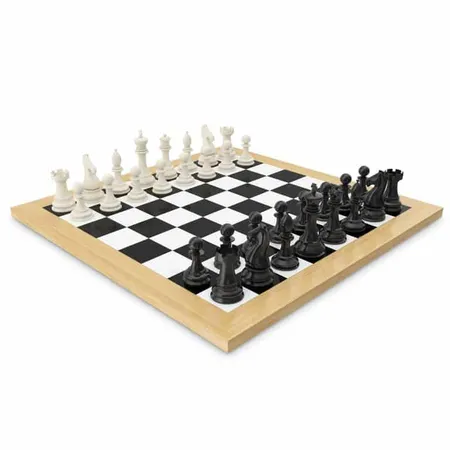
Chess Practice Test Questions
Prepare for the Chess exam with our free practice test modules. Each quiz covers key topics to help you pass on your first try.
Chess Endgames
Free Chess Practice Test featuring Chess Endgames. Improve your Chess Exam score with mock test prep.
Chess History and Famous Players
Chess Mock Exam on Chess History and Famous Players. Chess Study Guide questions to pass on your first try.
Chess Middlegame
Chess Test Prep for Chess Middlegame. Practice Chess Quiz questions and boost your score.
Chess Openings
Chess Questions and Answers on Chess Openings. Free Chess practice for exam readiness.
Chess Rules and Notation
Chess Mock Test covering Chess Rules and Notation. Online Chess Test practice with instant feedback.
Chess Strategy
Free Chess Quiz on Chess Strategy. Chess Exam prep questions with detailed explanations.
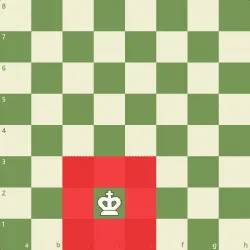
The king has the ability to move one tile in any direction. Castling, a special move that requires moving the king and a rook, is also available. The king is the most valuable piece; attacks on it must be resisted instantly, and if this is impossible, the game is lost immediately.
Rook
Types of Chess Pieces
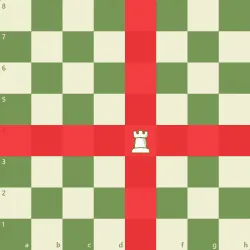
A rook can move as many squares as it wants along a rank or file, but it can't jump over other pieces. A rook is involved in the king's castling move, along with the king.
- ✓Review core chess rules, notation, and common opening principles
- ✓Take a diagnostic practice test to identify weak areas
- ✓Create a study schedule (4-8 weeks recommended)
- ✓Focus on your weakest domains first
- ✓Complete at least 3 full-length practice exams
- ✓Review all incorrect answers with detailed explanations
- ✓Take a final practice test 1 week before exam day
Bishop
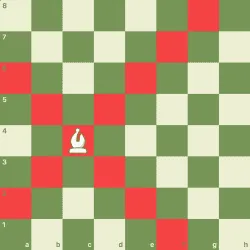
A bishop can move any number of squares diagonally but not across other pieces.
Queen
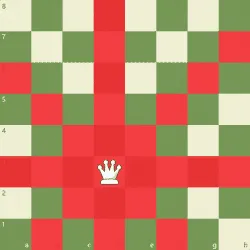
A queen has the abilities of both a rook and a bishop, and she can move any number of squares down a rank, file, or diagonal, but she can't jump over other pieces.
Knight
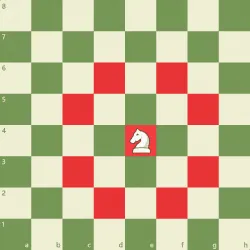
A knight can move to any square that is not on the same rank, file, or diagonal. (This creates an "L" shape, with two squares vertically and one horizontally, or two squares horizontally and one vertically.) Only the knight has the ability to leap over other pieces.
Pawn
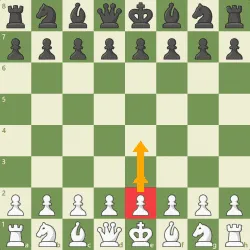
A pawn can advance to the unoccupied square directly in front of it on the same file, or it can advance two squares along the same file on its first move, as long as both squares are unoccupied. By moving to a square diagonally in front of it, a pawn can capture an opponent's piece. En passant capture and promotion are two unique movements available to pawns.
Chess Questions and Answers
You must first set up the chess board before learning how to move the pieces. Learn about the unique rules of the game. Then find out who makes the first move. You must learn the fundamental strategies for winning the game.
- Place a board on your table such that each player has a black square on their left side.
- Place your white king piece first. On the back line, he belongs in the fifth square to the right.
- Place the white queen on the white king piece’s left side.
- For both black and white, place one bishop on each side of the king and queen pieces.
- For both black and white, place one knight piece next to each bishop.
- Place a rook in each of the board’s four corners.
- One pawn piece should be placed in front of each piece currently on the board.
- You may now begin playing, with white taking the first move.
Unfortunately, no one knows who invented chess, or even if it was invented by a single person.
A player must capture the opponent’s king to win a game of chess. This is referred to as the king being “checkmated.” The king is under check whenever he is assaulted, and the opponent must remind him of this.
Simply move the king two spaces to the left or right to castle, OR place the king on top of the rook you wish to castle with. The rook will immediately jump across and to the other side of the king.
According to Wikipedia, chess’ origin was invented in India in the 7th century CE.
Yes. Chess has been recognized as a sport by the International Olympic Committee (IOC) since 2000. Chess is also recognized as a sport in more than 100 countries.
Not only do some individuals believe chess originated in India, but others say it was developed in China.
The current World Chess Champion is GM D Gukesh of India, who won the title in December 2024 at age 18 — the youngest World Chess Champion in history. (Magnus Carlsen, widely considered one of the greatest players ever, held the classical title from 2013 to 2023 but chose not to defend it in the 2023 cycle.)
In any direction, the Knight moves in a L shape. It either moves two squares sideways before moving one square up or down, or it moves two squares up or down before moving one square sideways.
Each player begins with 16 pieces in a chess game. On the board, there are a total of 32 pieces.
Chess has an approximately 1500-year history.
A player normally requires three GM-norms to earn the title of Grandmaster. In addition, to become a Grandmaster, your FIDE rating must have surpassed 2500 at some moment.
Move your e-pawn two spaces ahead. Then, your bishop should be moved to c4. Move your queen to h5. Checkmate occurs when your queen takes your opponent’s weak f7 pawn.
FIDE recognizes roughly 1,800 Grandmasters worldwide as of the mid-2020s, and the count grows most years as new players earn the title — check the current total on FIDE's official rating site.
The player who has the white pieces moves first in chess.
The queen has the most legal moves in the game, as she can move any number of vacant squares horizontally, vertically, or diagonally.
On the chessboard, there are many more different-sized squares. On a chessboard, there are actually 64 + 49 + 36 + 25 + 16 + 9 + 4 + 1 squares. There are a total of 204.
A blunder in chess occurs when a player makes a move that has a major negative impact on their situation. A mistake can result in a player losing material or being checkmated in many cases, but it can also result in a strategically lost position.
The Queen’s Gambit is a chess opening in which White attempts to sacrifice a piece early in order to improve his chances of winning later.
In any direction, the king can only move one square forward, backward, or sideways.
A pawn normally moves one square at a time, but the first time it moves, it has the option of moving two squares.
- The first stage in beginning a game of chess is to set up your chessboard.
- Ranks are numbers that correspond to rows that go from side to side across the chessboard.
- Files are columns that go up and down the chessboard, and each board has eight of them because it is square.
- Using the file-first strategy, you may assign an identity to every square according to the naming standards for ranks and files.
- You must be familiar with the various movements that chess pieces may perform.
- You should be familiar with the terms check, checkmate, and stalemate.
Begin with moving your Queen Pawn to d3. Then, move your King Pawn to e4, freeing up your Queen. Finally, move your Queen diagonally to h5, where you’ll checkmate your opponent’s King without capturing a single piece.
When a player makes the same move three times in a row, or is about to make the same move, a draw is declared.
Yes. The promotion rule allows a player to have more than one queen on the board.
Given that a normal chess game has a branching factor of 35 and lasts 80 moves, the number of potential movements is vast, at 3580 (or 10123), called the “Shannon number.”
To begin a game, the chess pieces are always placed in the same positions. Chess players alternate turns. On their turn, each player performs a single move, and turns cannot be skipped. Special chess moves allow the pieces to move in ways that are normally prohibited by the game’s rules. The initial movements, or opening moves, are crucial because players seek to take control of the board as soon as possible. Chess games can come to one of three endings. One player may leave the game, both players may agree that the game is a stalemate in which neither player can win, or the game may end in a checkmate.
Fool’s Mate, often known as the “two-move checkmate,” is a checkmate obtained by Black by giving checkmate on the second move with the queen following the fewest possible moves from the game’s starting position.
When a king is placed in check and has no legal movements to escape, it is called a checkmate.
Castling is the only time two pieces can move at the same moment in chess, and the only time a piece other than the knight can move over another piece. All in one move, the king moves two squares to the left or right, while the rook moves over and in front of the king.
On the back line, the king belongs in the fifth square to the right. Keep in mind that the white king goes inside the black square. The black king piece should be placed directly across from the white king on the board.
The queen starts on the first rank, next to the king, according to standard FIDE chess rules. The queen, unlike the king, always starts on her own color, whereas the king starts on the opposite-colored square.
Yes. The King, like every other chess piece on the board, may attack and capture.
No. Chess.com is up and running, and we can access it.
The king, rook, bishop, queen, knight, and pawn are the six different types of pieces in chess or called chessman.
Around 600 is the average scholastic tournament player’s rating in Chess.
Chess playing has been shown in multiple studies to increase cognitive, memory, and math skills.
The majority of players still say “check.” The declaration of “check” is not required by chess rules, and it is rarely done in official games.
The total number of pawns in a chess set is sixteen. The game begins with each player having eight pawns.
There's no official average salary for chess Grandmasters — most earn from a mix of tournament prize money, coaching, streaming, sponsorships, and appearance fees, and income varies enormously from player to player.
You must learn to play the game. Join a chess club in your area. Try different playstyles to see which one you prefer. Make your first tournament entry. Learn how to employ methods by reading a chess book or playing in chess app. Use a chess engine or a chess coach to analyze your games. Interact with a skilled chess player.
No. Learning chess is not hard, but mastering the game is.
En passant is a chess rule that allows pawns to capture a pawn that has just passed them by.
Russia’s chess success came from the fact that the country funded the system. The Soviets made a huge contribution to the game. As a result, the game gained a lot of popularity in Russia.
The bishop chess piece may move diagonally in any direction.
You must write down movements at all levels of chess so that if you make a mistake, like as making an illegal move and realizing it later, you can correct it.
A British master, Johann Löwenthal, proposed one of the first proposals to give white the mandatory first move. The First American Chess Congress, held in New York in 1857, was the first of its kind in the United States.
After a tournament, a match, or a single game, ratings are recalculated. Online chess sites, such as chess.com, also have rating systems. A player with a higher rating is considered to be more competent.
Go to your chess.com friend’s profile page. Click “Add to my friends list”. If they accept your friend request, you will now be chess.com friends. Both of you should now log in to play live chess.
No. Chess is not a game that can be solved. We weren’t able to come up with an algorithm that could calculate the best move without considering other options.
Yes. Chess is beneficial to the brain. When you play chess, your brain is forced to exercise logic, develop pattern recognition, make visual and analytical decisions and test your memory.
Chess is not currently a program event at the Olympic Games. FIDE (the International Chess Federation) has periodically advocated for chess's Olympic inclusion, but there is no confirmed Games where it has been added as of this writing.
The king, rook, bishop, queen, knight, and pawn are the six different types of pieces.
A blitz chess game is one in which each player must finish all moves in 10 minutes or less, or the given time plus 60 times any increment is 10 minutes or less.
The objective of the game is to checkmate the opponent’s king by trapping him in a position from which he cannot escape.
In chess, a king, as well as any other enemy piece, cannot capture another king.
The first stage is to compare one player’s expected performance to that of another. The second step is to enter in the actual vs. expected performance and multiply it by a factor that determines how stable the rating should be. It is called the ELO formula.
Rooks move in straight lines throughout the ranks, either up and down the files or side to side. In a straight line, they can move as many squares as they like.
A king can only move one place unless it is castling, in which case it can move two or three spaces.
Bullet chess is a kind of chess that is played with time limits of less than 3 minutes per player.
In chess, clocks are used to keep track of how much time each player spends on the game. The first player to run out of time loses the game.
The greatest places to play chess online are:
- Chess.com
- chess24
- Lichess
- Internet Chess Club
- Playchess.com
Yes. MuchGames.com offers a free version of the Chess Titans game.
Find several chess websites that allow players to make money through tournaments to make money online.
- +Free to start — ratings come from playing rated tournament games, no exam fee required
- +FIDE and national federation (e.g., US Chess) ratings are recognized worldwide
- +Regular tournament play sharpens tactics, calculation, and strategic thinking
- +Higher ratings and titles (Candidate Master, FIDE Master, IM, GM) can open coaching and competitive opportunities
- −Reaching strong ratings takes years of consistent study and play, not a single test
- −Tournament entry fees and travel costs add up for competitive players
- −Federation membership (e.g., US Chess) typically costs around $40-$60 per year
- −Chess has no single universal "certification exam" — progress is measured by rating, not a pass/fail credential
Pros and Cons at a Glance
| Pros | Cons |
|---|---|
| Free to start — ratings come from playing rated tournament games, no exam fee required | Reaching strong ratings takes years of consistent study and play, not a single test |
| FIDE and national federation (e.g., US Chess) ratings are recognized worldwide | Tournament entry fees and travel costs add up for competitive players |
| Regular tournament play sharpens tactics, calculation, and strategic thinking | Chess has no single universal "certification exam" — progress is measured by rating, not a pass/fail credential |
Sample Chess Practice Questions
Try these questions from our free Chess practice tests. The correct answer and an explanation follow each question.
What is the highest chess player's title?
- A. Grandmaster
- B. Super master
- C. Life-time master
Answer: A. Grandmaster
Grandmaster (GM) is the highest title a chess player can achieve, awarded by FIDE for exceptional skill. It is a lifetime title, and once earned, it is rarely revoked.
What does 'piece activity' mean in the chess middlegame?
- A. How many captures a piece has made during the game
- B. The number of pieces off the back rank
- C. The total number of pieces remaining on the board
- D. The mobility and effectiveness of pieces in influencing key squares
Answer: D. The mobility and effectiveness of pieces in influencing key squares
Piece activity refers to how actively placed and mobile a piece is—how many squares it controls and how much it contributes to the overall position.
What does it mean to 'control the center' in chess?
- A. Influence the squares e4, d4, e5, and d5 with pawns or pieces
- B. Place the king in the center during the opening
- C. Put all pieces on the central four squares
- D. Occupy the center with pawns only
Answer: A. Influence the squares e4, d4, e5, and d5 with pawns or pieces
Controlling the center means exerting influence over the four central squares (e4, d4, e5, d5), giving pieces maximum mobility and restricting the opponent's options.
What is a 'battery' in chess?
- A. A group of three or more connected pawns
- B. A defensive pawn chain across the center
- C. Two or more pieces of the same type aligned along a rank, file, or diagonal
- D. A coordinated attack by the king and pawn in the endgame
Answer: C. Two or more pieces of the same type aligned along a rank, file, or diagonal
A battery combines two pieces (such as two rooks, or a queen and rook) aligned on the same rank, file, or diagonal to amplify their combined attacking power.
Chess Questions and Answers
About the Author

Law Enforcement Trainer & Civil Service Exam Specialist
John Jay College of Criminal JusticeMarcus B. Thompson earned his Master of Arts in Criminal Justice from John Jay College of Criminal Justice and served 12 years as a law enforcement officer before transitioning to full-time academy instruction. He is a POST-certified instructor who has prepared candidates for police entrance exams, firefighter assessments, and civil service examinations across dozens of agencies.