

CFC Practice Test
Updated for October 2026The Certified Forensic Counselor (CFC) credential represents a significant achievement for professionals working at the intersection of mental health and the legal system. This specialized certification validates expertise in forensic counseling techniques, ethical standards, and legal procedures that govern work with court-involved clients. As the demand for qualified forensic counselors continues to grow across correctional facilities, court systems, and private practices, earning the Certified Forensic Counselor (CFC) designation can dramatically enhance career opportunities and professional credibility.
CFC Practice Test Questions
Prepare for the CFC - Certified Forensic Counselor exam with our free practice test modules. Each quiz covers key topics to help you pass on your first try.
CFC Substance Abuse & Addiction in Forensi...
CFC Exam Questions covering CFC Substance Abuse & Addiction in Forensic Settings. Master CFC Test concepts for certification prep.
CFC Trauma-Informed Care & Mental Health i...
Free CFC Practice Test featuring CFC Trauma-Informed Care & Mental Health in Criminal Justice. Improve your CFC Exam score with mock test prep.
CFC Communication & Collaboration
CFC Mock Exam on Communication & Collaboration. CFC Study Guide questions to pass on your first try.
CFC Core Principles & Fundamentals
CFC Test Prep for Core Principles & Fundamentals. Practice CFC Quiz questions and boost your score.
CFC Documentation & Reporting
CFC Questions and Answers on Documentation & Reporting. Free CFC practice for exam readiness.
CFC Leadership & Management
CFC Mock Test covering Leadership & Management. Online CFC Test practice with instant feedback.
CFC Professional Standards & Ethics
Free CFC Quiz on Professional Standards & Ethics. CFC Exam prep questions with detailed explanations.
CFC Quality Assurance & Improvement
CFC Practice Questions for Quality Assurance & Improvement. Build confidence for your CFC certification exam.
CFC Reentry & Community Supervision
CFC Test Online for Reentry & Community Supervision. Free practice with instant results and feedback.
CFC Safety & Compliance
CFC Study Material on Safety & Compliance. Prepare effectively with real exam-style questions.
CFC Technology & Tools
Free CFC Test covering Technology & Tools. Practice and track your CFC exam readiness.
CFC Crisis Management & Risk Assessment
CFC Exam Questions covering Crisis Management & Risk Assessment. Master CFC Test concepts for certification prep.
CFC Forensic Assessment & Evaluation
Free CFC Practice Test featuring Forensic Assessment & Evaluation. Improve your CFC Exam score with mock test prep.
Key Takeaways
Free Forensic Counselor Practice Test Online
The Certified Forensic Counselor (CFC) credential demonstrates specialized expertise in forensic mental health practices
Core exam content covers forensic assessment, treatment approaches, and legal/ethical standards
Developing a structured study plan significantly improves exam performance
Clinical experience with forensic populations enhances practical understanding of exam concepts
Practice exams help identify knowledge gaps and improve test-taking strategies
Staying current with legal precedents and evolving treatment models is essential
Professional supervision and peer consultation provide valuable preparation support

Understanding the Certified Forensic Counselor (CFC) Exam Structure
The Certified Forensic Counselor (CFC) examination consists of multiple components designed to assess both theoretical knowledge and practical application skills. The test typically includes 150-200 multiple-choice questions covering all major domains of forensic counseling practice. Some versions of the exam may incorporate case study analyses or situational judgment items to evaluate decision-making abilities in complex forensic scenarios.
Examination content emphasizes the integration of counseling principles with legal knowledge, requiring candidates to demonstrate competency in areas such as risk assessment, expert testimony preparation, and treatment planning for specialized populations. The test also evaluates understanding of jurisdictional variations in mental health law and the counselor's role within different legal contexts. Candidates should anticipate questions that assess both general counseling competencies and specialized forensic applications.
Core Content Areas Covered in the CFC Exam
The Certified Forensic Counselor (CFC) examination focuses on several critical knowledge domains:
Forensic Assessment & Evaluation - Conducting psychological assessments for legal purposes and writing forensic reports
Treatment Approaches for Forensic Populations - Evidence-based interventions for offenders and court-mandated clients
Legal Systems & Procedures - Understanding courtroom processes, chain of custody, and evidentiary rules
Ethical Practice & Professional Standards - Navigating confidentiality issues and dual relationship challenges
Crisis Intervention & Risk Management - Assessing dangerousness and implementing safety protocols
Cultural Competency in Forensic Settings - Addressing diversity factors in assessment and treatment
Effective Preparation Strategies for the CFC Exam
Developing a comprehensive study plan is essential for success on the Certified Forensic Counselor (CFC) examination. Begin by conducting a self-assessment to identify your strengths and areas needing improvement across the test domains. Allocate study time proportionally, focusing more attention on less familiar content areas while maintaining proficiency in stronger subjects.
Create a structured study schedule that incorporates various learning modalities:
Review primary textbooks and professional guidelines on forensic counseling
Complete practice questions under timed conditions to simulate exam pressure
Participate in study groups to discuss complex scenarios and legal applications
Attend exam preparation workshops or webinars when available
Develop mnemonics or visual aids for remembering key legal standards and assessment protocols
The Importance of Clinical Experience in Forensic Settings
While academic preparation forms the foundation for the Certified Forensic Counselor (CFC) examination, direct clinical experience with forensic populations provides invaluable context for exam content. Professionals who have worked in correctional facilities, court clinics, or forensic treatment programs often find they can better understand and apply examination concepts through their practical experience.
Seeking supervised experience in conducting forensic evaluations, writing court reports, or providing expert testimony can significantly enhance both exam performance and professional competence. Many certification boards require a minimum number of supervised hours working with forensic populations precisely because this experience translates to better understanding of the material. Even for those not subject to such requirements, pursuing relevant clinical opportunities will strengthen both examination preparation and long-term career prospects.
Common Challenges and Solutions for CFC Candidates
Many professionals encounter specific difficulties when preparing for the Certified Forensic Counselor (CFC) examination. One frequent challenge involves mastering the extensive legal terminology and procedural knowledge required, particularly for those without formal legal training. Creating a glossary of key terms and regularly reviewing legal case studies can help overcome this hurdle.
Another common struggle involves applying general counseling principles to specialized forensic contexts. Practicing with scenario-based questions and seeking supervision from experienced forensic counselors can develop this translational skill. Time management during the exam also poses difficulties for some candidates, making timed practice tests an essential preparation tool.

Final Preparation Tips Before Exam Day
As the Certified Forensic Counselor (CFC) examination date approaches, focus your efforts on consolidation rather than new learning. Review key concepts and formulas, but avoid introducing unfamiliar material in the final days. Ensure you understand the testing center procedures and have all required documentation prepared well in advance.
In the 24 hours before the exam:
Get adequate sleep to ensure mental clarity
Prepare necessary materials (identification, admission tickets, etc.)
Plan your route to the testing center with extra time for contingencies
Engage in light review rather than intensive study
Practice relaxation techniques to manage test anxiety
Conclusion
Earning the Certified Forensic Counselor (CFC) credential represents a significant professional milestone that validates specialized expertise in this growing field. The examination process, while challenging, serves an important quality assurance function for the profession and ultimately benefits the clients and legal systems served by forensic counselors.
Successful candidates typically combine thorough academic preparation with relevant clinical experience, creating a strong foundation for both examination success and professional practice. The certification opens doors to advanced career opportunities and enhances credibility when providing expert services within legal contexts.
As the field of forensic counseling continues to evolve, maintaining certification through continuing education ensures professionals stay current with emerging research, legal precedents, and best practices. The effort invested in obtaining the CFC credential pays dividends throughout one's career in this dynamic specialty area.
CFC: Pros and Cons
- +CFC certification validates expertise recognized by employers nationwide
- +Certified professionals typically earn 15-20% higher salaries
- +Opens doors to advanced positions and leadership roles
- +Demonstrates commitment to professional standards and ethics
- +Builds a strong professional network through certification communities
- −Exam preparation typically requires 2-4 months of dedicated study
- −Certification and exam fees can range from $150-$500+
- −Must complete continuing education to maintain active certification
- −Pass rates vary — thorough preparation is essential for success
- −Some certifications require prerequisite experience or education
Pros and Cons at a Glance
| Pros | Cons |
|---|---|
| CFC certification validates expertise recognized by employers nationwide | Must complete continuing education to maintain active certification |
| Opens doors to advanced positions and leadership roles | Pass rates vary — thorough preparation is essential for success |
| Demonstrates commitment to professional standards and ethics | Some certifications require prerequisite experience or education |
Sample CFC - Certified Forensic Counselor Practice Questions
Try these questions from our free CFC - Certified Forensic Counselor practice tests. The correct answer and an explanation follow each question.
How should documentation & reporting retention policies be determined in Certified Forensic Counselor?
- A. Based on legal requirements, operational needs, and industry best practices
- B. Keeping everything indefinitely
- C. Destroying records as soon as they are no longer immediately needed
- D. Based on available storage space
Answer: A. Based on legal requirements, operational needs, and industry best practices
Retention policies should balance legal requirements, operational needs, and best practices to ensure appropriate preservation and disposal.
Which metric BEST indicates successful leadership & management in Certified Forensic Counselor?
- A. Achievement of defined key performance indicators and stakeholder satisfaction
- B. Number of meetings held per week
- C. Volume of emails sent
- D. Hours worked by team members
Answer: A. Achievement of defined key performance indicators and stakeholder satisfaction
KPI achievement and stakeholder satisfaction directly measure whether management activities are producing desired outcomes.
What is the PRIMARY benefit of standardizing technology & tools practices in Certified Forensic Counselor?
- A. Consistency, easier maintenance, and improved collaboration among team members
- B. Limiting innovation and creativity
- C. Reducing the number of tools available
- D. Increasing dependency on specific vendors
Answer: A. Consistency, easier maintenance, and improved collaboration among team members
Standardization promotes consistency across the organization, simplifies maintenance, and enables better collaboration between team members.
In Certified Forensic Counselor, how should sensitive documentation & reporting be protected?
- A. Through role-based access controls, encryption, and compliance with privacy regulations
- B. By limiting all access to one person
- C. By avoiding digital storage entirely
- D. Through password protection alone
Answer: A. Through role-based access controls, encryption, and compliance with privacy regulations
Multi-layered protection through access controls, encryption, and regulatory compliance provides comprehensive security for sensitive data.
Take the full CFC - Certified Forensic Counselor practice test
(CFC) Certified Forensic Counselor Questions and Answers
About the Author
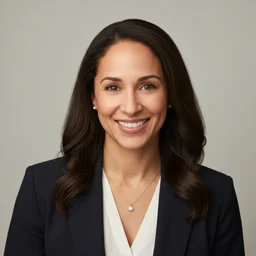
Licensed Counselor & Mental Health Certification Specialist
University of Texas at AustinDr. Angela Ross holds a PhD in Counseling Psychology from the University of Texas at Austin and is licensed as both a Professional Counselor (LPC) and Marriage and Family Therapist (LMFT). With 15 years of clinical and academic experience, she specializes in helping counseling graduates prepare for the NCE, NCMHCE, and state licensure examinations.
Join the Discussion
Connect with other students preparing for this exam. Share tips, ask questions, and get advice from people who have been there.
View discussion (9 replies)