

CDT Practice Test
Updated for September 2026Dogs are often more than just pets—they’re loyal companions, service animals, and even therapeutic partners. Behind every well-behaved dog is a skilled professional who knows how to guide them: a Certified Dog Trainer (CDT). With pet ownership continuing to rise, the demand for qualified dog trainers is stronger than ever. Becoming a CDT not only enhances your ability to train canines effectively but also adds credibility to your skills in a competitive job market.
Whether you’re passionate about animals or seeking a career shift, pursuing certification as a dog trainer can be your path to a fulfilling profession. This article dives into what it takes to become certified, the available classes, salary expectations, job roles, and associated costs.
CDT Practice Test Questions
Prepare for the CDT - Certified Dog Trainer exam with our free practice test modules. Each quiz covers key topics to help you pass on your first try.
CDT Aggression Assessment & Management
CDT Exam Questions covering Aggression Assessment & Management. Master CDT Test concepts for certification prep.
CDT Behavior Modification Protocols
Free CDT Practice Test featuring Behavior Modification Protocols. Improve your CDT Exam score with mock test prep.
CDT Business Operations & Marketing
CDT Mock Exam on Business Operations & Marketing. CDT Study Guide questions to pass on your first try.
CDT Canine Behavior & Body Language
CDT Test Prep for Canine Behavior & Body Language. Practice CDT Quiz questions and boost your score.
CDT Canine Behavior & Psychology
CDT Questions and Answers on Canine Behavior & Psychology. Free CDT practice for exam readiness.
CDT Client Assessment & Consultation
CDT Mock Test covering Client Assessment & Consultation. Online CDT Test practice with instant feedback.
CDT Client Communication & Ethics
Free CDT Quiz on Client Communication & Ethics. CDT Exam prep questions with detailed explanations.
CDT Foundational Principles & Theory
CDT Practice Questions for Foundational Principles & Theory. Build confidence for your CDT certification exam.
CDT Group Class Instruction & Management
CDT Test Online for Group Class Instruction & Management. Free practice with instant results and feedback.
CDT Health, Safety & First Aid
CDT Study Material on Health, Safety & First Aid. Prepare effectively with real exam-style questions.
CDT Learning Theory & Conditioning
Free CDT Test covering Learning Theory & Conditioning. Practice and track your CDT exam readiness.
CDT Leash & Obedience Training
CDT Exam Questions covering Leash & Obedience Training. Master CDT Test concepts for certification prep.
CDT Positive Reinforcement Methods
Free CDT Practice Test featuring Positive Reinforcement Methods. Improve your CDT Exam score with mock test prep.
CDT Puppy Socialization & Development
CDT Mock Exam on Puppy Socialization & Development. CDT Study Guide questions to pass on your first try.
CDT Safety Protocols & Risk Management
CDT Test Prep for Safety Protocols & Risk Management. Practice CDT Quiz questions and boost your score.
Key Takeaways
Free Dog Trainer Practice Test Online
Certified Dog Trainers play a crucial role in the development and behavior of dogs across various settings.
There are many high-quality programs, both online and in-person, that offer structured education for aspiring trainers.
Certification exams, like the CPDT-KA, are recognized nationally and increase career credibility.
Salaries vary but can increase significantly with experience, specialization, or business ownership.
Start-up and certification costs can range from $1,000 to $6,000 depending on the chosen path.
How to Become a Certified Dog Trainer
The process of becoming a certified dog trainer involves a few essential steps. While requirements may differ by organization, a general pathway includes:
Education & Coursework: Start by completing a reputable dog training program. Ensure that the course you choose aligns with the standards of organizations like the Certification Council for Professional Dog Trainers (CCPDT).
Hands-On Experience: Most certifying bodies require proof of practical training hours. Working as an apprentice under a seasoned trainer or volunteering at shelters can help meet this requirement.
Certification Exam: The CCPDT, for instance, offers the Certified Professional Dog Trainer - Knowledge Assessed (CPDT-KA) exam, which tests knowledge in behavior, instruction, and training techniques.
Continuing Education: To maintain certification, trainers must complete continuing education units (CEUs) regularly to stay up-to-date on best practices and new methodologies.
In the U.S., there is no mandatory licensing for dog trainers, but earning certification ensures a higher level of trust and professionalism when working with clients.
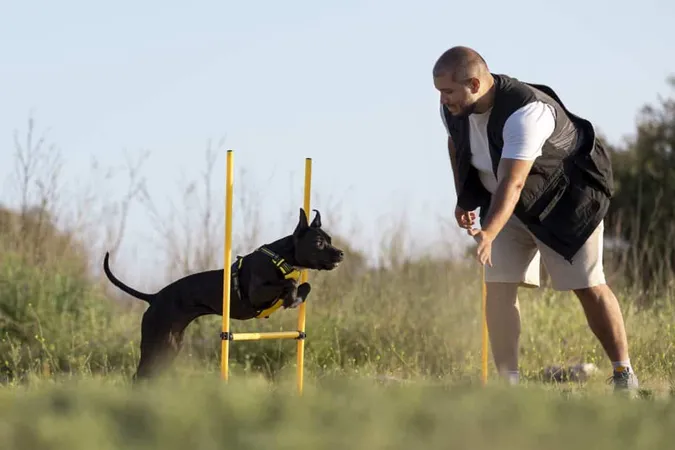
How Much Does It Cost to Become a Dog Trainer
The cost to become a certified dog trainer varies based on the path you choose. Here’s a breakdown of potential expenses:
Training Courses: $500 to $5,000 depending on the program's length, format, and depth.
Certification Exam: The CPDT-KA exam costs $385, with recertification required every three years.
Continuing Education: Workshops, seminars, or online CEU courses may cost anywhere from $50 to $300 annually.
Optional Expenses: Books, training tools, insurance, and memberships (e.g., APDT) can add to costs.
Although it may seem like a sizable investment, the career opportunities and professional credibility earned often outweigh the upfront cost.
Certified Dog Trainer Classes
Enrolling in a structured course is typically the first step for anyone aiming to become a certified dog trainer. These programs vary by organization and focus, but they all aim to provide foundational knowledge in:
Canine behavior and learning theory
Positive reinforcement techniques
Breed-specific training approaches
Client communication and training customization
Safety and emergency protocols during sessions
Institutions like the International Association of Animal Behavior Consultants and the Association of Professional Dog Trainers (APDT) offer accredited programs that include in-person, online, or hybrid formats.
Most certification bodies require hands-on training hours as part of their curriculum. Students may also be expected to demonstrate proficiency in behavior modification and obedience skills with real dogs before completing the course.
Many programs are offered through community colleges or vocational institutions, including some backed by extension programs of state universities.
Dog Trainer Salary
Salaries for certified dog trainers can vary widely based on location, experience, and specialization. However, certified trainers generally earn more than those without formal credentials.
Entry-Level Trainers: May earn between $25,000 to $35,000 annually.
Experienced Trainers: Those with several years of experience and specialization (e.g., service dogs, aggression cases) can earn between $45,000 to $75,000 per year.
Self-Employed or Business Owners: Dog trainers who run their own businesses or work in urban, high-demand areas can earn over $100,000 annually.
Additional income can come from offering group classes, private sessions, pet boarding, or selling training resources. According to the U.S. Bureau of Labor Statistics, employment of animal care workers is expected to grow 29% from 2026 to 2031, much faster than average.

Dog Trainer Positions
Certified dog trainers are not limited to just obedience instruction. Their skills are applicable in a wide variety of roles:
Private Dog Trainer: One-on-one in-home sessions or group obedience classes.
Animal Shelter Behaviorist: Improve adoptability by working on behavioral issues in shelter animals.
Service Dog Trainer: Specialized training for dogs that assist individuals with disabilities.
Veterinary Assistant/Trainer: Offering basic training or behavior consultation in vet clinics.
Pet Daycare & Boarding Facility Staff: Enforcing positive behavior and managing group dynamics.
Military or Police K9 Units: Trainers can work with detection dogs or support police operations.
Many certified trainers also branch out into writing books, creating online courses, or running training schools. Flexibility and entrepreneurship are common in this field.

Conclusion
The journey to becoming a Certified Dog Trainer is both exciting and impactful. Not only does this role offer the chance to work closely with man’s best friend, but it also creates meaningful connections with pet owners, shelters, and communities. As a CDT, you can help transform animal behavior, support stronger bonds between people and their pets, and even contribute to public safety through service or support dog training.
With a combination of passion, education, and persistence, becoming a certified trainer can be a fulfilling long-term career. The investment of time and money is well worth the professional recognition and personal satisfaction that comes from improving the lives of animals and humans alike.
CDT: Pros and Cons
- +CDT certification validates expertise recognized by employers nationwide
- +Certified professionals typically earn 15-20% higher salaries
- +Opens doors to advanced positions and leadership roles
- +Demonstrates commitment to professional standards and ethics
- +Builds a strong professional network through certification communities
- −Exam preparation typically requires 2-4 months of dedicated study
- −Certification and exam fees can range from $150-$500+
- −Must complete continuing education to maintain active certification
- −Pass rates vary — thorough preparation is essential for success
- −Some certifications require prerequisite experience or education
(CDT) Certified Dog Trainer Questions and Answers
About the Author

Veterinarian & Veterinary Technician Exam Specialist
Cornell University College of Veterinary MedicineDr. James Whitfield is a licensed veterinarian with a DVM and PhD from Cornell University College of Veterinary Medicine. He has 16 years of mixed-practice experience and has taught veterinary technician licensing courses at three accredited institutions. He specializes in VTNE preparation, veterinary clinical skills, and animal science certification pathways.