
CDL Schools Near Me: How to Find the Right Training Program
Find CDL schools near me with info on costs, financial aid, VA-approved programs, and free training options. Compare local CDL trucking schools today.
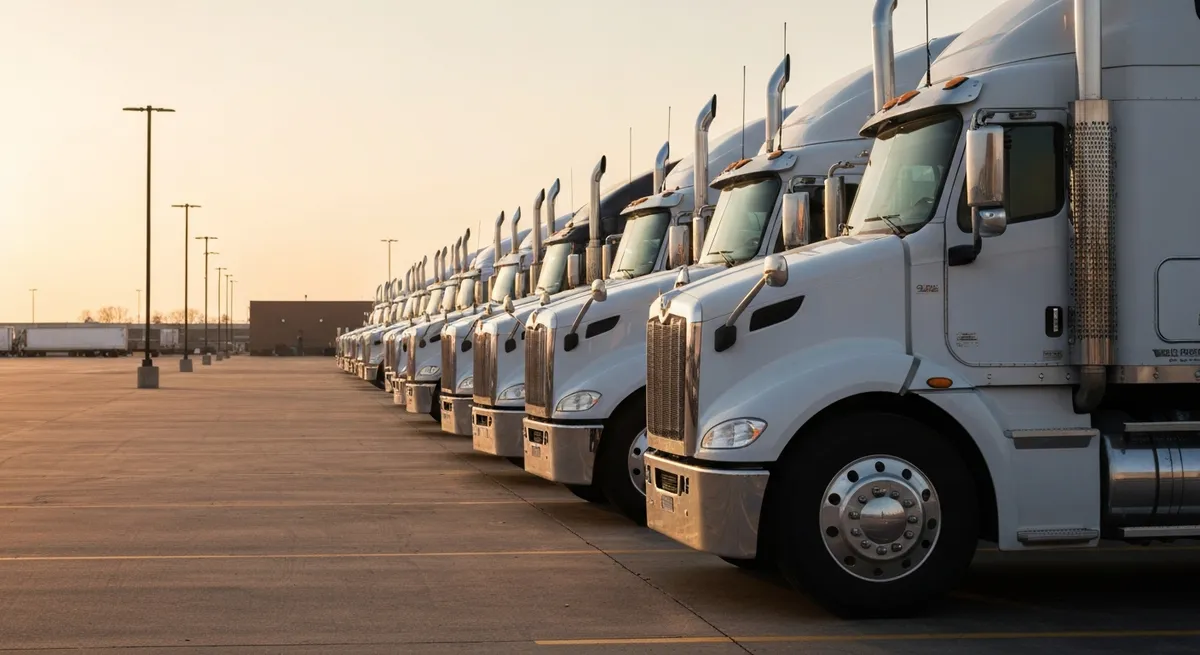
Finding the right CDL school can feel overwhelming when you're staring at a dozen options within driving distance. You've got private academies, community college programs, company-sponsored training, and everything in between — each one claiming they'll get you behind the wheel fastest. The trick isn't just finding cdl schools near me on a map. It's knowing which programs actually deliver on their promises and which ones quietly cut corners on behind-the-wheel hours.
If you're specifically looking for cdl b schools near me, your search gets narrower fast. Class B programs are shorter — often two to four weeks — and they train you for straight trucks, buses, and delivery vehicles rather than the big rigs that Class A covers. Fewer schools offer standalone Class B training because the demand skews heavily toward Class A. Community colleges tend to be your best bet for dedicated Class B programs, and they're usually cheaper than private academies too.
Money is the elephant in the room. A full CDL program can run anywhere from $3,000 to $10,000 depending on where you live and what class of license you're after. That's a serious chunk of change for most people. Good news: there are more funding options than you probably realize. If you're wondering about cdl schools that accept financial aid near me, FISA-eligible programs exist at accredited community colleges and some private schools — you just need to verify they hold proper Department of Education accreditation before assuming your FAFSA will work there.
Before you commit to anything, check whether the school appears in the FMCSA's Training Provider Registry. That registry — launched under the Entry-Level Driver Training rule in 2022 — lists every school that meets federal curriculum standards. If a school isn't on it, walk away. No exceptions. You can also compare programs side by side with our guide on cdl class a schools near me to understand the differences between license classes.
CDL Training at a Glance
Paying for CDL training is the single biggest barrier for most people considering a trucking career. Private CDL academies often cost $5,000 to $8,000, while community college programs tend to land between $3,000 and $5,500. That gap matters. If you're searching for cdl schools that accept financial aid near me, start with community colleges — they're almost always Title IV eligible, meaning your FAFSA application actually works there. Private schools sometimes qualify too, but you need to verify their accreditation status individually.
Veterans have even more options. The VA covers CDL training under multiple benefit programs, and va approved cdl schools near me are more common than you'd think. The GI Bill, VR&E (Veteran Readiness and Employment), and state veteran training grants can all apply. The VA maintains its own list of approved training facilities — separate from the FMCSA registry — and you'll want to cross-reference both lists before enrolling. Some schools are FMCSA-registered but not VA-approved, or vice versa.
Workforce development boards are another funding source that flies under the radar. Nearly every county in the US has a workforce board, and many of them fund CDL training through WIOA (Workforce Innovation and Opportunity Act) grants. These grants can cover the full cost of tuition, books, and even your CDL test fees. The catch? You usually need to be unemployed or underemployed to qualify, and the application process takes two to six weeks. Don't wait until you're ready to start class — apply early.
Employer-sponsored training deserves a mention here too. Companies like CRST, Werner, and Swift will pay for your entire CDL program upfront in exchange for a one-year driving commitment. Sounds great on paper. The reality is more nuanced — these contracts often lock you into lower starting pay and limited route choices. Still, if you genuinely can't afford training any other way, company-sponsored programs eliminate the cost barrier entirely.
When people search for cdl trucking schools near me, they usually mean Class A programs — the ones that qualify you to drive tractor-trailers, tankers, and flatbeds. That makes sense. Class A licenses open the widest range of jobs and typically pay the most. But rushing into the first school you find is a mistake that costs people thousands of dollars and months of wasted time every year.
The quality gap between CDL programs is massive. Some schools pack 160+ hours of behind-the-wheel training into their curriculum. Others barely hit 40 hours and fill the rest with classroom lectures and simulator time. Both charge similar prices. The FMCSA sets minimum training standards, but those minimums are exactly that — minimums. Schools that exceed them by a significant margin tend to produce drivers who pass their skills test on the first attempt. Schools that don't? First-attempt pass rates below 60%.
If you're evaluating cdl class a schools near me, ask for three numbers before anything else: total behind-the-wheel hours, first-attempt pass rate, and job placement rate within 30 days of graduation. Any school that can't — or won't — share those figures is hiding something. Accredited programs are required to track this data. The FMCSA registry doesn't publish pass rates directly, but individual state DMVs sometimes do.
Location matters more than most people realize. A school 90 minutes from your house means three hours of daily commuting on top of a full training schedule. That burns you out fast. Prioritize programs within 30 to 45 minutes of where you live, even if a slightly cheaper option exists farther away. The gas money and time savings usually offset any tuition difference.
Types of CDL Training Programs
Community colleges offer the best value for CDL training in most areas. Programs typically run $3,000 to $5,500, last 6 to 12 weeks, and include both classroom instruction and behind-the-wheel time. The biggest advantage? Financial aid eligibility. Because community colleges hold regional accreditation, you can use Pell Grants, student loans, and workforce grants to cover tuition. Many also offer evening and weekend schedules for students who work full-time. Downsides include longer program lengths and limited start dates — most run on a semester schedule rather than rolling enrollment.
Searching for class b cdl schools near me turns up fewer results than Class A — that's normal. Class B programs serve a smaller market: bus drivers, delivery truck operators, dump truck drivers, and concrete mixer operators. The training is shorter (often two to three weeks) and less expensive ($1,500 to $4,000 in most areas). Community colleges and some vocational schools are your primary options here.
Don't overlook va-approved cdl schools near me if you're a veteran or active-duty service member transitioning out. The VA covers CDL training under Chapter 33 (Post-9/11 GI Bill), Chapter 31 (VR&E), and several state-level veteran benefit programs. Some states — Texas, California, and Florida in particular — have additional veteran CDL training grants that stack on top of federal benefits. Check with your local VA education liaison before enrolling anywhere.
The FMCSA's Training Provider Registry is your single most important research tool. Every school that meets federal Entry-Level Driver Training (ELDT) standards appears on this list. You can filter by state, city, and training type. If a school isn't in the registry, their training won't count toward your CDL application — period. The registry also shows whether a school offers Class A, Class B, or both, along with any endorsement training (hazmat, tanker, passenger).
Accreditation is the other piece of the puzzle. Regional or national accreditation from a body recognized by the Department of Education means a school has been independently verified. This matters for two reasons: financial aid eligibility and training quality. Unaccredited schools can still appear in the FMCSA registry (it tracks ELDT compliance, not accreditation), so you need to check both databases separately. The difference between FMCSA registration and accreditation trips up a lot of students.
What to Look For in a CDL School
Verify the school appears in the federal Training Provider Registry. Schools not listed can't provide valid ELDT certification, and your state DMV won't accept their training toward your CDL application.
FMCSA requires minimum driving hours, but top schools offer 160+ hours of actual road time. Ask specifically about range vs road hours — range time parking a truck isn't the same as highway driving.
Good schools have pass rates above 85% on the CDL skills test. If a school won't share this number or claims they don't track it, that's a red flag worth paying attention to.
Look for schools with active carrier partnerships and dedicated job placement staff. The best programs guarantee interviews with multiple carriers within two weeks of graduation.
If you're hunting for cdl class b schools near me, know that Class B programs are structured differently than Class A. The vehicle you'll train on is different — straight trucks, buses, or large box trucks instead of tractor-trailers. The pre-trip inspection is simpler. The backing maneuvers are easier. And the road test is shorter. All of this means less training time and lower costs, which is great if Class B is genuinely what you need.
Here's something most people don't realize: you can attend cdl schools near me free through several legitimate channels. Workforce development grants (WIOA), veteran benefits, employer-sponsored programs, and some state retraining initiatives cover 100% of CDL training costs. Free doesn't mean low quality — the school is the same regardless of who's paying. The difference is just the funding source.
State workforce boards are particularly generous with CDL training funds right now. The driver shortage is real — the American Trucking Associations estimates a shortfall of roughly 78,000 drivers — and states are actively funding CDL training to fill that gap. Contact your local CareerSource, WorkOne, or workforce development center (the name varies by state) and ask specifically about CDL training grants. Processing takes two to six weeks, so apply well before your intended start date.
Some community colleges have even started offering CDL scholarships funded by local trucking companies. These scholarships don't come with employment obligations like company-sponsored training does. The carrier donates scholarship money to the college, you train wherever the college sends you, and after graduation you're free to work for any company. It's the best of both worlds — free training with no strings attached. Ask admissions offices whether any employer-funded scholarships are currently available.
Pros and Cons of Different CDL School Types
- +Community colleges cost 40-50% less than private academies on average
- +Financial aid (Pell Grants, FAFSA loans) works at accredited schools
- +VA benefits cover full tuition at approved training facilities
- +Private academies get you licensed in 3-5 weeks instead of 8-12
- +Company-sponsored programs eliminate upfront costs entirely
- +WIOA workforce grants fund CDL training for unemployed or underemployed workers
- −Private academy costs ($5K-$10K) are prohibitive without financial aid
- −Company-sponsored contracts lock you into lower pay for 12 months
- −Community college schedules are rigid — limited start dates and evening options
- −Some schools barely meet FMCSA minimums for behind-the-wheel hours
- −Unaccredited schools can't accept FAFSA despite appearing in FMCSA registry
- −Workforce grant applications take 2-6 weeks and have income eligibility requirements
Let's talk money. The cheapest cdl schools near me are almost always community college programs. In some states — Mississippi, Arkansas, Oklahoma — you can complete CDL training at a community college for under $2,500. Add a Pell Grant or workforce development grant and you might pay nothing at all. The catch is availability: these low-cost programs fill up fast, and waitlists of three to six months aren't uncommon in high-demand areas.
Understanding cdl schools near me cost means looking beyond just tuition. Factor in the CDL learner's permit fee ($10 to $50 depending on your state), the skills test fee ($50 to $200), DOT physical exam ($50 to $150), drug screening ($40 to $100), and any endorsement test fees ($10 to $20 each). These add-on costs total $160 to $520 on top of tuition. Some schools bundle everything into one price; others nickel-and-dime you on every extra.
Payment plans can bridge the gap if you don't qualify for grants or financial aid. Most private CDL academies offer monthly installment plans, though the terms vary wildly. Some charge zero interest over 6 to 12 months. Others tack on 15-20% APR — effectively adding $750 to $2,000 to the total cost. Read the fine print. Ask about the total amount you'll pay after interest, not just the monthly number.
Here's a budgeting framework that works: set aside $1,000 for living expenses during training (reduced work hours or no income), $500 for testing and licensing fees, and the remaining tuition amount. If the total exceeds what you can manage, apply for WIOA grants first — they're the fastest non-loan funding source. VA benefits process slightly slower but cover more costs.
CDL School Enrollment Checklist
Some schools flip the traditional model entirely. If you're looking for cdl schools that pay for training near me, you're really talking about employer-sponsored programs. Companies like Roehl Transport, Maverick Transportation, and PAM Transport will cover your tuition, put you through training at their own facilities, and start paying you a salary from day one. The employment commitment is typically 12 months. Leave early, and you'll owe back a prorated portion of training costs — usually $3,000 to $6,000.
For anyone considering class a cdl truck driving schools near me, the training curriculum should follow a predictable structure. First few days: classroom instruction covering FMCSA regulations, vehicle systems, trip planning, and cargo securement. Next phase: range training where you practice pre-trip inspections, straight-line backing, offset backing, and parallel parking. Final phase: road training on actual highways, city streets, and rural routes. The total should add up to at least 160 hours, with a minimum of 40 hours on public roads.
Night driving is a curriculum element that separates good schools from mediocre ones. FMCSA requires some night driving experience, but the minimums are laughably low. Top programs include dedicated night driving modules — typically 8 to 16 hours — because nighttime conditions present completely different challenges: reduced visibility, fatigue management, different traffic patterns, and increased wildlife hazards. If a school doesn't mention night driving in their curriculum overview, ask about it directly.
Mountain driving and winter weather training are also differentiators, depending on where you plan to drive. Schools in flat states like Kansas or Indiana might skip these entirely. That's fine if you'll only drive regional routes in the Midwest. But if you're eyeing OTR (over-the-road) positions that cross the Rockies or run through New England winters, seek out programs that include terrain-specific training modules.
Check Before You Enroll
The FMCSA Training Provider Registry at trainproviderregistry.fmcsa.dot.gov is the only federal database of approved CDL training providers. Every school that meets Entry-Level Driver Training (ELDT) standards is listed here. If a school isn't in the registry, their training won't satisfy ELDT requirements — and your state DMV will reject your CDL application. Search by state and city, then cross-reference the school's accreditation status with the Department of Education database for financial aid eligibility.
Veterans searching for gi bill approved cdl schools near me have multiple benefit programs to tap. The Post-9/11 GI Bill (Chapter 33) covers tuition at VA-approved schools and may include a monthly housing allowance during full-time training. VR&E (Chapter 31) covers training for veterans with service-connected disabilities. And the Montgomery GI Bill (Chapter 30) pays a monthly stipend that can offset living expenses while you're in class.
Here's the critical detail most veteran CDL students miss: VA approval and FMCSA registration are two completely separate things. A school can be on the FMCSA Training Provider Registry without being VA-approved, and vice versa. You need cdl schools that accept gi bill near me to appear on BOTH lists. Check the VA's WEAMS database (Web Enabled Approval Management System) for VA approval status, then cross-reference with the FMCSA registry. If the school only appears on one list, it won't work — you need both for your benefits to apply AND your training to count toward your CDL.
State veteran benefit programs add another layer. Texas offers the Hazlewood Act, which covers tuition at state-funded schools for eligible veterans. California's CalVet fee waiver does the same at community colleges. Florida waives tuition for Purple Heart recipients. These state benefits stack on top of federal GI Bill benefits in many cases, potentially covering every penny of your CDL training plus living expenses. Contact your state's veteran affairs office — not just the federal VA — to learn what's available locally.
Timing matters for veteran benefits. VA education benefit processing takes 30 to 45 days from application to enrollment certification. Start this process at least two months before your intended training start date. If you wait until the week before class starts, you'll either delay enrollment or pay out of pocket while waiting for VA reimbursement. Neither option is ideal. Plan ahead.
The driver shortage has attracted predatory schools that charge premium prices for substandard training. Red flags include: guaranteeing CDL passage (no school can guarantee you'll pass the state exam), refusing to share pass rate data, not appearing in the FMCSA Training Provider Registry, and pressuring you to sign contracts before visiting the facility. Always verify FMCSA registration, check accreditation independently, and read recent graduate reviews before paying any deposit.
The phrase cdl schools that pay you near me sounds too good to be true — and it partly is. What it actually refers to are employer-sponsored programs where a trucking company pays for your training AND pays you a stipend or wage during the training period. Roehl Transport's "Get Your CDL" program, for example, pays students during training weeks. CRST offers a similar deal. The trade-off, as always, is a post-training employment commitment and typically below-market starting pay.
Genuinely free cdl training schools near me do exist outside the company-sponsored model. WIOA workforce grants cover 100% of tuition at eligible schools — no employment commitment attached. Some state programs, like California's Employment Training Panel or Texas's Skills Development Fund, also fund CDL training at zero cost to the student. These programs target unemployed, underemployed, or dislocated workers. The application process requires income documentation and sometimes a waiting period, but the payoff is real: professional CDL training with no debt and no strings.
Community action agencies and nonprofit organizations are another free-training avenue that most people overlook entirely. Organizations like Goodwill, the Salvation Army, and local community development corporations sometimes fund CDL training as part of their workforce development missions. Eligibility usually depends on income level and employment status. These programs don't advertise heavily — you won't find them on Google's first page. Call your local United Way's 211 helpline and ask specifically about CDL training assistance. They maintain databases of every workforce program in your area.
One more option worth mentioning: apprenticeship programs registered with the Department of Labor. CDL apprenticeships are structured earn-while-you-learn programs where you train under a licensed driver and gradually take on more responsibility. The training is free, you earn a paycheck from day one, and the program typically lasts 12 months. The DOL's ApprenticeshipFinder website lists active CDL apprenticeship opportunities by state.
If you're willing to pay a premium for quality, paid cdl training schools near me — meaning private academies — offer some genuine advantages over free or low-cost alternatives. Smaller class sizes mean more one-on-one time with instructors. Rolling start dates mean you can begin training within days rather than waiting for a semester. And dedicated career services teams actively connect graduates with carriers, often setting up interviews before you even finish the program.
Identifying the top cdl schools near me requires looking at outcomes, not marketing. The best schools share their data openly: pass rates above 90%, job placement within two weeks, average starting salary of graduates, and student-to-truck ratio of 3:1 or better. Schools that rank highly on these metrics don't need flashy websites or aggressive sales tactics. Their graduates recommend them, and carriers actively recruit from their programs.
The student-to-truck ratio deserves special attention. A ratio of 3:1 means three students share one training truck — each person gets roughly 20 minutes of driving time per hour while the others observe. That's acceptable. A ratio of 5:1 or 6:1 means you're spending most of your day watching other people drive. Some budget schools pack six or seven students per truck to keep costs down. More students per truck equals more tuition revenue but dramatically less behind-the-wheel time for each individual. Ask this question before you enroll.
Geography shapes your school options more than anything else. Urban areas typically have five to ten CDL schools within a reasonable commute. Rural areas might have one or two, and they may not offer your preferred license class or schedule. If your local options are limited, consider whether a short-term relocation for training makes financial sense. Some schools offer housing or housing stipends for out-of-area students. A four-week relocation for better training beats a local program with poor outcomes every time.
CDL Questions and Answers
About the Author
Licensed Driving Instructor & DMV Test Specialist
Penn State UniversityRobert J. Williams graduated from Penn State University with a degree in Transportation Management and has spent 20 years as a certified driving instructor and DMV examiner consultant. He has personally coached thousands of applicants through written knowledge tests, skills assessments, and commercial driver licensing programs across more than 30 states.
Join the Discussion
Connect with other students preparing for this exam. Share tips, ask questions, and get advice from people who have been there.
View discussion (2 replies)