
CCI Health Services Gaithersburg: Complete Guide to Credentialing, Careers, and Cardiovascular Certification
💯 CCI health services Gaithersburg guide — explore cardiovascular credentialing, career paths, salary data, and exam prep tips for 2026 October success.

When people search for cci health services gaithersburg, they often encounter two distinct but related worlds: the Maryland-based community health network and the Cardiovascular Credentialing International organization that certifies the technologists keeping cardiac patients alive. This guide untangles both, focusing primarily on the credentialing pathway because that is where the bulk of career-defining decisions happen. Whether you are a sonography student, a working tech, or a hiring manager, understanding the CCI ecosystem helps you make smarter choices about training, exam prep, and long-term professional growth in the cardiovascular field.
Gaithersburg, Maryland sits inside the Washington, D.C. metropolitan area, a region with one of the highest concentrations of academic medical centers, ambulatory cardiology practices, and federal health agencies in the United States. That density matters because cardiovascular technologists trained or credentialed through CCI find a strong local job market, with hospital systems like Adventist HealthCare and MedStar actively recruiting registered cardiac sonographers, vascular technologists, and invasive specialists almost continuously throughout the year.
CCI itself is a nonprofit credentialing body founded in 1968 and headquartered in North Carolina, but its credentials carry weight nationwide, including in every Gaithersburg-area hospital, outpatient imaging center, and cath lab. CCI offers credentials such as the RCS for adult cardiac sonography, RVS for vascular ultrasound, RCIS for invasive cardiovascular work, RCCS for pediatric cardiac sonography, and CCT for cardiographic techs, each requiring its own examination, eligibility documentation, and continuing education plan after issuance.
Why does the Gaithersburg search query persist? Many candidates locate CCI testing through Pearson VUE centers near Gaithersburg, attend regional prep workshops hosted at community colleges, or work for Holy Cross, Suburban Hospital, and Shady Grove Medical Center while preparing. The phrase has become a regional shorthand for the entire credentialing journey, including study materials, exam scheduling, fingerprinting requirements, and even the long drive to a quiet test center on the morning of the registry attempt.
This article walks through everything a candidate needs: eligibility pathways, exam structures, cost breakdowns, study timelines, and salary expectations. It also addresses common confusion between the Maryland clinic system and the credentialing body, so applicants stop sending résumés to the wrong address or scheduling exams at facilities that no longer host CCI testing. By the end, you will know exactly where to apply, what to study, and how the Gaithersburg cardiovascular labor market values each credential.
If you are early in the process, start by mapping your prerequisite hours, since CCI uses prerequisite categories ranging from formal CAAHEP-accredited programs to clinical experience pathways requiring documented patient procedures. The eligibility prerequisites change periodically, so always cross-reference the current CCI candidate handbook before paying application fees. Misreading prerequisites is the single most common reason candidates lose application money and delay credentialing by six months or more, especially among self-taught vascular technologists transitioning from sonography or radiologic technology backgrounds.
Finally, expect this guide to lean heavily on practical detail. Reading abstract overviews rarely helps a candidate pass a 170-question registry built on hemodynamics, pharmacology, vascular physics, and pathology. You need concrete numbers, real schedules, and tested study tactics, so that is what follows. Bookmark this page, return to it as your exam date approaches, and use the practice question links throughout to gauge readiness honestly rather than optimistically.
CCI Credentialing by the Numbers

The Six CCI Credentials Explained
Adult echocardiography credential covering 2D, M-mode, Doppler, contrast studies, and transesophageal echo. Most common path for hospital echo lab employment in the Gaithersburg metro area.
For cath lab personnel performing coronary angiography, electrophysiology, and structural heart procedures. Strong demand at MedStar and Adventist invasive cardiology departments.
Covers arterial and venous duplex, cerebrovascular exams, abdominal vascular studies, and physiologic testing. Widely used in outpatient vascular clinics around Montgomery County.
Pediatric and congenital adult heart disease imaging. Niche but high-paying, with Children's National Hospital being the largest regional employer for credentialed RCCS technologists.
Entry-level credential focused on EKG, Holter, stress testing, and basic monitoring. Often a stepping stone toward RCS, RCIS, or RVS career tracks.
The Gaithersburg cardiovascular job market is unusually deep for a suburb. Within a 30-mile radius you have Shady Grove Medical Center, Holy Cross Germantown, Adventist HealthCare White Oak, Suburban Hospital, Walter Reed National Military Medical Center, MedStar Montgomery Medical Center, Children's National in DC, and the entire NIH Clinical Center campus. Each of these facilities runs cardiology, vascular, or cath lab departments that prefer or outright require CCI credentials before issuing offer letters to imaging staff.
Wage data backs up the regional appeal. The Bureau of Labor Statistics places Maryland in the top tier nationally for cardiovascular technologist and sonographer pay, with median compensation often exceeding $85,000 once shift differentials, on-call stipends, and overtime are included. Gaithersburg specifically benefits from federal-adjacent employers, where defined benefit pensions and tuition reimbursement remain common, unlike many private hospital systems that have phased these benefits out over the last decade.
That said, the labor market is also more credentialing-strict than smaller markets. A technologist in rural West Virginia might be hired uncredentialed and given two years to register, but a Gaithersburg echo lab usually wants the RCS in hand or a documented exam date within 90 days of hire. This is why so many local applicants begin searching for cci health services gaithersburg study options well before they finish their CAAHEP-accredited program coursework or clinical rotations.
Beyond hospitals, outpatient cardiology practices represent a growing slice of demand. Groups like MedStar Cardiology Associates and Privia Health network practices operate dozens of imaging suites where vascular and echo technologists work standard daytime hours without nights or weekends. These positions pay slightly less than hospital roles but offer schedule predictability that attracts mid-career technologists with families or those finishing graduate degrees in healthcare administration.
Cath lab roles are the highest-paying corner of the local market. RCIS-credentialed invasive specialists at MedStar Washington Hospital Center, just south of Gaithersburg, frequently earn six figures including call pay, with electrophysiology specialists pulling even more. The trade-off is brutal on-call rotations, STEMI activation pages at 2 a.m., and a learning curve that takes years to master. Candidates considering this route should shadow before committing to the credential and exam fees.
For internationally trained candidates, CCI offers pathways that ARDMS and ARRT sometimes do not, particularly through documented clinical experience prerequisites. Gaithersburg has a substantial population of foreign-trained physicians and allied health professionals seeking U.S. credentialing, and CCI registries have become a reasonable second-career option for those whose original medical licenses do not transfer. Local community colleges including Montgomery College host bridge programs designed precisely for this demographic.
Finally, do not overlook telemetry and monitoring technician roles as entry points. Many Gaithersburg-area hospitals staff their telemetry units with CCT-credentialed technicians who later transition into echo or cath lab training programs. Starting at $22 to $28 per hour, these positions provide patient exposure and rhythm interpretation experience that directly accelerates later RCS or RCIS exam preparation, especially in the arrhythmia and pharmacology domains that consistently trip up first-attempt candidates.
CCI Practice Test Questions
Prepare for the CCI - Cardiovascular Credentialing International exam with our free practice test modules. Each quiz covers key topics to help you pass on your first try.
CCI Cardiac Pharmacology and Hemodynamic M...
CCI Exam Questions covering Cardiac Pharmacology and Hemodynamic Monitoring. Master CCI Test concepts for certification prep.
CCI - Cardiovascular Credentialing Interna...
Free CCI Practice Test featuring - Cardiovascular Credentialing International Cardiac Anatomy and Physiology. Improve your CCI Exam score with mock test prep.
CCI - Cardiovascular Credentialing Interna...
CCI Mock Exam on - Cardiovascular Credentialing International Cardiac Stress Testing Protocols. CCI Study Guide questions to pass on your first try.
CCI - Cardiovascular Credentialing Interna...
CCI Test Prep for - Cardiovascular Credentialing International Cerebrovascular Duplex Examinations. Practice CCI Quiz questions and boost your score.
CCI - Cardiovascular Credentialing Interna...
CCI Questions and Answers on - Cardiovascular Credentialing International ECG Rhythm Interpretation. Free CCI practice for exam readiness.
CCI - Cardiovascular Credentialing Interna...
CCI Mock Test covering - Cardiovascular Credentialing International Invasive Catheterization Procedures. Online CCI Test practice with instant feedback.
CCI - Cardiovascular Credentialing Interna...
Free CCI Quiz on - Cardiovascular Credentialing International Peripheral Arterial Evaluation. CCI Exam prep questions with detailed explanations.
CCI - Cardiovascular Credentialing Interna...
CCI Practice Questions for - Cardiovascular Credentialing International Peripheral Venous Evaluation. Build confidence for your CCI certification exam.
CCI - Cardiovascular Credentialing Interna...
CCI Test Online for - Cardiovascular Credentialing International Ultrasound Physics and Instrumentation. Free practice with instant results and feedback.
CCI - Cardiovascular Credentialing Interna...
CCI Study Material on - Cardiovascular Credentialing International Valvular Pathology Assessment. Prepare effectively with real exam-style questions.
CCI - Cardiovascular Credentialing Interna...
Free CCI Test covering - Cardiovascular Credentialing International Vascular Hemodynamics Principles. Practice and track your CCI exam readiness.
Inside the CCI Health Services Exam Structure
Every CCI registry uses computer-based multiple-choice items delivered through Pearson VUE testing centers, including the Gaithersburg and Rockville locations. Most exams contain approximately 170 scored questions plus a handful of unscored pilot items used for future test development. Candidates have three hours, which translates to roughly one minute per question with time left for flagging and review of uncertain answers near the end.
Questions blend recall, application, and analysis levels. You will see straightforward identification items asking which medication blocks calcium channels alongside complex calculations of stroke volume from hemodynamic tracings. The blend rewards candidates who studied the official content outline systematically rather than memorizing flashcards in isolation from clinical reasoning, since stand-alone facts rarely appear without an accompanying patient context.

CCI Credentialing: Should You Pursue It?
- +Nationally portable credential recognized by every major hospital system in the U.S.
- +Strong salary uplift averaging 15 to 25 percent versus uncredentialed peers
- +Multiple pathways including clinical experience routes for non-traditional candidates
- +CME requirements keep your knowledge current and competitive over time
- +Opens doors to specialized roles like electrophysiology, structural heart, and pediatric echo
- +Highly respected by employers in the Gaithersburg, Bethesda, and broader DC metro region
- −Application and exam fees exceed $400 per credential before study materials are added
- −Eligibility documentation can take months to assemble, especially clinical hour logs
- −Failure rates on first attempt run 30 to 40 percent, creating financial and emotional setbacks
- −Triennial renewal demands 36 CME credits and renewal fees on a rolling cycle
- −Some credentials overlap with ARDMS equivalents, creating duplicate cost without duplicate benefit
- −Pearson VUE testing windows fill quickly near Gaithersburg, requiring booking weeks in advance
Pros and Cons at a Glance
| Pros | Cons |
|---|---|
| Nationally portable credential recognized by every major hospital system in the U.S. | Eligibility documentation can take months to assemble, especially clinical hour logs |
| Multiple pathways including clinical experience routes for non-traditional candidates | Some credentials overlap with ARDMS equivalents, creating duplicate cost without duplicate benefit |
| CME requirements keep your knowledge current and competitive over time | Pearson VUE testing windows fill quickly near Gaithersburg, requiring booking weeks in advance |
CCI Health Services Application Checklist
- ✓Confirm your prerequisite category and required clinical hours in the current candidate handbook
- ✓Gather official transcripts from your CAAHEP-accredited or equivalent training program
- ✓Complete clinical experience logs signed by a supervising physician or program director
- ✓Submit your CCI online application with the correct credential code and category selection
- ✓Pay application and examination fees by credit card or institutional check
- ✓Wait for Authorization to Test email confirming Pearson VUE scheduling eligibility
- ✓Book your exam at the Gaithersburg or Rockville Pearson VUE center within the 90-day ATT window
- ✓Review the official content outline and download a printable PDF for tracking study progress
- ✓Take at least three full-length practice tests under timed conditions before exam day
- ✓Bring two forms of government-issued ID matching the name on your application exactly
Schedule your exam before you feel ready.
Candidates who book a Pearson VUE seat first and then plan their study calendar backward consistently outperform those who wait until they feel prepared. The deadline pressure forces consistent daily review and prevents the indefinite postponement that derails most working-tech registry attempts.
Cost transparency matters because credentialing budgets balloon quickly when candidates underestimate ancillary expenses. The base CCI application fee runs $200 with an additional $365 examination fee for most credentials, totaling $565 before any study materials enter the equation. Retake fees discount slightly to around $365 since the application portion does not repeat, but the cumulative cost of two failed attempts plus a successful third can easily exceed $1,500 for a single credential.
Study materials add another tier of expense. The Lippincott review books, Davies textbooks, and Pegasus online question banks each cost between $80 and $300, and most successful candidates use at least two sources rather than relying on a single text. Add a structured review course like ESP Ultrasound or Geisinger's cardiology review, and you might invest another $400 to $1,200 before sitting for the exam, particularly if you attend in-person workshops in Baltimore or northern Virginia.
On the income side, the return on investment justifies these costs for nearly every candidate who passes. A credentialed RCS in the Gaithersburg area earns roughly $15,000 more annually than an uncredentialed echo tech with similar experience, meaning the investment pays back in under three months once you secure a credentialed position. Cath lab RCIS holders see even larger gaps, often $20,000 to $30,000 above uncredentialed peers, especially when call pay enters the equation.
Tuition reimbursement programs at NIH, Walter Reed, and Adventist HealthCare frequently cover the entire credentialing cost, including study materials and exam fees, provided the employee remains in good standing for a specified period after passing. These programs typically require pre-approval before you incur expenses, so consult HR before paying out of pocket and missing reimbursement eligibility. Some unions and professional associations also offer scholarships specifically for CCI registry candidates.
Renewal cost is a smaller but recurring expense. CCI charges roughly $130 per credential every three years for active certificants, plus the cost of obtaining 36 continuing education credits during that period. Many employers cover renewal fees and CME costs as part of standard benefits packages, but freelance or per-diem technologists carry these expenses personally. Budget approximately $400 every three years per credential to maintain certifications without employer support.
Salary growth follows credential count and specialization. An RCS who later adds RVS or RCS-PE adult congenital specialty opens additional doors and bumps pay another $5,000 to $10,000 in the Maryland market. Lead sonographer or chief technologist roles typically require at least two CCI credentials plus management experience, and these positions in Gaithersburg-area hospitals approach or exceed six figures with benefits, on-call differentials, and quality bonuses included.
Long-term financial planning should also consider career longevity. Cardiovascular technologists experience musculoskeletal strain that sometimes shortens hands-on careers, so credentialed techs often transition into education, application specialist roles, or imaging informatics by their mid-fifties. Holding multiple CCI credentials makes that pivot easier because vendor companies like Philips, GE, and Siemens prefer credentialed clinical educators when staffing field positions throughout the mid-Atlantic region.
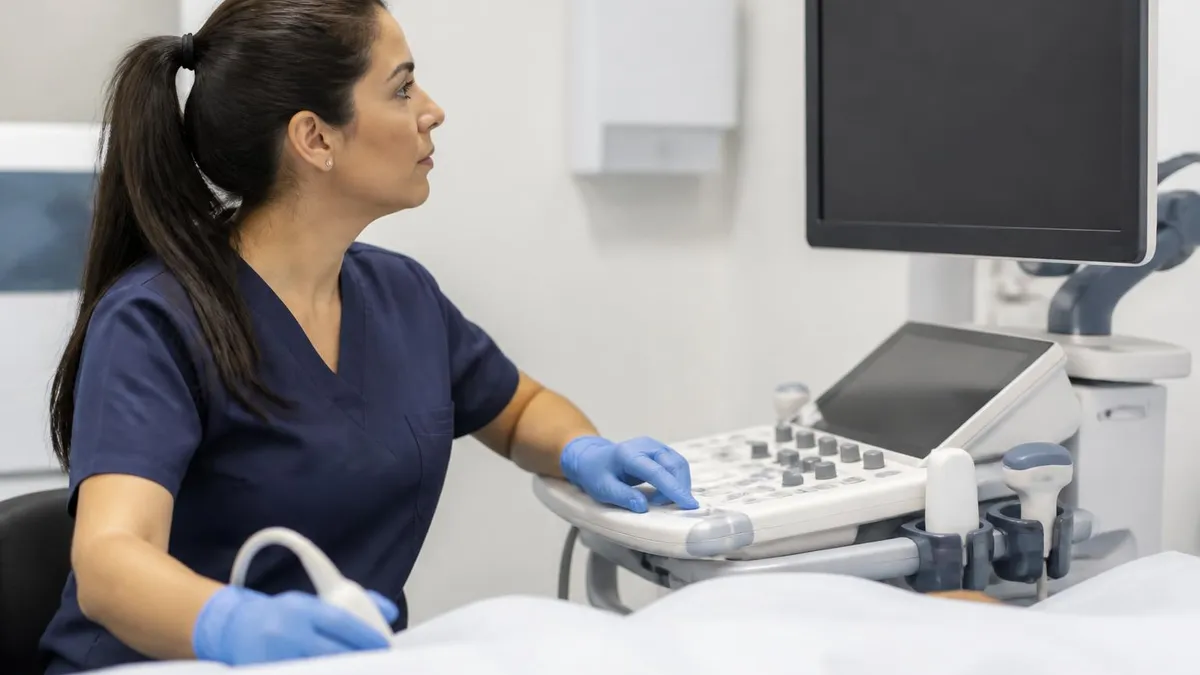
CCI rejects applications with mismatched names between government ID and submitted documentation. Verify that your transcripts, clinical logs, and ATT letter all show your legal name exactly as it appears on the ID you will bring to Pearson VUE. Name corrections after submission can delay testing by 60 days or more.
A structured 12-week study plan works for most candidates juggling clinical work with registry prep. The first four weeks should focus on foundational anatomy, physiology, and the hemodynamic principles underlying every cardiovascular exam type. Even RCIS candidates benefit from this base because invasive procedures rely on identical pressure-flow relationships that echo and vascular techs interpret through imaging. Skipping foundations and jumping to high-yield review books almost always produces shallow understanding that crumbles under exam pressure.
Weeks five through eight transition into pathology and procedural specifics. RCS candidates dive deep into valvular disease, cardiomyopathies, congenital lesions, and pericardial pathology, while RVS candidates work through carotid disease, aortic aneurysms, peripheral arterial disease, and venous thromboembolism. Each topic deserves a dedicated study session covering etiology, hemodynamic consequences, imaging findings, and treatment implications. Linking pathology to pharmacology during this phase pays enormous dividends on exam day.
Weeks nine through eleven shift toward question practice and weak-domain remediation. Take a baseline full-length practice test under timed conditions, identify domains scoring below 70 percent, and dedicate focused review sessions to those weak areas. Do not waste time re-reading domains where you already score 85 percent or higher. The marginal return on shoring up weak topics dramatically exceeds the return on polishing already-strong content during the final month of preparation.
Week twelve is consolidation, not new learning. Review your error logs, re-read your hand-written summary notes, and take one final timed practice exam 72 hours before the real test. Sleep, hydration, and exercise matter more during this final week than another five hundred practice questions. Cortisol levels and sleep deprivation impair recall on test day far more than minor content gaps, especially for working technologists who study after 12-hour shifts.
On exam morning, arrive at the Gaithersburg or Rockville Pearson VUE center 30 minutes early. Bring two government IDs, a light snack for the optional break, and weather-appropriate clothing because testing rooms run cold. Avoid heavy coffee unless it is your daily routine, since unusual caffeine spikes increase jitters and bathroom interruptions. Most candidates report finishing in 2 to 2.5 hours, leaving ample time for flagged-question review before final submission.
During the exam, use the flag function liberally for any item requiring more than 90 seconds. Move forward, maintain pace, and return to flagged items after completing the initial pass. Statistical analysis of registry performance shows that candidates who pace consistently outperform those who agonize over individual items, even when both groups demonstrate similar baseline knowledge. The exam tests endurance and judgment alongside content mastery, and pacing reflects that reality more than any single domain score.
If a question stumps you completely, eliminate clearly wrong options, make your best educated guess, and move on without dwelling. There is no penalty for incorrect answers, so leaving blanks costs you points unnecessarily. Trust the preparation you completed, resist the urge to change answers based on vague second-guessing, and remember that a passing score does not require perfection. Most candidates pass with 70 to 75 percent correct, leaving significant room for honest errors on genuinely difficult items.
Practical exam-week tactics make the difference between marginal pass and confident pass. Two weeks before exam day, taper your study volume rather than increasing it. Cramming new material in the final fortnight rarely sticks and frequently undermines confidence in topics you previously mastered. Instead, rotate through your error log, refine your medication summary sheet, and re-watch any procedure videos that anchored complex concepts during earlier study weeks. Confidence on test day comes from familiarity, not last-minute panic learning.
Sleep hygiene during exam week is non-negotiable. Aim for seven to eight hours nightly, maintain consistent bed and wake times, and avoid screens for one hour before sleep. Sleep consolidates memory, and a single poor night before the registry can shave five to ten percentage points off your performance. If you work night shifts in a Gaithersburg-area cath lab, request schedule adjustments at least two weeks before your test date to align your circadian rhythm with the morning exam slot you booked.
Nutrition and hydration play supporting roles. Eat a moderate protein-rich breakfast on exam day, avoid heavy carbohydrates that trigger mid-morning energy crashes, and bring water plus a small snack like almonds or a protein bar for the optional 10-minute break. The break is genuinely useful around question 90 to reset your focus, stretch your back, and clear mental fatigue. Skipping the break to finish faster usually backfires through declining accuracy on the final third of the exam.
Test anxiety affects nearly everyone, even repeat credentialing candidates. Box breathing, brief progressive muscle relaxation, and grounding techniques like naming five visible objects help reset your nervous system between difficult items. Practice these techniques during your final practice exams so they feel automatic on test day. Candidates who treat anxiety as a normal part of high-stakes performance, rather than a sign of inadequate preparation, consistently perform better than those who interpret nerves as failure signals.
After submission, your preliminary result appears immediately. Whether you pass or fail, resist the urge to dissect specific questions afterward. Detailed post-mortems rarely help, and Pearson VUE confidentiality rules forbid sharing exam content publicly anyway. If you pass, celebrate appropriately and immediately update your résumé, LinkedIn, and HR records to reflect the credential. Many Gaithersburg employers offer credential-based pay increases that activate only after you formally notify HR with documentation.
If you fail, schedule a brief debrief with yourself within 48 hours while the experience remains fresh. Identify which domains felt weakest, which question types tripped you up most often, and what study habits failed to prepare you adequately. Then take at least a week off before returning to study. Burned-out candidates retesting too quickly tend to fail again, while those who rest, reset, and rebuild around their identified weaknesses usually pass the second attempt within three months.
Finally, plan your credential maintenance from day one. Set calendar reminders for CME deadlines, track credits as you earn them rather than scrambling near renewal, and join your local cardiovascular professional society for affordable continuing education opportunities. The Maryland Society of Echocardiography and the regional Society for Vascular Ultrasound chapters host quality CME events near Gaithersburg several times per year, often at low or no cost to members holding active CCI credentials.
Sample CCI - Cardiovascular Credentialing International Practice Questions
Try these questions from our free CCI - Cardiovascular Credentialing International practice tests. The correct answer and an explanation follow each question.
A sonographer notices the Thermal Index (TI) reading is elevated during a lengthy fetal ultrasound. Which of the following principles should guide their actions?
- A. The Mechanical Index (MI) is more important for fetal imaging.
- B. TI values are only relevant for adult cardiac studies.
- C. The ALARA (As Low As Reasonably Achievable) principle.
- D. Increase the acoustic output to shorten the scan time.
Answer: C. The ALARA (As Low As Reasonably Achievable) principle.
The Thermal Index (TI) indicates the potential for tissue heating. The ALARA principle is a fundamental safety guideline in medical imaging, stating that exposure should be kept as low as reasonably achievable. When the TI is elevated, the sonographer should take steps to reduce it, such as decreasing the output power, not dwelling in one spot for too long, and minimizing the overall scan time, without compromising diagnostic accuracy.
In a patient with a bicuspid aortic valve, which associated cardiovascular abnormality must be routinely assessed?
- A. Mitral valve prolapse
- B. Aortic root and ascending aorta dilation
- C. Left ventricular non-compaction
- D. Pericardial constriction
Answer: B. Aortic root and ascending aorta dilation
Bicuspid aortic valve is associated with medial degeneration of the aortic wall, predisposing to aortic root and ascending aorta aneurysm independent of valve dysfunction.
A patient with complete ICA occlusion would most likely show which waveform pattern in the ipsilateral CCA?
- A. Normal low-resistance biphasic waveform
- B. High-resistance pattern with reduced or absent diastolic flow
- C. Markedly elevated PSV with spectral broadening
- D. Retrograde flow throughout the cardiac cycle
Answer: B. High-resistance pattern with reduced or absent diastolic flow
ICA occlusion eliminates the low-resistance contribution from the ICA, leaving only the high-resistance ECA component in the CCA, reducing diastolic flow.
During exercise stress testing, which blood pressure response is considered abnormal and associated with increased cardiovascular risk?
- A. Systolic BP rise of 40 mmHg at peak exercise
- B. Failure of systolic BP to rise above 10 mmHg from rest during maximal exercise
- C. Diastolic BP increase of 10 mmHg during exercise
- D. Systolic BP of 180 mmHg at peak exercise in a hypertensive patient
Answer: B. Failure of systolic BP to rise above 10 mmHg from rest during maximal exercise
Exertional hypotension or a flat BP response (rise <10 mmHg) suggests severe LV dysfunction or significant left main/proximal multi-vessel disease.
Take the full CCI - Cardiovascular Credentialing International practice test
CCI Questions and Answers


About the Author

Educational Psychologist & Academic Test Preparation Expert
Columbia University Teachers CollegeDr. Lisa Patel holds a Doctorate in Education from Columbia University Teachers College and has spent 17 years researching standardized test design and academic assessment. She has developed preparation programs for SAT, ACT, GRE, LSAT, UCAT, and numerous professional licensing exams, helping students of all backgrounds achieve their target scores.