
Certified Brain Injury Specialist: CBIS Exam Guide 2026 September
✅ Pass the Certified Brain Injury Specialist: CBIS exam with confidence. Practice questions with detailed explanations and instant feedback on every answer.
The Certified Brain Injury Specialist (CBIS) credential is one of the most respected certifications in neurorehabilitation. If you're working with brain injury survivors—whether in acute care, inpatient rehab, outpatient therapy, or community settings—earning your CBIS proves you have the specialized knowledge to deliver safe, effective care. It's not just a credential on your résumé. It signals to employers, colleagues, and patients' families that you understand the unique challenges of traumatic and acquired brain injuries at a clinical level.
Administered by the Academy of Certified Brain Injury Specialists (ACBIS), the CBIS exam tests knowledge across five core domains: brain injury pathophysiology and neuroscience, neurological assessment, management of associated problems, community reintegration and rehabilitation, and evaluation criteria and outcomes. You need to know these domains inside and out—and the exam will push you on edge cases, not just textbook definitions.
This guide breaks down everything you need to know about the CBIS certification process: eligibility, exam structure, study strategies, and how to approach the trickiest question types. Whether you're a case manager, social worker, rehabilitation nurse, or occupational therapist, this resource is written for you.
Who Needs the CBIS Certification?
The CBIS is designed for professionals who work directly with individuals who have sustained brain injuries. That's a broad category—and intentionally so. ACBIS recognizes that brain injury care is inherently multidisciplinary. The following professionals commonly pursue the certification:
- Registered nurses and LPNs in rehabilitation or neurology units
- Occupational therapists and occupational therapy assistants
- Physical therapists and physical therapy assistants
- Speech-language pathologists
- Social workers and case managers
- Recreational therapists
- Vocational rehabilitation counselors
- Certified nursing assistants with direct patient contact
You don't need to be a licensed clinician to sit for the CBIS exam. ACBIS evaluates each applicant based on documented experience working with brain injury survivors, not solely on professional licensure. That's why you'll see direct-support workers and residential care staff in CBIS prep courses alongside nurses and therapists.
CBIS Eligibility Requirements
To qualify, you must meet two core requirements. First, you need a minimum of 500 hours of experience working with persons with brain injury within the past three years. This isn't self-reported on the honor system—ACBIS may request documentation, so keep your employment records organized. Second, you must complete the ACBIS-approved Brain Injury Specialist Training Program, which consists of 40 hours of structured education covering all five exam domains.
Once you've met both criteria, you submit your application and the $195 exam fee (as of 2026). Applications are reviewed on a rolling basis, so you don't need to wait for a specific testing window.
Key Takeaway: CBIS certification demonstrates expertise in this field. Most candidates spend 4-8 weeks preparing with practice tests before taking the exam.
CBIS Exam Structure and Format
The CBIS exam consists of 100 multiple-choice questions. You have 2 hours to complete it. The exam is computer-based and delivered at Prometric testing centers or, in some cases, via remote proctoring. Here's how the content breaks down across the five domains:
- Brain Injury Pathophysiology and Neuroscience (approximately 20%): Covers the mechanisms of primary and secondary injury, neuroanatomy relevant to injury patterns, cerebral autoregulation, and the cascade of cellular events following TBI.
- Neurological Assessment (approximately 20%): Glasgow Coma Scale, Rancho Los Amigos Levels of Cognitive Functioning, post-traumatic amnesia, Disability Rating Scale, and functional outcome measures.
- Management of Associated Problems (approximately 25%): Behavioral changes, spasticity, heterotopic ossification, hydrocephalus, post-traumatic epilepsy, sleep disorders, fatigue, and pharmacological management.
- Community Reintegration and Rehabilitation (approximately 20%): Return to work, driving evaluations, independent living supports, family education, community resource navigation, and long-term care planning.
- Evaluation Criteria and Outcomes (approximately 15%): Evidence-based practice, outcome measurement, program evaluation, and quality improvement principles.
The passing score is scaled, not a fixed percentage—ACBIS uses item response theory to ensure that passing reflects genuine competency regardless of minor exam-to-exam variation. Generally, candidates who score around 70% correct pass, but don't bank on that number.
Study Strategy: How to Actually Pass
Most candidates fail the CBIS exam for the same reason: they know the information but struggle with clinical application questions. The exam rarely asks you to define a term outright. Instead, it presents a patient scenario and asks you to identify the most likely complication, select the best next step, or choose the most appropriate outcome measure. That's a different cognitive skill than memorization—and it requires deliberate practice.
Here's what works:
1. Master the Rancho Levels Early
The Rancho Los Amigos Levels of Cognitive Functioning (Rancho scale) appears in multiple domains. You need to know all 10 levels cold—not just what they mean but how they guide intervention. A patient at Level IV (confused/agitated) requires a very different approach than a Level VII (automatic/appropriate) patient. Exam questions love to test whether you can match the intervention to the level.
2. Know Your Outcome Measures
The exam expects you to distinguish between the Disability Rating Scale, the Functional Independence Measure (FIM), the Glasgow Outcome Scale Extended (GOS-E), and the Craig Handicap Assessment and Reporting Technique (CHART). Know what each measures, what population it targets, and its limitations. Picking the wrong outcome tool for a given scenario is one of the most common errors.
3. Build a Pharmacology Framework
You don't need to memorize drug dosages, but you do need to understand the major drug classes used in brain injury rehab: stimulants for arousal (amantadine, methylphenidate), mood stabilizers, antiepileptics, and the medications most likely to worsen cognitive recovery (anticholinergics, benzodiazepines). Exam questions often focus on drug-behavior interactions—what happens to cognition when a patient is on a particular medication.
4. Use Practice Tests Strategically
Don't just rack up correct answers—analyze every question you get wrong. For every missed question, ask: Did I misread the scenario? Did I not know the content? Or did I know the content but apply it incorrectly? Each of those failure modes requires a different fix. CBIS test prep through structured practice questions is one of the fastest ways to identify weak domains before exam day.
5. Study in Blocks by Domain
Rather than mixing topics randomly, spend dedicated sessions on each domain. After covering pathophysiology for two days, test yourself exclusively on pathophysiology questions before moving on. Domain-blocked study builds strong category-specific retrieval cues that serve you well under exam pressure.
- +Industry-recognized credential boosts your resume
- +Higher earning potential (10-20% salary increase on average)
- +Demonstrates commitment to professional development
- +Opens doors to advanced career opportunities
- −Exam preparation requires significant time investment (4-8 weeks)
- −Certification fees can be $100-$400+
- −May require continuing education to maintain
- −Some employers may not require certification

What to Expect on Exam Day
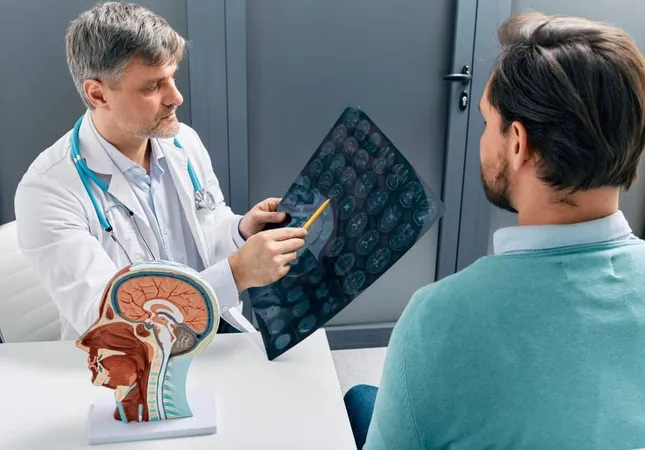
The CBIS exam is delivered at Prometric testing centers nationwide. You can also request a remote proctored option if you prefer to test from home—check ACBIS's current policies since remote testing availability changes. Arrive at the testing center 15 minutes early with two forms of ID. Lockers are provided for personal items; nothing goes into the testing room.
The exam software is straightforward. You can flag questions for review and return to them before submitting. Use this feature—it's better to mark a hard question, move on, and come back with fresh eyes than to stare at it for five minutes while the clock runs. Most candidates finish well within the two-hour window, so time pressure is rarely the issue. Reading comprehension is—many wrong answers are wrong because candidates misread the scenario, not because they lacked the knowledge.
After You Pass: Career Impact
The CBIS opens doors in several directions. Inpatient rehabilitation hospitals often list it as a preferred or required qualification for specialist roles. It strengthens applications for leadership positions in brain injury programs, community reintegration services, and case management. Some employers offer pay differentials for CBIS holders—especially in larger health systems where credentials carry weight in salary negotiations.
Beyond career advancement, the preparation process itself makes you a better clinician. Candidates consistently report that studying for the CBIS exam surfaced knowledge gaps they didn't know they had—particularly in neuroanatomy and pharmacology. The credential validates what you already know and fills in what you didn't.
If you're in a role that involves any regular contact with brain injury survivors, the CBIS is worth pursuing. The exam is achievable with focused preparation, the credential is well-respected in the field, and the two-year renewal cycle keeps your knowledge current in a rapidly evolving specialty. Start with the CBIS practice test to benchmark where you stand, then build your study plan around the domains where you have the most room to grow.
About the Author

Educational Psychologist & Academic Test Preparation Expert
Columbia University Teachers CollegeDr. Lisa Patel holds a Doctorate in Education from Columbia University Teachers College and has spent 17 years researching standardized test design and academic assessment. She has developed preparation programs for SAT, ACT, GRE, LSAT, UCAT, and numerous professional licensing exams, helping students of all backgrounds achieve their target scores.
Join the Discussion
Connect with other students preparing for this exam. Share tips, ask questions, and get advice from people who have been there.
View discussion (8 replies)