
Ishihara Test: How It Works, Validity, and Modern Alternatives 2026 October
Ishihara test guide: color blindness screening, how it works, validity, online vs professional testing, and modern alternatives for color vision ✍🏼

Ishihara test is the most widely-used color vision deficiency screening test, developed by Japanese ophthalmologist Shinobu Ishihara in 1917. The test uses plates containing colored dots arranged so people with normal color vision see specific numbers or patterns while people with color vision deficiencies see different numbers or no patterns at all.
The test screens specifically for red-green color deficiencies (protanomaly, protanopia, deuteranomaly, deuteranopia) — the most common forms of color blindness affecting about 8% of males and 0.5% of females. Understanding how the test works, its validity for various purposes, and modern alternatives helps make sense of color vision testing in various contexts.
For test format specifically, the standard Ishihara test uses 38 plates (full version) or shorter versions (24 plates, 14 plates). Each plate contains colored dots in two colors with one color forming a number or pattern visible to people with normal color vision. People with red-green color deficiencies either don't see the number, see different numbers, or see them with reduced clarity. Specific plates designed to detect specific deficiency types. Test administration takes 5-10 minutes typically. Each plate viewed for limited time (typically 3 seconds) preventing overthinking.
For test purposes specifically, several applications use Ishihara test. Initial color vision screening in routine eye exams. Pre-employment screening for jobs requiring color vision (electrical work, transportation, military, certain healthcare roles). Driver's license screening in some jurisdictions. Aviation medical examinations. Childhood color vision screening. Each application uses Ishihara screening to identify potential color vision concerns warranting more detailed evaluation. The test designed for screening rather than diagnosis.
This guide covers Ishihara test comprehensively: how the test actually works, what it can and can't measure, online vs professional testing reliability, modern alternatives, and how color vision testing fits into various practical contexts. Whether you're curious about your own color vision or interested in the testing methodology, you'll find practical context here.
Developer: Dr. Shinobu Ishihara, 1917
Detects: Red-green color vision deficiencies (most common color blindness)
Format: Plates with colored dots forming numbers or patterns
Time: 5-10 minutes for standard test
Purpose: Screening rather than diagnosis
For how Ishihara plates work specifically, several design principles matter. Each plate uses two colors with similar luminance but different hues. Background dots in one color, foreground dots forming pattern in different color. People with normal color vision distinguish patterns from background. People with red-green color deficiencies struggle to distinguish patterns due to reduced ability to differentiate red and green hues. The luminance similarity prevents using brightness rather than color to identify patterns. Each plate carefully designed to test specific aspects of color discrimination.
For specific deficiency types detected specifically, Ishihara test detects red-green deficiencies in several variations. Protanopia (no red cones) — most severe red deficiency. Protanomaly (reduced red cones) — milder red deficiency. Deuteranopia (no green cones) — most severe green deficiency. Deuteranomaly (reduced green cones) — milder green deficiency. Specific plates better at detecting some types than others. The combination of multiple plates supports identifying which specific deficiency exists. The CAST practice test resources cover related testing.
For what Ishihara test doesn't detect specifically, several limitations matter. Blue-yellow deficiencies (tritanopia, tritanomaly) — much rarer, not detected by standard Ishihara. Total color blindness (achromatopsia) — extremely rare. Acquired color vision deficiencies from disease or medication. Specific severity quantification requires additional testing. The screening focus on most common forms means less common conditions need different testing. Color vision deficiency exists on spectrum; Ishihara provides screening but not detailed assessment.
For test reliability specifically, Ishihara test demonstrates good reliability for its intended purpose (screening for red-green deficiencies). Test-retest results typically consistent. Sensitivity for detecting deficiencies high. Specificity (correctly identifying normal color vision) high. The reliability supports screening but specific quantification requires additional testing. Quality of testing matters — proper lighting, distance, plate condition affect results.
For online Ishihara tests specifically, several caveats apply. Computer monitors don't reproduce specific colors needed for accurate testing. Lighting conditions affect screen colors. Different monitors show different colors. Online tests provide rough screening but aren't equivalent to standardized printed plate testing. For genuine assessment of color vision, professional eye exam using actual Ishihara plates produces more reliable results than online screening. Online tests useful for general curiosity but not for important decisions.
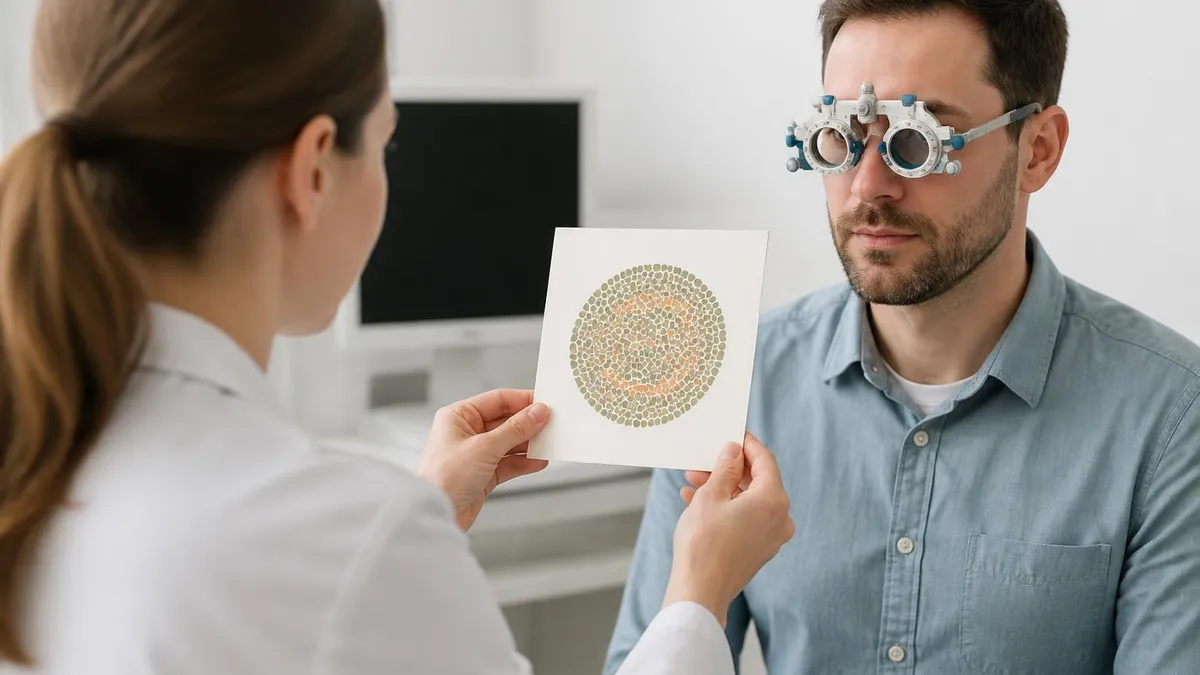
Color Vision Testing Approaches
38 plates or shorter versions. Designed to screen for red-green deficiencies. Properly administered with standardized lighting and standard plates. Most reliable color vision screening for protan/deutan deficiencies. Used in eye exams, pre-employment screening, aviation medicine, military testing. Standard since 1917 with continued refinement.
Web-based versions of Ishihara plates. Cannot reproduce exact colors needed. Variable monitor display affects accuracy. Useful for general curiosity. Not equivalent to standardized testing. Don't make important decisions based on online color tests. Free options widely available but with variable quality and reliability.
Color arrangement test using 85 colored caps that subjects arrange in order. More detailed assessment than Ishihara. Detects all types of color deficiencies. Quantifies specific severity. Used in advanced color vision evaluation. Not used for routine screening (more time-consuming than Ishihara). Better for detailed assessment when needed.
Specialized instrument testing color matching. Most precise color vision assessment available. Quantifies specific deficiency type and severity. Used in research and specific diagnostic contexts. Not commonly available outside specialty practices. Extremely expensive equipment limits availability. Gold standard for color vision quantification when access available.
For pre-employment screening specifically, several professions use color vision screening. Electrical work — color-coded wiring requires color discrimination. Transportation (rail, aviation) — signal recognition. Military — various color-related duties. Some healthcare roles — anatomical color recognition. Police and firefighters — color recognition in various situations. Each profession has specific color vision requirements. Failing color vision screening may disqualify candidates from specific roles. Some accommodations allow color-blind workers in specific roles with appropriate adaptations.
For aviation medical specifically, color vision testing required for pilot medical certification. Specific FAA requirements detail color vision standards. Failing standard Ishihara may not necessarily disqualify pilots — alternative tests sometimes accepted. Specific flight restrictions sometimes apply for borderline color vision. Aviation medical examiners conduct testing per FAA standards. The aviation context produces specific color vision requirements affecting career possibilities. The CAST practice test resources cover related testing context.
For inherited color vision deficiencies specifically, genetics drive most color blindness. X-linked recessive inheritance produces 8% male and 0.5% female prevalence for red-green deficiencies. Females typically need both X chromosomes affected (rare); males need only one (common). Family history often reveals color blindness. Genetic basis means inherited color blindness doesn't change over time. Specific deficiency type remains stable through life. Knowledge of family color blindness history sometimes helps interpret personal results.
For acquired color vision changes specifically, several causes affect color vision over time. Aging produces gradual color vision changes. Diabetes can affect color vision. Specific medications (some cardiac medications, etc.) affect color perception. Certain eye diseases (cataracts, macular degeneration, etc.) affect color vision. Toxic exposures sometimes affect color vision. Each acquired cause has different patterns. Diagnostic differentiation between inherited (stable) and acquired (changing or treatable) color vision changes matters substantially.
For daily living with color blindness specifically, several adaptations help. Memorizing position-based color information (traffic lights — red on top, green on bottom). Using brightness or shape cues alongside color. Smartphone apps identifying colors. Specific color-blind-friendly products and clothing. Each adaptation supports normal life despite color vision deficiency. Most color-blind individuals function normally throughout life with minor adaptations. Severity affects extent of needed adaptations.
Ishihara Test Applications
Annual or periodic vision examination:
- Purpose: Screening for color vision issues
- Format: Brief Ishihara test (typically shorter version)
- Time: 2-5 minutes added to overall exam
- If concerns: More detailed testing or referral to specialist
- Frequency: Initial baseline; not routinely repeated unless concerns
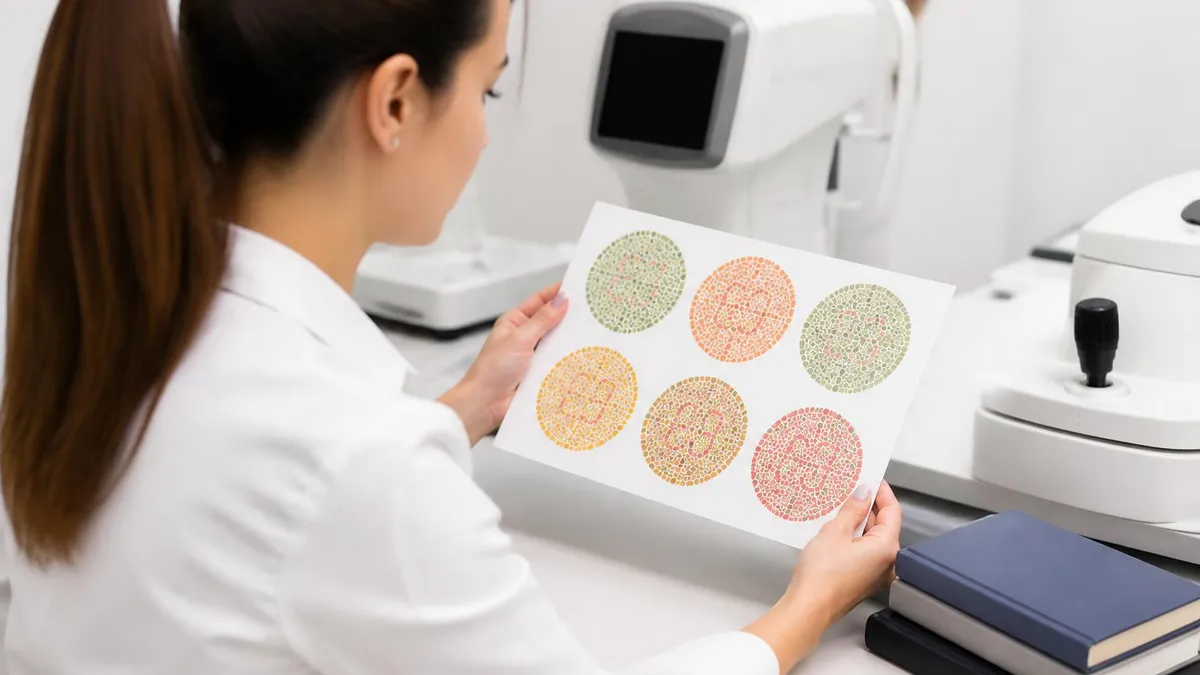
For testing children specifically, color vision screening typically begins around age 4-5. Pediatric versions of Ishihara use shapes (squares, circles, triangles) instead of numbers since young children may not know numbers. Specific pediatric tests support same screening as adult versions. Early detection allows accommodations in school (color-coded materials affect color-blind students). Most schools don't routinely screen for color vision; parental request or noticed difficulties may prompt testing. Children adapt to color vision deficiency through various coping strategies if identified early.
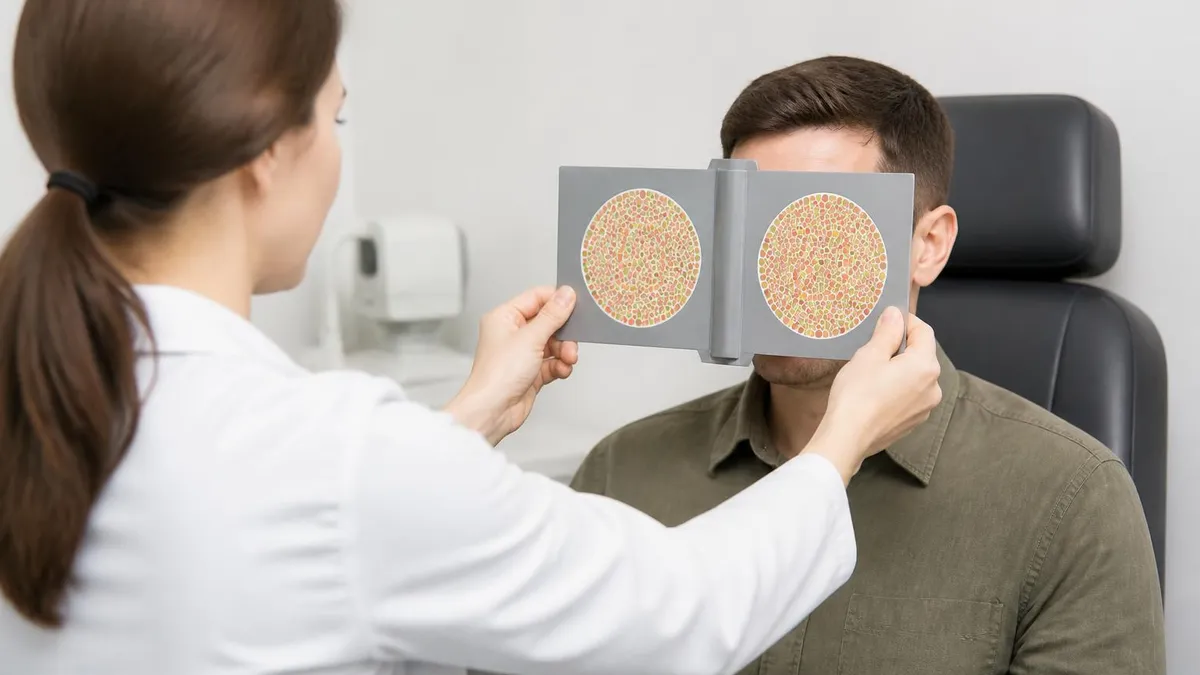
For specific Ishihara test conditions specifically, optimal testing requires specific conditions. Standardized lighting (typically natural daylight or specific artificial lighting). Specific viewing distance (typically 75 cm or 30 inches). Limited time per plate preventing overthinking. Original printed plates rather than reproductions. Each condition affects test reliability. Quality testing in clinical settings produces more reliable results than informal testing. The CAST practice test resources cover related test methodology.
For Ishihara test alternatives specifically, several tests serve different purposes. Cambridge Color Test — computer-based color vision testing. Color Assessment and Diagnosis (CAD) test — used in some aviation medical contexts. Hardy-Rand-Rittler (HRR) test — pseudoisochromatic plates similar to Ishihara but tests blue-yellow as well. City University Color Vision Test — newer alternative. Each test has specific applications. Standard Ishihara remains most common for routine screening; alternatives serve specific contexts.
For specific severity assessment specifically, Ishihara test indicates presence of color deficiency but not specific severity. Anomaloscope provides severity quantification. Farnsworth-Munsell 100 Hue test provides detailed assessment. Each severity test reveals more than basic Ishihara. For job applications or educational accommodations, specific severity sometimes matters. Routine screening uses Ishihara; detailed assessment uses additional testing.
For acquired color deficiency from disease specifically, several conditions affect color vision warranting medical attention. Cataracts produce color perception changes (yellowed worldview). Macular degeneration affects central vision including color discrimination. Glaucoma can produce subtle color vision changes. Diabetic retinopathy affects color vision. Each disease has specific patterns. Color vision testing as part of routine eye care helps detect emerging eye disease beyond just inherited color blindness identification.
Online Ishihara tests provide rough screening but aren't equivalent to standardized professional testing. Computer monitors can't reproduce exact colors needed for accurate testing. Different monitors show different colors. Lighting conditions affect screen colors. Online tests useful for general curiosity but not for important decisions. For genuine color vision assessment — especially when results affect employment, licensing, or medical care — pursue professional testing through eye care provider. The minimal cost of professional eye exam produces substantially more reliable color vision assessment than free online tests.
For specific color blindness statistics specifically, several patterns characterize prevalence. Red-green color deficiencies: 8% of males, 0.5% of females. Total color blindness: extremely rare (~1 in 33,000). Blue-yellow deficiencies: rarer than red-green. Specific country-level variations sometimes appear. Globally similar pattern reflects genetic basis. Color blindness more common than many people realize affecting substantial portion of population.
For specific accommodations available specifically, several support color-blind individuals. School materials with color plus shape coding. Workplace accommodations for color-coded displays. Specific glasses (EnChroma and similar) reportedly help some types of color blindness — effectiveness varies and quality of evidence mixed. Smartphone color identification apps. Each accommodation supports normal functioning. Most color-blind individuals manage well with combination of memory, alternative cues, and occasional accommodations.
For specific career impact specifically, color blindness affects career options for some roles but not most. Most careers don't require specific color discrimination. Specific color-critical roles (electrical, transportation, aviation, military) may have color vision requirements. Most careers including arts, business, technology, healthcare don't specifically require precise color vision. Career planning around color blindness focuses on the few roles with specific requirements rather than treating it as broad limitation. The CAST practice test resources cover testing in career context.
For specific impacts on visual arts specifically, surprising number of successful artists have color blindness. Color blindness doesn't prevent artistic ability. Many artists describe specific compensations (relying on labels, working with others on color decisions, etc.). Some artistic styles benefit from unique color perception color-blind artists develop. Don't assume color blindness eliminates artistic possibilities. Various successful color-blind artists demonstrate that vision deficiency doesn't equal artistic limitation.
For genetic counseling specifically, families with color blindness sometimes pursue genetic counseling. X-linked inheritance produces specific patterns. Affected fathers don't pass color blindness to sons (Y chromosome from father). Carrier mothers pass to 50% of sons. Specific genetic information supports family planning decisions. Most families don't need formal counseling about color blindness given non-life-affecting nature, but genetic information helps understand inheritance patterns.
Color Vision Testing Considerations
- ✓Standard Ishihara test for routine screening
- ✓Pediatric versions use shapes for young children
- ✓Online tests not equivalent to professional standardized testing
- ✓Specific severity quantification needs additional tests beyond Ishihara
- ✓Specific career requirements may need professional certification testing
For specific historical context specifically, color vision testing developed substantially in 19th and 20th centuries. John Dalton (chemist) described his own color blindness in 1798 supporting early scientific understanding. Various early tests preceded Ishihara's. Ishihara plates standardized testing globally. Continued refinements over decades. The historical development shaped current color vision testing practices.
For specific cultural variations specifically, color blindness terminology varies by language and culture. "Daltonism" used in some languages (after John Dalton). "Color vision deficiency" preferred technical term in many contexts. Different cultures vary in awareness and accommodation. Each cultural context produces specific patterns. Globalization and standardized professional medicine produce increasingly consistent terminology and approaches.
For specific testing in different age groups specifically, several patterns matter. Pediatric testing uses shape-based plates. Adult standard Ishihara. Elderly testing accounts for age-related vision changes. Each age group has appropriate testing approaches. Proper testing for specific age produces more reliable results.
For specific gender patterns specifically, color blindness substantially more common in males. X-linked recessive inheritance produces 8% male and 0.5% female prevalence for red-green deficiencies. Females typically need both X chromosomes affected (rare). Males need only one X affected (common). Specific genetic patterns produce gender-specific prevalence patterns matching inheritance pattern. The genetic basis explains the substantial gender prevalence difference.
For specific intermarriage and ancestry patterns specifically, color blindness rates vary somewhat by ancestry. European ancestry: 8% male prevalence typical. Asian ancestry: somewhat lower rates. African ancestry: lower rates. Various other ancestries: specific variations. Each genetic pool produces specific patterns. The variations matter for understanding population-level color blindness prevalence in different communities.
For specific medical specialties working with color vision specifically, several professionals address color vision concerns. Ophthalmologists for medical eye care including color vision evaluation. Optometrists for routine vision care including color vision screening. Genetic counselors for hereditary patterns. Occupational medicine specialists for work-related color vision questions. Each specialty contributes specific expertise. Coordinated care across specialties when needed produces best outcomes for complex color vision situations.
For specific research developments specifically, color vision research continues. Gene therapy research for color blindness in animal models has shown some success. Specific human applications still developing. Various assistive technologies developing. Each research direction may eventually affect color blindness treatment options. Current options primarily accommodate rather than treat color blindness.
For specific community resources specifically, several support color-blind individuals. Color Blind Awareness organization provides resources and advocacy. Various online communities support color-blind individuals. Specific apps support daily living. Each resource addresses specific aspects. Building awareness of available resources supports color-blind individuals.
For specific recent advances specifically, several developments continue. Improved color-blind-friendly design in apps and websites. Specific glasses (EnChroma and similar) more widely available. Various assistive technologies. Awareness of color blindness in design communities. Each advance reduces daily challenges. The trend toward more accessible design supports color-blind individuals across various contexts. Universal design principles increasingly include color blindness considerations.
For specific everyday challenges specifically, several common situations affect color-blind individuals. Stop lights and traffic signals (positional cues help). Color-coded charts and graphs in presentations. Battery indicators showing color rather than text. Sports team uniforms when teams have similar colors. Each situation has typical adaptations. Most color-blind individuals develop coping strategies through experience.
Ishihara Test Quick Facts
Ishihara Test Use
- +Quick screening (5-10 minutes typical)
- +Effective for detecting red-green deficiencies (most common color blindness)
- +Standardized worldwide for over 100 years
- +Available in pediatric versions for children
- +Foundation for various professional color vision requirements
- −Doesn't detect blue-yellow deficiencies (rarer but exist)
- −Online versions unreliable due to monitor color limitations
- −Doesn't quantify specific severity (just detects presence)
- −Quality varies based on testing conditions and plate condition
- −Some specific aviation/military contexts need additional testing
Pros and Cons at a Glance
| Pros | Cons |
|---|---|
| Effective for detecting red-green deficiencies (most common color blindness) | Doesn't detect blue-yellow deficiencies (rarer but exist) |
| Available in pediatric versions for children | Online versions unreliable due to monitor color limitations |
| Foundation for various professional color vision requirements | Doesn't quantify specific severity (just detects presence) |
Sample CAST Test Practice Questions
Try these questions from our free CAST Test practice tests. The correct answer and an explanation follow each question.
A test lead is creating a master test plan for a large, complex system that will undergo several levels of testing (component, integration, system, and acceptance). What is the primary role of the master test plan in this scenario?
- A. To detail the specific test steps and expected results for every test case.
- B. To provide a single, high-level document that governs and unifies all lower-level test plans.
- C. To track the execution status of every individual automated test script.
- D. To manage the configuration of the test environments for all testing levels.
Answer: B. To provide a single, high-level document that governs and unifies all lower-level test plans.
A master test plan serves as an overarching document that provides the framework and general guidelines for the entire testing effort across multiple test levels or projects. It coordinates the activities detailed in more specific, level-based test plans (e.g., System Test Plan, UAT Plan), ensuring consistency and alignment with overall project objectives.
A test manager is preparing a Test Summary Report for stakeholders after a major test cycle. Which of the following elements is MOST crucial to include to provide a clear assessment of product readiness?
- A. A detailed log of every test case executed and the time it took.
- B. An evaluation of the test items against the defined exit criteria.
- C. A list of all testers involved in the execution phase and their individual pass/fail rates.
- D. The complete set of test scripts used for automated testing.
Answer: B. An evaluation of the test items against the defined exit criteria.
The primary purpose of a Test Summary Report is to summarize the testing activities and provide an evaluation of the software's readiness for release. This evaluation is critically dependent on comparing the test results against the pre-defined exit criteria, which specify the conditions that must be met for the testing phase to be considered complete.
A test team needs to conduct realistic performance testing on a CRM system that handles sensitive customer information. Which approach for populating the test environment database BEST addresses the need for realistic data volume while complying with data privacy regulations?
- A. Manually creating a few hundred sample records in the database.
- B. Copying the entire production database directly to the test environment.
- C. Using a data masking tool to anonymize a copy of the production database.
- D. Using a data generation tool to create completely fictitious, simple records.
Answer: C. Using a data masking tool to anonymize a copy of the production database.
Using a direct copy of production data in a test environment is a significant security and privacy violation. Data masking (or anonymization) tools are designed to solve this problem by scrambling or replacing personally identifiable information (PII) while preserving the data's format, complexity, and statistical realism. This makes it ideal for performance and load testing where data volume and realism are crucial.
A project is facing a tight deadline, and the test team needs to prioritize its efforts. What is the PRIMARY factor that should guide the prioritization of test cases?
- A. The complexity of the underlying code for each feature.
- B. The availability of test automation scripts.
- C. The personal preferences of the testing team members.
- D. The risk associated with each feature or requirement.
Answer: D. The risk associated with each feature or requirement.
Risk-based testing is a fundamental principle of test management. Prioritizing tests based on the potential impact and likelihood of failure (risk) ensures that the most critical areas of the application are tested first and most thoroughly. This approach maximizes the effectiveness of the testing effort, especially under constraints.
CAST Questions and Answers
About the Author

Educational Psychologist & Academic Test Preparation Expert
Columbia University Teachers CollegeDr. Lisa Patel holds a Doctorate in Education from Columbia University Teachers College and has spent 17 years researching standardized test design and academic assessment. She has developed preparation programs for SAT, ACT, GRE, LSAT, UCAT, and numerous professional licensing exams, helping students of all backgrounds achieve their target scores.