
California Basic POST Certificate: Complete Study Guide & Certification Prep
Master the california basic post exam with our complete study guide. Prep strategies, practice tests & tips to pass in 2026 September. ✅

The california basic post exam is the gateway to a law enforcement career in the state of California, and understanding exactly what it tests — and how to prepare for it — can mean the difference between landing your dream job and repeating the process months later.
California POST (Peace Officer Standards and Training) sets the statewide standards for all peace officers, and the Basic Course Waiver Examination is one of the most important hurdles aspiring officers must clear. Knowing the structure, content, and scoring of this exam before you sit down to take it gives you a measurable competitive advantage.
The California POST Basic Course represents the mandatory training framework every entry-level peace officer in the state must complete before carrying a badge. The written component of this framework — often called the POST Entry-Level Law Enforcement Test Battery (PELLETB) — evaluates reading, writing, and reasoning skills that are directly tied to daily law enforcement duties. Officers must read incident reports, draft written documentation, analyze witness statements, and communicate clearly with prosecutors and the public. The PELLETB verifies that candidates possess those fundamental skills before they ever put on a uniform.
Thousands of candidates attempt the exam each year across dozens of hiring agencies throughout California. Competition is fierce because law enforcement positions offer stability, strong benefits, and meaningful community impact. Agencies typically set their own minimum T-score thresholds — which often range from 42 to 50 or higher for competitive departments — meaning that simply passing is rarely enough. Understanding percentile rankings and how T-scores are calculated will shape your entire study strategy and help you set realistic performance targets well before test day.
Effective preparation for the california basic post requires more than casual reading. It demands deliberate, timed practice across all tested skill domains: reading comprehension, clarity of written expression, vocabulary in context, spelling accuracy, and logical reasoning. Candidates who prepare systematically — working through timed practice sets, reviewing grammar rules, and practicing the analysis of informational passages — consistently outperform those who rely on general familiarity with the English language alone. Structure your study sessions around the actual test format rather than generic test-prep materials.
One of the most important early steps is to locate a hiring agency whose timeline aligns with your preparation schedule. California POST does not administer the exam directly; instead, individual agencies or regional testing consortiums schedule and proctor the PELLETB. Some agencies accept T-scores earned at other agencies within the past year, while others require you to test directly with them. Researching agency-specific policies early prevents costly scheduling missteps and ensures your score will be accepted when you apply.
This comprehensive study guide covers everything you need to succeed: a breakdown of the exam format by section, strategic tips for each question type, a realistic study schedule, expert insight on common pitfalls, and links to targeted practice quizzes. Whether you are preparing for your first attempt or returning after a previous score that did not meet your target agency's cutoff, the strategies in this guide are grounded in how the exam actually works — not general test-taking mythology. You can also explore our california basic post certificate practice resources to reinforce your skills between study sessions.
By the time you finish this guide, you will have a clear roadmap: which topics to prioritize, how many hours per week to invest, which question types trip up the most candidates, and how to use timed practice effectively in the final two weeks before your exam date. Commit to the process, follow the schedule outlined below, and you will walk into the testing room with genuine confidence backed by deliberate, measurable preparation.
California Basic POST by the Numbers

California POST Exam Format & Structure
| Section | Questions | Time | Weight | Notes |
|---|---|---|---|---|
| Writing Ability — Clarity | 15 | ~25 min | 14% | Choose clearest sentence |
| Writing Ability — Vocabulary | 15 | ~20 min | 14% | Word meaning in context |
| Writing Ability — Spelling | 15 | ~15 min | 14% | Identify misspelled words |
| Reading Ability — Reading Comprehension | 30 | ~45 min | 29% | Passages + questions |
| Reasoning Ability — Logical Reasoning | 16 | ~20 min | 15% | Deductive and inductive tasks |
| Reasoning Ability — Writing Errors | 14 | ~15 min | 14% | Identify grammar/punctuation errors |
| Total | 105 | 2 hours 30 minutes | 100% |
Understanding exactly what the California POST exam measures — and why — helps you study smarter rather than harder. The PELLETB is built around six distinct skill domains, each grounded in tasks that real peace officers perform every single day. When you understand the job-relevance behind each section, you can connect your study efforts to practical outcomes rather than treating the exam as an abstract academic exercise disconnected from your future career.
The Writing Ability — Clarity section presents candidates with three versions of the same sentence and asks them to identify which one is clearest and most precise. This directly mirrors the officer's daily task of writing incident reports that must be understood by prosecutors, defense attorneys, judges, and jurors who were not present at the scene. An ambiguous or convoluted sentence in a police report can undermine an entire case. Clarity questions are best approached by eliminating sentences with dangling modifiers, pronoun ambiguity, awkward phrasing, and unnecessary passive voice constructions.
The Vocabulary section tests whether candidates understand word meanings in context rather than in isolation. Questions present a sentence with an underlined word and ask you to choose the closest synonym from four options. Law enforcement officers regularly encounter specialized terminology in court documents, medical reports, and criminal statutes. Building a strong general vocabulary — particularly for words related to behavior, procedure, and evidence — is the most effective preparation strategy for this subsection. Reading quality newspapers and legal journalism builds this capacity organically over weeks of consistent exposure.
Spelling is a section many candidates underestimate until they see their score breakdown. Officers who misspell words in official reports create problems for their agencies: defense attorneys have successfully challenged the credibility of reports citing consistent spelling errors. The POST spelling section typically presents groups of four words and asks you to identify the one that is spelled incorrectly — or to confirm that all are correct. Focusing on commonly misspelled law enforcement terms (arraignment, surveillance, apprehend, subpoena, misdemeanor) and general high-frequency English words will cover the vast majority of what you encounter.
Reading comprehension is the largest single section on the exam, accounting for nearly 30 percent of your overall score. Passages are typically 200 to 400 words long and drawn from a variety of non-fiction topics including public safety, science, law, and policy.
Each passage is followed by several questions testing your ability to identify the main idea, draw inferences from evidence presented in the text, and understand vocabulary in context. Candidates who struggle with reading speed should practice active reading techniques: previewing questions before reading the passage, marking key claims as you read, and eliminating answer choices that introduce information not found in the text.
The Reasoning Ability — Logical Reasoning section evaluates deductive and inductive thinking through scenarios that mirror investigative decision-making. You might be presented with a set of conditions and asked to determine which conclusion must be true, which could be true, or which is impossible. These questions require careful, systematic analysis rather than intuition. Practicing formal logic problems — particularly conditional reasoning (if-then statements) and categorical syllogisms — builds the analytical muscle that makes these questions feel methodical rather than random.
Finally, the Writing Errors section asks candidates to identify grammatical and punctuation mistakes in short passages. Common error types include comma splices, subject-verb disagreement, incorrect apostrophe use, faulty parallel structure, and pronoun-antecedent disagreement. A solid grounding in English grammar rules — particularly the rules most frequently broken in informal writing — provides a strong foundation for this section. Reviewing a concise grammar reference guide and then practicing on realistic sample passages is far more effective than memorizing abstract rules in isolation from actual text examples.
California POST Study Strategies by Section
Reading comprehension makes up the largest share of your POST score, so it deserves the most deliberate preparation. The most effective strategy is to read the questions before you read the passage — this turns a passive read into an active search for specific information. Time yourself on each passage set: aim to spend no more than 90 seconds reading a 250-word passage and 45 seconds per follow-up question. Eliminating obviously wrong answers first narrows your choices and reduces second-guessing under exam pressure.
Build your reading speed and comprehension simultaneously by reading challenging non-fiction daily — quality journalism, government reports, and science writing all use the same dense, information-rich prose style the POST favors. After each reading session, try to summarize the main argument in one sentence without looking back at the text. This habit directly trains the main-idea identification skill that POST reading questions heavily reward. Candidates who read analytically for 30 minutes daily for eight weeks typically see measurable score improvements on timed practice tests.

Pros and Cons of the California POST Certification Path
- +Opens doors to law enforcement positions at hundreds of California agencies
- +T-scores remain valid for one year and may be accepted by multiple departments
- +The exam tests transferable skills — reading and reasoning — that can be improved with practice
- +No specialized law enforcement knowledge is required to pass the written exam
- +Strong T-scores can offset weaknesses in other parts of the hiring process
- +Preparation materials and practice tests are widely available online and free
- −Each agency sets its own minimum T-score cutoff, and competitive departments set high bars
- −The exam is not administered by POST directly — candidates must find a participating agency
- −Some agencies only accept scores earned through their own administration, not third parties
- −Test anxiety is a real factor: strict timing and formal testing environments affect many candidates
- −Retake policies vary by agency, and some impose mandatory waiting periods between attempts
- −A high T-score guarantees an interview at most agencies but does not guarantee a job offer
California POST Exam Prep Checklist
- ✓Identify your target agency and confirm their minimum T-score requirement before you begin studying
- ✓Obtain a copy of the official POST PELLETB Candidate Preparation Guide from the POST website
- ✓Take a full-length timed diagnostic practice test to establish your baseline score before structured prep
- ✓Build a 10-week study schedule that covers all six exam domains with weekly practice tests
- ✓Review all 15 core grammar rules most commonly tested on standardized English exams
- ✓Create a personal spelling list from words you miss on practice sets and review it three times per week
- ✓Practice reading one challenging non-fiction passage daily and summarizing the main idea in one sentence
- ✓Complete at least three timed logical reasoning practice sets per week using formal if-then logic problems
- ✓Simulate full exam conditions at least twice before your test date: timed, quiet, no interruptions
- ✓Confirm your testing appointment, required ID documents, and testing center location at least one week before the exam
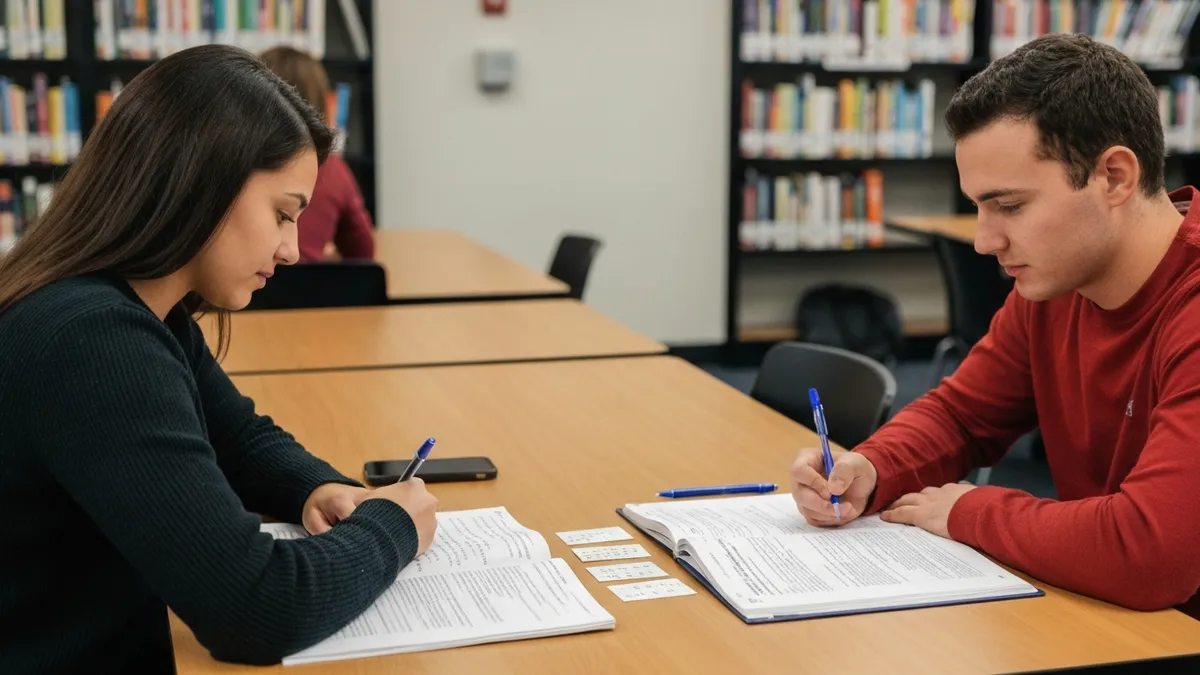
What Is a T-Score and Why Does It Matter?
A T-score converts your raw POST exam score into a standardized scale with a mean of 50 and a standard deviation of 10. A T-score of 50 means you performed at the average of all candidates tested in the norming group. Most California agencies require a minimum T-score between 42 and 50, but competitive metropolitan departments often prefer 55 or higher. Improving from a T-42 to a T-50 typically requires moving from roughly the 21st to the 50th percentile — a gap that focused preparation over 8 to 12 weeks can realistically close.
Your T-score is the single most important number produced by the California POST exam, yet many candidates misunderstand how it is calculated and what it actually tells hiring agencies about your abilities. The T-score is not a percentage correct — it is a standardized score that places your performance relative to the entire population of candidates who have taken the PELLETB. This distinction is critical because two candidates who earn the same raw score in different testing sessions may receive different T-scores if the norming populations had different average performance levels.
California POST calculates the T-score by taking your total weighted raw score across all sections, converting it to a z-score (standard deviations above or below the mean), and then transforming that z-score to the T-score scale using the formula T = 50 + 10z. Because the standard deviation is 10, a T-score of 60 means you performed one full standard deviation above the mean — placing you at approximately the 84th percentile. A T-score of 70 would represent two standard deviations above the mean, placing you at roughly the 98th percentile.
Not all sections contribute equally to your T-score. The reading comprehension section, which contains the most questions, carries the greatest raw-score weight. This means a candidate who excels at reading but struggles with spelling will generally outperform a candidate with the opposite strength profile, even if the total number of questions answered correctly is similar. Understanding this weighting should directly shape how you allocate your preparation time: invest the most hours where the payoff in T-score points is greatest.
Agencies differ substantially in how they use T-scores within their overall hiring process. Some agencies rank all qualified applicants strictly by T-score, with the highest-scoring candidates receiving the first interview invitations. Others use T-score as a minimum threshold and then weight background investigation, physical fitness, psychological evaluation, and oral interview scores more heavily. Researching your target agency's specific hiring matrix gives you crucial intelligence about how much marginal improvement in your T-score is worth versus investing time in other dimensions of your application.
If you receive a T-score that falls below your target agency's minimum — or that is competitive but not as strong as you hoped — most agencies permit retesting after a waiting period that typically ranges from one to six months. Use that waiting period productively: identify which sections cost you the most points, design a targeted remediation plan, and complete at least two full timed mock exams before rescheduling. Candidates who retest without systematically addressing their weak areas rarely see meaningful score improvement regardless of how motivated they feel going in.
One practical note about score portability: California POST maintains a network of agencies that can access T-scores earned at other participating agencies within the past 12 months, but this arrangement is voluntary and not universal. Always confirm with your target agency before assuming your existing score will be accepted. If you are applying to multiple agencies simultaneously, taking the exam at a large regional testing consortium — rather than at a single small agency — often maximizes the number of departments that will honor your score without requiring a separate test session.
Tracking your performance on practice tests using a T-score estimator is an effective way to monitor your preparation progress without waiting for an official exam result. Several free T-score estimation tools are available that convert your practice raw scores to approximate T-scores using published norming data. While these estimates are not perfectly precise, they provide a directionally accurate signal of whether your preparation is moving your projected score toward your target — and whether you are ready to schedule your official exam or would benefit from additional preparation time.
California POST T-scores are valid for 12 months from the date of testing. If you do not secure a conditional job offer within that window, you must retest. Additionally, some agencies require that you test directly with them rather than transferring a score earned elsewhere — always confirm this policy with each agency before scheduling your exam. Failing to verify this requirement can result in completing an entire hiring process only to discover that your existing score is not accepted.
Building an effective study schedule is one of the highest-leverage actions you can take in your POST preparation, yet most candidates either study too casually — a few hours here and there without structure — or they cram intensively in the final week before the exam, which research consistently shows is far less effective than distributed practice over multiple weeks. The optimal preparation window for most candidates is eight to twelve weeks, with roughly six to ten hours of focused study per week divided across multiple shorter sessions rather than concentrated into one or two long marathon days.
In the first two weeks of your preparation, focus primarily on diagnostic work. Take a full-length timed practice exam under realistic conditions, score it by section, and analyze your results with genuine honesty. Which sections are you strongest in? Where are you losing the most points? This diagnostic phase should produce a written score breakdown that you refer back to throughout your preparation to measure whether your targeted practice is actually moving your performance in each domain.
Weeks three through six are the core skill-building phase of your preparation. Dedicate the majority of your study time to your two weakest sections while maintaining a minimum baseline of practice in your stronger sections. Use targeted practice quizzes — rather than full-length mock exams — during this phase to build speed and accuracy in specific question types.
Review every question you answer incorrectly: do not simply note that you got it wrong, but instead work out why the correct answer is correct and why each incorrect answer is wrong. This active error analysis is the single most productive study activity available to POST candidates.
Weeks seven and eight should shift toward integrated practice. Take two or three full-length timed practice exams during this phase, simulating actual testing conditions as closely as possible. Complete each exam in a quiet environment, use only the materials permitted in the actual testing room, and time yourself strictly. After each mock exam, review your performance by section and compare it to your diagnostic baseline. Are your weak sections improving? Are your strong sections holding steady? Adjust your remaining preparation based on what the data tells you, not on how confident you feel subjectively.
The final week before your exam should include light review only — no intensive new learning, no cramming. Your goal in the final week is to maintain the mental sharpness you have built through weeks of preparation while ensuring you arrive at the testing room well-rested, calm, and confident. Review your personal spelling word list once more, skim your grammar notes, and complete one short timed practice set (20 to 30 questions) two days before the exam to keep your test-taking muscles warm without inducing fatigue or anxiety.
Sleep hygiene in the days leading up to your exam is not a minor consideration — it is a meaningful performance variable. Research on cognitive performance consistently shows that sleep deprivation has a measurable negative effect on working memory, reading comprehension, and logical reasoning — all three of which are directly tested on the POST. Aim for seven to nine hours of sleep in the three nights before your exam, avoid alcohol, and eat a protein-rich meal the morning of your test to support sustained cognitive energy throughout the approximately two and a half hour testing window.
On test day itself, arrive at the testing center at least 20 minutes early to allow yourself time to settle, review your identification requirements with the proctor, and acclimate to the testing environment before the clock starts. Bring all required identification documents — typically a valid government-issued photo ID — and leave your phone and other prohibited items in your vehicle.
During the exam, pace yourself deliberately: if you finish a section early, use the remaining time to review flagged questions rather than moving on impulsively. A calm, methodical approach consistently outperforms a rushed one, even among candidates of equal ability levels.
Beyond the mechanics of exam preparation, it is worth understanding the broader context of what the California Basic POST Certificate means for your law enforcement career. Earning a passing score on the PELLETB is just the beginning of the POST certification journey — it qualifies you to enter a peace officer basic training academy, which is itself an intensive multi-month program covering criminal law, defensive tactics, firearms, vehicle operations, first aid, and community policing principles. Your PELLETB score gets you in the door; your academy performance and subsequent field training determine whether you stay.
The California POST Basic Course typically runs between 664 and 900 hours depending on the academy and the specific training track, with full-time residential academies completing the curriculum in approximately six months and modular or regional programs sometimes extending up to 18 months. The written examination component of academy training is separate from the PELLETB and covers specific California Penal Code provisions, Evidence Code sections, Vehicle Code statutes, and POST-mandated learning domains. The reading comprehension and logical reasoning skills you build preparing for the PELLETB will serve you well in academy written exams as well.
Many California law enforcement agencies also use the PELLETB as a pre-employment screening tool even before academy training, meaning your T-score may determine whether you receive a conditional offer, advance to the physical agility test, or progress to the background investigation phase. The PELLETB is administered early in most hiring processes precisely because it is an efficient, standardized tool for narrowing a large applicant pool before agencies invest significant resources in background investigations, polygraphs, and psychological evaluations for every applicant.
For candidates who have previous law enforcement experience from out of state, California POST offers a Basic Course Waiver process that allows qualified officers to test out of portions of the Basic Course by demonstrating equivalent training and experience. The waiver examination is more comprehensive than the standard PELLETB and covers substantive California law and procedure. Out-of-state officers pursuing the waiver track should contact POST directly for current eligibility requirements, application procedures, and testing schedules, as these details change periodically and must be verified against current official POST documentation.
Lateral transfers — officers already certified in California moving from one agency to another — generally do not need to retake the PELLETB, as they hold existing Basic Course certification. However, some agencies administer their own written tests during the lateral hiring process to assess knowledge of local ordinances, departmental policies, and California-specific legal updates. Even experienced officers benefit from reviewing current California law before any written test component of a lateral hiring process, particularly given the pace of legislative change in criminal procedure and use-of-force standards in recent years.
The investment you make in preparing for the California basic POST exam pays dividends beyond the test itself. The habits of careful reading, precise writing, and systematic reasoning that you build during exam preparation are the same habits that produce excellent incident reports, thoughtful investigative analysis, and clear courtroom testimony throughout a full law enforcement career. Officers known for the quality of their written work and the clarity of their courtroom communication consistently advance more quickly and earn greater professional respect from colleagues, supervisors, and the prosecutors they work alongside.
Finally, approach your POST preparation with a long-term career mindset rather than a narrow pass-or-fail mentality. A candidate who earns a T-score of 65 rather than a T-score of 50 does not just clear more agencies' minimum thresholds — they signal to hiring panels that they bring exceptional analytical capacity to the job.
That signal matters in competitive hiring environments where dozens of otherwise qualified candidates are vying for a handful of positions. Push your score as high as your preparation allows, not just to the minimum threshold, and let the quality of your preparation reflect the quality of the officer you intend to be.
California Post Questions and Answers


About the Author

Educational Psychologist & Academic Test Preparation Expert
Columbia University Teachers CollegeDr. Lisa Patel holds a Doctorate in Education from Columbia University Teachers College and has spent 17 years researching standardized test design and academic assessment. She has developed preparation programs for SAT, ACT, GRE, LSAT, UCAT, and numerous professional licensing exams, helping students of all backgrounds achieve their target scores.