
California Notary Practice Exam 2026 October: Free Test Prep & Study Guide
Ace your California Notary exam with free 2026 October practice tests, study tips, and real exam questions. 🎯 Start practicing today!

The ca notary practice exam 2026 is the most effective tool available to anyone preparing for California's official notary public examination. California administers one of the most rigorous notary licensing exams in the country, requiring candidates to demonstrate deep familiarity with state-specific laws, notarial procedures, and signer identification requirements. Taking a structured california notary practice exam 2026 before your test date gives you a realistic preview of question difficulty, helps you spot knowledge gaps early, and dramatically improves your confidence on exam day.
California's notary exam is administered by the National Notary Association (NNA) on behalf of the Secretary of State. The exam consists of 45 multiple-choice questions drawn from the California Notary Public Handbook, and candidates must answer at least 70 percent — that's 32 out of 45 — correctly to pass. Many first-time test-takers underestimate how specific and detail-oriented the questions are. Topics range from the exact wording required in a jurat to the precise circumstances under which a notary may refuse to perform a notarization. Practice tests mirror this level of specificity, making them indispensable preparation tools.
One of the biggest mistakes candidates make is relying solely on reading the Notary Public Handbook without testing their recall. Reading is passive; answering practice questions is active. Research in cognitive science consistently shows that retrieval practice — the act of pulling information from memory under simulated test conditions — strengthens long-term retention far more effectively than re-reading. When you work through a full-length california notary practice exam 2026, you force your brain to actively retrieve and apply what you've read, cementing the material in a way that passive study simply cannot match.
The topics covered in California notary practice exams are wide-ranging. You'll encounter questions about acknowledgments and jurats — two of the most commonly tested certificate types — as well as questions about the Notary Public Journal, proper identification of signers, notarial certificates, conflicts of interest, and the rules governing notarization of documents for non-English speakers. Each of these topic areas carries real professional and legal weight, because errors in any of them can expose a notary to civil liability, disciplinary action, or even criminal charges.
Preparation timelines vary by individual, but most successful candidates spend two to four weeks studying before their exam date. During this period, a structured approach works best: begin with a thorough first read of the handbook, then move to topical practice quizzes targeting your weakest areas, and finally take full-length timed practice exams to simulate real testing conditions. This three-phase approach ensures you cover the material systematically rather than cramming the night before the exam.
PracticeTestGeeks.com offers a comprehensive library of California notary practice questions organized by topic, so you can target exactly the areas where you need the most improvement. Whether you struggle with the nuances of signer identification or the specific requirements for completing a certificate of acknowledgment, our quizzes provide immediate feedback with detailed explanations — not just the correct answer, but the reasoning behind it, grounded in California law and the Secretary of State's official guidance.
Understanding why an answer is correct is just as important as knowing what the correct answer is. When you review your practice test results and read the explanations for any questions you missed, you build the conceptual framework necessary to handle novel question phrasings on the actual exam. California notary examiners are skilled at testing the same concept from multiple angles, so surface-level memorization alone will not carry you across the 70 percent passing threshold. Deep comprehension, reinforced by repeated practice testing, is the winning strategy.
California Notary Exam by the Numbers
Key Facts at a Glance
| Item | Value | Details |
|---|---|---|
| Exam Questions | 45 | Multiple choice format |
| Passing Score | 70% | 32 correct answers required |
| Time Allowed | 90 min | 2 minutes per question |
| Exam Fee | $40 | Paid to NNA at registration |
| Retake Attempts | 3× | Per application cycle |
California Notary Exam Format
| Section | Questions | Time | Weight | Notes |
|---|---|---|---|---|
| Notarial Acts & Certificates | 15 | 30 min | 33% | Acknowledgments, jurats, oaths, affirmations |
| Signer Identification & Journal | 12 | 24 min | 27% | Acceptable IDs, journal entries, thumbprints |
| Notary Laws & Ethics | 10 | 20 min | 22% | Government Code, conflicts of interest, prohibitions |
| Procedures & Special Situations | 8 | 16 min | 18% | Non-English signers, credible witnesses, remote notarization |
| Total | 45 | 90 minutes | 100% |
Understanding what the California notary exam actually covers is the foundation of any effective study plan. The exam draws exclusively from the California Notary Public Handbook, which is published by the Secretary of State and updated periodically to reflect changes in California law. Every question on the exam has a specific statutory or regulatory basis, which means no question is subjective — there is always one definitively correct answer grounded in California Government Code, Civil Code, or the Secretary of State's official regulations.
Notarial acts and certificates make up the largest share of exam content. This includes acknowledgments, jurats, oaths, affirmations, and certified copies of power of attorney documents. An acknowledgment is a notarial act in which a signer personally appears before the notary and acknowledges that they signed the document willingly and for the purposes stated therein.
A jurat, by contrast, requires the signer to swear or affirm under penalty of perjury that the contents of the document are true. The certificate wording for each act is prescribed by California law, and exam questions frequently test whether candidates know the precise elements required in each certificate type.
Signer identification is another heavily tested area. California law specifies exactly which forms of identification a notary may accept, and the rules are more restrictive than many candidates expect. A California driver's license or identification card, a United States passport, a foreign passport stamped by U.S. Customs, a military identification card, and an inmate identification card issued by the California Department of Corrections are among the acceptable forms.
The ID must be current or issued within five years, bear a photograph and signature, contain a physical description, and be issued by a government agency. Expired identification — even by one day — is not acceptable, and exam questions will test this boundary condition specifically.
The notary public journal is a mandatory record-keeping tool in California, and exam questions probe both the required journal entries and the rules governing journal access. Every notarial act must be recorded in the journal at the time of notarization. Required entries include the date and time of the act, the type of notarial act performed, the type and title of the document, the signature and printed name of each signer, the method used to identify the signer, and the fee charged.
For deeds of trust, grant deeds, and quitclaim deeds affecting residential real property, California law additionally requires the signer's right thumbprint. Failing to complete a journal entry properly is a disciplinary offense, and questions about journal requirements appear on virtually every exam administration.
California notary law also covers a range of prohibitions and ethical obligations that exam candidates must master. A notary may not notarize a document in which they have a direct financial or beneficial interest — for example, a notary cannot notarize their own signature or a document in which they are named as a party.
A notary employed by a financial institution may notarize documents for that institution's customers but cannot notarize documents in which the institution itself is a named party and the notary holds stock or has a financial stake. These nuances are tested with scenario-based questions that require careful reading of the fact pattern.
Remote online notarization (RON) is a newer topic area that has been incorporated into California notary law. As of 2024, California permits certain types of remote notarization under specific conditions, and exam questions increasingly include scenarios involving RON procedures, technology requirements, and signer verification standards for remote sessions. Candidates preparing with a california notary practice exam 2026 should ensure their practice materials cover the RON framework alongside traditional in-person notarization requirements.
Special situations tested on the exam include notarizing for non-English speaking signers, using credible witnesses to verify a signer's identity when acceptable identification is unavailable, and handling situations where a document presented for notarization is incomplete. California law prohibits a notary from completing a notarial certificate on a document with blank spaces left to be filled in later.
This rule exists to prevent fraud, and exam questions often present scenarios where a signer asks the notary to notarize a partially completed document and test whether candidates know the correct course of action — which is to decline until all blanks are filled.
Study Strategies for the California Notary Exam 2023
Acknowledgments and jurats are the bread and butter of California notarial practice, and they account for a substantial portion of exam questions. When studying this topic, focus on the exact statutory language required for each certificate type. California Civil Code Section 1189 specifies the required form for an acknowledgment, and the Government Code prescribes jurat language. Memorize the distinction: an acknowledgment verifies the signer's identity and willingness; a jurat requires the signer to swear or affirm the truth of the document's contents.
Practice identifying which certificate type is appropriate for common document types. Affidavits and sworn statements require jurats because the signer is attesting to truthfulness under penalty of perjury. Deeds, powers of attorney, and most real estate documents use acknowledgments because the key legal act is the signer's voluntary execution of the document. Exam questions frequently present a document type and ask which notarial act is appropriate — or describe an incorrect certificate type and ask candidates to identify the error. Working through targeted practice questions on this topic until you can answer correctly and quickly is the single highest-return study activity available.

Practice Exams vs. Reading the Handbook Alone
- +Simulates real exam conditions so there are no surprises on test day
- +Active retrieval strengthens memory retention more than passive reading
- +Immediate feedback pinpoints exact knowledge gaps for targeted review
- +Exposes you to the specific question phrasing style used by California examiners
- +Builds time management skills — 90 minutes for 45 questions requires pace awareness
- +Detailed explanations teach the legal reasoning behind each correct answer
- −Poorly written practice tests can reinforce incorrect information if sourced outside official materials
- −Over-reliance on practice questions without reading the handbook can create gaps in foundational understanding
- −Some practice platforms use outdated questions that do not reflect recent California law changes
- −Repeated exposure to the same question set reduces the diagnostic value over time
- −Practice tests cannot replicate the stress of the official testing environment exactly
- −Candidates may focus only on topics that appear in practice tests and overlook less common but examinable content
California Notary Exam Day Preparation Checklist
- ✓Register for the exam through the NNA at least two weeks before your desired test date to secure your preferred location.
- ✓Bring two forms of identification to the exam site — your primary ID must include a photo.
- ✓Review the California Notary Public Handbook one final time the day before the exam, focusing on certificate wording.
- ✓Complete at least two full-length timed practice exams during the week before your test date.
- ✓Review all questions you answered incorrectly on practice tests and re-read the relevant handbook sections.
- ✓Memorize the list of acceptable signer identification documents and the five-year rule for currency.
- ✓Confirm the exam location address and plan your route the day before to avoid last-minute navigation stress.
- ✓Arrive at the testing center at least 30 minutes early to complete check-in procedures without rushing.
- ✓Bring the exam confirmation email or registration number provided by the NNA upon registration.
- ✓Read each exam question carefully and fully before selecting an answer — California questions often hinge on a single word.

The 70% Threshold Is Achievable With Structured Practice
Candidates who complete at least five full-length California notary practice exams before their test date pass at significantly higher rates than those who rely on reading alone. The key is not just volume — it's reviewing every incorrect answer with the corresponding handbook section until you understand the legal basis for the correct response. Quality of review, not quantity of questions answered, drives score improvement.
Achieving a passing score on the California notary exam requires more than surface-level familiarity with the handbook. The 70 percent threshold — 32 correct answers out of 45 — sounds achievable, and it is, but only for candidates who have genuinely internalized the material rather than skimmed it. California's exam is specifically designed to distinguish between candidates who understand notarial law deeply and those who have only a superficial acquaintance with the rules. Scenario-based questions, in particular, require the ability to apply legal principles to realistic situations that may not be described verbatim in the handbook.
Score improvement is most dramatic when candidates approach their practice strategically. Begin by taking a baseline practice exam before studying in depth. This diagnostic approach reveals your starting point and identifies the topic areas where you are weakest. Many candidates are surprised to discover that signer identification rules — which seem straightforward — are actually among the most frequently missed question categories, precisely because the rules have specific boundary conditions that intuition alone does not capture. A baseline score also gives you a concrete benchmark to improve against as your study progresses.
After taking your baseline exam, organize your study time around the topic areas where you scored lowest. If you missed multiple questions about the notary journal, spend two or three study sessions working exclusively through journal-related material: re-read the relevant handbook sections, take topical practice quizzes, and write out the required journal entries from memory until you can complete them without reference to notes. This focused remediation approach is far more efficient than re-reading the entire handbook from start to finish, which gives equal time to topics you already know and topics where you need help.
As your exam date approaches, shift from topical practice to full-length timed simulations. Taking a complete 45-question exam within 90 minutes accomplishes several things simultaneously. It reinforces your knowledge across all topic areas, develops your pacing instincts so you can move efficiently through the exam without spending too much time on any single question, and identifies any remaining weak areas that need last-minute attention. Most candidates benefit from taking at least two or three full-length simulations during the final week before their exam date.
One aspect of exam preparation that many candidates overlook is the careful reading of question stems. California notary exam questions are drafted with legal precision, and the difference between a correct and incorrect answer often hinges on a single qualifier. Words like "must," "may," "never," and "always" carry specific legal weight and should trigger careful attention.
Questions that include phrases like "except when" or "unless" are particularly important to read slowly and deliberately. Developing this careful reading habit during practice is essential, because the pressure of the actual exam can cause rushed candidates to misread questions they would otherwise answer correctly.
When you review your practice test results, pay special attention to questions you answered correctly but were uncertain about. Guessing correctly once does not mean you will guess correctly again under exam pressure. For any question where you were not fully confident, treat it the same as a question you missed: look up the relevant handbook section, read the explanation, and test yourself on the concept again in a future session. This approach ensures that your passing score reflects genuine mastery rather than lucky guessing, which matters both for the exam and for your professional practice as a California notary.
Finally, trust the process. Candidates who follow a structured study schedule, complete multiple practice exams, and review their results carefully almost invariably see their scores improve over the course of their preparation. The California notary exam is challenging but absolutely passable with the right preparation. The resources available at PracticeTestGeeks.com — including topic-specific quizzes, full-length practice exams, and detailed answer explanations — are designed to give you every advantage heading into your official test date.
You must submit your California notary public application to the Secretary of State before or alongside your exam registration. The exam result alone does not make you a notary — you must also complete a six-hour approved education course, pass a background check, and file your bond and oath of office within 30 days of commission issuance. Missing any of these steps after passing the exam means starting the process over.
After passing the California notary exam, the path to your commission involves several additional steps that are just as important as passing the test itself. Many candidates focus so intently on exam preparation that they are caught off guard by the post-exam requirements, and delays in completing these steps can result in having to retake the exam if the application process is not completed within the required timeframe. Understanding the full process from exam to active commission helps you plan your timeline effectively and avoid preventable setbacks.
The first post-exam step is receiving your exam results. The NNA typically provides results on the same day as the exam, or within a few business days for computer-based testing. Once you pass, the Secretary of State processes your application, which includes a background check conducted by the California Department of Justice and the FBI.
This background check reviews your criminal history, and certain convictions may disqualify you from receiving a commission. The background check can take several weeks, so it is important to apply as early as possible and ensure that your application is complete and accurate to avoid delays.
Once your application is approved, the Secretary of State issues your commission certificate. You then have 30 days to complete the remaining steps: file a $15,000 surety bond with the county clerk in the county where your business address is located, take and file your oath of office with the same county clerk, and submit your notary public seal order.
The surety bond protects members of the public from financial harm caused by a notary's misconduct, and it is required by California law as a condition of commission. The oath of office is your formal pledge to perform your duties faithfully and in accordance with California law.
Your notary public seal is another critical component. California law requires that your official seal include your name, the state seal, the words "Notary Public," the name of the county where your oath and bond are filed, and your commission expiration date. The seal must be capable of producing a legible impression directly on paper — rubber stamps are commonly used. You should order your seal from a reputable vendor immediately after receiving your commission to ensure it arrives before your bond and oath filing deadline. Operating as a notary without a proper seal is not permitted under California law.
Your California notary commission is valid for four years from the date of issuance. To renew, you must complete the same process as the initial application: pass the exam again, submit a new application, complete another background check, and file a new bond and oath. This four-year cycle ensures that all active California notaries remain current with state laws and regulations, which change periodically. Many experienced notaries begin preparing for renewal six months before their commission expiration to avoid any lapse in their commission status.
As an active California notary, you are also subject to ongoing legal obligations. You must maintain your notary journal throughout your commission, and you must surrender it to the county clerk upon resignation, revocation, or expiration of your commission if you do not intend to renew.
If you change your business address during your commission, you must notify the Secretary of State within 30 days. If your seal or journal is lost or stolen, you must immediately notify the Secretary of State and local law enforcement and obtain a new seal. These ongoing obligations reflect California's commitment to maintaining a rigorous and trustworthy notarial system.
For those who want to maximize their earning potential as a California notary, obtaining a Notary Signing Agent (NSA) certification is a popular next step. NSAs specialize in mortgage loan signings and can earn significantly more per appointment than general notaries. However, becoming an NSA requires additional training and certification beyond the state notary commission, as well as errors and omissions insurance and background screening by lending institutions. The foundation for all of this, however, is the California notary commission — which begins with passing the exam that your practice test preparation makes achievable.
With your exam date approaching, the final phase of your preparation should focus on consolidating your knowledge, sharpening your test-taking strategies, and managing the mental and logistical aspects of the examination experience. The most common reason qualified candidates fall short of the passing threshold is not a lack of knowledge — it's anxiety, careless reading, or poor time management on the day of the exam. Addressing these factors with the same intentionality you bring to content review can make the difference between a passing and failing score.
Time management during the exam deserves specific attention. With 45 questions and 90 minutes, you have an average of two minutes per question. This is generally sufficient, but some questions — particularly scenario-based ones with long fact patterns — can take three or four minutes to work through carefully.
To avoid running out of time, adopt a two-pass strategy: on the first pass, answer every question you can respond to confidently within 90 seconds and mark any question that requires more thought for review. On your second pass, return to the marked questions with the remaining time. This approach prevents you from spending eight minutes on a single difficult question while leaving easy questions at the end unanswered.
The night before your exam, resist the temptation to cram new material. At this stage, your knowledge base is largely set, and attempting to absorb new information the evening before the exam is more likely to create confusion than improve your score. Instead, do a brief, relaxed review of the topics you feel most confident about to reinforce positive associations with the material, then get a full night's sleep. Sleep is not optional for cognitive performance — research consistently shows that well-rested candidates outperform sleep-deprived ones on standardized tests, all else being equal.
On exam day, eat a substantial breakfast that includes protein and complex carbohydrates to sustain your energy and concentration throughout the 90-minute testing period. Avoid excessive caffeine, which can increase anxiety and impair fine motor control — ironically reducing the careful, deliberate reading that scenario-based questions demand. Bring water if the testing center permits it, and use any brief breaks during the exam to take slow, deep breaths and reset your focus.
When you sit down to begin the exam, read the instructions carefully before starting the questions. Take a moment to orient yourself to the testing interface or paper format, confirm the number of questions and the time allowed, and mentally commit to your pacing strategy. Then begin with confidence, knowing that your weeks of structured preparation have equipped you with the knowledge and skills to succeed. Approach each question fresh, without letting a difficult earlier question affect your concentration on subsequent ones.
After you finish and submit the exam, resist the urge to second-guess your answers. Research on test-taking consistently finds that first instincts are correct more often than revised answers — candidates who change answers typically change correct answers to incorrect ones more often than the reverse. Trust your preparation and your instincts, and know that the detailed, systematic review you have done of California notary law has prepared you for every question the exam can present.
Whether you are taking the exam for the first time or retaking it after a previous attempt, the approach is the same: systematic preparation, targeted practice, thorough review of missed questions, and confident execution on test day. The California notary commission is within reach, and the practice resources at PracticeTestGeeks.com are here to support every step of your preparation journey. Start your next practice quiz today, review your results carefully, and walk into your official exam date ready to earn your commission.
CA Notary Questions and Answers




About the Author
Attorney & Bar Exam Preparation Specialist
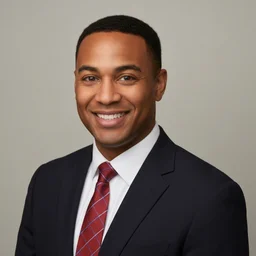
Yale Law SchoolJames R. Hargrove is a practicing attorney and legal educator with a Juris Doctor from Yale Law School and an LLM in Constitutional Law. With over a decade of experience coaching bar exam candidates across multiple jurisdictions, he specializes in MBE strategy, state-specific essay preparation, and multistate performance test techniques.
Join the Discussion
Connect with other students preparing for this exam. Share tips, ask questions, and get advice from people who have been there.
View discussion (8 replies)