
Where to Get a TB Test: Locations, Cost, and How the Test Works
Where to get a TB test: pharmacy clinics, health departments, primary care, urgent care. Cost, skin test vs IGRA blood test, results timing.

Where to Get a TB Test: Common Locations
Tuberculosis (TB) testing is widely available across the United States through multiple channels. The most common locations include primary care doctor's offices, urgent care clinics, county and state health departments (often free or sliding scale), pharmacy clinics like CVS MinuteClinic and Walgreens Healthcare Clinic, Walmart pharmacy clinics, Quest Diagnostics and LabCorp patient service centres, employer wellness programs, university student health centres, and some workplace and school health clinics. Each option has different cost, scheduling, and turnaround characteristics. Choosing the right location depends on whether you have insurance, why you need the test, and how quickly you need results.
The two main TB tests are the tuberculin skin test (TST, also called PPD or Mantoux test) and the interferon-gamma release assay (IGRA) blood test. The skin test involves a small intradermal injection of tuberculin protein in the forearm followed by return visit 48-72 hours later for reading the reaction. The IGRA blood test is a single blood draw with results returning in 1-3 days.
Both tests detect prior exposure to Mycobacterium tuberculosis bacteria. The choice between them depends on availability, cost, prior BCG vaccination status, and provider preference. IGRA is preferred for BCG-vaccinated individuals because the skin test produces false positives in this population.
People need TB testing for various reasons: employment in healthcare, schools, daycare, prisons, and other high-contact occupations; school enrollment at many institutions; military enlistment; immigration medical examinations; contact tracing after known TB exposure; immunocompromised conditions where latent TB would pose particular risk; before starting certain immunosuppressive medications like biologics for autoimmune conditions. Each reason has its own testing protocol and documentation requirements. Confirming what specific documentation your situation requires before testing prevents repeat visits.
Walk-in availability varies substantially by location type. Pharmacy clinics and some urgent care centres typically accept walk-ins without appointments, making them the fastest option when you need testing today. Health departments and primary care offices typically require appointments; same-day availability depends on local demand. Knowing your timeline before scheduling helps choose the right location — same-day need favours pharmacy or urgent care, more flexible scheduling allows lower-cost health department or primary care options.
TB Test Quick Reference
Two test options: TST/Mantoux skin test (2 visits, 48-72 hours apart); IGRA blood test (1 visit, 1-3 day results). Common locations: Primary care, urgent care, county/state health departments, CVS MinuteClinic, Walgreens, Walmart, Quest, LabCorp. Cost: $0-$50 skin test; $50-$150 IGRA; often free at health departments. Insurance: Covered when medically necessary or required for employment/school. Required for: Healthcare jobs, school enrollment, military, immigration, after exposure. Result timing: Skin test 48-72 hours; IGRA 1-3 days.
Free and Low-Cost TB Testing Options
County and state health departments are the most reliable source of free or low-cost TB testing across the United States. Public health departments are mandated to provide TB testing as part of communicable disease control, particularly for high-risk populations and contacts of known cases. Most state health departments offer TB testing free for residents regardless of insurance status; others charge nominal fees ($5-$25) on sliding scale based on income. Finding your local health department through your state's department of public health website typically reveals the specific testing process and scheduling.
Community health centres (federally qualified health centres or FQHCs) provide TB testing on sliding scale fees based on income. Patients without insurance often pay $0-$30 for testing at FQHCs versus $50-$150 at private providers. The FQHC network has clinics in most US counties; the HRSA Find a Health Center tool at findahealthcenter.hrsa.gov locates the nearest FQHC. Some FQHCs accept walk-ins; others require appointments. Asking about TB testing availability and pricing during initial contact prevents wasted trips.
School districts and universities often provide TB testing for students and employees who need it for enrollment or work. The testing is typically free for students; employees sometimes pay or have it deducted from benefits. Daycare workers, teachers, and school staff often need TB clearance before starting positions in school environments; the schools sometimes facilitate testing through their own clinics or partner with local providers. Asking the human resources department about testing options for required employment screening is straightforward.
Income-based qualification for free testing at FQHCs uses a sliding scale based on Federal Poverty Level. Patients at 100% FPL or below typically pay nothing; patients at higher income levels pay portions of full cost on a graduated scale. The income verification is usually a simple form during registration; complex documentation is not typically required. Bringing recent pay stubs or tax return to first visit speeds the qualification process. Repeat patients have qualification on file and skip the verification at subsequent visits.
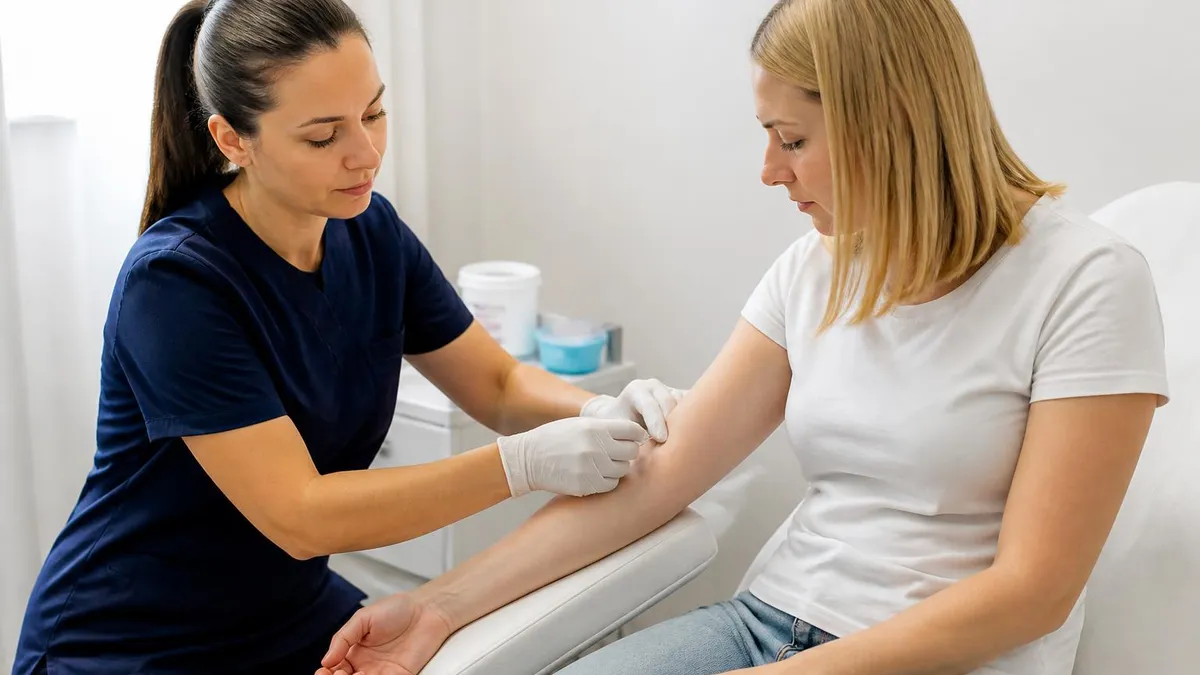
Where to Get a TB Test: Location Comparison
Most reliable source of free or low-cost TB testing. Mandated to provide TB testing as part of communicable disease control. Free or sliding-scale fees ($0-$25) for residents. Both skin test and IGRA typically available. Some require appointments; some allow walk-ins. Locate through your state's department of public health website. The default choice for uninsured patients or those wanting lowest cost.
Most insurance-covered TB testing happens here. Schedule with your regular doctor or nurse practitioner. Skin test is most common; IGRA available with referral or directly at some offices. Result interpretation built into your care team's overall health picture. Convenient if you already have primary care relationship; less convenient for uninsured or those without established care.
Convenient walk-in option for patients without established primary care or those needing same-day testing. Skin test typically $40-$80; IGRA $80-$150. Wait times shorter than scheduling primary care appointments. Result reading appointment can be at same urgent care. Useful for travel and employment deadlines requiring quick testing.
Convenient and consistent pricing. CVS MinuteClinic, Walgreens Healthcare Clinic, and Walmart Care Clinic offer TB testing at most locations. Cost typically $35-$50 for skin test, including reading visit. Walk-in availability with online booking option. Useful when you don't have insurance or want pricing transparency. Some accept insurance for the visit fee.
Patient service centres at thousands of locations nationwide. IGRA blood testing primarily — skin testing not typically offered here. Requires physician order for most direct testing, though some states allow direct-to-consumer ordering. Cost $80-$200 with insurance variations. Useful when IGRA blood test is specifically needed or when results need to integrate with lab databases.
Many healthcare employers, schools, and large workplaces offer TB testing on-site as part of employment health requirements. Cost typically free to employees or students. Convenient because timing aligns with work or school schedules. The certificate or documentation produced often is exactly what HR or admissions needs. Worth asking about availability before scheduling external testing.
The TB Skin Test (Mantoux/PPD): How It Works
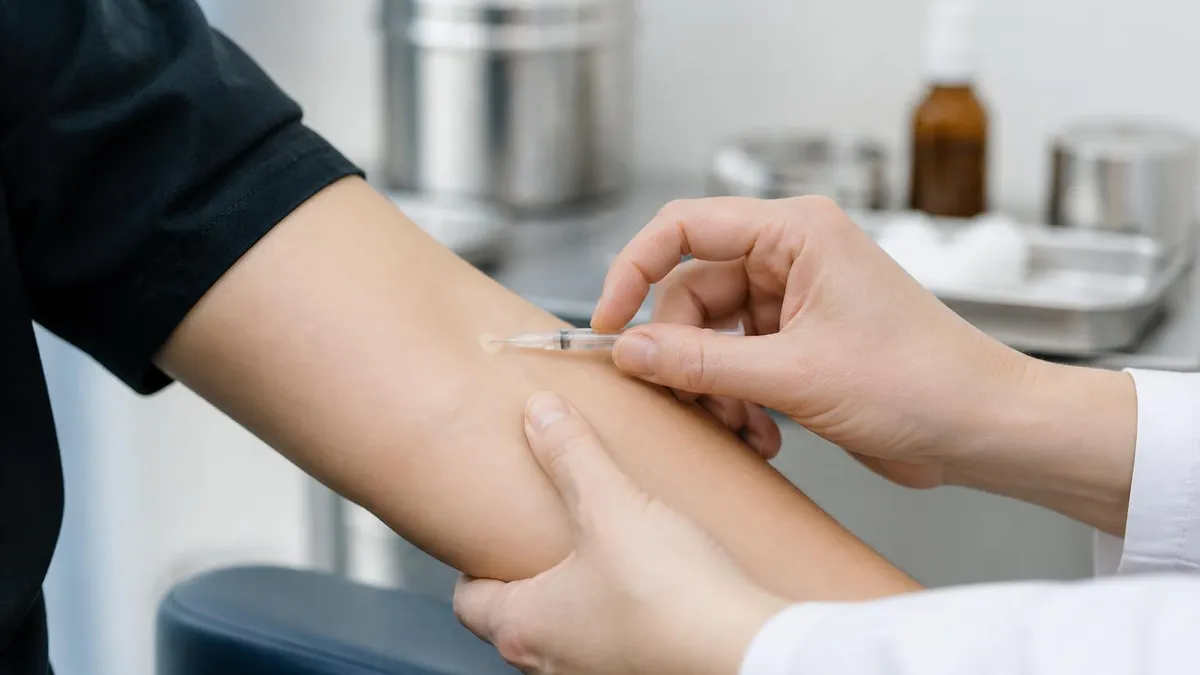
The tuberculin skin test (TST), also called the Mantoux test or PPD (purified protein derivative), involves a small intradermal injection of tuberculin protein into the inner forearm. The injection produces a small wheal (raised bump) that resolves within minutes. The patient returns 48-72 hours later for reading — a trained healthcare provider examines the injection site for induration (firm raised area, not just redness), measures the induration in millimeters, and records the result. Reading must happen within the 48-72 hour window; reading earlier or later produces inaccurate results.
Interpretation of induration depends on patient-specific risk factors. 5mm or more is considered positive in HIV-positive patients, recent TB contacts, patients with chest X-ray suggestive of prior TB, and immunocompromised patients. 10mm or more is considered positive in healthcare workers, recent immigrants from high-prevalence countries, residents of high-risk congregate settings, IV drug users, and certain other groups. 15mm or more is considered positive in everyone else with no specific risk factors. The graduated thresholds reflect that smaller reactions are more diagnostically meaningful in higher-risk groups.
False positives can occur from prior BCG vaccination (common in countries with TB endemic populations) or exposure to nontuberculous mycobacteria. False negatives can occur in immunocompromised patients, very recent infection (before immune response develops), or technical issues with the test. The skin test is sometimes repeated as a two-step test in patients with prior negative results who may have waning immunity — initial test plus second test 1-3 weeks later catches some cases that a single test misses. Two-step testing is common for healthcare worker baseline assessment.
What to expect physically during the skin test: a small needle inserts just under the skin (intradermal, not deep into muscle), producing a small bubble or wheal. Mild discomfort similar to other small injections. The injection site should not be covered with bandage that might affect reading. Patients can shower and go about normal activities; avoid scratching or rubbing the site. Some patients develop mild itching or redness; this is normal and does not affect interpretation. Severe reactions are rare; report severe symptoms to the provider if they occur.
TB Skin Test vs IGRA Blood Test
Intradermal injection in forearm, return in 48-72 hours for reading. Two-visit requirement. Cost $0-$50 typical at health departments and pharmacy clinics. Widely available. Requires trained reader for accurate induration measurement. False positive in BCG-vaccinated individuals (common in countries with TB endemic populations). False negative in immunocompromised patients. The traditional and most-used TB test globally.
Common Reasons People Need TB Tests
Healthcare employment is the most common TB testing requirement. Hospitals, clinics, nursing homes, home health agencies, and dental offices all require pre-employment TB testing for clinical staff. Many require annual testing for ongoing employment. The requirement reflects healthcare workers' higher TB exposure risk and the importance of preventing transmission to vulnerable patients. New hires sometimes have testing scheduled as part of employment onboarding paid by the employer; others complete it before starting and submit documentation.
School and university requirements vary by institution. K-12 teachers and staff in many states need TB clearance before employment. International students at many universities need TB testing as part of enrollment regardless of vaccination status from their home country. Daycare workers need TB clearance in most states. Foster parents need TB testing in many state child welfare systems. Each setting has its specific documentation requirements; checking before testing prevents repeat visits if your initial test result format does not match what the institution needs.
Immigration medical examinations include TB testing as required by USCIS. Adjustment of status, K-1 visa medicals, and refugee medical exams all include TB screening. The required test version and reading is specified by USCIS protocols. Civil surgeons authorised by USCIS perform these exams; they document on the I-693 form that becomes part of the immigration record. Going to a civil surgeon rather than regular primary care matters for immigration purposes because non-USCIS testing may not be accepted as documentation.
Post-exposure testing happens after known or suspected TB contact. The CDC recommends testing 8-12 weeks after the exposure because immune response takes time to develop. Earlier testing may produce false negatives. The 8-12 week window accommodates the immune response development while remaining early enough to detect infection before significant disease development. Contact tracing programs run by public health departments coordinate this testing for known contacts.
Pre-treatment screening before immunosuppressive medications matters because biologics, corticosteroids, and other immunosuppressants can activate latent TB. Patients starting these medications often need TB testing within 12 months of treatment initiation. Positive tests trigger preventive treatment before or during the immunosuppressive therapy. Standard pre-treatment screening protocols at rheumatology, dermatology, gastroenterology, and oncology practices include TB testing along with other infection screening.
A positive TB test (skin test or IGRA) means the body has developed an immune response to TB bacteria, indicating prior exposure. It does NOT automatically mean the person has active TB disease. Most people with positive TB tests have latent TB infection — TB bacteria in the body but contained by the immune system, not causing disease, and not contagious to others. Active TB disease (causing symptoms and contagious) is a smaller subset that requires additional evaluation including chest X-ray, possibly sputum testing, and clinical assessment for symptoms. Treatment recommendations differ substantially between latent infection (preventive treatment to prevent future activation) and active disease (curative multi-drug treatment lasting 6-9 months). A positive test starts the evaluation process; it does not end it.
Cost and Insurance Coverage
TB test cost varies substantially by location and test type. Health departments typically offer testing free or at minimal cost ($0-$25). Pharmacy clinics charge $35-$50 for skin tests including reading. Primary care and urgent care charge $40-$80 for skin tests, more for IGRA blood tests. IGRA tests run $50-$150 typically; specialty labs or full out-of-pocket can run higher. The skin test is generally less expensive than IGRA because the test materials cost less and laboratory processing is minimal compared to IGRA's blood analysis.
Insurance coverage typically applies when TB testing is medically necessary (after known exposure, immunocompromised patients before certain treatments, or as part of routine medical care) or required for specific purposes (employment, school enrollment, immigration). Coverage varies by plan — some cover at 100 percent under preventive care; others apply copay or deductible. Calling your insurance customer service to confirm coverage before testing prevents surprise bills. Self-pay options at health departments often produce lower total costs than insurance-billed visits with high deductible plans.
Self-pay strategies for uninsured patients include comparison shopping across local options. Calling 3-4 nearby providers (health department, pharmacy clinic, urgent care, FQHC) and asking for cash-pay pricing reveals substantial price variation. Some providers offer discounts for patients who pay at time of service rather than billing afterward. Asking for itemised pricing before service prevents surprise charges. Combining TB testing with other needed screening (annual checkup, vaccines, etc.) sometimes produces package pricing that reduces per-test cost.
Before Getting a TB Test
- ✓Confirm why testing is needed (employment, school, immigration, exposure, medical)
- ✓Check what documentation format the requesting party needs
- ✓Consider BCG vaccination history (IGRA preferred if vaccinated)
- ✓Decide on test type: skin test (2 visits, lower cost) vs IGRA (1 visit, higher cost)
- ✓Choose location: health department (cheapest), pharmacy clinic (convenient), primary care (insurance), or workplace
- ✓Confirm cost upfront, particularly if uninsured or high-deductible plan
- ✓Schedule return visit for skin test reading at 48-72 hour mark
- ✓Plan ID and insurance documentation for the visit
- ✓Save the result documentation in physical or digital form
- ✓Follow up if test is positive — chest X-ray and clinical assessment needed
What Happens If You Test Positive
A positive TB test triggers further evaluation, not immediate treatment. The next step is typically a chest X-ray to look for signs of active pulmonary TB. Most patients with positive tests have normal chest X-rays — indicating latent TB infection rather than active disease. Patients with abnormal chest X-rays or symptoms (cough, fever, weight loss, night sweats) need additional evaluation including sputum testing, possibly TB-specific imaging, and clinical assessment by a TB-trained provider. Active TB requires multi-drug treatment for 6-9 months under public health monitoring.
Latent TB infection (positive test, normal chest X-ray, no symptoms) is offered preventive treatment in many cases — typically 3-month rifapentine plus isoniazid, 4-month rifampin, or 6-9 month isoniazid. Preventive treatment reduces future risk of progression to active TB. The decision to treat latent TB depends on the patient's age, risk of progression, other medical conditions, and individual risk-benefit assessment. Some patients elect not to treat and instead get monitored over time. Public health departments often manage latent TB treatment when patients consent.
Public health follow-up after positive TB tests is mandatory in most jurisdictions. The healthcare provider reports positive results to the local health department, which contacts the patient to coordinate next steps. Health departments often manage latent TB treatment through dedicated TB clinics that monitor medication adherence and side effects. The follow-up structure produces better treatment completion than purely individual self-management. Coordination between primary care and public health is the standard pattern for TB management.
What Results Documentation Looks Like
TB test results come in different formats depending on test type and provider. Skin test results typically appear as a brief form documenting the date of test, date of reading, induration measurement in millimeters, and interpretation (positive or negative based on the patient's risk category). IGRA results appear as laboratory reports with quantitative measurements (TB antigen response, mitogen response, nil control) plus binary interpretation. Both formats are typically acceptable for employment, school, and immigration purposes when issued by a recognised healthcare provider.
Some employers and schools require specific forms rather than accepting standard provider documentation. The CDC Form CDC 50.137 is a standard TB test record acceptable to most institutions. School districts often have their own forms. Immigration medical exams use USCIS Form I-693. Asking the institution requiring documentation what specific form they need, and presenting that form to the healthcare provider during testing, ensures the result documentation matches the institution's requirements.
Lost result documentation can sometimes be recovered from the testing provider if it was within recent years. Pharmacy clinics, primary care offices, and health departments typically maintain records for 7-10 years. Requesting a copy of past test results from the original provider is straightforward in most cases. If the provider has gone out of business or records are not available, repeating the test may be necessary. Keeping original documentation in physical or digital form prevents the need for re-testing later.

TB Testing Numbers
Common TB Testing Scenarios and Best Locations
Hospital and clinic employers often facilitate TB testing as part of new-hire onboarding. Many hospitals run their own occupational health clinics that handle testing for free as employer benefit. New hires not yet started should ask whether employer covers external testing. Alternative: pharmacy clinic ($35-50) for fast turnaround if employer requires pre-start documentation.
County health department typically offers free testing for students. Pediatricians and family practice physicians provide insurance-covered testing. Pharmacy clinics offer walk-in testing for older students and staff. Confirm which test type (skin or IGRA) the school requires before scheduling. Most schools accept either; some specify skin test as the standard.
Must go to USCIS-authorised civil surgeon. Regular primary care or pharmacy clinic TB tests are not accepted for immigration purposes. Civil surgeon directory available on USCIS website. TB test is part of broader immigration medical exam including vaccination history review and other health screening. Cost typically $200-$400 for full immigration medical including TB test.
Pre-travel TB testing establishes baseline before potential exposure. Post-travel testing 8-12 weeks after return catches infections acquired during travel. Health departments and travel medicine clinics handle this routinely. Insurance coverage varies — sometimes covered under preventive care, sometimes self-pay. Travel medicine clinics often combine TB testing with other travel-related health screening.
Why Some Tests Are Repeated
Two-step testing for healthcare workers involves an initial TB skin test followed by repeat skin test 1-3 weeks later if the first was negative. The repeat catches "boosted" reactions — immune memory from old TB exposure that the first test stimulates but does not fully produce reaction to. The second test sometimes produces a positive reaction that the first missed. Two-step testing is the standard baseline assessment for healthcare workers in many institutions because catching these boosted reactions matters for accurate baseline interpretation in subsequent annual screening.
Annual testing for healthcare workers compares current results against the documented baseline. New conversion from negative to positive between annual tests suggests recent exposure and triggers active TB workup. Without proper baseline two-step testing, an annual positive could reflect either recent infection (concerning, requiring action) or boosted prior exposure (less concerning, manageable). The investment in two-step baseline testing pays back through more accurate interpretation of subsequent annual tests over years of healthcare career.
Annual testing for healthcare workers has nuances that change over time. CDC guidance updated in 2019 reduced the routine annual screening recommendation for low-risk healthcare workers, instead suggesting baseline testing plus testing only after known exposure. Many institutions have continued annual testing despite the revised CDC guidance because their accreditation or insurance requires it. Knowing your specific employer's current testing schedule, which may have been updated since the CDC change, prevents unnecessary annual visits if your institution has updated its protocol.
Choosing Where to Get a TB Test
- +Health department: Free or low cost, expert at TB protocols
- +Pharmacy clinic: Walk-in convenience, transparent pricing
- +Primary care: Insurance coverage, integrated with overall health
- +Urgent care: Same-day availability for quick turnaround
- +Employer occupational health: Free, scheduling fits work
- +Student health: Free for students, convenient on-campus
- +Quest/LabCorp: IGRA testing nationwide network
- −Health department: Limited hours, requires return visit for skin test
- −Pharmacy clinic: May not be covered by all insurance plans
- −Primary care: Appointment scheduling delays, higher cost without insurance
- −Urgent care: Higher cost than other walk-in options
- −Employer health: Only available to employees of specific employer
- −Quest/LabCorp: May require physician order, IGRA only
- −All: Need to return for skin test reading at 48-72 hours
BMV Questions and Answers
About the Author
Attorney & Bar Exam Preparation Specialist
Yale Law SchoolJames R. Hargrove is a practicing attorney and legal educator with a Juris Doctor from Yale Law School and an LLM in Constitutional Law. With over a decade of experience coaching bar exam candidates across multiple jurisdictions, he specializes in MBE strategy, state-specific essay preparation, and multistate performance test techniques.