
Did Joe Biden Pass the Bar Exam? The Full Story Behind His Legal Career
Did Joe Biden pass the bar exam? 🎯 Discover his law school record, Delaware bar admission, and what his journey means for aspiring lawyers today.

The question "did Joe Biden pass the bar exam" surfaces regularly in searches, especially among law students curious about how well-known politicians fared on one of the most demanding professional licensing tests in the United States. The bar exam is a rigorous multi-day assessment that determines whether law school graduates are qualified to practice law, and its difficulty means even brilliant minds have stumbled on it. Biden's academic and professional history offers a genuinely instructive case study for anyone preparing for this high-stakes test today.
Joe Biden graduated from Syracuse University College of Law in 1968, finishing near the bottom of his class — he ranked 76th out of 85 students. Despite those academic struggles, which included a plagiarism incident involving a law review article, Biden went on to take the Delaware State Bar Examination. He passed the Delaware bar exam in 1969 and was formally admitted to practice law in the state, launching a legal career that would later pivot entirely toward politics and public service.
Biden's bar admission story is worth examining in detail because it illustrates several truths about the legal licensing process. Class rank does not directly determine bar passage — the exam tests a specific set of legal reasoning and analysis skills that may differ from the abilities rewarded in law school coursework. Many candidates who struggled academically go on to pass, while some high-ranked graduates fail on their first attempt. The bar exam is its own distinct challenge, and preparation strategy matters enormously.
For context, the Delaware bar exam at the time Biden sat for it was administered differently than today's modern uniform assessments. The law bar exam practice landscape has transformed dramatically over the past five decades, with the Uniform Bar Exam (UBE) now adopted by a majority of states and providing a portable score that candidates can transfer across jurisdictions. Biden's era featured largely state-specific testing with different content and format requirements than what today's law graduates face.
It is also worth noting that Biden briefly practiced law before fully committing to politics. He worked at a Wilmington law firm and later served as a public defender, giving him practical courtroom experience. By 1972, however, he had been elected to the United States Senate at just 29 years old — making him one of the youngest senators in American history — and his legal career effectively ended. His bar admission, however, remained part of his professional credentials for decades.
The interest in Biden's bar exam history peaks around election cycles and during national conversations about leadership credentials, but it also resonates with a persistent curiosity about how famous figures handle the same professional hurdles that ordinary Americans face. Other celebrities, athletes, and public figures have also taken bar exams with varying results, and these stories collectively illuminate the exam's universal difficulty and the importance of focused, strategic preparation.
Understanding Biden's path to bar admission can motivate aspiring lawyers who feel discouraged by academic performance. If a future president could pass the bar after a rocky law school record, the exam is demonstrably conquerable with the right mindset and preparation. This article explores what the bar exam actually tests, how Biden's story fits into broader bar passage data, and what practical steps you can take to join the ranks of licensed attorneys.
The Bar Exam by the Numbers
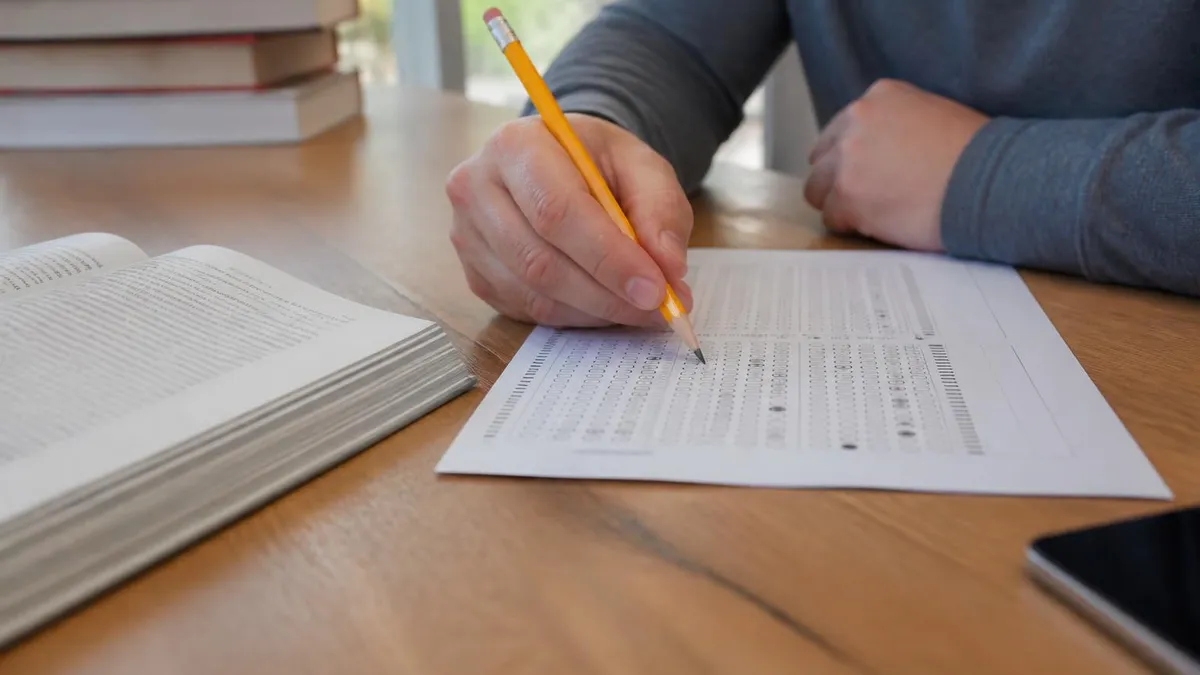
Bar Exam Format: What the Test Actually Looks Like
| Section | Questions | Time | Weight | Notes |
|---|---|---|---|---|
| Multistate Bar Examination (MBE) | 200 | Day 2 — 6 hrs | 50% | Multiple-choice; covers 7 core subjects |
| Multistate Essay Examination (MEE) | 6 | Day 1 — 3 hrs | 30% | Written essays on UBE jurisdictions |
| Multistate Performance Test (MPT) | 2 | Day 1 — 3 hrs | 20% | Practical lawyering tasks using provided materials |
| Total | 200 | 2 Days | 100% |
Joe Biden's journey through law school and into bar admission is a story of persistence overcoming academic mediocrity — and it carries real lessons for today's candidates. Biden attended Syracuse University College of Law on a half scholarship and struggled significantly. Beyond his low class ranking, he was found to have plagiarized five pages of a law review article in his first year, leading to a formal hearing. He was allowed to continue his studies after demonstrating the plagiarism was unintentional, but the incident followed him into his political career decades later.
Despite these setbacks, Biden completed his law degree and took the Delaware bar exam, passing in 1969. Delaware was then — and remains today — a state with a rigorous bar examination process, partly due to its outsized role in corporate law. The state is home to the Delaware Court of Chancery, the most influential business court in the United States, and its bar exam reflects that demanding legal culture. Passing the Delaware bar was a meaningful achievement regardless of Biden's class standing.
After admission, Biden joined the Wilmington firm of Prickett, Ward, Burt & Sanders, but his heart was in public service. He quickly moved to the public defender's office, where he gained hands-on courtroom experience representing indigent clients in criminal matters. This phase of his career was brief — lasting only a few years before his 1972 Senate campaign — but it demonstrates that bar admission opened a door that led directly to his rise in public life. Without passing the bar, that trajectory might have looked very different.
The broader context of Biden's law school era matters here. In the late 1960s, the bar examination landscape was considerably less standardized than it is today. There was no UBE, no Multistate Bar Examination in its current comprehensive form, and bar prep resources were a fraction of what candidates have access to now. Modern candidates benefit from elaborate commercial prep courses, adaptive question banks, video lectures, and community support through forums like bar exam Reddit threads where thousands of candidates share strategies in real time.
Biden's story also intersects with the question of what law school performance actually predicts. Research consistently shows that law school GPA and bar passage are correlated but imperfect predictors of each other. Factors like dedicated bar prep time, quality of study materials, test-taking strategy, and mental health management play enormous roles in whether a candidate passes on the first attempt. A candidate who graduates near the top of their class but neglects structured bar prep can fail, while someone with Biden's academic record can succeed with focused effort.
It is worth comparing Biden's path to that of other notable legal figures who faced bar exam challenges. Michelle Obama passed the Illinois bar on her first attempt after graduating from Harvard Law School. Hillary Clinton reportedly failed the District of Columbia bar exam before passing the Arkansas bar.
John F. Kennedy Jr. failed the New York bar exam twice before passing on his third attempt. These examples reinforce that the bar exam is a standalone challenge that does not simply mirror law school performance — it demands its own specific preparation. Check the latest ny bole bar exam results to see how current pass rates compare across administrations.
For Biden specifically, passing the bar at 26 after a difficult law school experience established a pattern that defined his entire career: setbacks followed by perseverance followed by ultimate success. His eventual presidency — reached after two failed earlier campaigns and enormous personal tragedy — mirrors the same arc. For bar candidates who have failed once or are anxious about their chances, Biden's story offers a genuine and historically grounded reminder that the exam is not the final word on legal aptitude or professional potential.
Famous Bar Exam Stories: Biden, Kardashian, and More
Joe Biden passed the Delaware bar exam in 1969 after graduating near the bottom of his Syracuse law school class. His path illustrates a truth that many bar prep instructors emphasize: raw academic rank is a poor predictor of bar exam success. Biden's ability to focus his preparation on the specific skills tested — legal analysis, issue spotting, and rule application — was sufficient to earn admission to practice, even without a distinguished transcript behind him.
After passing, Biden spent a short time in private practice and public defense before winning a U.S. Senate seat in 1972 at age 29. His bar admission was never revoked, and he maintained his status as a member of the Delaware bar throughout his political career. The credential became a quiet footnote to a life defined by legislative work, vice presidency, and ultimately the presidency — but it was a necessary foundation that opened the doors of public service.

Pursuing Law the Non-Traditional Way: Pros and Cons
- +Reading the law pathways exist in states like California, Vermont, and Virginia for those without law degrees
- +Bar exam results focus purely on legal knowledge and reasoning, not academic pedigree
- +Failing and retaking the bar is common — most states allow multiple attempts
- +Diverse professional backgrounds can strengthen legal reasoning and client empathy
- +Passing the bar unlocks career versatility: private practice, government, public interest, and corporate roles
- +Modern bar prep resources — adaptive question banks, video courses, Reddit communities — make self-study more effective than ever
- −Reading the law without a JD is not recognized in most states, limiting geographic mobility
- −California's first-year law students' exam (Baby Bar) has historically low pass rates for non-traditional students
- −Non-ABA-accredited law school graduates face additional restrictions in many jurisdictions
- −Law school GPA still affects clerkship and large-firm hiring even after bar passage
- −Bar exam prep costs can exceed $3,000–$4,500 for comprehensive commercial courses
- −Retaking the bar exam multiple times can delay career entry by a year or more and carries emotional and financial costs
Pros and Cons at a Glance
| Pros | Cons |
|---|---|
| Reading the law pathways exist in states like California, Vermont, and Virginia for those without law degrees | Reading the law without a JD is not recognized in most states, limiting geographic mobility |
| Bar exam results focus purely on legal knowledge and reasoning, not academic pedigree | California's first-year law students' exam (Baby Bar) has historically low pass rates for non-traditional students |
| Failing and retaking the bar is common — most states allow multiple attempts | Non-ABA-accredited law school graduates face additional restrictions in many jurisdictions |
| Diverse professional backgrounds can strengthen legal reasoning and client empathy | Law school GPA still affects clerkship and large-firm hiring even after bar passage |
| Passing the bar unlocks career versatility: private practice, government, public interest, and corporate roles | Retaking the bar exam multiple times can delay career entry by a year or more and carries emotional and financial costs |
Bar Exam Prep Checklist: 10 Steps Every Candidate Must Complete
- ✓Register for a commercial bar prep course (Barbri, Themis, or Kaplan) at least 10 weeks before the exam date
- ✓Download your state's officially released past bar exam questions and work through them under timed conditions
- ✓Complete at least 1,500–2,000 MBE practice questions spread across all seven tested subjects
- ✓Draft and self-grade at least 20 MEE essays, comparing your answers to model responses
- ✓Complete at least 6 full MPT practice tasks to build comfort with the performance test format
- ✓Build a daily study schedule with specific topic blocks and stick to it for the full prep period
- ✓Join a bar exam Reddit study group or online community to share strategies and stay accountable
- ✓Review your state's specific passing score requirements and character and fitness disclosure deadlines
- ✓Schedule at least two full-length simulated exam days to build stamina and time management skills
- ✓Prioritize sleep, exercise, and mental health — burnout is a leading cause of bar exam failure on reattempts

Class Rank Does Not Determine Bar Passage
Joe Biden graduated 76th out of 85 students at Syracuse Law and still passed the Delaware bar exam. Modern research confirms that bar-specific preparation time — not law school GPA — is the strongest predictor of first-time passage. Candidates who complete 400+ hours of focused bar prep consistently outperform peers who rely on academic record alone. Start early, practice daily, and trust the process.
Understanding bar exam pass rates and what drives them is essential context for anyone preparing for the test today. The national first-time pass rate for the Uniform Bar Exam hovers around 54 percent, but this figure masks enormous variation across jurisdictions. California consistently posts the lowest pass rates in the country — often below 40 percent for all takers and as low as 25 percent for some first-time sitters from unaccredited schools. New York and Texas post moderate rates in the 55–65 percent range for first-time ABA graduates. States like Missouri and Minnesota frequently see first-time rates above 80 percent.
The California bar exam's difficulty is legendary and shapes the discourse around bar exam questions nationally. The state uses a combination of the MBE, California-specific essay questions covering subjects not tested elsewhere (such as community property and California civil procedure), and performance tests. The sheer volume and complexity of California-specific content is why candidates like Kim Kardashian chose to pursue the "reading the law" pathway there — California is one of the few states that permits it — and why even elite law graduates from top schools sometimes fail on their first attempt.
The Uniform Bar Exam has dramatically reshaped the licensing landscape since its widespread adoption. Before the UBE, a lawyer admitted in New York who wanted to practice in Colorado had to take an entirely new bar exam in that state. Today, with 41 jurisdictions accepting UBE scores, attorneys can transfer their score to a new jurisdiction if it meets or exceeds that state's passing threshold. This portability has enormous practical value for law graduates who are uncertain about where they'll ultimately practice, and it makes early bar prep decisions about which state to apply in more strategic than ever.
For candidates concerned about their chances, the data offers both sobering and encouraging news. Among first-time takers from ABA-accredited law schools, pass rates are considerably higher than the overall average — typically 70–80 percent nationally. Repeat takers, however, face steeper odds, with pass rates often falling below 30 percent. This pattern underscores why passing on the first attempt is so critical and why the weeks of intensive preparation immediately following law school graduation are among the most important in a lawyer's career.
Bar exam questions themselves follow specific formats that candidates must master. The MBE covers Contracts, Torts, Constitutional Law, Criminal Law and Procedure, Evidence, Real Property, and Civil Procedure. Each of these subjects is tested with 25 scored questions out of the 200 total MBE questions, though the exam includes 25 experimental questions that do not count toward the final score. Understanding how these subjects are weighted and which concepts are most heavily tested is a core part of strategic prep. Access bar exam sample questions to benchmark your current knowledge against real exam difficulty.
The MEE essays test a broader range of subjects, including Business Associations, Conflict of Laws, Family Law, Secured Transactions, and Trusts and Estates, in addition to the core MBE subjects. Many candidates underestimate the MEE because it does not produce a single score but rather feeds into the overall scaled score. Strong MEE performance can compensate for a weaker MBE day, and vice versa — making it essential to treat both components as equally important rather than focusing prep time disproportionately on multiple-choice practice.
The MPT is perhaps the most underrated component of the bar exam. Unlike the MBE and MEE, the MPT does not require any memorized legal knowledge — all relevant law is provided in the exam packet. What it tests is the ability to read, synthesize, and apply materials under time pressure, which is precisely what practicing lawyers do every day.
Candidates who excel at the MPT often come from backgrounds with strong writing and analytical skills, regardless of their doctrinal knowledge. Given its weight in the overall score, dedicating meaningful prep time to the MPT is one of the highest-use strategies available.
Every state bar requires a character and fitness review alongside your exam score. Missing the filing deadline — often months before the exam date — can prevent you from being admitted even if you pass. Disclose all prior legal issues, academic discipline, and employment gaps honestly; omission is treated more seriously than the underlying incident itself. Check your state bar's official website for exact submission windows.
Passing the bar exam demands a structured, multi-week preparation plan that systematically covers every tested subject while building the stamina required for a two-day assessment. The most successful candidates typically begin their dedicated bar prep immediately after their final law school exam, giving themselves a full 10–12 weeks before the July or February administration. Compressing prep into six weeks or fewer dramatically increases failure risk, even for candidates with strong academic records. Time invested in preparation is one of the most reliable variables a candidate can control.
Commercial bar prep courses remain the gold standard for most candidates. Courses like Barbri, Themis, and Kaplan provide structured daily schedules, lecture videos, adaptive MBE question banks, model essay answers, and performance test practice. These resources cost $2,500–$4,500 but provide a comprehensive framework that eliminates the guesswork of designing your own curriculum. Many law schools offer subsidized course access to their graduates, so check with your financial aid office before purchasing at full price. Supplementing a commercial course with free publicly released past exam questions from your state bar's website is an effective cost-efficient strategy.
Active practice is far more valuable than passive review. Reading outlines or watching lecture videos without following up with timed practice questions creates the illusion of preparation without building actual exam-day performance. The most effective bar prep schedules dedicate 60–70 percent of daily study time to answering and reviewing practice questions, with passive review reserved for topics where targeted outlines are genuinely necessary. This active approach is supported by cognitive science research on retrieval practice and mirrors the methods used by bar prep specialists who coach repeat takers.
Essay writing is a skill that must be deliberately practiced, not just theoretically understood. Many candidates know the law well enough to identify correct MBE answers but struggle to translate that knowledge into organized, properly structured essay responses under time pressure. The IRAC method (Issue, Rule, Application, Conclusion) remains the dominant framework for bar exam essays, but its effective execution requires practice with real past MEE questions and honest self-assessment against model answers. Candidates who write 25 or more graded practice essays before exam day consistently outperform those who write fewer than ten.
Mental and physical preparation are underappreciated dimensions of bar exam success. The exam is a two-day cognitive marathon that depletes concentration, working memory, and emotional regulation resources. Candidates who enter exam week sleep-deprived, poorly nourished, or carrying high anxiety consistently underperform relative to their preparation level. Building a sustainable daily routine during prep — including regular sleep schedules, aerobic exercise, and brief daily mindfulness or stress management practices — is not a luxury but a performance optimization strategy backed by sports psychology and cognitive science research.
State-specific requirements deserve careful attention in the final weeks of prep. Even within the UBE framework, states may test additional local subjects in separate essay sessions, impose specific formatting requirements for written responses, or use different passing score thresholds. The July 2024 administration saw passing scores range from 260 in some UBE jurisdictions to 280 in others, all on the same 400-point scale.
Knowing your target jurisdiction's threshold and tracking your simulated practice scores against it gives you a concrete benchmark for evaluating readiness. Review the latest california bar exam results and compare passage rates across jurisdictions to set realistic expectations for your own timeline.
Finally, the community dimension of bar prep is increasingly recognized as a performance factor. Candidates who study in small groups, participate in accountability partnerships, or engage with bar exam communities online report higher motivation and better outcomes than those who isolate entirely. The bar exam Reddit community, study Discord servers, and law school alumni networks all provide spaces for sharing resources, troubleshooting weak areas, and normalizing the difficulty of the process. Biden had no such resources in 1969 — today's candidates are far better equipped, and using that advantage is simply good strategy.
Building an effective bar exam study schedule requires honest self-assessment before you write a single study hour onto a calendar. Begin by taking a diagnostic practice MBE under timed, exam-like conditions during the first week of prep. Your results will show which of the seven MBE subjects are already strong and which require the most remediation time. Candidates who skip this diagnostic step often distribute study time evenly across subjects, which wastes prep time on already-mastered topics while leaving weaknesses unaddressed heading into exam day.
Once you have diagnostic data, build a weekly schedule that front-loads your weakest subjects in the mornings when cognitive resources are freshest. Reserve afternoons for mixed-subject MBE practice, which trains the mental switching required during the actual exam. Dedicate at least two full days per week to essay writing — one day for MEE practice and one for MPT — throughout the entire prep period rather than saving written work for the final two weeks. This distribution prevents the common pattern of strong MBE performance paired with underpracticed writing skills.
Week-by-week milestones keep preparation on track and prevent the drift that derails many self-directed study plans. A useful framework divides the prep period into three phases: weeks one through four focus on subject review and learning the law through lectures and targeted outlines; weeks five through nine shift to heavy practice question volume with intensive error review; weeks ten through twelve simulate full exam conditions, including timed two-day mock exams, final weak-area drilling, and active stress management.
The transition between phases should feel deliberate, not gradual — the shift from learning to performing is one of the most psychologically important changes in the prep arc.
The final 72 hours before the exam require a counterintuitive approach: reduce new content absorption and maximize rest and logistics preparation. Attempting to cram new material in the last three days before the exam typically introduces anxiety without meaningfully improving scores.
Instead, lightly review your own previously written essay outlines, complete a small number of MBE questions to stay warm, confirm your exam location and required materials, arrange transportation and accommodation if the testing center is not nearby, and prioritize full nights of sleep. Entering both exam days in a rested, calm state is worth more than any additional hour of last-minute review.
On exam day itself, time management is the most critical in-the-moment skill. For the MBE, candidates have 3 hours for 100 questions in each session — exactly 1.8 minutes per question. Practicing to this cadence throughout prep makes the time pressure familiar rather than shocking. If a question is taking more than two minutes, mark it and move on; returning to difficult questions after completing easier ones is more efficient than getting stuck and missing questions later in the section. This time discipline is trainable and should be part of every timed practice session from week five onward.
Post-exam analysis — whether after a practice test or a real administration — is where the most learning occurs. Simply checking whether an answer was right or wrong captures only a fraction of the available information. The more valuable questions are: why was this answer correct? Why were the other options wrong?
What legal rule or principle does this question test? What fact pattern variation would change the answer? Candidates who engage in this deep review after every practice question session build the analytical schema that allows them to recognize and correctly answer novel variations on exam day, rather than pattern-matching to memorized fact patterns.
The bar exam is ultimately a test of professional readiness — it asks whether a candidate has developed the baseline analytical, organizational, and communicative skills required to represent clients competently. Biden's passage of the Delaware bar exam in 1969, despite a difficult academic record, confirmed that he possessed those baseline capabilities.
Modern candidates have access to far superior preparation resources than Biden did, along with communities of practice, adaptive technology, and decades of accumulated bar prep wisdom. There is no reason why any motivated, well-prepared candidate cannot pass. Commit to a structured plan, work the practice questions, write the essays, and trust that the preparation process works when followed with discipline and consistency.
Sample Bar Exam Practice Questions
Try these questions from our free Bar Exam practice tests. The correct answer and an explanation follow each question.
Which legal doctrine permits a property owner to transfer their property after death, avoiding probate by specifying beneficiaries and conditions in a legal document?
- A. Condemnation
- B. Eminent Domain
- C. Instate Succession
- D. Transfer on Death (TOD)
Answer: D. Transfer on Death (TOD)
A Transfer on Death (TOD) deed or designation is a legal instrument that allows a property owner to name a beneficiary who will automatically receive the property upon the owner's death, bypassing the probate process. This provides a simple and efficient way to transfer assets directly to heirs. It helps avoid the time and expense associated with traditional probate, making it a popular estate planning tool.
Under which legal principle can a court disregard the separate legal entity status of a corporation and hold its shareholders personally liable for the corporation's actions?
- A. Limited Liability Doctrine
- B. Piercing the Corporate Veil
- C. Shareholder Immunity Rule
- D. Business Judgment Rule
Answer: B. Piercing the Corporate Veil
Piercing the Corporate Veil is a legal doctrine where a court disregards the limited liability protection of a corporation and holds its shareholders personally responsible for the corporation's debts or actions. This typically occurs when the corporation is used to commit fraud, evade the law, or when corporate formalities are not properly maintained, blurring the lines between the corporation and its owners.
What is the legal document that establishes a formal relationship between a trustee, who holds legal title, and beneficiaries, who hold equitable title to the trust property?
- A. Deed of Trust
- B. Mortgage
- C. Lease Agreement
- D. Trust Agreement
Answer: D. Trust Agreement
A Trust Agreement is the legal document that creates a trust, outlining its terms and conditions. It formally establishes the relationship between the trustee, who holds legal title to the trust assets, and the beneficiaries, who hold equitable title and benefit from the trust. This agreement dictates how the trust assets are to be managed, invested, and distributed according to the grantor's wishes.
Under the Uniform Parentage Act and most state laws, what is the strongest presumption of legal parentage for a man?
- A. DNA evidence establishing biological fatherhood
- B. Marriage to the mother at the time of the child's birth or within 300 days before birth
- C. Acknowledgment of paternity signed by the alleged father
- D. The court's determination based on the best interests of the child
Answer: B. Marriage to the mother at the time of the child's birth or within 300 days before birth
The marital presumption — that the husband of the mother is the legal father of children born during the marriage or within 300 days of dissolution — is the strongest parentage presumption in most jurisdictions. It can only be rebutted by clear and convincing evidence and in some states only by the husband or wife, not third parties.
Bar Questions and Answers

TN Bar Exam Results: Everything You Need to Know About Tennessee's Bar Exam

Ohio Bar Exam: Complete Guide to Requirements, Format, and How to Pass
Bar Exam Practice Test PDF (Free Printable 2026)

UBE Bar Exam: Structure, Scores, States, and How to Pass

NCBE Bar Exam Results: What They Mean and How to Use Them to Pass
About the Author
Attorney & Bar Exam Preparation Specialist
Yale Law SchoolJames R. Hargrove is a practicing attorney and legal educator with a Juris Doctor from Yale Law School and an LLM in Constitutional Law. With over a decade of experience coaching bar exam candidates across multiple jurisdictions, he specializes in MBE strategy, state-specific essay preparation, and multistate performance test techniques.