
1 King Bail Bonds Reviews: What to Know Before You Call a Bail Bondsman
1 king bail bonds reviews explained — costs, agent qualifications, and how the process works. 🔎 Know what to ask before posting bail.
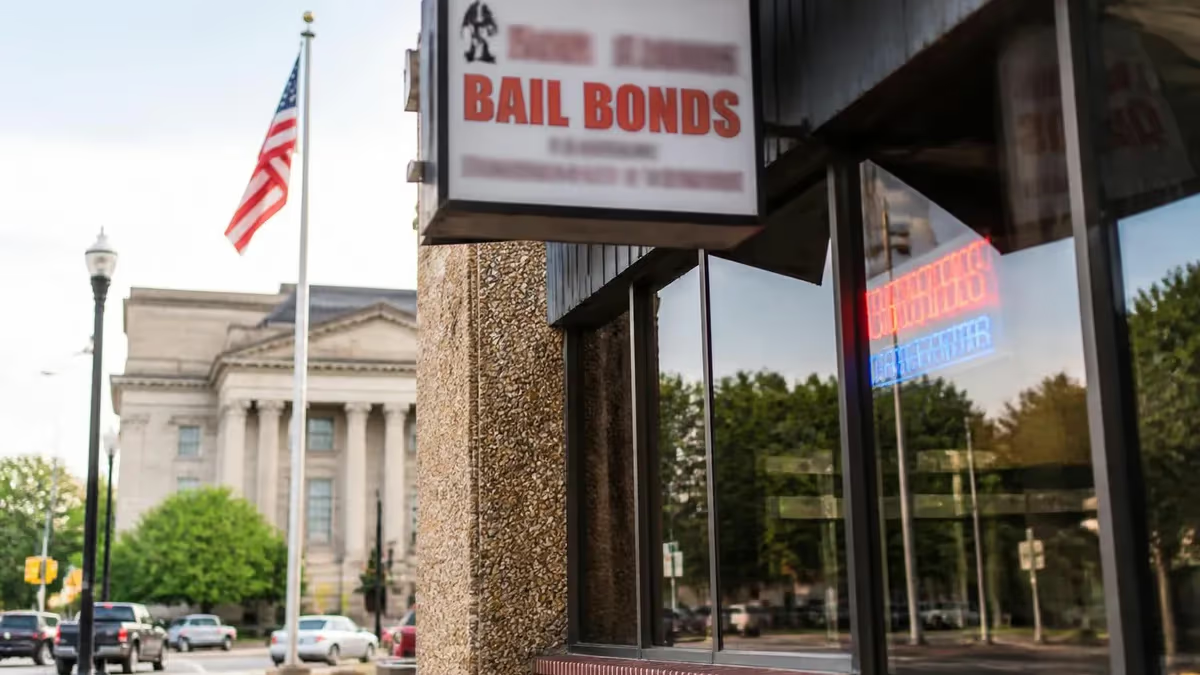
When someone you care about is sitting in a jail cell, time feels like the enemy. Reading 1 king bail bonds reviews online is often the first step families take when they need a bondsman fast — but reviews alone rarely tell the full story. Understanding how bail bond companies operate, what fees are standard, and what red flags to watch for can make the difference between a smooth release and a costly mistake. This guide breaks down everything you need to evaluate any bail bond agency with confidence.
Bail bond companies exist to bridge the gap between what a court demands as bail and what a family can realistically pay out of pocket. A typical bail bondsman charges a non-refundable premium — usually 10% of the total bail amount — in exchange for guaranteeing the defendant will appear at all scheduled court dates. If the defendant flees, the bondsman is on the hook for the full amount, which is why agencies run background checks and sometimes require collateral before issuing a bond.
Not all bail bond agencies are created equal. Some operate 24 hours a day, seven days a week, with licensed agents available by phone within minutes. Others keep limited hours, use answering services overnight, or require lengthy paperwork before anyone will pick up. When you are scanning 1 king bail bonds listings and competitor reviews side by side, response time and agent availability are two of the first practical details worth confirming directly.
State licensing requirements add another layer of complexity. Every state that permits commercial bail bonding requires agents to hold an active license, complete continuing education, and maintain a surety bond through an approved insurance carrier. Some states, like California, impose strict fee schedules so bondsmen cannot charge more or less than the mandated 10% premium. Other states allow more flexibility in pricing, which is why shopping around — and reading verified reviews — matters more in certain jurisdictions than others.
Customer reviews on platforms like Google, Yelp, and the Better Business Bureau often reveal patterns that a company's own website never will. Look for consistent mentions of communication speed, fee transparency, and how the agency handled complications — such as a defendant being transferred to a different facility or bail being reset after arraignment. A handful of negative reviews is normal for any service business, but a pattern of complaints about hidden fees or unresponsive agents after payment should raise immediate concern.
Collateral is another area where reviews frequently surface surprises. Some bondsmen require co-signers to pledge real estate, vehicles, or other assets to secure a bond, especially when bail is set high or the defendant has a prior record. Understanding these terms before signing is critical because a co-signer who is financially responsible for the full bail amount if the defendant skips court faces very real consequences. Reputable agencies explain collateral requirements clearly upfront rather than revealing them after the paperwork is half-signed.
This article will walk you through the complete bail bond process — from how premiums are calculated and what qualifications legitimate agents must hold, to the pros and cons of different bond types and the key questions you should ask any agency before handing over money. Whether you are vetting a specific company or simply learning how the system works, the information here will help you move faster and smarter when time is tight.
Bail Bonds by the Numbers
How Bail Bond Agencies Are Structured
The licensed individual who writes the bond on behalf of a surety company. Agents are the primary point of contact for defendants and co-signers, responsible for collecting premiums, reviewing collateral, and monitoring court compliance.
The financial backer behind every commercial bail bond. Surety companies are licensed insurers that agree to pay the full bail amount if the defendant fails to appear. Agents must be appointed by an approved surety to legally write bonds.
When a defendant skips court, the bondsman may hire a recovery agent to locate and return them. Recovery agents operate under state-specific rules and must typically be licensed. Their job is to protect the bondsman's financial exposure.
A person — often a family member — who agrees to be financially responsible if the defendant fails to appear. Co-signers may pledge collateral and are legally liable for the full bail amount if the bond is forfeited by the court.
Understanding what you will actually pay when you work with any bail bond company starts with grasping how premiums are calculated and why they are non-refundable. The standard premium in most U.S. states is 10% of the total bail amount set by the court.
So if bail is set at $20,000, you will owe $2,000 to the bondsman regardless of whether the case is dismissed the next day, regardless of whether the defendant is ultimately found not guilty, and regardless of how long the court process takes. That money pays for the risk the bondsman assumes by guaranteeing the full $20,000 to the court.
Some states allow a lower premium for defendants who qualify — for example, California permits a reduced rate of 8% for union members, active military, and defendants represented by an attorney at the time the bond is issued. These discounts are regulated and must be filed with the state insurance commissioner. If an agent offers you a dramatically lower rate with no documented justification, that is a warning sign worth investigating. Unlicensed or fraudulent operators sometimes use low-fee promises to attract desperate families and then disappear with the money.
Collateral requirements vary widely based on bail amount, the defendant's record, and the agency's internal risk assessment. For smaller bail amounts — under $5,000 to $10,000 — many agencies will write a bond on a signature alone, relying on the co-signer's creditworthiness and employment history. For higher bail, they may require a deed of trust on real property, a vehicle title, or jewelry. The collateral is held until the case is resolved and the bond is exonerated by the court, which can take months or even years in complex cases.
Payment plans are increasingly common at bail bond agencies, particularly for higher bail amounts. A bondsman may accept a down payment of 2% to 3% upfront and allow the remaining premium to be paid in monthly installments. While this can ease immediate financial pressure, it is important to read any payment agreement carefully. Some agencies charge interest on deferred premiums, and failure to make payments while the bond is active can give the bondsman grounds to surrender the defendant back to custody — effectively revoking the release until the balance is paid.
Hidden fees are among the most common complaints in bail bond reviews. These can include document preparation fees, electronic monitoring equipment rental, check-in appointment fees, and travel fees if the defendant is held in a facility outside the bondsman's primary service area. Legitimate agencies disclose all fees in writing before the contract is signed. Always ask for a complete itemized list of every charge before providing any payment or signing any documents. The 10% premium is regulated — the add-on fees often are not.
Refund policies around collateral deserve special attention. While the premium is never refunded, collateral pledged to secure the bond should be returned once the bond is exonerated — typically after the case concludes and the court formally releases the bondsman from liability. Most reputable agencies return collateral within a few weeks of exoneration. Delays of several months, requests for additional payments before releasing collateral, or outright refusal to return property after exoneration are serious red flags that may warrant a complaint to your state's Department of Insurance.
Interstate bail is another complexity worth understanding. If a defendant is arrested in a state other than where they live, the bondsman typically must be licensed in the state where the defendant is held — not just the state where the co-signer lives. Some larger bail bond networks operate across multiple states through affiliated agents, which can help in these situations. If a company you are considering cannot clearly explain how they handle out-of-state bonds, that is worth exploring before you commit.
Evaluating Bail Bond Company Reviews
Google reviews are often the most abundant source of customer feedback for local bail bond agencies. When reading them, look beyond the star rating and focus on the substance of individual comments. Reviews that describe specific interactions — fast pickup of a phone call at 3 a.m., clear explanation of payment terms, or quick resolution when a defendant was transferred to a different jail — are more reliable indicators of service quality than generic five-star ratings with no accompanying text.
Pay attention to how the business responds to negative reviews. A bail bond company that engages professionally with complaints, acknowledges specific concerns, and offers to resolve issues off-platform is demonstrating accountability. Companies that respond defensively, attack reviewers personally, or post templated non-answers to every negative comment often have underlying service problems they are trying to obscure. The response pattern matters as much as the complaint itself.

Pros and Cons of Using a Commercial Bail Bond Agency
- +Allows release from jail without paying the full bail amount upfront
- +Licensed agents navigate complex jail and court paperwork on your behalf
- +Many agencies operate 24/7, including holidays and weekends
- +Payment plans make bail accessible for families with limited immediate funds
- +Bondsman monitors court date compliance, reducing failure-to-appear risk
- +Faster release in many cases compared to cash bail processing through the court
- −The 10% premium is non-refundable even if charges are dropped immediately
- −Co-signers risk losing pledged collateral if the defendant skips court
- −Some agencies add undisclosed fees on top of the regulated premium
- −Bondsman can surrender the defendant back to jail for non-compliance with check-in terms
- −Quality and reliability vary significantly between agencies in the same market
- −Some states have banned commercial bail entirely, limiting your options
Pros and Cons at a Glance
| Pros | Cons |
|---|---|
| Allows release from jail without paying the full bail amount upfront | Co-signers risk losing pledged collateral if the defendant skips court |
| Licensed agents navigate complex jail and court paperwork on your behalf | Some agencies add undisclosed fees on top of the regulated premium |
| Payment plans make bail accessible for families with limited immediate funds | Bondsman can surrender the defendant back to jail for non-compliance with check-in terms |
| Bondsman monitors court date compliance, reducing failure-to-appear risk | Quality and reliability vary significantly between agencies in the same market |
| Faster release in many cases compared to cash bail processing through the court | Some states have banned commercial bail entirely, limiting your options |
Checklist: Vetting a Bail Bondsman Before You Sign
- ✓Verify the agent's license is active on your state's Department of Insurance website.
- ✓Confirm the surety insurance company backing the bond is admitted in your state.
- ✓Ask for a complete written list of all fees before signing any contract.
- ✓Confirm the agency's hours and who answers calls on nights, weekends, and holidays.
- ✓Request the names of at least two defense attorneys who have referred clients to them.
- ✓Ask how they handle it if the defendant is transferred to a different facility after bonding.
- ✓Clarify the collateral return timeline and get the exoneration procedure in writing.
- ✓Read all contract language about payment plan terms, interest charges, and default consequences.
- ✓Check Google, Yelp, and BBB for review patterns — especially how the company responds to complaints.
- ✓Ask whether the agency has any current or past complaints filed with the state insurance commissioner.
You Are Financially Liable for the Full Bail Amount
Many co-signers focus only on the 10% premium and do not realize they are legally guaranteeing the entire bail amount if the defendant skips court. Before signing as an indemnitor, consult with an attorney and make sure you have a realistic plan for monitoring the defendant's court date compliance. Your home, vehicle, or savings could be at risk.
Bail bond agent licensing exists to protect the public from unscrupulous operators who might take advantage of families in crisis. In most states, becoming a licensed bail agent requires completing a pre-licensing education course (typically 20 to 40 hours), passing a state licensing exam administered by the Department of Insurance, submitting to a background check, and being appointed by a licensed surety insurer. The exam covers topics like insurance law, the bail bond contract, fiduciary responsibilities, and the legal rights of defendants and co-signers.
Continuing education is required in most states to maintain an active license. California, for example, requires 30 hours of continuing education every two years, including mandatory courses on ethics and changes in state insurance law. These requirements are designed to ensure that agents stay current with evolving regulations, court procedures, and industry best practices. An agent who cannot tell you when they last completed their CE requirements or who seems unfamiliar with recent changes in your state's bail law may not be keeping up with their professional obligations.
The bail agent licensing exam tests knowledge that directly affects how well an agent can serve you in a crisis. Topics typically include the legal definition of bail, the conditions under which a bond can be forfeited by the court, the rights and obligations of the surety, the process for exoneration of a bond after a case concludes, and the regulatory framework governing premium rates and fees. Agents who passed their exam recently and work in active markets tend to be the most fluent in these areas because they apply this knowledge daily.
Some bail agents also pursue additional certifications through professional associations such as the Professional Bail Agents of the United States (PBUS) or state-level trade associations. While these credentials are voluntary and not required by law, they signal that an agent takes their professional development seriously and has access to industry resources, legal updates, and peer networks that less engaged practitioners do not. When you are scanning reviews and trying to distinguish between equally rated agencies, certifications like these can serve as a meaningful tiebreaker.
It is also worth understanding the difference between an independent bail agent and one who works for a larger franchise or network. Independent agents often have deep local relationships with court staff, jail personnel, and defense attorneys — relationships built over years that can translate into faster processing and better communication during a release. Franchise or network agents may offer more consistent service quality and broader geographic reach but sometimes operate with more rigid internal procedures that can slow things down in unusual situations.
Agent turnover is another factor worth investigating. A bail bond company where agents cycle in and out quickly may struggle to maintain the institutional knowledge and local relationships that make for smooth operations. Long-tenured agents who have been working the same local jails and courts for years often know the fastest administrative routes through the system. When reviewing an agency, ask specifically how long the agent you will be working with has been licensed and operating in that jurisdiction.
Finally, understand that the bail agent's fiduciary obligation runs primarily to the surety company, not to the defendant or co-signer. This does not mean agents are adversarial — the vast majority work professionally and ethically. But it does mean that in situations where the agent's financial interests and the defendant's interests diverge — such as when a defendant misses a court date — the agent has both the right and the financial incentive to take protective actions, including surrendering the defendant back into custody. Understanding this dynamic helps you set realistic expectations for the relationship from the start.

A legitimate bail bond agency will not ask for cash payment before presenting you with a written contract that clearly states all fees, collateral requirements, and payment terms. If an agent pressures you to pay before you have reviewed and signed documentation, or asks for payment via wire transfer, gift cards, or cryptocurrency, treat this as a serious red flag. Report suspected fraud to your state's Department of Insurance immediately.
Once a bail bond is posted and the defendant is released, a new phase of obligations begins for everyone involved. The defendant must appear at every scheduled court date without exception. Missing even a single appearance — for any reason, including illness or a scheduling confusion — triggers an automatic warrant for arrest and begins the bond forfeiture process. Most bondsmen require defendants to check in regularly, either by phone, in-person visits to the agency, or through a monitored app, as a condition of the bond agreement.
The co-signer's role does not end at the signing table either. Co-signers are typically expected to help ensure the defendant remains compliant with all bond conditions. This might mean confirming the defendant has transportation to court dates, checking in with the bondsman if the defendant is traveling out of state, or contacting the agency immediately if the defendant mentions plans to flee or evade the court process. Proactive co-signers who communicate openly with the bondsman are far less likely to face collateral forfeiture than those who remain passive after signing.
If the defendant does miss a court date, the bondsman typically has a grace period — usually 180 days in most states — to locate the defendant and return them to custody before the full bond amount is permanently forfeited to the court. During this period, the bondsman may work with a bail recovery agent and may suspend or revoke the bond agreement, which can return the defendant to jail. Acting quickly and transparently if a missed date occurs gives everyone the best chance of resolving the situation without total financial loss.
Bond exoneration — the formal release of the bondsman's financial obligation — occurs when the case concludes, either through conviction, acquittal, dismissal, or the defendant's voluntary surrender. After exoneration, the court formally notifies the surety company, and the bondsman should return any pledged collateral within a reasonable timeframe. Getting this timeline in writing during the initial contract negotiation protects co-signers from indefinite delays in recovering their property.
Understanding how a bail bond company you have found through 1 king bail bonds listings and reviews handles post-release monitoring is just as important as understanding their upfront process. Ask specifically: How often will the defendant need to check in? What happens if the defendant travels out of state for work or a family emergency? What is the procedure if the defendant is arrested on a new charge while the current bond is active? These scenarios are more common than people expect, and how an agency handles them reveals a great deal about their operational competence and client care philosophy.
Court date reminders are a service many reputable bondsmen provide as a matter of course. Some agencies use automated text or email reminders sent 48 to 72 hours before each scheduled appearance. Others assign a case manager who maintains direct contact with the defendant throughout the life of the bond. These services significantly reduce failure-to-appear rates, which is why the best agencies treat them as standard procedure rather than optional extras.
Ultimately, the bail bond relationship is a business transaction built on trust and legal obligation. The more clearly both parties understand their responsibilities from the moment the contract is signed, the smoother the process will be. Reading verified reviews helps you identify agencies that communicate clearly, operate transparently, and treat clients with respect even in the most stressful of circumstances — which is exactly the kind of agency you want on your side when someone you love needs to come home.
When you are moving quickly in a bail situation, having a clear action plan prevents costly mistakes. The first and most important step is to confirm the exact bail amount and the facility where the defendant is being held before contacting any bail bond agency.
Bail amounts can change after arraignment, and a bondsman who writes a bond based on an incorrect figure may need to issue a corrected bond — a process that costs time and sometimes additional fees. Call the jail's inmate information line or check the county court's online case lookup to verify the current bail amount directly.
Once you have confirmed the bail amount and facility, gather the defendant's full legal name, date of birth, booking number, and the specific charges listed on the booking document. Bail bond agencies need this information to pull the correct case record and to assess the risk profile before agreeing to write the bond. Having this information ready before your first call saves significant time and signals to the agent that you are organized and prepared to move forward efficiently.
When calling agencies, call at least two to three companies before committing. Ask each one the same set of questions: What is your total fee including all charges? Do you offer a payment plan, and if so, what are the terms and any associated interest? How long do you estimate it will take to complete the release process at that specific facility? Are you licensed in this state, and can you provide your license number? A legitimate agent will answer all of these questions without hesitation or evasion.
Be wary of agents who create artificial urgency to pressure you into signing immediately. Phrases like "if you don't act in the next hour, the rate goes up" or "we have a special deal only available right now" are sales tactics, not reflections of how bail bond pricing actually works. Premium rates in regulated states are set by the insurance commissioner and do not fluctuate based on how quickly you sign. Taking 20 minutes to compare two agencies will not change the defendant's situation — they will still be in custody whether you sign now or in an hour.
Keep copies of every document you sign. The bail bond application, the indemnity agreement, the collateral receipt, and the premium payment receipt are all critical documents that may be needed months or even years later when the case resolves and you are seeking return of collateral or exoneration paperwork. Many agencies now provide digital copies via email — request this explicitly if it is not offered automatically. Store these documents somewhere safe and separate from the originals.
If you later have concerns about how an agency has handled your case — whether it involves unexplained fee charges, refusal to return collateral after exoneration, or an agent behaving inappropriately — you have clear recourse. File a complaint with your state's Department of Insurance, which regulates bail bond agents and surety insurers. Most states have an online complaint portal and a dedicated insurance consumer protection unit. These agencies have real authority to investigate complaints, impose fines, and suspend or revoke licenses. Your complaint contributes to a public record that protects other families navigating the same process.
Staying informed about your rights as a consumer in the bail bond system is the most powerful tool you have. Read every line of every document before signing, ask questions until you fully understand the answers, and do not let urgency — however real it feels — push you into a decision you have not fully evaluated. A family that moves deliberately through the vetting process almost always gets better outcomes than one that signs with the first agency that answers the phone.
Sample Bail Bonds Practice Questions
Try these questions from our free Bail Bonds practice tests. The correct answer and an explanation follow each question.
How long does a bail agent typically have to surrender a defendant who missed their court date before the bond is declared forfeited?
- A. 180 days in most states
- B. 7 days
- C. 1 year
- D. 30 days
Answer: A. 180 days in most states
Most states allow approximately 180 days for the bail agent to locate and surrender the defendant before the full bond amount is forfeited.
Why might a bail agent surrender a defendant before trial?
- A. The defendant violated release conditions or appears likely to flee
- B. The premium increased
- C. The court requested it routinely
- D. To collect additional fees automatically
Answer: A. The defendant violated release conditions or appears likely to flee
Agents surrender defendants who break conditions or seem at risk of fleeing to limit forfeiture exposure.
What is the typical grace period given to a bail agent to return a defendant before a forfeiture becomes a final judgment?
- A. 180 days in most states
- B. 30 days
- C. 2 years
- D. 60 days
Answer: A. 180 days in most states
Most US states provide approximately 180 days after forfeiture for the agent to surrender the defendant and seek to have the forfeiture set aside.
What is 'bail review' or 'bail modification'?
- A. The annual audit of a bail agent's book of business
- B. A court proceeding to increase, decrease, or change the conditions of bail already set
- C. The process of renewing a bail bond after it expires
- D. The insurance department's evaluation of an agent's filed rates
Answer: B. A court proceeding to increase, decrease, or change the conditions of bail already set
Bail review or modification is a court hearing where either the prosecution or defense requests a change to bail conditions already established, such as a reduction or increase.
Bail Bonds Questions and Answers

If Bond Is $2,500 What Is Bail? Complete Guide to Bail Bond Calculation

YLS Bail Bonds San Antonio: Complete Guide to Bail Bonds Services, Costs, and What to Expect

Hillsborough Bail Bonds Services: Complete Guide to Posting Bail, Working with Agents, and Navigating the System

What's the Difference Between a Bail and a Bond? Complete Guide for 2026

$0 Down Bail Bonds in Glendale: How to Secure Release Without Upfront Cash
About the Author

Educational Psychologist & Academic Test Preparation Expert
Columbia University Teachers CollegeDr. Lisa Patel holds a Doctorate in Education from Columbia University Teachers College and has spent 17 years researching standardized test design and academic assessment. She has developed preparation programs for SAT, ACT, GRE, LSAT, UCAT, and numerous professional licensing exams, helping students of all backgrounds achieve their target scores.