
What Is Air Traffic Control? A Complete Guide to How ATC Keeps the Skies Safe
What is air traffic control? Learn how ATC works, the role of controllers, airspace classes, radar tech, and how the system keeps 45,000+ daily 🔎

What is air traffic control? Air traffic control, commonly shortened to ATC, is the ground-based service that manages the safe, orderly, and expeditious flow of aircraft moving through controlled airspace and on the ground at airports. In the United States, this service is provided primarily by the Federal Aviation Administration through a network of more than 300 facilities, including airport towers, terminal radar approach control centers, and air route traffic control centers. The system coordinates more than 45,000 flights and roughly 2.9 million airline passengers every single day across U.S. airspace.
At its core, ATC exists to prevent collisions between aircraft, between aircraft and obstructions on the ground, and to provide information and other support to pilots when they need it. Controllers issue instructions, clearances, and advisories using standardized aviation phraseology over very high frequency radios. They rely on radar, satellite-based surveillance, flight strips, automated decision-support tools, and direct visual observation to track every aircraft inside their assigned slice of the National Airspace System.
Most travelers only encounter ATC indirectly, perhaps hearing a captain mention a hold from air traffic controllers shutdown over the cabin PA. Behind the scenes, however, ATC touches almost every minute of every flight. From the moment a pilot requests an IFR clearance at the gate to the final taxi instruction after landing, controllers are sequencing, separating, and shepherding aircraft through layered airspace volumes that stretch from the runway surface up beyond 60,000 feet.
The job is part traffic cop, part chess master, and part safety officer. Controllers must mentally model dozens of moving aircraft at once, anticipate conflicts that may not develop for ten or fifteen minutes, and issue instructions in seconds when weather, equipment failures, or pilot deviations force rapid replanning. They do it while speaking in tightly compressed radio phraseology that minimizes ambiguity and maximizes frequency efficiency.
ATC also serves a broader national purpose beyond moving airliners. Controllers assist general aviation pilots, military missions, medevac flights, search and rescue teams, law enforcement aircraft, drone operators in some regions, and even spaceflight launches and recoveries. The system is the connective tissue that lets all of these users share the same finite three-dimensional space without conflicting with one another.
This guide walks through exactly what air traffic control is, how the system is structured, what controllers actually do during a shift, the technology they depend on, how U.S. airspace is divided into classes, common myths about the profession, and how someone interested in joining ATC can begin preparing. By the end, you will understand not only the answer to the question what is air traffic control but also why the system is widely regarded as one of the most complex safety-critical operations on the planet.
Whether you are an aspiring controller, a private pilot studying for a checkride, a curious traveler, or a parent trying to explain the contrails overhead to a child, the sections below break the topic down clearly. We will use plain language wherever possible, define every acronym the first time it appears, and link to deeper resources when a subtopic deserves its own treatment.
Air Traffic Control by the Numbers
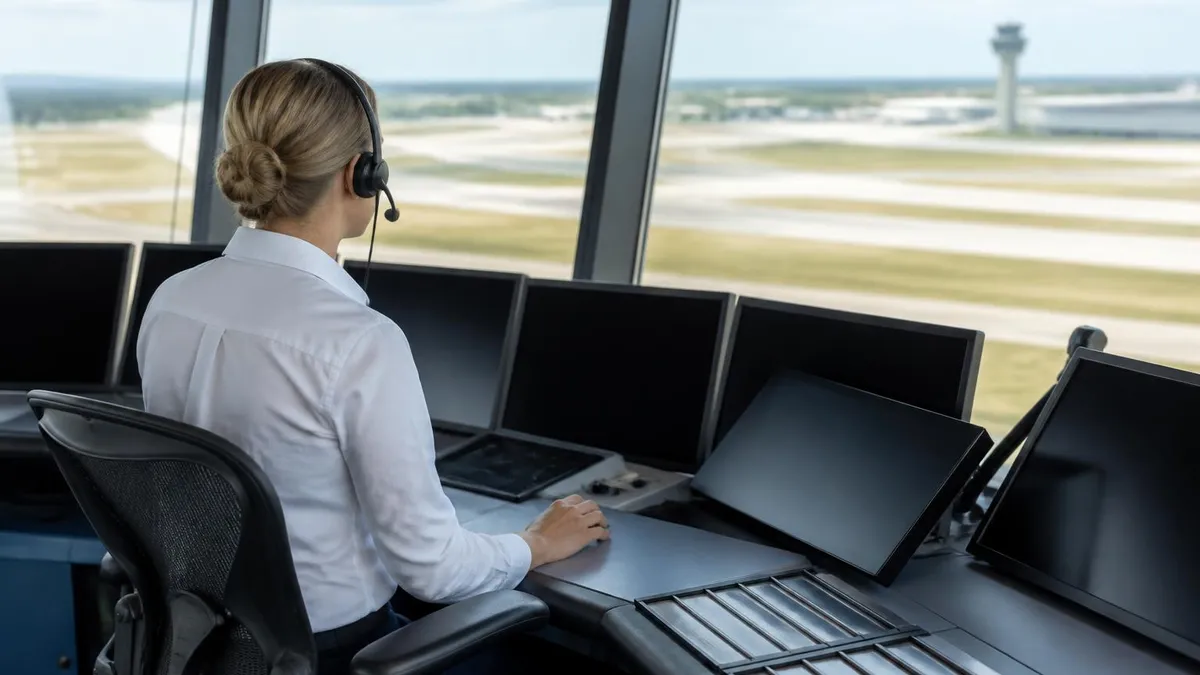
The Three Main Layers of ATC Service
Tower controllers manage aircraft on the runway, taxiways, and within roughly five miles of the airport up to about 2,500 feet AGL. They issue takeoff and landing clearances and sequence visual traffic.
TRACON facilities handle aircraft climbing out of and descending into busy terminal areas, typically within 30-50 nautical miles of major airports and up to roughly 10,000 feet, using radar to merge and space arrivals.
Centers, or Centers as controllers call them, manage high-altitude en route traffic across vast geographic regions. There are 22 ARTCCs covering the contiguous U.S., Alaska, Hawaii, Puerto Rico, and oceanic airspace.
Flight Service provides weather briefings, flight plan filing, and search-and-rescue coordination, especially for general aviation pilots. FSS is not separation-providing ATC but is a critical companion service to the system.
To understand what air traffic control really looks like in practice, it helps to walk through a single flight from a controller's perspective. Imagine a Boeing 737 departing Chicago O'Hare for Denver. Before the aircraft even pushes back, the pilots contact Clearance Delivery, a position inside the tower, to receive the route, altitude, transponder code, and departure frequency for their IFR clearance. The clearance encodes the entire first phase of the flight in a few short sentences.
Once the doors close, Ground Control takes over. The ground controller, working from the tower cab with a clear view of taxiways, issues a taxi route to the assigned departure runway. At a major airport like O'Hare, ground control alone may juggle 40 or more aircraft simultaneously, threading them around active runways, gate areas, and construction zones while keeping wingtips clear and avoiding runway incursions.
At the runway hold short line, the flight switches to Local Control, also called the tower controller, who owns the runways and the immediate airspace above the field. The local controller times the departure to fit between arrivals, applies wake turbulence separation behind heavy jets, and issues the takeoff clearance. Within seconds of liftoff, the aircraft is handed to Departure Control, a TRACON position, which radar vectors the climbing jet around other traffic.
As the 737 climbs through about 18,000 feet, it enters Class A airspace and is transferred to Chicago Center, the ARTCC controller whose sector covers that piece of the upper Midwest. Center controllers manage cruise flight, coordinating altitude changes, deviations around weather, and direct routing across hundreds of miles. The flight will be handed from sector to sector and then center to center as it crosses the country, with each handoff taking only a few seconds of radio time.
Approaching Denver, the process unwinds in reverse. Denver Center hands the flight to the Denver TRACON, which sequences arrivals into a continuous stream. The approach controller assigns vectors, descents, and speeds, lining the 737 up with the final approach course. About ten miles from the runway the flight is transferred to Denver Tower, which issues the landing clearance, monitors the rollout, and switches the aircraft to Ground Control once clear of the runway.
Throughout this entire chain, every controller is also watching dozens of other flights and integrating them with the 737. Conflicts are resolved not by reacting but by anticipating: a good controller is always planning two or three moves ahead, like a chess player. Trainees often describe the early phase of certification as learning to see the picture in three dimensions plus time, the way an experienced controller does almost automatically.
If something goes wrong, the cadence changes instantly. A radio failure, a medical diversion, a thunderstorm popping up on the arrival path, or a flock of birds on the runway can each trigger a cascade of decisions. Controllers train for these scenarios constantly in simulators, and certification standards demand that they handle abnormal events with the same calm precision as routine traffic. You can learn more about how delays cascade through this system in our deep dive on air traffic control delays.
ATC Practice Test Questions
Prepare for the ATC - Air Traffic Controller exam with our free practice test modules. Each quiz covers key topics to help you pass on your first try.
ATC Airspace Classification
ATC Exam Questions covering Airspace Classification. Master ATC Test concepts for certification prep.
ATC Radar and Technology
Free ATC Practice Test featuring ATC Radar and Technology. Improve your ATC Exam score with mock test prep.
ATC Separation Standards
ATC Mock Exam on ATC Separation Standards. ATC Study Guide questions to pass on your first try.
ATC Challenges and Stressors
ATC Test Prep for Challenges and Stressors. Practice ATC Quiz questions and boost your score.
ATC Communication Procedures
ATC Questions and Answers on Communication Procedures. Free ATC practice for exam readiness.
ATC Emergency Procedures
ATC Mock Test covering Emergency Procedures. Online ATC Test practice with instant feedback.
ATC Responsibilities and Duties
Free ATC Quiz on Responsibilities and Duties. ATC Exam prep questions with detailed explanations.
ATC Skills and Qualifications
ATC Practice Questions for Skills and Qualifications. Build confidence for your ATC certification exam.
U.S. Airspace Classes Controllers Manage
Class A airspace covers all U.S. airspace from 18,000 feet MSL up to flight level 600 (60,000 feet). Operations inside Class A are exclusively IFR, meaning every aircraft is on an instrument flight plan under positive ATC control. There is no see-and-avoid in Class A because the speeds and altitudes make visual separation impractical. All aircraft must be equipped with two-way radio, an altitude-reporting transponder, and increasingly ADS-B Out.
Class B airspace surrounds the busiest airports in the country, such as JFK, LAX, ATL, and ORD. It is shaped like an upside-down wedding cake, with progressively wider rings stacked above the surface. Every aircraft entering Class B requires an explicit ATC clearance, and student pilots need an instructor endorsement for solo operations into the busiest of these areas. TRACON controllers do most of the heavy lifting inside Class B.
Is an ATC Career the Right Fit for You?
- +Median pay near $144,000 with strong overtime and night-differential opportunities
- +Federal benefits including FERS pension, Thrift Savings Plan match, and paid leave
- +Genuinely meaningful work that keeps millions of people safe every day
- +Mandatory retirement at 56 enables a true second career while still young
- +No requirement for a four-year degree at most facilities
- +Strong union representation through NATCA across FAA facilities
- +Job security tied to a service the country cannot easily outsource
- −Highly competitive hiring with limited Academy class slots each year
- −Rotating shifts including nights, weekends, and holidays for most of a career
- −High cognitive workload and zero-tolerance error culture create real stress
- −Geographic placement is assigned by the FAA, not chosen by the trainee
- −Certification can take two to four years and not everyone makes it through
- −Strict medical and psychological standards must be maintained for the entire career
- −Maximum entry age of 30 limits late-career switchers
Core Separation Standards Every Controller Applies
- ✓Maintain 3 nautical miles lateral separation between aircraft within 40 NM of the radar antenna in terminal airspace
- ✓Maintain 5 nautical miles lateral separation in en route airspace beyond 40 NM from the antenna
- ✓Apply 1,000 feet vertical separation between aircraft below FL410 in domestic airspace
- ✓Apply 2,000 feet vertical separation above FL410 unless RVSM-equipped
- ✓Issue wake turbulence separation of 4 to 6 miles behind heavy and super-heavy aircraft
- ✓Provide visual separation only when explicitly approved and acknowledged by the pilot
- ✓Sequence arrivals so runway occupancy times do not create conflicts on final approach
- ✓Coordinate handoffs with adjacent sectors before transferring radio communications
- ✓Confirm Mode C altitude readouts match assigned altitudes within 200 feet
- ✓Issue safety alerts immediately when an aircraft is observed in an unsafe condition
Three miles or 1,000 feet — never less
Almost every decision a controller makes traces back to a single underlying principle: keep aircraft separated by the minimum standard for that airspace and equipment. Lose that separation and you have triggered an operational error, which means a formal investigation. Maintain it and you have done your job, no matter how chaotic the traffic picture became along the way.
The technology stack that makes modern ATC possible is layered, redundant, and constantly evolving. At the foundation sits radar, the surveillance technology that defined air traffic control for most of the 20th century. Primary surveillance radar bounces a radio signal off the aircraft skin and measures the return, producing a position blip without any cooperation from the aircraft. It is useful for detecting non-transponding targets but provides no altitude or identity information.
Secondary surveillance radar, by contrast, interrogates the aircraft's transponder. The transponder replies with a four-digit code assigned by ATC plus, in Mode C and Mode S, the aircraft's pressure altitude. This is what produces the data block next to the radar target on a controller's scope, showing call sign, altitude, and ground speed. Without secondary radar, modern terminal and en route operations would be impossible at current traffic densities.
Over the past decade, Automatic Dependent Surveillance-Broadcast (ADS-B) has supplemented or replaced traditional radar in many areas. ADS-B uses GPS positioning broadcast by the aircraft itself to ground stations and to other aircraft. Updates arrive roughly once per second, compared to the four-to-twelve-second sweep of mechanical radars. ADS-B Out has been mandatory in most controlled U.S. airspace since January 1, 2020, and it underpins the FAA's NextGen modernization program.
Controllers do not look at raw radar returns. Instead, they work with automated decision-support systems that fuse multiple surveillance sources, apply tracking algorithms, and present a synthesized picture on high-resolution displays. The en route system, called ERAM (En Route Automation Modernization), replaced the legacy HOST mainframes in the 2010s and runs the radar scopes at every ARTCC. In the terminal world, STARS (Standard Terminal Automation Replacement System) provides equivalent capability at TRACON and tower facilities.
Communication still happens primarily over very high frequency AM radio, a deliberately old-fashioned choice. VHF AM is reliable, robust against interference, and allows multiple aircraft to step on each other in a way that makes overlapping transmissions audible as a squeal, alerting both pilots to retry. Digital data link systems like CPDLC (Controller-Pilot Data Link Communications) supplement voice for routine clearances in oceanic and some domestic operations.
Coordination between facilities runs on dedicated landlines and, increasingly, digital messaging. Each handoff between sectors involves a brief verbal exchange or electronic acceptance confirming the receiving controller has identified the aircraft on radar. Flight data is exchanged through the Traffic Flow Management System, which gives national-level planners visibility into demand and capacity hours ahead of real time.
Looking forward, the FAA is rolling out trajectory-based operations, expanded data link, runway incursion alerting at hundreds more airports, and remote tower technology at smaller fields. These changes do not replace controllers but give them better tools, more accurate data, and more time to handle the cognitive parts of the job that humans still do far better than any machine.
A common misconception is that air traffic controllers screen passengers, inspect baggage, or handle security threats. That work belongs to the Transportation Security Administration and local airport police. ATC's responsibility is the safe movement of aircraft, not the security of people or cargo inside them. Controllers do coordinate closely with security agencies when an aircraft has a security issue in flight, but their role remains traffic management.
If reading about ATC has sparked an interest in actually doing the job, here is the realistic path. The Federal Aviation Administration is the primary employer of civilian controllers in the United States, hiring through a public bid process several times per year. To be eligible, applicants must be U.S. citizens, under 31 years old at the time of application (with limited exceptions for veterans), able to pass a Class II medical exam, and capable of speaking English clearly enough to be understood over the radio.
The first hurdle is the Air Traffic Skills Assessment, often abbreviated as ATSA. The ATSA replaced the older AT-SAT exam in 2018 and tests working memory, prioritization, visualization, and logic under time pressure. Candidates who score in the Best Qualified band move forward to medical and security clearances. Our companion guide on air traffic control jobs walks through the application timeline in detail.
Successful applicants attend the FAA Academy in Oklahoma City for an initial qualification course lasting roughly two to five months depending on the discipline. Trainees study airspace, separation rules, phraseology, and weather, and they spend hours in high-fidelity simulators handling progressively harder traffic. Academy washout rates have varied historically between 10 percent and 30 percent depending on the cohort and the option (tower versus en route).
Graduation from the Academy is not certification; it is permission to begin facility training. New hires are assigned to a tower, TRACON, or ARTCC based on operational needs and Academy performance. At the facility they begin a structured on-the-job training program that pairs them with certified professional controllers. Depending on facility complexity, full certification can take from one year at a small tower to four years or more at a busy Level 12 ARTCC.
Pay during training starts around the GS-7 to GS-9 federal pay grades and climbs steadily as the trainee certifies on each new position. Fully certified controllers at busy facilities routinely earn $150,000 to $200,000 with locality pay and overtime, and senior controllers at the busiest Level 12 facilities can exceed $250,000 in total compensation. Retirement is mandatory at age 56, but it comes with an enhanced annuity reflecting the demanding nature of the work.
Beyond the FAA, contract towers operated by companies like Robinson Aviation and Serco employ several thousand controllers at lower-volume Class D airports. The military also trains and employs controllers in the Air Force, Navy, Marine Corps, and Army, and many veterans transition into FAA jobs through dedicated hiring announcements. Each pathway has different pay, geography, and lifestyle tradeoffs.
Preparation for the ATSA matters more than candidates often realize. The exam is unlike any standardized test most applicants have encountered before. Strong working-memory exercises, dual-task practice, and a calm test-day strategy can move a borderline candidate into the Best Qualified band. Practice quizzes on radar, separation, and airspace also build the foundation knowledge that will accelerate learning at the Academy later.
For readers who simply want to be smarter consumers of the news the next time an ATC story breaks, a few practical takeaways will go a long way. First, the system is designed for graceful degradation. When weather, a runway closure, or a staffing shortfall reduces capacity, the FAA's Air Traffic Control System Command Center in Warrenton, Virginia, issues ground delays and ground stops to meter demand. These delays are inconvenient but they are the system working as designed, not failing.
Second, controllers do not have unilateral authority to ignore the rules. Separation standards, sequencing requirements, and runway configurations are governed by the FAA Order 7110.65, the controller's bible. When you hear about an aircraft holding or taking a longer routing, it is almost always because applying the rulebook in real time required that solution given everything else in the sky.
Third, the pilot is the final authority for the safe operation of the aircraft, full stop. ATC issues instructions and clearances, but a pilot who believes a clearance would compromise safety can and must decline it, declare an emergency, or request an alternative. This shared-responsibility model is central to how aviation safety is engineered, and it is one reason the U.S. has gone more than 15 years without a major scheduled-airline fatal accident attributable to ATC error.
Fourth, staffing matters. The FAA has operated below its target controller headcount for most of the past decade, and the consequences show up as overtime, six-day work weeks, fatigue, and occasional traffic management initiatives that ripple across the country. Long-term improvements depend on consistent hiring, faster Academy throughput, and retention incentives, all of which Congress and the FAA continue to work on through bills like the FAA Reauthorization Act of 2024.
Fifth, technology is evolving but humans remain central. There is regular talk of automating away the controller role, but the cognitive flexibility, judgment under uncertainty, and creative conflict resolution that controllers provide are far beyond current artificial intelligence. What automation can do, and is doing, is offload routine surveillance and conflict-detection work so controllers can focus on the harder problems.
Sixth, if you fly as a private pilot, building a good relationship with ATC pays compounding dividends. Use flight following on VFR cross-countries, listen to LiveATC.net recordings of busy airports to get comfortable with the cadence, and read back clearances exactly as issued. Controllers appreciate disciplined radio work because it lets them move more traffic safely, which is in everyone's interest.
Finally, if you are pursuing the career, focus your study on three high-leverage areas: airspace knowledge, separation standards, and the radar and surveillance technology that powers modern ATC. Those three topics anchor most of what you will encounter at the Academy, and they are also the cornerstones of the practice tests you can take on this site. Build the foundation now and the Academy will feel like reinforcement rather than introduction.
ATC Questions and Answers
Air Traffic Control Jobs: Salary, Requirements, and How to Get Hired in 2026
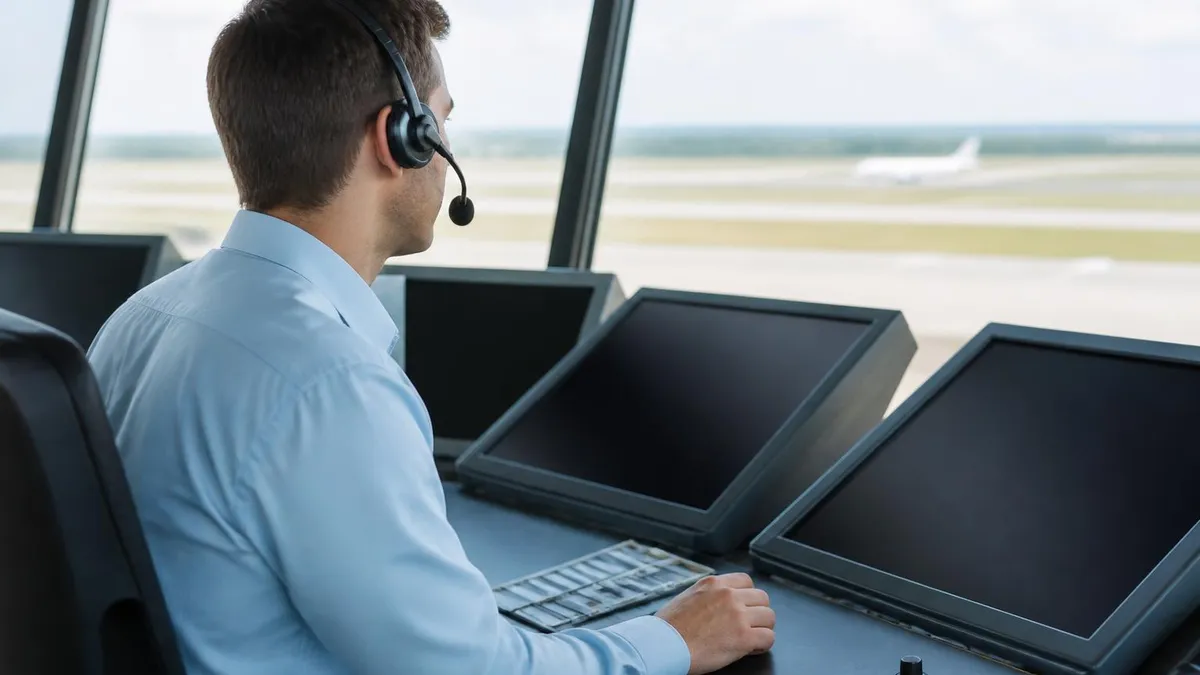
Air Traffic Controllers: Role, Requirements, and Career Path

Air Traffic Control Delays: Causes, Impact, and What Controllers Actually Do About Them

Air Traffic Controllers Bonus: Pay, Premiums & Career Earnings
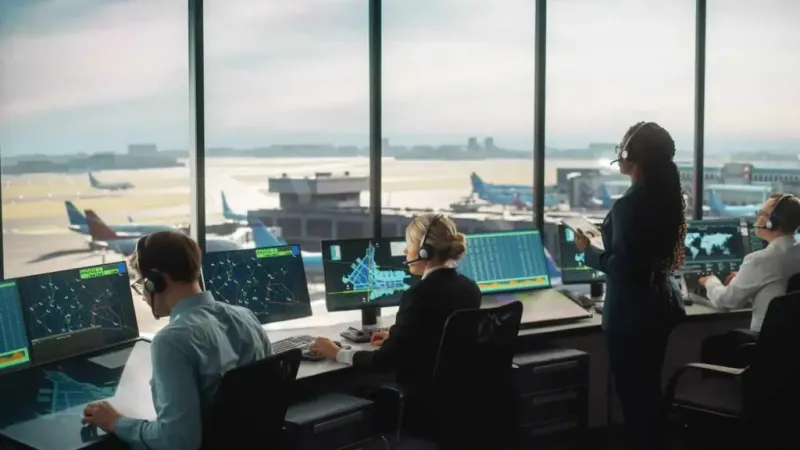
ATC (Air Traffic Controller) Test: Your Career Guide
About the Author
Commercial Pilot & FAA Certification Specialist
Embry-Riddle Aeronautical UniversityCaptain Jennifer Walsh graduated with honors in Aerospace Engineering from Embry-Riddle Aeronautical University and holds FAA Airframe & Powerplant and Airline Transport Pilot certificates. With 11 years of commercial aviation experience and 6 years as a ground school instructor, she guides aviation mechanics and student pilots through FAA written exams and practical tests.
Join the Discussion
Connect with other students preparing for this exam. Share tips, ask questions, and get advice from people who have been there.
View discussion (8 replies)