
ATC Recordings: How to Listen, Where to Find Them, and What Controllers Actually Say
ATC recordings explained: where to find live audio, archived tapes, FOIA requests, and what controllers actually say. Complete listener's guide. 📗

ATC recordings have become one of the most fascinating windows into the hidden world of aviation, letting anyone with a phone or laptop eavesdrop on the rapid-fire conversations between pilots and controllers. Whether you are a student pilot training your ear, an aviation enthusiast curious about emergencies, or a journalist investigating an incident, ATC recordings offer real, unfiltered audio of how the National Airspace System actually functions in real time. The popularity of these recordings has exploded over the past decade.
There are two broad categories of ATC recordings you will encounter. The first is live streaming audio, captured by volunteers using radio scanners and rebroadcast through platforms like LiveATC.net. The second is official archived audio, recorded by the Federal Aviation Administration on every controller position and retained for at least 45 days. Both serve different purposes, and understanding the difference is essential before you go hunting for a specific conversation, tower clearance, or emergency transmission.
The audio itself sounds nothing like Hollywood. Real controllers speak in clipped, standardized phraseology designed to compress maximum information into minimum airtime. A single eight-second transmission might contain a callsign, altitude, heading, frequency change, and traffic advisory. New listeners often describe the experience as drinking from a fire hose, but after a few hours the patterns become recognizable. You start to anticipate the rhythm of approach controllers vectoring jets onto final, ground controllers sequencing taxiing aircraft, and tower controllers issuing rapid-fire takeoff clearances.
ATC recordings have also become important evidence in accident investigations, FAA enforcement actions, and lawsuits. The NTSB routinely pulls archived audio within hours of any reportable incident, and pilots involved in altitude busts, runway incursions, or near mid-air collisions can expect their transmissions to be scrutinized down to the syllable. Knowing how this audio is captured, stored, and released helps you understand not just aviation safety, but the entire ecosystem of accountability that keeps modern flying remarkably safe.
Listening to ATC recordings is also one of the best free study tools available to anyone preparing for a pilot certificate, air traffic controller career, or dispatcher exam. Reading about phraseology in the Aeronautical Information Manual is one thing; hearing it executed at 200 transmissions per hour by a Class B approach controller is something entirely different. The audio teaches timing, tone, and the subtle ways experienced pilots and controllers handle pressure when something unusual happens on frequency.
This guide walks through every aspect of ATC recordings: where to find them, how the FAA captures and retains them, the legal framework around requesting them through the Freedom of Information Act, the most famous recordings in aviation history, and how to use them to improve your own radio work. Whether you want to listen casually or use the audio professionally, this is the complete reference.
By the end, you will know how to find a specific tower frequency anywhere in the country, how to request a sealed archived recording from the FAA, what to listen for during emergencies, and why ATC audio has become such a powerful teaching, journalism, and safety tool in modern aviation.
ATC Recordings by the Numbers

Where ATC Recordings Come From
Every controller position in the United States is wired to a digital voice recorder that captures both radio transmissions and landline coordination calls. These systems run continuously and are retained for a minimum of 45 days under FAA Order 7210.3.
LiveATC.net relies on hundreds of volunteer hobbyists who place VHF receivers near airports and stream the audio to a central server. Coverage depends on geography and antenna placement, so reception quality varies between feeds.
Commercial aircraft carry CVRs that capture two hours of cockpit and radio audio. These recordings are sealed and only released by the NTSB after accidents, and even then often only as written transcripts.
Many pilots record their own radio work using cockpit audio panels with built-in recording or apps like ForeFlight. These personal recordings are increasingly used for training reviews and CFI debriefs.
A long tradition of aviation scanner enthusiasts predates the internet. Many of the oldest archived ATC recordings, including incidents from the 1970s and 1980s, exist only because hobbyists happened to be recording.
The easiest way to start listening to ATC recordings is LiveATC.net, the free public website that has been the de facto home of amateur aviation audio since 2004. You can browse by airport ICAO code, ARTCC center, or country, then click any feed to hear it streaming in your browser. Major hubs like KJFK, KLAX, KORD, and KATL have multiple feeds covering ground, tower, approach, and departure on separate streams so you can follow an aircraft through the entire phase of flight.
If you want recorded audio rather than live streaming, LiveATC also maintains a rolling 30-day archive. Click the archive link under any feed, pick a date, and download 30-minute MP3 chunks. This is the resource most journalists, YouTubers, and aviation analysts use when an incident makes the news. Within an hour of any notable event, the relevant archive segment is usually already circulating on social media with timestamps and aircraft callsigns identified.
For higher-fidelity audio or recordings older than 30 days, you need to go directly to the FAA. The agency's National Operations Control Center retains every controller position recording for at least 45 days, and significant incident audio is preserved indefinitely. Members of the public, attorneys, journalists, and pilots can request these recordings through the Freedom of Information Act, though processing times typically run 30 to 90 days and recordings of ongoing investigations are exempt from release.
Mobile apps make on-the-go listening easy. The LiveATC app for iOS and Android mirrors the web feeds and lets you favorite specific airports. Aviation Radio Air Band Live and similar apps offer alternative interfaces. For pilots and serious enthusiasts, dedicated VHF scanners like the Uniden BCD436HP let you receive audio directly from local towers without relying on an internet feed, which is useful when you live near an airport or attend airshows.
YouTube has become a massive secondary distribution channel for ATC recordings. Channels like VASAviation, You can see ATC, and Kennedy Steve have built audiences in the millions by overlaying flight tracking data on archived audio of emergencies, unusual events, and famous controller personalities. These videos are often the entry point that gets new listeners interested in raw recordings.
Anyone serious about understanding how this audio fits into a broader aviation career should explore the path of air traffic controllers shutdown themselves, because the recordings make far more sense once you understand the positions, scopes, and coordination procedures the audio reflects.
One important caveat: not all ATC frequencies are publicly streamed. Military air traffic control, certain TRACON sectors near sensitive airspace, and most ARTCC frequencies that overfly classified facilities are deliberately excluded from LiveATC by community policy. Federal law does not prohibit listening to most VHF aviation frequencies, but redistribution of certain UHF military audio is restricted, and LiveATC respects those limits.
ATC Practice Test Questions
Prepare for the ATC - Air Traffic Controller exam with our free practice test modules. Each quiz covers key topics to help you pass on your first try.
ATC Airspace Classification
ATC Exam Questions covering Airspace Classification. Master ATC Test concepts for certification prep.
ATC Radar and Technology
Free ATC Practice Test featuring ATC Radar and Technology. Improve your ATC Exam score with mock test prep.
ATC Separation Standards
ATC Mock Exam on ATC Separation Standards. ATC Study Guide questions to pass on your first try.
ATC Challenges and Stressors
ATC Test Prep for Challenges and Stressors. Practice ATC Quiz questions and boost your score.
ATC Communication Procedures
ATC Questions and Answers on Communication Procedures. Free ATC practice for exam readiness.
ATC Emergency Procedures
ATC Mock Test covering Emergency Procedures. Online ATC Test practice with instant feedback.
ATC Responsibilities and Duties
Free ATC Quiz on Responsibilities and Duties. ATC Exam prep questions with detailed explanations.
ATC Skills and Qualifications
ATC Practice Questions for Skills and Qualifications. Build confidence for your ATC certification exam.
Types of ATC Recordings You Will Encounter
Live streaming ATC recordings come from volunteer-operated VHF receivers placed near airports. The audio is encoded as a low-bitrate MP3 stream and pushed to LiveATC servers, where listeners can tune in with roughly a 30-second delay. Quality depends on antenna placement, weather, and how many aircraft are transmitting at once. Major hub airports often have four or five separate live feeds covering ground, tower, approach, departure, and clearance delivery on different streams.
Live streaming is perfect for casual listening, weather day storm avoidance audio, and following specific flights in real time when paired with FlightAware or Flightradar24. The downside is that streams occasionally drop, popular feeds get overloaded during busy events, and there is no rewind feature on the live stream itself. For replays, you need the archive section, which lags the live feed by about 30 minutes.

Should You Use LiveATC or Request FAA Recordings?
- +LiveATC is free, instant, and requires no paperwork or waiting period
- +Coverage spans 1,400+ airports worldwide with multiple feeds per major hub
- +Archive going back 30 days lets you replay recent incidents within minutes
- +Mobile apps make casual listening possible from anywhere with internet
- +Community-driven feeds often include creative ground and tower combinations
- +Perfect for student pilots learning phraseology and listening comprehension
- −Audio quality varies dramatically based on volunteer antenna placement
- −Some sectors and frequencies are deliberately excluded from public streams
- −Archives older than 30 days disappear permanently from the public site
- −Single-channel audio mixes multiple sectors making transcription difficult
- −No legal evidentiary weight in court compared to official FAA recordings
- −Streams can drop, lag, or cut out during the most interesting events
Pros and Cons at a Glance
| Pros | Cons |
|---|---|
| LiveATC is free, instant, and requires no paperwork or waiting period | Audio quality varies dramatically based on volunteer antenna placement |
| Mobile apps make casual listening possible from anywhere with internet | Some sectors and frequencies are deliberately excluded from public streams |
| Community-driven feeds often include creative ground and tower combinations | Single-channel audio mixes multiple sectors making transcription difficult |
| Perfect for student pilots learning phraseology and listening comprehension | No legal evidentiary weight in court compared to official FAA recordings |
Checklist Before Listening to ATC Recordings
- ✓Bookmark LiveATC.net and download the official mobile app for offline listening
- ✓Pick a home airport feed that matches your skill level — start with smaller towered fields
- ✓Have a current sectional chart or ForeFlight open to follow geographic references
- ✓Memorize the standard phraseology for clearance, taxi, takeoff, and landing
- ✓Pair audio with Flightradar24 or FlightAware to match callsigns to aircraft
- ✓Learn ICAO airport codes and common waypoint names for your region
- ✓Adjust your expectations — most transmissions are routine and uneventful
- ✓Use headphones to pick up weaker stations and faint pilot transmissions
- ✓Take notes on unfamiliar phrases and look them up in the Pilot Controller Glossary
- ✓Respect privacy and avoid sharing personal details of pilots heard on frequency
Standardized phraseology saves lives and seconds
The clipped, formal sound of ATC recordings is not accidental. Every word, pause, and read-back is defined in FAA Order 7110.65 to minimize ambiguity. A single misunderstood altitude clearance was the root cause of the deadliest aviation disaster in history at Tenerife in 1977, which is exactly why modern phraseology requires explicit read-backs of hold-short instructions, runway crossings, and altitude changes.
If you need an ATC recording that LiveATC does not have, your next step is the Freedom of Information Act. The FAA receives thousands of FOIA requests per year for voice tapes, radar data, and incident reports. Most are submitted by attorneys involved in litigation, journalists covering aviation incidents, and pilots seeking their own transmissions for self-review after an FAA enforcement action. The process is well-defined but slow, and understanding the procedure dramatically improves your chances of getting useful audio.
Start by filing your request through the FAA's online FOIA portal at foia.faa.gov. You must specify the exact date, time in UTC, airport or facility, and controller position you want. Vague requests like all audio for JFK on March 15 will be rejected as unreasonably broad. The more precisely you can identify the recording, including flight callsigns and the specific frequency, the faster the request gets processed and the less likely it is to be partially denied.
Expect to wait 30 to 90 days for a routine request, longer if the audio relates to an open NTSB investigation. Recordings of ongoing investigations are exempt from FOIA release under Exemption 7(A), which protects law enforcement records. Once an investigation closes, the audio typically becomes available, often appearing in the public docket of the final NTSB report along with transcripts and analysis.
Fees for FOIA requests are modest. The first two hours of search time and the first 100 pages of duplication are free for most requesters. Beyond that, the FAA charges roughly $24 to $84 per hour of search time depending on the employee grade involved. Audio files themselves are usually delivered electronically at no cost, though older recordings on physical media may incur reproduction fees of around $15 per CD.
For attorneys and parties to FAA enforcement actions, there is a separate process under 14 CFR Part 13 that often produces faster results than FOIA. If you are appealing a pilot deviation, certificate suspension, or similar action, your attorney can request the relevant audio directly through the FAA's enforcement legal staff. This bypass exists because the recordings are evidence in your own case and you have a legal right to review them.
Journalists covering specific incidents should consider filing for expedited processing under FOIA, which requires demonstrating compelling need such as imminent loss of life or widespread media interest. The FAA grants expedited processing sparingly, but successful requests can produce audio within days rather than months. Always include flight numbers, exact times, and the facility involved to maximize your chances of approval.
Anyone working through these processes should also understand the broader context of air traffic control delays, because much of the audio you will encounter during peak periods reflects the routine traffic management initiatives that shape modern operations.

If you request audio from an ongoing NTSB or FAA investigation, expect a denial under FOIA Exemption 7(A). These recordings remain sealed until the investigation closes, which can take 12 to 24 months for major accidents. Filing too early just resets your queue position when the audio eventually becomes releasable, so time your request for after the final report is published.
Some ATC recordings have become genuinely famous in aviation, taught in flight schools and controller academies as case studies in either heroic professionalism or tragic miscommunication. Captain Sullenberger's January 2009 transmissions during the Miracle on the Hudson are required listening for every commercial pilot, demonstrating textbook calm under impossible pressure. The Cactus 1549 audio, less than four minutes from bird strike to splashdown, has been analyzed frame by frame in CRM training programs for over fifteen years.
On the controller side, the JFK ground controller known as Kennedy Steve became an internet phenomenon for his dry humor managing the busiest taxi operation in the country. His recordings, archived across thousands of YouTube clips, show how personality and professionalism can coexist on a high-volume frequency without compromising safety. He retired in 2017, but his audio remains some of the most-listened-to ATC content ever recorded.
Tragic recordings carry equally important lessons. The Tenerife disaster of 1977 produced cockpit and tower audio that drove the international adoption of standardized read-back requirements and the now-universal hold-short procedures. The Avianca 052 fuel exhaustion audio from 1990 taught controllers and dispatchers worldwide why the word emergency must be used explicitly when a flight needs priority handling, even when the crew is reluctant to declare.
Recordings from runway incursions, near mid-air collisions, and altitude busts appear regularly in the FAA's Air Traffic Bulletin and the safety journals published by NATCA, the controller's union. These audio clips drive procedural changes at the national level. The 2017 Air Canada 759 incident at SFO, where a 737 nearly landed on a taxiway full of jets, prompted entire revisions to visual approach procedures based on roughly 90 seconds of tower audio.
For student pilots and aspiring controllers, building familiarity with these famous recordings creates a mental library of how the system actually responds to abnormal situations. You start to recognize the cadence shift when a controller switches from routine handling to emergency coordination, the way frequencies clear out almost automatically when a Mayday call comes through, and the calm precision that experienced pilots project even during genuinely life-threatening events.
Anyone considering the controller profession should explore the realities of air traffic control jobs while continuing to study these recordings, because the audio is the closest thing to a live preview of what the work actually sounds like at the position.
The recordings also serve as historical documents. Audio from September 11, 2001, the 2009 Hudson event, the 2018 Southwest 1380 engine failure, and countless other moments captures aviation history in a way no transcript or news report ever could. These are voices in their own moment, making decisions in real time with no benefit of hindsight, and they reward careful, repeated listening.
To get the most out of ATC recordings as a learning tool, build a consistent listening habit. Twenty minutes per day produces dramatically better results than four-hour weekend sessions. The repetition trains your ear to parse the rhythm of routine transmissions, which makes the unusual events stand out clearly when they happen. Most experienced listeners can identify an emergency within two transmissions, often before the word emergency is even spoken, just from changes in pacing and tone.
Start with a smaller Class C or Class D tower in good weather. KAUS, KSAT, KBNA, and similar mid-sized fields run at a pace that beginners can follow without getting overwhelmed. Save Class B hubs like KJFK approach, SOCAL approach, and Chicago Center for after you have logged 20 or 30 hours of focused listening. The audio at major facilities is genuinely fast, and trying to track it cold will leave you frustrated and convinced you cannot hear anything useful.
Use companion tools to add context. Open Flightradar24 or FlightAware in another window and watch the traffic targets that match the callsigns you hear on frequency. This dual-screen approach turns abstract audio into a real geometric understanding of how aircraft move through controlled airspace. Within a few sessions, you will start anticipating which aircraft will get vectored where and why.
Keep a vocabulary notebook for unfamiliar phraseology. Terms like Maintain visual separation, Cleared the visual, Resume own navigation, and Reduce speed to your final approach speed have specific operational meanings that the Pilot Controller Glossary defines exactly. Looking them up after you hear them in context creates much stronger retention than reading the glossary cover to cover ever could.
Record yourself if you are a pilot. Comparing your own radio work to what you hear on LiveATC is the single fastest way to improve. Most new pilots stumble on initial callups, frequency changes, and read-backs. Hearing your own voice with a one-week gap exposes hesitations and verbal tics you never noticed in the cockpit. Many CFIs now build LiveATC review into ground school sessions specifically for this reason.
For controller candidates preparing for the AT-SA assessment or the Academy, listening to live approach control audio for 30 to 60 minutes per day before testing has become widely recommended preparation. The audio builds the listening stamina the assessment demands and gives you a feel for the multi-aircraft tracking that the radar simulations test. Pair it with sectional chart study and you will arrive at the testing center with real auditory context most candidates lack.
Finally, treat ATC recordings as a long-term resource rather than a quick study aid. Five years from now, the same recordings will still teach you new things as your aviation knowledge deepens. A clearance that sounded routine when you started will reveal interesting layers of separation, sequencing, and traffic management that only become visible after you understand the underlying system. That depth is the real reason serious aviators keep listening for decades.
Sample Air Traffic Controller Practice Questions
Try these questions from our free Air Traffic Controller practice tests. The correct answer and an explanation follow each question.
What term describes the area inside an airport control tower where controllers manage aircraft on the ground and in the immediate airspace?
- A. TRACON
- B. ARTCC
- C. Tower cab
- D. Flight service station
Answer: C. Tower cab
The tower cab is the glassed-in upper level of the control tower where local and ground controllers work with a direct visual of the airfield.
What is the typical shift schedule for FAA air traffic controllers?
- A. Standard 9-to-5 weekday shifts only
- B. Rotating shifts covering 24 hours a day, 7 days a week
- C. Fixed night shifts only
- D. Two 12-hour shifts per day with weekends off
Answer: B. Rotating shifts covering 24 hours a day, 7 days a week
ATC facilities operate continuously, so controllers work rotating shifts around the clock every day of the year.
What is the mandatory retirement age for FAA air traffic controllers?
- A. 55
- B. 60
- C. 62
- D. 65
Answer: B. 60
FAA regulations require controllers to retire at age 56 if hired after age 31, with an absolute mandatory retirement age of 56, though most sources cite the operational mandatory retirement at 56 — by federal statute, the hard cap is 56; however the commonly tested and statutory limit is age 56. The FAA mandatory retirement age is 56.
What kind of training program is typically required for aspiring air traffic controllers?
- A. A general aviation course
- B. A specialized air traffic control training program
- C. A commercial pilot’s training program
- D. An airport management course
Answer: B. A specialized air traffic control training program
Aspiring air traffic controllers undergo highly specialized and intensive training programs, typically provided by government agencies like the FAA in the U.S. (e.g., at the FAA Academy). These programs cover essential topics such as aviation regulations, radar operations, communication protocols, emergency procedures, and practical simulations. This comprehensive training prepares them for the complex and demanding responsibilities of managing air traffic.
ATC Questions and Answers
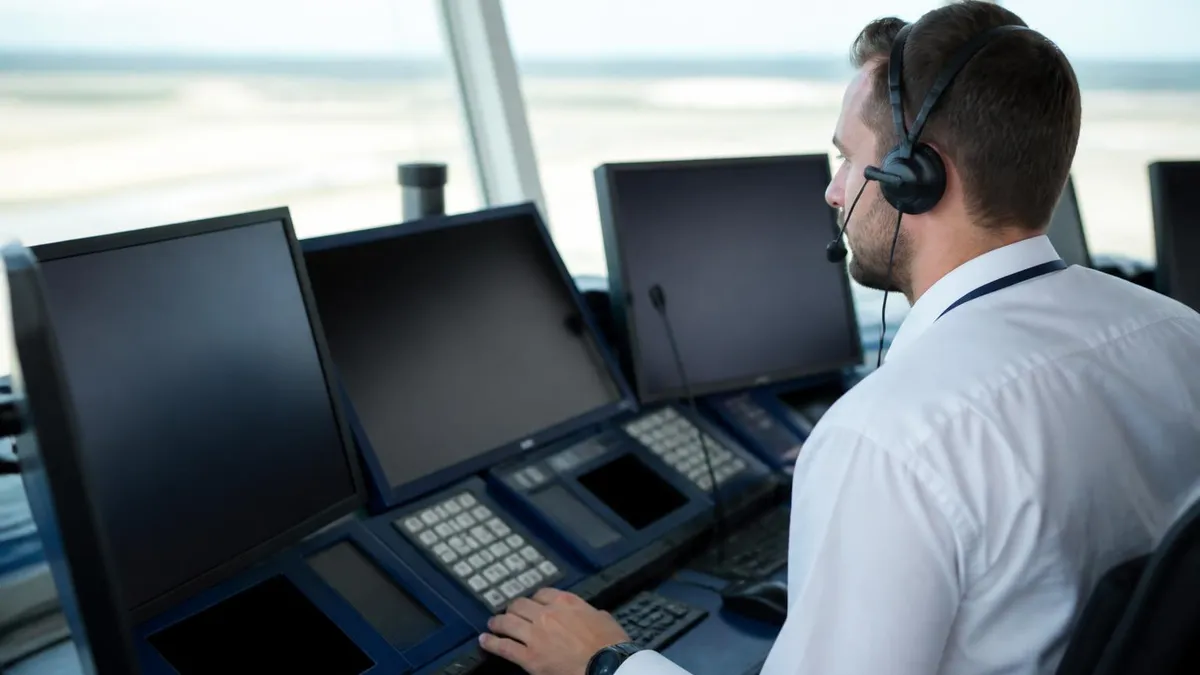
Air Traffic Control Jobs: Salary, Requirements, and How to Get Hired in 2026
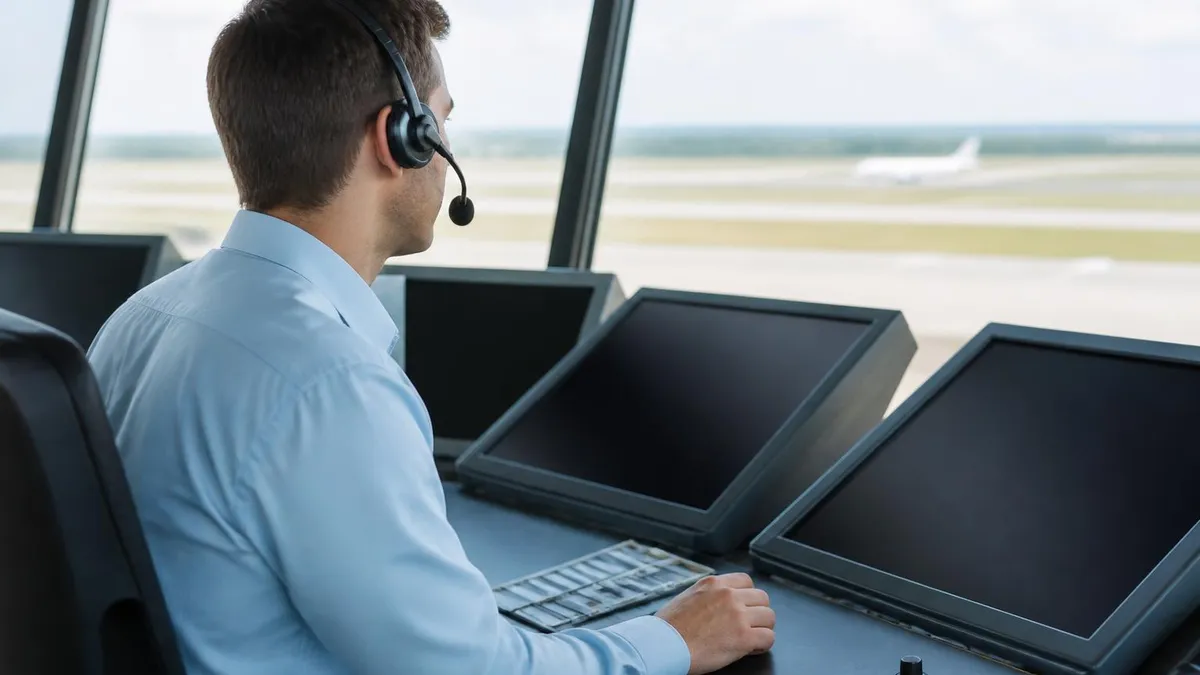
Air Traffic Controllers: Role, Requirements, and Career Path

Air Traffic Control Delays: Causes, Impact, and What Controllers Actually Do About Them

Air Traffic Controllers Bonus: Pay, Premiums & Career Earnings

ATC (Air Traffic Controller) Test: Your Career Guide
About the Author
Commercial Pilot & FAA Certification Specialist
Embry-Riddle Aeronautical UniversityCaptain Jennifer Walsh graduated with honors in Aerospace Engineering from Embry-Riddle Aeronautical University and holds FAA Airframe & Powerplant and Airline Transport Pilot certificates. With 11 years of commercial aviation experience and 6 years as a ground school instructor, she guides aviation mechanics and student pilots through FAA written exams and practical tests.
Join the Discussion
Connect with other students preparing for this exam. Share tips, ask questions, and get advice from people who have been there.
View discussion (8 replies)