
Air Traffic Controller Shortage: Complete Overview 2026 October
🆕 Air traffic controller shortage guide — causes, impacts, FAA response, ATC career pathway, working conditions, and outlook for resolution.

The air traffic controller shortage is one of the most discussed workforce issues in U.S. aviation, affecting flight operations, controller working conditions, and aviation safety planning across the National Airspace System. The Federal Aviation Administration (FAA) operates approximately 313 air traffic control facilities staffed by certified controllers managing aircraft separation, sequencing, and routing across U.S. airspace. Persistent staffing levels below targets have created the widely-reported air traffic controller shortage with substantial implications for the aviation industry and the controller workforce itself navigating these challenging staffing conditions.
This guide walks through the air traffic controller shortage including its causes, current staffing levels versus targets, impacts on operations and controllers, FAA response efforts, and the implications for prospective controllers considering ATC careers in current conditions. Information here applies to current conditions in the U.S. air traffic control system. Whether you're a prospective ATC career candidate evaluating opportunities, an aviation industry professional dealing with shortage impacts, or simply interested in this important workforce issue, this overview covers the essentials of the air traffic controller shortage and its current state.
The air traffic controller shortage has been documented through various government reports, industry analyses, and controller union statements over recent years. The National Air Traffic Controllers Association (NATCA) and various aviation industry organizations have called attention to the staffing gaps, while the FAA has acknowledged shortages and implemented various recruitment and training initiatives. The shortage is particularly acute at high-volume facilities where workload demands exceed available controller staffing, requiring substantial overtime, mandatory schedule modifications, and various other accommodations supporting continued operations despite staffing below targets.
Air Traffic Controller Shortage Quick Facts
Total controllers needed: Approximately 14,000+ across U.S. ATC facilities. Current shortage: Estimated 3,000+ below target staffing levels in recent years. Causes: Long training pipeline, retirements, COVID-era hiring disruptions, age 56 mandatory retirement, washouts during training. Impact: Mandatory overtime, 6-day workweeks at understaffed facilities, delays during constrained operations, potential safety concerns from fatigue. FAA response: Increased academy hiring (1,800+ in fiscal 2024), enhanced compensation discussions, modernized training methods. Career timing: Strong demand for new controllers despite challenging working conditions during shortage period.
Several factors contribute to the air traffic controller shortage. The mandatory retirement age of 56 for controllers (with limited exception waivers to 61) means substantial retirement waves as controller cohorts age. The 1981 PATCO strike resulted in mass firings that created subsequent demographic bulges affecting retirement timing decades later.
Long training pipelines (typically 2-4 years from initial hire through full certification at facility) limit how quickly hiring increases translate to certified controller availability. Training washout rates approaching 30-40% at the FAA Academy and during facility certification mean substantial percentages of new hires don't ultimately become certified controllers despite the substantial training investment.
The COVID-19 pandemic substantially affected controller training pipelines starting in 2020. The FAA Academy at the Mike Monroney Aeronautical Center in Oklahoma City had to substantially reduce or pause training cohorts during pandemic restrictions. Travel restrictions affected controller transfers and on-the-job training. The pandemic-era hiring disruption created a multi-year gap in new controller availability that continues affecting staffing levels years later. Recovery efforts including expanded academy classes have helped but full recovery from the pandemic disruption hasn't been complete in the time since restrictions ended and normal operations resumed.

Causes of ATC Shortage
Age 56 retirement creates ongoing controller exits. Demographics from prior hiring waves affect timing.
2-4 years from hire to certification. Hiring increases take years to translate to controllers.
30-40% washout rates at FAA Academy and during facility certification reduce hire-to-controller conversion.
Pandemic-era training disruptions created multi-year gap in new controller pipeline.
Some argue current compensation doesn't adequately attract enough candidates given training challenges.
Mandatory overtime, 6-day weeks at understaffed facilities affect retention and recruitment.
The impact of the controller shortage manifests across operations, controllers, and the aviation industry broadly. Mandatory overtime affects controllers at understaffed facilities — many work substantially more than 40-hour weeks for extended periods. Six-day work weeks have become common at the most affected facilities, creating sustained strain on controllers and their families. Operational impacts include flow control programs reducing arrival rates at affected airports during constrained operations, increasing flight delays and disruptions for airlines and passengers. Various safety concerns about fatigue and human factors emerge when controllers consistently work extended hours, which the FAA monitors carefully through various oversight mechanisms.
For prospective ATC career candidates, the shortage creates both opportunities and challenges. The opportunity: strong demand for new controllers means hiring continues at substantial levels with competitive compensation upon successful completion of training. The FAA has increased academy class sizes substantially and continues recruiting actively.
The challenge: working conditions during the shortage period are demanding for new and experienced controllers alike. Mandatory overtime, constrained schedules, and the high-stress nature of the work itself combine to create challenging early career conditions. Candidates should approach the career path realistically considering both the meaningful work and reasonable compensation along with the demanding working conditions.
The FAA's response to the shortage has involved multiple initiatives. Increased academy hiring with substantially larger class sizes than historical levels — the FAA aimed for 1,800+ academy hires in fiscal 2024 with continued elevated targets in subsequent years. Enhanced training efficiency through modernized methods and tools. Direct hire authorities for some positions bypassing some normal federal hiring delays. Discussions about compensation adjustments and benefits to improve recruitment and retention. Each initiative supports gradual workforce recovery though full staffing recovery is expected to take years given the long training pipeline and substantial gap that has accumulated.
Eligibility: US citizen, age under 31 at time of hire, English proficient, pass medical and security clearance. Application: Apply to FAA controller hiring announcements when posted at usajobs.gov. Selection: ATC Aptitude test (AT-SA), interviews, background investigation, medical clearance. Academy: Approximately 4-month training at FAA Academy in Oklahoma City. Field training: 1-3 years at assigned facility before full certification. Compensation: $40K during training rising to $130K+ after certification at busy facilities.
The pathway to becoming an air traffic controller involves several steps. First, meet basic eligibility — U.S. citizenship, under age 31 at time of hire (this is firm), English language proficiency, ability to pass medical examination and security clearance. Apply to FAA controller hiring announcements through USAJOBS.gov when posted (typically annually). Pass the ATC Aptitude test (AT-SA) measuring multitasking, spatial visualization, and various cognitive abilities relevant to controller work. Pass interview, background investigation, and medical examination. Attend the FAA Academy at the Mike Monroney Aeronautical Center in Oklahoma City for approximately 4 months of intensive training.
After successful Academy completion, controllers receive facility assignments to towers, terminal radar approach control facilities (TRACONs), or air route traffic control centers (ARTCCs). Each facility type has different work characteristics. Towers control aircraft within airport vicinity (visual and radar where available). TRACONs control approaches and departures within typically 30-50 mile radius around major airports. ARTCCs control en-route aircraft between major airport areas across larger sectors. Each facility type has its own specialized training, and controllers typically work the same facility type for their careers though some movement between facilities occurs over time.
Field training at the assigned facility follows Academy completion. Controllers progress through multiple phases — Academy training is followed by classroom training at the facility, then position training where the controller is paired with certified controllers learning specific operating procedures, then certification on individual positions. Each position certification represents qualification to work that specific position independently.
Full Performance Level (FPL) status indicates certification on all positions at the facility, typically requiring 1-3 years from facility arrival depending on facility complexity and individual progress. The training pipeline length is substantial portion of why hiring increases take years to translate to additional certified controllers.

Air traffic controller career has firm age limit and other strict eligibility requirements. Age limit: Must be under 31 at time of hire (this is firm; no waivers). Apply early in your career if interested. Citizenship: U.S. citizenship required (no permanent resident exception). Medical: Strict medical examination including vision (correctable), hearing, cardiovascular, neurological. Various conditions disqualify. Security clearance: Background investigation. Various criminal history can disqualify. Drug testing: Random drug testing throughout career. Verify eligibility before investing in preparation: Check FAA medical and security requirements before serious application effort.
For users wondering about the long-term outlook for the ATC shortage, several considerations apply. The shortage will likely persist for several more years given the long training pipeline. Even if hiring increases dramatically (which is happening), it takes 2-4 years for new hires to become certified controllers contributing to facility staffing. Retirement waves continue affecting workforce numbers as cohorts reach age 56. Improvement is occurring but gradual rather than rapid. Plans for full staffing recovery extend across multiple years through continued elevated hiring, training improvements, and possibly compensation/benefits enhancements supporting recruitment and retention.
The compensation for air traffic controllers is substantial when considering the difficult work and demanding requirements. Trainees earn approximately $40,000 during academy plus per diem. Developmental controllers earn $50,000-$80,000 during facility training. Certified controllers earn $80,000-$130,000+ depending on facility level — busier facilities pay more. Major terminal centers can reach $200,000+ for senior controllers with substantial overtime during shortage conditions. Federal benefits include strong retirement plan, health insurance, paid leave, and various other benefits supplementing base compensation. The total compensation package is competitive considering the demanding work requirements and qualifications needed to enter and succeed in the career.
For users considering ATC career during current shortage conditions, several practical factors warrant evaluation. Working conditions are demanding — mandatory overtime, 6-day weeks at affected facilities, high-stress work. The work itself can be deeply satisfying for those drawn to the controller role — managing complex traffic flows, supporting aviation safety, problem-solving under pressure.
Career stability is excellent given strong demand. Mandatory retirement at age 56 means relatively short overall career length compared to other professions, but compensation through career and federal retirement support post-controller life. Match the role to your personality, career goals, and life circumstances honestly before committing to the substantial training pipeline.
Considering ATC Career Action Steps
- ✓Verify basic eligibility — US citizenship, under age 31, English proficient
- ✓Research FAA medical and security clearance requirements thoroughly
- ✓Prepare for ATC Aptitude test (AT-SA) through available study resources
- ✓Monitor USAJOBS.gov for FAA controller hiring announcements (typically annual)
- ✓Complete application thoroughly when announcement opens
- ✓Take AT-SA test and complete other selection components if selected
- ✓Prepare for FAA Academy training in Oklahoma City (4 months)
- ✓Plan for facility assignment which may require relocation
- ✓Allow 2-4 years total from hire to full controller certification
- ✓Evaluate working conditions and demands carefully before commitment
For users wanting to understand the day-to-day controller work that the shortage affects, several common activities characterize the role. Working radar or position monitoring during shifts maintaining separation between aircraft, sequencing arrivals and departures, providing weather and traffic information to pilots, coordinating with other controllers and facilities for aircraft handoffs, responding to emergencies including aircraft mechanical issues or pilot incapacitation, managing operational problems including weather impacts and equipment failures.
The work requires sustained concentration throughout shifts with no opportunities for distraction during operations. The combination of cognitive demands, time pressure, and operational responsibility makes ATC one of the more demanding professions cognitively.
For prospective controllers wondering about academy preparation, several considerations help. The FAA Academy provides intensive training following hire — candidates aren't expected to know controller techniques before arriving. However, foundational knowledge of aviation, basic understanding of physics and air movement, comfort with cognitive multitasking, and physical stamina for intensive training all support success. Some candidates take aviation courses or earn pilot certificates before applying — these aren't required but provide useful background. The selection process emphasizes aptitude rather than prior knowledge — the AT-SA test measures inherent abilities relevant to controller work rather than acquired knowledge that can be studied.
For users considering whether to pursue ATC during shortage conditions specifically, several factors apply. Hiring is at elevated levels with strong demand for new controllers. Training class sizes are larger than historical levels. Compensation continues being competitive. Working conditions during training and early career are demanding due to shortage but improve gradually as workforce recovers over coming years. Long-term outlook supports controller careers as essential aviation infrastructure regardless of short-term staffing fluctuations. Apply if interested rather than waiting for ideal conditions — the timing for application is essentially when you're under age 31 and meet other eligibility criteria.
For users dealing with the broader aviation industry implications of the controller shortage, several effects emerge. Airlines plan operations carefully around constrained ATC capacity at affected facilities. Schedule reductions or changes sometimes occur to match available controller capacity. Flight delays and cancellations affect passenger experience during shortage-induced operational impacts. Aircraft routing sometimes uses longer paths to avoid constrained sectors. Industry advocacy groups like Airlines for America regularly call attention to ATC staffing as significant operational issue. The shortage creates costs across the aviation industry from airlines through airports through passengers experiencing disruptions.
For users wanting to understand FAA hiring processes during shortage conditions, several patterns emerge. Annual hiring announcements typically occur with substantially expanded class sizes. Direct hire authorities support faster processing for some candidates. The selection process remains rigorous despite hiring expansion — washout rates remain substantial reflecting the demanding nature of the work and ATC training.
Geographic flexibility helps candidates — willingness to accept assignment to less-popular facilities can support faster hiring and certification compared to candidates targeting only high-demand facility locations. The hiring expansion creates opportunity for committed candidates who match controller aptitude requirements and can navigate the demanding training pipeline.
For NATCA (National Air Traffic Controllers Association) members and aviation industry watchers, the controller shortage has dominated industry discussions in recent years. NATCA's positions advocate for staffing improvements, working condition enhancements, and various other workforce issues affecting current controllers. Congressional attention to ATC staffing has produced various legislative initiatives supporting hiring expansion and modernization. Aviation industry groups support similar themes. The combination of stakeholder advocacy contributes to ongoing FAA response efforts though full resolution requires sustained multi-year focus given the structural nature of the shortage causes.
The bottom line on the air traffic controller shortage: it's a significant and persistent workforce issue affecting U.S. aviation operations, controller working conditions, and recruitment/retention dynamics. Multiple causes contribute including mandatory retirements, training pipeline length, washout rates, and pandemic-era disruptions. FAA response includes elevated hiring, training improvements, and compensation discussions. For prospective ATC career candidates, the shortage creates both opportunity (strong hiring demand) and challenge (demanding working conditions during transition period). Career provides substantial compensation with federal benefits, meaningful work supporting aviation safety, and reasonable career structure despite mandatory retirement age requirements affecting overall career length compared to other professions.

ATC Shortage Quick Reference
ATC Facility Types
Visual and radar-based control of aircraft within airport vicinity. Typical airport-based facility.
Terminal Radar Approach Control. Manages approaches and departures around major airports.
Air Route Traffic Control Center. Manages en-route aircraft between major airport areas.
Provides preflight briefings and various services to pilots. Different role from controllers.
Some facilities combine tower and TRACON functions in single location.
Military bases have separate ATC structures distinct from FAA civilian ATC.
For users wanting to understand the specific impacts of mandatory retirement age on the controller workforce, several considerations apply. Most controllers retire at exactly age 56 since federal retirement benefits are typically maximized at that point and the work is demanding for older controllers. Limited waivers to age 61 exist for some specialized situations but most controllers retire at the standard age.
The mandatory retirement creates predictable retirement waves based on hiring cohort demographics. The 1981 PATCO strike and subsequent rehiring created demographic bulges that produced retirement waves decades later. Current hiring demographics will produce similar waves 30+ years from current hiring, requiring sustained workforce planning across long timelines.
For users considering the relationship between automation and the controller shortage, several considerations apply. Various automation tools support controller productivity but don't replace controllers. NextGen and various technology improvements provide better information to controllers but humans remain in the critical decision-making role for aircraft separation.
Full automation of air traffic control isn't expected for many decades if ever — the cognitive complexity of dynamic traffic management with weather, equipment failures, pilot interactions, and various other variables exceeds current AI/automation capabilities for the foreseeable future. The shortage cannot be solved through automation alone; it requires sustained workforce development supporting human controller availability.
For users dealing with the specific challenges of attracting people to ATC careers during shortage, several recruitment considerations matter. Awareness of the career — many people don't know ATC is a viable career path with substantial compensation. Misconceptions about the job — some assume military background or specific aviation experience required (it isn't). Compensation messaging — the substantial compensation isn't always known to potential candidates.
Working conditions transparency — being honest about demanding work supports realistic recruitment versus disappointing washout when training begins. Career development pathways — showing how controllers can develop expertise, become trainers, advance to leadership all support recruitment of those interested in long-term career growth.
Looking forward, the controller shortage will continue affecting aviation through coming years. FAA hiring will likely remain elevated. Training improvements will continue increasing pipeline efficiency. Compensation discussions may produce changes supporting recruitment and retention. Working condition improvements through staffing recovery will gradually emerge. Aviation industry will continue planning around constrained capacity. Stakeholder advocacy will continue influencing policy and resource allocation. Each element contributes to gradual improvement over coming years though full resolution requires sustained effort given the structural nature of the shortage affecting the entire workforce pipeline from hiring through retirement.
ATC Career During Shortage: Pros and Cons
- +Strong hiring demand with elevated class sizes
- +Competitive compensation ($80K-$130K+ certified, more at busy facilities)
- +Federal benefits including strong retirement
- +Meaningful work supporting aviation safety
- +Career stability with continued strong demand
- −Demanding working conditions during shortage period
- −Mandatory overtime and 6-day weeks at understaffed facilities
- −Long training pipeline (2-4 years to certification)
- −Strict age limit (under 31 at hire)
- −Mandatory retirement at age 56 (limits career length)
Sample Air Traffic Controller Practice Questions
Try these questions from our free Air Traffic Controller practice tests. The correct answer and an explanation follow each question.
A runway incursion narrowly avoided by controller intervention is classified as a critical incident. Which program is specifically designed to provide ATC employees peer support after such events?
- A. ASRS (Aviation Safety Reporting System)
- B. ATSAP (Air Traffic Safety Action Program)
- C. CIS (Critical Incident Stress) Program
- D. HIMS (Human Intervention Motivation Study)
Answer: C. CIS (Critical Incident Stress) Program
The FAA's Critical Incident Stress (CIS) Program provides trained peer supporters to help controllers process trauma following serious incidents.
A controller's communication skills are formally evaluated because unclear phraseology can cause what specific safety risk?
- A. Increased fuel burn by aircraft
- B. Pilot readback errors leading to runway incursions or altitude deviations
- C. Damage to ground radar equipment
- D. Loss of ATIS broadcast fidelity
Answer: B. Pilot readback errors leading to runway incursions or altitude deviations
Ambiguous or non-standard phraseology causes incorrect readbacks; if uncorrected, the result can be a runway incursion, airspace violation, or collision.
How does noise level in a busy ATC facility typically affect controller performance?
- A. Noise has no measurable effect on controller performance
- B. Moderate background noise improves concentration
- C. High ambient noise from radio transmissions and coordination can increase cognitive load and fatigue
- D. Controllers are isolated in soundproof booths that eliminate all noise
Answer: C. High ambient noise from radio transmissions and coordination can increase cognitive load and fatigue
Multiple simultaneous radio calls, interphone chatter, and equipment alerts create a high-noise environment that compounds mental workload.
What is the controller's responsibility regarding wake turbulence separation?
- A. Apply wake turbulence minima only when a pilot requests it
- B. Issue wake turbulence advisories and apply prescribed separation standards
- C. Delegate all wake turbulence decisions to the pilot in command
- D. Apply wake turbulence separation only for heavy aircraft on IFR flight plans
Answer: B. Issue wake turbulence advisories and apply prescribed separation standards
Controllers must apply prescribed wake turbulence separation minima and issue cautionary advisories to following aircraft regardless of pilot request.
ATC Questions and Answers
About the Author
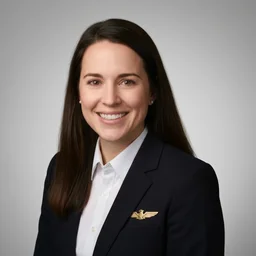
Commercial Pilot & FAA Certification Specialist
Embry-Riddle Aeronautical UniversityCaptain Jennifer Walsh graduated with honors in Aerospace Engineering from Embry-Riddle Aeronautical University and holds FAA Airframe & Powerplant and Airline Transport Pilot certificates. With 11 years of commercial aviation experience and 6 years as a ground school instructor, she guides aviation mechanics and student pilots through FAA written exams and practical tests.
Join the Discussion
Connect with other students preparing for this exam. Share tips, ask questions, and get advice from people who have been there.
View discussion (8 replies)