
AMCAT Coding Section: What to Expect and How to Prepare 2026 September
✍🏼 Pass your AMCAT Coding Section: What to Expect exam on the first attempt. Practice questions with detailed answer explanations, hints, and instant scoring.

What the AMCAT Coding Section Tests
Unlike the mandatory AMCAT modules — which assess verbal ability, quantitative aptitude, and logical reasoning — the coding section is a separate, optional programming module you opt into when scheduling your exam. It evaluates three core competency areas: basic programming logic, data structures, and algorithmic thinking.
Questions are presented as coding problems that you must solve in a live code editor embedded in the AMCAT platform. You are judged on correctness (whether your code passes all test cases) and, to a lesser extent, on code efficiency. The module is designed to mirror the kind of screening questions asked in entry-level software engineering interviews, so strong performance here can significantly differentiate you from candidates who only completed the core AMCAT modules.
Programming logic questions focus on control flow, loops, conditionals, and basic input/output handling — skills any first-year CS student should be comfortable with. Data structure problems typically involve arrays, strings, linked lists, stacks, and queues. Algorithmic problems may touch on sorting, searching, and simple dynamic programming. If you have also prepared your AMCAT quantitative section, you will notice overlapping pattern-recognition skills that transfer well to algorithm design.
Languages Supported
The AMCAT coding section supports the four most widely taught programming languages at Indian engineering colleges and universities: C, C++, Java, and Python. You select your preferred language at the start of the module and write your solution in the built-in online editor — no local IDE is required.
Python is increasingly popular among test-takers because of its concise syntax, which lets you implement data-structure solutions with fewer lines. However, if you are stronger in Java or C++, stick with what you know best — the judge evaluates correctness, not language choice. C remains a viable option for candidates from electronics and embedded backgrounds, though standard library support is more limited.
Difficulty-wise, the AMCAT coding section is rated beginner to intermediate. Think LeetCode Easy to occasionally Medium. Problems rarely require advanced graph algorithms or complex dynamic programming; instead, they test whether you can translate a clear problem statement into working code cleanly and within the time limit. Before your exam, also review the AMCAT logical reasoning module — pattern recognition from those questions feeds directly into algorithm design.
How the Coding Score Affects Your AMCAT Profile
Your coding module score appears as a separate percentile band on your AMCAT scorecard, visible to any recruiter who views your profile. It does not average into your overall AMCAT score for the core modules, so a poor coding attempt will not drag down your verbal or quant percentile. However, recruiters in software roles almost always filter by the coding percentile first. A score above the 70th percentile places you in the visible shortlist pool for most product and service companies. Candidates aiming for top-tier product companies should target the 85th percentile or above. Understanding the full AMCAT interview process helps you see where the coding score fits into recruiter decision-making.
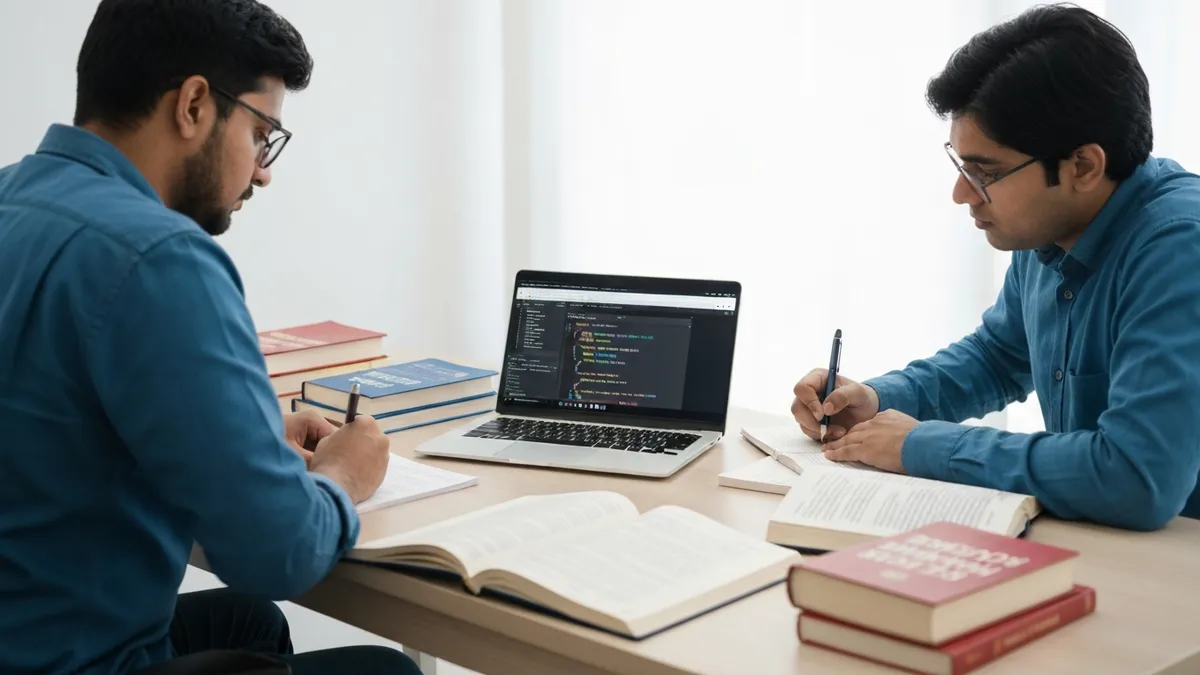
8 Preparation Tips for the AMCAT Coding Section
- ✓Practice at least 30 LeetCode Easy problems in your chosen language before the exam — fluency matters more than knowledge of advanced algorithms.
- ✓Learn to read problem statements precisely; AMCAT problems are well-specified and edge cases are always stated or implied in the examples.
- ✓Time yourself: solve practice problems with a strict 20-minute timer to build the pacing you will need on exam day.
- ✓Master string manipulation and array operations — these two topics cover roughly 60% of all AMCAT coding questions.
- ✓Review basic sorting algorithms (bubble, selection, insertion) and their time complexities so you can reason about efficiency in comments.
- ✓Use Python's built-in data structures (list, dict, set) or Java's Collections framework — they save precious time during the exam.
- ✓Before submitting, test your code against edge cases: empty input, single element, maximum constraints, and negative numbers.
- ✓Pair coding practice with the full <a href='/amcat-practice-test'>AMCAT practice test</a> so your mental stamina covers both core modules and the optional coding section in one sitting.
AMCAT Key Concepts
What is the passing score for the AMCAT exam?
Most AMCAT exams require 70-75% to pass. Check the official exam guide for exact requirements.
How long is the AMCAT exam?
The AMCAT exam typically allows 2-3 hours. Time management is critical for success.
How should I prepare for the AMCAT exam?
Start with a diagnostic test, create a 4-8 week study plan, and take at least 3 full practice exams.
What topics does the AMCAT exam cover?
The AMCAT exam covers multiple domains. Review the official content outline for the complete list.

AMCAT Pros and Cons
- +AMCAT exam content is organized around a published blueprint, making targeted preparation efficient and systematic
- +Official and third-party practice materials provide realistic exposure to question types before the actual exam
- +Score reporting after practice tests and the actual exam provides detailed feedback for focused improvement
- +Study communities (forums, Discord groups, Reddit) share current insights about tested content and effective strategies
- +Multiple registration windows and retake policies give candidates flexibility in timing and recovery from suboptimal first attempts
- −High-quality preparation materials require financial investment that not all candidates can easily access
- −Time required for thorough preparation is often underestimated, leading to rushed review of critical content
- −AMCAT preparation resources vary widely in quality and accuracy — not all published guides are aligned with current exam content
- −Self-study without external accountability increases the risk of avoiding weak subjects and over-studying familiar ones
- −Performance under actual exam conditions often differs from practice performance due to time pressure and stress factors
AMCAT Coding Questions and Answers
More AMCAT Guides




About the Author

Educational Psychologist & Academic Test Preparation Expert
Columbia University Teachers CollegeDr. Lisa Patel holds a Doctorate in Education from Columbia University Teachers College and has spent 17 years researching standardized test design and academic assessment. She has developed preparation programs for SAT, ACT, GRE, LSAT, UCAT, and numerous professional licensing exams, helping students of all backgrounds achieve their target scores.
Join the Discussion
Connect with other students preparing for this exam. Share tips, ask questions, and get advice from people who have been there.
View discussion (8 replies)