
ALEKS Prep and Learning Module: Complete Guide to Assessment and Learning in Knowledge Spaces
Master the ALEKS prep and learning module with our complete guide. Tips, strategies & practice tests for math and chemistry. 🎯 Start today!

The aleks prep and learning module is one of the most powerful — and misunderstood — tools available to students preparing for college-level math and science placement. ALEKS stands for Assessment and Learning in Knowledge Spaces, and it uses an artificial-intelligence-driven engine to build a precise map of exactly what each student knows and, critically, what they are ready to learn next.
Rather than presenting a fixed list of problems the way a traditional textbook does, the system constantly re-evaluates your knowledge state and personalizes every practice session to close your specific gaps. Understanding how this engine works is the first step toward using it effectively.
Unlike standardized tests where you answer a set number of questions and receive a score, the ALEKS prep and learning module operates through two distinct phases: assessment and learning. During the initial knowledge check, the system asks you a series of open-ended math or chemistry problems to determine your current knowledge state. There are no multiple-choice options, which forces you to demonstrate genuine understanding rather than test-taking strategy. Once the assessment is complete, ALEKS opens a personalized learning pie — a visual representation of every topic in your course, color-coded by mastery. The pie becomes your roadmap through the material.
Many students arrive at the ALEKS initial knowledge check answers math section feeling unprepared or anxious, especially when they discover that the system will ask them to solve problems without hints or partial credit. This is by design. The assessment is not meant to be passed — it is meant to be accurate.
An honest baseline is far more valuable than an inflated score, because the system will eventually uncover gaps through its regular knowledge checks regardless of how the first assessment goes. Students who try to cheat or guess their way through the initial assessment only hurt themselves by misaligning the learning content with their actual skill level.
The ALEKS platform is widely used across thousands of colleges and universities in the United States for math placement, chemistry placement, and course-embedded learning. If you are a first-year college student, there is a strong chance your institution uses ALEKS to determine which math or science course you are eligible to enroll in.
Placement scores typically range from 0 to 100 and represent the percentage of topics in the assessed course that you have mastered. A score of 61 or higher is commonly required for placement into College Algebra, while Calculus I may require a score of 76 or above, though thresholds vary by institution.
One of the most frequently searched topics around ALEKS is how to approach specific problem types — for example, find the slope of the line graphed below ALEKS questions or setting up a one step unit conversion ALEKS answers. These problems appear regularly in both the math and chemistry tracks. Slope problems require you to identify two clear points on a graph and apply the rise-over-run formula, while unit conversion problems demand careful attention to dimensional analysis and cancellation of units. Mastering these problem types dramatically increases your performance on both placement assessments and course-embedded knowledge checks.
The learning module inside ALEKS is equally important as the assessment component. After your initial knowledge check, the system identifies a subset of topics you are ready to learn — meaning you have already mastered the prerequisite skills.
Working through these ready topics first is the most efficient strategy, because ALEKS rewards consistent progress by refreshing your knowledge state and unlocking new material. Students who log in regularly for short sessions of 30 to 45 minutes tend to make faster progress than those who attempt marathon sessions once per week, because spaced repetition is built into how the system tracks retention.
Whether you are preparing for your first ALEKS login experience or returning to improve a placement score before the enrollment deadline, this guide covers everything you need to succeed. We will walk through the structure of the assessment, the best strategies for the learning module, how to handle knowledge checks, common problem types in math and chemistry, and how to build a study plan that gets real results. Practical examples, real numbers, and step-by-step explanations are included throughout so you can apply what you learn immediately.
ALEKS by the Numbers
How the ALEKS Assessment Is Structured
The first assessment ALEKS runs when you start a new course. It presents 20–35 open-ended problems across the full topic range to establish your precise baseline knowledge state before any learning begins.
After the initial check, ALEKS generates a personalized pie chart showing your mastery level across all course topics. Ready topics — those you can learn now based on prerequisites — are highlighted for you to work through.
Every 5 hours of learning time, ALEKS runs a mid-module knowledge check to verify retained mastery. Topics you cannot reproduce from memory are returned to your learning queue and must be re-mastered.
Your ALEKS score is a number from 0 to 100 reflecting the percentage of course topics you have mastered. Most colleges use this score directly for math or chemistry course placement decisions.
Understanding how the ALEKS learning module works at a technical level can give you a meaningful edge over students who simply log in and start clicking through problems at random. The system is built on a branch of mathematical psychology called Knowledge Space Theory, developed by researchers Jean-Paul Doignon and Jean-Claude Falmagne.
The core idea is that all knowledge in a domain can be mapped as a partially ordered set — meaning certain concepts must be mastered before others become learnable. ALEKS uses this theory to construct your personal knowledge state as a subset of all possible knowledge states in the course.
When you first enter the aleks le learning environment, you will notice that only a portion of your pie slices are available to work on. These are your "ready" topics — the ones for which you have already demonstrated the prerequisite knowledge.
It is a common mistake to try to jump to a harder topic before the system has unlocked it, because ALEKS will not allow you to practice content you are not yet ready for. The best strategy is to focus entirely on the ready topics, master them efficiently, and let the system naturally expand your available content as your knowledge state grows.
The ALEKS math track covers a wide range of topics depending on which course you are placed into. For the most common placement assessment — which covers content from Pre-Algebra through Pre-Calculus — you will encounter topics such as operations with fractions and decimals, linear equations and inequalities, systems of equations, properties of exponents, polynomial operations, factoring, rational expressions, radical expressions, quadratic equations, graphing lines and parabolas, function notation, and basic trigonometry. Each of these topic areas contains multiple individual skills, and ALEKS tracks your mastery at the individual skill level, not just the broad category.
For students navigating the chemistry track, the ALEKS initial knowledge check answers chemistry section focuses on fundamentals like significant figures, unit conversions, atomic structure, the periodic table, chemical nomenclature, stoichiometry, and basic thermodynamics. The unit conversion problems deserve special attention because they appear frequently and follow a consistent structure: you are given a starting quantity with units, a conversion factor, and you must cancel units systematically to arrive at the target units. Students who practice dimensional analysis chains of two or three steps consistently outperform those who try to memorize conversion factors in isolation.
One of the most valuable features of the ALEKS learning module is the worked example section available for most problems. When you answer a problem incorrectly, the system offers a detailed explanation of the correct solution. Many students skip these explanations in a hurry to move on, but this is a critical mistake.
The worked example is often the most efficient teaching moment in the entire system, because it appears immediately after a wrong answer when your brain is most primed to process the correction. Reading through each explanation carefully — even writing it out by hand — dramatically reduces the number of times you will see the same problem type again.
Progress in the ALEKS learning module is measured in terms of topics mastered, and this number is what ultimately determines your placement score. However, it is important to understand that mastery in ALEKS is not permanent until it is confirmed by a knowledge check. The system uses a forgetting curve model, and topics that you learned but have not recently practiced will be flagged during the next knowledge check.
This means that your strategy must include not just acquiring new topics but also reviewing recently mastered ones. A good rule of thumb is to spend the first 10 minutes of each session reviewing problems from topics you finished in the previous two sessions before moving on to new material.
Students who make the fastest progress on the ALEKS learning module typically share three habits: they log in every day or every other day for consistent short sessions rather than sporadic long ones; they work through every worked example carefully instead of rushing past errors; and they keep a handwritten notebook of formulas, problem-solving steps, and common mistakes they tend to repeat.
This notebook becomes an invaluable resource during the periodic knowledge checks, which arrive without warning after every five hours of learning time. By maintaining active recall through regular review, you ensure that your knowledge state reflects genuine mastery rather than short-term memory.
ALEKS Math, Chemistry & Learning Strategies
For the ALEKS math placement section, the most high-impact topics to master first are linear equations, slope and graphing, and polynomial operations, as these appear across nearly every level of the math track. When you encounter a "find the slope of the line graphed below" problem, always identify two points with integer coordinates to avoid fraction errors. Write the rise and run explicitly before dividing. Slope errors almost always come from sign mistakes — pay close attention to whether the line rises or falls from left to right before you calculate.
Fraction operations, exponent rules, and factoring quadratics are the three topic areas where students lose the most points on math placement assessments. For fractions, always find the least common denominator before adding or subtracting — never cross-multiply for addition problems. For factoring, practice the AC method for trinomials where the leading coefficient is not 1, because ALEKS frequently tests this exact form. Building speed and accuracy on these foundational topics earns you more placement points per hour of study than any other approach.

ALEKS Learning Module: Advantages and Limitations
- +Fully personalized to your individual knowledge gaps — no wasted time on topics you already know
- +Open-ended problem format builds genuine understanding instead of test-taking shortcuts
- +Immediate worked examples after wrong answers create powerful learning moments
- +Progress is visible and measurable through the pie chart, keeping motivation high
- +Knowledge checks enforce long-term retention and prevent shallow memorization
- +Accessible 24/7 from any device with a browser, allowing flexible study scheduling
- −Cannot skip ahead to locked topics even if you feel confident — the system controls pacing
- −Periodic knowledge checks can feel discouraging when previously mastered topics are removed
- −No multiple-choice format means partial credit is not available — problems must be solved completely
- −The interface can feel repetitive during long sessions, reducing engagement for some learners
- −Scores reset between placement attempts at some institutions, requiring full re-assessment
- −Limited worked examples for advanced topics leave some students without adequate explanation
ALEKS Prep Checklist: Before Your Initial Knowledge Check
- ✓Review fraction operations — addition, subtraction, multiplication, and division — without a calculator.
- ✓Practice solving two-step linear equations and check your answers by substituting back into the original equation.
- ✓Memorize the slope formula and practice finding slope from both two points and a graphed line.
- ✓Study the rules for integer exponents, including negative and zero exponents.
- ✓Work through at least 10 factoring problems including GCF, difference of squares, and trinomials.
- ✓Practice unit conversions using dimensional analysis, both one-step and two-step, for chemistry track students.
- ✓Review significant figure rules and complete 15–20 sig fig calculation problems before the assessment.
- ✓Complete a full timed practice session with open-ended problems to simulate the real ALEKS input format.
- ✓Create a reference sheet with key formulas: slope, quadratic formula, exponent rules, and conversion factors.
- ✓Get 7–8 hours of sleep the night before your placement assessment to maximize working memory performance.
Your Initial Score Is a Starting Point, Not a Final Verdict
Most colleges allow you to retake the ALEKS placement assessment after completing a minimum number of hours in the learning module — typically 5 to 10 hours. Students who spend focused time working through their personalized pie before retesting regularly improve their scores by 10 to 20 percentage points. A strategic preparation period in the learning module is often more effective than any other form of test prep for improving your ALEKS placement outcome.
Maximizing your ALEKS pie score requires a deliberate strategy that goes beyond simply logging in and solving whatever problem appears next. The most effective approach begins with a topic triage: immediately after your initial knowledge check, spend five minutes reviewing your pie to identify which slices have the most ready topics available. Slices with many ready topics represent areas where your prerequisite knowledge is strong, and working through these first gives you the fastest early momentum. Fast early progress builds confidence and also unlocks more topics in adjacent areas of the pie.
Time management inside ALEKS sessions matters more than most students realize. The system tracks your active learning time, and knowledge checks are triggered by hours of genuine learning activity — not calendar time.
This means that a student who logs in for 45 focused minutes per day will trigger knowledge checks on a predictable schedule, while a student who leaves sessions open in the background accumulates time without real learning. Always close your ALEKS session when you step away from the computer, and log your daily learning time in a notebook so you can anticipate when the next knowledge check is approaching.
For students working on the ALEKS math track, the graphing and functions section of the pie is often the most consequential for placement outcomes. Problems in this section include graphing linear equations, identifying slopes and intercepts, graphing quadratic functions, understanding function notation, and evaluating functions at given inputs. These topics appear in every college math course from College Algebra through Calculus, which is why ALEKS weights them heavily in the placement algorithm. If you are within 5 to 10 points of a placement cutoff, mastering the graphing topics first is often the fastest path to crossing the threshold.
Students who look for ALEKS knowledge check answers math online are setting themselves up for a disappointing outcome. Even if you find a list of problem types and solutions, the ALEKS engine will detect patterns in your performance — answering correctly on topics where your learning history does not support mastery will trigger additional verification problems.
More importantly, inflating your placement score through shortcuts places you in a course you are not prepared for, which leads to a much harder academic experience. The far better investment is spending the same time actually learning the material, which produces a score that accurately reflects what you are ready to handle.
The ALEKS learning module also supports students who are already enrolled in a course and using ALEKS as an in-class tool. In this context, assignments are tied to specific course modules, and your instructor can monitor your progress through the reporting dashboard. If you fall behind on ALEKS assignments, your instructor will see it immediately. Students in this situation should prioritize completing assigned modules before due dates, because late ALEKS work is harder to recover from than late homework — the knowledge checks still require mastery regardless of when you complete the initial learning.
One underused feature of ALEKS is the dictionary and reference tools available within the problem interface. When you encounter an unfamiliar term — especially in the chemistry module where nomenclature is dense — you can click on it for a definition within the system. This eliminates the need to tab out to a search engine and keeps your focus on the problem at hand.
Similarly, the ALEKS calculator (when allowed for a given problem type) is a four-function calculator that does not include trig functions or graphing, so practicing without an advanced calculator during your prep sessions will ensure you are not surprised by its limitations during the actual assessment.
Building a personal error log is one of the highest-leverage study habits you can develop for ALEKS. Every time you answer a problem incorrectly, write down the topic, the problem type, the mistake you made, and the correct approach in a dedicated notebook.
After two weeks of consistent use, your error log will reveal patterns — perhaps you consistently make sign errors when distributing a negative, or you forget to flip the inequality sign when multiplying both sides by a negative number. Identifying and deliberately practicing your personal error patterns is exponentially more efficient than generic practice, because it targets the exact gaps that ALEKS has already identified in your knowledge state.

Searching for ALEKS initial knowledge check answers math or chemistry answers online violates your institution's academic integrity policy and will result in a misaligned learning path that hurts your academic performance. ALEKS cross-validates your performance across multiple problem types, so an artificially high initial score will be corrected during the first knowledge check. Many colleges also require a proctored retake if your performance in subsequent knowledge checks significantly contradicts your initial placement score.
The ALEKS knowledge check survival guide begins with a simple but often overlooked principle: treat every knowledge check as a low-stakes formative assessment, not a high-stakes exam. The purpose of the periodic knowledge check is to help the system maintain an accurate picture of what you genuinely know, so that the learning module can continue to serve you the most useful content.
When topics are removed from your pie after a knowledge check, it is not a punishment — it is the system correcting for natural forgetting and pointing you back to content that needs reinforcement. Students who embrace this mindset progress faster because they do not waste energy feeling frustrated by setbacks.
Preparing for ALEKS knowledge checks means treating your mastered topic list as an active study guide rather than an archive. After each session, scan the topics you completed and ask yourself: if I had to explain this to someone else right now, could I do it from memory?
If the answer is no for any topic, that topic is a likely candidate for removal in your next knowledge check. Spending 5 to 10 minutes on active recall at the end of each session — closing your notes and solving two or three problems from recently mastered topics — dramatically improves knowledge check performance and keeps your pie score stable over time.
For students approaching a placement deadline, the first priority is completing enough hours in the learning module to unlock a retake attempt, then making those hours count strategically. Most institutions require between 5 and 10 hours of documented learning module work before allowing a second placement attempt.
During these hours, focus exclusively on topics from the slices of your pie that correspond to the placement cutoff you are trying to reach. For example, if you need a score of 61 to place into College Algebra and your current score is 52, you need to master approximately 9 more topics. Identify those 9 topics, work through them systematically, and then request your retake.
The aleks login process itself sometimes creates confusion for first-time users, particularly at institutions that use single sign-on (SSO) through a student portal. If you are having trouble accessing ALEKS, always try logging in through your institution's learning management system (LMS) — such as Canvas, Blackboard, or Moodle — rather than going directly to the ALEKS website. Many universities configure ALEKS access exclusively through the LMS, and attempting to create a standalone account will not give you access to your course. Contact your institution's IT help desk if you cannot locate the ALEKS link in your course shell.
Students using ALEKS for the first time should also understand the difference between the placement module and the course-embedded module. The placement module is used before enrollment to determine which course you qualify for, while the course-embedded module is assigned by your professor and tied to your grade in an enrolled course.
These two versions of ALEKS look similar on the surface but serve different purposes, and your progress in one does not carry over to the other. If you retake a placement assessment after completing course-embedded ALEKS work, you will receive a fresh initial knowledge check based on your current knowledge state.
Advanced students who are aiming for the highest possible ALEKS placement scores — typically 76 or above for Calculus I placement — should focus heavily on the trigonometry and pre-calculus sections of the pie. These include topics like radian measure, unit circle values, basic trig identities, function transformations, inverse functions, and logarithmic and exponential equations.
These topics are less commonly covered in high school curricula, particularly for students who took an algebra-based rather than a calculus-track math sequence. Dedicating the final week of ALEKS prep exclusively to pre-calculus topics often produces the highest marginal gains for students in this score range.
Finally, remember that the ALEKS learning module is a tool, not a complete course. It teaches problem-solving procedures and builds procedural fluency, but it does not replace the conceptual depth of a full math or science course.
Use ALEKS to establish your baseline, close your procedural gaps, and earn the placement you need — but also engage with the underlying concepts through textbooks, videos, and instructor office hours once you are enrolled in your course. Students who combine ALEKS mastery with genuine conceptual understanding are the ones who succeed not just on placement but throughout their entire academic career in mathematics and science.
Building an effective daily study routine around the ALEKS prep and learning module does not require hours of uninterrupted study time. Research on spaced repetition and interleaved practice consistently shows that shorter, more frequent sessions produce better long-term retention than infrequent marathon sessions. For ALEKS specifically, the optimal session length is 30 to 45 minutes of focused work, followed by a short break before returning for another session if time permits. This pattern keeps cognitive load manageable and ensures that each session ends while you are still alert, reducing the number of careless errors that come from mental fatigue.
When you sit down for a study session, start by reviewing your current pie to identify which ready topics have the highest point value — that is, which ones will contribute most to your placement score when mastered. In general, topics in the higher-level slices (such as functions, systems of equations, and polynomials) contribute more to your total score than foundational topics you may have already partially mastered. Strategically prioritizing these high-value topics during your finite prep time is a smarter approach than working through the pie in whatever order ALEKS presents topics by default.
Handwriting practice problems during your ALEKS sessions — rather than just clicking through the digital interface — has been shown to improve both retention and transfer. When you solve a problem on paper first and then enter it into ALEKS, you are practicing the same manual computation skills that will be required on proctored assessments.
Many universities now conduct ALEKS placement assessments in a supervised computer lab, and students who have practiced only in the digital environment sometimes struggle when they need to show work on scratch paper without the digital tools they have grown accustomed to. Always keep a pencil and scratch paper at your desk during ALEKS sessions.
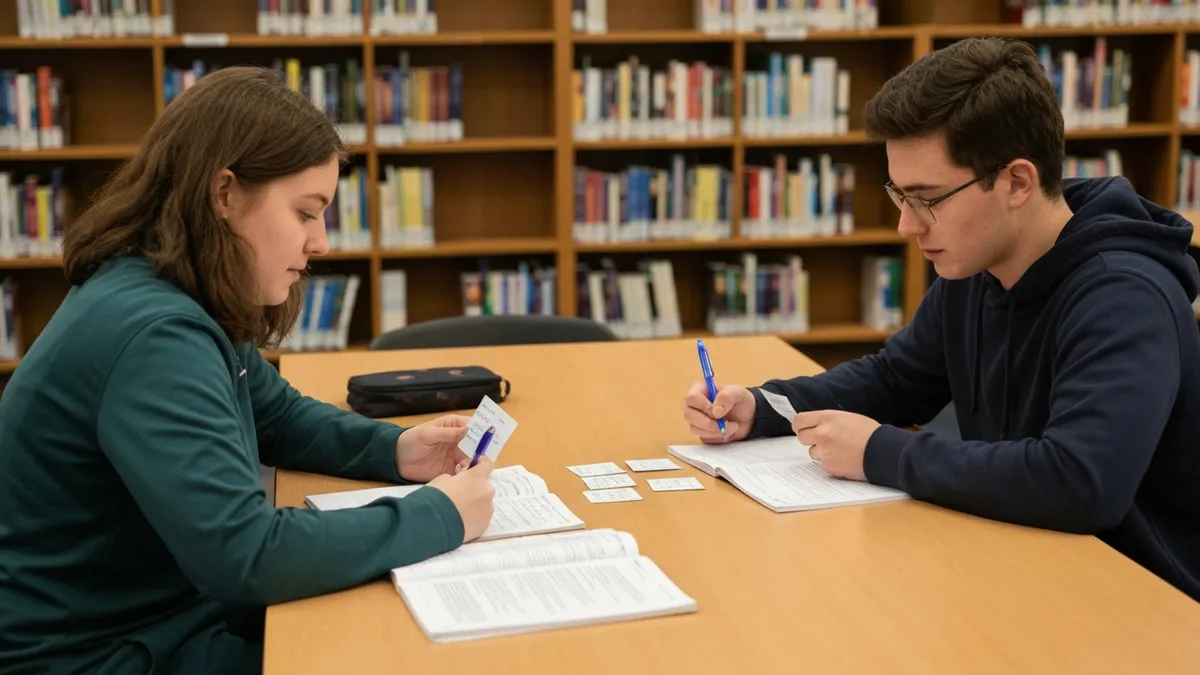
Peer study groups can be a valuable supplement to individual ALEKS work, even though ALEKS itself is an individual learning system. Forming a small group of two or three classmates who are preparing for the same placement assessment allows you to share problem-solving strategies, explain tricky topics to each other (which deepens your own understanding), and hold each other accountable to consistent daily practice.
Teaching a concept to someone else is one of the most powerful reinforcement techniques available, and the topics you can explain clearly without reference materials are almost always the topics you will perform well on during knowledge checks.
For students who have not taken a math or science course in several years — common among returning adult students — the ALEKS learning module is particularly valuable because it meets you exactly where you are without judgment or assumption. The initial knowledge check will establish your current baseline, and the system will identify which foundational topics need to be rebuilt before higher-level content becomes accessible.
This may feel slow at first, but the scaffolded approach ensures that you are never asked to master a topic for which you lack the prerequisites. Many returning students report that ALEKS helped them rebuild mathematical confidence more effectively than any other review resource they had tried.
Practice tests outside of ALEKS are also a valuable part of your preparation strategy. Because ALEKS uses an open-ended input format, practicing with similar open-ended problems builds the fluency and confidence you need to perform well under the timed conditions of the actual placement assessment. The free practice resources at PracticeTestGeeks.com include ALEKS-aligned questions in both the algebra fundamentals and knowledge assessment categories, with detailed answer explanations that mirror the kind of reasoning the ALEKS system expects. Combining external practice with your in-system ALEKS work produces a preparation program that is both broad and deep.
The final days before a scheduled ALEKS placement assessment should be spent on light review rather than intensive new learning. Attempting to master entirely new topics in the 48 hours before your assessment creates cognitive overload and can actually reduce your performance by crowding out well-established knowledge with freshly learned, fragile material.
Instead, spend your final two days doing rapid review of your mastered topic list, working through 3 to 5 problems per topic from memory, and getting adequate sleep. A well-rested brain consolidates learning during sleep, and the performance boost from 8 hours of sleep the night before your assessment is measurable and significant.
Many readers pair this guide with the aleks practice test to check their readiness before exam day.
ALEKS Questions and Answers


About the Author

Educational Psychologist & Academic Test Preparation Expert
Columbia University Teachers CollegeDr. Lisa Patel holds a Doctorate in Education from Columbia University Teachers College and has spent 17 years researching standardized test design and academic assessment. She has developed preparation programs for SAT, ACT, GRE, LSAT, UCAT, and numerous professional licensing exams, helping students of all backgrounds achieve their target scores.
Join the Discussion
Connect with other students preparing for this exam. Share tips, ask questions, and get advice from people who have been there.
View discussion (8 replies)