
ALAT Certification Guide: How to Become a Certified Laboratory Animal Technician
Complete ALAT certification guide. Learn AALAS exam requirements, domains tested, how to apply, study strategies, and what the ALAT certification 📝
What Is ALAT Certification?
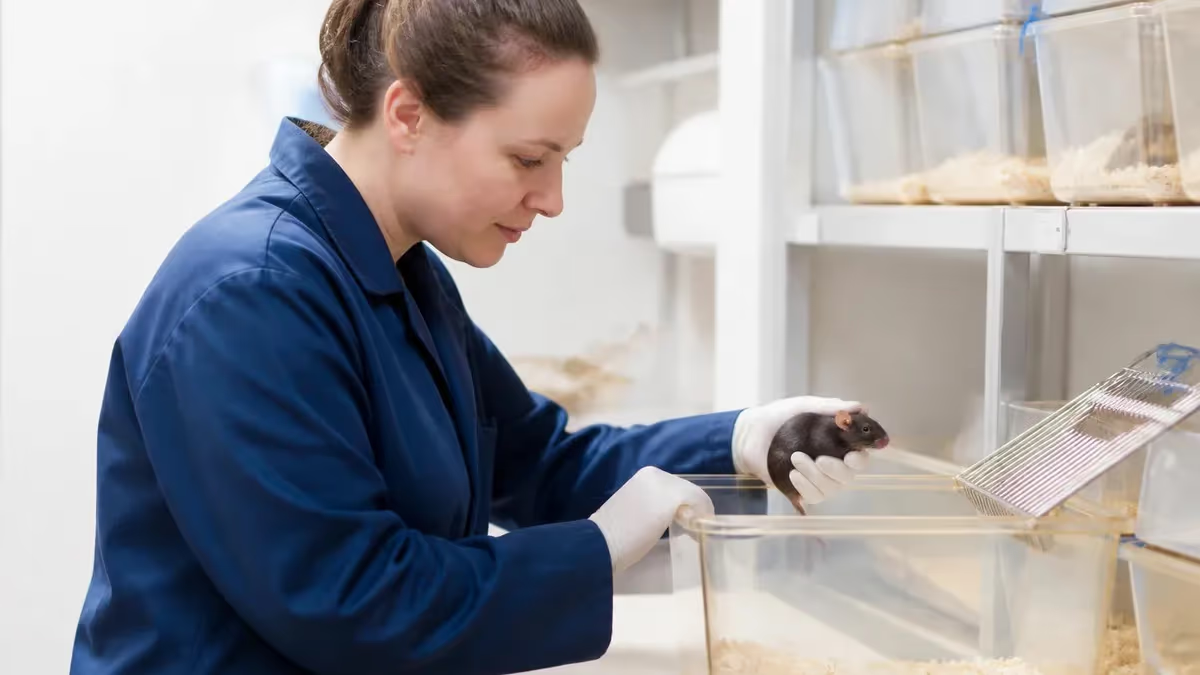
ALAT — Assistant Laboratory Animal Technician — is the entry-level certification issued by the American Association for Laboratory Animal Science (AALAS). It's the first of three AALAS technician credentials, followed by LAT (Laboratory Animal Technician) and LATG (Laboratory Animal Technologist). Earning the ALAT shows employers that you have foundational knowledge of laboratory animal care, husbandry, and the regulatory environment governing research animal programs.
AALAS is the governing body for laboratory animal technician certifications in the United States. Founded in 1950, AALAS represents professionals who work with animals in research, testing, and educational settings. Its certification program is widely recognized as the standard for demonstrating competence in the field, and many research institutions — including universities, pharmaceutical companies, and government labs — require or strongly prefer ALAT-certified candidates for entry-level animal care positions.
The certification exists because laboratory animal care is a regulated, specialized discipline. Animals used in research are protected under the Animal Welfare Act and various institutional policies enforced by Institutional Animal Care and Use Committees (IACUCs). Technicians working in these environments must understand animal behavior, health monitoring, proper handling techniques, and the ethical principles that govern humane animal care in research. The ALAT exam tests exactly this knowledge base.
Holding the ALAT credential benefits your career immediately. It signals baseline professionalism to hiring managers who may receive applications from candidates without any formal training. It also starts a documented credentialing path — once you've held the ALAT and accumulated additional work experience, you can sit for the LAT exam and eventually the LATG, which is the highest AALAS technician certification. Many technicians find that each credential step comes with a pay increase and expanded job responsibilities.
The ALAT is also a confidence builder. Many entry-level lab animal care workers lack formal credentials and rely entirely on facility-specific on-the-job training. Earning an industry-recognized certification early in your career establishes a foundation of verified knowledge and signals that you're invested in professional growth. Supervisors who see that motivation often respond with expanded responsibilities, mentorship toward LAT preparation, and support for attending AALAS regional or national meetings. The credential opens doors that aren't always visible from the outside of a certified professional's position.
ALAT Exam Overview
| Section | Questions | Time |
|---|---|---|
| Total Questions | 120 | 3 hours |
| Passing Score | 0 | |
| Delivery | 0 | |
| Exam Fee | 0 | |
| Renewal | 0 |
ALAT Certification Requirements
One of the ALAT's main appeals is its accessible entry bar. Unlike higher-tier AALAS certifications, the ALAT has no mandatory work experience requirement. You don't need to have worked in a laboratory animal facility before applying. What AALAS does require is that you demonstrate knowledge of the subject matter by passing the exam — that knowledge can come from formal training programs, on-the-job exposure, self-study, or AALAS's own training materials.
Applicants must be at least 16 years old at the time of the exam. There's no formal education prerequisite — high school completion is not explicitly required in the certification application, though it's the practical baseline for most applicants. You do need to create an AALAS member or non-member account to access the certification application portal, and members receive a reduced exam fee, making membership cost-effective if you plan to pursue the LAT or LATG later.
Many candidates sit for the ALAT while employed as laboratory animal care workers. In that case, your daily work provides practical reinforcement for the theoretical material covered on the exam. Facilities often support staff certification because certified technicians contribute to the facility's accreditation standing — particularly through AAALAC International, which accredits research animal programs and views staff credentialing positively during site visits.
Work experience is beneficial but not required. AALAS recommends that candidates have some familiarity with the topics covered before sitting for the exam, and the ALAT Training Manual is the primary resource designed for this purpose. Candidates without prior lab animal experience can use the manual, online modules, and study groups to build the knowledge base needed to pass.
After passing the exam, your ALAT certification is valid for five years. Renewal requires completing five Continuing Education Units (CEUs) during the certification period. AALAS defines acceptable CEU activities broadly — AALAS meetings, institutional training programs, relevant college courses, and approved self-study modules all qualify. Staying current with CEU requirements is straightforward for active practitioners who participate in facility training and professional development activities.
ALAT Exam Format and Structure
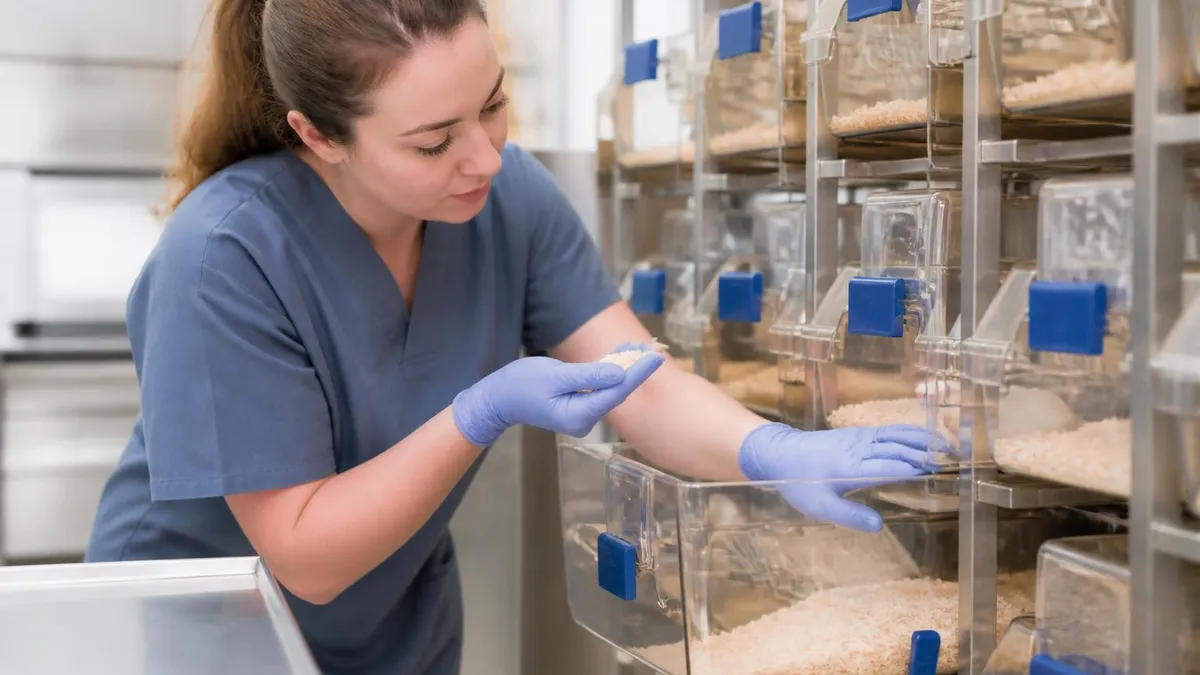
The ALAT exam consists of 120 multiple-choice questions administered over a three-hour testing window at a Prometric testing center. Most candidates find the time allotment generous — three hours for 120 questions works out to 90 seconds per question, and most questions are straightforward enough that candidates finish well before the time limit. The bigger challenge is breadth of knowledge rather than time pressure.
Questions are scenario-based and knowledge-recall in roughly equal measure. You'll see questions like "A mouse is observed hunching and not eating. What is the most appropriate first response?" alongside direct knowledge questions about cage change frequency recommendations or the anatomical differences between rat and mouse handling techniques. Reading each question carefully matters — some distractors are plausible for someone who knows the topic superficially but has memorized the wrong detail.
The exam is scored on a 100-point scale and the passing score is 70. AALAS does not publish the exact number of questions you must answer correctly because some questions are weighted differently as part of the psychometric scoring process, but the practical target is 84 or more correct answers out of 120. Results appear immediately after submission — the computer displays a pass/fail result and your scaled score, so you don't leave the testing center uncertain about whether you passed.
If you don't pass on the first attempt, AALAS allows retakes after a 30-day waiting period. There's no limit on the number of retake attempts, but each retake requires paying the full exam fee again. Most candidates who prepare thoroughly pass on the first attempt — investing time in studying the ALAT Training Manual and taking practice tests significantly improves first-attempt pass rates.
The computer-based format eliminates score waiting anxiety that paper exams create. You'll know whether you passed before you leave the testing center, which many candidates find far less stressful than waiting days or weeks for mailed score reports. The Prometric testing interface is straightforward — you can flag questions for review and move between answered and flagged questions freely within the exam window. Spending a few minutes familiarizing yourself with the interface through the practice tutorial at the start of the session is worthwhile.
ALAT Certification at a Glance
Key Facts at a Glance
| Item | Value | Details |
|---|---|---|
| Exam Questions | 120 | |
| Time Allowed | 3 hrs | |
| Passing Score | 70% | |
| Renewal Period | 5 yrs | |
| Experience Required | None |

ALAT Exam Domains and Content Areas
The ALAT exam covers several broad content domains, and understanding their relative weight helps you prioritize study time. Husbandry — the daily care and management of laboratory animals — is the largest content area. This includes topics like feeding and watering systems, bedding types, environmental enrichment, cage sanitation schedules, and appropriate housing density for different species. Candidates working in animal care facilities will recognize most of this content from their daily work.
Animal health and disease represents a substantial portion of the exam. Questions in this domain test your knowledge of normal vs. abnormal animal behavior, clinical signs of common diseases affecting research animals, zoonoses (diseases transmissible from animals to humans), and basic principles of disease prevention and biosecurity. You don't need to know detailed pathophysiology, but you should be able to identify a sick animal from behavioral and physical signs and know the appropriate response protocol — notifying veterinary staff, isolating affected animals, and documenting observations.
Genetics and nomenclature is tested at the introductory level. This includes understanding the difference between inbred, outbred, and hybrid strains; basic concepts of transgenic and knockout models; and the naming conventions AALAS uses for genetic models. The genetics section is often challenging for candidates without a biology background, but the ALAT Training Manual covers it clearly and the exam doesn't require deep molecular biology knowledge.
Regulatory topics appear throughout the exam. The Animal Welfare Act, the Guide for the Care and Use of Laboratory Animals, and the role of IACUCs are all testable content. You should understand what types of animals are covered by the AWA (note: rats, mice, and birds bred for research are not covered by the AWA but are covered by the PHS Policy), what an IACUC does, and the three Rs framework — Replacement, Reduction, and Refinement — that guides ethical animal use in research.
Species-specific content covers the most commonly used laboratory species: mice, rats, rabbits, guinea pigs, hamsters, gerbils, and non-human primates at an introductory level. For each species, expect questions on normal physiological parameters (body weight, body temperature, reproductive cycle), handling and restraint techniques, and species-specific husbandry requirements. Mice and rats receive the most attention because they represent the vast majority of animals used in biomedical research.
ALAT Exam Content Domains
The largest domain. Covers feeding, watering, bedding, cage sanitation, environmental parameters, and enrichment for common lab species.
Clinical signs of illness, common diseases by species, zoonoses, biosecurity procedures, and basic disease prevention principles.
Inbred strains, outbred stocks, transgenic and knockout models, AALAS naming conventions, and cryopreservation basics.
Animal Welfare Act coverage, IACUC roles and functions, the Guide, PHS Policy, and the Three Rs framework.
Normal physiological values, handling and restraint, reproductive biology, and species-specific husbandry for mice, rats, rabbits, guinea pigs, and hamsters.
Basic concepts of common procedures: injections, blood collection, anesthesia monitoring, and post-procedural observation requirements.
8-Week ALAT Study Plan
- ▸Read ALAT Training Manual Chapter 1 (Introduction to Lab Animal Science)
- ▸Study Animal Welfare Act coverage and exemptions
- ▸Learn IACUC structure and functions
- ▸Review the three Rs: Replacement, Reduction, Refinement
- ▸Housing systems: conventional, barrier, and isolator facilities
- ▸Environmental parameters: temperature, humidity, lighting cycles
- ▸Feed, water, and bedding requirements by species
- ▸Sanitation schedules and cage change procedures
- ▸Normal physiological parameters for both species
- ▸Handling and restraint techniques
- ▸Common diseases: MHV, Sendai virus, Helicobacter in mice
- ▸Reproductive biology and breeding systems
- ▸Rabbits: restraint, ear vein injection, normal values
- ▸Guinea pigs: vitamin C requirements, social housing
- ▸Hamsters and gerbils: hibernation, dust bathing
- ▸Non-human primates: introductory overview
- ▸Clinical signs of disease: hunching, ruffled fur, weight loss
- ▸Common zoonoses: LCMV, B virus, ringworm
- ▸Biosecurity levels and PPE requirements
- ▸Sentinel animal programs and health monitoring
- ▸Inbred strains: definition and naming conventions
- ▸Outbred stocks vs. inbred strains
- ▸Transgenic and knockout model nomenclature
- ▸Cryopreservation concepts
- ▸Complete 2 full-length practice exams (120 questions each)
- ▸Review missed questions against Training Manual
- ▸Focus on weak areas identified from practice tests
- ▸Review regulatory and ethics content
- ▸Quick review of all domain summaries
- ▸Take one more practice test under timed conditions
- ▸Review species-specific normal values flashcards
- ▸Confirm Prometric testing appointment
How to Apply for ALAT Certification
Applications for ALAT certification are submitted through the AALAS website. You'll need to create an account, complete the certification application form, and pay the exam fee. AALAS members pay $175 and non-members pay $220 as of current pricing. Membership in AALAS costs $55 per year for early career technicians, so if you plan to take the exam and pursue continuing education resources through AALAS, membership is cost-effective.
After AALAS approves your application and receives payment, you'll receive an Authorization to Test (ATT) letter by email. The ATT contains your eligibility period — typically 90 days — and instructions for scheduling your exam at a Prometric testing center. Prometric has centers in most major U.S. cities, and you can usually find a testing date within two to three weeks of receiving your ATT.
On exam day, bring two forms of valid ID — one must be government-issued with a photo. The testing center provides scratch paper and a locker for personal items. You won't be allowed to bring notes, study materials, or electronic devices into the testing area. Arrive 15–30 minutes early to complete check-in procedures without rushing before your exam window begins.
After passing, AALAS mails your certification wallet card and sends confirmation of your credentialing status. Your name is added to the AALAS online certification lookup, which employers and institutions can use to verify credentials independently. Many facilities include verification of AALAS certification status as part of their new hire background check process.
International applicants can take the ALAT exam through Prometric's international network of testing centers. AALAS's certification is primarily U.S.-centric in its regulatory content but is increasingly recognized by research institutions worldwide, particularly those affiliated with North American universities or multinational pharmaceutical companies. If you're located outside the U.S., confirm that your nearest Prometric center offers AALAS exams before submitting your application, as not all international Prometric locations carry every exam program.
ALAT Certification Study Resources
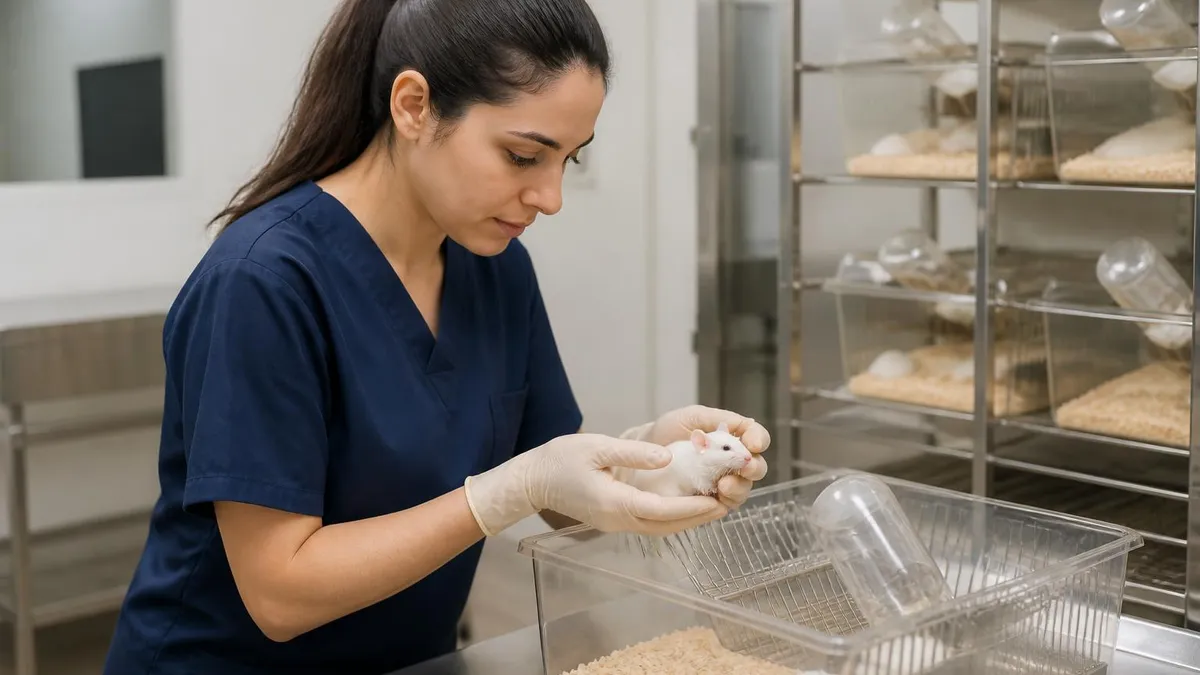
The ALAT Training Manual is published by AALAS and is the official exam preparation resource. It's written specifically for the ALAT certification and covers all content domains tested on the exam. Available for purchase on the AALAS website, the manual is updated periodically to reflect changes in animal care practices and regulations.
Working through the manual systematically — rather than jumping to sections you're unfamiliar with — builds a more complete knowledge base. Many successful candidates read the manual once cover to cover, then revisit highlighted sections and the end-of-chapter review questions in the final weeks before the exam.
Effective Study Strategies for the ALAT Exam
The ALAT Training Manual, published by AALAS, is the single most important study resource. The exam is explicitly based on the manual's content, so working through it methodically is more effective than relying on general biology textbooks. The manual is available for purchase through AALAS and covers all exam domains in the appropriate depth for the entry-level credential. Annotating the manual as you read — highlighting key terms, writing brief summaries in the margins, flagging tables of normal physiological values — creates a customized review resource that's faster to revisit than rereading full chapters.
Practice exams are essential. The breadth of the ALAT curriculum means that exposure to exam-style questions accelerates retention more than passive reading alone. AALAS offers official practice modules, and several third-party resources including question banks are available. Aim to complete at least two full 120-question practice exams in the final two weeks before testing. Review every missed question against the manual, not just the correct answer — understanding why the wrong answers are wrong is as important as knowing the right one.
Flashcards work particularly well for species-specific normal values and species identification content. Normal body temperature, heart rate, respiratory rate, and lifespan for mice, rats, rabbits, guinea pigs, and hamsters are fair game on the exam, and there are enough values across enough species to make recall challenging without deliberate memorization. Creating flashcards — physical or digital — and reviewing them during short daily study sessions reinforces these figures through spaced repetition more effectively than single-session cramming.
Connecting content to your workplace experience strengthens retention. When the manual describes cage change protocols, think about how your facility implements those procedures and whether there are differences. When it covers clinical signs of murine respiratory disease, recall cases you've observed at work. This dual encoding — connecting written knowledge to practical experience — creates stronger memory traces than either source alone. Candidates who actively connect manual content to their day-to-day work consistently report feeling better prepared walking into the exam.
Study groups with co-workers who are also pursuing ALAT certification provide accountability and expose knowledge gaps that solo study might miss. Explaining concepts to others is one of the most effective learning techniques because it forces you to articulate knowledge precisely rather than having a vague sense that you understand something. If your institution has multiple people preparing for the ALAT simultaneously, organizing weekly group study sessions covering one domain at a time adds structure and social reinforcement to the preparation process.
Time management during the exam matters less than most candidates expect, but pacing yourself prevents the anxiety of running short. A simple strategy: spend the first pass answering questions you're confident about quickly, marking any that require more thought. The second pass revisits marked questions with the remaining time. This approach ensures you don't spend 10 minutes on a difficult question while leaving easy questions unanswered at the end. The ALAT exam's format — 120 questions in three hours — allows roughly 90 seconds per question, which is comfortable for most well-prepared candidates.
ALAT Certification Checklist
- ✓Create an AALAS account at aalas.org (member or non-member)
- ✓Purchase the ALAT Training Manual through the AALAS store
- ✓Complete the online certification application form
- ✓Pay the exam fee ($175 member / $220 non-member)
- ✓Receive Authorization to Test (ATT) letter via email
- ✓Schedule exam at a local Prometric testing center
- ✓Study the ALAT Training Manual methodically across all domains
- ✓Complete at least 2 full-length practice exams before test day
- ✓Bring two valid IDs to the testing center on exam day
- ✓After passing: watch for certification wallet card from AALAS
ALAT Certification: Is It Worth It?
- +No work experience required — accessible entry point for new lab animal care workers
- +Nationally recognized by research institutions, universities, and pharmaceutical companies
- +Starts the AALAS credentialing ladder: ALAT → LAT → LATG
- +Demonstrates commitment and professionalism to hiring managers
- +Supports facility accreditation (AAALAC International recognizes staff credentials)
- +Computer-based results available immediately after completing the exam
- −Exam fee ($175–$220) plus Training Manual purchase adds up for first-time candidates
- −Requires disciplined self-study without a structured classroom curriculum unless employer provides training
- −5-year renewal requires CEUs — requires ongoing professional development commitment
- −Does not replace experience requirements for LAT certification — you'll need work hours to advance
- −Exam content is U.S.-focused; international recognition varies by country and institution
Sample ALAT - Assistant Laboratory Animal Technician Practice Questions
Try these questions from our free ALAT - Assistant Laboratory Animal Technician practice tests. The correct answer and an explanation follow each question.
In a typical laboratory animal facility, what is the correct chain of command for an ALAT technician reporting a non-emergency concern?
- A. Technician → USDA Inspector → Attending Veterinarian
- B. Technician → Supervisor → Facility Manager → Attending Veterinarian or Director
- C. Technician → Principal Investigator → Funding Agency
- D. Technician → IACUC Chair → Institutional Official
Answer: B. Technician → Supervisor → Facility Manager → Attending Veterinarian or Director
Technicians report to their immediate supervisor, who reports to the facility manager, who reports to the attending veterinarian or institutional director. Following the chain of command ensures concerns are appropriately escalated and documented at each level.
What should be included in an animal's health record maintained by an Assistant Laboratory Animal Technician?
- A. The technician's personal opinions
- B. Speculative diagnoses without veterinarian consultation
- C. Unrelated research data
- D. Detailed notes on diet, treatments, and observed behaviors
Answer: D. Detailed notes on diet, treatments, and observed behaviors
Accurate health records, including diet, treatments, and observed behaviors, are essential for tracking the animal’s health and ensuring comprehensive care.
How can an Assistant Laboratory Animal Technician contribute to the refinement of animal research procedures?
- A. By developing new experimental protocols independently
- B. By suggesting improvements in animal care and handling techniques
- C. By avoiding involvement in procedural changes
- D. By strictly following outdated protocols
Answer: B. By suggesting improvements in animal care and handling techniques
Technicians can contribute by suggesting and implementing improvements in care and handling to minimize distress and enhance welfare.
An animal technician observes that a room housing mice has a humidity level of 85%. According to the 'Guide for the Care and Use of Laboratory Animals', why is this a concern?
- A. Low humidity can cause ringtail in rats and respiratory issues.
- B. High humidity has no significant effect on rodent health.
- C. The ideal humidity range is between 10% and 20%.
- D. High humidity can lead to increased microbial growth and animal discomfort.
Answer: D. High humidity can lead to increased microbial growth and animal discomfort.
The generally accepted range for humidity in rodent housing rooms is 30% to 70%. Humidity levels above this range, such as 85%, can contribute to the growth of mold and bacteria, create an uncomfortable environment for the animals, and may affect experimental outcomes.
Take the full ALAT - Assistant Laboratory Animal Technician practice test
ALAT Questions and Answers
About the Author

Educational Psychologist & Academic Test Preparation Expert
Columbia University Teachers CollegeDr. Lisa Patel holds a Doctorate in Education from Columbia University Teachers College and has spent 17 years researching standardized test design and academic assessment. She has developed preparation programs for SAT, ACT, GRE, LSAT, UCAT, and numerous professional licensing exams, helping students of all backgrounds achieve their target scores.
Join the Discussion
Connect with other students preparing for this exam. Share tips, ask questions, and get advice from people who have been there.
View discussion (7 replies)